Australia Kickstarter Custom Bags: A Delivery Programme Built for AU Backers
Australian campaigns carry one of the longest delivery tails in crowdfunding and one of the strictest biosecurity regimes. This page sets out the calendar, landed cost, packing rules and import entry mechanics from Xiamen to an Australian address.
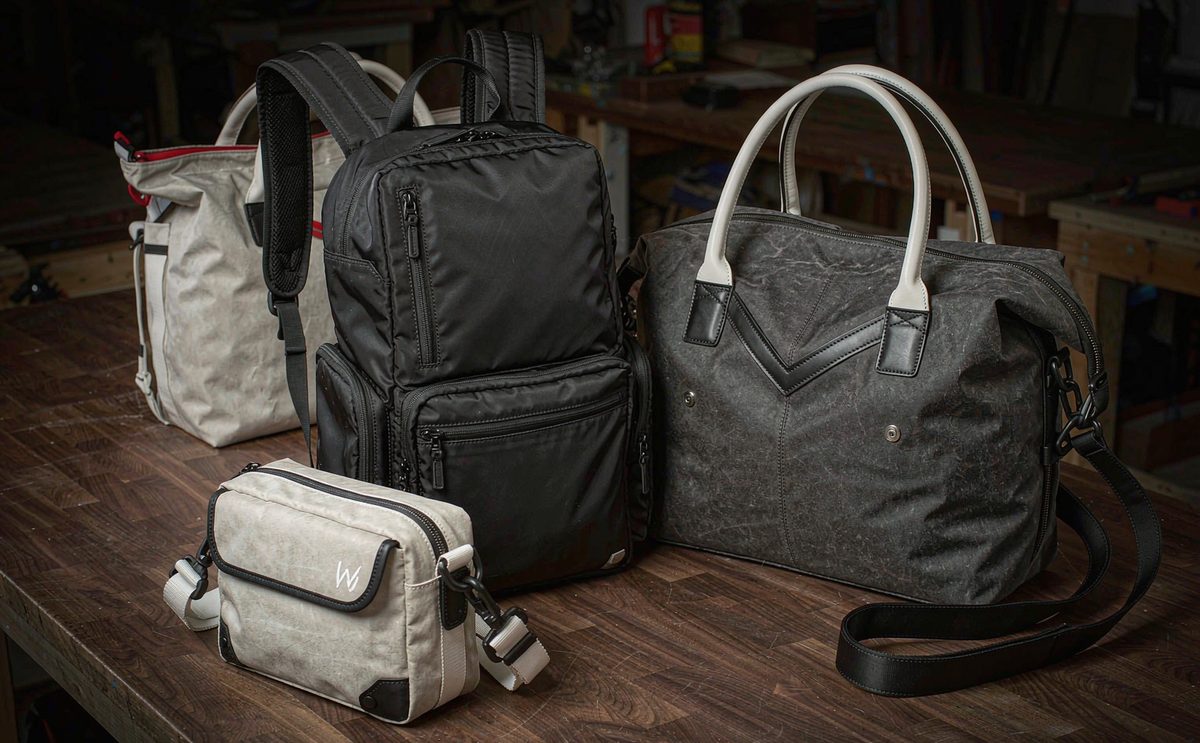
Kickstarter creators in Australia work with one of the longest delivery tails in crowdfunding and one of the strictest border regimes. This page sets out what an Australian campaign needs from a bag production programme: the calendar that survives a January shutdown, the landed-cost lines through Australian Border Force, biosecurity requirements that reach down to the pallet, and a freight plan that reaches Perth on the same date it reaches Sydney.
What an Australian Kickstarter bag programme involves
Australian campaigns sell a ladder like everyone else — early bird, core reward, bundle — but the economics of the ladder are different here, because every rung has to survive a long sea leg and a border regime that inspects packaging as closely as goods. The practical rule is to keep the number of distinct specifications small: the 500-pcs minimum applies per style and colourway, and a fourth colourway means a fourth fabric buy, a fourth print set-up and a fourth carton specification to screen before loading.
Key takeaways
- 500 pcs per style and colourway, with every re-order repeating the longest delivery tail in crowdfunding.
- Biosecurity is a schedule risk, not a quality dispute: soil, seeds and unmarked wood packaging get containers held.
- A 60-90 day sea plan is normal; air is a rescue mode priced on chargeable weight.
- The domestic leg inside Australia can rival the international one — price the state, not the country.
No Australian warehouse: what serving Australian creators actually covers
No Australian warehouse stands behind this page and no stock is held in the country. Production happens at one SGS-verified base — 4,950 m², 137 staff, 7 lines, 149 machines, about 200,000 pcs a month — after which the goods leave Xiamen on the longest leg in this set.
Your published date has to absorb a long sea leg, a biosecurity check and a domestic move that can be measured in thousands of kilometres. Production speed is the one part of that chain you control, which is why the public date should be set by the parts you do not.
Ask for the quotation split in two blocks. Unit cost, tooling and sampling are production-side lines; freight, duty, GST, clearance and last-mile are destination-side. Only the second block can be handed to an Australian fulfilment partner later, and only if it was never blended into a single per-unit figure.
Building the calendar backwards, with January in the model
Australian planning has two features imported templates miss. The first is geography: Brisbane, Perth, Darwin and regional addresses do not share a delivery tail with Sydney. The second is seasonality: Australian summer holidays and the northern Chinese New Year shutdown overlap in January and February, which compresses production availability exactly when the rest of the world is not affected. Sampling is 6-10 working days for standard builds and 12-15 for complex ones, with three to five days' courier transit and border handling on top.
| Stage | Elapsed time | Who signs off | What slips it |
|---|---|---|---|
| Specification review and quotation | 1-2 working days | Creator | Missing target retail price or undefined quantity band |
| Sampling | 6-10 days, 12-15 complex | Creator | Revisions to hardware, foam density or panel count |
| Sample courier to Australia | 3-5 days plus border handling | Carrier | Peak-season capacity holds and biosecurity questions |
| Bulk production | 35-50 days | Production team | Printing passes added after approval, Chinese New Year shutdown |
| AQL 2.5 inspection | 1-2 days | QC liaison | Marginal results requiring rework and reinspection |
| Ocean transit and clearance | 15-25 days plus inland | Freight partner | Quarantine holds, port congestion, documentation mismatch |
Add it together and a sea-freight plan to an Australian east-coast address runs roughly 60-90 days end to end, with Perth and regional destinations adding time at the tail. Air brings that to about 25-35 days. See low MOQ bag production for creators for how volume interacts with the choice.
Landed cost to an Australian address: what sits beyond the unit price
FOB Xiamen pays for the bag, the polybag and the export carton — and for nothing beyond the port. Then comes the sea leg or a very expensive air one, terminal handling, a formal import entry above the low-value threshold, duty at the commodity-code rate, GST, and a domestic move that can rival the international leg for both time and money.
| Line | Basis | What decides the number |
|---|---|---|
| Unit cost, FOB Xiamen | Per piece | Style complexity, fabric GSM, printing passes, hardware spec |
| Tooling, screens and moulds | One-off per design | Number of print screens, custom pulls, thermoformed panels |
| Freight | Per cubic metre or per kilo | Mode, season, port pair, fuel and peak-season surcharges |
| Customs duty | Percentage of customs value | Tariff classification plus whether a free trade agreement claim applies |
| GST | Percentage of value | 10% on imported goods, recoverable for registered businesses |
| Import entry and clearance | Per shipment | Broker fees, entry charges, quay rent and storage during holds |
| Inland delivery | Per pallet or carton | Distance from port, regional and remote surcharges |
| Contingency | Percentage of landed cost | Rework, carton damage, replacement of failed units |
Imported goods above the low-value threshold enter through a formal declaration where duty and GST both apply, so treat 10% GST as a modelled line rather than a surprise. For registered businesses it is normally recoverable, which makes it a cash-flow item funded at entry rather than a true cost.
Reserve 3-5% of landed cost, and regard it as the floor. Australian contingency has to cover a replacement that repeats a 60-90 day leg, so the real decision is whether to hold spare stock in-country after the first shipment rather than whether to reserve a percentage.
Biosecurity and packing requirements that stop containers at the wharf
Australia runs one of the stricter border regimes in the world and it applies to soft goods as much as to food. The most common interruption is packaging rather than product: timber pallets and crates must meet ISPM 15 heat-treatment and carry the mark, and any plant-based material, untreated wood filling or contamination inside a container can trigger inspection, treatment and charges while the clock runs. A clean, well-documented packing list is the cheapest insurance a campaign can buy.
- ISPM 15 heat-treated timber for every pallet and crate, carrying the visible treatment mark.
- No untreated wood, straw, bamboo or plant material used as void fill or dunnage inside the container.
- Cartons kept clean and free of soil, seeds or insect contamination before loading.
- Consistent, itemised packing lists that match the commercial invoice line for line.
- Country of origin marking that is permanent and legible on the product.
- Fibre content labelling where the outer cloth is presented as a named fibre or blend.
- Clear declarations on any leather, down or feather content, since these attract additional scrutiny.
These belong in the specification rather than in a panic email from the broker. Screening them before tooling is cut costs nothing; discovering them during quarantine costs storage time at the port. Detail sits under Kickstarter campaign bag QA and QC.
Import entry, GST and the FOB-to-DDP decision
Consignments below the low-value threshold are treated differently from a formal import entry, above which duty and GST both attach through a declaration. Threshold mechanics aside, the practical question is who is named as importer and who funds the entry. FOB Xiamen leaves that to you or your broker; DDP brings it forward into the freight quote so nothing lands on the backer downstream.
| Route | Who pays duty and GST | Backer experience | Best suited to |
|---|---|---|---|
| FOB Xiamen plus your broker | Creator or your 3PL | Entry and GST invoice arrive at clearance | Established sellers with a customs relationship |
| DDP to an Australian address | Prepaid inside the freight quote | No tax or duty demand downstream | First-time importers and mixed backer addresses |
| Split air and sea legs | Prepaid per leg | Consistent across both modes | Campaigns with staggered tier delivery |
| Direct consignment to an Australian fulfilment warehouse | Handled under their account | Depends on warehouse terms | Creators already running a 3PL relationship |
The pattern to avoid is choosing FOB on headline price and then discovering that quay rent, storage and the formal entry cost more than the difference. On a 60-90 day leg, the destination-side charges are where the quote is won or lost.
What the AQL 2.5 inspection must check before an Australian shipment
Distance makes inspection economics different in Australia. A defect found after arrival cannot be fixed cheaply, because the replacement repeats the full international leg — so the pre-shipment inspection under AQL 2.5 (ISO 2859-1) carries more weight here than in any other market on this site, and it has to include the biosecurity checks that decide whether the container is cleared at the wharf or held.
- Cleanliness of the carton and the goods. Soil, seeds, plant material and insects on packaging are grounds for a hold; bags arrive clean and individually bagged.
- Wood packaging compliance. Any pallet or dunnage carrying an ISPM 15 mark, or no wood at all.
- Country of origin and fibre content legible on the article, matching the commercial invoice.
- Carton specification able to survive a 60-90 day sea leg with humidity swings, because crushed cartons are treated as a defect on arrival rather than a freight claim.
Screen these before tooling, not after packing. Biosecurity holds are measured in weeks, and a hold is not a quality dispute — it is a schedule event that no amount of goodwill shortens.
Freight into Australia: choosing a defensible mode
Two modes are realistic and one is a rescue. Ocean is the default — 60-90 days end to end to an east-coast address and cheaper per unit than anything else. Air express at five to ten days is priced on chargeable weight and only works for a small, high-value top-up. There is no third option that changes the arithmetic.
| Mode | Transit to Australia | Cost basis | Use it when |
|---|---|---|---|
| Air express | 6-10 working days door to door | Chargeable weight | Samples, early-bird batches, deadline rescue |
| Sea LCL, east coast | 15-22 days port to port | Per cubic metre plus destination charges | Under roughly 10 m³ with flexible timing |
| Sea FCL, any capital port | 15-25 days port to port | Per container plus inland haulage | A single large tier consigned to one 3PL |
- Book four weeks ahead of cargo-ready; the Australia leg has fewer sailings and less spare capacity than the trans-Pacific or Europe trades.
- Confirm the quote is door-to-door including the domestic leg, because the inland move inside Australia can rival the international one.
- Screen wood packaging for ISPM 15 before it is loaded, and confirm bags are individually bagged and clean.
- Ask whether the quote assumes a formal import entry or the low-value treatment, because the GST mechanics differ between the two.
Working with almost no time difference
Sydney and Melbourne sit two to three hours ahead of China Standard Time, and Perth shares it exactly. There is no overnight delay to lean on, which changes how a programme is run: the advantage becomes same-day answers rather than a review window. A specification sent from Melbourne mid-morning can be answered the same afternoon, provided the decision chain on both sides is short.
- Two to three hours ahead of China Standard Time, and Perth sits on it exactly: Australian creators get the closest thing to a same-day answer on this list.
- Use that overlap rather than saving it — approvals that need a person are cheap here and expensive everywhere else.
- Remember that Australian state holidays are not national, and the port you are using may be closed while another is not.
Six mistakes that put Australian reward bags late
- Publishing a delivery month without counting formal import entry, GST handling and a long inland tail to Perth or regional addresses.
- Adding a third stretch-goal colourway without re-checking the 500 pcs per colourway minimum.
- Using timber pallets without ISPM 15 treatment marks and triggering a quarantine inspection plus storage charges.
- Accepting a low headline quote that omitted tooling, then meeting the screen charge after the money was committed.
- Assuming Chinese New Year shutdown does not affect the build, then losing two to three weeks in January.
- Treating inspection as paperwork and authorising shipment against a report nobody on your side actually read.
Routing to a continent-sized address, and the GST line
Australia is the market with the longest delivery tail in crowdfunding and the widest spread inside one country: a Sydney address, a Perth address and a Darwin address do not share a freight plan, and the domestic leg from an east-coast port can rival the international one. GST applies to imported goods at the border, and below the low-value threshold the mechanics differ from a formal import entry — which is exactly the distinction to settle before choosing FOB or DDP rather than after the goods ship.
- Send the five-line specification plus the state you will fulfil into, because the domestic leg is priced by it.
- Receive a quotation with unit-cost tiers at three volumes and every fixed charge listed separately.
- Approve the spec sheet and fund a sample — 6-10 working days, 12-15 for complex builds.
- Approve the pre-production reference, then inspect to AQL 2.5 with the biosecurity checks completed first.
- Pay the 30% deposit, run 35-50 days of bulk, release the 70% balance and sail on the booking you made four weeks out.
Bag type, quantity per colourway, launch date, Australian state and target pledge. You receive a 3-tier unit cost band, every fixed line itemised separately, and east-coast and west-coast routing with GST and clearance costs for each.
Frequently Asked Questions
What is the minimum order for an Australian Kickstarter bag campaign?
The minimum is 500 pcs per style and per colourway. A campaign promising three colourways of one backpack needs 1,500 pieces across the run, so how wide the reward ladder goes is a volume decision at least as much as a design one. A single-colourway run starts at 500.
How long does sampling take when the sample has to reach Australia?
Build time is 6-10 working days for standard styles and 12-15 for complex builds such as bonded panels or moulded backs. Courier transit adds 3-5 days plus border handling. Allow roughly three calendar weeks from funding the sample to having it in your hands.
What is the low-value threshold for importing into Australia?
Consignments below roughly AUD 1,000 in value are treated differently from a formal import entry, above which duty and GST both attach through a declaration. Because most campaign shipments exceed that value, plan for the formal route and model 10% GST as a line rather than a surprise.
Does the China-Australia Free Trade Agreement reduce my duty?
It can. Eligibility depends on the tariff classification plus a valid origin declaration supporting the claim, so the paperwork has to match the actual product. Depending on classification it may move duty from a 5% rate toward 0%, which is worth raising at specification stage rather than after entry.
Do I need ISPM 15 pallets for an Australian shipment?
Yes for any timber pallet or crate: heat treatment to 56°C core temperature sustained for at least 30 minutes, plus the visible ISPM 15 treatment mark on each piece. Untreated or unmarked timber risks inspection, treatment at your cost and storage charges while it is resolved.
What inspection standard applies to my Australia-bound bulk order?
Bulk is inspected to AQL 2.5 under ISO 2859-1. The sampling plan is sized to your lot, defects are classified as critical, major or minor, and accept or reject thresholds follow the standard. The report is issued before freight is booked so a marginal result can still be reworked.
Can you ship to Perth, Darwin and rural Australian addresses?
Yes, through the carrier your fulfilment plan uses, with longer tails and higher surcharges than the eastern capitals — commonly 20-40% above capital-city rates for remote routes. Price those destinations separately rather than averaging them into one national figure, because the tail usually decides whether a published delivery date survives.
What payment terms apply to an Australian campaign order?
Standard terms are T/T: a 30% deposit releases materials and books the bulk slot, and the 70% balance falls due against delivery of the inspection report and packing record. Bank transfer fees sit with each side. The deposit is what secures your place in the schedule.
Do you hold Australian inventory for backer replacements?
There is no Australian warehouse or inventory pool behind this service. Replacement units ship from the same production origin, typically taking 25-35 days to reach an Australian address. That is why a 3-5% contingency line belongs in the budget before the campaign closes.
How does the Chinese New Year shutdown affect my campaign timeline?
Production slows and then stops for roughly 2-3 weeks every January or February, and it overlaps the Australian summer holiday when replies are slower anyway. A campaign needing units built across that window should start earlier or plan schedules around it explicitly.
What should a complete quote request include for an Australian shipment?
Send 5 essentials: bag type, quantity per colourway, campaign launch date, the destination address including state, and the pledge price your unit economics must hold. Anything beyond those five can be proposed back, including fabric choice, hardware and print method.
How long is bulk production and what adds time?
production 35-50 days after the deposit clears and the pre-production sample is approved. What adds time is change: printing passes, hardware swaps or trim substitutions introduced after approval restart material lead times. Locking the specification before the deposit is the biggest schedule lever available.
People Also Ask
How much does it cost to make 500 custom bags for a Kickstarter campaign?
Unit cost reflects style complexity, fabric weight, printing passes and hardware, with tooling as a one-off line and freight, duty, GST and entry charges on the destination side. Base any published reward price on three volume tiers rather than one figure.
Why is the MOQ set per colourway rather than per order?
Each colourway needs its own dye lot, its own printing set-up and its own minimum run through the line. Setting the minimum per order would leave partial dye lots and idle machine time, which is why it works the way it does.
What happens if my lot fails inspection at AQL 2.5?
A failed lot goes to rework and reinspection when defects are correctable, or to a remake when they are structural. Nothing ships on a failed report, which is why inspection is booked at lot completion rather than discovered at arrival.
How long does sea freight take from Xiamen to Australia?
Roughly 15-22 days port to port into Sydney or Melbourne, around 18-24 to Brisbane and longer to Perth, plus clearance and inland transport. With a 35-50 day build and export packing, a realistic east-coast plan sits around 60-90 days.
Can a single shipment serve both Australian and New Zealand backers?
Usually it is cleaner to plan them separately. New Zealand is a different entry with its own GST and biosecurity declarations, so routing it as a transhipment off an Australian container tends to trade a small freight saving for a large paperwork risk.