Discover Bag Types for Crowdfunding
Choosing a bag type is the first sourcing decision a campaign makes and the one that constrains every other. Each category carries the same 500 pcs minimum per style and colourway, but sampling runs 6-10 working days on simple shapes and 12-15 on complex ones, production 35-50 days, and freight weight varies by a factor of ten between a flat pouch and a structured travel bag. This page maps the categories a crowdfunding buyer actually sources, with the commercial implications of each.
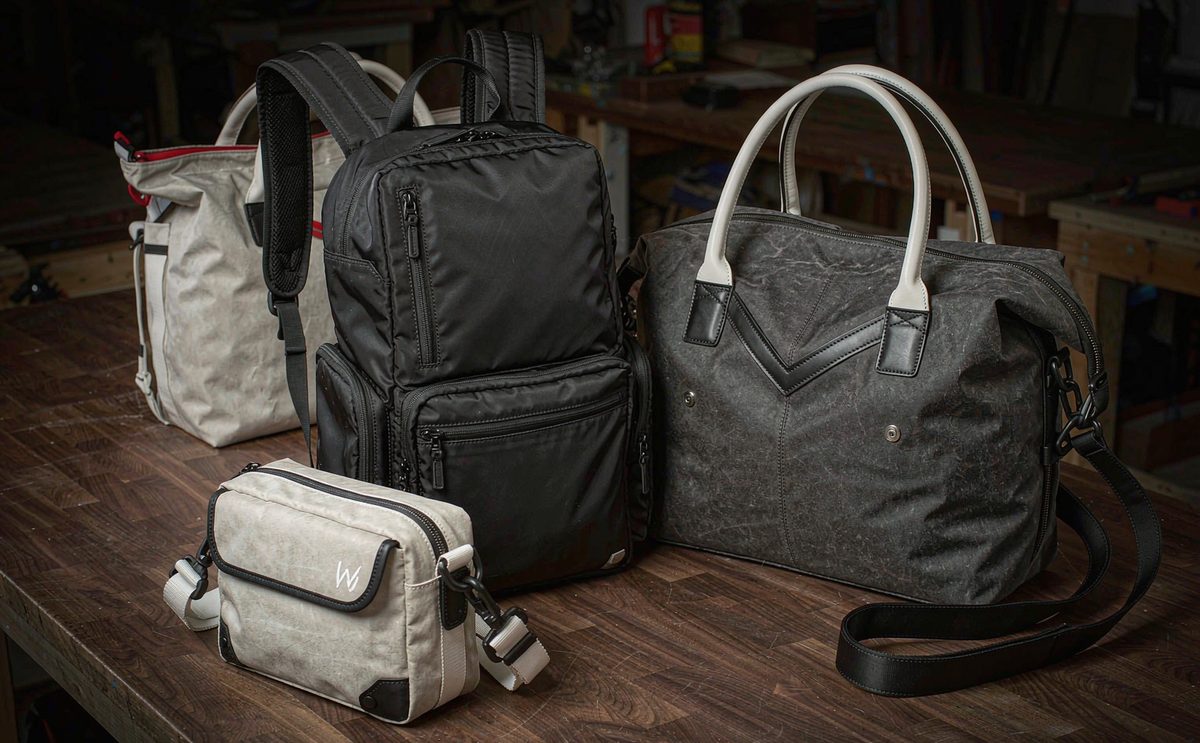
- How to use this category map
- Entry-tier categories: totes, cosmetic bags and pouches
- Mid-tier categories: backpacks, laptop bags and gym bags
- Premium-tier categories: travel, duffel and sports bags
- Choosing a category by campaign type
- MOQ and sampling implications by category
- Freight and dimensional weight by category
- Material fit by category
- Decoration fit by category
- QC priorities that differ by category
- Building a tier ladder across categories
- Where to go next
How to use this category map
This is a navigation page for buyers, not a product catalogue. Each category below is described in terms a purchasing decision actually turns on: how long sampling takes, what drives unit cost, how the shape behaves in a carton, which material and decoration methods it accepts, and where it sits in a pledge ladder. If you already know the shape you want, go straight to the category page. If you are still deciding, read the comparison tables first.
One structural point before the detail. Every category on this page is quoted against the same commercial frame: a 500 pcs minimum per style and colourway, sampling in 6-10 working days or 12-15 for complex builds, production 35-50 days after the deposit and approved pre-production sample, FOB Xiamen terms, T/T 30/70 payment and pre-shipment inspection at AQL 2.5 to ISO 2859-1. The category changes the difficulty of hitting those numbers, not the numbers themselves.
- Minimum order quantity
- 500 pcs per style / colourway
- Sampling
- 6-10 working days; 12-15 for complex builds
- Bulk production
- 35-50 days after deposit + approved pre-production sample
- Inspection
- AQL 2.5 to ISO 2859-1
- Trade term
- FOB Xiamen
- Payment
- T/T 30/70
- Production floor
- 4,950 m² SGS-verified, 137 staff, 7 lines, 149 machines
- Monthly capacity
- 200,000 pcs per month
- Programme contact
- service@junyuanbags.com
Key takeaways for category selection
- Simple flat shapes sample fastest and are the safest entry tier; structured shapes need the 12-15 day window.
- Freight cost tracks packed volume, not weight: a bulky duffel can cost 4-6 times more to ship than a pouch.
- Material and decoration must be chosen together — canvas prints, nylon transfers, vegan leather debosses.
- Structured categories need tighter QC: frame alignment, padding density and load testing, not just stitch count.
- One hero category plus one accessory category is the most reliable pledge ladder across campaigns.
Entry-tier categories: totes, cosmetic bags and pouches
Entry tiers exist to convert a casual visitor into a backer, and they work best when the item is simple, honest and obviously useful. Flat or near-flat constructions dominate for a reason: they sample in the standard 6-10 working day window, they have few components to go wrong, they pack almost flat and they take print beautifully. The commercial risk at this tier is not the product, it is the freight and platform fees eating a low pledge.
Custom tote bags are the workhorse entry reward and the fastest category to quote, because the pattern is simple and the fabric choice does most of the positioning work. Custom cosmetic bags carry a higher perceived value per unit of cost thanks to a zip closure, a wipe-clean lining and a structured base, and they work equally well as an add-on at a higher tier. Small pouches and tech organisers are the cheapest accessory in any set and are frequently cut from marker waste left over from a larger item.
| Category | Development difficulty | Typical sampling | Best use in a ladder |
|---|---|---|---|
| Tote bag | Low | 6-10 working days | Entry tier, eco campaigns, print-led branding |
| Cosmetic bag | Low to medium | 6-10 working days | Entry tier upgrade, add-on, gift positioning |
| Flat pouch / tech organiser | Low | 6-10 working days | Accessory inside a bundle, stretch goal |
| Drawstring bag | Low | 6-10 working days | Lowest-cost tier, event and community campaigns |
Mid-tier categories: backpacks, laptop bags and gym bags
The mid tier is where most campaigns make their money, and it is where development difficulty starts to matter. Backpacks introduce load paths, strap geometry, back-panel padding and often a frame sheet or structured base. Laptop bags add a protective brief and tight dimensional tolerances around device sizes. Gym bags add ventilation, wet compartments and wipe-clean linings. None of these are exotic, but each one adds components that have to be sourced, fitted and inspected.
Custom backpacks remain the most requested category for campaign rewards because they carry an everyday-use story and photograph well. Custom laptop bags convert a professional audience and justify a higher pledge through a protection claim, which means the padding specification has to be real and testable. Custom gym bags work best as a mid-tier option in fitness and lifestyle campaigns where the wet compartment and shoe separation are the selling points.
Premium-tier categories: travel, duffel and sports bags
Premium categories are where a campaign earns a three-figure pledge, and they are also where freight, material cost and QC exposure all rise together. Structured travel bags and large duffels consume fabric, need reinforcement at every stress point, and ship as bulky cartons that attract dimensional-weight pricing. Sports bags sit slightly lower on cost but higher on feature count, which means more components and more inspection variables.
Custom travel bags and custom duffel bags often serve as the hero item in a bundle, paired with a toiletry bag or packing cube set. Custom sports bags are frequently the add-on ladder in a fitness campaign. All three benefit from a single colourway at launch, because the 500 pcs per colourway minimum applied to a large, expensive item is a significant inventory commitment.
| Category | Development difficulty | Typical sampling | Primary cost driver |
|---|---|---|---|
| Backpack | Medium | 6-10 working days | Panel count, padding, strap hardware |
| Laptop bag | Medium | 6-10 working days | Protective structure and device-fit tolerance |
| Gym bag | Medium | 6-10 working days | Lining, ventilation, wet compartment |
| Duffel bag | Medium to high | 10-15 working days | Fabric consumption and reinforcement |
| Travel bag | High | 12-15 working days | Structure, hardware, wheel or frame systems |
| Sports bag | Medium to high | 10-15 working days | Compartment count and feature hardware |
Choosing a category by campaign type
The most reliable way to narrow the field is to start from the audience rather than the object. A sustainability campaign and a photography campaign both want a bag, but they want different bags for different reasons, and the reason should drive the shape. The table maps common campaign types to the category that historically converts best for them.
| Campaign type | Hero category | Accessory category | Why this pairing works |
|---|---|---|---|
| Everyday carry and tech | Backpack | Tech pouch | The pouch solves the cable problem the backpack creates |
| Sustainability and lifestyle | Canvas tote | Cosmetic bag | Both take print well and carry an eco material story |
| Travel and adventure | Travel bag or duffel | Packing cube set | Cubes nest inside the hero and cut packed volume |
| Fitness and sport | Gym bag | Shoe bag or wet pouch | Separation of clean and dirty is the functional claim |
| Professional and work | Laptop bag | Document sleeve | Device fit is the reason to pledge at a higher tier |
| Photography and creative | Backpack with dividers | Lens pouch | Padding and divider layout are the product |
Where a campaign does not fit the table, that is usually a signal worth taking seriously. Categories that recur across successful campaigns recur for mechanical reasons: the accessory solves a problem the hero creates, the pair shares a material, and the set nests into one carton. A pairing that satisfies none of those three is not innovative, it is just expensive to fulfil.
MOQ and sampling implications by category
The 500 pcs minimum is constant across categories, but its financial weight is not. Five hundred flat pouches is a modest commitment; five hundred structured travel bags at a much higher unit cost is a serious one, and it is the reason large categories should launch in a single colourway. The minimum applies per style and per colourway, so a travel bag in two colours is two orders of 500.
Sampling windows diverge more sharply. Flat and near-flat shapes reliably fit 6-10 working days. Anything with a frame, a moulded component, a wheel system or a complex internal divider structure should be planned at 12-15 working days, and should carry one correction round in the schedule. That difference is only a week on paper but it is the week that decides whether bulk starts before or after a campaign closes. Details are on the sample prototyping page.
In a mixed catalogue, always schedule sampling for the most complex category first. Simple items can be slotted in later with no risk; a structured item that starts late pushes the entire 35-50 day bulk window and delays every other SKU.
Freight and dimensional weight by category
Freight is the category difference buyers underestimate most. Carriers bill on the greater of actual and dimensional weight, and bags are a category where dimensional weight almost always wins. The spread between a flat pouch and a structured travel bag is not marginal: on an express or air route the bulky item can cost several times more per unit to move, which changes the landed cost arithmetic of the whole tier ladder.
| Category | Packed volume profile | Freight exposure | Mitigation |
|---|---|---|---|
| Flat pouch | Very low, ships almost flat | Lowest | Nest inside the hero item during transit |
| Tote bag | Low, compresses well | Low | Fold-flat packing, minimal void fill |
| Cosmetic bag | Low to medium | Low to medium | Nest or stack in a single carton layer |
| Backpack | Medium, partially compressible | Medium | Compress straps, pack body-flat |
| Laptop bag | Medium, rigid panel | Medium to high | Avoid oversized cartons on rigid items |
| Gym bag | Medium to high | Medium to high | Collapsible construction where the design allows |
| Duffel bag | High | High | Roll or fold packing; consider sea freight |
| Travel bag | Highest, often rigid | Highest | Size the carton to the closed item, quote sea freight |
The practical rule is to quote freight from a physically packed carton rather than from a nominal specification. Build one unit, pack it the way it will ship, measure the closed carton and quote from that. A carton 3 cm oversized on each axis can add 20-30% to an express shipment. Freight interacts directly with the rewards fulfilment plan and should not be decided after the product is locked.
Material fit by category
Material and shape constrain each other. A fabric that performs on a structured travel bag may be entirely wrong for a soft tote, and choosing material before category — or vice versa — produces a specification that cannot be costed honestly. The table below is a starting grid; the deeper comparison of canvas, nylon, recycled and vegan leather grades sits on the material customisation page.
| Category | Primary material | Alternative | Note |
|---|---|---|---|
| Tote bag | Cotton canvas 10-16 oz | Recycled canvas or rPET | Heavier canvas adds structure without interfacing |
| Cosmetic bag | Coated polyester or nylon | Vegan leather | Wipe-clean lining is the functional requirement |
| Backpack | Nylon 420-900D or recycled rPET | Coated canvas | Abrasion resistance drives the denier choice |
| Laptop bag | Nylon or polyester with padding | Vegan leather panels | Padding density must support the protection claim |
| Gym bag | Coated polyester | Nylon with mesh panels | Ventilation and moisture management matter |
| Duffel bag | Nylon or canvas | Coated fabric for wet compartments | Base reinforcement is the common failure point |
| Travel bag | Nylon or recycled rPET | Vegan leather trims | Structure and hardware dominate the unit cost |
Two cautions. First, availability at volume: an unusual fabric that looks perfect in a swatch may have a mill minimum or a lead time that does not fit the campaign, so confirm availability before the material goes into the tech pack. Second, documentation: any recycled content claim on the campaign page needs substantiation, typically a GRS transaction certificate, and any skin-contact fabric benefits from OEKO-TEX Standard 100.
Decoration fit by category
Decoration is where category and material meet the brand. Canvas and flat panels take screen print well and keep the unit cost low; nylon and coated fabrics generally need heat transfer, patches or woven labels; vegan leather and PU panels are the natural home of deboss and emboss. Embroidery is the premium option on structured categories and is the standard choice wherever the reward needs to read as durable rather than printed.
- Tote and flat pouch: screen print, water-based ink, or a woven label on the side seam.
- Cosmetic bag: woven label, debossed vegan leather patch, or a small embroidery.
- Backpack: embroidery on the front panel, heat transfer on coated fabrics, custom zipper pullers.
- Laptop bag: debossed patch or metal plate for a restrained professional look.
- Gym and sports bags: heat transfer for gradients, screen print for flat panels.
- Duffel and travel bags: embroidery plus a metal plate, with matching hardware finish.
Keep the logo system consistent across a multi-category catalogue. One method, one placement logic and one colour reference across every item is what makes a set look designed. The full method-by-material compatibility grid is on the print and embroidery page.
QC priorities that differ by category
Every category is inspected at AQL 2.5 to ISO 2859-1, but the defect types a buyer should worry about are category-specific. Inspecting a tote the way you inspect a travel bag wastes attention on stitch counts and misses the frame alignment that actually generates returns. The list below sets the priority check for each family.
- Tote and pouch: handle attachment strength, print registration and adhesion, seam slippage under load.
- Cosmetic bag: zipper smoothness, lining seam integrity, wipe-clean coating consistency.
- Backpack: strap attachment and bar-tack placement, back-panel padding, load test at the stated capacity.
- Laptop bag: device-fit tolerance, padding density and compression recovery, closure reliability.
- Gym bag: ventilation panel attachment, wet compartment seam sealing, odour and coating consistency.
- Duffel and travel bag: base reinforcement, hardware function under load, frame or wheel alignment.
Handle and strap attachment deserves a specific note, because it is the single most common field failure across every category and the one most likely to generate a backer complaint months after delivery. Specify a bar-tack or box-stitch at every handle and strap junction, state the stitch count in the tech pack, and make it an explicit line item in the inspection checklist. The full protocol is on the QA and QC page.
Building a tier ladder across categories
A tier ladder is a sourcing plan before it is a marketing artefact. Each tier adds a SKU, and each SKU adds a 500 pcs minimum, an inspection, a carton and a pick operation at the warehouse. The most reliable structure across campaigns we support is one hero category plus one accessory category, with a third item only if it solves a problem the first two create.
| Tier | Contents | Role | Sourcing note |
|---|---|---|---|
| Entry | Tote or pouch, printed | Converts casual visitors | Lowest unit cost, flattest carton, safest volume |
| Mid | Hero backpack or gym bag | The volume and margin driver | Sample first; everything else follows its schedule |
| Premium | Hero plus organiser or cosmetic bag | Raises average pledge value | Share the hero fabric and hardware finish |
| Add-on | Pouch or cube set | Post-campaign uplift | Reserve production capacity in the main run |
The 500 pcs minimum is per style and per colourway. A three-category ladder offered in two colours is six SKUs at 500 pcs each, or 3,000 units. Launch one colourway and hold the second as a stretch goal so it becomes a second production run rather than a mid-run change.
Where to go next
Pick a starting point by the tier you are designing for, then read the category page for the commercial detail — dimensions, material bands, hardware options, sampling window and inspection priorities. If the shape is still open, the fastest route is to send the campaign positioning, the target pledge price and the delivery window, and ask for two or three category recommendations with a costed comparison.
Backpacks
The most requested hero category for everyday carry and tech campaigns.
Travel bags
Premium tier hero items with structure, hardware and higher freight exposure.
Tote bags
Fastest to quote, flattest to ship, strongest for sustainability stories.
Duffel bags
High-volume premium category that pairs with a toiletry or shoe bag.
Gym bags
Fitness and lifestyle campaigns, ventilation and wet compartment led.
Laptop bags
Professional audiences, device-fit tolerance and protective padding.
Sports bags
Feature-rich add-on category with compartment and hardware count.
Cosmetic bags
High perceived value per unit of cost, works as tier upgrade or add-on.
Support pages matter as much as the category pages. Material customisation and print and embroidery determine what the chosen shape can actually carry; low MOQ production covers how to plan around the 500 pcs minimum; and campaign bag manufacturing sets out the full programme from brief to shipment.
Get a category recommendation and quotation
Send your campaign positioning, target pledge price, expected volume and delivery window. As your sourcing partner we will recommend two or three categories with a costed comparison, a sampling schedule and a freight-accurate landed cost at 500 pcs. Email service@junyuanbags.com or use the quote form.
- Custom bags for Kickstarter
- Material customisation for Kickstarter bags
- Print and embroidery for custom bags
- Low MOQ bag production for creators
- Crowdfunding bag sample prototyping
- Kickstarter campaign bag QA and QC
- Crowdfunding rewards fulfilment
- Indiegogo crowdfunding bags
Frequently Asked Questions
Which bag category is best for a first Kickstarter campaign?
A flat or near-flat shape such as a tote or pouch. It samples in 6-10 working days rather than 12-15, has few components to fail, packs almost flat and takes print well. That keeps the 500 pcs minimum financially manageable and leaves the most schedule slack for the 35-50 day bulk window.
What is the minimum order quantity for each bag category?
The minimum is 500 pcs per style and colourway across every category, from a flat pouch to a structured travel bag. What changes is the financial weight: 500 flat pouches is a modest commitment, while 500 structured travel bags at a much higher unit cost is a significant one.
How long does sampling take for a structured travel bag?
Plan 12-15 working days for structured categories with frames, moulded parts, wheel systems or complex internal dividers, against 6-10 working days for flat shapes. Budget one correction round on top. In a mixed catalogue, always sample the most complex category first because it sets the bulk start date.
Which bag category has the highest freight cost?
Structured travel bags carry the highest exposure, followed by duffels. Carriers bill on dimensional weight and bags are bulky relative to their mass, so one travel bag can cost 3-5 times more to move than a flat pouch. A carton 3 cm oversized on each axis adds roughly 20-30% to express cost.
Can one campaign source more than one bag category?
Yes, and most do. The reliable structure is one hero category plus one accessory category, sharing a body fabric, a hardware finish and a logo system. Each additional category adds a 500 pcs minimum, an AQL 2.5 inspection and a carton, so a fourth SKU rarely pays for itself.
Which material suits a backpack reward best?
Nylon in the 420-900D range or a recycled rPET equivalent, chosen for abrasion resistance at the base and strap contact points. Coated canvas is a credible alternative for a lifestyle positioning. Whichever is chosen, confirm mill availability at volume before the material enters the tech pack.
How does QC differ between a tote and a backpack?
Both are inspected at AQL 2.5 to ISO 2859-1, but the priority checks differ. A tote is judged on handle attachment strength, print registration and seam slippage. A backpack adds strap bar-tacks, back-panel padding and a load test at the stated capacity, which is a functional rather than cosmetic failure mode.
Should a campaign launch a bag in more than one colourway?
Usually not. The 500 pcs minimum is per style and per colourway, so two colours is two orders. Two colourways across a three-category ladder is 3,000 units. Launch one colourway and hold the second as a stretch goal so it becomes a second production run rather than a mid-run change.
What decoration method works on each bag category?
Canvas totes and flat pouches take screen print well, typically at USD 40-120 per screen colour. Nylon and coated fabrics need heat transfer, patches or woven labels. Vegan leather and PU panels suit deboss tooling at USD 120-400. Embroidery, digitised at USD 80-250, is the premium choice on structured bags.
How do I choose between a duffel bag and a travel bag for a premium tier?
A duffel is softer, lighter, cheaper to make and cheaper to ship, and suits fitness and weekend positioning. A travel bag carries structure, hardware and a higher perceived value, but samples in 12-15 working days and has the highest freight exposure. Choose by whether the premium claim is function or volume.
Do all categories use the same payment and trade terms?
Yes. Every category is quoted FOB Xiamen with T/T 30/70 payment — 30% deposit to release materials and tooling, 70% balance before shipment. production 35-50 days after the deposit and the approved pre-production sample, with pre-shipment inspection at AQL 2.5 to ISO 2859-1.
What information should I send to get a category recommendation?
Send the campaign positioning, target pledge price, expected backer volume, destination market and delivery window. With those five data points a sourcing partner can recommend two or three categories with a costed comparison covering unit cost at 500 pcs, sampling window and freight exposure.
People Also Ask
Which custom bag type sells best on Kickstarter?
Backpacks are the most requested hero category because they carry an everyday-use story and photograph well, but the best-selling type depends on the audience. Tech campaigns convert on backpacks, sustainability campaigns on canvas totes, fitness campaigns on gym bags.
How many bag types should one campaign offer?
Two is usually optimal: one hero category and one accessory that solves a problem the hero creates. Three works if the third shares fabric and hardware with the first two. Beyond three, the added SKUs cost more in inventory and freight than they earn in pledge uplift.
Are tote bags too cheap for a premium reward tier?
Not if the material does the work. A 16 oz canvas tote with a zip top, lined interior, leather-trim handles and a debossed patch can support a genuinely premium pledge. The shape is simple; the specification is what sets the perceived value.
What is the difference between a gym bag and a duffel bag?
A gym bag is smaller, usually 20-35 litres, with ventilation and a wet compartment. A duffel is larger, 40-70 litres, and is built for travel rather than daily training. The duffel consumes more fabric and ships in a bulkier carton.
Can I source a laptop bag and a backpack together?
Yes, and they share material and hardware well. Keep the device-fit tolerance explicit on the laptop bag, since that is the functional claim, and use the same body fabric and hardware finish on both so the pair reads as a designed set.