Bag Sampling and Prototyping for Crowdfunding
How long does it take to turn a sketch into a sample you can film? With a complete tech pack, our production team returns a reviewable prototype in 6-10 working days, rising to 12-15 for complex builds with moulded shells, welded seams or custom hardware. The approved pre-production sample is then the second of two triggers, alongside the T/T 30 deposit, that starts the 35-50 day bulk window. Sampling is also the only stage where changing the design costs nothing, which is why the review should be structured, written and tied to a specific clause.
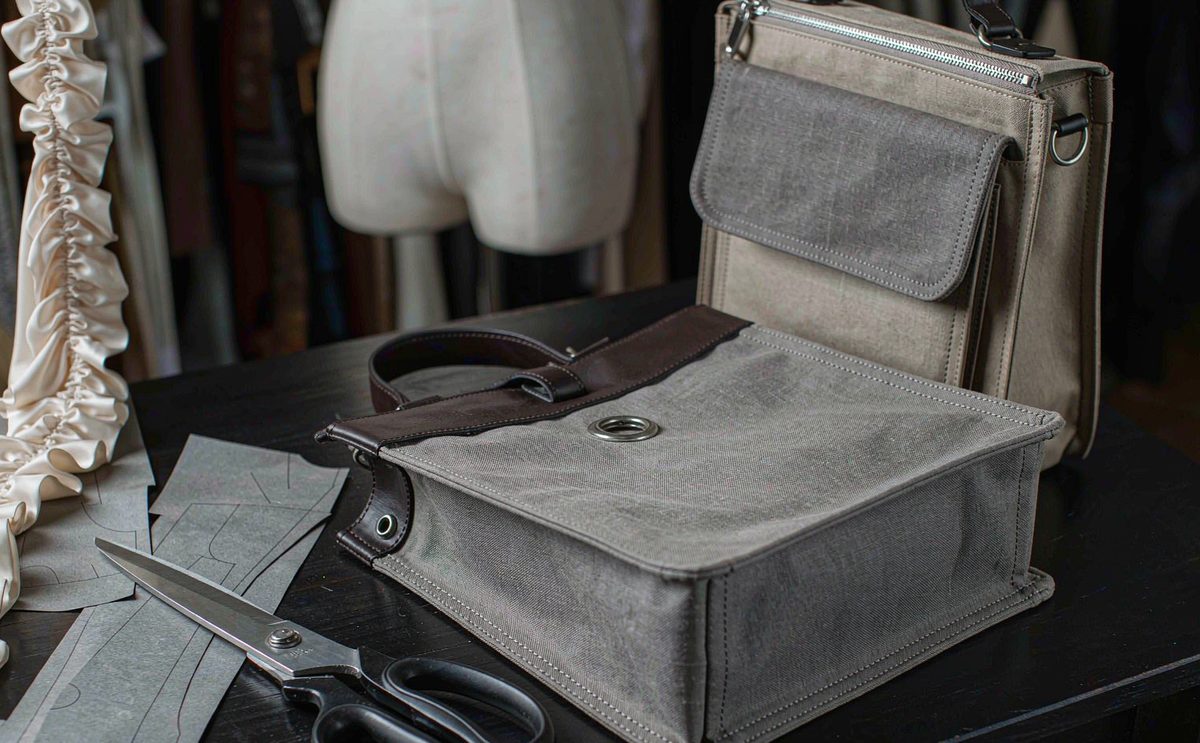
- What a prototype has to prove before the campaign goes live
- The sampling sequence: sketch, tech pack, prototype, PPS
- Writing a tech pack that gets quoted in a single round
- Choosing body fabric, lining and interlining for the sample
- Hardware, zips and trim decisions that reshape the sample
- Pattern making, grading and the tolerances worth writing down
- Inside the 6-10 working days of sampling window
- When a build becomes complex: the 12-15 working day path
- Running a structured sample review
- Revision loops and change control
- What sampling costs and how to budget the line
- Testing and compliance checks before design freeze
- Golden sample, PPS sign-off and the production freeze
- Photography, video and claim substantiation
- Sampling failure modes seen on campaign bags
- Verifying that the approved sample matches bulk intent
Sampling is where a campaign bag stops being an idea and starts being a costed, testable object. It is also the most compressed stage in the whole programme: 6-10 working days from an approved tech pack to a reviewable prototype, or 12-15 working days when the build involves moulded shells, welded seams, laminated panels or bespoke hardware. Everything that follows, including the 35-50 day bulk window, depends on what this stage produces.
Key takeaways
- A prototype has to prove construction, capacity, weight and compliance, not just look right on a table.
- Sampling runs 6-10 working days from an approved tech pack; complex builds take 12-15 working days.
- The approved pre-production sample is one of two triggers for the 35-50 day bulk window, the other being the T/T 30 deposit.
- A tech pack that specifies fabric weight, seam type, hardware grade and tolerances gets quoted in one round instead of three.
- Change control matters: every revision after the pre-production sample costs calendar days that come straight out of the delivery promise.
- Testing should run in parallel with sampling, using certified inputs to OEKO-TEX Standard 100 or GRS where possible.
- A golden sample, sealed and dated, is the reference the AQL 2.5 inspection is judged against.
What a prototype has to prove before the campaign goes live
A prototype carries four burdens. It has to prove that the construction survives the load the campaign claims, that the internal volume matches the stated capacity, that the empty weight sits within the figure in the reward copy, and that the materials can pass the compliance testing required in the destination market. A sample that looks right but fails any one of these will cost far more to fix after launch than before it.
Capacity claims are the most common failure. A 25-litre claim printed on a campaign page needs to be verified by measurement, not by eye, because internal volume including pockets behaves differently from the external silhouette. Weigh the empty sample on the same scale you will use for the specification sheet, and record both figures in the tech pack so they can be checked again against bulk.
Load testing is the second burden. Fill the sample to the claimed capacity with a representative weight, hang it for a defined period, and inspect strap attachment points, seam ends and zip stops. This is not destructive testing and it does not need a laboratory, but it does need to happen before the design freeze rather than after. The Kickstarter campaign bag QA and QC page lists the checks used on campaign lots.
The sampling sequence: sketch, tech pack, prototype, PPS
Four artefacts define the stage. The sketch fixes intent; the tech pack converts intent into a written, quotable specification; the prototype is the first physical build made to that specification; and the pre-production sample is the revised build that is approved in writing and becomes the reference for bulk. The distinction between prototype and PPS matters commercially, because only the latter releases production.
In practice most first campaigns run one prototype round and one PPS round. The prototype surfaces the construction problems that no drawing reveals: panel tension, webbing angles, lining bulk at corners, and whether the zip garage actually covers the slider. The PPS then incorporates the corrections and, once approved, freezes the design.
Creators who skip the PPS round and approve the first prototype are the ones who discover a problem in inspection, which is the most expensive possible place to find it. The crowdfunding bag guide places these four artefacts inside the eight-stage programme sequence.
| Artefact | What it fixes | Commercial weight |
|---|---|---|
| Sketch or design intent | Silhouette, proportions, feature list | Internal only |
| Tech pack | Materials, dimensions, tolerances, hardware, packing | Quotable and contractual |
| Prototype | First physical build; surfaces construction faults | Review and revision |
| Pre-production sample (PPS) | Corrected build approved in writing | Releases the bulk window |
| Golden / sealed sample | Dated physical reference retained | Basis for AQL 2.5 comparison |
Writing a tech pack that gets quoted in a single round
The tech pack is the difference between a quotation that arrives in two days and one that takes three rounds. It needs external dimensions with tolerances, internal volume with the method used, fabric specification by weight and finish, lining specification, interlining and foam placement, webbing width and material, hardware grade and finish, thread specification, stitch density, seam type at each construction point, and the packing instruction.
Two fields are most often missing and most often cause a re-quote. The first is seam type: a plain seam, a bound seam and a taped seam differ in labour, in material and in water resistance, and a quotation cannot be built without knowing which applies where. The second is hardware grade, because a branded zip and an unbranded equivalent differ in price and in lead time, and the difference is not visible in a drawing.
The packing instruction is the third. Polybag, hangtag, tissue, carton quantity and carton specification all sit inside the unit price, and getting them wrong at quotation stage produces a number that moves later. A campaign bag specialist will ask for all three fields; a partner who does not is quoting a guess.
The fields that most often trigger a second RFQ round
- Seam type not specified at each construction point, so labour cost cannot be built.
- Hardware described by appearance rather than by grade, finish and supplier reference.
- Packing instruction omitted, so polybag, hangtag and carton specification come later as extras.
- Tolerance absent, so a dimensional dispute has no written reference to resolve it against.
- Lining and interlining unspecified, leaving the sample structurally different from the quotation.
Choosing body fabric, lining and interlining for the sample
Fabric selection drives cost, compliance and lead time together. A certified input removes most of the testing burden: fabric certified to OEKO-TEX Standard 100 covers restricted substances, and recycled content certified to GRS supports a recycled claim with a chain of custody. Choosing certified stock at sampling stage is usually cheaper than choosing uncertified stock and testing it afterwards.
Lining matters more than its share of the bill suggests. A lining that is too light puckers at internal seams and wears through at the base; a lining that is too heavy adds bulk at corners and stiffens the silhouette. Specify by weight and finish, and sample it in the actual construction rather than judging it as a swatch. Interlining and foam placement then decide whether the panel holds its shape after transit.
Where a performance claim is made, name the test method. ASTM D5034 is the standard reference for grab and tear testing of woven fabrics, and citing it in the specification removes an argument later about how a figure was obtained. Our production team flags any claim that needs a named method before the specification is frozen.
Hardware, zips and trim decisions that reshape the sample
Hardware is the longest lead-time item in most bag programmes and the one most likely to move the sampling window. A stock zip in a standard length can be sourced in days; a custom pull with branded tooling may carry a 3,000-piece equivalent minimum and several weeks of tooling time. Decide early whether the campaign needs custom hardware at all, because for a 500-pcs run the answer is often no.
Finish is the other variable. A matte black coating, an antique brass plating or a gunmetal finish each carry a different minimum and a different abrasion performance. Ask for the plating specification and, where the piece will contact fabric or skin, for the relevant nickel-release or heavy-metal test. This is a common failure point in EU shipments under REACH.
Trim items sit underneath the same logic. Woven labels usually carry a 1,000-pcs minimum and printed care labels around 500 pcs, which is why they are normally neutral at the standard MOQ of 500 pcs per style and colourway. Confirm the trim minimum schedule with the quotation rather than discovering it after the artwork is signed off. The low MOQ bag production pillar covers the arithmetic in detail.
A bespoke zip pull or buckle can add weeks for tooling and carries its own minimum. For a 500-pcs first run, stock hardware with a custom finish is usually the better trade.
Pattern making, grading and the tolerances worth writing down
Pattern making converts the drawing into the flat pieces that get cut, and grading scales those pieces across the size range if there is one. This is where small decisions compound. A panel that is 3 mm short changes the tension across the whole assembly; a dart that is misplaced by 5 mm changes how the lining sits. Neither is visible in a rendering, and both are obvious in the hand.
Tolerances should be written, not implied. A general tolerance of plus or minus 5 mm on external dimensions is workable for soft goods and gives both sides a reference if a bulk piece differs from the approved sample. Tighter tolerances are achievable but cost more in cutting waste and operator time, so specify them only where the function requires it, such as a laptop sleeve opening.
Marker efficiency improves with quantity. Once a marker is optimised across a full size range rather than a single sample size, the metres consumed per piece fall, which is one reason the unit-cost curve behaves the way it does on the custom laptop bags and backpack formats where panel count is high.
Inside the 6-10 working days of sampling window
The window starts when the tech pack is approved, not when it is sent. Days one and two cover material sourcing and confirmation of the hardware schedule. Days three and four cover pattern making, marker preparation and cutting the first set. Days five to seven cover assembly by a senior operator working the reference from start to finish. Days eight to ten cover internal review, measurement and photography for the submission.
The reason it works at this speed is that a 500-pcs programme does not need a pilot line: it needs one skilled operator, one pattern and a small cutting run. Seven lines and 149 machines mean a prototype can be built without interrupting scheduled bulk, which is the practical constraint that slows sampling at some partners.
What stalls the clock is ambiguity. If the fabric is described rather than specified, sourcing takes longer than assembly. If the hardware has no reference, the search starts from zero. The fastest way to protect a 6-10 day window is to send a complete pack with supplier references on day one.
| Days | Activity | Output |
|---|---|---|
| 1-2 | Material sourcing and hardware schedule confirmation | Confirmed material list with lead times |
| 3-4 | Pattern making, marker preparation, cutting first set | Cut panels ready for assembly |
| 5-7 | Assembly by a senior operator, end to end | First physical prototype |
| 8 | Internal measurement and construction review | Measurement report against the tech pack |
| 9-10 | Photography and submission to the creator | Sample images and review notes |
| 12-15 | Complex path: tooling, welding or moulding cycles | Revised prototype for complex builds |
When a build becomes complex: the 12-15 working day path
A build moves onto the 12-15 working day path when it needs something beyond cut and sew. Moulded EVA shells require tooling and a curing cycle. Welded or high-frequency seams require jig setup and parameter trials. Laminated or coated technical panels may need a bonding trial before the assembly sequence is fixed. Each adds calendar time that cannot be compressed by adding operators.
Multi-material shells behave similarly. A bag combining a rigid back panel, a soft body and a welded pocket is effectively three constructions joined together, and the interface between them is where prototypes fail. Budget the extra days and, more importantly, budget an extra review round, because the first attempt at a mixed-material interface rarely succeeds.
Custom hardware is the fourth trigger. If the design needs a bespoke buckle, pull or cam, tooling time sits outside the sewing window entirely and has to be added in parallel. The practical advice is to run tooling and prototype development concurrently rather than sequentially, which usually recovers a week.
Running a structured sample review
Unstructured review is the reason sample rounds multiply. A creator who says it feels wrong forces a guess; a creator who says the shoulder strap attachment sits 15 mm too high and the lining bunches at the base corner produces a fixable instruction. Structure the review around the tech pack fields, in order, and write every observation against a specific clause.
Work through dimensions first, then construction, then material behaviour, then finish and hardware, then packing. Photograph every observation from a fixed distance with a scale in frame. Number the images to match the written notes. This takes an hour and it is the cheapest hour in the programme, because it converts opinion into a specification change.
A written review also protects the schedule. When observations are numbered, photographed and tied to a specific clause, the correction can be quoted and scheduled the same day. When they are not, the next round opens with a meeting to work out what was meant, and that meeting is measured in days the campaign does not have.
Then separate must-fix from nice-to-have. Every change after the pre-production sample costs calendar days, and a campaign running to a published delivery month has a limited number of those. Our programme coordinators recommend fixing anything structural or compliance-related and deferring anything cosmetic to the re-order.
Review against the tech pack clause, photograph each point with a scale, and rank changes as must-fix or defer. Every revision after PPS approval takes days out of the delivery promise.
Revision loops and change control
Change control is the discipline of recording what changed, when, why and at whose instruction. It sounds administrative, and it is the single most useful document in a dispute. A dated revision log showing that the webbing width moved from 25 mm to 20 mm at the creator's request on a specific date resolves in minutes what would otherwise take weeks.
Log revisions with a version number, a date, the clause affected, the instruction source and the reason. Circulate the log with each sample round. When the pre-production sample is approved, the log closes, and that closed version is what bulk is made to. Any change after that point is a change order, not a revision, and it carries both a cost and a schedule impact.
Change orders after production starts are the most damaging category. Rework on a running line displaces other references, and material already cut cannot be uncut. This is why the sampling stage exists: it is the period during which change is free.
What sampling costs and how to budget the line
Sampling costs fall into three buckets: the sample build charge, which covers pattern development and skilled operator time; material and trim procurement for the sample, which includes the mill minimum if the stock is not held; and courier cost for shipping the sample for review. Ask which of these are refundable against a bulk order, because practice differs.
Budget two rounds rather than one for a complex build. A first prototype plus a corrected PPS is the normal pattern, and planning for it removes the temptation to approve a sample that is not ready. Where custom tooling is involved, budget the tooling separately, since it is a one-off capital charge rather than a per-piece cost.
The comparison a creator should make is not between paying for sampling and not paying for it, but between a controlled development cost and an uncontrolled bulk remedy. A rejected lot at 500 pcs has to be re-made, re-inspected and re-booked onto a later vessel, and it puts the published delivery month at risk. Two planned sample rounds, each with a written review and a closed revision log, cost a fraction of that and produce a specification the line can actually build.
The comparison to make is not sample cost against zero, but sample cost against a failed bulk lot. At 500 pcs with 200,000 pcs of monthly capacity behind the programme, a rejected lot costs the delivery month, the backer relationship and the re-order. Two sample rounds is a small premium against that. The contact and quote page sets out what to send to get a sampling quotation.
Testing and compliance checks before design freeze
Compliance is tested against the material set, not the drawing, so it can only be completed once the sample exists. United States shipments fall under CPSIA, with Prop 65 warnings added for California. European Union shipments require REACH, and from late 2024 the General Product Safety Regulation adds a named responsible economic operator and a technical file.
Running testing in parallel with sampling rather than after it saves weeks. Send the declared material set for assessment as soon as the specification is frozen, and use certified inputs so that the assessment is a documentation exercise rather than a laboratory programme. Where a figure is quoted on the campaign page, name the method: ASTM D5034 for grab and tear testing of woven fabrics.
Retain the reports in the technical file with the approved specification and the sealed golden sample. Those three artefacts are what an enforcement request or a marketplace compliance check will ask for, and reassembling them later is far harder than keeping them together.
Golden sample, PPS sign-off and the production freeze
The golden sample is the approved pre-production sample, sealed, dated and retained by both sides. It is the physical reference against which the bulk lot is judged at inspection to AQL 2.5 under ISO 2859-1. Without a retained reference, inspection becomes a discussion about memory, which is a discussion the creator does not win.
Sign-off should be explicit: a written approval naming the sample version, the date and the specification revision it was built to. A verbal approval, or an email that says looks good, leaves the freeze ambiguous. The freeze is what converts the design into the production instruction, and it needs to be unambiguous because it is the point after which change costs money.
Once the freeze is in place and the T/T 30 deposit is received, the 35-50 day bulk window starts. Those two events, not the campaign close, are what determine the ex-factory date. The crowdfunding rewards fulfilment pillar maps that window onto actual ship dates.
Photography, video and claim substantiation
One of the practical reasons to sample before launch is that the campaign page is built from the sample, not from a rendering. That creates an obligation: whatever appears in the photography has to match what ships. If the prototype is hand-finished in a way bulk will not replicate, do not photograph it that way.
Claims need a document behind them. A capacity figure, a weight figure, a recycled-content percentage and a water-resistance statement each need a measurement or a certificate. GRS supports recycled content, OEKO-TEX Standard 100 supports restricted substances, and a named test method supports a strength figure. Keep the documents with the technical file.
There is also a QC angle. The photographs used on the campaign page become the visual standard the inspection team works to, so shooting the sample from fixed angles with consistent lighting makes later comparison easier. It costs nothing at sampling stage and it prevents arguments at release.
| Document | Purpose | Standard or reference |
|---|---|---|
| Approved specification | Contractual basis for the build | Signed and dated tech pack |
| Approved pre-production sample | Physical reference for inspection | Sealed golden sample |
| Restricted substances report | Market access in the EU and US | REACH, CPSIA, OEKO-TEX Standard 100 |
| Recycled content certificate | Substantiates a recycled claim | GRS |
| Strength or abrasion test | Substantiates a performance figure | ASTM D5034 |
| Transit test report | Substantiates packaging performance | ISTA 3A |
| Inspection release report | Releases the T/T 70 balance | AQL 2.5 to ISO 2859-1 |
Sampling failure modes seen on campaign bags
The first failure mode is sampling a material that cannot be bought at the production quantity. A beautiful fabric sourced as a 20-metre sample may have a mill minimum that makes no sense at 500 pcs, or a lead time that breaks the calendar. Confirm availability and minimum before the sample is approved, not after.
The second is a prototype built by a different method than the line will use. A senior operator can hand-feed a corner that a production machine will struggle with. Ask how the prototype was assembled and whether the sequence is reproducible at speed. The third is approving the sample without measuring it, which means every dimensional clause in the tech pack is unenforced.
The fourth is treating the sample as final before compliance assessment, and the fifth is shipping the golden sample to a photographer and never getting it back. Keep the sealed reference on file; that is its entire job.
Backers respond to proof, not promises: a photographed, measured, tested prototype does more conversion work than any render.
Kickstarter Creator Handbook
Verifying that the approved sample matches bulk intent
The most dangerous sample is the one that was built correctly but not built the way bulk will be. A prototype made from stock fabric rather than the production dye lot will differ in shade and hand feel; one assembled with substitute hardware will differ in weight and finish; one packed in a prototype carton tells you nothing about the parcel that backers receive. Each of these substitutions is reasonable during development and dangerous at approval.
Ask four questions at PPS review. Is the body fabric from the production lot, with the certificate number recorded? Is the hardware the production reference and finish, not an equivalent? Is the trim, including woven labels and printed care labels, from the approved artwork and the actual run? Is the packing identical to the specification, including polybag, insert, carton quantity and label placement?
Record the answers with the sealed golden sample and the dated revision log. Those three artefacts together are what the inspection compares the finished lot against, and inspection to AQL 2.5 under ISO 2859-1 can only be as good as the reference it is judged against. A vague reference produces a vague release decision, and a vague release decision is how a campaign ships a problem.
| Check | What to record | Why it matters |
|---|---|---|
| Body fabric | Production lot reference and certificate number | Shade and hand feel must match bulk |
| Lining and interlining | Specified weight and finish, placed as drawn | Structure differs from sample if substituted |
| Hardware | Production reference, grade and finish | Weight and abrasion performance change |
| Trim and labels | Approved artwork, actual run quantity | Colour match and compliance content |
| Packing | Polybag, insert, carton quantity, label placement | Determines parcel weight band and scannability |
| Golden sample | Sealed, dated, held by both sides | Physical reference for AQL 2.5 comparison |
- Crowdfunding rewards fulfilment for bags
- Kickstarter campaign bag QA and QC
- Custom bag categories
- Regional service by destination
- Custom duffel bags for Kickstarter
- Custom cosmetic bags for Kickstarter
- Campaign bag blog
- Request a quotation
Route the rest of your programme
Sampling sits between specification and production, and both neighbours constrain it. If the quantity commitment is not yet fixed, resolve that first, because the sample has to be built to a run the line can actually schedule. If the question is what happens after the golden sample is sealed, that is a fulfilment question rather than a prototyping one.
Low MOQ bag production
How the 500-pcs-per-colourway floor is built, and how unit cost behaves as quantity rises.
Custom bags for Kickstarter
Cost architecture, material specification discipline and RFQ standards for a campaign bag programme.
Rewards fulfilment
What happens after the sealed sample: freight mode, duty treatment, 3PL routing and backer parcels.
Format routes worth sampling first
Some formats reward early sampling more than others. Anything with a rigid panel, a laptop compartment or a moulded base benefits from a physical build, because the interface between soft and rigid parts is where drawings mislead. Simpler formats can be validated with fewer rounds, which is useful when the calendar is tight.
- Custom backpacks for Kickstarter
- Custom laptop bags for Kickstarter
- Custom camera bags for Kickstarter
- Custom travel bags for Kickstarter
- Custom duffel bags for Kickstarter
- Custom dry bags for Kickstarter
- Custom sling bags for Kickstarter
- Custom bag categories
Sampling and production parameters
- Standard sampling window
- 6-10 working days from approved tech pack
- Complex build window
- 12-15 working days
- Bulk production
- 35-50 days after deposit and approved PPS
- Minimum order quantity
- 500 pcs per style and colourway
- Inspection standard
- AQL 2.5 to ISO 2859-1
- Trade terms
- FOB Xiamen
- Payment terms
- T/T 30/70
- Production floor
- 4,950 m2, SGS-verified
- Workforce and equipment
- 137 staff, 7 lines, 149 machines
- Monthly capacity
- 200,000 pcs
- Operating since
- 2014, with trade roots since 2004
- Campaign experience
- 20+ crowdfunding campaigns supported
Turn the sketch into a sample you can film
Send the drawings, dimensions and material direction. Our production team will confirm the tech pack fields, quote the sampling round and book the 6-10 working day window. Email service@junyuanbags.com or message WhatsApp +86 177 5002 0688, or start on the quote request page.
Frequently Asked Questions
How long does bag sampling take for a crowdfunding campaign?
Standard sampling takes 6-10 working days from an approved tech pack to a reviewable prototype. Complex builds involving moulded EVA shells, welded seams, laminated panels or bespoke hardware take 12-15 working days. The clock starts when the specification is approved, not when it is first sent, so a complete first submission protects the date.
What is the difference between a prototype and a pre-production sample?
The prototype is the first physical build made to the specification, and its job is to surface construction faults that no drawing reveals. The pre-production sample is the corrected build that you approve in writing. Only the PPS releases the bulk window, together with the T/T 30 deposit, starting the 35-50 day production run.
What should a bag tech pack contain?
It needs external dimensions with tolerances, internal volume with the method used to measure it, fabric by weight and finish such as 600D polyester with a PU coating, lining, interlining and foam placement, webbing width and material, hardware grade and finish, thread specification, stitch density, seam type at each construction point, and the packing instruction. Missing seam type and hardware grade cause the most re-quotes.
How many sample rounds should I budget for?
Budget 2 rounds: one prototype and one corrected pre-production sample. That is the normal pattern for a first campaign. Complex builds with mixed materials or custom hardware may need a third, because the interface between rigid and soft parts rarely succeeds on the first attempt. Budgeting two removes the pressure to approve early.
When should I start sampling relative to the campaign launch?
Start early enough that the approved PPS exists before launch. That means roughly 2 weeks of specification, then 6-10 working days of sampling, then revision and approval. Doing this before launch lets the 35-50 day bulk window overlap with the final weeks of pledging instead of starting after funds clear.
How much does a bag sample cost?
Cost falls into 3 buckets: the build charge covering pattern development and skilled operator time, material and trim procurement including any mill minimum, and courier cost. Ask which elements are refundable against a bulk order, because practice differs. Compare the total against a failed lot, not against zero.
Can I use my own fabric for the sample?
Yes, but confirm the mill minimum and lead time before approval. A fabric sourced as a 20-metre sample may carry a minimum that makes no sense at 500 pcs, or a lead time that breaks the calendar. Certified stock to OEKO-TEX Standard 100 or GRS is usually the faster route.
What tolerances should I specify on a soft bag?
A general tolerance of plus or minus 5 mm on external dimensions is workable for soft goods and gives both sides a reference if bulk differs from the approved sample. Tighter tolerances are achievable but cost more in cutting waste and operator time, so apply them only where function demands it.
What is a golden sample and why keep one?
The golden sample is the approved pre-production sample, sealed, dated and retained by both sides. It is the physical reference the bulk lot is judged against at inspection to AQL 2.5 under ISO 2859-1. Without it, inspection becomes a discussion about memory, and that is a discussion the creator rarely wins.
Should compliance testing happen before or after sampling?
Run it in parallel with sampling. Compliance is assessed against the material set rather than the drawing, so it can only complete once the sample exists, but waiting for approval before starting adds 2-3 weeks. Certified inputs turn the assessment into documentation rather than laboratory work.
Which standards apply to a bag shipped to the EU?
REACH applies to restricted substances, and from late 2024 the General Product Safety Regulation requires a named responsible economic operator plus technical documentation. OEKO-TEX Standard 100 covers the fabric testing and GRS supports recycled-content claims. Transit packaging is assessed with ISTA 3A.
Which standards apply to a bag shipped to the United States?
CPSIA applies nationally and California adds Prop 65 warning requirements. Where a performance figure is quoted on the campaign page, name the test method: ASTM D5034 is the common reference for grab and tear testing of woven fabrics. Keep each report in the technical file with the approved specification.
What makes a build complex enough to need 12-15 working days?
4 triggers: moulded EVA shells needing tooling and curing, welded or high-frequency seams needing jig setup and parameter trials, laminated or coated panels needing bonding trials, and bespoke hardware needing tooling. Run tooling and prototype development concurrently rather than sequentially to recover about a week.
How should I give feedback on a first prototype?
Review against the tech pack fields in order, starting with dimensions checked against the 5 mm tolerance, then construction, then material behaviour, then finish and hardware, then packing. Write each observation against a specific clause and photograph it from a fixed distance with a scale in frame, numbering images to match the notes.
What happens if I change the design after PPS approval?
It becomes a change order rather than a revision, priced separately and scheduled against the 35-50 day bulk window. Rework on a running line displaces other scheduled references, and material already cut cannot be uncut, so the impact is measured in both money and calendar days. Before the pre-production sample is approved, change is effectively free, which is the purpose of the stage.
Do I need a moulded shell or custom hardware for a first campaign?
Usually not. Custom tooling carries its own minimum, often around 3,000 pieces equivalent, and adds weeks to the calendar that a 500-pcs first run can rarely absorb. Stock hardware with a custom finish, or a printed artwork variation instead of a second colourway, delivers most of the visual distinctiveness at a fraction of the cost.
How does the sample relate to the AQL 2.5 inspection?
The approved pre-production sample is the physical reference the bulk lot is compared against during inspection to AQL 2.5 under ISO 2859-1. That standard sets the sample size and the accept and reject numbers for the lot. A passed inspection is the condition for releasing the T/T 70 balance before shipment.
Can the sample be used for campaign photography?
Yes, and it should be, provided the sample was built to production intent at the 500-pcs specification rather than as a one-off. Do not photograph hand-finishing or prototype-only details that the line will not replicate, because the campaign image becomes the visual standard inspectors work to. Shoot from fixed angles with consistent lighting and keep the sealed golden sample on file.
What production capacity sits behind the sampling stage?
A 4,950 m2 SGS-verified floor with 137 staff across 7 lines and 149 machines, producing 200,000 pcs per month. That scale lets a prototype be built by a senior operator without interrupting scheduled bulk, which is the practical constraint that delays sampling elsewhere. Operating since 2014, with trade roots since 2004.
How do I book a sampling window?
Send the drawings, dimensions, material direction and destination market. Our production team confirms the outstanding tech pack fields, quotes the sampling round and books the 6-10 working day window. Email service@junyuanbags.com, message WhatsApp +86 177 5002 0688, or use the quote request page.
People Also Ask
How do I make a prototype for a Kickstarter bag?
Start with a written tech pack covering dimensions, tolerances, fabric, hardware, seams and packing. A partner then builds a first prototype in 6-10 working days, you review and log changes, and a corrected pre-production sample is approved in writing.
What is a tech pack and do I really need one?
A tech pack is the written specification a quotation is built from. Without it, a partner guesses at seam type, hardware grade and packing, which is why the first quote is wrong and the sample does not match it.
Why is my sample different from what I designed?
Usually because a field was never specified. Seam type, interlining placement and hardware grade are the three fields that most often get substituted with a partner's default during the build.
How many samples should I order before production?
Plan on two rounds for a standard build and three for a complex one. A first prototype surfaces faults; the corrected pre-production sample is what you approve to release bulk.
Can I get a sample before placing a bulk order?
Yes. Sampling is a paid standalone stage running 6-10 working days from an approved tech pack, and it is the recommended route before any 500-pcs commitment.
What tests should a bag pass before a campaign launch?
Restricted substances under REACH or CPSIA, plus any performance claim you make on the page. Name the method, such as ASTM D5034 for grab and tear testing, and check packaging to ISTA 3A.
Does custom hardware delay my sample?
It can. Bespoke pulls or buckles add tooling time outside the sewing window, and tooling minimums often sit near 3,000 pieces equivalent. Run tooling and prototype work concurrently to recover about a week.