Custom Camera Bags for Kickstarter
The MOQ for custom camera bags on a Kickstarter campaign is 500 pcs per style and colourway. Sampling takes 6-10 working days, or 12-15 when moulded shells or removable insert systems are involved, and production 35-50 days after deposit and approved pre-production sample. Inspection is set at AQL 2.5 to ISO 2859-1, cargo ships FOB Xiamen and payment is T/T 30/70. Camera bags are protective equipment: a backer is trusting the bag with gear worth ten times the reward price. This page sets out the padding, access, costing and QC decisions that determine whether that trust is warranted.
Key takeaways
- MOQ is 500 pcs per style and colourway, with each colourway carrying its own minimum.
- Sampling takes 6-10 working days, extending to 12-15 for moulded shells or removable insert systems.
- production 35-50 days after deposit and approved pre-production sample.
- Inspection is AQL 2.5 to ISO 2859-1, with a photographic report issued before the 70% balance payment.
- Shipments move FOB Xiamen on T/T 30/70 terms.
- Protection is a specification, not a feeling: name the foam density, the drop height and the pass criterion.
Why camera bags are priced as protective equipment, not luggage
A camera bag is bought to protect something more valuable than itself. That single fact changes the specification logic. Where a tote can be costed on fabric and finish, a camera bag has to be costed on energy absorption: the foam density, the divider structure, the base stiffness and the closure integrity all have to work together to survive a drop. Backers evaluate the reward against the value of the gear inside it, which is why protective rewards attract scrutiny long after delivery.
From a sourcing perspective that means the quotation has more moving parts than a general-purpose bag. Our production team reads a camera-bag RFQ on four axes: internal protection, access speed, weather resistance and carrying comfort. Each axis carries its own cost lines and its own sampling risk. A creator who optimises only for the external silhouette will end up with a bag that photographs beautifully and fails the first time it is set down on concrete.
There is also a positioning question worth settling early. Camera buyers are unusually specification-literate: they will read the foam thickness, ask about the zipper brand and count the dividers. Publishing real numbers is a competitive advantage in this category, and it is only possible if the tech pack contains them. The wider programme context is on the custom bags for Kickstarter page.
Padding thickness, divider layout and impact protection
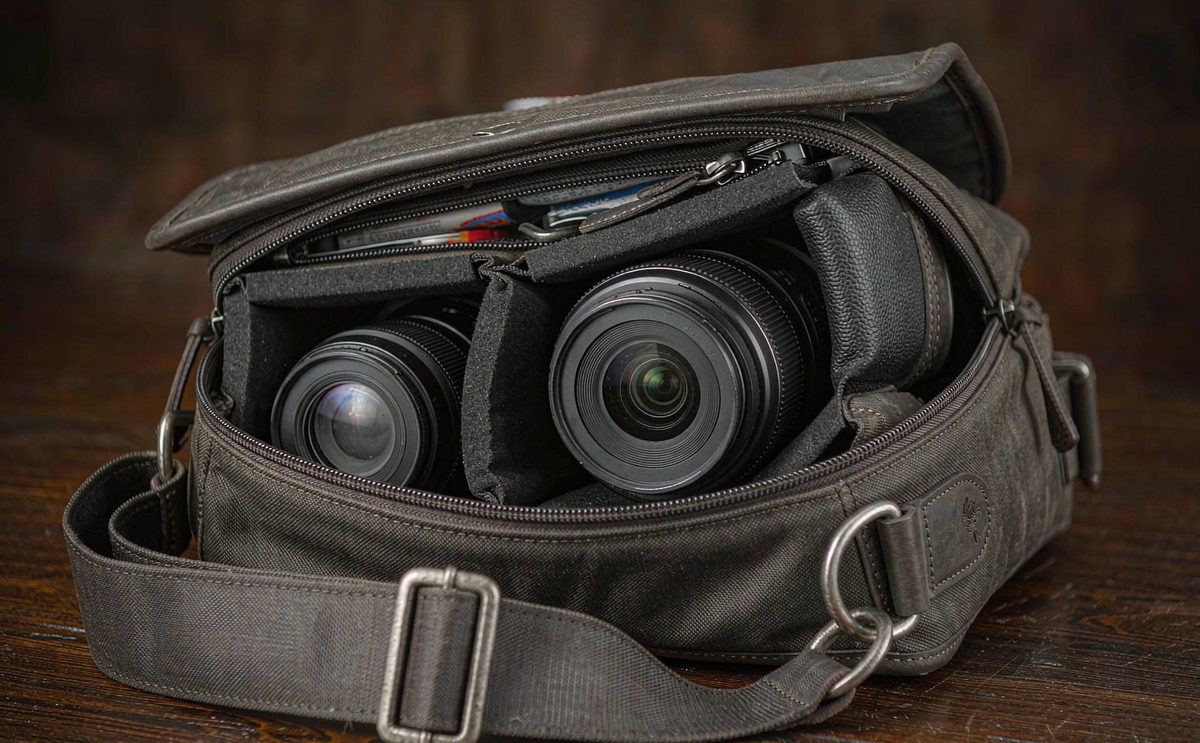
Protection is engineered from the inside out. The base takes the impact in a drop, so it gets the densest foam and often a hidden rigid plate. The side walls take compression in transit, so they get medium-density foam with a bonded outer shell. The divider system has to hold a heavy body and lens without creeping out of position over months of use, which is a function of the hook-and-loop grade and the divider core as much as the foam.
| Component | Entry specification | Recommended specification | Why it matters |
|---|---|---|---|
| Base foam | 8 mm open cell | 12-15 mm closed cell plus PE plate | Absorbs the drop that actually happens |
| Side walls | 6 mm foam | 8-10 mm closed cell bonded to shell | Resists compression in transit |
| Divider core | Single foam layer | Foam plus PE stiffener, 10 mm | Stops dividers sagging under lens weight |
| Hook and loop | Standard nylon | High-cycle nylon, 25 mm width | Holds position after repeated re-configuration |
| Top flap | Fabric only | Foam-laminated flap | Protects the camera body from above |
| Lens cradle | None | Moulded or padded cradle | Stops lens roll and front-element contact |
Specify the drop test in the tech pack and make it a pass/fail gate: bag loaded to a stated weight, dropped from a stated height onto a stated surface, with the contents inspected afterwards. That is the only language a protective claim can be written in. Vague durability language in a campaign video cannot be defended, and it cannot be inspected against either.
Zipper, flap and access design for working photographers
Access speed is the second thing photographers judge. A bag that needs two hands and a flat surface to open will be criticised even if the padding is excellent. The practical answer is a clamshell or three-sided zipper on the main compartment, a top grab handle positioned over the centre of gravity, and a side access panel that lets a body be lifted out without setting the bag down. Every one of those features adds a seam, a zipper run and a QC checkpoint, so they need to be in the RFQ rather than added later.
- Main closure: #8 or #10 coil zipper on the main compartment; metal reads premium but adds weight and cost.
- Zipper garage: a covered zipper end protects the camera from scratch and reduces water ingress.
- Pull cords: branded or corded pulls, because photographers open the bag with gloves on.
- Side access: a dedicated zippered panel on one side, sized to the largest body in the stated range.
- Flap fall: where a flap is used, confirm it does not flop into frame when the bag is open on a shoulder.
- Tripod carry: a compression strap system at the base is a low-cost feature with a high perceived value.
Camera bags are opened far more often than almost any other bag category. Specify the zipper size, the tape material and the expected cycle life in the tech pack, and test the run on the pre-production sample. A zipper that survives 5,000 cycles in the sample room but fails at 800 on bulk production is a specification problem, not a luck problem.
Shell materials and weather protection
Shell choice is a trade-off between abrasion resistance, weight and cost. Coated nylon and polyester dominate the category because they balance all three. Where a campaign promises all-weather use, the build needs a water-resistant zipper and a rain cover, because a stitched seam with a needle hole will eventually let water through however good the coating is. Decide that at RFQ stage: retrofitting waterproofing after sampling means re-costing the whole bag.
| Material | Use | Abrasion | Weight | Cost index |
|---|---|---|---|---|
| 420D nylon, double PU | Everyday sling and shoulder bags | Medium | Low | 1.0 |
| 500D polyester, TPU laminated | Backpack and holster builds | High | Medium | 1.6 |
| 840D ballistic-style nylon | Premium and travel camera bags | Very high | Medium-high | 2.3 |
| Recycled rPET 600D, GRS | Sustainability-positioned campaigns | Medium-high | Medium | 1.7 |
| Brushed tricot lining | Interior facing, screen protection | Low | Very low | 1.1 |
| Orange hi-vis lining | Interior, aids gear location | Low | Very low | 1.2 |
Back the abrasion claim with data rather than adjectives. Independent Martindale or Wyzenbeek rub testing on the shell, plus tensile and tear testing to ASTM D5034 on load-bearing panels, gives a defensible figure for the campaign page. Recycled and certified inputs, including GRS-certified rPET, are covered on the material customization for Kickstarter bags page.
Sampling a padded insert: the approval sequence
Sampling runs 6-10 working days from approved artwork and confirmed materials, stretching to 12-15 where a moulded shell or a removable insert system is specified, because tooling has to be cut before the first piece can be assembled. Camera bags reward a two-round approach: the first round validates external geometry and access, the second validates the internal divider fit against real equipment rather than against a drawing.
- Round one: assess the silhouette, the main opening geometry and whether the bag stands unaided when loaded.
- Round one testing: fit the actual camera bodies and lenses named in the campaign, not a stand-in weight.
- Round two: confirm divider tension, hook-and-loop grip after repeated re-configuration, and zipper run smoothness.
- Drop test: run the specified drop height with the stated payload and inspect the contents afterwards.
- Approval: sign the pre-production sample built from bulk materials, which becomes the AQL 2.5 reference.
A divider layout validated against a block of foam behaves differently from one validated against an actual 70-200 mm lens, which is longer, heavier and has a tripod collar that catches. Send the real equipment, or the exact dimensions and weight, before sampling starts. production 35-50 days after deposit and approved pre-production sample, so the clock only starts once that fit is signed off. The full gate sequence is on the crowdfunding bag sample prototyping page.
MOQ and the cost anatomy of a camera bag
The minimum order is 500 pcs per style and colourway. Camera bags carry more labour content than most categories: dividers, foam laminating, hook-and-loop cutting and multiple zipper runs all add minutes at the bench, and minutes are the largest single component of unit cost on a padded build. That is the practical reason the 500 pc threshold exists, and it is also why a creator asking what is the MOQ for custom camera bags should ask what a moulded insert would add, since tooling changes the economics sharply.
| Cost driver | What changes | Effect on unit cost |
|---|---|---|
| Shell material | 420D nylon to 840D ballistic-style | +15% to +130% |
| Padding package | 6 mm open cell to 12 mm closed cell plus plate | +18% to +55% |
| Divider system | Loose pads to moulded insert | +22% to +90% |
| Zipper package | Coil #5 to metal #10 with garage | +9% to +40% |
| Weather package | None to WR zipper plus rain cover | +$1.40 to +$4.20 |
| Order volume | 500 pcs to 3,000 pcs | -8% to -19% |
Request the quotation as a cost breakdown with fabric, foam, hardware, labour, tooling, testing, packing and freight as separate lines. Labour is the line to watch in this category, because it is where two superficially similar quotes diverge. It also makes the landed-cost conversation honest: a padded protective bag is dense, so actual weight rather than volume usually drives the freight bill.
Set the reward price from the landed unit cost upwards, then stress-test it against shipping, fees and a realistic contingency.
Kickstarter Creator Handbook
Scheduling production against the campaign close date
Protective bags are slow to sample and slow to build. Sampling is 6-10 working days per round, production 35-50 days after deposit and approved pre-production sample, inspection and packing add 3-5 days, and transit adds 12-38 days. A campaign that closes in November and promises February delivery is workable only if sampling completed before launch and materials were pre-booked against a forecast. Otherwise the calendar does not close, and the delay lands on the backer.
| Stage | Working days | Owner |
|---|---|---|
| RFQ, tech pack review and tooling plan | 3-5 | Creator and production partner |
| Material sourcing and foam selection | 5-8 | Production team |
| Sampling round one | 6-10 | Production team |
| Real-gear fit test and correction | 3-7 | Creator |
| Pre-production sample and drop test | 6-15 | Both |
| Bulk production | 35-50 | Production team |
| AQL 2.5 inspection and packing | 3-5 | QC team |
| Freight, customs and fulfilment | 12-38 | Freight and fulfilment partners |
If the reward kit includes more than one item — a bag plus a strap plus a rain cover, for example — the kitting operation needs its own specification, cost and QC check. The crowdfunding rewards fulfilment page covers kitting, addressing and the DDP option that removes surprise duty invoices for international backers.
Inspection disciplines for padded protective builds
Pre-shipment inspection runs at AQL 2.5 to ISO 2859-1, which fixes the sample size, the accept and reject counts and the defect classification. Critical defects — a divider that detaches, a zipper that splits, foam missing from a wall — are zero tolerance at any level. Major defects such as foam delamination or a misaligned panel are capped by the AQL 2.5 table. Minor defects such as a stray thread carry a higher allowance but must still be logged.
- Incoming check: foam density and thickness verified against the specification, not against appearance.
- Inline check: divider alignment, hook-and-loop stitch length and zipper run on the first 50 units.
- Bonding check: foam-to-shell adhesion tested on a sample, because delamination appears after weeks, not days.
- Drop test: the specified height and payload applied to a statistical sample from the bulk batch.
- Final AQL 2.5 inspection: random carton selection, defect logging and a photographic report before release.
- Compliance file: REACH, CPSIA or Prop 65 documentation assembled for each destination market.
Foam is the component most easily substituted without visual detection, and it is the component doing the protective work. Specify density in kilograms per cubic metre, thickness in millimetres and a bonded construction, then verify all three on incoming material and again on a cut sample from the bulk batch. A bag that looks identical can be 30% lighter in protection.
The staged inspection model, the defect classification logic and the reporting pack are explained in full on the Kickstarter campaign bag QA/QC page, including the decision path when a batch lands marginally under the accept threshold.
Freight, drop testing and arrival condition
Padded bags are dense. Freight on this category is driven by actual weight more often than by volume, which is the opposite of most soft goods and is worth modelling before you commit to a format. The second consideration is arrival condition: a protective bag is often shipped with the dividers installed, and a carton that compresses will deform them permanently. Specify the packing method, the unit count per carton and the drop test standard in the tech pack.
- Carton grade: five-ply export carton with a burst strength matched to the container stacking height.
- Packing method: dividers installed but uncompressed, or supplied flat with a card, depending on the design.
- Inner protection: tissue or a polybag per unit to prevent abrasion between units in the carton.
- Drop test: ISTA 3A on the packed carton, which is the standard reference for parcel-delivered goods.
- Pallet plan: confirm units per pallet early, because dense cartons can hit weight limits before volume limits.
These programmes are run from a 4,950 m² SGS-verified production floor with 137 staff, 7 production lines and 149 machines, giving 200,000 pcs of monthly capacity. Established in 2014 with trade roots going back to 2004, the team has supported more than 20 crowdfunding campaigns. That headroom is what allows a protective reward to scale from 500 pcs to several thousand without losing the delivery window.
How to choose a production partner for protective bags
How to choose between bidders on a protective build is a question about evidence. Will the bidder quote from a tech pack or only from a photograph? Will they name the foam density and the drop test in writing? Will they release the inspection report before the 70% balance? A supplier shortlist assembled on photograph quotes almost always falls apart at sampling, when the real cost of the padding package surfaces.
- Request a line-by-line breakdown including foam, hardware, labour, tooling, testing and freight.
- Confirm the drop test protocol: height, payload, surface and pass criterion, in writing.
- Ask how foam substitution is prevented and how density is verified on incoming material.
- Ask for the zipper specification including size, tape material and expected cycle life.
- Ask for the re-order price band in writing while the first purchase order is still open.
Creators whose reward overlaps with travel or everyday carry will find useful comparison material on the custom travel bags for Kickstarter and custom backpacks for Kickstarter pages. For the end-to-end planning frame, start with the crowdfunding bag guide.
Re-order economics for a premium protective tier
Premium protective rewards tend to sell steadily after the campaign rather than in a single spike, which makes re-order economics more important here than in most categories. Once tooling, patterns and jigs exist, the incremental order carries no fresh setup cost, and raising volume from 500 to 3,000 pcs typically reduces unit cost by 8% to 19%. Negotiate the band before the campaign closes, while the first purchase order still gives you leverage.
- Minimum order quantity
- 500 pcs per style / colourway
- Sampling lead time
- 6-10 working days (12-15 for complex builds)
- Bulk production
- 35-50 days after deposit and approved pre-production sample
- Inspection standard
- AQL 2.5 to ISO 2859-1
- Trade term
- FOB Xiamen
- Payment terms
- T/T 30/70
- Production capacity
- 200,000 pcs per month, 7 lines, 149 machines
- Facility
- 4,950 m² SGS-verified floor, 137 staff
- Programme experience
- 20+ crowdfunding campaigns supported since 2014
Request a camera bag quotation
Send the silhouette, the largest camera body and lens the bag must hold, the padding expectation, the access design, quantity per colourway, destination market and target reward price. The team will return a structured quotation, a padding specification proposal, a sampling schedule and the drop-test protocol that will govern the order.
- Custom backpacks for Kickstarter
- Custom travel bags for Kickstarter
- Low MOQ bag production for creators
- Sample prototyping for crowdfunding bags
- QA and QC for campaign bags
- Material customization for Kickstarter bags
- Print and embroidery for custom bags
- Request a quotation
Request a camera-bag quotation
Email service@junyuanbags.com with your tech pack, the largest body and lens the bag must hold, quantity per colourway and target delivery month. A campaign bag specialist will return a cost breakdown and sampling schedule within two working days.
Frequently Asked Questions
What is the MOQ for custom camera bags on a Kickstarter campaign?
The minimum order is 500 pcs per style and colourway. Padded builds carry high labour content through dividers, foam laminating and multiple zipper runs, which is why the 500 pc threshold applies. A second colourway in the same silhouette carries its own 500 pc minimum because the line has to be re-set.
How thick should the padding be in a camera-bag reward?
Specify 12-15 mm closed-cell foam at the base over a hidden PE plate, 8-10 mm on the side walls bonded to the shell, and 10 mm dividers on a PE stiffener. Entry builds use 6-8 mm open cell, which compresses and stops protecting. Name the density in kilograms per cubic metre so it can be verified.
How long does sampling take for a camera bag with a moulded insert?
Standard sampling is 6-10 working days from approved artwork and confirmed materials. A moulded shell or removable insert system extends that to 12-15 working days, because tooling has to be cut before the first piece can be assembled. Budget 20-30 working days for two rounds.
How much does a custom camera bag cost per unit?
Unit cost turns on shell, padding, divider system, zipper and weather package. Moving from 420D nylon to 840D ballistic-style adds 15% to 130%; upgrading the padding package adds 18% to 55%. Raising volume from 500 to 3,000 pcs typically reduces unit cost by 8% to 19%.
What inspection standard governs a camera-bag shipment?
Pre-shipment inspection runs at AQL 2.5 to ISO 2859-1, which fixes the sample size, accept and reject counts and defect classification. Critical defects such as a detached divider or split zipper are zero tolerance. You receive a photographic report before releasing the 70% balance payment.
How is foam substitution prevented during bulk production?
Specify density in kilograms per cubic metre, typically 25-35 kg/m3 for this category, thickness in millimetres, and bonded construction. Verify all three on incoming material and again on a cut sample from the bulk batch. Foam is the easiest component to substitute without visual detection and the one doing the protective work.
Should a camera bag be specified as waterproof?
All-weather use requires a water-resistant zipper, taped or covered seams and a rain cover, adding roughly $1.40 to $4.20 per unit. A stitched seam with needle holes will eventually leak however good the coating. Decide at RFQ stage, because retrofitting waterproofing after sampling means re-costing the whole bag.
When should production start relative to the campaign closing?
Finish sampling before launch so the pre-production sample exists when funds clear. production 35-50 days after deposit and approval, inspection and packing add 3-5 days, and transit adds 12-38 days. A 90-day delivery promise only holds if materials were pre-booked.
Which zipper specification suits a camera bag?
Use a #8 or #10 coil zipper on the main compartment, with a zipper garage at the closed end to protect the camera from scratch and reduce water ingress. Specify tape material and expected cycle life, because camera bags are opened far more often than most bag categories.
How should a camera bag be packed for parcel delivery?
Use a five-ply export carton, pack dividers installed but uncompressed, and protect each unit with tissue or a polybag. Specify ISTA 3A drop testing on the packed carton. Note that padded bags are dense, so freight is driven by actual weight more often than by volume.
Do camera bags need compliance documentation for backers?
Yes. Assemble a REACH declaration, CPSIA or Prop 65 documentation and EU GPSR product information for the destination markets, plus OEKO-TEX Standard 100 for textiles where applicable. Confirm destinations in the RFQ, because the compliance file has to be built before production rather than after inspection.
What happens to the unit price on a post-campaign re-order?
Tooling, patterns and jigs already exist, so the incremental order carries no fresh setup cost. Raising volume from 500 to 3,000 pcs typically reduces unit cost by 8% to 19%. Negotiate a price band in writing before the campaign closes, while the first purchase order still gives you leverage.
People Also Ask
Are camera bags a good Kickstarter reward?
Camera bags suit a premium tier because buyers are specification-literate and compare against retail prices. The risk is protection: a bag that fails a drop damages gear worth far more than the reward. Publish foam thickness, divider count and drop-test figures rather than vague durability language.
How do I know if a camera bag is protective enough?
Look for a named drop test with height, payload, surface and pass criterion, plus foam density stated in kilograms per cubic metre. Without those numbers there is nothing to inspect against, and protection becomes a matter of opinion rather than specification.
Should dividers be fixed or removable?
Removable hook-and-loop dividers give backers flexibility and photograph well, but need a PE stiffener to stop sagging under lens weight. Moulded inserts hold shape better and cost 22% to 90% more. Choose based on how many configurations the reward promises.
Why does my camera bag feel heavy before I put gear in it?
Weight comes from the padding package and the shell. Moving from 6 mm open cell to 12 mm closed cell over a PE plate roughly doubles protective mass. If weight is the selling point, trade shell denier down before you trade padding down.
How long does a camera bag order take from approval to delivery?
Allow 35-50 days for bulk production after deposit and approved pre-production 35-50 days for inspection and packing, and 12-38 days for freight depending on mode. Sampling of 6-10 working days per round sits on top of that.