Crowdfunding Rewards Fulfilment for Bags
When will backers actually receive their bags? production 35-50 days after deposit and approved pre-production sample, then inspection to AQL 2.5, then the freight leg you choose. Under FOB Xiamen the onward cost is yours to model: ocean per container or express per chargeable kilogramme, plus duty and VAT at import. This page maps each leg to a calendar date, then covers the packing specification, 3PL routing, ISTA 3A drop testing and the support load that follows the first wave.
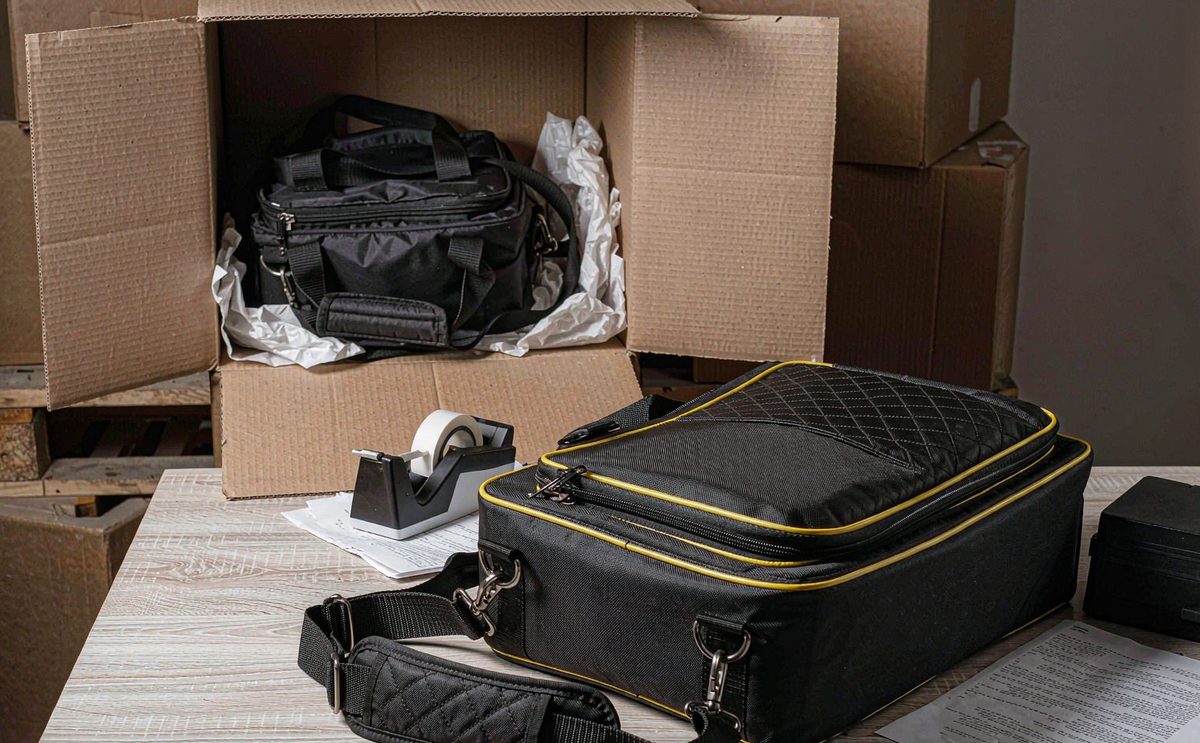
- Fulfilment begins the moment the design is frozen
- Turning reward tiers into a shippable unit of work
- Packaging specification for backer parcels
- Carton engineering and freight mode selection
- Duty, VAT, IOSS and DDP without nasty surprises
- Building the backer address file and survey discipline
- Warehouse and 3PL routing options for a bag campaign
- Last-mile carrier mix and zone-based pricing
- Mapping the 35-50 day window onto real ship dates
- Drop testing to ISTA 3A before parcels leave
- Building the fulfilment line of your campaign budget
- Damage, loss and replacement stock planning
- Returns, exchanges and backer support load
- Re-orders, retail and leftover inventory
- A sixteen-week fulfilment calendar
- Getting the fulfilment plan onto one page
Fulfilment is not the stage that starts when the goods are finished. It is the stage that starts when the specification is frozen, because every downstream decision, from carton dimensions to duty classification, is made or constrained at that point. A campaign that treats fulfilment as an afterthought discovers its problems in the shipping invoice, which is the one document backers never see but always feel.
Key takeaways
- Fulfilment decisions are locked at specification freeze: carton size, packing method and HS classification all follow from it.
- production 35-50 days after deposit and approved PPS; inspection to AQL 2.5 gates the release and the T/T 70 balance.
- Bags are bulky and light, so chargeable weight is usually volumetric, not actual.
- Under FOB Xiamen the buyer owns freight, insurance, duty, VAT and onward delivery from the port.
- EU parcels need REACH and GPSR treatment, with IOSS for low-value consignments or DDP as the alternative.
- Packaging should be transit-tested to ISTA 3A before a single backer parcel ships.
- Plan replacement stock, returns handling and support load before launch, not after the first damage report.
Fulfilment begins the moment the design is frozen
The packing specification belongs in the tech pack alongside the fabric and hardware clauses. Once it is written, the carton quantity, the inner protection, the label placement and the parcel weight band are all fixed, and those four variables determine the freight cost more than the bag itself does. Leaving packing until the goods are finished means accepting whatever carton is available rather than the one the freight arithmetic wants.
There is also a customs dimension. Classification under an HS code is determined by the product as shipped, not as designed, so the material composition declared in the specification is the same information customs will use. Getting that declaration right at freeze avoids a reclassification at import, which is a delay no campaign budget plans for.
The practical rule is simple: if a decision affects the weight, volume, content or classification of the parcel, it is a fulfilment decision, and it belongs in the specification. Our programme coordinators review the packing clause at the same time as the construction clauses for exactly this reason.
Turning reward tiers into a shippable unit of work
A reward tier is a promise; a shippable unit is what the warehouse actually picks, packs and labels. Converting one into the other means deciding, for each tier, what the unit of work is: one carton, one polybag, one bundle with a printed insert, or a multi-parcel shipment. Each option has a different pick cost and a different last-mile band.
Bundles deserve particular attention. A backpack plus two accessories may ship as one parcel or as two, and the answer depends on the volumetric weight at each carrier's divisor rather than on how it looks on the campaign page. Modelling both options before the tier is published is faster than re-cutting the tier after ten thousand backers have chosen it. The custom bag bundles page works through that choice.
Keep the number of distinct units small. Every additional unit is another pick face, another packing instruction and another way to pack the wrong thing. Three units is comfortable for a first campaign; beyond five, error rates rise faster than the pick team can absorb them.
| Tier type | Unit of work | What drives the cost |
|---|---|---|
| Single bag | One polybagged unit in one parcel | Volumetric weight of the packed carton |
| Bag plus accessory | One bundle, one parcel | Whether the bundle crosses a carrier weight band |
| Multi-item bundle | Two or more parcels | Per-parcel handling plus separate tracking |
| Early-bird variant | Same unit, different insert | Insert printing and packing instruction |
| Colourway choice | Same unit, different SKU | Pick accuracy and SKU count on the pick face |
Packaging specification for backer parcels
Backer packaging has to survive two very different journeys: the ocean or air leg in a consolidated carton, and the last-mile leg as an individual parcel. Optimising for only one of these is a common error. A carton engineered purely for container efficiency may be too light for the last-mile network, and a parcel engineered purely for last-mile protection may waste container space.
Start with the master carton. Fix the quantity per carton so that the carton dimensions work against both the container or pallet footprint and the eventual parcel size. Then specify the inner protection: tissue, bubble, corner supports or a moulded insert, chosen against the actual failure modes of the construction rather than habit.
Then fix the labelling. The shipping label, the return address and any regulatory marking must be placed where the last-mile network scans them, and the carton must carry the marks the destination requires. ISTA 3A is the reference test for parcel-sized shipments and it is the sensible acceptance criterion to write into the specification.
Unboxing belongs in the specification rather than in the marketing plan. For a reward that backers waited months to receive, the first 30 seconds after the carton opens is the moment the campaign is judged. A printed insert, a care card and a deliberate fold cost little per parcel, and specifying them alongside the carton avoids the alternative, which is opening and resealing every unit by hand after production has already finished.
Carton engineering and freight mode selection
Freight mode is chosen from the calendar first and the cost second. Ocean freight is the default for the bulk replenishment that supplies a fulfilment warehouse; air and express are reserved for review units, replacement stock and deadline rescue. Once the delivery month is fixed, the transit time of each mode tells you which ones remain available, and only then does the price matter.
Carton efficiency is the lever that reduces cost within a mode. Bags compress, so a vacuum or compression packing step can materially change the chargeable volume on an air movement. On ocean, the calculation is container utilisation: how many master cartons fit a 20ft or 40ft box, and whether the carton dimensions leave dead space at the top or sides.
Chargeable weight is where most budgets slip. Carriers bill on the greater of actual and volumetric weight, and for a bulky light bag volumetric almost always wins. That makes packed dimensions a specification decision with a direct freight consequence, which is why the packing clause belongs in the tech pack rather than in the warehouse.
| Mode | Typical use | Billing basis | Calendar fit |
|---|---|---|---|
| Ocean FCL | Bulk replenishment to a fulfilment warehouse | Per container | Plan 4-6 weeks transit plus clearance |
| Ocean LCL | Smaller top-up quantities | Per chargeable cubic metre | Similar transit, more handling |
| Air freight | Deadline rescue or launch stock | Per chargeable kilogramme | Roughly a week door to door |
| Express courier | Review units and replacement parcels | Per parcel, volumetric | 2-5 days, zone dependent |
| Postal parcel | Low-weight single-item backer rewards | Per parcel by zone and weight | Variable; slower and less trackable |
Carriers bill on the greater of actual and volumetric weight. Cutting a few centimetres from the packed carton can move a whole tier into a lower band, and that saving repeats on every parcel.
Duty, VAT, IOSS and DDP without nasty surprises
Import duty is assessed against the HS classification at the destination, at the rate that applies to that code, and VAT is then assessed on the duty-inclusive value, commonly 19 to 21 percent across EU markets. Under FOB Xiamen both are the buyer's cost, along with freight, insurance and the per-shipment charges for clearance and handling. Modelling them per destination market before the pledge tier is published is what separates a defensible margin from a hopeful one.
For EU consumer parcels below the low-value threshold, IOSS lets VAT be collected at the point of sale, so the backer pays once and receives the parcel without a second charge. Above that threshold, or without an IOSS registration, VAT and the carrier's clearance fee are collected on delivery, which is the single most common cause of backer complaints on European campaigns.
DDP is the alternative: the seller takes responsibility for duty and VAT, and the backer receives the parcel with nothing further to pay. It is cleaner for the backer and more expensive to administer, because someone has to model and advance the duty across multiple markets. Choose between IOSS and DDP by destination mix, and state the choice on the campaign page.
What has to be declared at import
- HS classification derived from the material composition declared in the specification.
- Customs value, which under FOB excludes the onward freight and insurance the buyer arranges.
- Country of origin, declared per the applicable origin rules rather than per the shipping route.
- Quantity, net and gross weight, and the number of packages in the consignment.
- Any regulatory marking or documentation the destination market requires for the product category.
Building the backer address file and survey discipline
The address file is the highest-leverage artefact in fulfilment and the one most campaigns under-invest in. Bad addresses produce failed deliveries, return-to-sender charges and re-shipments, and each one costs more than the parcel did. Collect addresses in a structured survey with validated fields rather than free text, and require the format the destination network expects.
Timing matters. Send the survey as soon as pledges are collected, chase twice at fixed intervals, and set a hard cut-off date after which the backer's address is treated as the one on file. Backers move, and an address collected nine months ago is not necessarily valid today. Re-confirm before the first wave ships if the gap is long.
Clean the file before it reaches the warehouse: normalise country codes, check postcode formats against destination rules, and flag anything that fails validation for manual review. A few hours of cleaning prevents a wave of failed first-attempt deliveries, which is both the most expensive and the most visible failure mode in backer shipping.
Warehouse and 3PL routing options for a bag campaign
Three routing patterns cover most bag campaigns. The first is direct from the port to a single 3PL in the primary market, which is simplest and cheapest per parcel but leaves secondary-market backers paying long-zone rates. The second splits stock across two or three regional 3PLs, which raises inventory complexity but cuts last-mile cost and transit time. The third ships individual parcels direct from origin.
Direct-from-origin parcel shipping suits campaigns with a genuinely global, thinly spread backer base and a low-weight single-item reward. It avoids the inbound container, the 3PL handling charge and the storage fee, but it gives up consolidation savings and makes replacement handling slower. Model it against the regional 3PL route using your actual destination mix, not an average.
Whichever route you take, agree the receiving specification in advance: carton labelling, pallet configuration, advance shipping notice format and the booking window. Most 3PL receiving problems are documentation problems, and they are all preventable at specification stage. The regional service page sets out the onward leg by destination.
Last-mile carrier mix and zone-based pricing
Last-mile pricing is zone-based, not distance-based: carriers divide destinations into bands and price per parcel within each band. That means the destination mix of your backers determines your cost more precisely than any headline rate. Before the campaign launches, look at where your audience actually is, because a US-weighted audience and a globally spread one produce very different bills for the same product.
A carrier mix beats a single carrier for most campaigns. One carrier is usually strongest domestically, another strongest on intra-EU, and a third on the rest of the world. Routing by destination band rather than by habit typically improves both cost and first-attempt delivery rate, at the cost of maintaining more than one integration.
First-attempt delivery rate is the metric to manage. Every failed attempt adds a re-delivery or a collection point holding fee, and it is the point at which backer patience is consumed. Tracking, accurate addresses and a delivery window that suits the destination all push that rate up.
Build the carrier mix from the destination file rather than from a preferred-supplier list. Export backer addresses by country, rank them by volume, then assign the strongest carrier in each band. Three carriers cover most campaigns: one domestic, one regional and one international, with the international lane often splitting again between a tracked service and an economy service.
Then negotiate against volume commitments per lane rather than a blended rate. Carriers price on committed volume within a band, and a campaign shipping 500 pcs across five markets has a very different profile from one shipping the same quantity into a single market. Sharing the destination mix at RFQ stage produces a sharper number than asking for a general price list.
| Band | Typical lane | Planning note |
|---|---|---|
| Domestic | Same-country delivery from the regional 3PL | Cheapest per parcel and fastest; often half of total volume |
| Regional | Intra-EU or within a trade bloc | No duty at import; VAT collected at sale through IOSS where eligible |
| Near international | Adjacent regions with established lanes | Duty applies; consolidated line-haul keeps per-parcel cost down |
| Long international | Rest of world | Highest cost and longest transit; put tracking on every parcel |
| Restricted | Destinations with carrier or goods limits | Flag at survey stage and confirm serviceability before wave one |
Mapping the 35-50 day window onto real ship dates
The production 35-50 days after deposit and approved pre-production sample, and both triggers must exist for it to start. Once it closes, inspection to AQL 2.5 under ISO 2859-1 gates release, and the T/T 70 balance falls before the shipment leaves. Everything after that is freight, clearance and last mile, each with its own duration.
Build the calendar backwards. Fix the date the first backer should receive a parcel, subtract last-mile transit, subtract clearance, subtract the freight leg, and subtract inspection and repacking. What remains is the date the bulk window must close, and subtracting 50 days from that gives the latest safe deposit date.
Publish a month, not a date. A delivery window communicates the same information with far less risk, and backers respond better to an honest range than to a specific date that the sampling and production windows were never going to support.
- Freeze the specification including the packing clause and the declared material composition.
- Complete sampling in 6-10 working days, or 12-15 for a complex build.
- Approve the pre-production sample in writing and seal the golden sample.
- Release the T/T 30 deposit and confirm the 35-50 day production window.
- Book freight against the destination mix and the delivery month.
- Inspect the finished lot to AQL 2.5 and release the T/T 70 balance.
- Ship to the regional 3PL, clean the address file, and wave the parcels out.
Drop testing to ISTA 3A before parcels leave
ISTA 3A is the standard test procedure for parcel-sized individual shipments, and it is the right acceptance criterion for a backer parcel. It combines drop, vibration and handling sequences that approximate what a courier network actually does to a box. A carton that passes is not guaranteed undamaged, but a carton that has never been tested is a guess.
Test the packed unit as it will ship, not the product alone. Protection that works for the master carton may do nothing for the individual parcel, because the failure modes differ: the master carton is stacked and containerised, while the parcel is dropped and sorted. Test both, and record the packed dimensions and weight that passed.
Pair the result with the inspection gate. Inspection to AQL 2.5 confirms the product was made correctly; the transit test confirms the packaging will get it there. Both belong in the technical file alongside the approved specification and the golden sample, and our production team can arrange both. See the Kickstarter campaign bag QA and QC page for the checklist.
| Gate | What it confirms | Reference |
|---|---|---|
| Pre-production sample approval | Design is frozen against a written specification | Sealed golden sample |
| In-line production checks | Construction matches the approved build | Approved tech pack |
| Final random inspection | Lot quality is within the agreed allowance | AQL 2.5 to ISO 2859-1 |
| Restricted substances check | Material set is compliant for the destination | REACH, CPSIA, OEKO-TEX Standard 100 |
| Transit test of the packed parcel | Packaging survives the courier network | ISTA 3A |
| Balance release and loading | Payment gate before the vessel departs | T/T 70, FOB Xiamen |
Building the fulfilment line of your campaign budget
Fulfilment is a per-parcel cost that behaves very differently from a per-unit cost. Freight, duty, VAT, pick and pack, packaging materials, address correction and replacement stock all scale with the number of backers, but several carry fixed components that punish small runs. A 500-pcs programme therefore needs its fulfilment line modelled per parcel and then multiplied, never estimated as a percentage of unit cost.
Build the line in six rows: inbound freight to the 3PL, duty and VAT at import, pick and pack per parcel, packaging materials per parcel, last-mile postage by zone band, and a contingency for replacement and re-shipment. The contingency is the row most campaigns omit, and it is the one that decides whether a damage wave is survivable.
Then test the tier ladder against it. A bundle that lifts pledge value by 40 USD while pushing the parcel into a higher band may deliver half that gain. Tier design, unit cost and freight band are one calculation, and the low MOQ bag production pillar carries the unit-cost side of it.
Damage, loss and replacement stock planning
Plan replacement stock before the first wave ships, not after the first damage report. A contingency of a few per cent of the total quantity, held either at the 3PL or at origin for express dispatch, converts a backer complaint into a two-day resolution instead of a six-week one. The cost of holding that stock is small compared with the cost of a re-run.
Separate damage from loss. Damage is a packaging problem and is fixed by the transit test and the packing specification. Loss is a network problem and is fixed by tracking, signature requirements and carrier mix. Both need a defined claim route with the carrier, and both need a recorded threshold at which the campaign escalates from replacement to a design or packaging change.
Also decide the replacement policy in writing: whether the campaign replaces once, whether the backer returns the damaged item, and who pays the return leg. Backers accept an imperfect outcome far more readily when the policy was stated up front. Our programme coordinators keep a copy of the policy with the packing specification.
A few per cent of total quantity, held at the 3PL or at origin for express dispatch, turns a damage report into a two-day fix instead of a re-run.
Returns, exchanges and backer support load
Support load peaks in the fortnight after the first wave ships, and it is almost entirely predictable: where is my parcel, my parcel arrived damaged, and can I change my colourway. Preparing templated answers and a tracked escalation route before launch is the difference between a busy week and a campaign that loses control of its own comment section.
Exchanges are the expensive category, because they involve two parcels and a restocking step. Decide before launch whether exchanges are offered at all, whether the backer pays the return leg, and what condition the returned item must be in. A clear policy costs less than an unclear one, even when the clear policy is stricter.
Statutory distance-selling rights apply in many markets regardless of campaign policy, so the policy should describe how the campaign handles them rather than whether it does. Where obligations vary by destination, the regional service page and the FAQ carry the destination-specific detail.
Re-orders, retail and leftover inventory
A post-campaign re-order is the cheapest unit cost you will ever get on the same reference, because pattern development, tooling and trim minimums are already covered. Agree the re-order floor and the tooling holding period at quotation stage, and diarise the slot booking before the campaign closes rather than after.
Leftover stock is not waste if it was planned. A deliberate overrun of a few per cent covers replacements, retail enquiries and late survey responses, and it costs less than an emergency re-run at a higher quantity break. The mistake is unplanned surplus: stock that exists because the forecast was optimistic rather than because the plan called for it.
Retail enquiries usually arrive after the campaign ships. Having the specification, the test reports and the golden sample already assembled as a technical file means a retail conversation can start immediately, rather than beginning with a documentation exercise. The programme has supported 20+ crowdfunding campaigns, operating since 2014 with trade roots since 2004, and that history is largely a history of files kept in order.
A sixteen-week fulfilment calendar
Sixteen weeks from specification freeze to first delivered parcel is a realistic planning figure for a standard backpack-format reward with ocean freight into a regional 3PL. Two weeks to freeze the specification and receive the quotation, two weeks of sampling and revision, seven weeks of bulk production, one week of inspection and repacking, and four weeks of freight, clearance and last mile.
Complex builds stretch this. Add up to a week for a 12-15 working day sampling path, and add tooling time if bespoke hardware is involved. Air freight compresses the last leg to roughly a week, which is the standard rescue when a delivery month is at risk, but it moves the cost rather than removing it.
The calendar should be held as a live document. Confirm the deposit date, the PPS approval date, the inspection date and the vessel booking against it each week, and escalate the moment any of the four slips. Campaigns rarely fail because of one catastrophic event; they fail because four small slips were never added up.
Set a delivery date you can defend, communicate it as a window, and update backers before they have to ask. Silence is what turns a delay into a dispute.
Kickstarter Creator Handbook
Documents to assemble during the production window
The 35-50 day production window is long enough to assemble every document the shipment will need, and short enough that leaving it to the end causes panic. Work through the list while bulk is running: commercial invoice and packing list templates, the declared HS classification with its supporting material breakdown, certificates for the fabric and trim, the transit test report for the packed parcel, and the receiving specification agreed with the 3PL.
- Crowdfunding bag guide
- Custom bags for Kickstarter
- Custom backpacks for Kickstarter
- Custom gift bags for Kickstarter
- Custom shoe bags for Kickstarter
- Custom toiletry bags for Kickstarter
- Frequently asked questions
- About us
Getting the fulfilment plan onto one page
A fulfilment plan that fits on one page is a plan the whole team can act on. It should carry the destination mix, the unit of work per tier, the packed weight and dimensions per unit, the freight mode, the duty and VAT treatment by market, the 3PL routing, the inspection gate and the four calendar dates. Anything more detailed belongs in the technical file.
Build it during specification rather than after production. Every number on that page is either fixed or made much harder to change once the pre-production sample is approved, and several of them, notably packed dimensions and declared composition, directly determine what the shipment costs.
Low MOQ bag production
How the 500-pcs-per-colourway floor shapes the tier ladder and the unit-cost curve behind your pledge pricing.
Sampling and prototyping
The 6-10 working day path from sketch to approved pre-production sample, and the checks that protect it.
QA and QC for campaign bags
The defect classification, inspection checklist and release gates used on 500-pcs campaign lots.
Format routes with the best freight economics
Freight economics vary by format more than creators expect. Items that pack flat or compress, such as totes, packing cubes, pouches and drawstring bags, reach an efficient chargeable volume easily, while rigid-frame travel pieces and moulded camera bags carry a volumetric penalty on every parcel. Pairing a bulky hero item with a compressible companion is a common way to balance the tier ladder.
- Custom travel bags for Kickstarter
- Custom packing cubes for Kickstarter
- Custom pouches for Kickstarter
- Custom tote bags for Kickstarter
- Custom camera bags for Kickstarter
- Custom bag bundles for crowdfunding
- Regional service by destination
- Request a quotation
Fulfilment parameters and programme facts
- Bulk production window
- 35-50 days after deposit and approved PPS
- Sampling window
- 6-10 working days (12-15 complex)
- Minimum order quantity
- 500 pcs per style and colourway
- Inspection standard
- AQL 2.5 to ISO 2859-1
- Transit test reference
- ISTA 3A for parcel-sized shipments
- Trade terms
- FOB Xiamen
- Payment terms
- T/T 30/70
- EU consumer VAT route
- IOSS at point of sale, or DDP as the alternative
- Production floor
- 4,950 m2, SGS-verified
- Workforce and equipment
- 137 staff, 7 lines, 149 machines
- Monthly capacity
- 200,000 pcs
- Operating since
- 2014, with trade roots since 2004
- Campaign experience
- 20+ crowdfunding campaigns supported
Map your production window to a delivery month
Send the reward tier structure, estimated destination mix and target delivery month. Our production team will return the sampling schedule, the confirmed production window and the freight options that meet the date. Email service@junyuanbags.com or message WhatsApp +86 177 5002 0688, or use the quote request page.
Frequently Asked Questions
How long after a campaign closes do backers receive their bags?
Plan on roughly 16 weeks from specification freeze to first delivered parcel: about 2 weeks of specification and quotation, 2 weeks of sampling, up to 7 weeks of bulk production, 1 week of inspection and repacking, then around 4 weeks of freight, clearance and last mile. Sampling before launch is what compresses this.
What does FOB Xiamen mean for my fulfilment budget?
FOB Xiamen covers the goods, export clearance and loading onto the nominated vessel at the port of Xiamen. Freight, insurance, import duty, VAT and onward delivery from that point are the buyer's cost. Model the onward leg per destination market, and note that per-shipment charges are fixed whether the run is 500 pcs or 5,000.
Should I ship ocean or air for a bag reward programme?
Ocean is the default for bulk replenishment into a fulfilment warehouse and is billed per container, with roughly 4 weeks of transit to plan for. Air and express are reserved for review units, replacement stock and deadline rescue, billed per chargeable kilogramme. Choose from the calendar first: once the delivery month is fixed, transit time decides which modes remain viable.
Why is my freight bill higher than the actual weight suggests?
Because carriers bill on the greater of actual and volumetric weight, and bags are bulky and light, volumetric almost always wins at a divisor of 5,000 or 6,000. Reducing packed carton dimensions by a few centimetres, or using compression packing, can move an entire reward tier into a lower band and the saving repeats on every parcel.
What is IOSS and do I need it for European backers?
IOSS lets VAT be collected at the point of sale on consignments into the EU valued at 150 EUR or less, so the backer pays once and receives the parcel without a second charge. Without it, VAT plus the carrier clearance fee is collected on delivery, which is the most common cause of backer complaints on European campaigns.
When should I collect backer addresses?
Send a structured survey as soon as pledges are collected, chase twice at fixed intervals, and set a hard cut-off after which the address on file is treated as final. Re-confirm before the first wave ships if more than about 3 months have passed, because backers move and stale addresses drive failed first-attempt deliveries.
How much replacement stock should a campaign hold?
A contingency of a few per cent of total quantity, held at the regional 3PL or at origin for express dispatch, covers damage and loss without a re-run. Weight it toward your damage rate: if the packed parcel has been transit-tested to ISTA 3A, a lower contingency is defensible than for untested packaging.
What is ISTA 3A and why does it matter for backer parcels?
ISTA 3A is the standard test procedure for parcel-sized individual shipments, combining drop, vibration and handling sequences that approximate what a courier network does to a box. Testing the packed unit as it will ship, rather than the product alone, is the difference between a packaging specification and a packaging guess.
How do I choose between a single 3PL and regional 3PLs?
A single 3PL in the primary market is simplest and cheapest per parcel but leaves secondary-market backers on long-zone rates. Splitting stock across two or three regional 3PLs raises inventory complexity and inbound freight cost but cuts last-mile spend and transit time. Decide using your actual destination mix, not an average.
What should the packing clause in the tech pack specify?
It should fix the quantity per master carton, the carton dimensions and board specification, the inner protection method, the label placement for the last-mile network, any regulatory marking required at the destination, and the resulting packed weight and dimensions. Those variables drive freight cost more directly than the bag itself, because a divisor of 5,000 turns every extra centimetre into chargeable weight.
Can I offer backers a choice of colourway without extra freight cost?
Yes, within the same packed carton specification. The constraint is not freight but the 500-pcs-per-colourway production floor: three colourways are three separate 500-pcs commitments, each with its own dye lot and trim minimums. Keep the packed dimensions identical across colourways so the carrier band does not change.
How does inspection affect my ship date?
Inspection to AQL 2.5 under ISO 2859-1 is the release gate, and the T/T 70 balance falls against a passed report before the shipment leaves. Budget roughly a week for inspection, corrective action if needed and repacking. A failed lot costs that week plus whatever remedy is required, which is why pre-production approval matters.
What happens to stock left over after fulfilment?
Planned overrun is useful: an extra 3 to 5 per cent covers replacements, late survey responses and retail enquiries, and it costs less than an emergency re-run. Unplanned surplus is the problem, because it ties up campaign cash. Keep the technical file, test reports and golden sample together so a retail conversation can start immediately.
Are re-orders cheaper than the first production run?
Yes. Once the first 500 pcs covers pattern development, tooling and trim minimums, so only material and labour are priced again, and line changeover largely disappears. Agree the re-order floor, the tooling holding period and the notice required for the production window in writing at quotation stage rather than after the campaign closes.
Which packaging failures cause the most backer complaints?
3 recur: crushed corners from a board specification chosen for container efficiency rather than parcel handling, scuffed or marked outer surfaces that make a gift reward look second-hand, and labels placed where the carrier scanner cannot read them. All 3 are fixed in the packing clause before production, not in the warehouse after it.
Should reward tiers ship as one parcel or several?
Model both against your carrier's volumetric divisor, typically 5,000. A bundle that fits one carton usually wins, but once a tier crosses a weight band the split can be cheaper because each parcel prices separately. Keep the number of distinct units at around 3, because every extra unit adds pick faces and packing errors.
What compliance documentation travels with a shipment?
Hold the approved specification, the sealed golden sample reference, the restricted substances report under REACH or CPSIA, any recycled-content certificate to GRS, the performance test with its named method such as ASTM D5034, the ISTA 3A transit report, and the AQL 2.5 inspection release.
How do I handle a damaged parcel reported by a backer?
Follow a written policy: confirm the damage with a photograph, dispatch stock from the 3 to 5 per cent held for this purpose, and decide whether the backer returns the damaged item and who pays that leg. Having the decision made before launch turns a complaint into a 2-day resolution instead of an argument in the comments.
What is the most common cause of a missed delivery month?
4 small slips that were never added up: a late specification freeze, a compressed sampling window, a deposit that waited for funds to clear, and a booking made after the shipping peak had already absorbed the capacity. Track those 4 dates weekly from specification, and escalate the moment any of them moves.
How do I get a fulfilment quote for my campaign?
Send the reward tier structure, the estimated destination mix and the target delivery month. Our production team returns the sampling schedule, the confirmed production window and the freight options that meet the date. Email service@junyuanbags.com, message WhatsApp +86 177 5002 0688, or use the quote request page.
People Also Ask
How much does it cost to ship rewards to backers?
Model it per parcel, not as a percentage of unit cost. Six rows: inbound freight, duty and VAT, pick and pack, packaging materials, last-mile postage by zone band, and a contingency for replacement and re-shipment.
Should I use a 3PL for crowdfunding fulfilment?
Usually yes for a bag reward. A regional 3PL converts an inbound container into individual tracked parcels and handles returns. Split across two or three regions when the backer base is genuinely global.
What is volumetric weight and why does it matter?
It is the billing weight carriers derive from parcel dimensions. They charge on the greater of actual and volumetric weight, and for a bulky light bag volumetric almost always wins, so packed dimensions decide the freight bill.
Do backers have to pay import duty on their reward?
Under FOB terms the buyer owes duty and VAT at import. Many campaigns avoid backer-side charges by collecting EU VAT at sale through IOSS, or by shipping DDP so the parcel arrives with nothing further to pay.
How long does it take to ship bags from China?
Ocean transit plus clearance typically runs about 4 weeks door to warehouse, air roughly a week, and express 2-5 days zone dependent. Add the 35-50 day production window and about a week for inspection before any of it.
When should I order inventory for a crowdfunding campaign?
As soon as the specification and pre-production sample are approved. Ordering at that point lets the 35-50 day window overlap with the final weeks of pledging instead of starting after funds clear.
How do I handle damaged rewards after shipping?
Prevention first by testing the packed parcel to ISTA 3A, then a written policy covering photo evidence, dispatch of held replacement stock, and whether the backer returns the item and who pays the return leg.