Custom Pouches for Kickstarter
A pouch is the cheapest unit in a reward line-up and the one backers mention most. Flat and gusseted builds span 15 x 10 cm to 32 x 23 cm, weigh 35-140 g, and nest 100-150 per carton. Our production team runs pouches at 500 pcs per style / colourway, sampling in 6-10 working days and production 35-50 days at AQL 2.5 (ISO 2859-1), with unit cost starting near 1.10 USD ex-works.
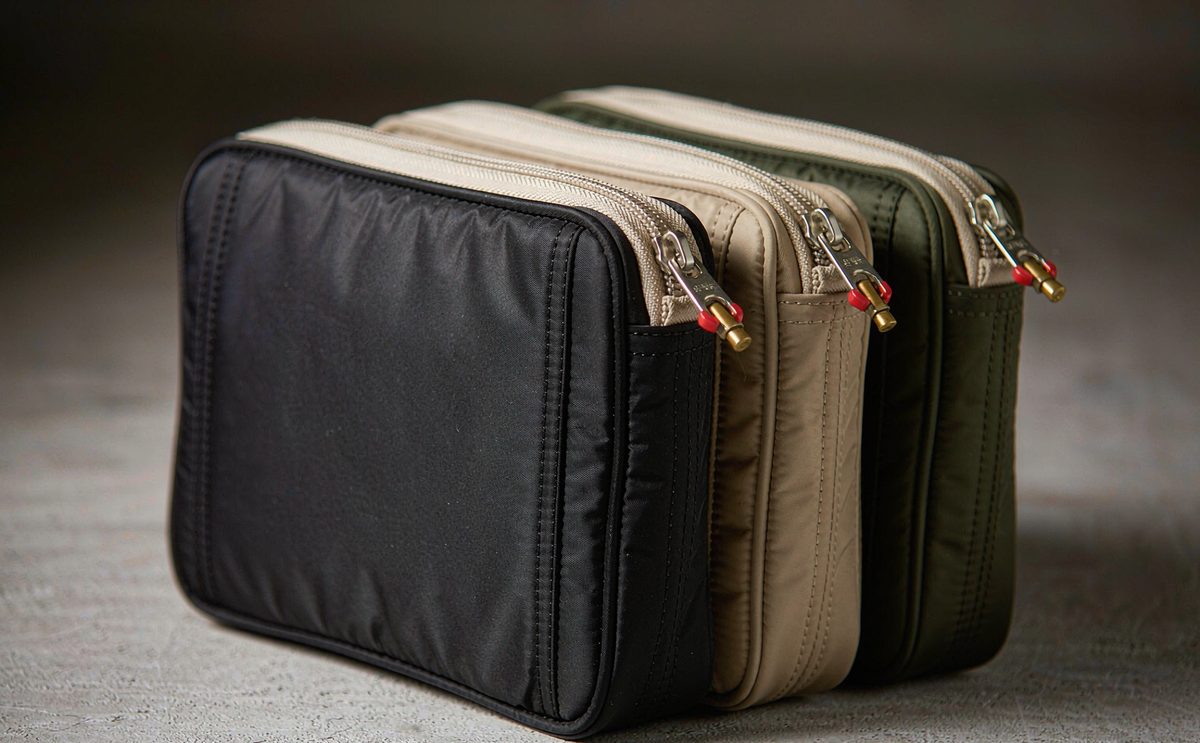
- Minimum order quantity
- 500 pcs per style / colourway
- Sampling
- 6-10 working days (12-15 for complex builds)
- Bulk production
- 35-50 days after deposit + approved pre-production sample
- Inspection
- AQL 2.5 to ISO 2859-1
- Trade term
- FOB Xiamen
- Payment
- T/T 30/70
- Production floor
- 4,950 m² SGS-verified, 137 staff, 7 lines, 149 machines
- Monthly capacity
- 200,000 pcs per month
- Programme contact
- service@junyuanbags.com
Key takeaways before you spec a pouch
- Choose the build first: flat, gusseted or boxed. It drives volume, cost and whether the pouch stands up.
- MOQ is 500 pcs per style and colourway, so a three-size pouch tier is normally three commitments.
- A #3 coil zip suits pouches up to 24 cm; move to #5 above that or the tape will bow.
- Interlining of 2-3 mm turns a soft pouch into a structured one and gives print a stable surface.
Why a pouch is the highest-margin add-on in a reward line-up
A pouch is the cheapest unit in most reward programmes and the one backers mention most often in unboxing content. The reason is arithmetic: a unit that costs 1.10 to 3.40 USD ex-works sits in a pledge tier that looks substantially more generous than the cost suggests, and it fills the gap between a sticker pack and a full bag. It also carries the brand into daily use, which no insert card does.
From a sourcing perspective it is the lowest-risk format to put into production. Two to four panels, one closure, one lining, one branding application. There is no frame, no harness and no load-bearing seam, which means sampling is fast, round-two corrections are cheap, and the defect list at inspection is short. Our low MOQ bag production page explains how a pouch tier is booked alongside a hero bag.
Flat, gusseted or boxed: choosing the build
Build type is the decision that everything else follows, and it is usually made by looking at a competitor product rather than at the intended contents. A flat pouch is two panels sewn together with no depth; it is the cheapest, packs flattest and suits cables, cards and flat tools. A gusseted pouch adds a 3-5 cm side and base strip, which gives real volume without changing the outline. A boxed pouch goes to 8-10 cm and starts behaving like a small case.
The trade is between volume and packability. A gusseted pouch holds roughly three times the volume of a flat pouch of the same outline and costs 15-25% more, but it will not lie flat in a carton. Where the pouch ships inside a hero bag, flat wins; where it is claimed on its own, gusset usually wins.
| Build | Typical depth | Cost index | Packs flat | Best for |
|---|---|---|---|---|
| Flat, two panels | 0 - 1 cm | 1.00 | Yes | Cables, cards, flat tools |
| Lightly gusseted | 3 - 4 cm | 1.18 | Folds once | Everyday EDC pouch |
| Full gusset | 5 - 6 cm | 1.25 | No | Toiletries, chargers |
| Boxed with base panel | 8 - 10 cm | 1.45 | No | Tool or kit pouch |
- Decide the build from the contents, not from a competitor photograph.
- Add a gusset where the pouch is claimed on its own; keep it flat where it ships inside a hero bag.
- Specify the gusset as a separate component with its own width, not as a note on the pattern.
- Remember that a gusseted pouch will not lie flat in a carton and will raise the volumetric figure.
- Keep one build type across a pouch tier so the set shares a single pattern logic.
Sizing a pouch around what actually goes inside
Pouch sizing is the specification most often decided by eye, and it is the easiest to get right, because the contents are enumerable. A cable pouch has to hold a charger brick, typically 6-8 cm square and 3 cm deep, plus a coiled cable. Write the contents list into the tech pack and size from it, adding 10-15 mm of clearance in each dimension.
Beyond that, keep the size ladder simple. Four sizes cover almost every programme: an extra-small around 15 x 10 cm for cards and cash, a small at 20 x 14 cm for cables, a medium at 24 x 17 cm for tools and everyday carry, and a large at 28 x 20 cm for a tablet or a wash kit. Each size is a separate style against the 500 pcs minimum, so a four-size tier is four commitments unless the sizes are bundled into a single pledged set.
Fabric, lining and the interlining question
A pouch shell carries less load than any bag, so the fabric can be chosen for hand feel and print quality rather than abrasion resistance. A 300D polyester with a light PU coating is the default; a 600D polyester reads tougher and suits a tool pouch. Canvas and recycled rPET shells are positioning choices that lengthen sampling by a few days. Take both from one material customisation shortlist.
Interlining is the specification that decides whether the product feels considered. Without it, a pouch is a soft envelope that collapses on a desk. With 2-3 mm of foam laminated behind the shell, it holds its outline, photographs as a solid object and gives print a stable surface that will not pucker. The cost is roughly 8-12% on unit cost and around 10-20 g of weight, which is a good trade on a product this size.
| Specification | Unit weight | Cost index | Best for |
|---|---|---|---|
| 300D polyester, PU coated, 210D lining | 45 - 90 g | 1.00 | Default everyday pouch |
| 300D shell plus 2 mm interlining | 55 - 105 g | 1.10 | Structured pouch, print-ready |
| 600D polyester, heavy PU, ripstop lining | 70 - 130 g | 1.20 | Tool and utility pouches |
| 12 oz canvas, cotton lining | 75 - 140 g | 1.35 | Heritage or design-led tiers |
| rPET shell with rPET lining | 50 - 95 g | 1.25 | Sustainability-led campaigns |
| PU leather with microfibre lining | 85 - 150 g | 1.55 | Premium retail-facing tiers |
Zips, pulls and the closure specification
The zip is the only mechanical component on a pouch and the part the backer touches every time, so it is worth specifying properly. A #3 nylon coil is the default for pouches up to 24 cm across, because the tape is light and the slider runs quietly. Above 24 cm move to a #5, because a #3 tape on a long run bows visibly and the slider starts to catch at the curve. Reverse coil reads cleaner and snags less on the lining.
Two details separate a considered pouch from a generic one. The first is a zip garage or a turned end hiding the top stop. The second is the puller: a plain metal puller is cheapest, a fabric pull with a heat-shrink tip is quietest, and a branded moulded puller is the most expensive and the most photographed. Specify the puller separately, because it has its own cost and lead time.
| Closure | Cost index | Defect risk | Perceived value | Best for |
|---|---|---|---|---|
| Zip, #3 nylon coil, plain puller | 1.00 | Low | Medium | Pouches up to 24 cm |
| Zip, #5 nylon coil, plain puller | 1.12 | Low | Medium-high | Pouches above 24 cm |
| Reverse coil with zip garage | 1.25 | Medium | High | Clean-faced premium pouches |
| Coil zip with fabric pull | 1.15 | Low | High | Quiet everyday carry |
| Water-resistant coil zip | 1.40 | Medium | High | Wash kits and outdoor tiers |
| Envelope flap with snap | 1.05 | Low | Medium | Flat document pouches |
On a pouch the zip tape terminates into a short seam with very little reinforcement, and repeated opening concentrates all the force at that point. A bar-tack at both ends takes a few seconds per unit and removes the single most common defect class on this format. Write it into the tech pack as a construction note, not as a finishing preference.
Interior, organisation and the pouch as a system
A pouch is at its best when it does one job. A cable pouch with three elastic loops, a mesh slip pocket and nothing else beats a pouch with six storage features, because the backer sees at a glance where everything goes. Elastic loops are the cheapest useful addition; a divider panel is the most expensive and the least used.
Where a pouch is part of a wider reward programme, think of the sizes as a system rather than as four unrelated products. Matching shell, lining, zip family, puller and label across the tier means one material purchase order, one shade approval and one hardware order, and it makes the set photograph as a set. That is also the cheapest way to run a custom cosmetic bag or a custom laptop bag alongside the same base pattern.
Branding a small panel
A pouch panel is small, and the most common branding error is scaling the logo to fill it. A mark at 25-30% of the panel face reads as considered; the same mark at 60% reads as promotional. Place it with a measured offset from the zip line, at least 10 mm clear, and pin the coordinate to a stated seam in the tech pack rather than to a photograph. On a gusseted build, remember the panel curves at the edge.
Method choice follows the surface. Screen print is economical at one to three colours and durable on polyester. Heat transfer handles gradients but changes the hand feel and can stiffen a small panel noticeably. Embroidery reads premium but needs a stable surface behind it, which is where the 2-3 mm interlining earns its cost twice. A woven label sewn into a side seam is the cheapest durable option and survives abrasion better than any print. The full comparison sits on our print and embroidery page.
A single mark on the front panel plus a woven label at the side seam is enough. Adding a second print on the back panel doubles the print setup, doubles the inspection surface and rarely adds perceived value, because the back of a pouch is only seen when the front is not.
Packing and freight: the cheapest SKU you will ship
Pouches are the best-behaved format in the range when it comes to freight. A flat 20 x 14 cm pouch weighs 35-55 g and nests almost flat, so 100-150 units fill a standard export carton. A carton of 120 flat pouches measures around 0.030 m3 and weighs roughly 6 kg gross, which is 5.0 kg of volumetric weight at the 6,000 divisor. Actual weight governs.
- Bulk pack flat at 100-150 pieces per carton; gusseted builds drop to 60-90.
- Band the pouch tier in stacks of 10 rather than individually bagging every unit.
- Confirm carton dimensions on the packing list so volumetric weight can be quoted accurately.
- Keep insert cards to one per pouch tier, not one per unit, to save a packing operation.
- Our rewards fulfilment page covers the packing specification format we ask for.
QC gates on a pouch run
Pre-shipment inspection runs at AQL 2.5 to ISO 2859-1, general inspection level II, single sampling plan. Critical is a zip that does not close or a puller that detaches. Major is a print defect on the logo, an external dimension outside tolerance by more than 5 mm, a missing bar-tack at a zip end, or a seam outside tolerance. Minor is a loose thread, slight shade variation, or a fold crease that relaxes out.
- Confirm carton count, packing list and size split before any carton is opened.
- Measure external dimensions on three units per drawn carton against the stated tolerance.
- Cycle every zip a minimum of 20 times and record any catch, skip or puller failure.
- Check both zip ends for a bar-tack and confirm the stop holds under load.
- Inspect the print block for registration, coverage and any puckering behind the panel.
- Verify the branding coordinate against the pack, measured from the zip line.
On a pouch the highest-value check is the zip cycle, because the component is the only moving part and the run is long. A single slider that catches on 2% of units will generate more support tickets than every visual defect combined. The defect taxonomy we log is set out on the QA and QC page, and the sampling sequence is covered on our sample prototyping page.
Cost, sampling and the pouch RFQ checklist
On a 500 pcs run a flat 300D polyester pouch with a 210D lining, a #3 coil zip and a one-colour print typically quotes in the 1.10 to 3.40 USD ex-works band. A gusseted build with interlining, a fabric pull and a woven label sits at the top; an unlined flat pouch with a single-colour print at the bottom.
| Quantity | Ex-works unit cost (USD) | What changes |
|---|---|---|
| 500 pcs | 1.10 - 3.40 | Baseline, setup spread over the minimum |
| 1,000 pcs | 0.99 - 3.05 | Better marker yield, setup across 2x units |
| 3,000 pcs | 0.90 - 2.80 | Dedicated line, material in full rolls |
| 5,000 pcs | 0.85 - 2.65 | Material at roll-lot pricing |
| 10,000 pcs | 0.79 - 2.50 | Full-line booking, tooling amortised |
Sampling runs 6-10 working days per round from a released tech pack, extending to 12-15 working days where a custom puller, a water-resistant zip or a canvas shell is involved. Budget two rounds. production 35-50 days after the 30% deposit under T/T 30/70 has landed and the pre-production sample has been approved in writing. United States shipments fall under California Prop 65 where a listed substance is present above threshold; European Union shipments fall under REACH Annex XVII and the EU GPSR.
A pouch approved empty tells you nothing about whether the charger, the multi-tool or the wash kit fits. Load the sample with the actual items named on the campaign page, close it, and leave it in a bag for a day. Most sizing complaints on pouch rewards trace back to a sample that was only ever assessed flat and empty.
- Build type: flat, gusseted or boxed, plus the contents the pouch must hold.
- External dimensions in centimetres with a tolerance, and gusset width where there is one.
- Shell by denier, weave and coating; lining by denier; interlining by thickness.
- Zip gauge, coil direction, puller type, stop type, garage and bar-tack specification.
- Branding method, maximum print block size, and placement measured from the zip line.
- Packing specification: pieces per bundle, per inner and per carton, with carton dimensions.
- Quantity per size and colourway against the 500 pcs minimum, and the target delivery month.
- Low MOQ bag production for creators
- Custom tech pouches for Kickstarter
- Custom cosmetic bags for Kickstarter
- Material customisation for Kickstarter bags
- Print and embroidery options for custom bags
- Crowdfunding bag sample prototyping
- QA, QC and inspection on campaign bag runs
- Request a quotation
Spec a pouch tier that earns its pledge band
Send us the build type, the contents list and the quantity per colourway. As your production partner we will return a unit cost, a sampling estimate and a carton specification. Write to service@junyuanbags.com.
Frequently Asked Questions
What is the MOQ for custom pouches on a Kickstarter campaign?
The minimum is 500 pcs per style and per colourway. A four-size pouch tier is normally four separate 500 pcs commitments, unless the sizes are only ever pledged as a bundled set, in which case the set can be treated as the style. Confirm the split before you send the RFQ.
How much does a custom pouch cost to produce?
On a 500 pcs run a flat 300D polyester pouch with a 210D lining, a #3 coil zip and a one-colour print typically quotes between 1.10 and 3.40 USD ex-works. At 3,000 pcs the same build usually drops to 0.90 - 2.80 USD, because material is bought in full rolls.
Should I choose a flat or a gusseted pouch build?
Choose from the contents. A flat pouch suits cables, cards and flat tools, packs flat and is the cheapest at a cost index of 1.00. A gusseted pouch holds roughly three times the volume, suits chargers and wash kits, and costs 15-25% more but will not lie flat in a carton.
What size pouch do I need for a charger and cable?
A charger brick is typically 6-8 cm square and 3 cm deep, so a flat pouch of 20 x 14 cm holds the brick plus a coiled cable with clearance. Add 10-15 mm in each dimension and use a gusseted build if the cable is bulky or the plug does not fold.
Which zip gauge should a pouch use?
A #3 nylon coil is the default for pouches up to 24 cm across. Move to a #5 above 24 cm, because a #3 tape on a long run bows visibly and the slider catches at the curve. Ask for a cycle figure and bar-tack both zip ends.
How long does sampling take for a custom pouch?
Sampling runs 6-10 working days per round from a released tech pack, extending to 12-15 working days where a custom puller, a water-resistant zip or a canvas shell is involved. Budget two rounds, so 12-20 working days of calendar, before you publish a delivery month.
Do I need interlining inside a pouch?
Not structurally, but it is the specification that makes a pouch feel considered. Two to three millimetres of foam behind the shell holds the outline, improves photography and gives print a stable surface. It adds roughly 8-12% to unit cost and 10-20 g of weight.
How heavy is a custom pouch for freight planning?
A flat 20 x 14 cm pouch weighs 35-55 g and a large gusseted pouch 90-140 g. About 120 flat pouches fill a carton of roughly 0.030 m3 and 6 kg gross, which is 5.0 kg of volumetric weight at the 6,000 divisor. Actual weight governs.
What inspection standard applies to a pouch order?
AQL 2.5 to ISO 2859-1 at general inspection level II, single sampling plan. Critical is a zip that does not close or a puller that detaches. Major is a print defect, a missing bar-tack or an out-of-tolerance dimension. Name the standard in the purchase order.
Can a pouch share a production run with a hero backpack?
Yes, and it is the cheapest way to add the SKU. Sharing shell, lining, zip family and branding means one material purchase order, one shade approval and one consolidated container. Book both inside the same 35-50 day window rather than as two separate orders.
What compliance applies to pouches shipped into the US and EU?
United States shipments fall under California Prop 65 where a listed substance is present above threshold, and CPSIA where the product is intended for children. European Union shipments fall under REACH Annex XVII and the EU GPSR. OEKO-TEX Standard 100 covers textile components.
When does bulk production actually start on a pouch order?
production 35-50 days after two conditions are met together: the 30% deposit under T/T 30/70 has landed, and the pre-production sample has been approved in writing. Neither condition alone starts the clock. Confirm the slot with a start, completion and inspection date.
People Also Ask
Are pouches worth adding to a Kickstarter reward line-up?
Almost always. A unit costing 1.10 to 3.40 USD ex-works lifts the perceived value of a mid tier more than any insert, carries the brand into daily use, and is the lowest-risk format to put into production for a first order.
What fabric is best for a custom pouch?
A PU-coated 300D polyester is the default at 45-90 g per unit and takes print well. 600D reads tougher for tool pouches, canvas and rPET are positioning choices that lengthen sampling, and PU leather sits at the top of the cost range.
How large should the logo be on a pouch?
Cap the mark at 25-30% of the panel face. The same logo at 60% reads as promotional rather than considered, and on a gusseted build the panel curves at the edge, so keep the print clear of the curve by at least 10 mm.
Can I use one pouch pattern across several reward tiers?
Yes, and it is worth doing. One pattern, one shell and one zip family across three sizes means a single material purchase order and one shade approval, and the tier photographs as a set rather than as unrelated products.
Do pouch sizes count as their own MOQ?
Each size and colourway is counted separately against the 500 pcs minimum, so a four-size tier is normally four commitments. Where sizes are only pledged as a bundled set, the set can be treated as the style.