Crowdfunding Bag Guide
How do you take a bag reward from idea to backer delivery? The route runs specification, quotation, sampling, production, inspection and freight, in that order, and skipping any stage is what breaks the delivery date. Our production team works from 500 pcs per style and colourway, samples in 6-10 working days, produces in 35-50 days after deposit and approved pre-production sample, and releases only against AQL 2.5 under ISO 2859-1.
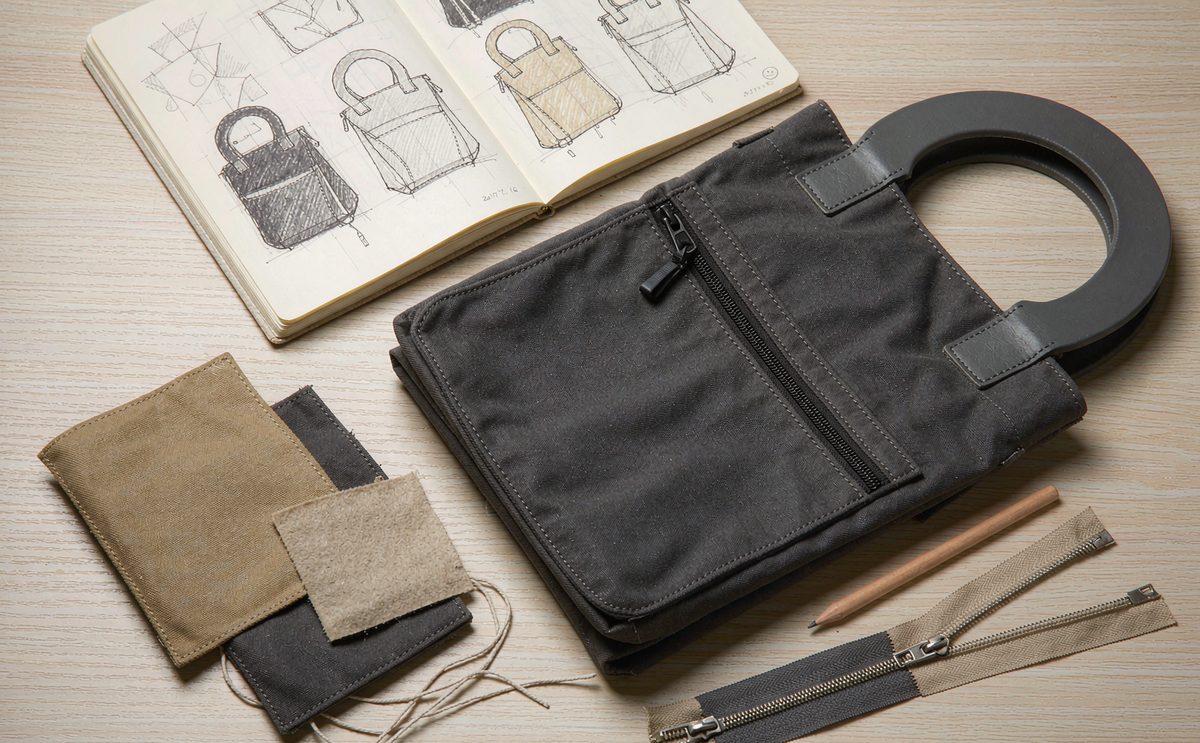
- Where a bag reward fits in a campaign plan
- Stage one: turning an idea into a written specification
- Stage two: cost modelling before the pledge tier is fixed
- Stage three: shortlisting a production partner
- Stage four: requesting a quotation you can compare
- Stage five: prototyping and sample approval
- Stage six: booking the production window
- Stage seven: inspection and release
- Stage eight: freight, duty and the fulfilment handover
- The calendar: working backwards from delivery month
- Budget lines first-time creators miss
- Risk register for a bag programme
- Choosing the reward format for your audience
- Where to go next inside this guide
Where a bag reward fits in a campaign plan
A bag is one of the few reward categories a creator can specify, sample and price before the campaign ever goes live. That is its advantage and its trap. Because it is tangible, backers expect a firm delivery month; because it is physical, every week lost in specification is a week that has to be recovered somewhere else in the schedule, and there is usually nowhere else to recover it.
Treat the bag as a programme with eight stages rather than as a purchase. The stages are specification, cost modelling, partner shortlist, quotation, prototyping, production window, inspection and freight. Each stage produces a document that the next stage depends on. A campaign that reaches the quotation stage without a written specification will receive a number, but that number will not survive contact with the sample.
This guide walks the eight stages in order and routes you to the detail pages for each one. If you already know the format you want, start at the relevant custom bag category page; if you are still deciding, work through stages one to three before you commit to anything.
The two documents that decide everything
Across the whole programme only two documents carry contractual weight: the approved specification and the approved pre-production sample. Everything else is correspondence. When a dispute arises about fabric weight, seam type or hardware grade, the question that gets asked is what those two documents said, so both should be written, dated and held by both sides.
That is also why the overview page matters. The custom bags for Kickstarter pillar sets out the cost architecture, the material specification discipline and the RFQ standards that make those two documents quotable. Read it alongside this guide: this page gives you the sequence, that page gives you the numbers behind each step.
Key takeaways
- A bag reward is a fixed-date production programme, not a retail purchase; the schedule is set by the slowest stage, not the fastest.
- Specification must be written before quotation, because a quote built on a verbal description is priced on its cheapest reading.
- MOQ is 500 pcs per style and colourway, sampling takes 6-10 working days, production 35-50 days after deposit and approved sample.
- Budget for sample fees, courier, lab testing, tooling and freight separately; none of them sit inside the unit price you are quoted.
- Work backwards from the delivery month you promise, and add a buffer you control rather than one you hope to absorb.
Stage one: turning an idea into a written specification
The specification is the document that turns a sketch into a buildable instruction. It has four parts: a dimensioned drawing, a materials list, a hardware list and a construction note. Campaigns that skip it end up iterating during sampling, and every iteration costs working days against a delivery date that has already been published.
| Section | Contents | Why it matters |
|---|---|---|
| Dimensioned drawing | All three axes, panel layout, pocket positions, tolerances | Sets the pattern and the volume claim |
| Materials list | Shell denier, coating weight, lining, mesh grade, foam density | Each line is a priced line item |
| Hardware list | Zip brand and size, buckles, sliders, feet, finish | Longest lead component in most builds |
| Construction note | Seam types, stitch density, reinforcement, seam sealing | Determines assembly time and durability |
| Branding spec | Method, position, size, colour count, artwork file type | Priced per position and per colour |
State numbers rather than adjectives throughout. Water resistant is not a specification; a PU coating at 40 grams per square metre with a welded wet-pocket seam is. Vented is not a specification; 216 square centimetres of open area through a 200 gsm mesh panel is. The difference between the two versions of each line is the difference between a quotation and a guess.
Fix your destination markets at this stage too. Testing scope is priced per market and per material, and adding a market after the sample is approved usually means re-testing on a new sample. A specification that names the United States, the EU and the UK from the start returns a compliance cost you can actually plan against.
Stage two: cost modelling before the pledge tier is fixed
The most common structural error in a bag campaign is setting the pledge price before the unit cost is known. The tier then constrains the specification, and the specification gets quietly downgraded to fit the price. Model the cost first, then set the tier at a level that supports the build you actually want to deliver.
Work backwards from the retail-equivalent price you intend to show on the campaign page. The pledge tier has to cover unit cost, freight and duty per unit, the platform fee, payment processing, packaging, the fulfilment pick-and-pack cost and a margin that survives a re-make. A bag that lands at 11 USD per unit FOB Xiamen is not an 11 USD reward once it reaches a backer's door.
| Line | Typical share of pledge | Illustrative amount |
|---|---|---|
| Unit cost, FOB Xiamen | 20 to 30 percent | 9.80 to 14.70 USD |
| Freight, duty and inland delivery | 8 to 14 percent | 3.90 to 6.90 USD |
| Platform fee and payment processing | 8 to 10 percent | 3.90 to 4.90 USD |
| Pick, pack and fulfilment | 5 to 9 percent | 2.45 to 4.40 USD |
| Packaging and inserts | 3 to 5 percent | 1.45 to 2.45 USD |
| Buffer for re-make and returns | 5 to 8 percent | 2.45 to 3.90 USD |
| Gross margin | 30 to 45 percent | 14.70 to 22.05 USD |
Two figures deserve particular attention. The buffer line is not optional: at 500 pcs a single carton-level defect that requires a re-make will consume most of a thin margin. And the freight line is volatile, so quote it as a range and re-check it when you book, rather than fixing it at the modelling stage and discovering the variance after the campaign has closed.
Stage three: shortlisting a production partner
Shortlist three partners and send each the identical specification. Comparability comes from identical inputs, and the most expensive thing you can do in this stage is to spend three weeks reconciling three quotes that were pricing three different bags. Ask each partner the same six qualifying questions and score the answers, not the enthusiasm.
- Do they quote against a written tech pack, or do they ask you to describe the bag and then quote a range?
- Can they name the sampling window and the revision policy in writing before any money moves?
- What inspection standard do they release against, and will they share the report rather than a pass statement?
- Which certificates can they produce for your destination markets, and are those certificates lot-specific?
- How do they count the minimum: per style, per colourway, or per style across colourways?
- Who is the named programme coordinator, and what is the escalation route when a sample is late?
Capacity matters less than schedule honesty at this scale. A partner quoting from a 4,950 square metre SGS-verified floor with 137 staff across seven lines and 149 machines, at 200,000 pcs per month, has room for a 500-piece programme; the question is whether your programme gets a booked window or gets fitted in. Ask for the window in writing before you pay a deposit.
Where you are comparing us against other options, the useful comparison is not the headline unit price. It is whether the quotation is line-itemed, whether the sampling window is committed, and whether inspection is a report you receive or an assertion you accept. See how we structure a programme on the bag manufacturing for campaign creators page.
Stage four: requesting a quotation you can compare
A request for quotation should return a line-item breakdown, not a single number. The breakdown lets you see which specification lines are expensive, which lets you negotiate on the specific line rather than asking for a generic discount. A partner who will not line-item the quote is telling you that they intend to re-price later.
- Send the written specification with every dimension, material and hardware line named.
- State quantity per style and per colourway, and ask how the minimum is counted.
- State destination markets and the certificates you require, so compliance scope is included.
- State target delivery month and ask which production window supports it.
- Ask for a line-item breakdown separating fabric, hardware, labour, branding, testing and overhead.
- Ask for the sampling window, revision policy and sample fee credit terms in the same response.
Volume pricing is worth asking about explicitly even on a first order. Most partners quote 500 pcs at the first tier and then show the behaviour at 1,000, 2,000 and 5,000 pcs. Knowing the shape of that curve before you launch tells you what a stretch goal is actually worth, and it tells you what a re-order will cost before you promise one.
If two quotations differ by more than 15 percent on the same specification, they are almost certainly not quoting the same bag. Ask both partners which material, hardware and seam interpretation they priced before you treat the lower number as a saving.
Stage five: prototyping and sample approval
Sampling is where the specification meets reality. A standard build takes 6-10 working days; a complex build with moulded components, welded seams or a structured frame takes 12-15. Neither window includes courier time, and neither window should be compressed by approving on photographs alone.
Plan for two rounds. The first sample confirms proportion, material hand feel and construction feasibility. The second confirms the revisions and becomes the pre-production sample that bulk is held to. Campaigns that assume one round and get it wrong lose the full sampling window again, which at this stage usually means the delivery month is gone.
| Step | Working days | Output |
|---|---|---|
| Tech pack review and material confirmation | 1 to 2 | Confirmed materials list, any substitutions flagged |
| Pattern making and first cut | 2 to 3 | Cut panels for the first build |
| First assembly | 2 to 3 | First physical sample |
| Functional checks and internal review | 1 | Fit, load, zip-cycle and water test results |
| Client review and revision note | Client-side | Written revision list |
| Second build and pre-production sample | 3 to 5 | Approved reference sample for bulk |
Sample fees and courier costs are real costs and should be budgeted as such. Most programmes credit the sample fee against the bulk order when you proceed, but the courier cost usually is not recoverable. Budget for both, and budget for sending the sample to more than one reviewer if your team is distributed. The full sequence is documented on the bag sampling and prototyping page.
Stage six: booking the production window
production 35-50 days, and the clock starts only when two conditions are met: the deposit has been received and the pre-production sample has been approved in writing. A campaign that assumes the clock starts at deposit will mis-plan by however long sample approval takes, and sample approval is client-side time.
The window covers material booking, cutting, printing or embroidery, assembly, in-line inspection, packing and final inspection. Long-lead components dominate the front of it. A branded zip in a non-standard colour can hold up the whole run, which is why confirming hardware availability at specification stage is worth more than any schedule pressure you can apply later.
Payment terms are T/T 30/70: 30 percent to release materials and book the window, 70 percent before shipment against the passed inspection report. Trade term is FOB Xiamen. If your plan depends on DDP delivery to a fulfilment warehouse instead, say so at quotation stage, because the freight and duty handling is a different scope and a different quote.
Use the window productively rather than waiting on it. While bulk runs, finalise the carton specification and the labelling artwork, brief the fulfilment partner on the expected carton count and delivery date, and confirm the inspection worksheet is agreed in writing. Those three items are the ones that delay release when they are left until the run finishes.
Ask for a mid-production status point as well. A short written update at roughly the halfway mark, with in-line inspection findings attached, gives you two weeks of warning if anything is drifting. That warning is what makes air-freight fallback or a split shipment a decision rather than a scramble.
Stage seven: inspection and release
Pre-shipment inspection runs at AQL 2.5 under ISO 2859-1. The sampling level tells you how many units are checked; the defect classification tells you what counts. Both should be agreed before production starts, in a worksheet written against your specification rather than against a generic checklist.
- Classify defects as critical, major and minor against your own specification, not against a default list.
- Run function-critical checks at 100 percent where a single failure produces a return: seams, closures, load points.
- Require dimensional measurement on a stated sample size, against the tolerance written in the tech pack.
- Require photographs of every defect found, not just a defect count.
- Agree the remedy before production: re-work, credit, or re-make, and who bears the freight for each.
Insist on receiving the report rather than a pass statement. A report you can read tells you the defect distribution, which tells you whether the run is marginal or clean, and that is the information you need if you are deciding whether to ship, re-work or re-make. The protocol is set out in full on the campaign bag QA and QC page.
Stage eight: freight, duty and the fulfilment handover
Freight is where a well-run programme can still lose its margin. Bags are bulky relative to their weight, so sea freight is usually priced on volume rather than on kilograms, and a carton that is two centimetres larger on one axis can move a container count. Confirm final carton dimensions at sample stage, not after packing.
| Decision | Options | What drives the choice |
|---|---|---|
| Trade term | FOB Xiamen or DDP to warehouse | Whether you have a customs broker and a duty plan |
| Mode | Sea for bulk, air for a first tranche | Delivery month versus cost per unit |
| Carton spec | Shipper carton count and dimensions | Compression limits, pallet efficiency, parcel rates |
| Transit test | ISTA 3A for parcel networks | Whether the parcel goes through a carrier network |
| Handover | Palletised to 3PL, or parcel-ready units | What your fulfilment partner will accept |
Align the carton and labelling spec with the fulfilment partner before production finishes. A 3PL that receives unlabelled inner cartons will charge you to label them, and that cost lands after the campaign has closed, when there is no revenue left to absorb it. The handover detail is covered on the crowdfunding rewards fulfilment page.
The calendar: working backwards from delivery month
Build the schedule backwards from the month you promised, and add the buffer explicitly. A programme that promises June delivery and needs 35-50 days of production, 6-10 working days of sampling, two revision cycles, and four to six weeks of sea freight plus fulfilment has already consumed most of the first quarter of the year.
| Milestone | Working days before delivery | Note |
|---|---|---|
| Backer delivery complete | 0 | Fulfilment partner ships final unit |
| Sea freight and customs | -30 to -45 | Add time if DDP with inland delivery |
| Final inspection and release | -40 to -55 | AQL 2.5 plus any re-work |
| Bulk production | -75 to -105 | 35-50 days after deposit and approval |
| Pre-production sample approval | -80 to -110 | Client-side; the most commonly underestimated step |
| Sampling rounds one and two | -95 to -130 | 6-10 days standard, 12-15 complex, per round |
| Specification signed off | -100 to -135 | With materials and hardware confirmed |
| RFQ issued and quotations compared | -115 to -150 | Allow two weeks for a three-partner comparison |
Two lines in that calendar are client-side and therefore entirely under your control: specification sign-off and sample approval. They are also the two lines that slip most often. Protecting them is the single highest-leverage thing a creator can do to hold a delivery date.
Budget lines first-time creators miss
The unit price is not the programme cost. Five categories sit outside it, and each one is large enough to matter at a 500-piece scale. Missing them is the difference between a campaign that funds and a campaign that funds but does not profit.
- Sample fees and courier: usually credited against bulk for the fee, rarely for the courier, and incurred at least twice.
- Tooling and setup: moulded components, custom zip pulls, dies for embroidery and printing screens.
- Lab testing and certification: priced per market and per material, and repeated if the material changes after approval.
- Freight, duty and inland delivery: volatile, and frequently double the modelled figure for bulky soft goods.
- Re-make and returns buffer: at 500 pcs, one carton-level defect is a meaningful share of margin.
Add a sixth line if the campaign page makes any claim that needs substantiation: recycled content, biocidal treatment, waterproof rating, load rating. Each claim has a corresponding certificate, and each certificate has a cost and a lead time that sits outside the production window.
A seventh line is worth carrying if you intend to re-order. Re-orders are cheaper per unit because setup is already amortised, but they are not free: fabric lots change, and a new lot needs re-testing if the campaign page carries a certified claim. Budget one repeat test per re-order in your forward plan rather than discovering it at the time.
Finally, price the cost of your own time. A 500-piece programme consumes real hours across specification, sample review, revision notes and inspection sign-off. Creators routinely model every supplier cost and none of the coordination cost, then wonder why the margin is thinner than the spreadsheet predicted.
Risk register for a bag programme
A risk register is not pessimism; it is the document that tells you what to do on the day something slips. Write it at specification stage, review it at sample approval, and keep it through production. The four risks below account for most schedule loss on first-time bag campaigns.
| Risk | Likelihood | Mitigation |
|---|---|---|
| Sample approval slips beyond the planned window | High | Name a single approver; approve in writing within 48 hours of receipt |
| Material substitution after approval | Medium | Require lot-specific certificates and a no-substitution clause |
| Hardware lead time holds the run | Medium | Confirm availability at specification stage; approve a named alternative |
| Freight cost exceeds the modelled range | Medium | Quote as a range; re-book early; ship a tranche by air if the date is fixed |
| Defect rate forces re-work | Low to medium | Agree the remedy and the cost bearer before production starts |
Sample approval is client-side time and it is the step most campaigns underestimate. A sample that sits unopened for a week consumes a week of the production window you have not yet booked. Name one approver, set a 48-hour review rule, and send the revision list as a single written document rather than as a series of messages.
Choosing the reward format for your audience
Format choice should follow the audience's actual carrying behaviour, not the format that photographs best. A commuter audience wants a laptop compartment and a structured back panel. A fitness audience wants separated wet storage and a vented shoe bay. A travel audience wants cabin compliance and compression. Each of those is a different build with a different cost structure.
If the audience is broad, resist the temptation to design one bag that does everything. Multi-function builds carry more panels, more hardware and more assembly time, and they tend to do each function worse. A single-purpose bag plus a small custom pouch or cube as a bundle usually delivers better perceived value at a lower unit cost.
Consider the platform as well. Kickstarter backers expect a firm delivery date and a detailed reward description; Indiegogo backers are more tolerant of flexible timelines but expect early-bird pricing logic. The format and the tier structure should be chosen together. See the Indiegogo crowdfunding bags page for the platform-specific differences.
Where to go next inside this guide
The eight stages above are the spine of the programme. Each one has a detail page covering the decisions inside it, and each category has its own specification guide. Start with whichever stage you are currently in; if you are at the very beginning, the two process pages below are the ones that change the numbers most.
Sampling and prototyping
Tech pack contents, revision rounds, the 6-10 day window and pre-production sample approval.
Low MOQ production
How the 500-piece minimum counts and which levers genuinely reduce a first order.
QA and inspection
AQL 2.5 worksheets, defect classification and what to require in the release report.
Rewards fulfilment
Carton spec, labelling, freight modes and the 3PL handover after inspection release.
Custom bags overview
The full campaign bag programme: cost architecture, materials, compliance and RFQ standards.
Backpacks
Panel architecture, harness engineering and unit cost behaviour from 500 to 2,000 units.
Gym and fitness bags
Vented shoe storage, wet-kit pockets, odour finishes and 40-60 litre volume planning.
Travel bags
Cabin compliance, compression systems, sets and bundles inside one minimum.
- Custom sports bags for Kickstarter
- Custom duffel bags for Kickstarter
- Custom laptop bags for Kickstarter
- Custom tote bags for Kickstarter
- Custom cosmetic bags for Kickstarter
- Custom bag categories index
- Bag manufacturing for campaign creators
- Frequently asked questions
Your reward tier is a promise about a date as much as a promise about a product; cost the date before you publish it.
Kickstarter Creator Handbook
- Minimum order quantity
- 500 pcs per style / colourway
- Sampling
- 6-10 working days (12-15 for complex builds)
- Bulk production
- 35-50 days after deposit + approved pre-production sample
- Inspection standard
- AQL 2.5 to ISO 2859-1
- Trade term
- FOB Xiamen
- Payment terms
- T/T 30/70
- Production floor
- 4,950 m², SGS-verified
- Team and capacity
- 137 staff / 7 production lines / 149 machines / 200,000 pcs per month
- Foundation
- 2014 (trade roots since 2004)
- Campaigns supported
- 20+ crowdfunding campaigns
- Contact
- service@junyuanbags.com / WhatsApp +86 177 5002 0688
Start your bag programme
Send a written specification or a sketch with dimensions and target quantity. You will receive a line-item quotation, a committed sampling window and a production calendar built backwards from your delivery month.
Frequently Asked Questions
How long does a crowdfunding bag programme take from start to backer delivery?
Work backwards from the delivery month: two to three weeks to compare quotations, 6-10 working days per sampling round, 35-50 days of bulk production after deposit and approved sample, then 30 to 45 days for sea freight, customs and fulfilment. Most programmes need four to six months of calendar from specification sign-off.
What is the minimum order quantity for a crowdfunding bag reward?
The minimum is 500 pcs per style and per colourway. Two colourways of the same body normally count as two minimums, so a black and a grey version is 1,000 pcs unless a split within one production setup is negotiated. Splits are more likely where both colourways share fabric, hardware and branding.
When should I fix the pledge tier price for a bag reward?
After you have modelled the cost, not before. Set the tier from a reverse model that covers unit cost, freight and duty, platform fees of roughly 8 to 10 percent, pick and pack, packaging, a re-make buffer of 5 to 8 percent and a margin of 30 to 45 percent. Fixing the price first forces the specification down to fit it.
How many production partners should I shortlist?
Three is the practical number. Send each the identical written specification so the quotations are comparable, and score the answers to six qualifying questions rather than the headline price. If two quotes differ by more than 15 percent on the same spec, they are almost certainly not quoting the same bag.
What should a bag request for quotation include?
A dimensioned drawing with tolerances, a materials list with denier and coating weights, a hardware list with brand and size, a construction note covering seam types and stitch density, a branding spec, quantity per colourway, destination markets and target delivery month. Ask for a line-item breakdown in return.
How long does bag sampling take before bulk production?
A standard build samples in 6-10 working days and a complex build in 12-15. Plan for two rounds, because the first confirms proportion and feasibility while the second becomes the pre-production sample that bulk is held to. Neither window includes courier time or client-side approval time.
What starts the bulk production clock?
Two conditions together: the deposit has been received and the pre-production sample has been approved in writing. production 35-50 days, covering material booking, cutting, decoration, assembly, in-line inspection, packing and final inspection. Assuming the clock starts at deposit alone is the most common planning error.
What inspection standard applies before a campaign bag shipment is released?
Pre-shipment inspection runs at AQL 2.5 under ISO 2859-1. Agree the defect classification before production: treat seam failure, closure failure and load-point stitch omission as critical, and run function-critical checks at 100 percent. Always require the full report with photographs, not a pass statement.
Which budget lines sit outside the quoted unit price?
Five categories: sample fees and courier, tooling and setup for moulded or custom components, lab testing and certification per market, freight with duty and inland delivery, and a re-make buffer. Sample fees are usually credited against bulk but courier rarely is, and testing is repeated if material changes after approval.
Should I ship bags by sea or by air for a campaign reward?
Sea for the bulk run, because bags are bulky relative to weight and sea freight prices on volume. Air only for a first tranche where a delivery date is fixed and cannot move. A common structure is a small air tranche to start fulfilment and a sea shipment for the remaining volume.
What trade terms and payment terms should I expect?
Standard trade term is FOB Xiamen and standard payment is T/T 30/70: 30 percent to release materials and book the window, 70 percent before shipment against the passed inspection report. If you need DDP delivery to a fulfilment warehouse, request it at quotation stage because it is a different scope.
How do I choose between one multi-function bag and a bag plus a bundle?
Prefer a single-purpose bag plus a small pouch or cube bundle. Multi-function builds add panels, hardware and assembly time, which is the largest cost block at 28 to 34 percent of unit cost, and they tend to perform each function worse. Bundled small items nest inside the bag and add almost nothing to freight.
Which certificates do I need for a bag reward shipped to the EU?
EU GPSR product identification is the baseline. Add a REACH SVHC statement for coated fabrics and hardware, a GRS transaction certificate for any recycled-content claim, and a treatment certificate for any biocidal claim. Fix the destination list before sampling so the testing scope is quoted rather than added later.
How much buffer should I build into a bag campaign budget?
Allow 5 to 8 percent of the pledge value for re-make and returns, and quote freight as a range rather than a fixed figure. At a 500-piece scale a single carton-level defect requiring re-work consumes a meaningful share of a thin margin, so the buffer is a planned cost rather than a contingency.
Can I run a pilot run before committing to 500 pieces?
A pilot run below the minimum is sometimes possible but it is priced as a small run, so the per-unit figure is materially higher. Sampling is usually the better first step: it costs one sample fee, takes 6-10 working days and validates the specification before any volume commitment is made.
What is the most common cause of a missed bag delivery date?
Sample approval slipping on the client side. It is the one stage entirely under your control and the one most often underestimated. Name a single approver, apply a 48-hour review rule on receipt, and send the revision list as one written document rather than a series of separate messages.
How do stretch goals affect a bag production programme?
Stretch goals that add colourways multiply the minimum, while those that add a bundled small item do not. Ask for the volume pricing curve at 500, 1,000, 2,000 and 5,000 pcs before launch so you know what each stretch goal is actually worth in unit cost terms before you promise it.
Do I need a written tech pack to get a firm quotation?
Yes, if you want the number to hold. A quotation built from a verbal description is priced on its cheapest reading and will move when the sample clarifies the intent. A written pack with dimensions, materials, hardware and construction notes returns a line-itemed figure you can compare across three partners.
How do I compare two quotations that look very different?
Ask both partners which material, hardware grade and seam method they priced. Most large gaps come from a different interpretation of one unspecified line rather than from a genuine cost difference. Reconcile the inputs before you treat the lower number as a saving, and re-issue one identical specification to both.
What happens if the inspection fails and I have a delivery date?
Agree the remedy before production starts: re-work, credit or re-make, and who bears the freight for each. Re-work is measured in days, a re-make in weeks. Where the date is fixed, a common fallback is to ship the compliant portion and air-freight the re-worked balance afterwards.
People Also Ask
How do I start a custom bag project for a crowdfunding campaign?
Start with a written specification rather than a supplier conversation. Produce a dimensioned drawing, a materials list, a hardware list and a construction note, then send that identical pack to three production partners. The specification is what makes the quotations comparable and what stops the price moving once sampling begins.
Is 500 pieces a lot for a first crowdfunding bag order?
It is the standard floor for a custom build because it covers line setup, material minimums from the mill and hardware minimums from the trim vendor. Below that the per-unit cost rises steeply. If 500 feels high, reduce risk by sampling first and by sharing fabric, hardware and branding across the range.
What is the cheapest type of bag to produce for a campaign?
Flat-construction items such as totes, drawstrings and pouches, because they have few panels and low assembly time. Structured bags with linings, padding and hardware cost more per unit regardless of size. Labour, not fabric, is usually the largest single cost block, so panel count drives the price more than material grade does.
Do I need to pay for samples before placing a bulk order?
Yes. Sampling is a paid standalone step, typically 6-10 working days for a standard build. The sample fee is usually credited against the bulk order when you proceed, but the courier cost generally is not. Budget for at least two rounds, because the second becomes the pre-production sample that production is held to.
How do I avoid my bag reward arriving late?
Work backwards from the delivery date and protect the two client-side steps: specification sign-off and sample approval. Name one approver, review within 48 hours of receipt, and send revisions as a single written document. Book the production window in writing before paying the deposit rather than assuming capacity will be available.
Can I change the design after the sample is approved?
You can, but it restarts the affected part of the schedule. A material or hardware change after approval usually requires a new pre-production sample and repeats any compliance testing tied to that material. Treat the approved sample as the contractual reference and make changes before approval rather than after it.
What is the difference between FOB and DDP for a bag shipment?
FOB Xiamen means you take ownership at the port and handle freight, customs and duty yourself. DDP means the partner delivers to your warehouse with duty paid. FOB gives control and lower headline cost; DDP removes the customs workload but is a different scope that must be quoted from the start, not added later.