Custom Duffle & Weekender Bags for Crowdfunding Campaigns
A custom duffel or weekender reward is quoted on five variables: build shape, shell denier, strap load rating, trim grade and packed volume. The commercial constants are fixed - MOQ 500 pcs per style and colourway, sampling in 6-10 working days, production 35-50 days after deposit and approved pre-production sample, inspection at AQL 2.5 to ISO 2859-1. A 40-litre duffel lands between USD 21 and USD 38 per unit at 500 pcs, depending on shell denier and trim grade.
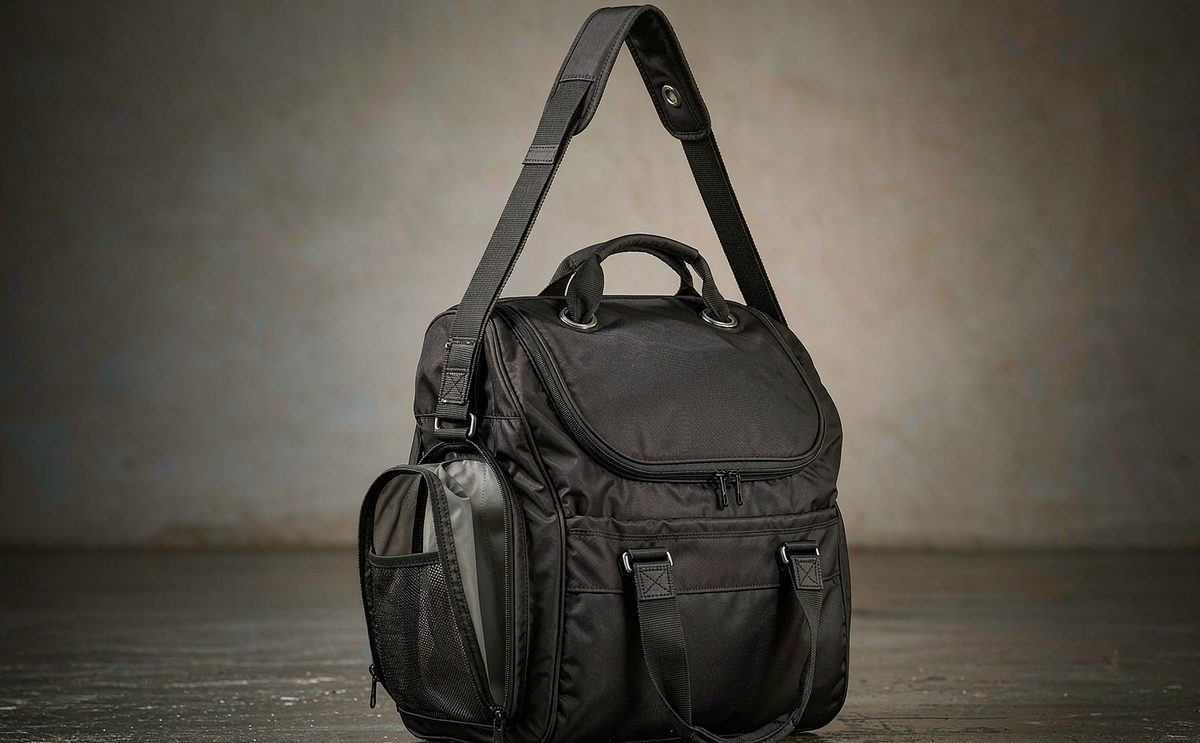
- Where duffels and weekenders sit in a reward matrix
- Barrel builds versus rectangular builds
- Packing volume versus external size
- Shell fabric decisions: 600D, 1000D and coated polyester
- Leather trim, PU trim and where it belongs
- Strap load ratings and shoulder carry engineering
- Duffel hardware: zips, sliders and end-cap construction
- Airline sizing and carry-on compliance
- Lining, wet compartments and shoe tunnels
- Branding placement on curved and flat panels
- Unit cost behaviour across 500 to 2,000 duffel units
- Sampling a duffel: load tests and revision rounds
- Duffel inspection points at AQL 2.5
- Carton cubing and freight for soft bags
- Writing a duffel RFQ that prices cleanly
A campaign bag programme is won or lost on the middle pledge tier, and the duffel is usually that tier. Between a printed pouch at USD 29 and a full travel set at USD 249 sits a 35-55 litre duffel or weekender at USD 89-149, and it is the reward most backers compare against retail equivalents they already own. That comparison is unforgiving, because a duffel is judged on three things a photograph cannot hide: zip action, strap comfort under load, and whether the bag holds its shape when half full.
From a sourcing standpoint the duffel is also the most forgiving category to cost. It has one main cavity, few panels, and no internal frame, so labour minutes per unit are low relative to perceived size. That is precisely why it is the reward where campaigns most often over-specify. A production partner can build a 40-litre duffel anywhere between USD 21 and USD 38 per unit at 500 pcs, and the difference between those two numbers is almost entirely shell denier, trim grade and hardware choice rather than size.
Where duffels and weekenders sit in a reward matrix
The duffel occupies the volume band that a backpack cannot reach and a suitcase cannot justify. A 30-45 litre soft bag carries a weekend of clothing, a pair of shoes and a wash kit, and it flat-packs into a carton dimension that stays inside standard carrier bands. For a creator building a reward matrix, that combination makes it the natural upgrade path from an accessory tier and the natural anchor for a bundle with packing cubes or a toiletry bag.
The commercial constraint is the same as every other campaign bag: 500 pcs per style and colourway. One hero duffel in one colourway is 500 units of commitment. Three colourways of the same duffel is 1,500 units, three dye lots and three hardware set-ups, which is a very different cash requirement for a 30% deposit calculated at T/T 30/70. Most first campaigns are better served by one hero colourway with accessory add-ons cut from the same fabric buy, because add-ons ride on set-up costs the hero run has already paid for.
Programme timing does not change with category. Sampling runs 6-10 working days for a standard duffel, or 12-15 working days where the build carries custom hardware, welded wet compartments or multi-panel print. production 35-50 days from the two events that start the clock together: deposit received and pre-production sample approved. Transit and fulfilment sit on top of that window, not inside it. The full category map is set out on custom bag categories, and the campaign-level mechanics are covered in the crowdfunding bag guide.
Key takeaways for duffel reward planning
- One hero duffel in one colourway is 500 units of commitment; three colourways is 1,500 units and three dye lots.
- Unit cost at 500 pcs typically lands between USD 21 and USD 38, driven by denier and trim rather than by size.
- Accessory add-ons from the same fabric lot cost 30-50% less per unit than standalone equivalents.
- production 35-50 days starts only when deposit and sample approval are both in place.
Barrel builds versus rectangular builds
The first specification decision is geometry, and it is a cost decision before it is a design decision. A barrel duffel has a curved top zip path, a radial end cap and a gusset that wraps the circumference of the bag. A rectangular weekender has flat top and bottom panels, square end panels and straight seams. The barrel looks softer and packs more forgivingly; the rectangular build prints cleanly, cubes better in a carton and sews faster.
| Element | Barrel build | Rectangular build |
|---|---|---|
| Top zip path | Curved, #8 or #10 coil, horseshoe route around the end cap | Straight three-sided or full-perimeter route on flat planes |
| Panel count | 6-9 panels including a wrapped gusset | 4-6 panels with square corners |
| Print surface | Curved; screen print limited to flat end panels | Flat top, front and side panels all printable |
| Shape retention | Slumps when half full unless a base board is added | Holds form; optional base board shared with the shell |
| Sewing minutes | Higher; curved seams need skilled operators | Lower; straight seams run on any of the 7 lines |
| Freight cubing | Poorer; dead space at the corners of the carton | Better; nestles to carton dimensions with less void |
In quotation terms the geometry gap is usually USD 2-4 per unit at 500 pcs, mostly in cutting and sewing labour rather than in material. A barrel build also constrains branding: screen print registration on a curved gusset is unreliable above roughly 200 mm of print width, so most barrel campaigns put the hero mark on a flat end panel or on a woven label. If the campaign identity depends on a large front graphic, specify rectangular and spend the labour saving on a better zip chain instead.
There is a middle path that is often the right answer for a weekender: a rectangular body with a subtly curved top zip and a structured base board. It prints flat, holds its shape for photography, and still reads as a soft bag rather than a box. Ask your production partner to quote both geometries against the same tech pack in the same sampling round, because the cost difference is only meaningful when the fabric and hardware are held constant.
Packing volume versus external size
Backers buy litres and airlines measure centimetres, and campaigns routinely publish the wrong one. A duffel described as 40 L may be quoted from external dimensions multiplied out, which overstates usable capacity by 15-25% once seam allowance, padding and the base board are deducted. Specify volume by a stated method — water-fill, or stuffing with standardised blocks — and write the method into the tech pack so the claim on the campaign page matches the bag that ships.
| Tier | External dimensions (cm) | Usable volume | Typical pledge band |
|---|---|---|---|
| Gym / day duffel | 45 x 24 x 24 | 20-25 L | USD 59-79 |
| Weekender | 50 x 28 x 28 | 30-38 L | USD 89-119 |
| Travel duffel | 55 x 32 x 30 | 40-50 L | USD 119-149 |
| Expedition duffel | 65 x 36 x 34 | 60-80 L | USD 149-199 |
| Under-seat mini | 40 x 20 x 25 | 15-18 L | USD 49-69 |
Volume also drives freight in a way that surprises first-time creators. A 55 cm duffel packed assembled occupies roughly 45-52 litres of shipped volume per unit; flat-packed with the strap detached and the base board removed it can drop to 30-34 litres. Across 500 units that is the difference between one and two pallet positions on the sea leg, and it is usually worth more than any rate negotiation you will win with a forwarder. Design for flat pack from the first sample, not as a packaging afterthought.
Shell fabric decisions: 600D, 1000D and coated polyester
Denier is the single biggest lever on duffel unit cost, and it is also the lever most campaigns pull in the wrong direction. A duffel is not a load-bearing backpack; it does not need 1680D on the body. What it needs is a shell that resists abrasion at the base and corners, a coating that sheds rain, and enough hand-feel that the bag does not read as a giveaway. That is usually achievable at 600D with a PU backing, upgraded selectively at wear points.
- 600D polyester, PU backed. The default duffel shell. Good abrasion resistance, stable print surface, predictable dye lots, and the lowest cost per yard of the coated options.
- 900D to 1000D polyester. Used where the campaign story is durability. Adds roughly 12-18% to the fabric line and about 90-140 g to the empty weight of a 40 L bag.
- 1680D ballistic polyester. Reserved for the base panel and corner reinforcements on expedition builds. Rarely worth specifying across the whole body.
- Recycled PET with GRS documentation. Priced at a premium of 8-15% over virgin equivalent, and only defensible if the transaction certificate exists before the claim is published.
- TPU laminate. Weldable and genuinely waterproof at the seam, specified for adventure and dry-bag-adjacent duffels rather than for general weekenders.
- Canvas or cotton blends. Chosen for weekender aesthetics, heavier per litre and slower to dry; specify a 12oz minimum and expect a dye-lot variance discussion.
Coating matters more than denier for perceived quality. A PU backing of 0.08-0.12 mm gives a duffel a dry hand and a slight sheen; a heavier coating makes the fabric feel boardy and crack at fold points after a season. Ask for the hydrostatic head figure in millimetres rather than accepting a water-resistant adjective, and specify DWR finish separately if the campaign imagery depends on beading. Both are cheap line items and both are frequently omitted from first RFQs.
Specifying 1000D across an entire 40-litre duffel adds roughly USD 3-5 per unit and 100-140 g of empty weight, and most of that cost and weight is on panels that never touch the ground. Specifying 600D on the body with 1680D or 1000D on the base panel and corner patches delivers the same abrasion performance where it matters for about a third of the cost.
Leather trim, PU trim and where it belongs
Leather trim is the fastest way to raise the perceived value of a weekender and the fastest way to break a production schedule. Full-grain and top-grain hides are bought in lots, colour-matched by hand, and subject to natural variation that a 500-piece run cannot fully average out. PU trim gives 80% of the visual effect at 20-30% of the material cost, with consistent colour and no hide-lot minimum, and it has become the default for campaign weekenders positioned under USD 129.
| Trim type | Cost impact at 500 pcs | Lead-time impact | Best placement |
|---|---|---|---|
| PU / vegan leather | + USD 1.20-2.40 per unit | None if stocked colour; +5 days for a matched custom colour | Zip pulls, logo patch, handle wrap, base corners |
| Top-grain leather | + USD 4.00-8.50 per unit | +7-12 days for hide procurement | Handle wrap, end-cap logo patch, detachable strap pad |
| Full-grain leather | + USD 7.00-14.00 per unit | +10-15 days; hide-lot variance must be pre-agreed | Handle wrap and strap pad only |
| Woven / silicone label | + USD 0.25-0.90 per unit | None; runs from existing artwork | Front panel, end panel, zip garage |
| Moulded rubber patch | + USD 1.10-2.20 per unit + tooling | +12-15 days for tooling and first shots | Centre front panel on flat builds |
Placement should follow contact, not visibility. A leather handle wrap is touched on every carry and reads as quality in use; a leather patch on a panel nobody touches is an expensive photograph. Edge paint is the failure point on leather trim — specify sealed and burnished edges, and add an edge-paint rub check to the inspection criteria, because edge cracking is one of the defects that generates warranty claims 12-18 months after delivery.
Strap load ratings and shoulder carry engineering
A duffel strap carries the whole bag plus contents, and it is the component most likely to fail in backer hands. Specify it numerically: webbing width and material, stated break strength in kilonewtons or kilograms-force, stitch pattern at every load point, and padding density if the strap is padded. A 40-litre duffel loaded to 12 kg puts roughly 6 kg on each shoulder contact when carried by the handles, far more in dynamic load when the bag is swung.
- Webbing. Polyester webbing at 38 mm for a removable shoulder strap on bags above 30 L; 25 mm is acceptable only for light day duffels under 20 L.
- Break strength. Ask for a stated figure from the webbing mill, typically 400-600 kgf for 38 mm polyester, and have it verified rather than assumed.
- Bar-tacks. Every strap root gets a bar-tack or an X-box stitch; a single straight stitch line at the strap root is the most common duffel failure we see in inspection.
- Padding. Closed-cell foam at 8-12 mm with a density near 25-30 kg/m3 for a strap pad; lower density flattens within a season and reads as cheap.
- Handles. Two self-fabric or webbing handles with a joined grip wrap, tested for a 15 kg static hold for 60 seconds in sampling.
- Hardware. Zinc alloy or acetal triglides and swivel hooks rated above the webbing break strength, so the webbing is never the weak link.
Test the strap in sampling rather than trusting the mill certificate. A straightforward protocol is a static load test at 1.5 times the stated carry weight for 60 seconds, followed by 500 cycles of a 10 kg dynamic lift. Where the campaign makes a durability claim, seam and fabric strength testing to ASTM D5034 gives you a number to publish and, more importantly, a number your production partner can be held to on a re-order.
Duffel hardware: zips, sliders and end-cap construction
The main zip is the first thing a backer touches and the most common source of a defect claim on a duffel. For bags above 30 litres specify #8 or #10 coil, not #5; the larger chain resists the spreading force that occurs when a full duffel is closed under tension. Reverse coil puts the teeth on the inside and gives a cleaner exterior line plus better weather shedding, at a modest premium over standard coil.
- Chain grade. #8 coil for 30-45 L, #10 for 50 L and above, or for any bag with a curved horseshoe path that loads the chain asymmetrically.
- Slider. Metal or rubber-moulded pull with a branded logo, autolock slider on the main compartment so the bag cannot self-open in transit.
- Zip garage. A fabric or PU garage at the end of the path protects the teeth and stops the slider snagging lining.
- End cap. A shaped end panel with a wet compartment or shoe tunnel adds two panels and one zip; budget it as a distinct cost line rather than assuming it folds into the shell.
- Feet. Five moulded feet or a reinforced base strip on bags above 40 L, bar-tacked rather than riveted where possible.
- D-rings and lash points. Two to four D-rings on the exterior for a strap and for attachment; specify welded or bar-tacked, never sewn-only.
Hardware set-up is where a schedule slips. A custom-moulded zip pull adds tooling and 12-15 working days to the sampling window for a feature almost nobody pledges for. Put the money into the chain grade, the slider and the bar-tacks instead. Where a campaign genuinely needs a signature closure, a magnetic FIDLOCK-class buckle is the better investment because it is visible in use and sourced as a stock component rather than as tooling.
Airline sizing and carry-on compliance
Most airline cabin allowances cluster around the IATA cabin baggage reference of 55 x 40 x 20 cm, and individual carriers vary below that. A soft duffel has a structural advantage over a hard case: it compresses into a sizer. That advantage only holds if the bag has no rigid internal frame and no fixed base board that cannot flex, which is a specification decision, not a marketing one.
Cabin allowances are set by individual carriers and change without notice, and no production partner can certify compliance on their behalf. Publish the measured external dimensions of the empty bag, state that allowances vary by carrier, and point backers to their airline. A campaign that claims guaranteed carry-on approval for a 55 cm duffel is creating a refund liability it will pay for after delivery.
Where the campaign genuinely targets cabin use, spec the empty bag to sit 1-2 cm under the reference in every dimension so that a loaded bag still compresses into a sizer, and document the measurement method in the tech pack. Rewards built strictly for cabin compliance belong on the custom carry-on bags page, and the wider dimensional and compliance picture is covered under custom travel bags. Under-seat formats at roughly 40 x 20 x 25 cm are the safer claim, because they sit well inside every published allowance.
Lining, wet compartments and shoe tunnels
The interior is where a weekender differentiates from a gym bag. A plain 210D polyester lining is the cheapest option and is entirely adequate for a general duffel. A wet compartment needs a welded or TPU-coated lining with sealed seams, and a shoe tunnel needs an accessible end-cap entry with a vented or wipe-clean surface. Each of those adds panels, a second zip and additional sewing minutes, and each should be quoted as a separate line so the campaign can drop it if the price model tightens.
- 210D polyester lining. Standard for the main cavity; low cost, low weight, and available in a contrast colour for brand identity.
- 420D lining. Specified where the bag carries shoes, tools or camera inserts and the lining takes abrasion.
- TPU-coated or welded wet pocket. Sealed seams with a stated hydrostatic head; the only construction that genuinely contains a wet swimsuit.
- Shoe tunnel. End-cap access, wipe-clean lining, optional vent grommet; adds roughly USD 2.50-4.50 per unit at 500 pcs.
- Interior organisation. Two slip pockets and one zip pocket on the lining is a typical specification and adds about USD 1.20-2.00 per unit.
- Contrast binding. A bound internal seam in a brand colour reads as a premium finish and costs cents rather than dollars.
Lining colour is a quiet quality signal. A dark lining hides dirt but makes the bag feel like a black hole when a backer opens it in a hotel room; a mid-tone or contrast lining photographs far better in campaign video and costs the same. Specify the lining denier and colour in the tech pack, because a substituted lining is one of the changes most likely to slip through a sample approval when it is not written down.
Branding placement on curved and flat panels
Duffel branding is constrained by geometry more than by method. Screen print gives the best colour saturation on flat polyester panels but needs a flat surface and carries a per-colour screen charge. Heat transfer handles gradients and small runs of complex artwork. Embroidery reads as premium on canvas and on end panels but is slow and adds cost per 1,000 stitches. A woven or silicone label is the cheapest route to a visible brand mark and works on any panel shape.
| Method | Suitable surfaces | Set-up cost at 500 pcs | Durability notes |
|---|---|---|---|
| Screen print | Flat panels only; 200 mm max width on curved gussets | USD 45-80 per colour screen | Excellent on PU-backed polyester; cracks on heavy coating if under-cured |
| Heat transfer | Flat and lightly curved panels | USD 60-120 for film and setup | Good detail; can lift at fold points if applied across a seam |
| Embroidery | End panels, canvas bodies, structured panels | USD 40-90 digitising + per-1,000-stitch charge | Highest perceived value; slows the line on heavy coverage |
| Woven label | Any panel, any geometry | USD 25-60 for the loom setup | Cheapest visible mark; ideal as the hero placement on barrel builds |
| Silicone / rubber patch | Flat front or end panel | USD 150-400 mould + unit cost | Best hand-feel; tooling adds 12-15 working days to sampling |
Place the hero mark where the camera will find it and the second mark where the owner will. On a duffel that usually means a large front-panel graphic and a small woven label at the zip garage or on the strap pad. Two placements cost marginally more than one and materially improve perceived value in unboxing photography, which is the content that drives the next campaign. Confirm artwork format before sampling starts, because an artwork delay is the most common cause of a slipped 6-10 working day window.
Unit cost behaviour across 500 to 2,000 duffel units
Duffel unit cost follows the same six-element structure as any campaign bag, but the shares differ from a backpack because there is no harness and no frame. Fabric dominates, hardware is second, and labour is third. Set-up charges — screens, loom labels, moulded pulls — are fixed and are amortised across the run, which is why the curve between 500 and 1,000 pcs is far steeper than the curve between 1,000 and 2,000.
| Cost element | Share of unit cost | Notes for duffel builds |
|---|---|---|
| Shell fabric and lining | 34-46% | 600D PU-backed body with 210D lining; rises with 1000D or recycled PET |
| Hardware and trims | 16-24% | #8 or #10 coil chain, sliders, D-rings, feet, base board |
| Cutting, sewing and assembly | 16-24% | Barrel builds sit at the top of the band, rectangular at the bottom |
| Branding | 4-10% | Screen, embroidery or label; set-up amortised over the run |
| Packaging | 3-7% | Polybag, hangtag, printed carton; flat-pack reduces freight materially |
| Inspection and export handling | 2-5% | AQL 2.5 pre-shipment inspection, documentation, port handling |
Ask for a three-tier quotation at 500, 1,000 and 2,000 pcs before you set the pledge price. The shape of that curve tells you whether a stretch goal improves margin or merely adds volume, and it tells you how much of the first run is set-up cost that will disappear on a re-order. A typical 40-litre duffel drops 8-14% per unit between 500 and 1,000 pcs and a further 4-7% between 1,000 and 2,000, with most of the first drop coming from amortised set-up rather than from material.
A 40-litre duffel quoted at USD 26 FOB Xiamen is roughly USD 34-38 landed once sea freight, duty and fulfilment handling are added for North America or Europe. If the reward ships at USD 109 with backer-facing freight taking USD 20-26, that leaves a workable margin. If the same bag is quoted at USD 34 FOB, the landed figure approaches USD 44 and the tier stops working regardless of how well the campaign funds.
Sampling a duffel: load tests and revision rounds
Sampling runs 6-10 working days for a standard duffel, counted from approved artwork and a settled tech pack, and 12-15 working days where the build carries custom hardware, welded compartments or a moulded component. That clock excludes courier transit in both directions. Plan two rounds: the first settles geometry, volume and strap comfort, the second settles colour, trim and branding placement.
- Tech pack issued. Dimensions, volume method, shell denier, lining, zip specification, strap rating, branding placement and packing format, all written and countersigned.
- Material confirmation. Fabric lot, coating, webbing, zip chain and trim confirmed available, or substituted with a documented equivalent and a revised cost.
- Pattern and first build. Cut and sewn on one of the 7 production lines that will run bulk, not in a separate sample room.
- Dimensional and volume check. External dimensions measured empty and stuffed; usable volume verified by the method written into the tech pack.
- Load test. Strap and handles held at 1.5 times stated carry weight for 60 seconds; 500 cycles of a 10 kg dynamic lift where the campaign claims durability.
- Photography and review. Neutral-light photography sent with the sample so the creator can mark up without a second courier leg.
- Revision and pre-production approval. The gold sample locks construction; changes after this point carry both a cost and a timeline impact.
Two rounds is the realistic default and budgeting one is the most common scheduling error in duffel sourcing. The sample prototyping programme sets out how revision loops are structured and what a marked-up sample should contain. If the campaign page needs final photography before launch, build the second round into the pre-launch calendar rather than discovering it after the funds clear.
Duffel inspection points at AQL 2.5
Pre-shipment inspection runs at AQL 2.5 under ISO 2859-1: a statistically determined sample is drawn from finished cartons, defects are classified as critical, major or minor against tolerances agreed before the run starts, and the shipment either passes or is reworked before release. For a duffel the classification list must be written before production, because most disputes are about whether a defect is major or minor rather than about whether it exists.
- Critical. Broken or non-functioning main zip, detached strap root, missing bar-tack at a load point, sharp hardware edge.
- Major. Zip chain spreading under closure, seam slippage above 3 mm, visible shade variation between panels of one bag, lining pulled taut across the cavity.
- Minor. Loose thread under 10 mm, light print misregistration within tolerance, small adhesive residue on trim, carton scuffing.
- Dimensional. External dimensions checked against the tech pack within an agreed tolerance, typically plus or minus 5 mm on a 50 cm bag.
- Functional. Strap and handle load test repeated on 3 units drawn from the inspection sample, not only on the gold sample.
- Documentation. Inspection report issued before cartons are released, with photographs of any defect found and the disposition recorded.
The inspection report is the deliverable that matters to a campaign creator, not the pass rate. It is the document you can quote in an update when backers ask about quality, and it is the evidence base if a re-order needs to be corrected. Full defect classification and reporting structure are set out on the campaign bag QA and QC page, and the broader compliance picture sits in the crowdfunding bag guide.
Carton cubing and freight for soft bags
Duffels are high-volume, low-weight freight, which means volumetric weight rather than actual weight sets the bill. That makes carton design one of the highest-return decisions in the whole programme. A 40-litre duffel shipped assembled occupies roughly 45-52 litres; flat-packed with the strap detached and the base board laid flat it occupies 30-34 litres. Across 500 units, that reduction frequently removes a pallet position from the sea leg.
| Option | Transit | Cost profile | Campaign risk |
|---|---|---|---|
| Sea freight, consolidated, flat-packed | 30-45 days | Lowest cost per unit at 500+ pcs | Requires production to start at campaign close |
| Sea freight, assembled cartons | 30-45 days | 15-25% higher volumetric charge | Highest volume; still the default for structured weekenders |
| Air freight, split first wave | 7-12 days | 3-5 times sea cost per kg | Useful for early-backer delivery; expensive as a full solution |
| DDP to fulfilment hub | Adds 6-10 working days handling | Duty and tax prepaid and priced in | Removes backer-side customs charges, a frequent complaint source |
| Direct parcel from hub | 2-6 days last mile | Per-parcel rate agreed with the fulfilment partner | Needs ISTA 3A transit testing on the packed carton |
Coordinate carton dimensions with the fulfilment partner before the pre-production sample is approved, because changing the carton after production is a repacking cost nobody budgeted. Where individual backer parcels are shipped direct, transit testing to ISTA 3A on the packed carton is worth booking during sampling. Freight and handover planning are covered in more detail on the rewards fulfilment page.
Writing a duffel RFQ that prices cleanly
An RFQ that arrives complete gets a real number back within a business day. An RFQ that arrives as a paragraph of intent gets a range, and a range cannot be tested against a funding target. Include the geometry decision explicitly, because barrel and rectangular are priced differently, and state the volume measurement method if the campaign will publish a litre figure.
- Geometry: barrel or rectangular, with target external dimensions in centimetres.
- Target usable volume in litres and the measurement method the campaign will publish.
- Shell fabric with denier and coating, plus a base-panel specification if it differs.
- Trim route: PU, top-grain, full-grain, or label-only, with placement noted.
- Strap specification: webbing width, stated break strength, padding and hardware rating.
- Zip chain grade and slider type for the main compartment and any secondary zips.
- Interior: lining denier, wet compartment, shoe tunnel, pocket count.
- Branding method and placement, artwork format, quantity at launch, launch date and reward price point.
With those items a production partner returns fabric options, a unit cost band at three volumes and a sampling window. Where 500 pcs is the binding constraint rather than the specification, the analysis on low MOQ bag production explains how minimums are structured by style and colourway. To start the conversation, send the brief through the quote request form, or compare the wider category set on custom bags for Kickstarter.
Backers judge a campaign on whether the reward arrived and whether it matched the page, and both are decided before the campaign closes.
Kickstarter Creator Handbook
- Custom travel bags: carry-on, packing and adventure builds
- Custom sports and gym bags for backers
- Custom packing cubes for bundle rewards
- Custom toiletry bags for campaign sets
- Sampling and prototyping programme
- Campaign bag QA and QC protocol
- Low MOQ bag production for creators
- Request a quotation
Send the duffel brief and get a quotable number
Geometry, dimensions, shell denier, trim route and quantity. You get fabric options, a three-tier unit cost band and the sampling window back within one business day.
Frequently Asked Questions
What is the MOQ for custom duffel bags on a crowdfunding campaign?
The minimum is 500 pcs per style and per colourway. One hero duffel in one colourway is therefore 500 units of commitment, while three colourways of the same bag becomes 1,500 units with three separate dye lots and three hardware set-ups to finance at the 30% deposit stage.
How much does a 40-litre custom duffel cost per unit at 500 pieces?
A 40-litre duffel typically quotes between USD 21 and USD 38 FOB Xiamen at 500 pcs. The spread is driven by shell denier, trim grade and zip chain size rather than by capacity, so a 600D body with PU trim sits near the bottom and a 1000D body with leather trim near the top.
Which is cheaper to produce, a barrel duffel or a rectangular weekender?
A rectangular weekender is usually USD 2-4 cheaper per unit at 500 pcs. Barrel builds need 6-9 panels, a wrapped gusset and a curved zip path that requires more skilled operators, while rectangular builds use 4-6 flat panels and run on any of the 7 production lines.
How long does sampling take for a duffel with a leather handle?
Standard duffel sampling is 6-10 working days from approved artwork. Leather trim adds 7-15 days for hide procurement depending on grade, so a weekender with a top-grain handle wrap should be planned at 15-22 working days for the first sample.
What zip size should a 40-litre duffel use?
Specify #8 coil for bags between 30 and 45 litres, and #10 for 50 litres and above or for any build with a curved horseshoe path. The larger chain resists the spreading force created when a full bag is closed under tension, which is the most common zip failure on duffels.
How is packing volume measured for a campaign duffel?
Volume should be measured by a stated method, either water-fill or stuffing with standardised blocks, and written into the tech pack. External dimensions multiplied together overstate usable capacity by 15-25% once seam allowance, padding and any base board are deducted.
Can a duffel reward be described as airline carry-on approved?
No. Cabin allowances are set by individual carriers around the IATA 55 x 40 x 20 cm reference and change without notice. Publish measured external dimensions instead, and spec an under-seat format near 40 x 20 x 25 cm if the campaign needs a defensible cabin claim.
What strap specification should a weekender carry?
Use 38 mm polyester webbing with a stated break strength of roughly 400-600 kgf, closed-cell padding at 8-12 mm and a density near 25-30 kg/m3, and a bar-tack or X-box stitch at every strap root. Test at 1.5 times stated carry weight for 60 seconds during sampling.
Is leather trim worth the cost on a campaign weekender?
Top-grain leather adds USD 4.00-8.50 per unit and 7-12 days of lead time, while PU trim adds USD 1.20-2.40 with no schedule impact. Leather is worth it on a handle wrap that is touched on every carry; it is rarely worth it on a flat panel patch nobody touches.
How much does a shoe tunnel add to duffel unit cost?
An end-cap shoe tunnel with wipe-clean lining and a vent grommet typically adds USD 2.50-4.50 per unit at 500 pcs, because it introduces two extra panels and a second zip. Quote it as a separate line so the feature can be dropped if the pledge model tightens.
Which branding method works best on a barrel duffel?
A woven or silicone label is the most reliable hero mark on a barrel build, because curved gussets limit screen print registration to roughly 200 mm of width. Screen print and embroidery work well on the flat end panels, and a moulded rubber patch suits rectangular builds with a flat front.
How does flat-packing change duffel freight cost?
Flat-packing a 40-litre duffel with the strap detached and the base board laid flat reduces shipped volume from roughly 45-52 litres to 30-34 litres per unit. Across 500 units that often removes one pallet position from the sea leg and lowers volumetric charges on the last mile.
What inspection standard applies to a duffel production run?
Pre-shipment inspection follows AQL 2.5 under ISO 2859-1, with defects classified as critical, major or minor against a list agreed before production starts. Critical defects include a broken main zip or a detached strap root; dimensional tolerance is typically plus or minus 5 mm.
How long is bulk production for 500 duffel bags?
production 35-50 days, starting only when the 30% deposit has cleared and the pre-production sample is approved. A rectangular duffel with a single print sits near the bottom of that band; a barrel build with welded wet compartments sits near the top.
Should a duffel campaign offer multiple colourways?
Usually not at launch. Three colourways mean three 500-pcs minimums, three dye lots and three hardware set-ups, which triples the deposit requirement. Offer one hero colourway and use accessory add-ons cut from the same fabric lot as stretch goals instead.
What does an RFQ need for an accurate duffel quotation?
Eight items produce a quotable number: geometry, external dimensions, target volume with measurement method, shell denier and coating, trim route, strap specification, zip grade and interior layout. Add quantity, launch date and reward price point, and a production partner returns a three-tier cost band within one business day.
How much does unit cost fall between 500 and 2,000 duffel units?
A typical 40-litre duffel drops 8-14% per unit between 500 and 1,000 pcs and a further 4-7% between 1,000 and 2,000. Most of the first reduction comes from amortised set-up charges such as screens and loom labels rather than from material savings.
What compliance documents does a duffel reward need?
Common requirements are REACH and Prop 65 declarations for chemical substances, OEKO-TEX Standard 100 or GRS where the campaign claims skin-safe or recycled material, and EU GPSR documentation for European delivery. Book testing during the 6-10 working days of sampling window, not in the final production week.
People Also Ask
How much does a custom weekender bag cost to produce?
At 500 pcs a weekender typically quotes USD 21-38 FOB Xiamen, depending on whether the shell is 600D or 1000D and whether the trim is PU or leather. Request a three-tier quotation at 500, 1,000 and 2,000 pcs before you set the pledge price.
Is a duffel or a backpack a better Kickstarter reward?
A duffel is cheaper to build for the same perceived size because it has one cavity and no harness, which suits a mid-tier reward. A backpack costs more per unit but supports a higher pledge. Many campaigns run one of each rather than two colourways of one.
What size duffel works as a weekend bag?
A weekend bag usually sits at 30-38 litres with external dimensions near 50 x 28 x 28 cm. Below 25 litres it reads as a gym bag, above 45 litres it becomes a travel duffel and starts competing with the check-in tier of the reward matrix.
Can a duffel be produced in under 60 days after funding?
production 35-50 days after deposit and sample approval, so 60 days is only realistic if the pre-production sample is already approved at campaign close. Otherwise publish a delivery estimate that assumes production starts after funding.
Do leather trim duffels need extra QC checks?
Yes. Add an edge-paint rub check and a hide-lot shade comparison to the defect list, because edge cracking and panel-to-panel shade variation are the two leather defects that generate warranty claims months after delivery.
Should a duffel have a structured base board?
A base board improves shape retention and photography but reduces compressibility if you want a cabin claim. Use a removable or flexible board on bags positioned for cabin use and a fixed board on weekenders sold on structure.
What is the cheapest way to brand a duffel reward?
A woven or silicone label is the cheapest visible mark at USD 0.25-0.90 per unit plus a USD 25-60 loom set-up, and it works on any geometry including curved barrel gussets where print registration is unreliable.