Custom Travel Bags for Kickstarter — Carry-On, Packing & Adventure
A custom travel bag reward is specified around one external constraint and one internal one: cabin dimensions and packing efficiency. The IATA cabin baggage reference of 55 x 40 x 20 cm sets the outer envelope most campaigns design to, while packing cubes, compression panels and wet-dry separation decide whether the bag earns its litre claim. Constants: MOQ 500 pcs per style and colourway, sampling 6-10 working days, production 35-50 days, inspection at AQL 2.5 to ISO 2859-1. A cabin-size travel bag quotes USD 32-58 per unit at 500 pcs.
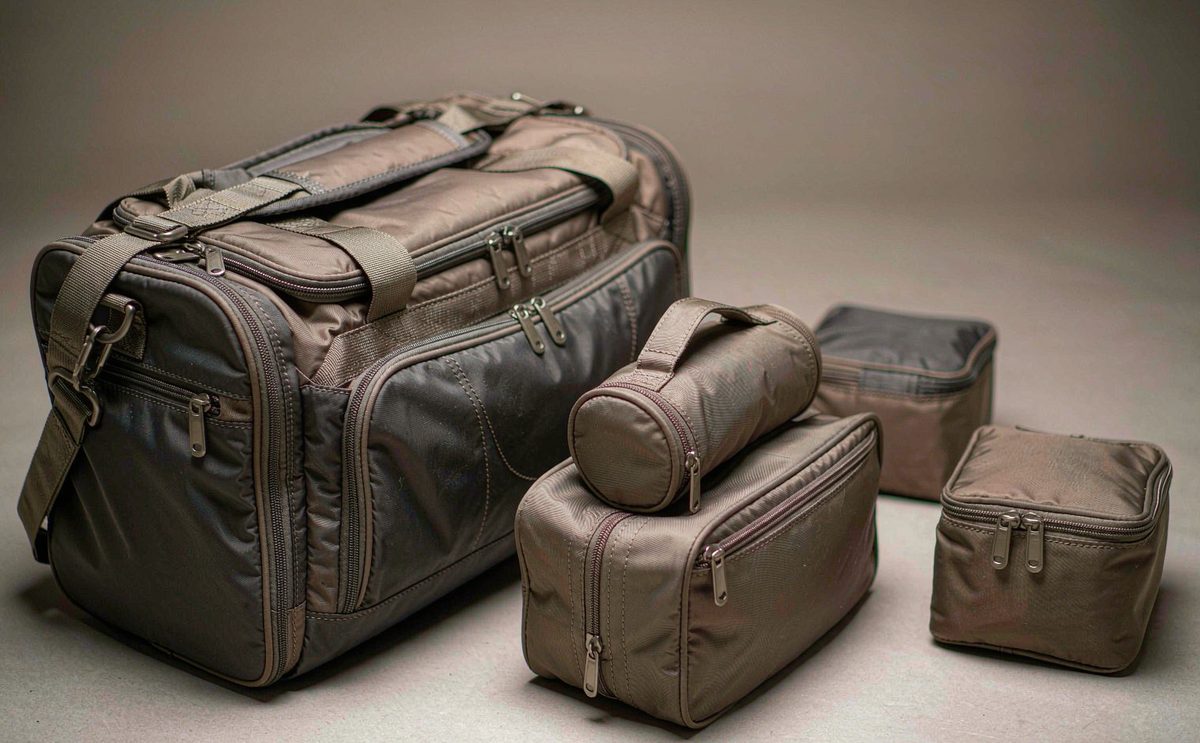
- Defining the travel bag category
- Cabin-size compliance and the IATA reference
- Carry-on builds versus check-in builds
- Shell and frame choices for structured travel bags
- Handle, trolley sleeve and wheel-base hardware
- Packing cubes as a bundle line
- Compression systems and volume claims
- TPU waterproofing and seam construction
- Travel bag closures, locks and zipper grades
- Sets and bundles inside one minimum
- Unit cost modelling for travel sets
- Sampling travel bags: dimension, drop and transit
- Travel bag inspection and dimensional tolerance
- Freight, cubing and DDP planning
- A travel category RFQ that prices accurately
Travel is the widest and most competitive bag category a campaign can enter, and it is also the one where a specification error is most expensive to correct. A travel bag is measured against a hard external constraint that the creator does not control, it is compared by backers against products with decades of retail refinement, and it is the reward most likely to be shipped to a backer in another continent with its own duty and labelling regime.
The commercial structure, however, is identical to every other campaign bag. Minimum 500 pcs per style and colourway, sampling in 6-10 working days for standard builds or 12-15 for complex ones, production 35-50 days from deposit plus approved pre-production sample, pre-shipment inspection at AQL 2.5 to ISO 2859-1, trade term FOB Xiamen and payment at T/T 30/70. What changes is the density of specification: a travel build has more panels, more hardware and more claims to substantiate than any other category.
Defining the travel bag category
Travel spans four distinct reward formats, and they do not share a cost structure. The cabin carry-on is a structured soft or hybrid bag built to a dimensional envelope. The check-in travel bag is a larger soft build where volume rather than compliance drives the design. The adventure travel bag is a weather-resistant build with welded seams and roll-top or storm-flap closures. The packing system is a set of organisers that may ship as the hero product or as an add-on.
Choosing between them is a funding-target decision before it is a design decision. A structured cabin carry-on at USD 32-58 per unit supports a pledge of USD 149-229 and requires a confident campaign with strong photography. A packing cube set at USD 9-18 per unit supports a pledge of USD 45-79, ships flat, and carries a far lower cash requirement at the 30% deposit. Many successful travel campaigns lead with the set and offer the bag as the upper tier.
The full set of formats sits on the custom bag categories map. Where the campaign intent is strictly cabin luggage, the dedicated carry-on bags page covers dimensional compliance in isolation, and where the product is a soft weekender or holdall the duffel category is the closer fit.
Key takeaways for travel reward planning
- Four formats compete under one label: cabin carry-on, check-in soft build, adventure weatherproof build and packing system.
- A packing cube set at USD 9-18 per unit carries a much lower deposit requirement than a structured bag at USD 32-58.
- Design the empty bag 1-2 cm under the cabin reference in every dimension so a loaded bag still compresses into a sizer.
- Sets let a campaign offer multiple SKUs against a single fabric buy and one 500-pcs minimum on the hero item.
Cabin-size compliance and the IATA reference
Most airline cabin allowances cluster around the IATA cabin baggage reference of 55 x 40 x 20 cm, including handles and wheels, though individual carriers publish figures below that. The reference is a guideline issued by a trade body rather than a regulation, which is why a campaign cannot promise compliance and why the correct published claim is a measured dimension rather than an approval.
| Build | Empty dimensions (cm) | Margin to reference | Compliance position |
|---|---|---|---|
| Strict cabin carry-on | 53 x 38 x 19 | 2 cm on every axis | Compresses into a sizer when loaded; the safest published claim |
| Reference-sized carry-on | 55 x 40 x 20 | Zero | Fits only when lightly packed; wheels and handles must be inside the measure |
| Expandable carry-on | 53 x 38 x 19, expanding to 24 depth | 2 cm collapsed | Defensible collapsed; the expanded figure must be stated separately |
| Under-seat personal item | 40 x 30 x 18 | Well inside | The only format that sits inside every published allowance |
| Check-in travel bag | 70 x 40 x 32 | Outside cabin scope | No cabin claim; sized against airline checked allowances instead |
Measurement method decides whether the number holds. State whether the figure includes wheels, the extended handle and external pockets, and whether the bag is measured empty or lightly stuffed. A bag quoted at 55 x 40 x 20 cm measured on the body alone can exceed the sizer by 3-5 cm once a wheel base and a protruding top handle are counted, and that discrepancy is discovered by a backer at an airport gate rather than by the production team.
Cabin allowances are set carrier by carrier and change without notice, and no production partner can certify a bag against them. Publish external dimensions with the measurement method stated, note that allowances vary, and keep 1-2 cm of margin on every axis. A guaranteed cabin-approval claim converts a specification issue into a refund liability after delivery.
Where a campaign is built on the expandable format, cost the expansion mechanism explicitly. A #8 coil expansion zip with a gusseted panel adds roughly USD 3.50-6.00 per unit and introduces a second failure point that has to appear in the inspection criteria. It is a legitimate feature, but it should be quoted as a line rather than folded into the shell cost, because the campaign may need to drop it.
Carry-on builds versus check-in builds
The carry-on and the check-in build look similar in a render and behave very differently in a quotation. The carry-on is engineered to a maximum, which forces structure, a compact wheel base and tighter tolerances. The check-in build is engineered to a minimum volume, which permits softer panels, simpler frames and looser tolerances. That difference shows up in labour minutes, in dimensional rejection rates and in freight.
| Element | Carry-on build | Check-in build |
|---|---|---|
| Dimensional tolerance | Plus or minus 2-3 mm; outside tolerance is a major defect | Plus or minus 5-8 mm; volume matters more than precision |
| Frame and structure | Perimeter frame or base board required to hold the sizer shape | Soft structure with a removable base board is acceptable |
| Wheel base | Compact, recessed, low-profile to stay inside 20 cm depth | Larger, more robust, external mounting acceptable |
| Hardware grade | Higher; every component counts against the dimensional budget | Standard grade adequate for the load |
| Unit cost position | USD 32-58 at 500 pcs | USD 26-46 at 500 pcs for a comparable soft build |
| Freight cubing | 1 unit per carton, 55-70 litres shipped volume | Nestable; 2-3 units per carton possible when collapsed |
Dimensional rejection is the cost line unique to carry-on builds. A frame that is 3 mm over tolerance is not a cosmetic issue; it is a unit that fails the published claim and either gets reworked or gets sold as a different SKU. Agree the tolerance in the tech pack, hold it at plus or minus 2-3 mm, and require dimensional measurement on 5 units in every inspection sample rather than on the gold sample alone.
Shell and frame choices for structured travel bags
A travel bag has to hold its shape empty, survive being stacked, and resist abrasion on a conveyor. Three construction routes deliver that, at very different price points: a soft shell with an internal perimeter frame, a hybrid build with a moulded back panel, and a fully structured shell with an EVA or polypropylene body. Campaign rewards almost always sit in the first two.
- Soft shell with perimeter frame. 600D or 900D polyester over a steel or fibreglass perimeter rod; the most common travel reward build and the most forgiving to cost.
- Hybrid with moulded back panel. An EVA-moulded rear panel carrying the handle and wheel mounts; better load transfer, adds USD 4-9 per unit.
- Structured EVA or PP shell. Highest protection and highest tooling cost; tooling of USD 1,500-6,000 and 12-15 working days added to sampling.
- Base board only. A 2-3 mm PP board at the base with an unstructured body; the cheapest route to shape retention and the standard for packing-cube-led systems.
- Corner reinforcement. Abrasion patches at the four lower corners in 1680D or TPU; costs cents and prevents the most visible wear complaint.
Frame choice interacts with freight more than creators expect. A perimeter-framed soft bag can be collapsed for shipping if the frame is removable, cutting shipped volume by 25-35%. A moulded-back hybrid cannot. If the campaign is shipping 500 units to a single fulfilment hub, that difference can outweigh the unit-cost saving of the cheaper construction, which is why the frame decision belongs in the landed-cost model rather than in the design meeting.
Handle, trolley sleeve and wheel-base hardware
Hardware is where a travel bag reward earns or loses its reputation in the first week of use. The three components backers test immediately are the telescoping handle, the wheel base and the trolley sleeve, and all three fail in predictable ways when they are specified by description rather than by rating.
| Component | Specification to require | Cost impact | Failure mode if underspecified |
|---|---|---|---|
| Telescoping handle | Aluminium, 2 or 3 stage, stated cycle rating of 5,000-10,000 cycles | USD 6-14 per unit | Wobble and jamming; the single most complained-about travel component |
| Wheel base | Inline skate wheels at 50-60 mm, sealed bearings, replaceable housing | USD 4-11 per unit | Flat spots and seized bearings after the first trip |
| Trolley sleeve | Webbing or fabric sleeve at 180-220 mm with a stated fit range | USD 1.20-2.80 per unit | Tearing at the sleeve seam; too loose to hold a second bag |
| Top and side handles | Padded, bar-tacked, load rated with the shell | USD 1.00-2.50 per unit | Handle root tearing when the bag is lifted fully loaded |
| Lash points and straps | Four external points with bar-tacked webbing | USD 0.80-1.80 per unit | Strap pull-out at the attachment point |
| Feet and base protection | Four moulded feet plus a reinforced base strip | USD 0.60-1.60 per unit | Abraded base fabric after two conveyor trips |
Ask for cycle-test data on the telescoping handle and the wheels before sampling closes, not after. A handle rated at 5,000 extension cycles costs roughly 30-40% less than one rated at 10,000, and for a travel reward used a dozen times a year the cheaper rating is often entirely adequate. Specifying the higher rating by reflex is a common source of unnecessary cost in this category.
Packing cubes as a bundle line
Packing cubes are the most efficient margin product in the travel category. They are cut from lightweight nylon, sewn in minutes, and sold as a set, which means a single fabric buy supports three or four SKUs. A three-piece set typically quotes USD 9-18 per unit at 500 pcs and supports a pledge of USD 45-79 on its own, or adds USD 19-29 to the average pledge when bundled with a bag.
- Shell. 210D or 420D nylon or recycled PET, often with a mesh top panel for visibility and ventilation.
- Closure. #3 or #5 coil zip with a branded slider; the zip grade is the main cost differentiator between budget and premium sets.
- Structure. Unstructured cubes nest and flat-pack; lightly structured cubes hold shape and cost USD 0.80-2.00 more per piece.
- Set composition. Three sizes is standard, typically 4-6 L, 8-10 L and 12-15 L, with a shoe or laundry cube as a fourth piece.
- Branding. A woven label on the zip garage and a screen-printed size mark on the mesh panel.
- Packaging. A printed belly band or a reusable mesh outer bag; USD 0.35-1.20 per set.
The commercial advantage is the shared set-up. A cube set produced alongside a hero travel bag from the same fabric lot pays the fabric minimum once and shares print and label set-up, which is why a bundle frequently costs 20-35% less per unit than the same items quoted separately. Dedicated cube specification is covered on the packing cubes page, and bundle structures are set out under bag bundles.
Compression systems and volume claims
Compression is the feature that most often over-promises. An internal compression strap system reduces the height of soft contents by 15-25%; an external compression panel with a buckled wrap reduces packed depth by 20-35%. Neither changes the capacity of the bag, and a campaign that presents compression as additional litres is publishing a claim it cannot support.
- Internal cross straps. Two or four webbing straps with side-release buckles; USD 1.40-3.00 per unit and the cheapest compression option.
- Compression panel. A zippered panel with a buckled wrap; USD 3.50-7.00 per unit and the most visible compression feature in photography.
- Roll-top closure. Genuinely variable volume but awkward on a structured cabin bag; suited to adventure builds.
- Expansion zip. Adds volume rather than compressing it; quote separately and never net the two figures against each other.
- Volume honesty. Publish capacity as a measured figure and describe compression as a percentage reduction in packed bulk, not as extra litres.
State capacity as a measured litre figure obtained by a documented method, and describe compression separately as a percentage reduction in packed bulk. Netting the two together produces a headline number that a backer can disprove with a measuring jug, which is the fastest route to a comment thread the campaign cannot recover from.
TPU waterproofing and seam construction
Adventure and weatherproof travel builds depend on the seam, not the fabric. A TPU-laminated shell is genuinely impermeable, but a sewn seam through that shell leaks through the needle holes unless it is welded or taped. The specification decision is therefore a construction decision: welded seams with no stitching, or taped seams over a sewn construction, and the two have very different cost and repair profiles.
- Welded seams. RF or hot-air welded, no needle holes, the highest waterproof integrity; requires a TPU-laminated fabric and dedicated equipment.
- Taped seams. Sewn then sealed with a heat-applied tape; costs USD 1.80-4.50 per unit and is the standard for mid-tier weatherproof builds.
- Storm flap. A fabric or TPU flap over the main zip; USD 1.20-2.80 per unit and the cheapest meaningful weather upgrade.
- Hydrostatic head. Ask for the figure in millimetres and specify a minimum, typically 3,000-10,000 mm for travel builds.
- Coated zips. Reverse coil with a PU or TPU coating, or a waterproof zip; USD 2.00-6.00 more per unit than a standard coil chain.
- Roll-top closure. The most reliable waterproof closure and the standard on dry-bag-adjacent travel builds.
Where waterproofing is a hero claim, commission a hydrostatic head test and a shower or spray test during the sampling window, and put the result in the tech pack. Waterproof claims are among the easiest for a backer to test and among the most expensive to defend after delivery. Fully submersible builds belong with the dry bag category, where the closure and seam specification is set up for immersion rather than for weather.
Travel bag closures, locks and zipper grades
Travel bag closures carry a security expectation that no other category does. Specify the main chain at #8 or #10 coil, with a lockable slider housing where the campaign includes or references a padlock, and confirm whether any integrated lock is a TSA-accepted type. An integrated lock that is not TSA-accepted creates a real problem for US-bound backers, because screeners cut non-accepted locks.
- Main chain. #8 coil for cabin builds, #10 for check-in and expedition builds; reverse coil where weather resistance matters.
- Lockable sliders. Two sliders with interlocking housings so a padlock secures the compartment; USD 0.90-2.20 per unit over standard sliders.
- Integrated combination lock. USD 2.50-6.00 per unit; confirm TSA acceptance and the documentation that supports the claim.
- Secondary zips. #5 coil on front and internal compartments; do not downgrade below #5 on any travel closure.
- Buckle hardware. Acetal or zinc alloy side-release buckles with a stated break strength above the strap webbing rating.
Zip quality is the cheapest insurance in this category. A branded coil chain costs USD 1.20-3.50 more per unit than an unbranded equivalent on a travel bag, and it removes the single most common critical defect in inspection. Where the budget is genuinely tight, keep the branded chain on the main compartment and use an unbranded chain of the same size on secondary pockets.
Sets and bundles inside one minimum
The 500 pcs per style and colourway rule applies to the hero item. Accessories produced from the same fabric lot and in the same production window are normally treated as bundle components rather than as separate styles, which is the mechanism that lets a campaign offer three or four SKUs against one minimum. This is the single most useful structural fact in travel reward planning.
- Choose the hero. The item that carries the 500-pcs minimum, sets the fabric buy and anchors the pledge tier.
- Select bundle components. Cubes, a laundry bag, a shoe bag or a toiletry bag cut from the same lot.
- Share the set-up. One fabric minimum, one print film set, one label loom setup across every component.
- Quote the bundle as a unit. Packing labour and carton costs are quoted per set, not per item, which is where the saving appears.
- Cost the stretch goals now. A fourth cube or an extra strap pad should be pre-costed before the page goes live.
- Confirm the packing format. Sets ship in one carton; confirm the carton with the fulfilment partner before sample approval.
Bundles also solve the deposit problem. A 30% deposit at T/T 30/70 on 500 structured travel bags is a very different cash requirement from the same deposit on 500 cube sets, and a campaign that leads with the set and funds the bag from overfunding keeps its production window intact. Pre-costing the bundle at 500, 1,000 and 2,000 sets before launch is what makes that sequencing safe.
Unit cost modelling for travel sets
Travel bag unit cost is the most hardware-heavy in the bag category set, and hardware does not amortise the way fabric does. A wheel base and a telescoping handle are bought components with per-unit prices that move little between 500 and 2,000 pcs. That flattens the volume curve and means a travel campaign gains less from an overfund than a tote campaign does.
| Cost element | Share of unit cost | Notes for travel builds |
|---|---|---|
| Shell fabric, lining and frame materials | 26-36% | 600D or 900D shell, 210D lining, perimeter frame or base board |
| Hardware | 22-34% | Telescoping handle, wheel base, zips, buckles, feet; the largest hardware share of any category |
| Cutting, sewing and assembly | 18-26% | Panel count and seam complexity; taped seams add to this line |
| Branding | 3-8% | Label, screen print or moulded patch, usually a small share at this price point |
| Packaging | 4-9% | One bag per carton; carton strength matters because the bag is the outer pack |
| Inspection and export handling | 2-5% | AQL 2.5 inspection plus dimensional measurement on 5 units per sample |
Model the reward backwards from the pledge. On a USD 189 travel reward, backer-facing freight runs USD 26-38 for a 2.5-3.5 kg parcel and platform plus payment fees take 8-10%, leaving roughly USD 130-145 for landed unit cost, margin and replacement stock. A cabin bag at USD 42 FOB lands near USD 56-64, which works at that tier; at USD 58 FOB it lands near USD 74 and the margin becomes thin enough that a single defect cluster removes it.
Ask for a bundle quotation at 500, 1,000 and 2,000 sets rather than itemised prices for the bag and the cubes. Shared fabric, print and label set-up plus combined packing typically saves 20-35% per unit against separately quoted items, and the single-carton format reduces both freight and fulfilment handling.
Sampling travel bags: dimension, drop and transit
Travel sampling runs 6-10 working days for a soft or hybrid build from approved artwork and a settled tech pack, and 12-15 working days where the build includes a moulded panel, taped seams or a custom hardware item. Complex structured builds with tooling sit at the top of that range or beyond. Two rounds should be assumed: the first settles structure and dimensions, the second settles colour, hardware action and branding.
- Tech pack issued. External dimensions with measurement method, capacity and its method, frame type, hardware ratings, seam specification and packing format.
- Dimensional prototype. Built to the sizer target and measured on every axis including wheels, handles and external pockets.
- Sizer check. A physical gauge test against the IATA reference plus the two strictest target carriers.
- Hardware cycle test. Handle extended and retracted 500 cycles; wheels run over a loaded course and inspected.
- Load and drop test. 15 kg loaded, dropped 300 mm onto a corner, four corners, then inspected at the frame and wheel mounts.
- Transit test. Where individual backer parcels ship direct, pack out to ISTA 3A and document the result.
- Pre-production approval. The gold sample locks dimensions and construction; later changes carry cost and schedule impact.
The sizer check is the step that distinguishes travel sampling from every other category. It costs nothing beyond a gauge and it is the only way to know whether the published dimension will hold at a gate. Details of the revision loop, including how dimensional changes are documented between rounds, are set out on the sample prototyping page.
Travel bag inspection and dimensional tolerance
Pre-shipment inspection follows AQL 2.5 under ISO 2859-1 with the defect classification list agreed before the run begins. Travel adds one category that no other bag has: dimensional non-conformance, which is a functional failure rather than a cosmetic one when a cabin claim has been published.
- Critical. Broken main zip, detached handle or wheel mount, telescoping handle that will not lock, cracked frame.
- Major. External dimension outside the agreed tolerance, wheel wobble beyond a stated limit, seam slippage above 3 mm, taped seam lift.
- Minor. Loose thread under 10 mm, light scuffing on moulded parts, label misalignment within tolerance.
- Dimensional. Five units measured on every axis per inspection sample on cabin builds; tolerance plus or minus 2-3 mm.
- Functional. Handle cycled 50 times and wheels rolled 100 m on 2 units drawn from the sample, not only on the gold sample.
- Documentation. Report with photographs and measured dimensions issued before cartons are released.
Agree the disposition rule for dimensional failure before production starts. Options are rework, sale as a non-cabin SKU, or acceptance with a corrected published claim, and each has a different cost and a different effect on the delivery date. That decision is far cheaper to make in the tech pack than in the final week of a 35-50 day run. The reporting structure is documented on the campaign bag QA and QC page.
Freight, cubing and DDP planning
Travel bags are the least freight-efficient bag category. A structured cabin build ships one unit per carton at 55-70 litres of shipped volume, and volumetric weight dominates the bill on both the sea leg and the last mile. That makes carton design and mode selection a material part of the unit economics rather than a logistics footnote.
| Option | Transit | Cost profile | When to use it |
|---|---|---|---|
| Sea freight, one unit per carton | 30-45 days | Lowest cost per unit, highest volume | Default when the published delivery date allows 30-45 days |
| Sea freight, collapsed or nested | 30-45 days | 25-35% lower volumetric charge | Only where the frame is removable or the build is soft |
| Air freight, first wave | 7-12 days | 3-5 times sea cost per kg | Press deadlines and early-backer delivery only |
| DDP to fulfilment hub | Adds 6-10 working days handling | Duty and tax prepaid and priced in | Recommended; removes backer-side customs charges |
| Direct parcel to backers | 2-6 days last mile | Per-parcel rate with the fulfilment partner | Requires ISTA 3A transit testing on the packed carton |
DDP deserves particular attention in this category because duty rates on travel bags vary by classification and by destination, and a backer presented with an unexpected import bill attributes it to the campaign rather than to their own customs authority. Where the budget allows, price duty and tax into the pledge and ship DDP. Handover planning and hub selection are covered on the rewards fulfilment page.
A travel category RFQ that prices accurately
A travel RFQ is the one most likely to come back as a range, because dimensional intent and hardware grade are the two items creators leave vague. State the target external dimensions with the measurement method, state whether the claim is cabin or check-in, and state the hardware ratings you expect rather than the look you want.
- Format: cabin carry-on, check-in soft build, adventure weatherproof build, or packing system.
- Target external dimensions in centimetres, with the measurement method and whether wheels and handles are included.
- Capacity in litres with the measurement method, plus any compression or expansion feature stated separately.
- Shell fabric with denier and coating, frame type, and whether seams are sewn, taped or welded.
- Hardware: handle stage count and cycle rating, wheel size and type, closure and lock type.
- Interior: lining denier, pocket count, wet compartment, compression system and any laptop or tech insert.
- Quantity at launch, launch date, reward price point and destination markets.
With those seven items a production partner returns a construction recommendation, hardware options and a three-tier unit cost band within one business day. Where volume is the binding constraint, the low MOQ production page explains how minimums apply to sets and bundles. Send the brief through the quote request form, and compare formats across the wider custom bag categories map.
Publish a delivery date you can defend, then communicate early when circumstances change, because backers judge a campaign on whether it met its own stated promise.
Kickstarter Creator Handbook
- Custom carry-on bags for cabin-compliant rewards
- Custom packing cubes for bundle sets
- Custom dry bags for waterproof builds
- Custom duffel bags for weekender rewards
- Custom shoe bags and toiletry bags for sets
- Bag bundles for crowdfunding campaigns
- Rewards fulfilment planning
- Request a quotation
Send the travel brief and get a quotable number
Format, target dimensions with measurement method, hardware ratings and quantity. You get a construction recommendation, hardware options and a three-tier cost band back within one business day.
Frequently Asked Questions
What is the MOQ for custom travel bags on a Kickstarter campaign?
The minimum is 500 pcs per style and per colourway, applied to the hero item. Accessories such as packing cubes cut from the same fabric lot are treated as bundle components, so a campaign can offer several SKUs against that single 500-pcs commitment.
How much does a cabin-size travel bag cost per unit at 500 pieces?
A cabin-size soft or hybrid travel bag typically quotes USD 32-58 FOB Xiamen at 500 pcs. Hardware is the largest single share at 22-34% of unit cost, which is why the volume curve on travel builds is flatter than on totes or duffels.
What is the IATA cabin baggage reference size?
The IATA cabin baggage reference is 55 x 40 x 20 cm including handles and wheels. Individual carriers publish allowances at or below that figure, so design the empty bag 1-2 cm under the reference on every axis and publish measured dimensions rather than a compliance claim.
Can a campaign claim that a travel bag is airline approved?
No. Allowances are set by individual carriers and change without notice, and no production partner can certify a bag against them. Publish external dimensions with the measurement method stated, keep 1-2 cm of margin, and note that allowances vary by carrier.
How much does a three-piece packing cube set cost to produce?
A three-piece set in 210D or 420D nylon with #3 or #5 coil zips typically quotes USD 9-18 per unit at 500 pcs. Produced alongside a hero bag from the same fabric lot, the shared set-up usually saves 20-35% against quoting the items separately.
What dimensional tolerance should a cabin travel bag hold?
Hold plus or minus 2-3 mm on cabin builds, because a frame 3 mm over tolerance fails the published claim and becomes a major defect. Require dimensional measurement on 5 units in every inspection sample rather than on the gold sample alone.
How are wheels and telescoping handles specified for travel rewards?
Specify an aluminium 2 or 3 stage handle with a stated cycle rating of 5,000-10,000 cycles, and inline skate wheels at 50-60 mm with sealed bearings. Handle cost is USD 6-14 per unit and wheels USD 4-11 per unit at 500 pcs.
Does a compression system increase the capacity of a travel bag?
No. Internal cross straps reduce the height of soft contents by 15-25% and an external compression panel reduces packed depth by 20-35%, but neither changes the capacity of the bag. Publish capacity as a measured litre figure and describe compression separately as a reduction in packed bulk.
What makes a travel bag genuinely waterproof?
The seam, not the fabric. A TPU-laminated shell leaks through needle holes unless the seams are welded or taped. Taped seams cost USD 1.80-4.50 per unit, welded seams need TPU-laminated fabric and dedicated equipment, and both should carry a stated hydrostatic head of 3,000-10,000 mm.
How long does sampling take for a structured travel bag?
Soft and hybrid travel builds sample in 6-10 working days from approved artwork and a settled tech pack. Moulded panels, taped seams or custom hardware move the build to 12-15 working days, and a build requiring tooling sits at the top of that range. Courier transit is additional on both legs.
Should a travel bag include an integrated lock?
Only if it is a TSA-accepted type, because screeners cut non-accepted locks on US-bound bags. An integrated combination lock costs USD 2.50-6.00 per unit, while lockable slider housings cost USD 0.90-2.20 and let each backer fit their own accepted padlock, which is usually the safer specification.
How much does duty add to a travel bag reward shipped to backers?
Duty rates on travel bags vary by classification and destination, which is why DDP is recommended for this category. Pricing duty and tax into the pledge removes backer-side customs bills, which are among the most damaging post-delivery complaint sources. FOB Xiamen remains the production handover term either way.
What inspection defects are specific to travel bag runs?
Beyond the standard AQL 2.5 list, travel adds dimensional non-conformance, wheel wobble beyond a stated limit, telescoping handle failure to lock and taped seam lift. Agree the disposition rule for dimensional failure before production starts, because reworking 500 units and reclassifying them carry very different costs.
Can a travel bag ship flat to reduce freight cost?
Only where the frame is removable or the build is soft and unstructured. Collapsing or nesting reduces shipped volume by 25-35%, which matters because a structured cabin build otherwise ships one unit per carton at 55-70 litres, and volumetric weight dominates the freight bill at that volume.
What is the difference between a carry-on and a check-in build in cost?
A carry-on at USD 32-58 is engineered to a maximum with tighter tolerances, a compact wheel base and a structural frame. A comparable check-in soft build runs USD 26-46, permits looser tolerances and can often be nested two or three per carton.
Which zip sizes suit a travel bag reward?
Use #8 coil on cabin builds and #10 on check-in and expedition builds, with reverse coil where weather resistance matters. Secondary compartments can run #5, but do not go below that on any travel closure, because zip failure is the leading critical defect.
How should a travel campaign model the pledge price?
Work backwards from the pledge. On a USD 189 reward, backer freight takes USD 26-38 and platform plus payment fees take 8-10%, leaving roughly USD 130-145 for landed unit cost, margin and replacement stock. A USD 42 FOB bag lands near USD 56-64.
What should a travel RFQ include for an accurate quotation?
Seven items produce a firm number: format, target external dimensions with the measurement method, capacity with its method, shell and frame construction, hardware ratings including handle cycles and wheel size, interior specification, and quantity with launch date, reward price and markets.
People Also Ask
How much does a custom travel bag cost to produce for a campaign?
A cabin-size soft or hybrid build quotes USD 32-58 FOB Xiamen at 500 pcs, while a three-piece packing cube set runs USD 9-18. Hardware is the largest cost share on the bag and does not amortise much with volume, so the discount curve is flatter than on simpler categories.
What size should a carry-on reward bag be?
Design to 53 x 38 x 19 cm so the loaded bag still compresses into a sizer built around the IATA 55 x 40 x 20 cm reference. Measure including wheels, handles and external pockets, and publish that measured figure rather than an approval claim.
Are packing cubes a good standalone crowdfunding reward?
Yes. They quote USD 9-18 per set at 500 pcs, ship flat, and carry a much lower 30% deposit requirement than a structured bag. Many travel campaigns lead with the set and hold the bag for an upper pledge tier or a post-campaign re-order.
Can a travel bag be produced and delivered in 90 days?
production 35-50 days after deposit and sample approval, and sea transit adds 30-45 days, so 90 days is tight. It works only if the pre-production sample is approved at campaign close and freight is booked in the same week.
Do I need TSA-approved locks on a travel bag reward?
If you integrate a lock, yes, because screeners cut non-accepted locks on US-bound bags. The safer and cheaper route is lockable slider housings at USD 0.90-2.20 per unit, letting each backer use a padlock of their own choosing.
What is the difference between taped and welded seams?
Welded seams join TPU-laminated panels with heat and leave no needle holes, giving the highest waterproof integrity. Taped seams are sewn first and then sealed with heat-applied tape, costing USD 1.80-4.50 per unit and suiting mid-tier weatherproof builds.
Should travel rewards ship DDP or FOB?
DDP for backer-facing delivery. Duty and tax rates on travel bags vary by classification and destination, and a backer hit with an unexpected import bill blames the campaign. FOB Xiamen remains the production handover term either way.