Custom Shoe Bags for Kickstarter
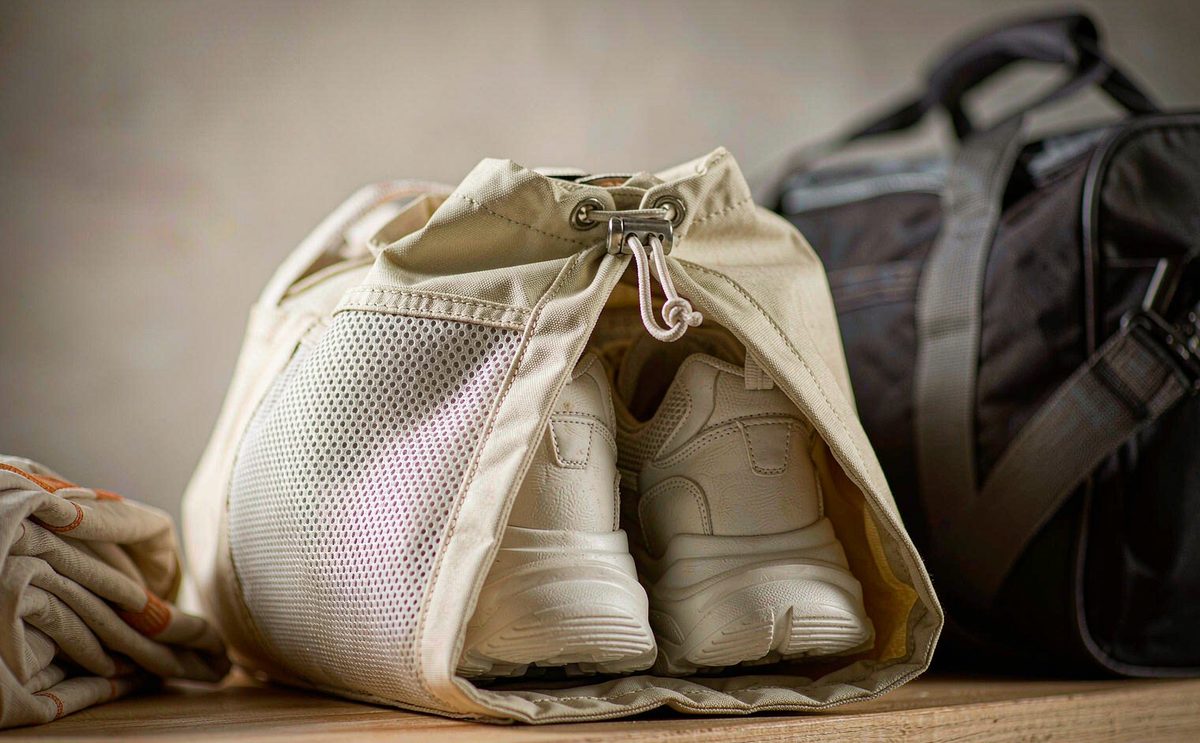
A shoe bag is the cheapest way to complete a travel or gym kit. Single-pair formats run 30 x 18 cm to 40 x 26 cm, weigh 55-180 g, and fold flat at 100-150 per carton. Our production team runs shoe bags at 500 pcs per style / colourway, sampling in 6-10 working days and production 35-50 days at AQL 2.5 (ISO 2859-1), with unit cost from 1.90 USD ex-works.
- Minimum order quantity
- 500 pcs per style / colourway
- Sampling
- 6-10 working days (12-15 for complex builds)
- Bulk production
- 35-50 days after deposit + approved pre-production sample
- Inspection
- AQL 2.5 to ISO 2859-1
- Trade term
- FOB Xiamen
- Payment
- T/T 30/70
- Production floor
- 4,950 m² SGS-verified, 137 staff, 7 lines, 149 machines
- Monthly capacity
- 200,000 pcs per month
- Programme contact
- service@junyuanbags.com
Key takeaways before you spec a shoe bag
- Size from the largest shoe in the range plus 2-3 cm of clearance, not from a nominal shoe size.
- MOQ is 500 pcs per style and colourway, so a two-size kit is normally two separate commitments.
- Choose one ventilation method and specify its reinforcement; unreinforced eyelets are the top defect.
- A drawstring channel is a structural seam, so give it its own stitch density and exit reinforcement.
- Shoe bags fold flat at 100-150 per carton, which makes them the cheapest kit component to freight.
Where a shoe bag fits inside a reward kit
A shoe bag is a component reward rather than a hero. It earns its place when the campaign already sells something that needs protecting: a footwear launch, a travel system, a gym or training programme, a cycling kit, or a bag campaign that needs a low-cost SKU to fill the band between a pouch and a full bag. It is also the cheapest way to lift the perceived completeness of a kit without adding a structured product to the bill of materials.
The procurement argument is structural. Two to four panels, one closure and one branding application, with no frame, no harness and no interlining. That makes it the fastest format to sample, the cheapest to correct in round two, and the least likely to produce a defect class that requires sorting finished goods. For a creator placing a first production order, that risk profile is worth more than the unit cost saving alone, which is why a shoe bag is often the first SKU we recommend sampling inside a new custom bag categories programme.
Sizing single-pair and two-pair formats
Sizing errors on this format always run in the same direction: the bag is built to a nominal shoe size rather than to the largest shoe it must hold plus clearance. A US men's size 12 trainer is roughly 32 cm long and does not compress meaningfully. Add 2-3 cm at the toe and you are at a 35 cm internal length before seam allowance and the closure are taken into account. Backers forgive a slightly generous bag; they do not forgive one that will not close.
Depth is the second half of the problem. A pair laid flat needs roughly 13-16 cm of width, and a structured hiking boot needs considerably more. Where the kit covers more than one footwear type, resist building one bag for everything; build the largest size the range requires and state the compatibility list on the campaign page as internal dimensions with a tolerance. That is a shorter specification than two SKUs and a more honest claim than a stretch fit.
| Format | Internal size (cm) | Panels | Unit weight |
|---|---|---|---|
| Flat shoe or sandal, single pair | 30 x 18 | 2 | 55 - 75 g |
| Standard trainer to US 10 | 34 x 20 | 2-3 | 70 - 95 g |
| Large trainer to US 13 | 38 x 23 | 3 | 90 - 120 g |
| Boot or high-top, single pair | 40 x 26 x 14 gusset | 4-5 | 130 - 180 g |
| Two pairs, travel format | 40 x 30 x 16 gusset | 5-6 | 180 - 240 g |
| Kids' shoe, single pair | 24 x 15 | 2 | 40 - 55 g |
- Size to the largest shoe in the range and say so explicitly on the campaign page.
- Give internal dimensions, not external, with a tolerance of plus or minus 5 mm.
- Add 2-3 cm of clearance in every dimension, because shoes do not compress to fit.
- Test with the actual product, including a bulky sole and any lacing or straps.
- Match the cord or zip length to the opening rather than to the bag width.
Ventilation and odour management as a specification
A shoe bag lives in a suitcase or a locker with worn shoes in it, which makes it a different material problem from a pouch or a tote. Two properties matter more than appearance: the face fabric has to resist abrasion from soles and eyelets, and the bag has to let moisture escape rather than trap it. A tightly woven 210D or 300D polyester with a light PU coating handles both; a heavy laminated shell traps moisture and generates the complaints that drive replacement requests.
Pick one ventilation method and specify it properly. A mesh panel adds a panel and a binding operation. A mesh gusset adds a material to the bill and a second seam sequence and is the most effective of the three. Eyelets are the cheapest and the most failure-prone, because they tear out of a light shell within a few uses unless there is a reinforcement patch of at least 20 mm behind them. An unreinforced eyelet is the most common construction defect on this format.
| Specification | Unit weight | Cost index | Best for |
|---|---|---|---|
| 210D polyester, unlined | 55 - 70 g | 1.00 | Lightest travel shoe bag |
| 300D polyester plus PU coating | 70 - 95 g | 1.15 | Default everyday shoe bag |
| 300D shell with mesh gusset | 85 - 115 g | 1.30 | Ventilated gym or running use |
| 420D nylon, wipe-clean lining | 110 - 145 g | 1.40 | Boot and hiking formats |
| rPET shell with rPET lining | 75 - 100 g | 1.25 | Sustainability-led campaigns |
| Non-woven PP, value tier | 40 - 60 g | 0.75 | Lowest cost giveaway |
Do not leave ventilation to the sample stage. Name the method in the RFQ, give the mesh weight or the eyelet diameter, and specify the reinforcement patch behind any eyelet at a minimum of 20 mm. A ventilation feature that fails in week two turns a 2 USD component into a support ticket and a replacement shipment.
Cord, channel and closure hardware
Three closures carry this format. A drawstring is the cheapest and the lightest, and it tolerates over-stuffing because the opening gathers rather than straining. A zip is the premium-feeling option that backers read as higher value, but it constrains the opening to the zip length and introduces the failure modes that dominate sewn-goods defects. A flap with a snap or a hook-and-loop tab is the middle path and is the most underrated of the three.
On a drawstring build the specification detail that matters is the channel. It is a structural seam, not a decorative hem, and it should be specified with its own stitch density and its own reinforcement at the cord exit points. Use a cord of 4-5 mm diameter, because anything thinner cuts into the channel under load, and add a cord lock where the bag will be carried, or the closure will loosen in transit. Take the whole hardware family from one material customisation shortlist.
| Closure | Cost index | Defect risk | Perceived value | Best for |
|---|---|---|---|---|
| Drawstring, cord in channel | 1.00 | Low | Medium | Travel and gym shoe bags |
| Drawstring with cord lock | 1.08 | Low | Medium-high | Carried or clipped formats |
| Zip, #5 coil, full opening | 1.25 | Medium | High | Premium or retail tiers |
| Flap with snap | 1.15 | Low | Medium-high | Boot and structured formats |
| Flap with hook-and-loop tab | 1.10 | Low | Medium | Value tiers needing closure |
| Zip with gusseted wrap | 1.45 | High | Highest | Two-pair travel formats |
Branding a soft, unstructured shell
The temptation on a soft shell is to print large, and it is the wrong call twice over. A large print block on an unstructured panel cracks along the fold line after compression in a suitcase, and it changes the hand feel of a bag whose whole appeal is that it compresses. A controlled block of no more than 30% of the panel, plus a woven label at a seam where it will survive abrasion, delivers the same brand impact at lower cost and lower defect risk.
Placement has to respect the closure. On a drawstring bag the cord channel occupies the top 4-6 cm, so the print block sits below it, centred, at a measured distance from the channel seam. On a zip format the print sits on the panel face with clearance for the zip tape. Pin every coordinate to a measured distance from a stated seam in the tech pack, because a photograph will not be available to the line. Methods are compared on our print and embroidery page.
Set maximum print dimensions in the tech pack and make them an inspection criterion. A block larger than roughly 30% of a soft shell panel tends to crack at the fold line after compression, and catching that on the line costs far less than catching it in a backer's unboxing photograph.
Packing flat and the freight line
Shoe bags are one of the few reward formats where packing density genuinely helps. A carton of 100 flat shoe bags in 300D polyester typically measures around 0.024 m3 and weighs roughly 8 kg gross, so actual weight governs the freight calculation at the standard 6,000 divisor. Fold them once along the long axis and you roughly halve the carton footprint without a crease problem, because the shell is uncoated or only lightly coated.
- Bulk pack folded once at 100-150 pieces per carton, or 80-120 where units are polybagged.
- Confirm carton dimensions on the packing list so volumetric weight can be quoted accurately.
- Individual polybagging protects the print and usually pays for itself in reduced replacement requests.
- Cost any insert card as a labour operation per unit rather than treating it as negligible.
- Our rewards fulfilment page covers the packing specification format we ask for.
QC gates on a shoe bag run
Pre-shipment inspection runs at AQL 2.5 to ISO 2859-1, general inspection level II, single sampling plan. Critical is a closure that does not function or a torn cord channel. Major is a print defect on the logo, a seam outside tolerance, or an eyelet without the specified reinforcement. Minor is a loose thread, slight shade variation between panels, or a fold crease that relaxes out. Define all three before production starts, not at the gate.
- Confirm carton count, packing list and shipping marks before any carton is opened.
- Measure internal dimensions on three units per drawn carton against the stated tolerance.
- Cycle every drawstring cord and cord lock a minimum of 20 times and record any catch or slip.
- Cycle every zip a minimum of 20 times and check both stops hold under load.
- Inspect the print block for registration, coverage and cracking at the fold line.
- Verify eyelet reinforcement and the branding coordinate measured from a stated seam.
An in-line check during the sewing window is worth more than a heavier final gate here, because the two dominant defects, unreinforced eyelets and short bar-tacks at zip ends, are both correctable at the station. A failed final inspection costs roughly 10-15 days in rework and re-presentation, which is a meaningful share of a 35-50 day programme. The defect taxonomy we log is set out on the QA and QC page.
Cost, lead time and programme planning
On a 500 pcs run a standard 300D polyester drawstring shoe bag typically quotes in the 1.90 to 3.20 USD ex-works band, depending on size, lining, closure and branding. A zip closure with a wipe-clean lining and a woven label sits at the top; an unlined drawstring with a single-colour print at the bottom. The spread between the cheapest and most expensive version of nominally the same product is usually wider than any discount you will negotiate on the base price.
| Quantity | Ex-works unit cost (USD) | What changes |
|---|---|---|
| 500 pcs | 1.90 - 3.20 | Baseline, setup spread over the minimum |
| 1,000 pcs | 1.70 - 2.85 | Better marker yield, setup across 2x |
| 3,000 pcs | 1.55 - 2.60 | Dedicated line, material in rolls |
| 5,000 pcs | 1.45 - 2.45 | Material at roll-lot pricing |
| 10,000 pcs | 1.35 - 2.30 | Full-line booking, tooling amortised |
Volume pricing steps at 1,000 and 3,000 pcs. Against a 200,000 pcs per month capacity across 7 production lines, a 500 pcs order is a small booking, which is why the minimum exists as an economic floor. Where a shoe bag is one component of a kit, quote the whole kit together so the bag manufacturing for campaign creators schedule can run every SKU in one window and one container.
Sampling, compliance and the shoe bag RFQ checklist
Sampling runs 6-10 working days per round from a released tech pack, extending to 12-15 working days for a gusseted or structured boot format. Because the panel count is low, round one returns quickly and the revision list is short, which is exactly why the time should be spent testing with real footwear; our sample prototyping page sets out what a released specification pack contains. production 35-50 days after the 30% deposit under T/T 30/70 has landed and the pre-production sample has been approved in writing.
Load the sample with the largest shoe in the range, close it, carry it, and leave it compressed in a bag overnight. A shoe bag that is only ever assessed flat on a table has not been assessed at all, and sizing and closure complaints almost always trace back to that omission.
Compliance follows the destination market rather than the product category. United States shipments fall under California Prop 65 where a listed substance is present above threshold, and CPSIA where the product is intended for children. European Union shipments fall under REACH Annex XVII and the EU GPSR, with OEKO-TEX Standard 100 covering textiles. Country-of-origin marking must be applied at the point of manufacture, so it belongs in the tech pack before carton marking is printed.
- Internal dimensions in centimetres with a tolerance, plus gusset depth where the format has one.
- Shell by denier, weave and coating; lining by denier and finish; ventilation method and reinforcement.
- Closure type, cord diameter or zip gauge, stop type, puller type and reinforcement specification.
- Branding method, maximum print block size, and placement measured from a stated seam.
- Packing specification: pieces per polybag, per inner and per carton, with carton dimensions.
- Quantity per size and colourway against the 500 pcs minimum, and the target delivery month.
- Inspection standard, trade term, destination market and required compliance documentation.
- Custom travel bags for Kickstarter
- Custom gym bags for Kickstarter
- Custom sports bags for Kickstarter
- Material customisation for Kickstarter bags
- Print and embroidery options for custom bags
- Bag manufacturing for campaign creators
- QA, QC and inspection on campaign bag runs
- Request a quotation
Complete your kit with a shoe bag that survives the suitcase
Send us the shoe size range, the ventilation method and the quantity per colourway. As your production partner we will return a unit cost, a sampling estimate and a carton specification. Write to service@junyuanbags.com.
Frequently Asked Questions
What is the MOQ for custom shoe bags on a Kickstarter campaign?
The minimum is 500 pcs per style and per colourway. A two-size kit, for example a trainer size and a boot size, counts as two separate 500 pcs commitments unless both are booked as colourway splits inside one production run. Most creators launch one size and add the second on re-order.
How large should a custom shoe bag be?
Size to the largest shoe you must hold, then add 2-3 cm of clearance in every dimension. A US men's size 12 trainer is roughly 32 cm long, so that bag needs an internal length near 35 cm. For boots, plan internal dimensions around 40 x 26 cm with a 14 cm gusset.
How much does a custom shoe bag cost to produce?
On a 500 pcs run a standard 300D polyester drawstring shoe bag typically quotes between 1.90 and 3.20 USD ex-works. A zip closure with a wipe-clean lining and a woven label sits at the top of the band; an unlined drawstring with a single-colour print at the bottom.
Which closure works best on a shoe bag?
A drawstring is the cheapest and lowest-risk option at a cost index of 1.00 and tolerates over-stuffing. A #5 coil zip reads as higher value at 1.25 but constrains the opening. A flap with a snap sits at 1.15 and is the most underrated of the three.
Do shoe bags need ventilation features?
Yes, if the bag will hold worn shoes. Pick one method and specify it: a mesh gusset is the most effective, a mesh panel adds a binding operation, and eyelets need a reinforcement patch of at least 20 mm behind them or they tear out within a few uses.
How long does sampling take for a custom shoe bag?
Sampling runs 6-10 working days per round from a released tech pack, extending to 12-15 working days for a gusseted or structured boot format. Budget two rounds, or 12-20 working days of calendar, and test the sample loaded with the largest shoe in the range.
Should a shoe bag be lined?
Yes for any format holding worn or damp shoes. A 210D polyester lining adds roughly 10-15 g and about 15% to unit cost. A wipe-clean TPU or PEVA lining adds 20-35 g and around 40%, but it prevents the staining complaints that drive replacement requests.
How heavy is a custom shoe bag for freight estimates?
A standard trainer-size bag in 300D polyester weighs 70-95 g, or 90-120 g for a large trainer size. A gusseted boot format reaches 130-180 g and a two-pair travel format 180-240 g. A carton of 100 flat bags weighs roughly 8 kg gross.
What inspection standard applies to a shoe bag order?
AQL 2.5 to ISO 2859-1 at general inspection level II, single sampling plan. Critical is a closure that does not function or a torn cord channel. Major is a print flaw, an out-of-tolerance seam or an unreinforced eyelet. Name the standard in the purchase order.
Can a shoe bag share a production run with a duffel or backpack?
Yes, and it is the cheapest way to complete a kit. Sharing the shell, hardware family and branding means one material purchase order, one shade approval and one consolidated container. Book every SKU inside the same 35-50 day window rather than as separate orders.
What compliance applies to shoe bags shipped into the US and EU?
United States shipments fall under California Prop 65 where a listed substance is present above threshold, and CPSIA where the product is intended for children. European Union shipments fall under REACH Annex XVII and the EU GPSR. OEKO-TEX Standard 100 covers textile components.
When does bulk production actually start on a shoe bag order?
production 35-50 days after two conditions are met together: the 30% deposit under T/T 30/70 has landed, and the pre-production sample has been approved in writing. Neither condition alone starts the clock. Confirm the slot with a start, completion and inspection date.
People Also Ask
Are shoe bags a good reward outside a footwear campaign?
Only where the backer can name what goes inside. They work in travel, gym, cycling and bag programmes where footwear protection is already part of the story, and underperform where the connection has to be explained on the page.
What fabric is best for a custom shoe bag?
A lightly PU-coated 300D polyester is the practical default at 70-95 g per unit. It resists abrasion from soles and eyelets and does not trap moisture the way a heavy laminated shell does. Add a wipe-clean lining for worn shoes.
How much clearance should a shoe bag have?
Add 2-3 cm to the length, width and height of the largest shoe in the range. Backers forgive a slightly generous bag far more readily than one that will not close, and a bulky sole will not compress to fit.
Can I put a logo on both sides of a shoe bag?
Yes, but it doubles the print setup and the inspection surface. A single block of no more than 30% of the panel plus a woven label at a seam usually delivers the same brand impact at lower cost and lower defect risk.
Do shoe bag sizes count as their own MOQ?
Yes. Each size and colourway is counted separately against the 500 pcs minimum, so a two-size kit is normally two commitments. Both can still be produced in one booked window if they are quoted together at the start.