Bag Campaign Fulfilment Promise: Setting Delivery Dates You Can Hit
Most missed delivery dates are set correctly and then broken by a phase the creator did not schedule. The fix is to plan backwards from the calendar rather than forwards from the launch date, using the upper end of every range: sampling at 6 to 10 working days per round, bulk at 35 to 50 days, inspection and rework 7 to 12 days, sea freight 35 to 60 days door to door, and pick-pack 5 to 20 days. That is 120 to 160 days, plus roughly six weeks of buffer you publish nothing about. Here is the arithmetic and the wording.
- Why delivery dates slip: five root causes
- Planning the date backwards instead of forwards
- The buffer arithmetic, phase by phase
- Writing the promise: a month, not a day
- One date or five: regional differentiation
- Stretch goals and the schedule they consume
- Communicating before you are late
- The update cadence during production
- When to switch to air freight and who pays
- Handling the three percent that go missing
- A promise template you can paste into your page

A delivery promise on a bag campaign is not a marketing statement, it is a schedule commitment that other people have to keep. It is also the most consequential sentence on the campaign page, because it is the one thing every backer will check and the one thing most campaigns get wrong. The mechanism of the failure is remarkably consistent: the creator takes the production figure they were quoted, adds it to the launch date, rounds to a month, and publishes. What they have published is 35 to 50 days in a process that takes 120 to 160, and the missing 85 to 110 days are the phases that slip.
This article is written for the creator who has to publish a date in the next few weeks. It gives the arithmetic for setting it, the wording that survives contact with reality, and the communication plan for the two situations that follow: the project is on schedule and the project has slipped. The figures are the ones our programme coordinator works to on every campaign: sampling at 6 to 10 working days per round (12 to 15 for a complex build), bulk at 35 to 50 days, inspection to AQL 2.5 to ISO 2859-1, FOB Xiamen with T/T 30/70, and 500 pcs per style and colourway. Where a phase belongs to someone else's schedule, that is stated, because those are the ones that break. The fulfilment pillar covers the shipping side in more depth, and the crowdfunding bag guide carries the same planning figures.
Publish a month, plan a week, and hold six weeks of buffer you tell nobody about. The buffer is the difference between a promise that holds and an apology.
Why delivery dates slip: five root causes
The first cause is the one described above: the date was built from the production number rather than the whole calendar. Bulk at 35 to 50 days is roughly a third of the elapsed time. A creator who plans against it has already missed two thirds of the schedule before anything goes wrong. This is a planning error rather than a production failure, and it is entirely preventable with the arithmetic in the next section.
The second cause is sampling rounds that were not budgeted. A first sample is a conversation starter, and two to three rounds is the normal number at 6 to 10 working days each plus courier transit. Each additional round is 2.5 to 4 weeks door to door. A creator who budgeted one round and needs three has added roughly 8 weeks to a calendar that had no room for it. The third cause is a change order during production, which is the most damaging single event available, because it can stop a line that has already been booked and paid for.
The fourth cause is clearance, and it is the one that feels most unfair because it happens after everything else went right. A shipment arriving without a complete document set, or into a market where no importer of record was appointed, can sit at a port accruing daily storage charges while the calendar burns. The causes are almost always documentary rather than physical, and they are preventable with a checklist completed a fortnight before the vessel sails. The fifth cause is volume at the fulfilment end: a run with three colourways, two sizes and a personalisation option is a pick-per-order operation, and a warehouse that quoted a throughput for a single-SKU bulk ship will not hit it.
Planning the date backwards instead of forwards
The method is to fix the delivery month first and subtract each phase, using the upper figure in every range. The reason for using the upper figure is that the costs are asymmetric. Plan to the low end and run to the high end, and you have broken a public promise, which generates refund requests, card disputes and a permanent mark on the campaign. Plan to the high end and run to the low end, and you have delivered early, which generates goodwill at no cost. There is no scenario in which planning to the lower figure is the better bet.
Start from the first day of the month you want to deliver in. Subtract 10 to 20 days for pick, pack and last-mile delivery, using the upper figure if the run has variants. Subtract 35 to 60 days for sea freight, clearance and inland delivery. Subtract 7 to 12 days for inspection, any rework and final packing. Subtract 50 days for bulk production. Subtract 1 to 2 weeks for the pre-production sample and the golden sample sign-off. Subtract 4 to 6 weeks for sampling rounds including transit. That puts the production start roughly 115 to 155 days before the first day of the delivery month.
Two implications follow, and both are uncomfortable for a creator who wants to launch soon. The first is that the delivery month is largely determined by the launch date, because production cannot start until the campaign closes and the survey is in, and the survey typically takes 2 to 4 weeks. The second is that the calendar can be compressed by roughly 8 to 12 weeks by sampling and specifying before launch, which is the single largest saving available. Full phase-by-phase detail is in the project timeline guide, which uses the same subtraction method with a worked example.
The buffer arithmetic, phase by phase
Buffers should not be distributed evenly, because the phases have very different variance. Sampling has high variance: a round either works or it does not, and a failed round costs the full 6 to 10 working days again. Freight has high variance, because sailings, weather and clearance are outside anyone's control. Bulk production has moderate variance, because a booked line runs to a plan and the main risk is a change order rather than a slow line. Pick and pack has low variance once the export file is clean.
The allocation below assumes a 140 day calendar. It totals roughly six weeks, which is about 25 percent of the elapsed time. That sounds generous and it is not: it is the observed difference between a schedule that holds and one that does not. The buffers should be held inside the plan rather than added to the published date, because a published buffer stops being a buffer and becomes the deadline in the backers' minds the moment they read it.
| Phase | Planned duration | Buffer to hold | Variance | What the buffer covers |
|---|---|---|---|---|
| Sampling rounds | 4 to 6 weeks | 2 weeks | High | A repeated round and courier delay |
| PP sample and sign-off | 1 to 2 weeks | 1 week | Medium | A correction before the golden seal |
| Bulk production | 35 to 50 days | 5 days | Moderate | A material delay or a short line stoppage |
| Inspection and rework | 2 to 6 days | 5 days | High | A first-run re-sort of 5 to 12 days |
| Freight and clearance | 35 to 60 days | 10 days | High | A rolled sailing or a document query |
| Pick, pack and last mile | 5 to 20 days | 5 days | Low | A receiving delay or a throughput gap |
One rule about buffers is worth stating separately because it is counter-intuitive: do not buffer the specification. The instinct to keep the specification open a little longer in the hope of improving it is the most expensive form of procrastination in this process. Every week the specification stays open is a week the material is not reserved, a week the sample slot is not booked, and a week the quotation validity is burning. The right sequence is to freeze at a good-enough point, book everything, and improve the product on the second run, where the patterns and the line are already proven.

Writing the promise: a month, not a day
The single most effective change a creator can make to a delivery promise is to publish a month rather than a date. This is not evasion. It is an accurate description of what a production programme can actually commit to, because the phases that dominate the variance are measured in weeks rather than days. A promise of October 2026 is a commitment a schedule can keep. A promise of 14 October 2026 is a commitment that a rolled sailing can break, and the difference in backer goodwill between the two outcomes is far larger than the difference in perceived precision.
The second element is to state the condition rather than only the date. A promise that reads *estimated delivery October 2026, assuming the colourway survey closes on schedule* is more credible and more defensible than a bare month, because it tells the backer what the commitment depends on. Backers in this category have seen enough slipped dates to read a bare month as optimism, and a stated condition reads as someone who has done this before. It also creates a natural hook for the update if the condition is not met.
The third element is to commit to the update cadence on the page itself. A line that reads *we publish a production update every two weeks until delivery* is worth more than a precise date, because what backers actually fear is silence rather than delay. Campaigns that communicate frequently and deliver late retain more goodwill than campaigns that deliver on time and go quiet for three months. The cadence commitment is also a commitment the creator fully controls, which makes it the one promise on the page that cannot be broken by somebody else's schedule.
One date or five: regional differentiation
A single global date is easier to communicate and harder to keep honestly, because the last-mile leg varies from 1 to 3 days domestically to 7 to 21 days for an international economy service, and because clearance and inland delivery differ by market. A single date therefore has to be set by the slowest destination, which means most backers receive the goods well before the published date and the promised month describes a small minority of the run.
The alternative is regional dates, usually grouped into three to five zones. This is more honest and it is better for the backer, because a backer in the fastest zone learns they will receive the goods in the earlier month rather than waiting in uncertainty. The operational requirement is that the zones have to be real: UK and EU, North America, Asia-Pacific, and rest of world is a workable grouping, and it only works if the freight plan actually delivers stock to warehouses in those regions rather than to one warehouse that then forwards.
The deciding factor is the freight structure. Shipping directly to two or three regional warehouses from origin costs slightly more on the ocean leg and removes a forwarding step, typically saving 7 to 14 days on the onward journey and simplifying clearance into one entry per region. Shipping everything to one warehouse and forwarding is simpler to book and adds a leg, a handling cost and a week or more per region outside the first. For a campaign above roughly 1,500 units, the regional structure is usually worth it; below that, a single warehouse with a clear regional date spread is simpler and the saving is small.
Stretch goals and the schedule they consume
Every stretch goal on a bag campaign has a schedule cost, and most creators price the unit cost and forget it. A new colourway is the most expensive of the common ones, because it is a 500 pcs commitment with its own fabric lot, its own colour approval and usually its own sample round. A new accessory such as a pouch or a packing cube is a separate product with its own sampling, its own tooling if anything is moulded, and its own packing specification. A new feature on the existing bag is the cheapest in money and the most dangerous in time, because it changes the specification after the run may already have been quoted.
The rule our team suggests is that a stretch goal should only be announced if it can be booked within the same production window as the main run. That means it has to be specified, sampled and costed before the campaign launches, even though it is announced during it. A stretch goal decided live, in response to the campaign performing well, is a change order waiting to happen, and a change order during bulk is the event most likely to break the published date.
The arithmetic is worth doing in advance for each candidate goal. A new colourway adds roughly 2 to 4 weeks: one dye-lot confirmation, one colour approval round, and the risk of a second if the first is off. A new accessory adds 4 to 8 weeks, because it is a full product cycle including sampling at 6 to 10 working days and inspection. A new feature on the existing bag adds 1 to 3 weeks if it can be sampled inside the existing rounds, and 4 to 6 weeks if it requires a new one. Only the first of those is comfortably compatible with a promise already published.
Communicating before you are late
The instinct when a project slips is to wait until the situation is clear, and that is exactly wrong. The reason is arithmetic: a slip identified in week two of bulk production can often be recovered with 5 to 10 days of schedule adjustment, while the same slip identified in week seven cannot. But the more important reason is trust. A backer told in week two that a fabric lot failed and the run will move by ten days reads that as competence. The same backer told in week ten that delivery has moved by six weeks reads it as a broken promise, even though the underlying event is identical.
The practical trigger for communication should be the buffer, not the deadline. Decide in advance that when the project consumes more than half of a phase's buffer, an update is published. That gives roughly two weeks of warning on the sampling buffer and five days on the freight buffer, and it converts every future update from an apology into a status report. It also has a self-disciplining effect: a team that knows a buffer breach triggers an update will manage the buffer more carefully.
The content of a slip update matters as much as its timing. Three elements, in order: what happened, stated plainly and specifically, with the phase named; what it does to the date, stated as a new month rather than a vague delay; and what has changed to prevent a recurrence, because a backer who believes the same thing will happen again will ask for a refund regardless of the new date. The third element is the one most often omitted and it is the one that determines whether the update lands.
The update cadence during production
A bag programme has six natural update moments, and scheduling them in advance removes the two failure modes of campaign communication, which are silence and noise. Update one is the survey close and the confirmed colourway split, which tells the backer the run is real. Update two is the production booking, with the deposit paid and the start date confirmed. Update three is material preparation and cutting, which is the first point at which photographs of the real material exist.
Update four is the sewing line, roughly mid-bulk, which is the highest-value update of the six because it is the moment the product visibly exists in quantity. Update five is the inspection result, with the AQL 2.5 to ISO 2859-1 finding and the packing photographs, which answers the question every backer is actually holding. Update six is the freight departure and the estimated arrival, after which the remaining updates are logistic rather than production.
The cadence should be roughly fortnightly during production and weekly during the final four weeks, because the questions change character as the goods get closer: during production the question is whether the product exists, and near delivery it is where the parcel is. Two mechanics make this sustainable. Write the update from the production report, because a status note that already exists takes ten minutes to adapt, while one written from scratch takes an afternoon and gets skipped. And answer the top question from the last update's comments first, because that is what the majority are waiting for and it demonstrably reduces the support load.
When to switch to air freight and who pays
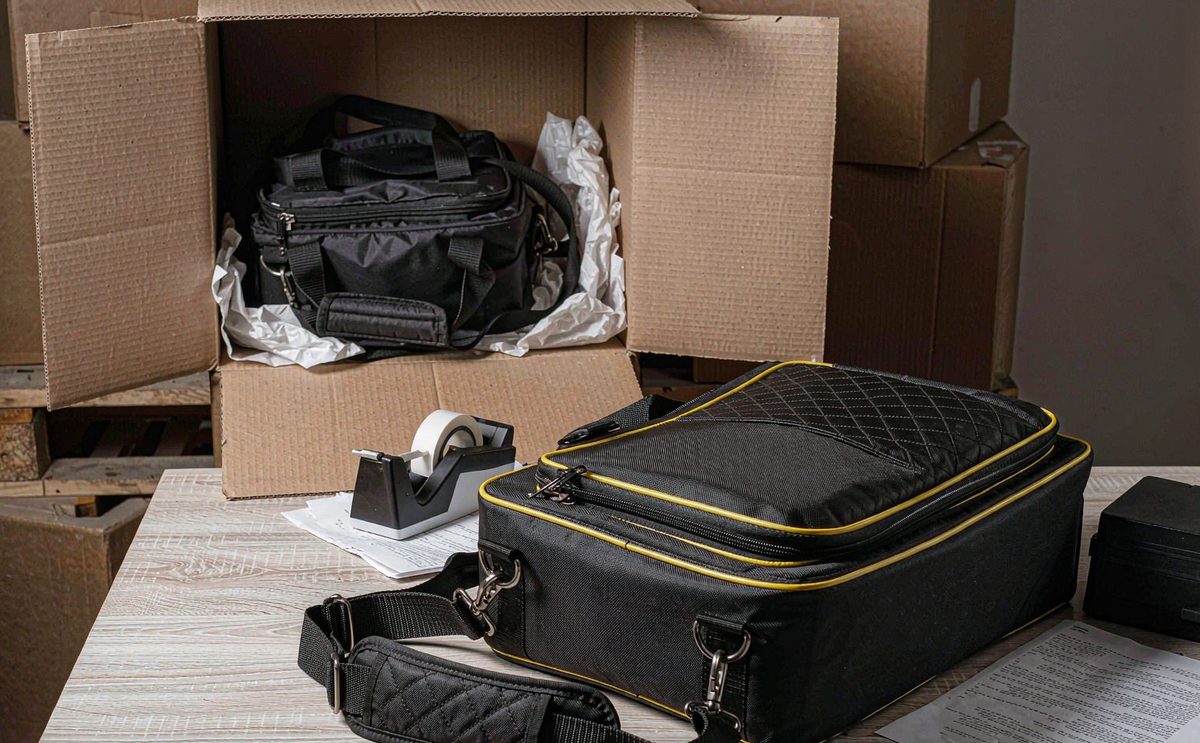
Air freight is the emergency lever, and like most emergency levers it works better if the decision is made before the emergency. Sea runs 35 to 60 days door to door. Air runs 5 to 10 days at roughly 3 to 6 times the cost per kilo. The saving is therefore 25 to 50 days, and the cost on a 500 pcs run at a packed weight around 0.9 kg per unit is five figures at the upper end. That is too much to absorb casually and too little to justify a broken promise, which is why the decision should be pre-agreed rather than improvised.
The structure that avoids the dilemma entirely is to fly a portion from the start. Shipping 90 to 95 percent by sea and flying 5 to 10 percent ahead costs 3 to 8 percent more than an all-sea plan and provides a buffer of stock that can be used for the earliest regional wave, for replacement units, for press samples and for the warranty pool. Where a campaign has a hard external deadline, meaning an event, a retail commitment or a seasonal window, this structure is close to mandatory rather than optional.
On who pays: the answer should be the campaign, and it should be budgeted. Air freight invoked to recover a delay that was not the backer's fault is a cost of the campaign, and attempting to pass it to backers as a shipping upgrade charge generates more damage than the freight bill. The exception is where the delay is genuinely the backer's, meaning an address that was never confirmed or a survey that was never completed, in which case a re-shipment charge is reasonable and should be stated in the survey terms rather than invented at the time.
Handling the three percent that go missing
Some proportion of a run will not reach its backer first time. The causes are address errors, failed delivery attempts, customs refusals, damage in transit and the backer simply not collecting the parcel. Across the campaigns we have supported, a working planning figure is 2 to 5 percent of units, and it should be budgeted in both stock and support time rather than treated as an exception. The two measures that reduce it are address validation at survey stage and tracked shipping with the reference uploaded.
The stock implication is the one that catches creators: replacement units have to exist. A run produced to exactly the backer count has no stock to replace a damaged parcel, and reordering 500 pcs to replace 15 units is not a commercial proposition. The standard answer is a 2 to 4 percent spare allowance produced with the main run, which costs a small amount per unit and removes the problem entirely. This is the same allowance that services warranty claims in the months after delivery, and it is the cheapest insurance in the programme.
The support implication is that the process for a missing parcel should be published before any parcel is late. A backer who knows to wait 14 to 21 days past the tracking's last event, then contact the campaign with their pledge number, is a manageable support ticket. A backer who has no process and no update is a chargeback. The three elements of a workable policy are a stated waiting window, a single contact route, and a stated resolution, usually a replacement from the spare allowance or a refund at the campaign's discretion where stock has run out.
A promise template you can paste into your page
The template below is built on the four principles above: a month rather than a day, a stated condition, a cadence commitment, and a process for the exceptions. The square brackets are the parts to fill in. It is deliberately unexciting, because an exciting delivery promise is usually an optimistic one, and there is no prize for the most confident sentence on the page.
Rewards are estimated to ship in [month, year]. Production starts once the backer survey closes, and bulk runs 35 to 50 days followed by inspection to AQL 2.5, sea freight of approximately 35 to 60 days door to door, and regional pick and pack. We publish a production update every two weeks until delivery, and weekly in the final month. If any phase moves, we say so in the next scheduled update rather than waiting for the deadline. Parcels ship tracked; if yours has not arrived within 21 days of dispatch, contact us with your pledge number and we will resolve it from held replacement stock.
Two lines in that template do most of the work, and they are worth drawing out. The cadence commitment is the only promise on the page that the creator fully controls. The 21 day resolution clause converts the most common backer anxiety into a process, and it is the line that most directly reduces the support load in the final month. Both cost nothing to include and both change how the campaign is judged after the fact.
What the template deliberately does not do is name a day, promise free shipping, or commit to a date that is earlier than the arithmetic supports. Those three are the most common ways a delivery promise is made fragile, and all three are within the creator's control at the moment the page is published. The one thing worth checking before publishing is that the arithmetic in the second section above, run with the upper figure in every range, produces a month at or before the one on the page. If it does not, the date needs to move rather than the plan.
Send us your target delivery month and destination split, and our programme coordinator will run the backwards calculation with you before you commit to a published date.
Key takeaways
- P
- u
- b
- l
- i
- s
- h
- a
- m
- o
- n
- t
- h
- ,
- p
- l
- a
- n
- t
- o
- t
- h
- e
- u
- p
- p
- e
- r
- e
- n
- d
- o
- f
- e
- v
- e
- r
- y
- r
- a
- n
- g
- e
- ,
- h
- o
- l
- d
- s
- i
- x
- w
- e
- e
- k
- s
- o
- f
- b
- u
- f
- f
- e
- r
- y
- o
- u
- n
- e
- v
- e
- r
- p
- u
- b
- l
- i
- s
- h
- ,
- a
- n
- d
- c
- o
- m
- m
- i
- t
- t
- o
- a
- n
- u
- p
- d
- a
- t
- e
- c
- a
- d
- e
- n
- c
- e
- y
- o
- u
- f
- u
- l
- l
- y
- c
- o
- n
- t
- r
- o
- l
- .
Frequently Asked Questions
How long after a campaign should I promise delivery?
Plan 120 to 160 days from launch. Run the arithmetic backwards using the upper figure in each range: 10 to 20 days for pick and pack, 35 to 60 days for sea freight and clearance, 7 to 12 days for inspection and rework, 50 days for bulk, 1 to 2 weeks for pre-production sign-off, and 4 to 6 weeks for sampling. Then hold about six weeks of buffer you publish nothing about.
Should I promise a specific date or a month?
A month. The phases that dominate the variance are measured in weeks, so a month is what a production schedule can actually commit to. A specific date can be broken by a single rolled sailing, and the loss of goodwill is far larger than the gain in perceived precision. Add a stated condition, such as the survey closing on schedule, which reads as experience rather than evasion.
How much buffer should I add to a delivery date?
About six weeks on a 140 day calendar, roughly 25 percent of elapsed time, allocated by variance: 2 weeks to sampling, 1 week to pre-production sign-off, 5 days to bulk, 5 days to inspection and rework, 10 days to freight and clearance, and 5 days to fulfilment. Hold the buffer inside the plan rather than adding it to the published date.
Which phase slips most often?
Sampling and freight. A sampling round either works or it does not, and a failed round costs the full 6 to 10 working days again plus courier transit, so three rounds instead of one adds about 8 weeks. Freight depends on sailings, weather and clearance, none of which the creator controls. Bulk production has moderate variance because a booked line runs to a plan.
Should I give different delivery dates by region?
Yes, if your freight plan actually supports it. Group into three to five zones and only publish regional dates if stock is shipped directly to warehouses in those regions rather than to one warehouse that forwards. Direct regional shipping saves roughly 7 to 14 days on the onward leg and simplifies clearance into one entry per region.
Do stretch goals delay delivery?
They can. A new colourway adds 2 to 4 weeks for a dye lot and a colour approval round. A new accessory adds 4 to 8 weeks because it is a full product cycle with its own sampling and inspection. A new feature on the existing bag adds 1 to 3 weeks if it fits inside existing rounds. Only announce a stretch goal that can be booked inside the same production window.
When should I tell backers about a delay?
When the project consumes more than half of a phase's buffer, not when the deadline passes. That gives roughly two weeks of warning on the sampling buffer and five days on the freight buffer. A slip reported early reads as competence; the same slip reported at the deadline reads as a broken promise, even though the underlying event is identical.
How often should I post production updates?
Fortnightly during production and weekly in the final four weeks. There are six natural moments: survey close, production booking, cutting, the sewing line, the inspection result, and freight departure. Write each one from the production report that already exists rather than from scratch, and answer the top question from the previous update's comments first, which demonstrably reduces the support load in the final month. A status note that already exists takes ten minutes to adapt, while one written from scratch takes an afternoon and gets skipped.
Is air freight worth it to catch up a delay?
It saves 25 to 50 days at roughly 3 to 6 times the sea cost per kilo, which is five figures on a 500 pcs run at about 0.9 kg packed weight. Better than deciding under pressure, fly 5 to 10 percent of units from the start, which costs 3 to 8 percent more than an all-sea plan and provides stock for the first wave, replacements and warranty.
Who pays for air freight when a campaign runs late?
The campaign. Air freight used to recover a delay that was not the backer's fault is a cost of running the campaign, and passing it on as a shipping upgrade generates more damage than the freight bill. The exception is a genuinely backer-caused failure such as an unconfirmed address, where a re-shipment charge is reasonable if stated in the survey terms in advance.
What percentage of parcels go missing or get damaged?
Plan on 2 to 5 percent, covering address errors, failed delivery attempts, customs refusals, transit damage and uncollected parcels. Reduce it with address validation at survey stage and tracked shipping with the reference uploaded. Budget both the stock and the support time, because a run produced to exactly the backer count has nothing to replace a damaged parcel with.
How much spare stock should I produce?
A 2 to 4 percent spare allowance produced with the main run. It covers warranty claims, transit damage and address failures, and it is the only practical answer because reordering 500 pcs to replace 15 units is not viable. Inspection to AQL 2.5 sets an acceptance threshold for the lot rather than guaranteeing perfection, so some post-delivery claims are expected rather than exceptional.
People Also Ask
When should my bag campaign deliver?
Plan 120 to 160 days from launch, calculated backwards using the upper figure in every range, plus about six weeks of unpublished buffer.
Should I promise a date or a month?
A month. A specific date can be broken by one rolled sailing, and the goodwill loss is far larger than the precision gain.
How much buffer do I need?
About six weeks on a 140 day calendar, concentrated on sampling, inspection rework and the freight leg, where the variance is highest.
What slips most often?
Sampling rounds and the freight leg. Three sample rounds instead of one adds about 8 weeks; freight depends on sailings, weather and clearance.
Should I give regional delivery dates?
Yes, if stock is shipped directly to regional warehouses. Group into three to five zones and match the dates to the actual freight plan.
Do stretch goals delay delivery?
They can. A colourway adds 2 to 4 weeks, an accessory 4 to 8 weeks. Only announce one that can be booked inside the existing production window.
How often should I update backers?
Fortnightly during production, weekly in the final four weeks. Write each update from the production report that already exists.
How much spare stock should I hold?
2 to 4 percent, produced with the main run. It covers warranty claims, damage and address failures over the months after delivery.