Choosing a China Bag Factory Region for Crowdfunding
Choose a China bag factory by product capability and verified programme fit, not by city reputation alone. Xiamen and nearby Quanzhou are practical for many backpacks, sports bags and sewn travel products; Guangzhou and the Pearl River Delta can suit fashion-led development and broad component access; other clusters serve specialised categories. Compare the actual workshop, material route, subcontractors, quality controls, available capacity and export plan for your 500-piece style and colourway. Regional reputation may guide the shortlist, but only dated product-specific evidence should close the decision.
- Use Location as a Filter, Not a Verdict
- Understand the Xiamen and Quanzhou Ecosystem
- Assess Guangzhou and the Pearl River Delta
- Consider Zhejiang, Shanghai and Other Clusters
- Match the Region to Bag Construction
- Trace Materials and Components Across Regions
- Verify the Actual Production Site
- Compare Landed Programme Cost, Not City Quotes
- Build the Production and Export Timeline
- Select the Region With a Project Scorecard
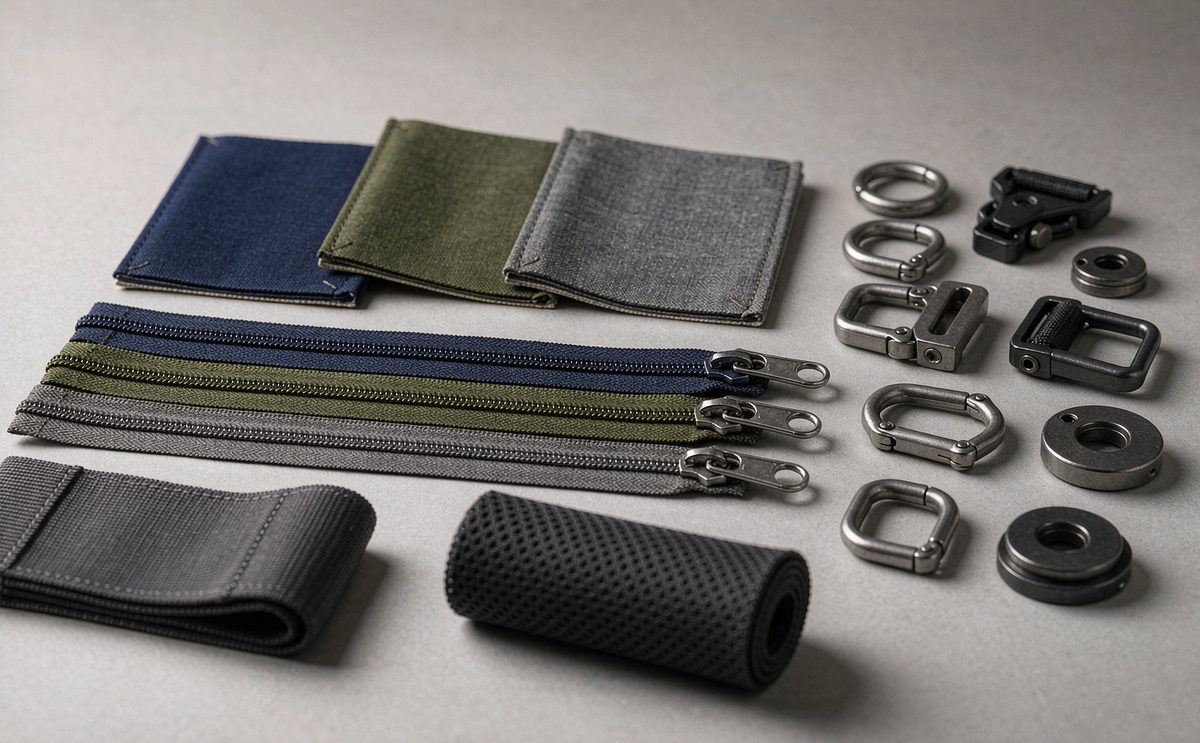
China contains several connected textile, component and sewn-product ecosystems. A city name can indicate likely access to skills or materials, but it cannot guarantee the proposed site has experience with a specific crowdfunding bag. Our team coordinates production through disclosed partners and uses FOB Xiamen as the standard quotation basis. This guide explains how a creator should evaluate regional fit without treating geography as a shortcut for due diligence.
Use Location as a Filter, Not a Verdict
Begin with the product route. List fabric type, structure, pattern complexity, foam, lining, webbing, zipper, moulded components, branding process, performance claims, packaging and test needs. Then identify regions where those processes and upstream materials are commonly accessible. A soft promotional tote and a structured camera backpack should not follow the same search logic. Location is useful when it narrows likely capability; it becomes misleading when it replaces an audit, sample and controlled quotation.
Separate sales location, registered entity and production location. A contact may work in Xiamen while sewing occurs in Quanzhou, or a Guangzhou office may coordinate a workshop elsewhere in Guangdong. This is not automatically a problem. Record the legal seller, physical workshop, critical subcontractors, export point and accountable programme owner. Ask which address appears on audit and quality records. The commercial agreement should disclose any material site change before production moves.
Add campaign constraints before ranking regions. The standard MOQ is 500 pcs per style and per colourway, sampling takes 6–10 working days for standard products, and production 35-50 days after approvals and agreed conditions. A region with a rich network is still unsuitable if the selected partner cannot allocate capacity during the required period. The bag manufacturing guide for campaign creators shows how regional choice fits into the complete programme.
Use a two-stage regional search. Stage 1 screens clusters for likely materials, processes, inspection access and export routes. Stage 2 ignores regional reputation and scores the exact candidate, site and proposed line. This prevents a well-known city from receiving unearned credit and prevents a capable specialist elsewhere from being discarded. Preserve both scores in the decision file so the creator can explain whether geography solved a real programme constraint or merely influenced the initial shortlist.
Understand the Xiamen and Quanzhou Ecosystem
Xiamen is an established port and commercial gateway for the wider southern Fujian production area. Nearby Quanzhou and related districts have long experience in footwear, sports goods, textiles and sewn bags. For creators, the useful feature is not a boundary on a map but the practical connection between product development, component access, partner workshops and export handling. Backpacks, duffles, school bags, sports bags and travel organisers can all be relevant categories, subject to site-specific verification.
Our production programme has operated since 2014, with founder experience from 2004, and references a 4,950 m² SGS-verified operation, 137 staff, 7 lines and 149 machines. Overall stated capacity is 200,000 pcs per month. These numbers provide due-diligence context, not a promise that any style automatically fits. A creator still needs a dated line allocation, product-specific sample, material plan and quality controls for the proposed 500-piece colourway.
FOB Xiamen provides a clear export-side quotation point for the programme. It does not include destination freight, customs duty, taxes, fulfilment or backer delivery. Logistics quotations should therefore start with carton count, dimensions, gross weight, cargo-ready range and named destination. When another production region is compared, use equivalent Incoterms and scope. A quote described only as “from China” can hide different inland transport and documentation responsibilities.
Creators should still ask where each key material originates and how long replenishment takes. A nearby sewing line gains little from regional density if the chosen coating, buckle or printed lining comes from a constrained distant source. Build the critical path from component readiness, not from office location. For every high-risk input, name a current source, approved alternative and last order date. This turns the ecosystem advantage into measurable availability rather than a general claim about local convenience.
Assess Guangzhou and the Pearl River Delta
Guangzhou and the wider Pearl River Delta provide dense access to fashion markets, materials, trims, packaging, hardware and diverse production specialists. This can help fast visual development or products that combine several sourced components. The same density creates a verification need: a showroom, market stall, office and production workshop are not the same thing. Ask where patterns, cutting, sewing, finishing and packing occur, and which processes move between sites.
A creator visiting Guangzhou can review many components quickly, but market availability should not be confused with bulk consistency. A roll of fabric available today may not be the same lot or specification supplied 6 weeks later. Record composition, weight, finish, supplier reference, colour standard and minimum quantity. Require approval for substitutions. If a material is selected from a market swatch, identify how production yardage will be tested and reserved before campaign claims are finalised.
Compare communication and technical ownership. A broad network can solve unusual component needs, yet every additional handoff can introduce delay or variation. Identify one accountable commercial party and one technical owner. The workshop should receive a controlled tech pack, while printing, moulding and other specialists receive the approved references that apply to them. An apparently rapid sample is not evidence of scalable control until the same materials and process can be reproduced in the bulk order.
When comparing a Pearl River Delta option, separate development convenience from repeat-production control. Easy access to a wide market can accelerate the first sample, yet the bulk order still needs reserved materials, approved suppliers and lot traceability. Ask whether the sample components came from the intended bulk source and whether replacements will remain available. A campaign re-order 6 months later should not depend on finding an unrecorded stall from memory; it needs a repeatable component specification.
Consider Zhejiang, Shanghai and Other Clusters
Eastern China offers other textile, luggage, accessory and export ecosystems. Zhejiang locations may be relevant for certain luggage, soft goods, fabrics or hardware, while Shanghai can function as a design, commercial, inspection or logistics centre even when production is elsewhere. Northern or central locations may fit specialised materials or cost structures. No regional list is complete enough to select a partner. Use it to create questions and then verify the exact production route.
Inland options can have attractive conversion cost or specialist labour, but the export route may add inland time, consolidation and documentation handoffs. Model cargo movement from the actual workshop, not from the contact’s office. Ask whether cartons move by truck to a port, consolidate at another warehouse or transfer between entities before export. Add each stage to the risk register with owner, duration and evidence. A lower unit price is not a saving if it forces premium freight to protect the campaign date.
Use independent inspection coverage as another filter. Confirm that qualified inspectors can reach the site, review the required processes and work within the production window. A remote location is not inherently unsuitable, but travel cost, lead time and reinspection options need to be budgeted. Similarly, confirm test-laboratory access for material or performance claims. The region should support the complete quality route, not merely sewing capacity.
For every other cluster, ask whether the regional advantage survives the actual quantity. A specialist line may excel at large luggage orders but have inefficient setup for one 500-piece colourway. Another workshop may handle that quantity well but lack custom hardware support. Request the product route and minimums at the campaign's base case, not at an attractive future scale. Regional fit is only useful when it works at the funded quantity and required approval dates.
Match the Region to Bag Construction
Classify the product by its hardest process. For a structured camera bag, foam lamination, divider accuracy and shape control may dominate. For a hiking backpack, load-bearing seams, frame integration and strap construction matter. For a coated dry bag, seam sealing or welding capability is decisive. For a fashion tote, material handling, edge finish and appearance consistency may lead. Search and audit around that bottleneck instead of the generic word “bag.”
Ask candidates to explain the route from pattern to packed carton. Mark which operations are internal, associated or subcontracted. Request 2–3 relevant examples where confidentiality allows, then commission a paid sample under the current brief. The sample should test at least 5 critical characteristics selected from fit, reinforcement, closure, load, logo, colour, water resistance and packaging. Those counts are practical ranges, not universal standards. The evidence must reflect the campaign’s actual claims.
Avoid specifying unfamiliar premium materials solely because they sound persuasive on a campaign page. Confirm availability, minimums, lead time, lot variation and test documentation first. A workshop that knows a local fabric route may offer a more repeatable alternative than an imported material with uncertain replenishment. Evaluate the alternative against measurable performance and appearance. If accepted, update the campaign wording and tech pack together so marketing does not promise the rejected material.
Translate the hardest process into an audit demonstration. If binding around thick foam is critical, ask to observe or sample that operation. If a waterproof claim depends on sealed seams, verify the equipment, operator method and test. A general line tour can miss the one capability that determines success. The demonstration does not need to use another client's confidential product; a controlled trial piece from the creator's design can show whether the regional candidate has the required method.
Trace Materials and Components Across Regions
Create a component map for shell, lining, foam, mesh, webbing, zippers, buckles, labels, thread, print, packaging and any custom mould. Record supplier region, purchase minimum, lead time, approved reference and incoming inspection. A bag assembled in one city can contain components from several provinces. The relevant question is whether the programme controls specifications and delivery, not whether every input originates within a short radius.
Custom hardware deserves a separate schedule. Design approval, moulding, material selection, colour matching and functional testing can push sampling into the 12–15 working day complex range. If the component cannot arrive before the marketing shoot, use a clearly labelled prototype and avoid claims about the unfinished performance. Include tooling ownership, spare quantity and authorised use in the agreement. A delayed logo puller should not remain invisible until the sewing line is ready.
Control colour across materials that behave differently. Fabric, webbing, moulded plastic, printed ink and metal finishes may not match one colour standard identically. Approve a range or hierarchy, such as shell fabric as the master and components as visually acceptable matches under named lighting. Keep physical references where possible. Regional sourcing speed is valuable only when it produces a repeatable, documented set rather than a collection of individually approved pieces that clash in assembly.
Add a replenishment test to the component map. Ask which items can be reordered in the same specification 6 or 12 months later and which are spot-market purchases. These periods are planning questions, not availability promises. A crowdfunding campaign may need service stock or a late-backer batch, so the team should know whether a unique buckle or fabric can be reproduced. If not, buy an approved spare quantity or design around a more stable component before launch.
Verify the Actual Production Site
Conduct a live walkthrough, on-site visit or independent audit of the proposed workshop. Follow the real process: receiving, storage, cutting, work-in-progress control, sewing, finishing, inspection, packing and nonconforming-goods area. Match signage and address to commercial records. Ask to see equipment relevant to the proposed construction rather than counting every machine. Record the date, observed lines, current products and auditor limitations.
Validate capacity with a dated order plan. Ask for intended line, material-ready date, pilot run, ramp-up output, bottleneck operation and current commitments. A site may have 7 lines yet only 1 with the right skill for a structured backpack. Overall capacity of 200,000 pcs per month does not mean 200,000 complex backpacks. The plan should fit the specific 35–50 day production range and preserve time for final inspection and corrective action.
Review quality records and escalation. Incoming inspection should identify material lots; inline records should show checks at risk operations; and final criteria should reference the approved specification. Our stated basis is AQL 2.5 to ISO 2859-1, with defect definitions agreed for the product. Ask who can stop a line and who approves rework. The bag factory audit-question guide helps distinguish process evidence from generic assurance.
Use the audit to trace one sample requirement end to end. Select a critical feature, then find its drawing, approved material, operation instruction, inline check and final criterion. If any link is missing, the site may understand the product informally but lack reproducible control. Repeat the trace for a cosmetic feature and a packaging requirement. This method produces deeper evidence than counting machines because it tests whether information actually travels through the proposed production system.
Compare Landed Programme Cost, Not City Quotes
Build a normalised cost sheet with product revision, material, dimensions, branding, packaging, quantity, tooling, sampling, testing, inspection, inland transport, Incoterm, payment and exclusions. Keep quotation currency and validity. A Guangzhou EXW price and an FOB Xiamen price are not directly comparable because export handling and inland responsibilities differ. Convert both to a consistent handover point and then add international freight, duties, fulfilment and service reserve.
Include coordination cost and creator time. A region with many component options can reduce purchase price while increasing technical follow-up. A more integrated programme may have a higher quoted unit cost but fewer interfaces. Estimate hours for material selection, sample comments, site verification, quality planning and issue resolution. Label labour values as internal planning assumptions. The bag sourcing partner versus DIY visit analysis expands this comparison.
Use scenario ranges for volatile inputs, not invented certainty. Test the effect of 5% and 10% changes in freight or currency as planning scenarios, and identify which party holds a quote until which date. Do not generalise that one city is always cheaper. Product complexity, material lot, loading, quantity and commercial scope influence the outcome more than a city label. Compare the final programme that meets the same requirement and date.
| Factor | Xiamen/Quanzhou | Guangzhou/PRD | Other clusters |
|---|---|---|---|
| Likely strength | Sewn sports and travel ecosystem | Dense fashion and component network | Specialist category access |
| Key test | Exact site and line fit | Handoff and material control | Inland/export route |
| Commercial basis | FOB Xiamen available | Normalise chosen port term | Normalise scope and port |
| Sample risk | Category relevance | Market swatch reproducibility | Specialist lead time |
| Logistics question | Xiamen handover | Workshop-to-port route | Consolidation stages |
| Decision evidence | Audit plus sample | Audit plus component map | Audit plus route proof |
Add failure cost to the regional comparison. Model a missed vessel, one reinspection and 10% of cargo moved by faster transport as separate stress cases; the figures are planning scenarios, not forecasts. A route with slightly higher normal cost may have better recovery options, while a remote route can magnify one delay. Ask logistics providers for current evidence and cut-offs. The purpose is to understand resilience, not to penalise distance automatically.
Build the Production and Export Timeline
Work backwards from the backer delivery window through last mile, customs, international freight, export handling, inspection, packing and bulk production. Add sample approval before order confirmation. Standard sampling is 6–10 working days; complex work may take 12–15. production 35-50 days. These ranges exclude creator feedback delay and freight. A different region can change inland transport or port cut-off, so preserve those as separate milestones.
Account for calendar constraints using current, verified dates. National holidays, regional labour patterns, material-market closures, peak shipping periods and weather can affect planning, but dates vary by year and provider. Ask the selected programme to provide a working calendar and material cut-offs for the actual order. Avoid vague claims that an entire month is impossible. Name the decision deadline that protects the required production and export slot.
Align cash gates. The standard structure is T/T 30/70, subject to the agreed contract and evidence. Match the deposit to approved scope and cleared campaign funds. Define the pre-shipment evidence required before the balance stage, including inspection status and documents. If production and export entities differ, identify who invoices and who receives payment. A city comparison is incomplete when its cheaper route adds a new counterparty or beneficiary without controls.
Insert a document-release gate between inspection and export. Confirm final quantity, carton marks, packing list, commercial invoice data, inspection disposition and consignee instructions before the forwarder collects cargo. Regional proximity to a port cannot correct inconsistent documents after handover. Assign one owner to reconcile the file across production, commercial and logistics parties. This gate should have a defined cut-off so urgent changes do not create conflicting versions at the workshop and freight desk.
Select the Region With a Project Scorecard
Weight technical fit, material availability, quality control, capacity, commercial completeness, inland/export logistics, communication and total landed exposure. Score the exact candidate and proposed site, not the region in general. Require minimum evidence in critical categories. A workshop with ideal geography but no relevant sample should not outrank a verified specialist elsewhere. Record open issues and the gate by which each must close.
Run a decision review with product, finance, operations and logistics. Product approves sample and material route; finance accepts T/T 30/70 and total exposure; operations accepts the 35–50 day plan; logistics accepts the FOB handover and destination route. The creator then aligns public delivery promises. If one stakeholder relies on a different production address or quotation revision, stop and reconcile the pack before deposit.
The result may be Xiamen and Quanzhou for one backpack, Guangzhou for a fashion-led accessory or another cluster for a specialised construction. The point is not to crown a city. It is to select a documented programme that can reproduce the approved bag, meet the 500-piece colour quantity, pass AQL 2.5 inspection and hand over cargo on a financeable schedule. Geography guides the investigation; evidence closes it.
After award, keep regional alternatives as documented contingencies rather than informal threats. Record which component or process could move, what requalification would be required and how much schedule might be lost. Do not share one candidate's confidential pricing with another. A contingency is useful when it has evidence and a decision trigger; a list of old contacts is not. The selected programme should be managed for success while the creator retains a proportionate recovery plan for critical failures. Recheck that plan before material commitment and again before the final shipment gate, when the available recovery choices will be different. Record any change in the programme risk register and notify the owners affected by it.
Key takeaways
- C
- h
- o
- o
- s
- e
- a
- v
- e
- r
- i
- f
- i
- e
- d
- p
- r
- o
- d
- u
- c
- t
- -
- a
- n
- d
- -
- p
- r
- o
- g
- r
- a
- m
- m
- e
- f
- i
- t
- w
- i
- t
- h
- i
- n
- a
- r
- e
- g
- i
- o
- n
- ;
- n
- e
- v
- e
- r
- t
- r
- e
- a
- t
- a
- c
- i
- t
- y
- n
- a
- m
- e
- a
- s
- p
- r
- o
- o
- f
- o
- f
- c
- a
- p
- a
- b
- i
- l
- i
- t
- y
- ,
- c
- o
- s
- t
- o
- r
- r
- e
- l
- i
- a
- b
- i
- l
- i
- t
- y
- .
Send us your construction, materials, quantity and campaign dates for a region and production-route assessment.
Frequently Asked Questions
Is Xiamen a good location for crowdfunding bag production?
Xiamen is a practical commercial and export gateway for the wider southern Fujian sewn-product ecosystem, including nearby Quanzhou. It can suit backpacks, sports and travel products when the actual workshop has relevant evidence. Verify the site, sample, material route, dated capacity and quality controls. A city name alone does not prove fit for a 500-piece colourway.
How does Guangzhou differ from Xiamen for bag sourcing?
Guangzhou and the Pearl River Delta offer dense access to fashion materials, components and specialist services. Xiamen and nearby Quanzhou connect strongly with sewn sports and travel production. These are broad cluster tendencies, not guarantees. Compare the actual 2 or 3 candidate programmes using the same specification, Incoterm, audit and cost scope.
Does the sales office have to be at the production site?
No. A commercial office can coordinate production at a disclosed partner workshop. Record the legal seller, bank beneficiary, workshop, critical subcontractors and accountable owner. Verify each relevant address. The agreement should require approval before a material site change, because moving 1 order can alter capacity, quality and logistics assumptions.
What is the minimum order for each bag colour?
The working MOQ is 500 pcs per style and per colourway. A campaign offering 3 colours should model 1,500 pieces unless the quotation explicitly permits another arrangement. Do not pool colour demand informally. Use campaign surveys and stretch goals to lock each colour before material purchasing begins.
How long does a bag sample take in China?
A standard sample takes 6–10 working days after materials, construction and artwork are confirmed. Complex products or custom hardware may require 12–15 working days. Add creator review and courier time. Regional component access can help, but it does not remove pattern, testing or approval stages.
How long is bulk production for campaign bags?
Plan 35–50 days after approved samples, quantity, materials and agreed payment conditions. The range excludes platform payout, freight, customs and backer delivery. Ask for a dated material, pilot, cutting, sewing, inspection and packing plan at the actual site, not only an overall monthly capacity figure.
What does FOB Xiamen mean?
FOB Xiamen is the standard programme quotation basis and defines the agreed export-side handover at Xiamen. Destination freight, insurance decisions, import clearance, duties, taxes, fulfilment and backer delivery require separate scope. Compare another region using an equivalent handover point before ranking unit prices.
How can a creator verify a China bag workshop?
Use a dated visit, live walkthrough or independent audit covering materials, cutting, sewing, finishing, inspection and packing. Cross-check the address and legal relationship, then request a product-specific sample. Review line allocation and quality records. At least 1 current site check should relate to the workshop proposed for the order.
What inspection standard should be used?
The stated basis is AQL 2.5 to ISO 2859-1, with critical, major and minor defects defined for the actual bag. Add incoming and inline controls because final inspection samples the lot rather than watching every operation. Reserve time for corrective action inside the 35–50 day programme.
Is the cheapest Chinese city the best sourcing choice?
No city is always cheapest for every construction. Compare product revision, material, packaging, tooling, tests, Incoterm, inland transport, creator coordination and destination logistics. A 5% lower production quote can be lost through extra handoffs or premium freight. Use a consistent landed-programme model rather than a city-level assumption.
What payment terms apply to the order?
The standard structure is T/T 30/70 under the agreed contract. Define the evidence and milestone for each payment. Verify that contract, invoice and bank beneficiary align, especially if production and export entities differ. Reserve separate campaign cash for inspection, freight, duties and fulfilment outside the FOB unit cost.
Should a creator visit Xiamen or Guangzhou?
Visit the proposed production route, not a city for its own sake. If 2 shortlisted workshops and key component sources can be reviewed in one trip, a visit may be efficient. Otherwise an independent audit and live technical review can provide focused evidence. Set 8–12 audit questions before travel so the result informs a decision.
People Also Ask
Where are bags made in China?
Relevant clusters include southern Fujian, the Pearl River Delta and parts of eastern China. The exact workshop matters more than the regional label.
Why choose Xiamen for bag exports?
Xiamen is an established port and gateway for nearby sewn-product production. The standard programme quotation basis is FOB Xiamen.
What is the custom bag MOQ?
The working minimum is 500 pcs per style and per colourway.
How long does sampling take?
Standard samples take 6–10 working days; complex designs may require 12–15 working days.
How long does production take?
Bulk production 35-50 days after approvals and agreed order conditions.
How should a workshop be audited?
Verify the site, process route, relevant equipment, materials, capacity and quality records with dated evidence.
How are campaign bags inspected?
Use product-specific checks and final inspection based on AQL 2.5 to ISO 2859-1.