Campaign Merchandise Bags: Why Physical Rewards Lift Crowdfunding Conversion
A physical bag reward lifts crowdfunding conversion for three measurable reasons: it raises the ceiling of the pledge ladder, it gives the page something photographic to prove, and it converts a digital promise into an object backers can compare with retail. Those gains only hold if the reward is costed before it is published. Model the tier at 500 pcs per style and colourway, sample in 6-10 working days, allow 35-50 days of bulk production, and inspect at AQL 2.5 to ISO 2859-1 before cartons leave the floor.
- What conversion means on a crowdfunding page
- Three mechanisms that move average pledge value
- Building the tier ladder around one hero product
- Anchoring the premium tier without a second build
- Prototype proof outperforms a render
- The conversion cost nobody budgets: reward freight
- Stretch goals and the overfund trap
- What to measure, and when to measure it
- When a physical reward hurts conversion
- Writing the reward page around production reality
- A worked conversion and margin model
- From conversion model to RFQ
What conversion means on a crowdfunding page
Conversion on a campaign page is not one number. It is a ratio that moves at three separate points: the share of visitors who pledge at all, the average value of each pledge, and the share of pledgers who later cancel or downgrade. A physical bag reward touches all three, and it touches them in different directions. Understanding which lever you are pulling is what separates a reward structure that improves the campaign from one that merely looks generous on the page.
The first lever is the hardest to move with product alone; it responds mostly to the video, the price and the credibility of the creator. The second lever is where a bag reward does its heaviest work, because a physical object gives you permission to place a higher number on the page without it looking arbitrary. The third lever is entirely a function of fulfilment confidence: backers cancel when updates go quiet, and nothing reassures a quiet period like a dated production milestone that has actually been hit.
That is why the reward decision is a sourcing decision long before it is a marketing decision. The pledge ladder you publish is a promise about cost, lead time and quality. If the numbers behind it were never tested against a quotation, the campaign converts well and then fails expensively, which is a worse outcome than converting modestly and delivering cleanly.
- Minimum order quantity
- 500 pcs per style / colourway
- Sampling
- 6-10 working days (12-15 for complex builds)
- Bulk production
- 35-50 days after deposit + approved pre-production sample
- Inspection
- AQL 2.5 to ISO 2859-1
- Trade term
- FOB Xiamen
- Payment
- T/T 30/70
- Capacity
- 200,000 pcs per month, 7 lines, 149 machines
- Programme track record
- 20+ crowdfunding campaigns supported
Three mechanisms that move average pledge value
A bag raises average pledge value through three distinct mechanisms, and a campaign should deliberately design for each rather than hoping the product does the work by itself. The mechanisms are cumulative: a page that uses all three typically sees a materially higher average pledge than a page that relies on the product alone.
- Ceiling effect. A digital-only reward caps what a backer can justify paying. Put a physical object on the ladder and the top tier becomes defensible at three or four times the entry price, because the backer can compare it against a retail equivalent they already know the price of.
- Bundle effect. Adding a second physical item to a tier raises perceived value faster than it raises cost, provided both items come from the same fabric lot and the same print set-up. This is the cheapest margin lever available to a campaign.
- Tangibility effect. A photograph of a real sample converts better than a rendering of an intended one. The sample also removes the doubt that keeps a mid-tier backer from moving up, because it shows the object exists at the specification being promised.
The bundle effect deserves particular attention because it is the only one of the three that is purely structural. A hero bag plus a matching pouch costs the campaign the pouch unit cost plus picking and packing; it reads to a backer as a meaningfully larger reward. Structure premium tiers as bundles on one approved spec rather than as new products, and the premium tier stops being a production risk and becomes a margin instrument.
Key takeaways on reward conversion mechanics
- Conversion has three levers: pledge rate, average pledge value and cancellation rate. A bag reward moves the second most strongly.
- Premium tiers should be bundles on one approved spec, not additional products with their own minimums.
- A physical sample photographed in context converts better than a render and reduces upgrade hesitation.
- Fulfilment confidence, not product design, drives cancellation after funding closes.
Building the tier ladder around one hero product
The cleanest reward structure is three rungs on one hero product plus a backer-selected add-on. The entry rung carries an accessory, the core rung carries the hero, and the premium rung carries the hero with accessories and, where relevant, a numbered edition. Every rung uses the same fabric lot and the same branding set-up, so the campaign runs one production programme rather than three.
| Rung | Contents | Landed unit cost | Pledge | Contribution after fees |
|---|---|---|---|---|
| Entry | Single accessory in hero fabric | USD 16-24 | USD 55 | Thin but positive; buys volume and social proof |
| Core | Hero bag, one colourway | USD 30-45 | USD 135 | The rung that funds the campaign |
| Premium | Hero bag plus two accessories | USD 46-68 | USD 225 | Highest absolute margin; no new pattern required |
| Add-on | Backer-selected pouch or organiser | USD 12-20 | USD 45 | Raises average pledge without a new minimum |
| Retail re-order | Same spec, post-campaign | Typically 8-15% lower | N/A | Where campaign margin is recovered after delivery |
Notice the gap between landed unit cost and pledge on the premium rung. It is much larger than the gap on the core rung, and it is larger not because the product costs proportionally less but because the accessories ride on set-up already paid for. That is the arithmetic behind every successful bundle tier, and it is arithmetic that only works if the accessories are designed into the same production run from the start rather than bolted on after funding.
Keep the entry rung genuinely cheap to ship. An entry reward that lands in the lowest parcel band protects the bottom of the ladder, which is where social proof accumulates fastest in the first 48 hours. A heavy entry reward pushes the entry pledge up, slows early momentum, and removes the cheapest acquisition point the campaign has.
Anchoring the premium tier without a second build
Anchoring works when the top of the ladder makes the middle look reasonable. The mistake creators make is building the anchor as a different product, which means a second pattern, a second minimum and a second delivery risk. Build the anchor as a configuration instead. Numbered edition, extra modules, a second strap set, a personalised label, a matching pouch set: all of these are configuration changes on an approved spec rather than engineering changes.
Personalisation is the strongest anchor and the one most likely to break a production schedule. A personalised label, monogram or identifier has to be applied per unit, which means a data file, a check against that file during packing, and an inspection step that catches mismatches. Specify it, cost it, and put it into the AQL 2.5 inspection criteria before production starts. Done properly it is a powerful anchor; done casually it is a returns generator.
Prototype proof outperforms a render
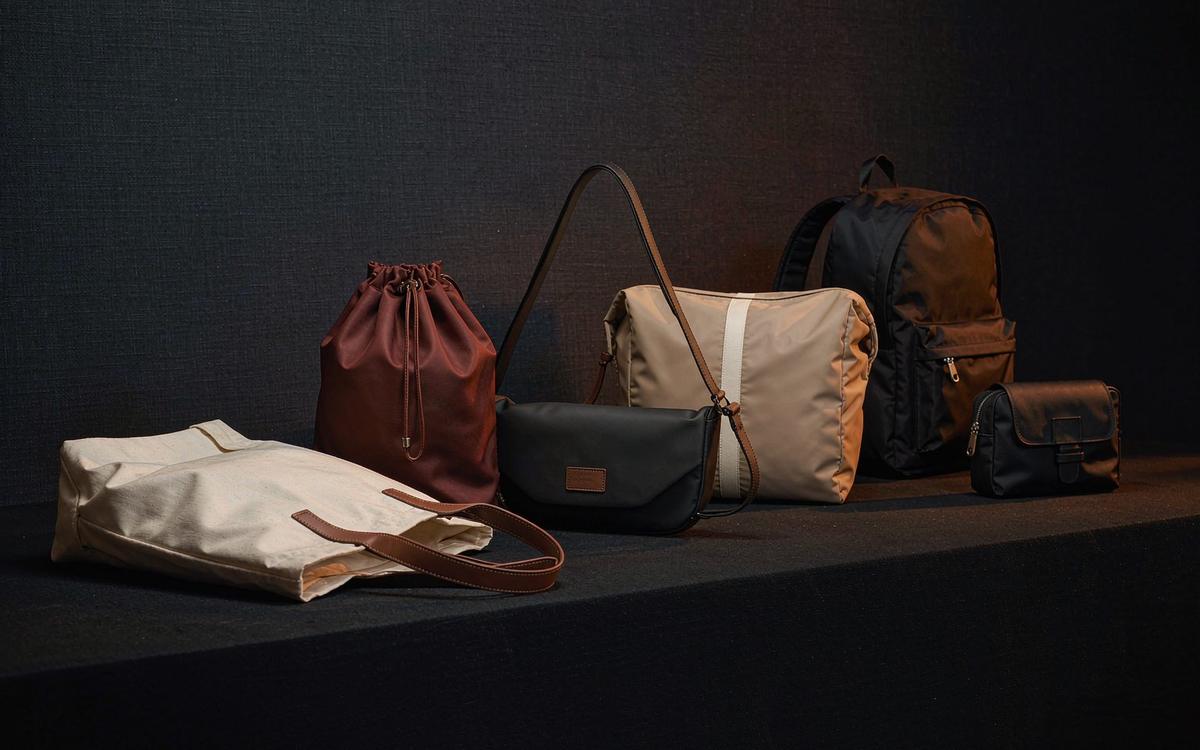
A physical sample changes what a campaign page can claim. A render shows intent; a sample shows a seam, a zip, a lining and a hand-feel. Backers who have been disappointed by a previous campaign are specifically looking for evidence of a real object, and photography of a real object is the only form of that evidence a page can carry. It also gives the video something to hold, which matters more than most creators expect.
Plan the calendar so that a physical sample exists before the page is written. With sampling at 6-10 working days for simple builds and 12-15 working days for complex ones, two rounds plus reward photography need roughly four to six weeks of pre-launch calendar. That is the single best-converting investment available in the pre-launch phase, and it is also the cheapest insurance against a specification that photographs well and feels wrong in hand.
Use the sample for a second purpose as well: shoot the packed carton. Reward photography that shows the shipping carton, the packing format and the unboxing sequence sets accurate expectations about what arrives, and it reduces the most common post-delivery complaint in crowdfunding, which is that the parcel looked smaller or less protected than the backer imagined. Our guide to rewards fulfilment planning covers the packaging specification in detail.
Two photography sessions pay for themselves. Session one is the product in use, which drives conversion. Session two is the packed carton and unboxing sequence, which sets delivery expectations and reduces complaints. Both need a physical sample, so book them after the second sampling round and before the page is finalised.
The conversion cost nobody budgets: reward freight
Freight is a conversion variable, not just a cost line. The published pledge has to cover the parcel to the backer, and if the reward is bulky the pledge rises to a point where conversion falls. A 40 L duffle and a 6 L sling can sit at the same unit cost and produce completely different pledge structures, because volumetric weight dominates the last mile. Design reward formats with the parcel tariff in mind, not only with the product brief in mind.
| Format | Packed volume | Freight pressure | Effect on entry pledge | Conversion effect |
|---|---|---|---|---|
| Flat-pack tote or sling | Low | Lowest; fits a letterbox or small-parcel band | Keeps entry pledge under USD 60 | Strongest at the entry rung |
| Structured backpack | Medium | Medium; boxed to hold crown shape | Pushes core pledge to USD 120-180 | Strongest at the core rung |
| 40 L duffle | High | High; volumetric weight dominates | Requires a core pledge above USD 150 | Converts well but needs a strong video |
| Compressible travel bag | Low to medium | Reduced by up to 40% when packed flat | Supports a mid-band pledge | Best travel-category compromise |
| Accessory set | Low | Low; ships with the hero reward | Adds USD 40-70 as an add-on | Raises average pledge with little friction |
Decide the shipping model before the pledge ladder is fixed. A campaign that collects shipping separately at checkout shows a lower headline pledge and a higher total; a campaign that builds shipping into the pledge shows a higher headline and no surprise. Both work, but they change the number that appears in the pledge grid, which is the number that drives conversion. Make that choice deliberately, and make it before the reward page is written rather than during the campaign.
Stretch goals and the overfund trap
Stretch goals are the most effective conversion tool available to a live campaign and the most common cause of a failed delivery. They work because they give the backer community a reason to keep promoting after the funding target is met. They fail when the goal adds a product variant that was never costed, or when the added volume outruns the cash available for the deposit.
Protect against both failure modes with two rules. First, pre-cost every stretch goal before the campaign launches, so that unlocking one is a pricing event rather than a sourcing event. Second, cap the funded volume against the deposit: payment terms are T/T 30/70, so a larger run needs a larger 30% deposit, and the campaign has to be able to finance it from cleared funds. A stretch goal that doubles unit volume is a cash-flow decision, not a marketing decision.
The safest stretch goals are accessories and colourways that reuse the approved spec. A second colourway on an existing pattern needs no new sampling cycle, only a new dye lot, which is why it can be costed and scheduled inside the same production window. A new product variant does need a new cycle, and adding it mid-campaign is how a 35-50 day production window becomes a 90-day one. Our article on planning production before you launch walks through the pre-costing exercise.
What to measure, and when to measure it
Track four metrics through the campaign, and track them separately, because a single conversion percentage hides the mechanism. Visitor-to-pledger rate tells you whether the page and video are working. Average pledge value tells you whether the reward ladder is working. Tier distribution tells you which rung is carrying the campaign. And cancellation rate in the final week tells you whether fulfilment confidence is holding.
- Visitor-to-pledger rate. If this is weak while average pledge is strong, the problem is the entry tier or the headline price, not the product.
- Average pledge value. If this is flat while volume is strong, the bundle tier is not visible enough on the page or the upgrade gap is too wide.
- Tier distribution. If 80% of pledges land on one rung, that rung is effectively your product and the rest of the ladder is decoration. Rebalance mid-campaign by moving content between rungs.
- Cancellation and downgrade rate. A spike here after a quiet period is a fulfilment-confidence signal. Answer it with a dated production milestone rather than with reassurance.
The most actionable of the four is tier distribution, because it can be changed during a live campaign without touching the product. Moving an accessory from the premium rung to the core rung, or adding a backer-selected add-on at USD 45, changes the average pledge within 24 hours. None of that requires a new specification, which is exactly why the accessories should be specified and costed before launch even if they are not initially offered.
When a physical reward hurts conversion
A physical reward is not universally positive. It damages conversion when the pledge required to cover it pushes the product above what the audience will pay for the underlying idea, when the delivery date is implausibly close, or when the reward is visibly a low-cost item dressed up as a premium one. Backers are better at spotting the third than creators assume.
The plausibility test on delivery date deserves particular care. production 35-50 days after deposit and pre-production sample approval, and sea transit plus fulfilment sit on top of that window, not inside it. A campaign promising delivery six weeks after close on a first custom run is making a promise its own production schedule cannot support. Publish a date built from all three legs; the credibility gain outweighs the conversion loss from a longer date.
Writing the reward page around production reality
The reward page should read like a specification, because specification is what converts a sceptical backer. State the shell fabric with its denier, the zip sizes, the lining, the reinforcement at load points and the tested properties. Avoid adjectives in the reward description wherever a number is available. A page that says 600D polyester with PU coating and bar-tacked load points is more persuasive than one that says tough and durable, because the first can be checked and the second cannot.
State the compliance position too, particularly for rewards shipped into the European Union or California. Mentioning REACH, Prop 65, CPSIA or OEKO-TEX Standard 100 where they genuinely apply signals a creator who has done the work, and it protects the campaign if a backer asks. Book the testing during sampling so the claim on the page is backed by a document that exists, not by one that is expected. See kickstarter campaign bag QA and QC for how those checks are evidenced before cartons are released.
A worked conversion and margin model
Take a campaign with a funding target of USD 60,000 and a hero reward at USD 135. Platform and payment fees take roughly 8-10%, leaving about USD 121 per pledge. Landed unit cost at 500 pcs is USD 38 including freight, duty and fulfilment handling. That leaves USD 83 per core pledge before marketing, samples, tooling and the reserve for replacements. At 500 backers the campaign clears its target with roughly USD 41,500 of gross contribution, which is a viable position; at USD 52 landed cost it is not, and no amount of conversion optimisation fixes that.
| Landed unit cost | Pledge net of 9% fees | Contribution per unit | Gross contribution at 500 units | Viability |
|---|---|---|---|---|
| USD 28 | USD 122.85 | USD 94.85 | USD 47,425 | Comfortable; absorbs marketing and samples |
| USD 38 | USD 122.85 | USD 84.85 | USD 42,425 | Workable; needs a disciplined marketing budget |
| USD 48 | USD 122.85 | USD 74.85 | USD 37,425 | Tight; sensitive to overfund and replacements |
| USD 58 | USD 122.85 | USD 64.85 | USD 32,425 | Fragile; a 5% replacement rate erases the margin |
| USD 68 | USD 122.85 | USD 54.85 | USD 27,425 | Not viable at this pledge level |
Run this table for your own numbers before the page is built, and run it at 500 pcs, not at the volume you hope to reach. The minimum is 500 pcs per style and colourway, so 500 is the number you are contractually committing to and the number the funding target has to survive. Volume above that improves the picture; volume below it is not available.
The contractual commitment is 500 pcs per style and colourway. Build the funding target and the pledge ladder on unit cost at 500, then treat volume above that as upside rather than as assumption. A campaign modelled at 2,000 pcs and funded at 600 is the standard shape of a crowdfunding margin failure.
From conversion model to RFQ
The conversion model produces four numbers a production partner needs: target quantity, launch date, published delivery month and the pledge price each tier has to defend. Send those with the bag type, dimensions, fabric preference and branding method, and ask for unit cost at 500, 1,000 and 2,000 pcs. The shape of that curve tells you whether a stretch goal improves margin or simply adds volume.
- Fix the tier ladder first. Entry, core, premium and add-on, all on one hero spec.
- Model landed cost at 500 pcs. Add freight, duty and fulfilment handling to the FOB Xiamen figure.
- Issue the RFQ at three volumes. 500, 1,000 and 2,000 pcs, before pledge prices are published.
- Confirm the sampling band. 6-10 working days for simple builds, 12-15 for complex ones.
- Protect the premium rung with bundles. Configuration changes, not new patterns.
- Pre-cost stretch goals. Accessories and colourways on the approved spec only.
Start with the quote request form and include the pledge ladder, because a quotation that can be tested against a published price is worth far more than one that cannot. For the category-level view of which formats convert in campaigns, see custom bags for Kickstarter, and for platform-specific mechanics read the Indiegogo crowdfunding bags page.
- Custom Bags for Kickstarter — campaign sourcing hub
- Kickstarter campaign guide for creators
- Indiegogo crowdfunding bags
- Crowdfunding rewards fulfilment planning
- Sampling and prototyping programme
- Low MOQ bag production for creators
- Request a campaign bag quotation
- More campaign sourcing articles
Cost the ladder before you publish it
Send the tier structure, target quantity and launch date. You get landed-cost bands per rung, a three-tier unit cost curve and the sampling window within one business day.
Frequently Asked Questions
How does a physical bag reward change average pledge value?
Through three mechanisms: it raises the ceiling of the pledge ladder, it lets a premium rung be built as a bundle on the same approved spec, and it replaces a render with a photograph of a real object. Average pledge typically rises most when the premium rung is a bundle rather than a separate product.
Should shipping be included in the pledge or collected separately?
Either works, but decide before the reward page is written because it changes the headline number in the pledge grid. Separate shipping shows a lower pledge and higher total; included shipping shows a higher pledge with no surprise at checkout. Test the variant against your audience before launch.
How many reward tiers should a bag campaign publish?
Three rungs plus a backer-selected add-on is usually enough. Entry carries an accessory at USD 55-79, core carries the hero bag, premium bundles the hero with accessories. Every rung should use the same fabric lot so the campaign runs one production programme rather than three.
Why does a bulky reward format reduce conversion?
Volumetric weight dominates the last mile, so a 40 L duffle needs a materially higher pledge to cover the parcel than a 6 L sling at the same unit cost. A compressible or flat-pack format can cut shipped volume by up to 40% and keeps the entry rung inside the cheapest parcel band.
When should a campaign have a physical sample in hand?
Before the page is written. Sampling runs 6-10 working days for simple builds and 12-15 for complex ones, so two rounds plus reward photography need roughly four to six weeks of pre-launch calendar. The sample drives conversion and reveals fit problems while they are still cheap to fix.
What makes a stretch goal safe to offer?
Pre-cost it before launch and keep it on the approved spec. Accessories and additional colourways reuse the pattern and need only a new dye lot, so they fit inside the same production window. A new product variant needs a new sampling cycle and pushes a 35-50 day window much longer.
How does the deposit affect an overfunded campaign?
Payment terms are T/T 30/70, so a larger run needs a larger 30% deposit from cleared funds. A stretch goal that doubles unit volume is a cash-flow decision before it is a marketing one. Cap funded volume against the deposit the campaign can actually finance at close.
Which conversion metric should a creator watch most closely?
Tier distribution, because it can be changed during a live campaign without touching the product. If 80% of pledges land on one rung, move accessory content between rungs or add a backer-selected add-on at USD 45 and re-measure within 24 hours.
Does a longer delivery date hurt conversion?
Slightly, and it is worth accepting. production 35-50 days after deposit and sample approval, with sea transit and fulfilment on top. A date built from all three legs is credible; a six-week promise on a first custom run is not, and late delivery costs more conversion in the next campaign than an honest date costs in this one.
How should compliance be presented on a reward page?
Name the standard that genuinely applies and book the testing during sampling so the claim is backed by an existing document. REACH and Prop 65 declarations, CPSIA where the reward targets children, and OEKO-TEX Standard 100 or GRS for material claims all signal a creator who has done the work.
What landed unit cost leaves a workable campaign margin?
On a USD 135 pledge, platform and payment fees take about 9%, leaving roughly USD 123. At USD 38 landed cost the contribution is about USD 85 per unit, or USD 42,500 across 500 backers. At USD 58 the same campaign is fragile, because a 5% replacement rate erases what remains.
Can personalisation be added to a premium reward tier?
Yes, and it is a strong anchor, but specify it as a production step. Per-unit identifiers need a data file, a check against that file during packing, and an inspection criterion at AQL 2.5 to catch mismatches. Costed and inspected properly it adds value; added casually it generates returns.
What should an RFQ include when the goal is conversion planning?
Target quantity, launch date, published delivery month and the pledge price each tier must defend, alongside bag type, dimensions, fabric preference and branding method. Ask for unit cost at 500, 1,000 and 2,000 pcs so the volume curve is visible before prices are published.
Is a digital-only reward ever better than a physical bag?
For a small campaign with a pledge ceiling below USD 40, yes, because the parcel cost consumes most of the pledge. Above that level a physical reward gives the ladder a ceiling the digital tier cannot reach, which is why bag rewards sit at the centre of most mid-sized hardware and design campaigns.
People Also Ask
Do physical rewards really increase crowdfunding conversion?
They raise average pledge value more reliably than they raise pledge rate. The mechanism is the ceiling effect: a physical object lets a premium rung sit at three or four times the entry price and still look defensible against retail.
What is the best reward tier structure for a bag campaign?
Three rungs on one hero spec: an entry accessory, a core hero bag and a premium bundle, plus a backer-selected add-on. Keeping every rung on one fabric lot means one production programme instead of three.
How much should I charge for a custom bag reward?
Work from landed unit cost at 500 pcs, add platform fees of roughly 8-10%, and leave room for a 3-5% replacement reserve. A USD 135 pledge against USD 38 landed cost is workable; the same pledge against USD 58 is not.
Should I show a prototype or a render on my campaign page?
A prototype. Photography of a real sample converts better than a render and removes the doubt that stops a mid-tier backer from upgrading. Book two sampling rounds before reward photography.
Why does my campaign convert but still lose money?
Usually because the pledge was set before the landed cost was known. Add freight, duty and fulfilment handling to the FOB figure, model at 500 pcs rather than hoped-for volume, and re-check the tier before launch.