Campaign Promotional Bags: When to Order Production After Funding
When should you place a bag production order after a campaign funds? Earlier than the funding close suggests. The deposit that starts the 35-50 day bulk window falls due on approval of the pre-production sample, not on campaign close, and pledge money settles weeks later. Plan it as: sampling approved before launch, deposit in week one, bulk running by week two, inspection at AQL 2.5 around week eight, FOB Xiamen loading in week nine. This article sets out the order sequence day by day.
- What is actually true on the day funding closes
- The deposit clock, not the campaign close, sets your delivery date
- Converting pledge data into a production order
- The pre-production sample gate before any bulk run
- Booking the production window and the 35-50 day run
- Payment milestones set against the production calendar
- Inspection, release and the shipping decision
- Handling overfund: re-order or extend the specification
- What late changes cost after the deposit is paid
- Promotional bag runs against a fixed event date
- Risk register for the first thirty days after funding
- The order checklist to issue your production partner
What is actually true on the day funding closes
The campaign closes, the target is met, and three things are true at once. You have a number of pledges that will change before it settles, because late pledges, failed payments and survey responses all move it. You have a published delivery month that backers are already counting against. And you have a production commitment that has not yet been placed, because production starts on a deposit and an approved sample rather than on a funding result.
That gap is where campaigns lose weeks. The instinct is to wait for the pledge number to settle before ordering, because ordering too few means a re-order and ordering too many means unsold stock. In practice the number will not settle for two to four weeks, and waiting for it pushes the production start past the point where the published month is achievable. The correct response is to order the known minimum and treat the variance as a re-order decision made later.
The numbers this article plans against are fixed: a 500 pcs minimum per style and colourway, sampling at 6-10 working days, production 35-50 days after deposit and approved pre-production sample, inspection at AQL 2.5 to ISO 2859-1, FOB Xiamen, and T/T 30/70 payment. The crowdfunding bag guide covers the same sequence from programme level.
- Minimum order quantity
- 500 pcs per style / colourway
- Sampling
- 6-10 working days (12-15 for complex builds)
- Bulk production
- 35-50 days after deposit + approved pre-production sample
- Inspection
- AQL 2.5 to ISO 2859-1
- Trade term
- FOB Xiamen
- Payment
- T/T 30/70
- Capacity
- 200,000 pcs per month across 7 lines
- Programme contact
- service@junyuanbags.com
Key takeaways for the post-funding order
- Order the known minimum immediately; the pledge count never settles in time to wait for it.
- The 30% deposit is triggered by pre-production approval, which is why sampling should finish before launch.
- Booking the slot matters as much as paying the deposit: confirm start and completion dates in writing.
- Inspection at AQL 2.5 and the 70% balance sit around week eight, before any cargo moves.
- A late change after deposit costs days, not minutes; freeze the specification at approval.
The deposit clock, not the campaign close, sets your delivery date
Internalise one sentence: production 35-50 days after the deposit and the approved pre-production sample. Neither the campaign close nor the purchase order starts that clock. A creator who closes on 1 March and pays a deposit on 20 March has lost nineteen days of the delivery promise before a single unit is cut, and those nineteen days are the ones that push a May delivery into June.
This is why the sampling work belongs before launch. If two sampling rounds at 6-10 working days were completed during the pre-launch period, the pre-production sample exists on day one after funding, and the deposit can be paid in week one. If sampling starts after funding, the calendar absorbs 12-20 working days before the bulk clock can even begin, and the published month becomes unachievable regardless of how fast production runs.
| Milestone | Sampling done before launch | Sampling started after funding |
|---|---|---|
| Campaign closes | Day 0 | Day 0 |
| Pre-production sample approved | Day 2 | Day 20 |
| Deposit paid and slot booked | Day 4 | Day 22 |
| Bulk production completes | Day 40-55 | Day 58-73 |
| Inspection and release | Day 45-60 | Day 63-78 |
| Goods at fulfilment, US West Coast | Day 75-105 | Day 93-123 |
There is one further reason to move early, and it is commercial rather than logistical. Production capacity is allocated to whoever books it first, and a campaign that funds in a busy month competes for lines against far larger orders. A 500 pcs order is small in absolute terms and easy to schedule, but only if it is in the schedule. Booking in week one rather than week four is frequently the difference between a 35-day window and a 50-day one for the identical specification.
Converting pledge data into a production order
The pledge count is not the order quantity. Converting one into the other requires four adjustments: subtract pledges at tiers that carry no physical reward, add backers who have not yet completed a survey where the survey determines colourway, add a replacement reserve of 2-5%, and add units set aside for press, retail samples and post-campaign sales. The result is usually modestly above the raw pledge count at the physical tier.
- Export the pledge report and separate physical tiers from digital and no-reward tiers.
- Identify colourway and size splits from survey responses, and treat unreturned surveys as the most popular option.
- Add a replacement reserve of 2-5% of units; a re-run carries the full 500 pcs minimum again.
- Add press, sample and post-campaign stock, typically 5-10% on a first run.
- Round up to a quantity the production run can absorb cleanly and confirm the per-colourway minimum.
- Issue the order with the quantity per style and colourway stated separately, not as a total.
One judgement call sits in the middle of that list: unreturned surveys. Backers who never respond still need a unit, and the safest assumption is the most popular variant, because it is the easiest to ship and the easiest to resell if it is not wanted. Ordering against the mean of survey responses rather than the sum is the error that produces a shortfall in the least popular colourway and surplus in the most popular one.
The pre-production sample gate before any bulk run
The pre-production sample is the last cheap moment to change anything. It is built from the exact materials, hardware and branding method the bulk run will use, and approval of it is what releases the deposit and books the slot. Approval should be written, dated and tied to a sample identification and a pack revision number, because that document is what the inspector will measure the finished run against several weeks later.
- Confirm the sample uses production materials, not substitutes, including lining, webbing and thread.
- Measure it against the tech pack clause by clause and record the measurements in writing.
- Check branding placement against the stated coordinates, not against a photograph.
- Load it as a backer would, if it is a load-bearing format, and record the result.
- Approve in one pass; a partial approval restarts the sampling clock rather than the production queue.
- Retain the approved unit as the inspection reference for the whole run.
A written approval tied to a sample identification gives you three things: it releases the deposit the same day, it gives the inspector a reference unit, and it ends the argument about what was agreed if a defect claim arrives later. Verbal approval gives you none of them.
For creators who did not complete sampling before launch, the honest position is that the calendar has already moved and the published month should be revised rather than defended. Publish the revision once, with the reason and the new month, rather than in three updates as each stage slips. Backers accept a single honest revision far more readily than a sequence of optimistic ones, and the rewards fulfilment handover is easier to plan against a date that is true.
Booking the production window and the 35-50 day run
Paying the deposit and booking the slot are two separate actions and both are required. The deposit purchases materials and commits the order; the booking places it on a line with a start date and a completion date. A production floor with 7 lines and 200,000 pcs of monthly capacity can absorb a 500 pcs order quickly, but it can only do so if the order is in the schedule rather than in an inbox.
Ask for three dates in writing: production start, production completion and inspection date. Then ask what happens if any of them slips, and get that answer in writing too. A supplier who will not state dates is telling you something important about how the order will be managed, and the moment to hear it is before the deposit rather than in week six.
| Week | What should be reported | What to do with it |
|---|---|---|
| Week 1 | Deposit confirmed, materials released, slot dates | Publish update one to backers |
| Week 2 | Cutting started, cut quantities confirmed | Check against order quantity |
| Week 3 | Decoration first-off approval photographs | Approve or correct within 24 hours |
| Week 4-5 | Units completed, in-line defect log | Publish update two; watch defect trends |
| Week 6 | Packing progress, carton count confirmed | Confirm freight booking |
| Week 7-8 | Inspection scheduled and report issued | Release the 70% balance on a pass |
| Week 9 | Cargo loaded under FOB Xiamen, documents issued | Hand over to fulfilment |
Payment milestones set against the production calendar
T/T 30/70 aligns payment with progress, which is why it suits campaign cash flow. The 30% deposit falls due at approval and buys materials and the slot. The 70% balance falls due after a passed inspection and before cargo is released. Nothing else is payable in between, which means the largest payment is made against verified goods rather than against a promise.
The planning consequence is that the deposit must sit inside the funding target as a cost line. Platform payouts lag the campaign close, late pledges are collected afterwards, and payment failures reduce the final figure. A campaign whose target only covers the full unit cost and not the deposit timing will delay its own production start while it waits for cash, and the delay lands directly on the published date.
Currency is the quiet exposure in this phase. Quotations are in USD and payment is T/T, so if pledges were collected in another currency, a movement between close and deposit changes what the deposit actually costs. On a 35-50 day window there is room for that movement to matter. Hold a buffer of 3-5% in the campaign budget or fix the rate with your payment provider where that option exists, and revisit the figure before the balance falls due as well.
Inspection, release and the shipping decision
Inspection at AQL 2.5 to ISO 2859-1 is the gate before any cargo moves. The inspector draws a statistically determined number of units from the finished run, examines them against the approved reference sample and the agreed defect classes, and issues a report with an accept or reject outcome. You receive that report before releasing the 70% balance, which is the only leverage a creator has at this point and the reason to insist on it in the order.
Once the report passes, the shipping decision follows. Ocean freight from FOB Xiamen takes 18-30 days to the US West Coast and 28-38 days to Northern Europe; air freight takes 3-8 days at four to eight times the cost. The choice is usually made by whether the goods are needed by a fixed date or simply as soon as reasonable. Promotional runs with an event date justify a partial air shipment; ordinary reward runs do not.
- Require the inspection report before releasing the balance, and read the defect counts rather than only the outcome.
- Agree in advance who pays for re-inspection if the first inspection fails.
- Confirm carton count, dimensions and the packing list format your fulfilment warehouse expects.
- Book freight before inspection completes so loading is not delayed by a booking gap.
- Decide air versus sea on a fixed date test, not on impatience in week eight.
- Insure the shipment; a first run is not the place to save that line.
Handling overfund: re-order or extend the specification
An overfund presents two options and one of them is usually wrong. Extending the specification, adding a better fabric or custom hardware to the existing run, means new materials, new sampling and frequently new tooling, which pushes the whole window back by 15-25 days. Re-ordering more units of the approved specification means another deposit, another 35-50 day window, but no engineering risk and no new approval cycle.
The exception is a stretch goal promised during the campaign. If backers were told that a funding threshold unlocks an upgrade, that promise is a specification change and it has to be honoured, which is precisely why stretch goals should be priced and specified during the original RFQ. A goal that was costed at quotation time is a confirmation; one invented during the campaign is a re-engineering project with a delivery date attached.
There is a second, quieter use for a re-order that creators often miss: post-campaign sales. Units ordered above the pledge count, at a slightly better unit cost because tooling is already paid, are inventory for a webshop, a retail conversation or a second campaign. Our low minimum production page covers how re-order quantity interacts with the per-style minimum and why the second run is usually cheaper per unit than the first.
What late changes cost after the deposit is paid
After the deposit, the cost of a change rises sharply and non-linearly. A colour change before cutting costs a material order; the same change after cutting costs the cut panels, the material and the line time. A hardware change after assembly may be unrecoverable without rework, and rework adds ten to fifteen days and a second inspection. This is not bureaucracy; it is the arithmetic of a run that is already in motion.
| Change requested | Before deposit | After cutting | After assembly |
|---|---|---|---|
| Colourway swap | Material order, 6-10 working days | Cut panels scrapped, 15-25 days | Not recoverable |
| Hardware upgrade | Tooling, 15-20 days | Partial rework, 10-15 days | Rework plus re-inspection |
| Branding placement move | New setup, 3-5 days | Units re-decorated, 10-15 days | Not recoverable |
| Fabric grade change | New lot, 10-15 days | Full re-cut, 20-30 days | Not recoverable |
| Packaging change | Carton re-quote, 2-3 days | Repack at destination, 6-10 working days | Repack at destination |
Flexible-funding platforms add one wrinkle to this sequence, because funds arrive in tranches rather than in a single settlement, which makes the deposit timing harder to predict. Our Indiegogo crowdfunding bags page covers how that affects the order decision, and the wider bag blog archive carries worked schedules for both funding models.
Promotional bag runs against a fixed event date
Promotional bags differ from reward bags in one important way: they have an immovable date. A conference, a product launch or a retail activation does not move because a production window slipped. That changes the planning method entirely, because the backwards plan now runs from the event rather than from the funding close, and contingency has to be built into the front end rather than hoped for at the back.
The practical method is to fix the event date, subtract inland delivery and clearance, subtract transit, subtract inspection and packing, subtract the production window and subtract sampling, and then check whether the resulting specification date is before today. If it is not, the only variables left are mode of transport and order quantity. A partial air shipment of the units needed on the day, with the balance following by sea, is the standard answer and it should be costed before the order is placed.
- Set the specification lock date from the event, not from the campaign calendar.
- Cost a split shipment: air for the units needed on the day, sea for the remainder.
- Add one week of contingency before the event for clearance and inland delivery.
- Confirm the carton specification early; a volumetric surprise is worse under a fixed date.
- Consider a simpler format for the event units if it reduces the sampling window.
Risk register for the first thirty days after funding
The first month after funding carries most of the avoidable risk on a campaign programme. The deposit is paid, the slot is booked and the specification is frozen, so the remaining exposure is execution: materials arriving late, a defect trend appearing during sewing, or a freight booking gap. Each has a cheap mitigation and each mitigation costs nothing if it is arranged at the point of order rather than discovered later.
| Risk | Mitigation | Owner |
|---|---|---|
| Deposit delayed by cash timing | Hold the deposit inside the funding target | Creator |
| Material lot unavailable | Confirm availability before the slot is booked | Production partner |
| Defect trend during sewing | Require in-line checks and a weekly defect log | Production partner |
| Inspection failure | Agree re-inspection cost and rework plan in advance | Both |
| Freight booking gap | Book freight before inspection completes | Creator or forwarder |
| Pledge count shortfall | Order the known minimum and re-order later | Creator |
| Specification change request | Freeze at approval; price changes before accepting | Both |
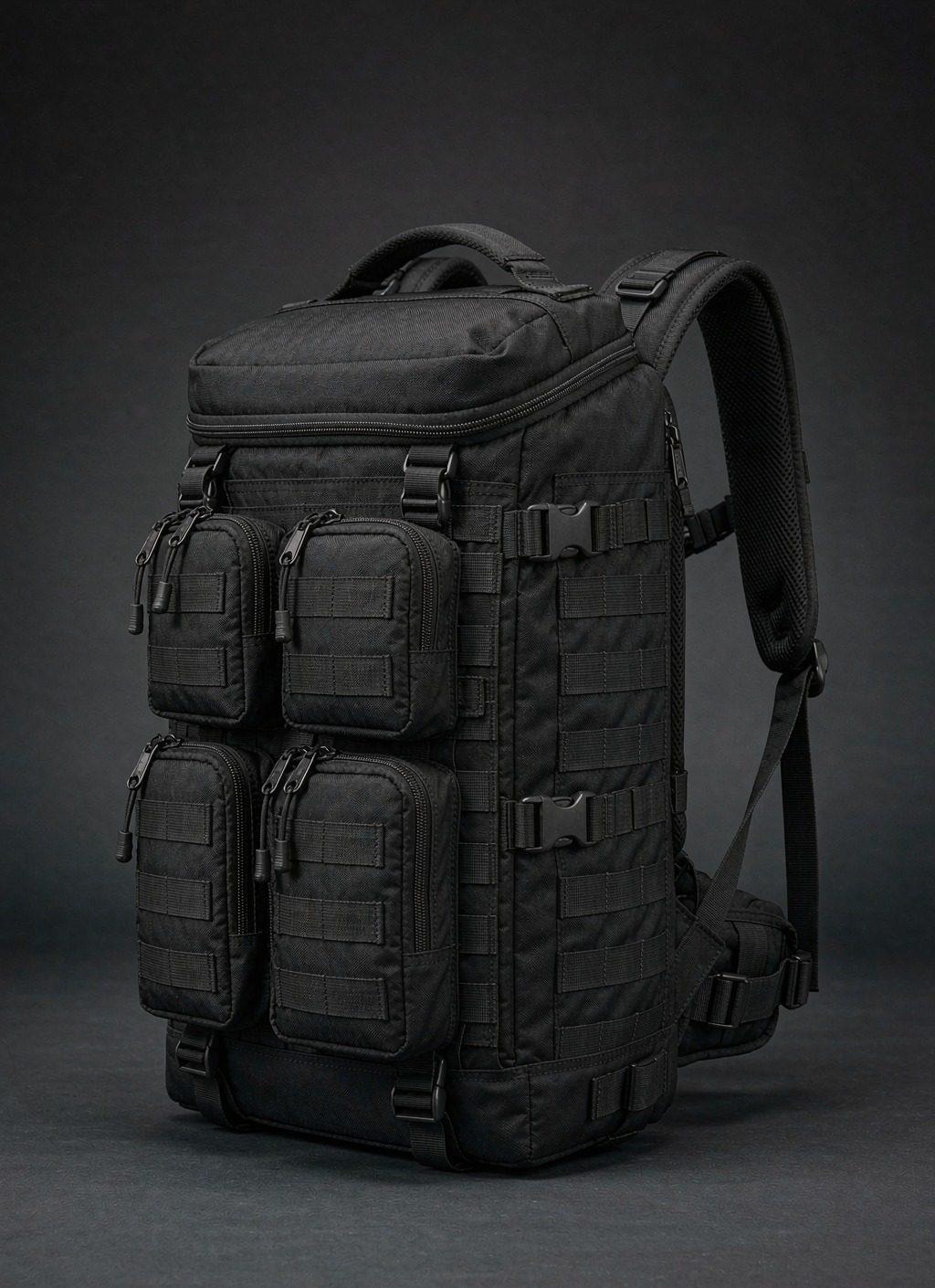
Format choice also affects how much of this schedule is exposed. A flat tote or drawstring bag samples in 6-10 working days and packs densely, so freight is cheaper and less likely to surprise. A structured backpack reward samples slower, may need 12-15 working days on a complex build, and carries a volumetric freight penalty. When a delivery month is tight, the format decision is a schedule decision as much as a design one.
The order checklist to issue your production partner
When the campaign funds, issue one document and issue it completely. A complete order returns a booked slot and a confirmed schedule; an incomplete one returns a week of questions. Everything below should be settled before the deposit is sent, and most of it should already have been agreed during the quotation stage.
- Tech pack with the final revision number and the approved sample identification referenced.
- Quantity per style and per colourway, stated separately, at 500 pcs per style and colourway minimum.
- Unit price, tooling charges and payment structure confirmed as T/T 30/70.
- Production start, completion and inspection dates confirmed in writing.
- Inspection standard stated as AQL 2.5 to ISO 2859-1 with defect classes defined and report recipient named.
- Trade term FOB Xiamen, carton specification, and packing list format for the fulfilment handover.
- Compliance documentation required for the destination market, and who holds the test reports.
- Custom bags for Kickstarter campaigns
- Crowdfunding rewards fulfilment
- Kickstarter campaign bag QA and QC
- Crowdfunding bag sample prototyping
- Low MOQ bag production for creators
- Request a quotation
Turn a funded campaign into a booked production slot
Send your pledge count, colourway split and target delivery month. As your programme coordinator we will confirm the order quantity, book the 35-50 day window and issue the inspection and payment schedule in writing. Write to service@junyuanbags.com.
Frequently Asked Questions
When should I place a bag production order after a campaign funds?
In week one, against the known minimum rather than the final pledge count. The pledge number does not settle for two to four weeks, and waiting for it pushes the production start past the point where a published delivery month is achievable. Overfund is handled later as a re-order.
What actually starts the 35-50 day production window?
Two conditions together: the 30% deposit under T/T 30/70 has landed and the pre-production sample has been approved in writing. Neither the campaign close nor the purchase order starts the clock. A creator who closes on 1 March and deposits on 20 March has already lost nineteen days.
Should sampling be finished before the campaign launches?
Yes. Two sampling rounds at 6-10 working days each, completed pre-launch, mean the pre-production sample exists on day one and the deposit can be paid in week one. Starting sampling after funding adds 12-20 working days before the bulk clock can begin at all.
How do I convert pledge counts into an order quantity?
Remove non-physical tiers, resolve colourways from survey responses, add a replacement reserve of 2-5%, and add 5-10% for press, samples and post-campaign stock. State the quantity per style and per colourway separately, because the minimum is 500 pcs per style and colourway.
Why is the deposit due before the pledge money has settled?
Because it is triggered by approval of the pre-production sample, not by campaign close, and platform payouts lag that moment by weeks. The deposit must therefore be a cost line inside the funding target; campaigns that model only the full unit cost delay their own production start.
What should a production booking confirm in writing?
Three dates: production start, production completion and inspection date. Also ask what happens if any slips. A programme that will not state dates is signalling how the order will be managed, and that is better learned before the deposit than in week six.
When is the 70% balance payment due?
After a passed pre-shipment inspection at AQL 2.5 to ISO 2859-1 and before cargo is released for loading under FOB Xiamen. Require the report to be issued to you first; that is the only leverage a creator has at that point in the programme.
How long does shipping take after production finishes?
Add 3-5 days for inspection and release, then 18-30 days of ocean transit from Xiamen to the US West Coast or 28-38 days to Northern Europe, plus 6-10 working days of clearance and inland delivery. Air freight takes 3-8 days at four to eight times the cost.
Should an overfunded campaign re-order or upgrade the specification?
Re-order the approved specification. A specification upgrade means new materials, new sampling and often new tooling, adding 15-25 days; a re-order needs another deposit and another 35-50 day window but carries no engineering risk. The exception is a stretch goal promised during the campaign.
What does a late specification change cost after the deposit?
It depends on where the run has reached. A colourway swap before cutting costs 6-10 working days and a material order; after cutting it costs 15-25 days and the cut panels; after assembly it is usually unrecoverable without rework and a second inspection.
How should promotional bags be planned against a fixed event date?
Plan backwards from the event rather than from the funding close, add one week of contingency for clearance and inland delivery, and cost a split shipment: air for the units needed on the day, sea for the remainder. Book freight before inspection completes.
What is the biggest risk in the first month after funding?
Cash timing on the deposit, followed by freight booking gaps and defect trends during sewing. Mitigations are cheap if arranged at order stage: hold the deposit in the funding target, book freight early, and require in-line checks with a weekly defect log.
Do I need the packing list format confirmed before shipping?
Yes. Confirm carton count, carton dimensions and the packing list format your fulfilment warehouse expects before cargo leaves. The most common last-mile failure is goods arriving at a fulfilment point that has no paperwork to receive them against.
People Also Ask
Can I wait for all pledges to settle before ordering production?
No, not if you want to hit the published date. Pledge counts move for two to four weeks after close through late pledges, failed payments and survey responses. Order the known minimum in week one and treat any shortfall as a re-order decision.
How many extra units should I order above the pledge count?
Add a replacement reserve of 2-5% plus 5-10% for press, samples and post-campaign stock. Replacements cannot be sourced from a new run without committing to the full 500 pcs minimum again, so holding them in the first run is far cheaper.
What if my campaign overfunds after I have placed the order?
Re-order the approved specification rather than upgrading it. The re-order needs another 30% deposit and another 35-50 day window but no new sampling or tooling, whereas a specification change adds 15-25 days and re-engineering risk.
Should I ship the first production run by air or by sea?
Sea for ordinary reward runs: 18-30 days from Xiamen to the US West Coast at baseline cost. Air at 3-8 days costs four to eight times more and is justified for a partial shipment needed before a fixed event or press date.
What happens if my pre-shipment inspection fails?
The run is reworked or re-sorted and presented again, typically adding 10-15 days. Agree in advance who pays for re-inspection, and reduce the risk with an in-line check during sewing, when a defect trend is still correctable.