Importing Reward Bags: Customs, Duty and VAT in Three Markets
Customs classifies a bag by what it is made of and how it is constructed, not by what the campaign calls it. Nylon and polyester travel bags generally fall in one heading and leather or coated textile bags in others, with duty bands commonly spanning 3 to 20 percent depending on the outer surface and market; import VAT then applies at 17 to 27 percent in the EU and 20 percent in the UK. The value customs uses is the transaction value of the goods plus freight and handling to the border, not the retail pledge price. This guide covers the classification question, the duty bands, de minimis thresholds, valuation rules, import VAT mechanisms and the documents every entry needs.
- Why bags are classified by material, not by name
- The classification code: what actually determines it
- Duty bands by market and construction
- De minimis thresholds and why they keep moving
- Customs valuation: which number goes on the invoice
- Import VAT in the EU and the UK
- The documents a reward bag shipment needs
- First time importer risk: examination and holds
- Broker, importer of record and who is liable
- A compliance timeline for a reward shipment

Customs authorities do not care that a bag is a reward, a perk or a limited edition. They care what it is made of, how it is constructed and what it is worth at the border. A creator who understands those three questions can predict the duty bill to within a few percent before the goods ship, and a creator who does not will discover the number when a broker calls with an invoice and a container sitting at the port.
This article is the compliance layer underneath the delivery question. It covers how bags are classified, the duty bands that follow from the material, the de minimis thresholds that determine whether small parcels are assessed at all, the valuation rule for what number goes on the commercial invoice, the import VAT mechanisms in the EU and UK, and the document set every entry requires. For the commercial decision about who pays that duty, see the DDP shipping guide for backer rewards; for the wider framework, see crowdfunding rewards fulfilment.
Why bags are classified by material, not by name
The most common assumption among first time importers is that a bag is a bag. It is not. Tariff schedules distinguish between travel bags and backpacks by outer surface material, and that distinction drives the duty rate. A backpack with an outer surface of synthetic textile sheeting sits in a different place from one with an outer surface of leather, and one of coated textile sits somewhere else again. Two products that look similar on a campaign page can attract materially different duty.
This matters because the classification is decided on the physical product, not on the description you write. If the outer surface is 100 percent polyester and the lining is nylon, the classification follows the outer surface. If the base is coated with a visible layer of plastic, some authorities will treat the coating as the outer surface. These are judgement calls that a broker makes using the specification, and that is why the specification matters more than the marketing copy.
The practical consequence for a creator designing a reward is that material choice has a duty consequence. Our sourcing partner has seen campaigns choose a coated canvas for its look and then find the duty band materially higher than the polyester they had costed. That does not mean avoid the material. It means confirm the band before you fix the specification, because afterwards the only remedy is absorbing it.
The second reason material matters is that it is verifiable. A customs officer can look at a bag, read a fibre label, and form a view in seconds, whereas a product name on an invoice tells them nothing. This is why the specification you send your broker should read like a technical document rather than a marketing one: composition percentages, coating presence, panel construction and closure type. A broker working from a campaign page will guess, and a guess that is wrong becomes a reassessment.
The classification code: what actually determines it
Every imported product is assigned a tariff classification under the Harmonized System, administered internationally and applied nationally with additional digits. The first six digits are common across most jurisdictions; the remaining digits are country specific. For bags, the heading level is generally determined by the type of container and the sub-heading by the outer surface material.
For the creator, the useful level of detail is this: you need the six digit level confirmed for your specific construction, and you need the national extension confirmed for each destination market. Those are two separate tasks. A code that is correct in the United States can require a different national extension in the European Union or the United Kingdom, and while the duty rate often matches at the six digit level, the administrative detail does not.
Getting this confirmed costs nothing and takes a few days. Send your broker the construction detail: outer material and its composition, lining material, whether there is a coating, whether any part is leather or leather fibre, the closure type and the intended use. Ask for the code and the rate in writing, per destination. Do this while the 6 to 10 working day sampling round is running, or 12 to 15 working days if the construction is complex, so the answer arrives before bulk starts rather than after.
| Factor | Why it matters | What to supply |
|---|---|---|
| Outer surface material | Primary driver of the duty band | Composition percentage, for example 100 percent polyester or 600D nylon |
| Coating or lamination | A visible coating can be treated as the outer surface | Whether a PU or PVC coating is applied and on which face |
| Leather content | Leather and composition leather sit in different bands | Whether any panel is genuine leather, bonded leather or PU |
| Type of container | Travel bag, backpack, pouch and case are treated differently | Intended use and closure type |
| National extension | Country specific digits affect administration | Destination market list, one code per market |
| Declared value | Duty is ad valorem on customs value, not retail price | Commercial invoice value plus freight and handling to the border |
Duty bands by market and construction
Duty on bags is ad valorem, meaning it is a percentage of the customs value rather than a fixed amount per unit. The bands vary by market and by material. Synthetic textile travel bags and backpacks commonly fall in the single digits in the EU and UK, often quoted in a 3 to 9 percent range, while certain coated, leather or specialty constructions can reach the high teens or above in some markets.
The United States applies its own schedule, and rates for bag classifications there can be higher than in Europe for certain constructions, with some lines reaching the high teens to around 20 percent. This is a reason not to generalise from one market to another. A campaign that costed duty at 6 percent on the basis of a European quote can face a materially different number on the US entry, and the US allocation is often the largest one.
There is also trade remedy exposure. Anti-dumping or countervailing measures, and tariff measures applied to particular origins, can add to the headline rate. These change, they are product and origin specific, and they are exactly the kind of thing that should be confirmed with a broker close to dispatch rather than assumed at launch. A campaign running a nine month gap between launch and delivery is exposed to policy changes it cannot control, which is why a 10 to 15 percent contingency on the duty line is standard advice rather than pessimism.
There is a practical way to handle this uncertainty without paying for a formal ruling on every campaign. Ask the broker for the rate on the most likely code and on the adjacent plausible code, then price the pledge against the higher of the two. The difference between two adjacent bands is usually a few percentage points, which on a 1,000 unit shipment is a few hundred to a couple of thousand dollars, and carrying it as a provision costs nothing if the lower rate applies.
De minimis thresholds and why they keep moving
A de minimis threshold is the customs value below which a shipment is not assessed for duty, and sometimes not for import tax either. It matters enormously for per-parcel fulfilment and almost not at all for bulk import. If you import 1,000 units into a warehouse, you will be well above any threshold and the subject is academic. If you ship 200 individual parcels directly to backers, the threshold decides whether anything is assessed at all.
The thresholds differ by market and they have been under active review in several jurisdictions, particularly for low value e-commerce imports. The direction of travel in recent years has been toward tighter treatment of high volume low value parcels, with proposals and enacted changes affecting both duty and import tax collection. This is an area where a figure quoted in an article written twelve months ago may no longer be correct, and the honest advice is to verify current thresholds with your broker or carrier at the point of dispatch.
The operational implication is straightforward. Do not build a fulfilment plan whose economics depend on staying under a threshold. If your landed cost model only works because parcels are duty free, the model is fragile. Structure the plan so that duty is either paid and priced, or genuinely not applicable because goods are already in market, as described in the US, EU and UK warehouse comparison.
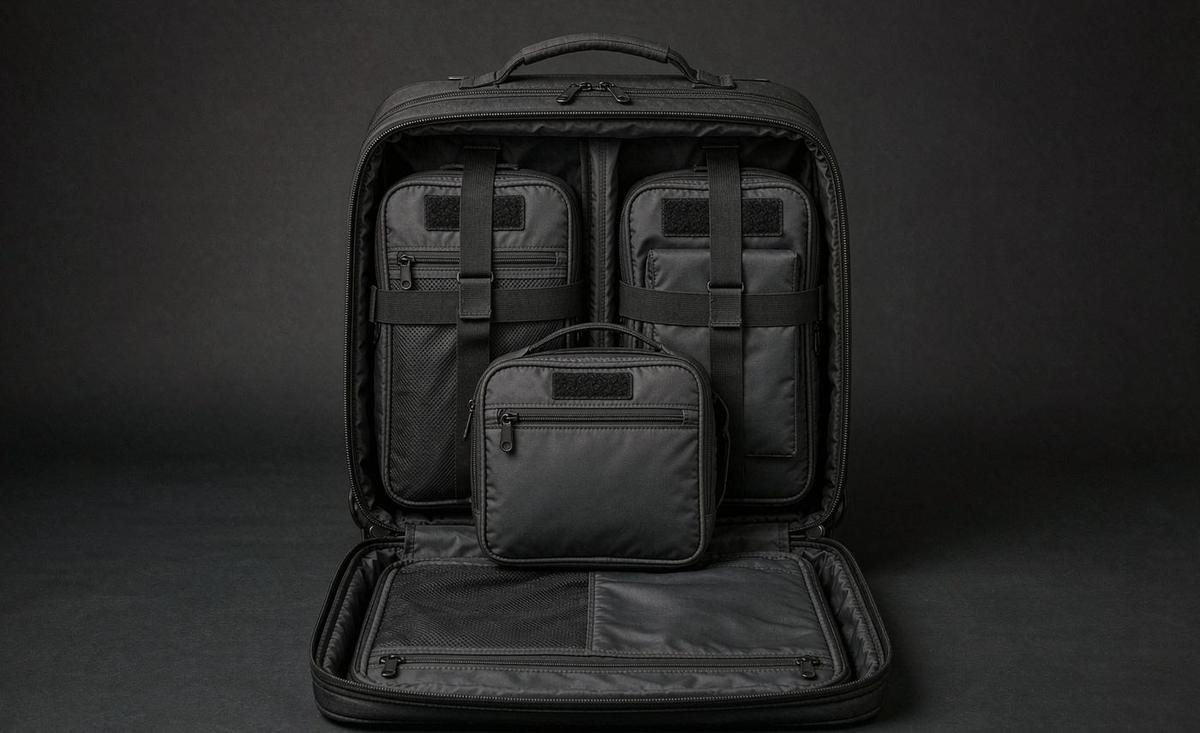
There is a second-order effect that matters for planning. Where a threshold applies to duty but not to import tax, eliminating the duty on a low value parcel does not eliminate the import tax, so the backer may still receive a demand. This is the pattern in much of Europe, where VAT applies from the first euro. The practical conclusion is that a threshold analysis is only useful if it covers both the duty and the tax, and a broker who answers only about duty has answered half the question.
Customs valuation: which number goes on the invoice
Customs value is not the retail price and it is not the pledge price. It is the transaction value of the goods, which for a reward bag is what the campaign paid, plus the freight, insurance and handling costs incurred getting them to the border. Under FOB Xiamen terms the price covers the goods loaded at the port of shipment, so the international freight and insurance are added on top to reach the customs value.
Work the arithmetic. A bag at USD 14.50 FOB, plus USD 1.10 of ocean freight and origin handling amortised per unit, gives a customs value of about USD 15.60. Duty at 6 percent is USD 0.94. import VAT is then applied to the duty inclusive value of about USD 16.54, which at 19 percent gives roughly USD 3.14. The total fiscal load per unit is about USD 4.08, and that is before any clearance administration charge.
The reason to be precise about this is that under-declaration is the most common and most avoidable compliance failure. Authorities have access to freight documentation, to banking records on a T/T 30/70 payment structure, and to the campaign page itself showing a retail price. An undervaluation finding can trigger reassessment across the entire entry, penalties, and a hold on the goods while it is resolved, which on a shipment with a published delivery date costs far more than the duty saved.
One more valuation detail deserves attention: assists and tooling. If the campaign supplied artwork, paid for a mould or provided materials free of charge, some jurisdictions require the value of those contributions to be added to the customs value. For a bag programme this usually means the cost of any custom hardware tooling or branded zipper pulls supplied separately. Disclose them to the broker rather than assuming they are outside the transaction value, because an undisclosed assist is a common finding.
Import VAT in the EU and the UK
Import VAT is charged on most imports into the EU and the UK regardless of value, at the standard rate of the importing member state. Rates span roughly 17 to 27 percent across the EU and stand at 20 percent in the UK. It is applied to the customs value plus the duty, which means duty and VAT compound rather than simply adding.
For goods already held in an EU warehouse and sold onward to consumers in other member states, distance selling rules determine which member state's VAT applies. Below the EU-wide threshold, a seller can often account for VAT in its own member state; above it, the destination rate applies. Above the threshold, many sellers use the import one stop shop to report and pay across member states through a single return. If your campaign is holding EU stock and shipping to backers in several countries, this is a real obligation and not an optional optimisation.
The UK operates separately. Import VAT at 20 percent applies on import, and a registration obligation generally arises once taxable supplies in the UK pass the relevant threshold. Because the UK is a distinct customs territory, shipments from an EU warehouse into the UK are imports with their own entry and their own VAT, which is the point that most campaigns discover too late. Holding separate UK stock, as discussed in the warehouse location comparison, is the structural answer above roughly 400 UK backers.

There is a recovery point that many campaigns miss. Import VAT paid on a commercial import is generally recoverable by a VAT-registered business, which means the campaign may be able to reclaim the import VAT it prepaid if it makes onward taxable supplies. Whether this applies depends on the registration position and on how the rewards were priced, and it is a question for an accountant rather than a broker. Worth asking, because on a 1,000 unit European shipment the reclaimable amount can run to several thousand dollars.
The documents a reward bag shipment needs
A commercial entry needs a small set of documents, and every one of them has to reconcile with the others. The commercial invoice states the seller, the buyer, the description, the classification, the quantity and the value. The packing list states the carton count, the contents per carton and the weights and dimensions. The transport document is the bill of lading for sea or the air waybill for air. Depending on the market and the product, a certificate of origin may also be required.
Reconciliation is the discipline that matters. If the invoice says 1,000 units and the packing list totals 980, the entry will be queried. If the weights on the packing list do not match the bill of lading, the entry will be queried. These are not moral questions, they are arithmetic ones, and each query costs days. Our production team produces the packing documentation to match the inspection lot, which is why the AQL 2.5 to ISO 2859-1 report and the packing list are generated together.
For textile products, labelling and fibre composition rules can also apply in the destination market, and some jurisdictions require country of origin labelling to be permanently affixed. A bag can clear customs and still be non-compliant on labelling, which is a separate exposure that surfaces at retail rather than at the border. Confirm the labelling requirement for each market while the specification is being finalised, because adding a sewn-in label after production is expensive and adding it during production is not.
- Commercial invoice: parties, description, classification, quantity, value, terms of sale
- Packing list: carton count, contents per carton, net and gross weights, dimensions
- Bill of lading or air waybill: matching the carton count and weights on the packing list
- Certificate of origin: where required by the destination or needed for preference claims
- Fibre composition and origin labelling: a market requirement that applies at retail, not at the border
First time importer risk: examination and holds
Examination rates are not uniform. A consignment from an importer with no history is materially more likely to be selected for physical examination or document check than one from an established importer with a clean record. Examination adds time, and the time is not fixed: a document check may add two or three days, while a physical examination of a container can add a week or more depending on the port and the workload.
The mitigation is a clearance buffer in the published timeline. Allow 5 to 10 days for clearance rather than assuming same-week release, and use the upper figure for a first shipment. A campaign that budgets 5 days and takes 5 is not clever, it is lucky; a campaign that budgets 10 and takes 6 simply delivers early, which costs nothing.
The second mitigation is document quality. Most examinations that turn into delays do so because a query was raised and the answer took days to assemble. Have the classification rationale, the specification sheet and the value breakdown ready to send the same day the query arrives, not the day after. A broker who has the file in advance can answer a query in hours; one who has to chase the creator for it will take days.
A second mitigation is to ship the entry documents early. Most brokers will accept and pre-check the commercial invoice and packing list several days before the vessel arrives, which allows queries to be raised and answered before the goods are physically held. Pre-lodgement is standard practice on established import lanes and it is available to first time importers on request, at no additional cost beyond the normal entry fee. Ask for it explicitly, because it is often offered only to clients who ask.
Broker, importer of record and who is liable
A customs broker prepares and submits the entry. The importer of record is the party legally responsible for the accuracy of the declaration and for paying the duty and tax. These are usually the same commercial provider in a reward fulfilment context, but they are distinct legal roles and the distinction matters when something goes wrong.
If you use a fulfilment warehouse in the destination market, confirm in writing who will be named as importer of record. Some warehouses will do it; some require the creator to register locally; some require a fiscal representative. Getting this wrong is not a delay, it is a blocker, because an entry cannot be filed without a party who is legally able to make the declaration.
Liability follows the declaration. If the classification is wrong and duty was underpaid, the importer of record is liable for the difference and any penalty, regardless of who chose the code. That is why the written confirmation from the broker matters: it establishes who made the classification determination. Ask for it, keep it, and treat it as part of the campaign's permanent file rather than as an email you will never look at again.
There is also a practical question about records. Customs authorities in most jurisdictions require importers to retain entry records for a defined period, commonly several years, and can audit well after the campaign has closed. Keep the commercial invoice, the packing list, the entry summary, the duty payment proof and the classification rationale together in one folder. This takes ten minutes at the time and saves days if a query arrives eighteen months later, which is exactly when queries of this kind tend to arrive.
A compliance timeline for a reward shipment
Compliance work is front-loaded, which is inconvenient because it happens at the least exciting moment of a campaign. The sequence below is built against the production clock: sampling at 6 to 10 working days for a standard build or 12 to 15 working days for a complex one, then bulk at 35 to 50 days after deposit and approved pre-production sample.
During sampling, send the specification to a broker and get the classification and rate confirmed per market. Before bulk starts, confirm the importer of record in each destination and open any registration that is required. During bulk, prepare the commercial invoice template and the packing list format, and confirm the labelling requirements for each market. At booking, confirm the freight terms and the valuation basis. Two weeks before dispatch, re-verify the de minimis position and any trade remedy exposure, because these are the two items most likely to have moved.
Then hold the buffer. Clearance at 5 to 10 days, plus a 10 to 15 percent contingency on the duty and tax line, plus a 2 to 4 percent physical buffer of units against loss and damage. Those three provisions cover the overwhelming majority of what goes wrong in a first reward shipment, and each one costs far less than the failure it prevents. The campaigns that deliver quietly are not luckier, they simply made these provisions before they needed them.
Key takeaways
- C
- o
- n
- f
- i
- r
- m
- c
- l
- a
- s
- s
- i
- f
- i
- c
- a
- t
- i
- o
- n
- a
- n
- d
- i
- m
- p
- o
- r
- t
- e
- r
- o
- f
- r
- e
- c
- o
- r
- d
- d
- u
- r
- i
- n
- g
- s
- a
- m
- p
- l
- i
- n
- g
- ,
- r
- e
- -
- v
- e
- r
- i
- f
- y
- t
- h
- r
- e
- s
- h
- o
- l
- d
- s
- b
- e
- f
- o
- r
- e
- d
- i
- s
- p
- a
- t
- c
- h
- ,
- a
- n
- d
- h
- o
- l
- d
- a
- 1
- 0
- t
- o
- 1
- 5
- p
- e
- r
- c
- e
- n
- t
- d
- u
- t
- y
- c
- o
- n
- t
- i
- n
- g
- e
- n
- c
- y
- .
Send us your bag specification and destination markets, and our programme coordinator will confirm what classification work your shipment needs.
Frequently Asked Questions
How is a custom bag classified for customs?
By what it is made of and how it is constructed, not by its name. The outer surface material is the primary driver, so supply composition percentages, whether a PU or PVC coating is applied, whether any panel is genuine or bonded leather, the closure type and the intended use. The six digit level is largely common, with country specific extensions per market.
What duty rate applies to imported reward bags?
Synthetic textile travel bags and backpacks commonly fall in the 3 to 9 percent band in the EU and UK, while some coated, leather or specialty constructions reach the high teens or above, and certain US lines reach around 20 percent. Confirm the rate against your specific construction and market rather than using a generic figure.
What value does customs use for a reward bag?
The transaction value of the goods, meaning what the campaign paid, plus freight, insurance and handling to the border. Under FOB Xiamen terms the price stops at the port of shipment, so international freight is added on top. A bag at USD 14.50 FOB plus USD 1.10 freight gives a customs value of about USD 15.60.
Is duty charged on the retail price of the reward?
No. Duty is assessed on customs value, not on the pledge price or the retail price. This works in the importer's favour, but the declared value must be accurate, because authorities can see freight documents, payment records and the public campaign page.
What is a de minimis threshold?
The customs value below which a shipment is not assessed for duty and sometimes not for import tax. It matters for per-parcel direct shipping and not for bulk warehouse imports. Thresholds differ by market and have been under active review, so verify them close to dispatch rather than relying on published figures.
Do I pay VAT on reward bags imported into the EU?
Yes, import VAT applies from the first euro of value at the standard rate of the importing member state, roughly 17 to 27 percent, and it is charged on the customs value plus the duty. If you hold EU stock and ship to several member states, distance selling thresholds determine which rate applies above the EU-wide limit.
Does shipping from an EU warehouse to the UK avoid UK import VAT?
No. The UK is a separate customs territory, so the shipment is a fresh import with its own entry, duty assessment and 20 percent import VAT. Above roughly 400 UK backers, holding separate UK stock is usually the better structure.
What documents does a bag import need?
A commercial invoice, a packing list, a bill of lading or air waybill, and a certificate of origin where required. Every document must reconcile: carton counts, weights and unit totals that disagree will trigger a query, and each query costs days.
Who is the importer of record on a reward shipment?
The party legally responsible for the declaration and for paying duty and tax. It is often the fulfilment warehouse or its broker, but confirm it in writing, because an entry cannot be filed without a party legally able to make the declaration.
Why was my first shipment selected for examination?
Examination rates are materially higher for importers with no history. A document check may add two or three days and a physical examination a week or more. Allow 5 to 10 days for clearance and have the classification rationale and value breakdown ready to send the same day a query arrives.
How much duty contingency should I hold?
10 to 15 percent on the duty and tax line. Duty rates, de minimis thresholds and trade remedy measures all move, and a campaign delivering nine months after launch is exposed to changes it cannot control.
Do fibre composition labels matter for bags?
Yes, in many markets. Textile labelling and country of origin rules can apply at retail rather than at the border, so a bag can clear customs and still be non-compliant. Confirm requirements while the specification is open, because adding a sewn-in label after production is expensive.
People Also Ask
What duty do I pay on custom bags?
Usually 3 to 9 percent for synthetic textile bags in the EU and UK, with coated or leather constructions higher and some US lines around 20 percent. Confirm against your construction.
Is customs value the same as retail price?
No. It is what you paid plus freight and handling to the border. Under FOB terms the international freight is added on top of the unit price.
Do I need an EORI or VAT number to import rewards?
Usually yes in the EU and UK for commercial imports. Confirm who will be named as importer of record with your warehouse or broker before the goods ship.
Can I avoid duty by shipping small parcels?
Sometimes, if the value falls under the de minimis threshold. Thresholds have been moving, so do not build a plan whose economics depend on staying under one.
What is import VAT?
A tax charged on most imports into the EU and UK, at 17 to 27 percent depending on member state and 20 percent in the UK, applied to customs value plus duty.
How long does customs clearance take?
Allow 5 to 10 days. First time importers face higher examination rates, so use the upper figure and treat early release as a bonus.
What is a certificate of origin?
A document stating where the goods were produced, required by some destinations and needed for any preference claim. It must match the invoice and packing list.