Custom Bags for Amazon FBA Startups: Sourcing With Fulfilment in Mind
Sourcing a bag for Amazon FBA means the production order is planned backwards from the inbound appointment. The minimum is 500 pcs per style and per colourway, and every unit has to arrive labelled, bagged and cartoned in a way the fulfilment network can receive without extra handling. Polybag and label requirements, carton weight and dimensions, carton contents, SKU identity and the freight route are decided before bulk production, not after it. Sampling takes 6-10 working days, or 12-15 for complex builds, production 35-50 days, inspection is AQL 2.5 to ISO 2859-1, payment is T/T 30/70 and the trade term is FOB Xiamen.
- Why FBA changes the sourcing brief
- Decide the prep model first
- Polybag, labelling and scannable identity
- Carton planning: weight, dimensions, contents
- SKU identity and what it means for MOQ
- Freight routing to the fulfilment centre
- Lead time as inventory: restock maths
- Quality and returns: what FBA magnifies
- The cost model for an FBA bag
- A sourcing checklist for FBA bag startups
Why FBA changes the sourcing brief
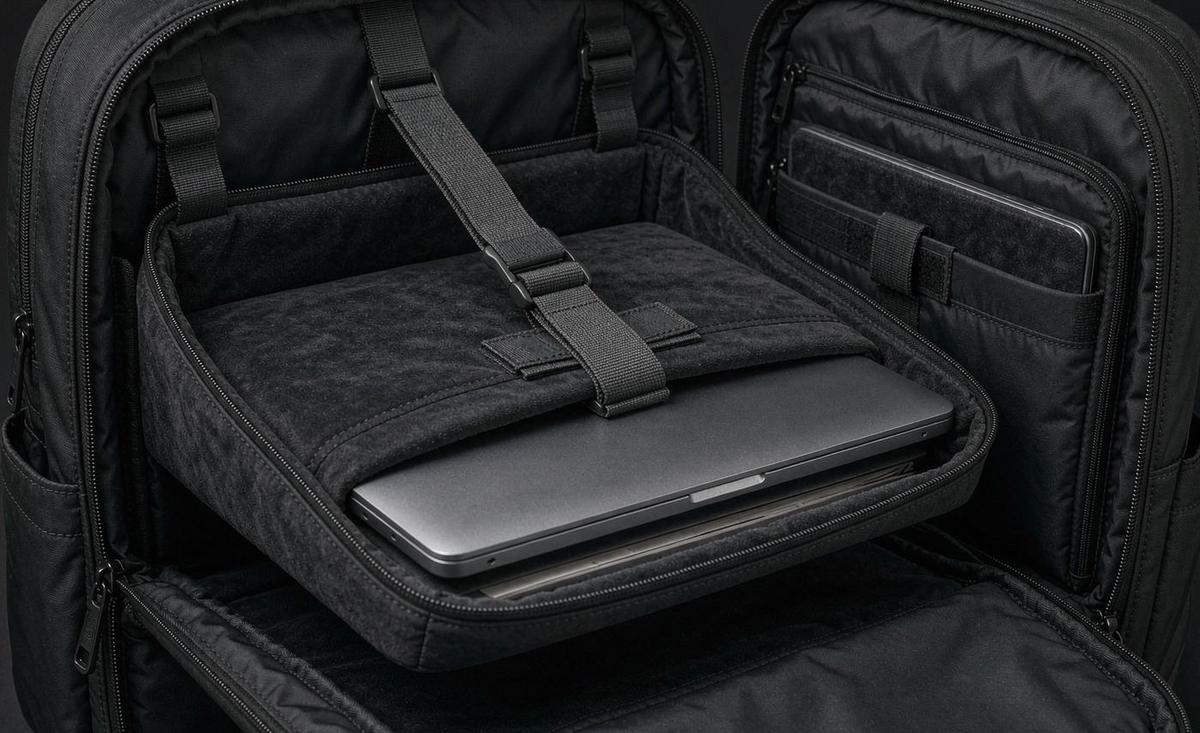
A marketplace seller does not ship parcels to named customers; they ship cartons into a fulfilment network that receives them under its own rules. That single difference changes the sourcing brief. The question is no longer only what the bag costs and when it arrives, but whether the carton can be received, the label scanned, the unit identified and the inventory counted without anyone unpacking and reworking 500 pieces at destination.
Every rework at destination is paid twice: once in handling and once in delay. A carton that arrives without the required label, or with the wrong contents declaration, can sit while it is corrected, and the inventory is not sellable during that time. For a startup holding one month of stock, that delay is the difference between a ranking held and a ranking lost.
The brief therefore starts with the requirement set. Before the RFQ, a seller should have the current inbound requirements for the destination marketplace: how each sellable unit must be bagged and labelled, what the carton must declare, how contents must be arranged, and which carriers and routes are acceptable. Those requirements change, so confirm them in the seller documentation at the time of ordering rather than relying on a saved screenshot.
With that requirement set, the sourcing conversation becomes concrete. The low-MOQ production guide sets the quantity framework, and the MOQ vocabulary article defines the SKU layer. This article adds the fulfilment-specific decisions that a bag founder has to make before the deposit is released.
Decide the prep model first
Prep is the work that makes a unit receivable: bagging, labelling, and arranging carton contents. It can be done at origin, before the goods are handed over at FOB Xiamen, or at destination, in a prep facility or a 3PL. The decision shapes the packing rules, the carton plan, the cost structure and the calendar, so it should be made before the RFQ rather than after the quotation.
| Factor | Origin prep | Destination prep | What to check |
|---|---|---|---|
| Labelling cost | Applied during packing, low per unit | Higher per-unit handling rate | Label stock and print quality |
| Carton contents | Mixed or single, as planned | Repacked to requirement | Whether mixing is permitted |
| Error correction | Hard after the cartons are sealed | Easier before inbound | How errors are found |
| Lead time | Adds packing time at origin | Adds handling time at destination | Effect on the restock date |
| Flexibility | Lower once packed | Higher, SKU mix can change | Survey or listing changes |
| Best for | Stable, known requirements | Changing or uncertain requirements |
Origin prep is usually cheaper per unit and removes one handling step, but it requires the requirements to be stable and correct at the time of packing. Destination prep costs more per unit and adds days, but it allows the SKU mix and the carton plan to change after the goods arrive. For a first order with a new requirement set, a hybrid often works: bag and label at origin, and keep the final carton arrangement flexible at destination.
The decision also interacts with the MOQ. Bagging and labelling at origin is a packing operation inside the 500-pcs run, and it needs its own material: the bag film, the label stock and the print file. Those are items with their own quantities and their own lead times, and they belong in the RFQ.
Our production team asks sellers to state the prep model in the enquiry, because it changes what we plan. A request that says label at origin receives a packing rule, a label specification and a per-unit operation; a request that says prep at destination receives a simpler packing rule and a stricter carton-content declaration.
Polybag, labelling and scannable identity
Marketplace units normally need three things to be scannable and safe in transit: a protective bag, a scannable identity label and, where required, a safety warning printed on the bag. The bag protects the product from dust and handling; the label identifies the exact sellable variant; the warning satisfies the applicable packaging rule. All three are specified before bulk production, because they are applied in the packing sequence, not afterwards.
- Bag film thickness and closure method, stated in the packing rules.
- Label size, position and orientation on the bag, verified by scan.
- Print quality of the barcode, checked on a sample, not assumed.
- Warning text where the destination rule requires it.
- Whether the identity label must be scannable through the bag.
- A spare-label quantity for replacements and exceptions.
The scannable identity is the part that ties the physical bag to the listing. The MOQ vocabulary article separates the production SKU from the fulfilment SKU; in a marketplace context each sellable variant needs its own identity, its own listing and its own inventory count. If a black bag and a sand bag share one label because the label was planned late, the inventory will be wrong at receiving, and correcting it costs handling and time.
Verify by scanning. A label that looks correct can fail a scanner because of print resolution, quiet-zone size or placement over a seam. Request that the packing test includes a scan check on a sample carton, and keep a photographed record of the approved label position. That is a 10-minute control that prevents a receiving exception on 500 units.
There is a timing point here too. The identity must be final before packing rules are written, which means before bulk production, which means before the deposit. A seller who changes their listing structure after the lot is packed has created a physical problem rather than a digital one.
Carton planning: weight, dimensions, contents
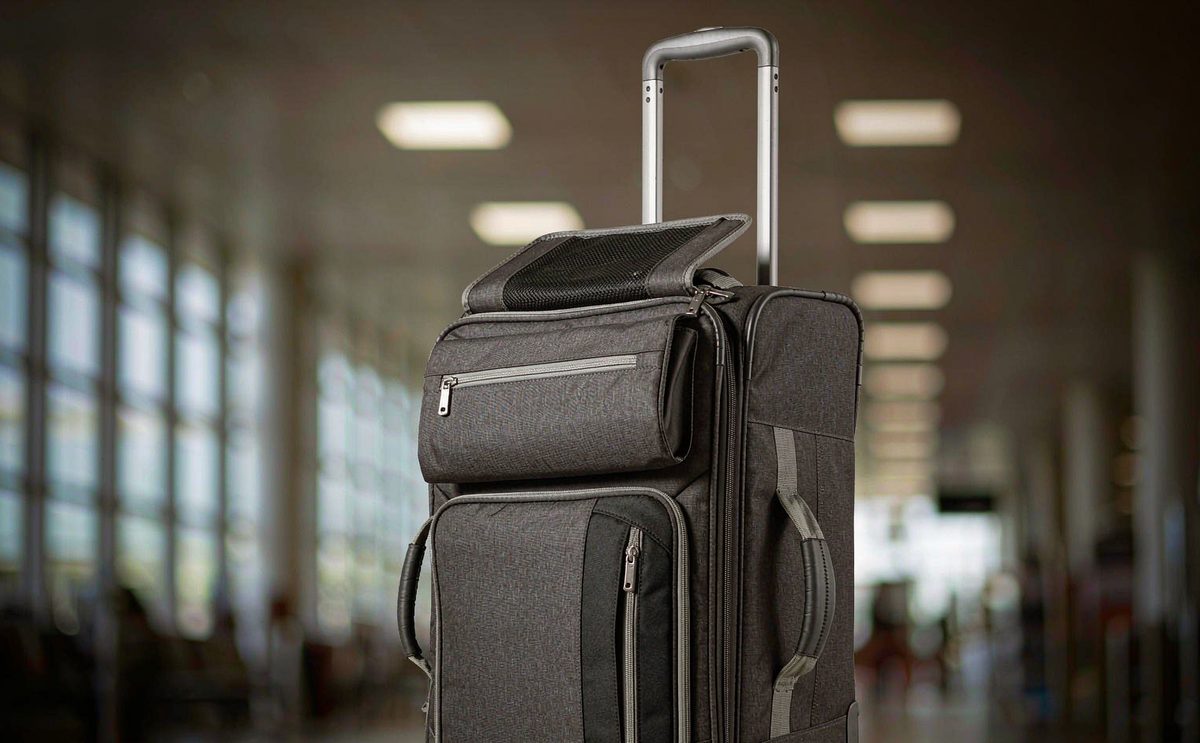
Carton planning is where FBA sourcing differs most from a campaign. A campaign ships parcels to people; a marketplace seller ships cartons to a network with its own receiving rules. The carton must declare its contents, be movable by the receiving process, and be arranged so that the contents can be counted efficiently. Getting it wrong does not damage the product; it delays the inventory.
Three numbers matter and they come from a trial carton: exterior dimensions, gross weight, and pieces per carton. From those, two derived figures follow: the carton count for the order and the total cube. Cube then drives the freight cost, which under FOB Xiamen the seller arranges and pays. A carton plan made from a drawing is the most common source of a freight estimate that later doubles.
| Decision | Direct effect | Downstream effect | When to fix it |
|---|---|---|---|
| Pieces per carton | Carton count and cube | Freight cost and receiving time | At the trial carton stage |
| Carton dimensions | Cube and pallet fit | Freight rate and storage | Before cartons are ordered |
| Gross weight per carton | Handling and carrier limits | Whether a carton is receivable | At the trial carton stage |
| Single versus mixed contents | Counting method | Receiving speed and error rate | Before packing rules are written |
| Carton label placement | Scan at receiving | Expedited or delayed intake | Before the packing test |
| Spare cartons and labels | Exception handling | Replacement and relabel capacity | Include in the order |
Contents arrangement deserves its own decision. A single-SKU carton is the simplest to receive and count; a mixed carton can be permitted under the applicable rules but requires a contents declaration and more counting effort. For a first 500-pcs order, single-SKU cartons with a small, clearly labelled mixed remainder are usually the safer structure.
The 500-pcs scope article lists what is included in the production order. Carton planning sits at the boundary: the carton specification and the packing list are included, while the freight routing, the carrier booking and the inbound appointment are the seller's responsibilities.
SKU identity and what it means for MOQ
Marketplaces reward variants. A bag listed in three colours and two sizes can capture more search traffic, but each sellable variant is a separate identity with its own inventory, and the production consequence is that each colourway carries its own 500-pcs minimum. A seller planning six variants is planning six commitments, six deposits and six inventory positions.
The disciplined version is a hero-first listing. Launch one colour in one size at 500 pcs, build the listing, gather reviews and conversion data, then add a second colourway as a separate 500-pcs commitment when the first one's rate of sale justifies it. The marketplace rewards availability and reviews, both of which are easier to sustain with one deep SKU than with six thin ones.
Bundles change the arithmetic again. A bag plus a pouch is two constructions with two minimums, and the kit has its own identity, its own packing rule and its own carton cube. Kitting at origin saves a handling step; kitting at destination keeps flexibility if the bundle mix changes. Either way, the kit needs its own scannable identity and its own inventory count.
A practical rule we give sellers: every identity on the listing must exist as a physical packing instruction before bulk production. If the listing shows four variants and the purchase order covers one, the other three are plans, not stock, and the listing should say so. Present them as unavailable rather than as delayed, because a listing that marks a variant out of stock protects the review record of the one that is shipping.
Freight routing to the fulfilment centre
Under FOB Xiamen the seller arranges and pays for everything after the on-board point: main carriage, insurance, import clearance, duty and inland delivery to the fulfilment network. For a marketplace seller the routing has one extra requirement: the goods must arrive as a bookable, compliant inbound shipment, not merely at a port or a warehouse.
- Choose the mode from the cube and the restock deadline, not from habit.
- Confirm who is the importer of record and how duty is handled.
- Book the inland leg to the receiving appointment, not to a generic address.
- Prepare the carton declaration and the inbound documentation before booking.
- Keep a time buffer for clearance and for appointment availability.
- Track the carton count against the purchase order at every handover.
Air freight moves fast and is expensive per carton; sea freight is economical and adds weeks. For a 500-pcs bag order with a known restock deadline, the choice is usually arithmetic: if the inventory will run out before the sea option arrives, the cost of an air leg has to be compared with the cost of a stockout, which includes lost ranking as well as lost sales. Many sellers split: a small air quantity to protect availability, then the sea remainder.
Carton data makes this calculation possible. With pieces per carton, exterior dimensions and gross weight, a freight forwarder can quote both modes on the same basis, and the seller can compare landed cost per sellable unit rather than per carton. Without it, every quote is a range and every restock date is a guess.
The rewards fulfilment guide covers the handling side of bag programmes in general. The marketplace-specific point is that the inbound requirement is a document and label exercise as much as a transport one, and it should be prepared while the cartons are still being packed.
Lead time as inventory: restock maths
A marketplace seller does not have a delivery date; they have a date of stockout. The planning question is therefore not when the order arrives but whether it arrives before the inventory runs out. That reframing turns the 35-50 day bulk window and the 6-10 working days of sampling rounds from a schedule into an inventory calculation.
| Step | Basis | Planning note | Common error |
|---|---|---|---|
| Rate of sale | Units per week from live data | Recalculate monthly | Using launch-week velocity |
| Cover at reorder | Weeks of stock in hand | Add a safety buffer | Reordering at zero |
| Sampling allowance | 6-10 days, or 12-15 complex | Two rounds for structured bags | Counting one round |
| Bulk window | 35-50 days | Use the longer side | Using 35 days as the plan |
| Transit and clearance | Mode and destination dependent | Add a buffer | Booking after completion |
| Inbound to sellable | Receiving and processing time | Confirm with the network | Assuming arrival equals availability |
The result of that arithmetic is usually uncomfortable for a first-time seller: the reorder has to be placed several months before the stockout. The 500-pcs minimum then becomes a second constraint, because a re-order is another 500 pcs per style and colourway, and it may arrive in one lot that has to be held or split across fulfilment locations.
Because the deposit is 30% under T/T 30/70 and the 70% balance falls at the inspection gate before cargo release, the cash calendar and the inventory calendar have to be planned together. A seller can be perfectly timed on inventory and still miss the order if the deposit falls in a week when cash is tied up in advertising or in unsettled marketplace payouts.
Our advice is to keep the re-order file ready in the same way a crowdfunding creator does: the signed sample, the tech pack, the component list, the artwork, the carton specification and the AQL 2.5 to ISO 2859-1 inspection report. Then a re-order is a quotation and a booking, not a new development cycle.
Quality and returns: what FBA magnifies
Marketplace selling amplifies quality problems in three ways. A defect is not a private complaint but a public review, and reviews compound. Returns are processed at network scale, which makes them cheap for the customer and expensive for the seller. And a listing's position depends on recent performance, so a cluster of defects in one month can affect discoverability for the following months.
That is why the inspection standard matters commercially rather than procedurally. AQL 2.5 to ISO 2859-1 is a statistical lot-acceptance framework: it sets how many units are drawn and how many defects in each category the lot may contain before rejection. It is not a promise that every unit is perfect, and for marketplace selling the checklist should be weighted towards the things customers notice first and return for.
- Straps and attachment points, which generate the most functional complaints.
- Zips, tested for smooth operation on every unit.
- Appearance of the shell, because it is photographed in reviews.
- Colour consistency across the lot, because two shades generate shade complaints.
- Decoration placement, which customers treat as a quality signal.
- Packing condition, since crushed arrivals become reviews before they become sales.
Colour consistency deserves particular attention in a marketplace context. A backer compares the bag with a page; a marketplace customer compares it with the previous one they saw and with the photograph on the listing. Holding the lot to the approved sample at inspection is the control. The QA and QC process sets out how that is structured on a bag programme.
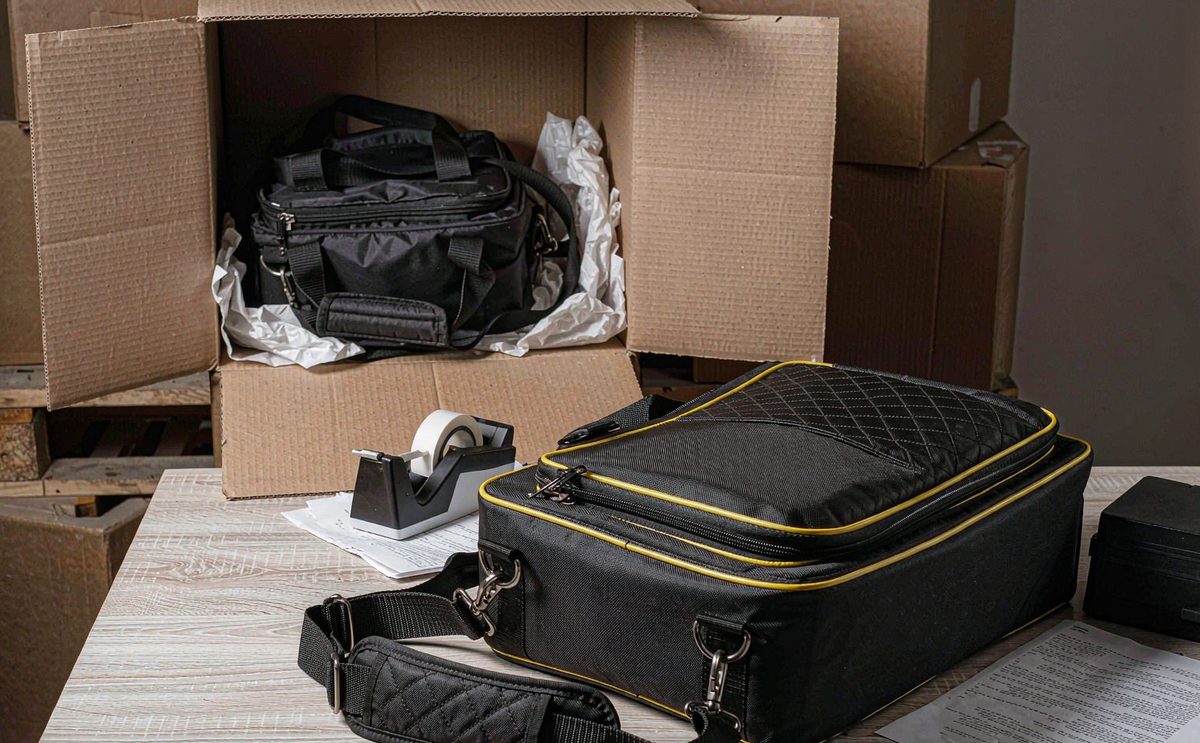
There is a packaging dimension too. Arrival condition is a review driver. A carton specification that protects the bag in transit, and a packing method that prevents creasing or crushing, is a product decision as much as a logistics one. That is another reason to build and test a trial carton before the packing rules are finalised.
The cost model for an FBA bag
A marketplace seller needs a different bottom line than a campaign creator. The useful figure is landed cost per sellable unit: the FOB Xiamen unit price, plus origin prep such as bagging and labelling, plus freight and duty per unit, plus inland delivery to the network, plus any receiving or handling charge, plus an allowance for returns and replacements. Only then can the selling price be tested against the marketplace fee structure.
| Cost line | Source of the figure | Typical mistake | How to improve it |
|---|---|---|---|
| Product unit price | Quotation at 500 pcs | Using a future volume price | Quote the quantity being ordered |
| Origin prep | Per-unit packing operation | Forgotten entirely | Decide prep model in the RFQ |
| Freight per unit | Trial carton cube and weight | Estimating from a render | Build and measure a trial carton |
| Duty and clearance | Classification and rate | Assumed at zero | Confirm the code before shipping |
| Inland to the network | Distance and carton count | Using a generic warehouse rate | Quote to the real destination |
| Returns allowance | Product and category history | Assumed at zero | Reserve a percentage of units |
Two sensitivity checks are worth doing before the deposit. First, what happens to the margin if freight costs rise by a fifth, which can happen with a cube surprise or a rate movement. Second, what happens if the return rate is double the forecast. A product that survives both is a product worth launching; one that survives neither should be re-specified rather than discounted later.
The MOQ then sets the size of the bet. At 500 pcs per style and colourway the deposit is 30% and the balance is 70%, and the seller can compute both before ordering. The discipline is the same as in crowdfunding: compare total exposure, not the unit-price column, and order a quantity the rate of sale can absorb.
A sourcing checklist for FBA bag startups
The practical output of all of this is a short checklist attached to every enquiry. It protects the seller twice: it makes quotations comparable, and it prevents the two expensive surprises of marketplace sourcing, a freight estimate built on a guess and a carton that cannot be received as packed.
- Quantity by style and colourway, never as a mixed total.
- Prep model: origin, destination or hybrid.
- Polybag, label and warning requirements, with a scan test.
- Carton specification: dimensions, gross weight, pieces per carton.
- Identity list: one per sellable variant, on the listing and on the bag.
- Freight mode, importer of record and destination appointment.
- AQL 2.5 to ISO 2859-1 inspection with a weighted checklist.
- Re-order file retained for the next 500-pcs commitment.
With that list attached, our team can return a structured response: a cost breakdown at 500 pcs, the sampling path at 6-10 working days or 12-15 for complex builds, the 35-50 day bulk window, the carton data and the inspection plan. The crowdfunding bag guide covers the wider programme structure for sellers who also run campaigns, since many marketplace brands launch on a campaign and then scale in a marketplace.
The underlying arrangement never changes: 500 pcs per style and per colourway, sampling at 6-10 working days or 12-15 for complex builds, production 35-50 days, AQL 2.5 to ISO 2859-1 inspection, FOB Xiamen and T/T 30/70. Sourcing with fulfilment in mind means planning each of those figures backwards from the day the inventory must be sellable.
Sourcing bags for marketplace fulfilment? Send the product specification, the prep model, the carton requirement and the target inbound date through the contact quotation form or to service@junyuanbags.com, and we will return a packing and production plan built around the 500-pcs minimum.
Frequently Asked Questions
What is the minimum order for custom bags sold through FBA?
500 pcs per style and per colourway. Each colourway is its own commitment, so a three-colour listing is three 500-pcs orders with three deposits under T/T 30/70 and three inventory positions. A hero-first listing, one colour in one size, is usually the safer first launch for a new marketplace brand. Each colourway also needs its own inspection lot, its own carton plan and its own inventory count on the listing.
Should prep be done at origin or at destination?
Origin prep is usually cheaper per unit and removes a handling step, but it requires the requirements to be stable when packing begins. Destination prep costs more and adds days, but allows the SKU mix and carton arrangement to change after arrival. A hybrid, bagging and labelling at origin with carton arrangement flexible, often suits a first order. Confirm the current requirements in the seller documentation before choosing, because they change.
What does FBA-ready packing mean for a bag order?
Each unit bagged to the required standard, labelled with a scannable identity, warning text where required, packed into cartons whose contents, dimensions and gross weight are declared. Confirm the current requirements in the seller documentation at the time of ordering, because they change. A packing test with a scan check catches print and placement problems before 500 units are packed.
How do I estimate freight for 500 bags?
From a trial carton: pieces per carton, exterior dimensions and gross weight. Those three numbers give the carton count and the cube, which drive the freight quote. Bags are commonly charged on volume rather than weight, so an estimate made from a render is often too low. With those three numbers a forwarder can quote sea and air on the same basis.
When should a re-order be placed?
Work backwards from the stockout date: subtract inbound processing, transit and clearance, the 35-50 day bulk window, and two sampling rounds at 6-10 working days each, or 12-15 for complex builds. Add a buffer. The answer is usually several months before the inventory runs out. Use the longer side of the ranges for a structured bag, and add a buffer for clearance.
How does the 500-pcs minimum affect a multi-variant listing?
Every sellable variant needs its own identity, its own listing and its own inventory count, and each colourway carries its own production minimum. Launching one variant at 500 pcs and adding a second later keeps the deposit small and concentrates reviews on one listing. One deep SKU outsells six thin ones, and the reviews concentrate where the stock is. Add the second colourway when the first one's rate of sale justifies it.
What should the inspection cover for marketplace stock?
AQL 2.5 to ISO 2859-1 with a checklist weighted to what customers notice and return for: straps and attachment points, zip operation, shell appearance, colour consistency across the lot, decoration placement and packing condition. An in-line check after the first 50-100 units catches repeated errors early. Colour consistency across the lot matters, because customers compare one unit with the next.
How do I calculate landed cost per sellable unit?
Product price at FOB Xiamen, plus origin prep, plus freight and duty per unit, plus inland delivery to the network, plus receiving and handling, plus a returns allowance. Test the selling price against the marketplace fee structure only after all six lines are included. Then test the margin against a freight rise of a fifth and a return rate twice the forecast.
What happens if a carton arrives without the required label?
It can be delayed while it is corrected, and the inventory is not sellable during that time. Prevent it by requesting a packing test with a scan check on a sample carton, and by fixing the label position and print quality in the packing rules before bulk production. Keep a spare-label quantity in the order, so a relabel does not wait on a new print run.
Can 500 pcs be split across fulfilment locations?
Physically yes, if the carton plan supports it. Splitting requires the carton contents and labels to be planned in advance, and it changes the inland routing and the receiving appointments. Decide it before the packing rules are finalised rather than after the goods arrive. It changes the inland routing and the receiving appointments, so it belongs in the carton plan.
How long does a first 500-pcs bag order take for FBA?
Sampling at 6-10 working days per round, or 12-15 for complex builds, plus review and courier time, then production 35-50 days, then inspection, transit, clearance, inland delivery and inbound processing. Plan in months, and use the longer side of both ranges for a structured bag. Add inbound processing, which is not the same as arrival at the destination warehouse.
Do I need a separate sample for the packing test?
A packing test can use the approved sample and a trial carton, which is the cheap way to establish pieces per carton, dimensions and gross weight. It is also the moment to verify label scanability and arrival condition, both of which are far cheaper to fix before 500 units are packed. The test costs one carton and prevents two of the most expensive marketplace surprises.
People Also Ask
What is the MOQ for custom bags sold on Amazon?
500 pcs per style and per colourway. Each colourway is a separate commitment, so one hero colour is the usual first launch.
Should I bag and label bags at origin?
Usually yes, if the requirements are stable. It is cheaper per unit and removes a handling step at destination.
How do I avoid freight surprises?
Build a trial carton and record pieces per carton, dimensions and gross weight. Bags are charged on volume more often than on weight.
When should I place a re-order?
Several months before the stockout date. Subtract inbound, transit, clearance, the 35-50 day window and two sampling rounds, then add a buffer.
Do I need one SKU per colour?
Yes. Each sellable variant needs its own identity, listing and inventory count, and its own 500-pcs production commitment.
What should inspection focus on for marketplace stock?
Straps, zips, shell appearance, colour consistency, decoration placement and packing condition, checked at AQL 2.5 to ISO 2859-1.
How is landed cost calculated for FBA?
FOB price plus origin prep, freight, duty, inland delivery, receiving and a returns allowance, divided by the number of sellable units.