Custom Bags for Pozible Campaigns: Rewards and Australian Logistics
A bag reward delivered to Australian backers fails for unglamorous reasons. Work to a 500 pcs minimum per style and per colourway, 6 to 10 working days of sampling and 12 to 15 for a complex build, then 35 to 50 days of bulk. Add 18 to 28 days of sea transit to the east coast, 3 to 7 days of clearance and 3 to 5 days of 3PL receiving, and the realistic window from purchase order to the first parcel landing is 70 to 115 days. Consolidate into one Australian 3PL above roughly 800 units, price the tier in AUD on a landed cost that includes 10 percent GST, and specify the bag for a container that will sit at 50 to 60 degrees inside.
- Why Australia is a different logistics problem for a bag reward
- Pozible against the global platforms: what changes for a bag perk
- Where Australian backers cluster and what that does to freight
- GST, duty and the import entry for a bag shipment
- Fulfilment models compared: 3PL, direct parcel and hybrid
- Specifying a bag for Australian heat and a long sea leg
- Compliance, labelling and what ACCC expects
- Reward pricing in AUD: what a tier actually has to cover
- The Australian fulfilment timeline, week by week
- A working checklist for an Australian bag reward
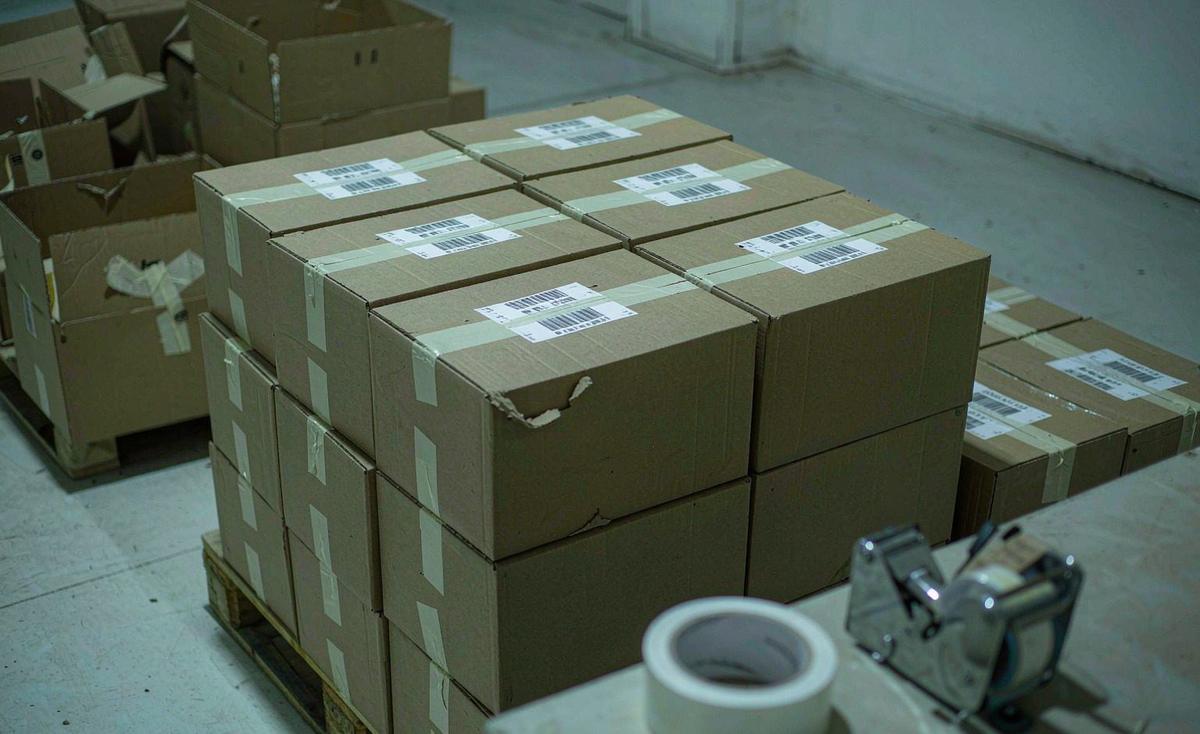
A bag reward sent to Australian backers fails for unglamorous reasons. The cartons clear customs a week late, the adhesive softens in a container that has been sitting at 50 degrees, and the tier was priced in a currency the backer never paid in. This guide is written for creators planning a bag reward on Pozible, or on Kickstarter and Indiegogo with a heavy Australian backer mix, and it deals only with the decisions that change once Australia is the delivery market: the freight model, the GST and duty entry, local fulfilment, a specification that survives a long sea leg and a hot summer, and a tier price that still works after conversion. The production side does not move. You work to 500 pcs per style and per colourway, 6 to 10 working days for sampling on a standard construction and 12 to 15 for a complex one, then 35 to 50 days for bulk. Inspection is run to AQL 2.5 to ISO 2859-1, and the commercial terms are FOB Xiamen with T/T 30/70. What changes is everything downstream of the port.
Why Australia is a different logistics problem for a bag reward
Australia is a large market measured in distance and a small one measured in people. Xiamen to Sydney or Melbourne by sea is a long lane even before the vessel calls at any intermediate port, and the practical planning figure for a full container is 18 to 28 days port to port. Air freight cuts the transit to 3 to 7 days, but it does so at a per-kilo cost that will consume a reward tier built on a 1 to 2 kg bag. Every one of those days sits after the 35 to 50 days of bulk production, so a creator who quotes a delivery date using production time alone is quoting a date that cannot hold.
The second structural fact is concentration. Sydney and Melbourne together typically account for a large share of Australian backers, with Brisbane, Perth and Adelaide making up most of the remainder. That is helpful, because it means one warehouse on the east coast can reach most of your backers in 2 to 6 working days by domestic parcel. It is also a trap, because Perth and Hobart sit at the far end of a continental road and rail network and add 3 to 5 days on their own. A single delivery promise worded as one to two weeks will be correct for about four fifths of the list and wrong for the rest.
The consequence for planning is straightforward. Treat the 35 to 50 days of bulk as the middle of the schedule rather than the whole of it. Add the dwell at origin while the container waits for a vessel, the sea leg, the customs entry, the 3PL receiving queue and the pick and pack run, and the realistic figure from purchase order to first parcel delivered is 70 to 115 days depending on the freight model. A campaign page that promises 60 days is making a promise the freight system will break, and a broken delivery date is the single most common reason a bag campaign draws complaints in the comments.
Pozible against the global platforms: what changes for a bag perk
Pozible is an Australian platform with a domestic audience, and that is the whole of the difference. A Pozible campaign is priced in AUD, the audience is overwhelmingly local, and the international share of the backer list is small enough that the freight model can be built around one destination country. A Kickstarter or Indiegogo campaign with an Australian creator usually draws a mixed list, and the platform level mechanics are covered in our Indiegogo and multi-platform crowdfunding guide. For a Pozible bag reward the practical meaning is that you can consolidate into one 3PL and one import entry, and you should.
The harder issue on Pozible is volume. Australian campaigns are often smaller than their US equivalents, and a campaign that closes with 300 backers still faces a 500 pcs per style and per colourway minimum. There are three ways through it. The first is to consolidate the colourways, so a 500 unit minimum is met with 300 dark and 200 light pieces of one style rather than four colours of 125 each. The second is to treat the minimum as inventory for a post-campaign store rather than as waste. The third is to design the reward so that one physical bag serves two tiers, differentiated by an accessory rather than by a second style. Our low MOQ bag production guide sets out the consolidation tactics in more detail.
There is also a timing difference worth budgeting for. Funds release schedules and the fee structure differ by platform, and each platform also handles tax on rewards differently and changes that handling over time. Confirm the current position directly with the platform before you set the tier price, and treat any answer given by a blog post, including this one, as a starting point rather than as tax advice. A campaign bag specialist will price the bag in AUD and will not make the tax decision for you.
Where Australian backers cluster and what that does to freight
Freight is priced on consolidation, and consolidation is only possible if you know roughly where the cartons are going. Before the campaign closes, add one field to the backer survey that captures the state or the postcode rather than the country alone. With that data you can decide whether a single east coast 3PL covers the list or whether the Western Australian share justifies a second receiving point. As a working rule, if fewer than about 15 percent of backers sit west of Adelaide, ship everything to one Sydney or Melbourne facility and absorb the extra road days.
The same data drives the carton plan. A 20 ft container carries a lot of flat packed tote bags and far fewer structured backpacks, because a structured bag refuses to collapse. If your bag is a soft tote or a flat packed duffle, work on the basis that a 20 ft container holds several thousand units. If it is a 40 L travel bag with an internal frame, the same container may hold fewer than a thousand and the per unit freight cost rises accordingly. Our production team will give you the carton dimensions and the packing count before you book, and that single number decides whether the sea leg or the air leg is the sensible option.
There is one more clustering effect that catches creators out. A campaign that sells strongly in New Zealand is nominally the same lane, but it is a separate customs entry, a separate duty treatment and a separate last mile. If a meaningful share of the list is New Zealand based, decide early whether the Australian 3PL will handle the trans-Tasman leg or whether those parcels will move direct. Two receiving events are manageable. Discovering the second one after the container has shipped is not.
GST, duty and the import entry for a bag shipment
Importing a commercial quantity of bags into Australia means an import entry, and the entry has three lines that matter: customs duty, goods and services tax, and the broker and terminal charges. Duty on bags under HS heading 4202 is commonly in the 5 percent band, and the China Australia Free Trade Agreement can reduce that to zero where the goods qualify and a certificate of origin is issued. Do not build the tier price on the zero duty assumption until your broker has confirmed the classification and the origin documentation for your specific product.
GST is charged at 10 percent, and it is charged on the value of the goods plus freight, insurance and duty, not on the FOB value alone. This is where most bag campaign budgets go wrong, because a freight saving reduces GST while a duty payment increases it. The GST is recoverable by the importing entity if it is registered for GST and the goods are used in a taxable enterprise, which is a question for your accountant rather than for a bag supplier. Model it as a cash cost in the tier price unless and until you are told otherwise.
The third line is the one nobody budgets for: terminal handling, container unpack, wharf storage if the container is not collected quickly, and the customs broker fee. These are fixed costs per entry rather than per unit, which is another argument for one entry rather than four. They are also the reason a demurrage or storage charge appears when the documentation is late. Get the commercial invoice, the packing list and the certificate of origin to the broker before the vessel berths, not after. Since 2014 we have watched more schedules slip on missing paperwork than on missing cartons.
Ask your customs broker to confirm the tariff classification and the duty outcome for your bag before you set the tier price, and ask whether ChAFTA preference applies to your goods. The answer changes the landed cost by several percent.
Fulfilment models compared: 3PL, direct parcel and hybrid
There are four workable ways to get a bag from the production line to an Australian backer, and they differ on transit time, unit cost and risk. The comparison below uses indicative figures for a 1 to 2 kg bag and should be replaced with quotes from your own providers before you commit. The full mechanics of volume dispatch are set out in crowdfunding rewards fulfilment.
| Model | Transit after production | Indicative cost per unit | Works when | Main risk |
|---|---|---|---|---|
| Direct postal parcel from origin | 12 to 25 days | AUD 8 to 18 | Under about 300 units, flat packed, no fixed date | Weak tracking and per parcel customs delay |
| Air consolidation plus Australian 3PL | 8 to 14 days | AUD 12 to 22 | 300 to 1,000 units with a date critical launch | Air rate spikes in peak season |
| Sea consolidation plus Australian 3PL | 30 to 45 days | AUD 7 to 15 | Over about 800 units or where the schedule has slack | Port congestion and stevedore delay |
| Hybrid: sea base plus air top-up | 12 to 40 days | AUD 10 to 20 | A stretch goal lands late or a colourway sells out | Two receiving events to manage |
| Pick pack from a bonded origin warehouse | 15 to 30 days | AUD 9 to 16 | Mixed international list with an Australian minority | GST is charged per parcel at origin |
The decision usually turns on volume rather than on preference. Below roughly 300 units the fixed costs of a container, an entry and a 3PL receiving appointment spread across too few bags, and a direct postal model is cheaper even with its weaker tracking. Above roughly 800 units the sea plus 3PL model wins on cost by a wide margin and gives you something the direct model cannot: a physical stock position in the destination country from which you can replace damaged parcels in 2 days instead of 25.
The hybrid is the option most creators discover too late. If a stretch goal unlocks a second colourway after the container has shipped, the choice is between waiting for the next vessel and paying for air freight. Book the air leg as a contingency in the budget at 10 to 15 percent of the freight line, and you will not have to ask backers to fund an unplanned cost. Our programme coordinator can hold capacity for a second run, but the freight will still cost what it costs.
Specifying a bag for Australian heat and a long sea leg
A container on a long sea lane is an oven. Internal temperatures above 50 degrees are routine on an unventilated lane in summer, and a bag that passed inspection on the line can arrive with its lamination lifted, its print blocked and its adhesive softened. This is a specification input, not a shipping footnote. If a bag uses a PVC coating or a low grade PU, ask what happens to that coating after several weeks at temperature. Hydrolysis resistant PU is a modest cost increase and it removes the most common heat failure.
The adhesive question deserves its own line in the specification. Solvent based contact adhesives are still common because they are strong, but they are also the first thing to creep in heat. Where the construction allows it, water based adhesive or a heat activated film removes the risk. Where the design needs a structural bond, ask your supplier what temperature the adhesive is rated to and put the answer in the specification document, not in an email. Heat is also why printed panels should be separated by interleaving, and why a bag should be packed in a perforated polybag rather than a sealed one.
- Face fabric: pick a hydrolysis resistant PU or a solution dyed polyester rather than a PVC laminate
- Adhesive: specify a heat rated bond and record the rating in the tech pack
- Hardware: use a corrosion resistant finish, because Brisbane and Perth backers live in salt air
- Print: interleave printed panels to stop blocking during the container dwell
- Packing: perforated polybag plus desiccant, and a carton stacking height the carton can survive
- Zips: specify a coil zip with a heat stable slider, and check the tape does not stiffen
Compliance, labelling and what ACCC expects
Bags are not a heavily regulated product category in Australia, but three things still apply. The first is consumer guarantees. Under Australian Consumer Law the goods you supply must be of acceptable quality and fit for any purpose you represented them for, and a promotional description on a campaign page is a representation. If the page says the bag carries a 16 inch laptop, the bag has to carry a 16 inch laptop. Marketing copy that overstates capacity or water resistance is a legal exposure, not just a returns problem.
The second is country of origin. Origin claims are regulated, and a bag made in China should be labelled as made in China in a form that is clear and legible. A sewn in label stating the origin alongside the fibre composition is the normal solution, and it costs very little if it is decided at the sampling stage and a great deal if it is added after the bulk is running. The third is anything attached to the bag. If a reward includes a power bank, an LED or any electrical component, that component is subject to electrical safety requirements and the lithium cells are subject to dangerous goods rules on the aircraft.
Our sourcing partner handles the labelling artwork and the physical testing arrangement, and the inspection standard we apply to a campaign order is AQL 2.5 to ISO 2859-1. The documentation that supports this, including the material declaration and the test report set, is covered in bag QC and compliance for Kickstarter campaigns. For an Australian delivery, add one file to that set: the certificate of origin, because it is the document that decides the duty outcome at the border.
Reward pricing in AUD: what a tier actually has to cover
A reward tier priced in AUD has to carry the landed cost, the platform and payment fees, and a damage reserve, and it still has to leave something towards advertising. The worked example below uses indicative figures for a 1 to 2 kg structured bag imported by sea into a Sydney 3PL. Replace every number with your own quote; the structure is the part that transfers.
| Line | Indicative AUD per unit | Note |
|---|---|---|
| FOB Xiamen unit price | 12.00 | Quoted at 500 pcs per style and colourway |
| Sea freight and insurance | 1.40 | Consolidated, per unit at container volume |
| Customs duty at 5 percent | 0.67 | Zero where ChAFTA preference is confirmed |
| GST at 10 percent on value plus freight plus duty | 1.41 | Recoverable if the importer is registered |
| 3PL receiving and pick pack | 3.50 | Includes one pick and one carton |
| Domestic parcel, Sydney metro | 9.50 | Perth and regional addresses cost more |
| Damage and return reserve at 3 percent | 0.85 | Held against the landed total |
| Landed total | 29.33 | Before platform and payment fees |
A tier at AUD 79 then loses about 8 percent to platform and payment fees, which is AUD 6.32, leaving AUD 43.35 against a landed cost of AUD 29.33. That is a contribution of AUD 14 per unit, which has to cover any advertising you spend to sell the tier and any shortfall on the units you give away to press. A tier at AUD 59 leaves AUD 25 against the same landed cost, and the margin disappears. This is why the freight model and the tier price belong in the same conversation, and why the currency conversion needs a buffer: an AUD rate that moves 5 percent between the campaign and the freight invoice is normal.
The Australian fulfilment timeline, week by week
The schedule below assumes a sea consolidation into an east coast 3PL and a single import entry. Each band is a working range rather than a promise, and the point of writing them down is that a delivery date published on a campaign page should be set at the long end of the total, not at the short end of the production band.
| Stage | Working range | What can lengthen it |
|---|---|---|
| Backer survey lock | 7 to 14 days | Late respondents and address corrections |
| Sampling | 6 to 10 working days | 12 to 15 working days for a complex construction |
| Bulk production | 35 to 50 days | Custom hardware and a second colourway |
| Inspection to AQL 2.5 | 1 to 3 days | A first inspection failure and a recheck |
| Inland haul and vessel wait | 3 to 7 days | Port congestion and a missed cut off |
| Sea transit to the east coast | 18 to 28 days | Transhipment and weather |
| Customs entry and clearance | 3 to 7 days | Missing certificate of origin or a valuation query |
| 3PL receiving to shelf | 3 to 5 days | A receiving appointment queue |
| Pick pack and dispatch | 5 to 10 days | Volume and label errors |
| Domestic transit | 2 to 6 days | Perth and regional addresses add 3 to 5 days |
Add the short ends and the long ends separately. The short end totals roughly 83 days and the long end roughly 170 days, and neither is the number to publish. Publish a date at about the eightieth percentile of the range, which for most bag campaigns on this lane lands between 110 and 130 days after the campaign closes. Under promise and deliver is a tired phrase and it remains the only reliable way to keep the comments section calm. Since 2014 our production programme has run on the same rule: quote the date you can hit nine times out of ten.
A working checklist for an Australian bag reward
The list below is the one our programme coordinator walks through with a creator before a purchase order is signed. It is deliberately unglamorous, and every item on it has cost a campaign money at some point when it was skipped.
- Confirm the style count and the colourway count against the 500 pcs per style and per colourway minimum before the page goes live
- Add a postcode or state field to the backer survey, not just a country field
- Get carton dimensions and the packing count from the production team, then price the sea and air options with real numbers
- Ask the broker to confirm the HS classification, the duty rate and whether ChAFTA applies to your bag
- Specify the fabric, the adhesive temperature rating and the hardware finish for a hot container, not for a showroom
- Decide the origin label and the composition label at sampling, and approve them on the sample
- Build the tier price on a landed cost that includes 10 percent GST, a 3PL fee and a damage reserve
- Book the 3PL receiving appointment before the vessel berths, not after it clears
- Publish a delivery date at the eightieth percentile of the schedule, and say so on the page
- Hold 10 to 15 percent of the freight budget for an air top-up on a late stretch goal
Key takeaways
- O
- n
- a
- n
- A
- u
- s
- t
- r
- a
- l
- i
- a
- n
- b
- a
- g
- c
- a
- m
- p
- a
- i
- g
- n
- t
- h
- e
- p
- r
- o
- d
- u
- c
- t
- i
- o
- n
- s
- c
- h
- e
- d
- u
- l
- e
- i
- s
- t
- h
- e
- e
- a
- s
- y
- h
- a
- l
- f
- .
- F
- r
- e
- i
- g
- h
- t
- ,
- d
- u
- t
- y
- ,
- G
- S
- T
- a
- n
- d
- t
- h
- e
- l
- a
- s
- t
- m
- i
- l
- e
- d
- e
- c
- i
- d
- e
- b
- o
- t
- h
- t
- h
- e
- d
- e
- l
- i
- v
- e
- r
- y
- d
- a
- t
- e
- a
- n
- d
- t
- h
- e
- m
- a
- r
- g
- i
- n
- .
Send us the style, the colourway split and the backer spread, and we will return a landed cost build and a schedule through our quote page, or email service@junyuanbags.com.
Frequently Asked Questions
What is the minimum order for a Pozible bag reward?
The minimum is 500 pcs per style and per colourway. On a small Australian campaign the usual solution is to consolidate the colourways, so 500 units are met with one style in two colours rather than four. Sampling takes 6 to 10 working days on a standard construction and 12 to 15 on a complex one, and bulk takes 35 to 50 days. If the shortfall is unavoidable, treat the extra units as stock for a post-campaign store rather than as a loss.
How long does sea freight take from Xiamen to Sydney?
Port to port is typically 18 to 28 days for a full container. Add 3 to 7 days at origin for the inland haul and the vessel wait, 3 to 7 days for the customs entry, and 3 to 5 days for 3PL receiving. Air freight cuts the transit to 3 to 7 days but costs substantially more per kilo. On a 1 to 2 kg bag the sea option is usually the only one that leaves room in the tier price.
Do I have to pay GST on imported bags in Australia?
GST is charged at 10 percent on the value of the goods plus freight, insurance and duty. It is recoverable by the importing entity if that entity is registered for GST and the import is for a taxable enterprise, which is a question for your accountant. Model it as a cash cost in the tier price unless you are told otherwise, because a refund arrives long after the reward has shipped.
What duty rate applies to bags imported into Australia?
Bags under HS heading 4202 are commonly in the 5 percent duty band, and the China Australia Free Trade Agreement can reduce that to zero where the goods qualify and a certificate of origin is issued. Do not build the tier price on the zero duty assumption until your broker has confirmed the classification for your specific product. Confirming this before the page goes live is cheaper than amending it afterwards.
Should I use an Australian 3PL or ship direct to backers?
Below roughly 300 units the direct postal model is usually cheaper, because the fixed costs of a container, an import entry and a receiving appointment spread across too few bags. Above roughly 800 units a sea consolidation into an east coast 3PL wins on cost and gives you a domestic stock position for replacements. The middle band is a judgement call that depends on whether you have a firm delivery date.
Do I need a second warehouse for Perth backers?
Usually not. If fewer than about 15 percent of the list sits in Western Australia, ship everything to one east coast facility and absorb the extra 3 to 5 road days. A second receiving point adds a receiving appointment, a stock split and a separate reconciliation for a small gain. Publish a delivery range that covers the Perth tail rather than a single date.
Will the bags survive a container in an Australian summer?
They will if the specification accounts for it. Internal container temperatures above 50 degrees are routine on a summer lane. Ask for a hydrolysis resistant PU or a solution dyed polyester rather than a PVC laminate, specify a heat rated adhesive, interleave printed panels, and pack in a perforated polybag with desiccant. Add the temperature requirements to the tech pack so they are a specification and not a request.
What labelling does a bag need in Australia?
Country of origin is the main one, and a bag made in China should say so on a legible sewn in label. Fibre composition on the same label is the normal practice. Australian Consumer Law also requires the goods to be of acceptable quality and fit for any purpose you represented on the campaign page, so a capacity or water resistance claim is a legal exposure. Decide the labels at sampling rather than after bulk starts.
How should I price a Pozible bag tier in AUD?
Build it from the landed cost. On an indicative 1 to 2 kg bag the FOB Xiamen unit might be AUD 12, with AUD 1.40 of sea freight, AUD 0.67 of duty, AUD 1.41 of GST, AUD 3.50 of pick pack and AUD 9.50 of domestic parcel, giving about AUD 29 landed before a 3 percent reserve and before fees. A tier at AUD 79 leaves a usable contribution; a tier at AUD 59 does not.
Can I add a power bank to the bag reward?
You can, but the electrical component changes the compliance file and the freight classification. The component is subject to electrical safety requirements, and the lithium cells are subject to dangerous goods rules on aircraft. Expect higher freight and a longer clearance time. If the power bank is not essential to the reward, ship it separately or make it an optional add-on rather than bundling it.
When should I book the 3PL receiving appointment?
Before the vessel berths. A container that arrives without a booked receiving appointment accrues wharf storage and container detention charges that no freight quote will have included. Get the commercial invoice, the packing list and the certificate of origin to the broker early, and give the 3PL the carton count and the packing list in advance so the receiving appointment matches the volume.
What if a stretch goal unlocks a colourway after the container ships?
Then you are choosing between the next vessel and an air top-up. Hold 10 to 15 percent of the freight budget for exactly this event, and decide the trigger in advance: if the unlocked colourway exceeds about 15 percent of the order, book the air leg rather than delaying the whole shipment. Our production team can hold capacity for a second run, but the freight still costs what it costs.
People Also Ask
Is Pozible still used for physical rewards?
Yes. Pozible remains the main Australian platform for creative projects and is used for physical rewards including bags. Its audience is domestic, which simplifies the freight model compared with a global platform.
Which Australian city should I ship the cartons to?
Sydney or Melbourne. Both reach most of the population in 2 to 6 working days by domestic parcel, and both have 3PL capacity and regular container services.
How many days should I promise for delivery to Australia?
Publish the eightieth percentile of your schedule, which for a sea consolidated bag campaign is usually 110 to 130 days after the campaign closes. Promising less than 90 days on this lane is asking for comment section trouble.
Is it cheaper to ship one container or several smaller lots?
One container. The import entry, the broker fee and the 3PL receiving appointment are fixed per event, so four entries cost roughly four times as much in overhead for the same volume.
What does a 3PL charge per bag in Australia?
Indicatively AUD 3.50 to 6.00 for receiving plus a single pick and pack, before the parcel cost. Volumes above a few hundred units sit at the lower end, and multi item kits cost more.
Do I need a certificate of origin for bags?
Yes if you want to claim ChAFTA preference. Without it the duty line defaults to the standard rate, which on HS 4202 is commonly around 5 percent of the customs value.
Can I ship bags to New Zealand from the Australian warehouse?
Some 3PLs will, but trans-Tasman is a separate customs entry and a separate last mile. Decide before the container ships, because the label data and the destination split have to be set in advance.