Custom Bags for Republic and Reg CF Campaigns: A Brand Merch Plan
A Reg CF raise on Republic is not a pre-order campaign, and a bag in that context is not a reward. It is brand merchandise and investor recognition, produced before there is a retail order to attach it to. The working minimum is 500 pcs per style and per colourway, sampling runs 6 to 10 working days and 12 to 15 on a complex build, and bulk takes 35 to 50 days. Budget the bag as an operating expense inside the raise, at 3 to 8 percent of the amount you intend to collect, and specify it as merch that will survive a year of use rather than as a giveaway that will be photographed once.
- Reg CF is investment, not pre-order
- Why a raising brand still needs a bag
- Volumes: investor perks, retail readiness and the minimum
- Budgeting merch inside a Reg CF raise
- Specifying merch and not a giveaway
- Branding methods that survive a year of use
- Production planning when there are no pre-orders to match
- Timing the run against the raise and the retail launch
- Disclosure, perks and what the portal will let you promise
- A merch plan for a Reg CF raise
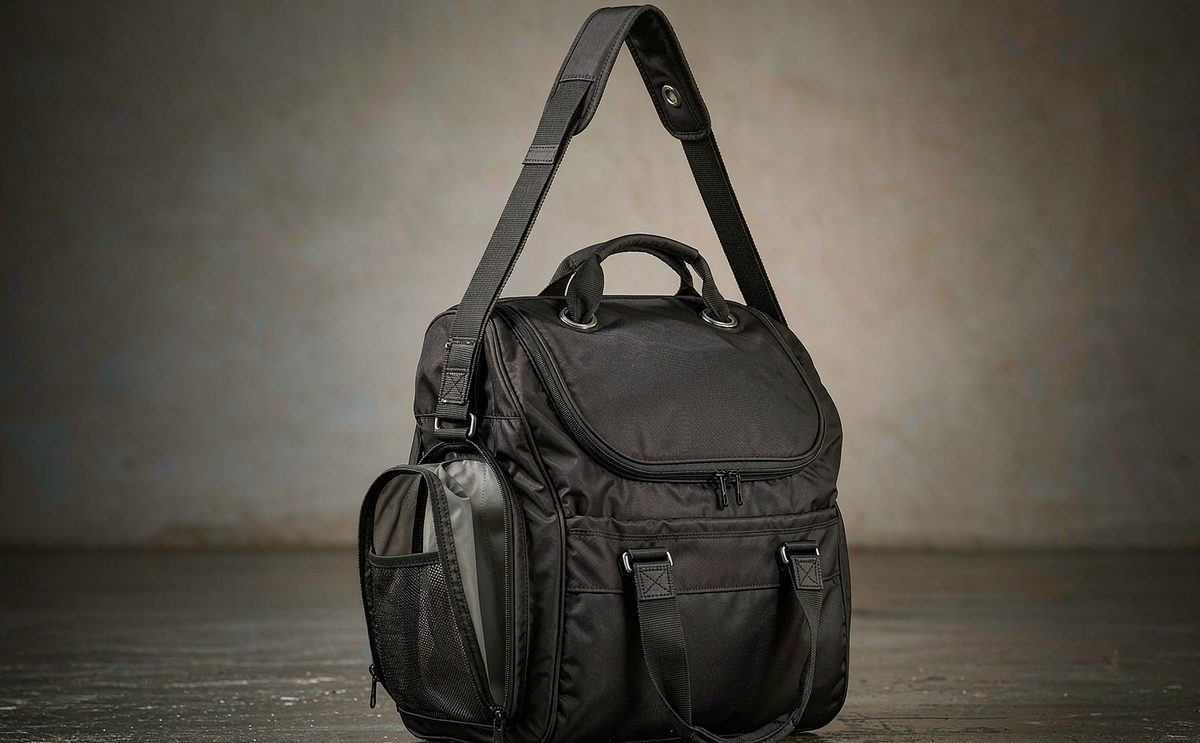
A raise on Republic under Regulation Crowdfunding looks like a campaign and behaves like a financing round, and that difference changes everything about a bag. There are no pre-orders to fulfil, there is no shipping wave to plan, and the money raised is capital rather than revenue. The bag in this context is brand merchandise: a physical object that recognises investors, that travels with them, and that doubles as the sample the brand will show retail buyers in the year after the raise. This guide covers the decisions specific to that situation: how much to spend, what volume to commit to against a 500 pcs per style and per colourway minimum, how to brand it so it survives a year of use, and how to time the run against a raise that has no fixed closing date. The production constants do not change: sampling is 6 to 10 working days, 12 to 15 for a complex construction, bulk is 35 to 50 days, inspection runs to AQL 2.5 to ISO 2859-1 and the terms are FOB Xiamen with T/T 30/70.
Reg CF is investment, not pre-order
On a rewards platform, money arrives because a backer wants a thing. On a Reg CF portal, money arrives because an investor wants equity or a debt instrument, and any bag they receive is a token of appreciation rather than consideration for their investment. That single distinction has three practical consequences. The bag cannot be the reason someone invests, it must not be described as one, and the spend on it is an operating expense of the raise rather than a cost of goods sold.
The second difference is timing. A rewards campaign has a closing date and a defined wave of obligations after it. A Reg CF raise has a target, an annual cap that has been revised upward several times, and a closing date the company decides. Confirm the current cap and the current portal rules with the portal and with your counsel, because both have changed and neither is a bag decision. The consequence for production is that the order quantity is not determined by a backer count. It is determined by a business plan, which is more controllable and less predictable.
The third difference is who receives the bag. On a rewards campaign the recipient is a stranger who pledged 60 dollars. On a Reg CF raise the recipient may be an investor who committed 5,000 dollars, a journalist, or a retail buyer the company is courting. The bag will be judged as a brand object rather than as a goodie. That is why the middle of the quality range, which is perfectly adequate for a rewards perk, is usually wrong here. Our production team sees the same pattern across the more than 20 crowdfunding programmes it has supported: the more sophisticated the recipient, the more the bag has to carry the brand alone.
Why a raising brand still needs a bag
There are four reasons a company raising under Reg CF buys bags, and they point at different products. The first is investor recognition: a tiered perk that gives a larger investor something physical and useful. The second is sales infrastructure: a tote or a duffle that the company will use as a retail sample, a trade show piece or a gift with purchase. The third is community: a bag sold or given at events during the raise, which turns attendees into carriers. The fourth is content: a bag that photographs well and appears in the hands of the founders on the portal page.
These purposes pull in different directions. An investor perk wants to feel substantial and to be made of a material that ages well. A retail sample wants to be identical to the production item it represents, which means the sample run has to be made on the same line as the future bulk. A community tote wants to be cheap enough to give away at 500 units. A content bag wants to be photogenic in one colourway regardless of cost. Most raising brands need two of these and order one product, which is the most common mistake on this kind of programme.
The way through it is to pick the primary purpose and accept the secondary one. For most consumer brands raising on Republic the primary purpose is retail readiness, because the bag will be shown to buyers within six months of the raise and it will be carrying the brand's first serious retail conversation. A campaign bag specialist will ask which room the bag will be carried into before discussing fabric, and that question usually settles the specification in about five minutes. The rewards side of the business is covered separately in our Indiegogo and multi-platform crowdfunding guide.
Volumes: investor perks, retail readiness and the minimum
Quantity on a Reg CF programme is a business decision rather than a backer count, and the 500 pcs per style and per colourway minimum is the floor rather than the plan. Three volumes are worth modelling. The first is the perk volume: the number of investors at each tier who will receive a bag, which for an early raise is often between 50 and 300 people. The second is the sample volume: what the sales team will need for a trade season, which is commonly between 100 and 400 units. The third is the launch volume: the first genuine retail or direct order, which is unknowable at the time of the raise and is the reason the bag should be specified so it can be reordered.
Add the first two and you land between 150 and 700, which straddles the minimum. If the total is under 500, the decision is whether to place 500 anyway and hold the surplus, or to consolidate the colourways and reduce the effective minimum. Holding the surplus is usually right, because the second and third volumes will arrive within a year and the setup will already be paid. The alternative, placing 150 units at a much higher unit cost and then reordering at a lower one, costs more in total over a two year horizon.
There is a third lever that rewards campaigns do not have and Reg CF brands do: the bag can be specified as a permanent catalogue item rather than as a one-off. A brand that picks a fabric and a hardware set that the production programme can hold in stock for 12 months gains a 6 to 10 working day reorder instead of a 35 to 50 day one, because the material and the tooling are already allocated. Ask at the first order which components are stockable, and record the answer in the tech pack. The consolidation tactics behind this are set out in low MOQ bag production for creators.
Budgeting merch inside a Reg CF raise
A rewards campaign budgets the bag as a percentage of the tier price. A Reg CF raise has no tier price to work from, so the bag has to be budgeted as a percentage of the raise. The working range we see is 3 to 8 percent of the amount the company intends to collect, with the lower end appropriate for a tote and the upper end for a structured duffle or a travel bag. On an indicative raise of USD 400,000 that is between USD 12,000 and USD 32,000 of bag spend, which at a landed unit cost of USD 9 to 16 buys somewhere between 800 and 3,500 units.
That arithmetic is the reason most Reg CF bag orders are larger than they need to be, and the reason to resist it is that the money is capital rather than revenue. Spending 8 percent of a raise on bags that will sit in a storeroom for a year is a use of funds the investor did not underwrite. The discipline is to place the first order at the minimum plus the known near-term need, and to hold the remainder of the merch budget for the reorder that will follow the first retail order. That reorder will be cheaper per unit because the setup is paid, and it will be specified against real demand.
| Raise size | Merch at 4 percent | Indicative units at USD 10 landed | Recommended first order |
|---|---|---|---|
| USD 150,000 | USD 6,000 | 600 units | 500 units, one colourway, hold 100 |
| USD 400,000 | USD 16,000 | 1,600 units | 600 units, two colourways |
| USD 1,000,000 | USD 40,000 | 4,000 units | 1,000 units, three colourways plus a reorder plan |
| USD 2,500,000 | USD 100,000 | 10,000 units | 1,500 units and a stockable material programme |
Two costs are usually omitted from the budget and both belong in it. The first is freight. At 500 units of a structured bag the sea freight and duty can add 15 to 30 percent to the FOB unit, and an air shipment adds more. The second is the sample cost, which on a Reg CF programme is not a rounding error because the brand will want at least one pre production sample for photography and often two. Treat the freight and the sample as separate lines in the merch budget, and the raise will not be surprised by them in month three.
Specifying merch and not a giveaway
A giveaway bag is specified to be photographed once. A merch bag is specified to be used for a year, and the failures that matter are the ones that appear after three months: a strap that stretches, a print that cracks at a fold, a lining that pills and a handle that separates at the tack. The specification habits that prevent them are unglamorous. Ask for the fabric weight in grams per square metre rather than by denier alone. Ask for the strap webbing to be the same material as the load bearing panel. Ask for the handle attachment to be box stitched rather than tacked.
The second specification decision is between a tote, a duffle and a backpack, and on a Reg CF programme it is usually won by the tote or the duffle. A tote is the cheapest to make, the cheapest to ship, the easiest to brand with a large print area and the most likely to be used by an investor who is not a bag person. A duffle is the more substantial gift at a higher tier and it carries a brand into a gym or a weekend. A backpack is the most expensive and the most specification sensitive, and it is usually the wrong first product unless the brand is already a bag brand.
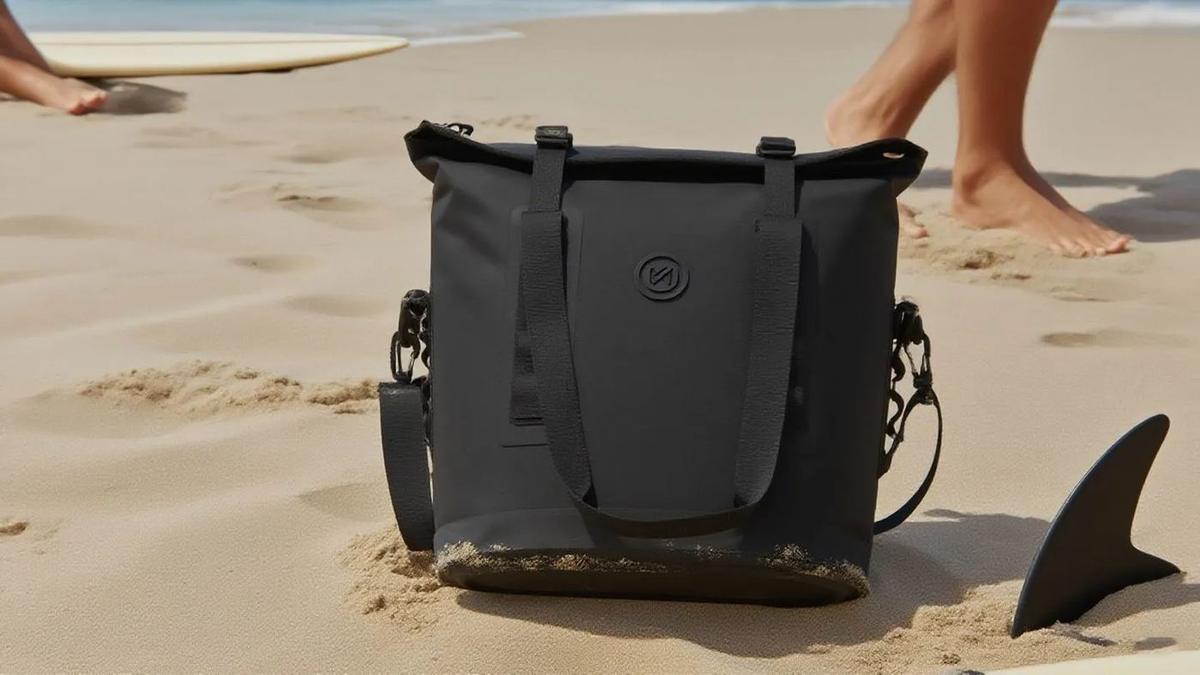
The third decision is the interior, which is where a merch bag either earns a second use or is put in a cupboard. A slip pocket that fits a phone, a key clip, and a base stiffener that lets the bag stand up are the three features that generate repeat use on a tote. None of them is expensive. A key clip in particular costs a small amount and is mentioned by users far more often than any other single feature, because it solves a problem the user has several times a day. Our production team will tell you which of the three a given construction can carry without a cost penalty.
Branding methods that survive a year of use
Branding on merch is chosen for durability, not for the sample photograph. The four common methods behave differently across a year. Embroidery is the most durable and the most expensive, it looks best on a woven fabric and it will outlast the bag. A woven label is cheap, durable and small, and it is the right choice for a subtle mark. Screen print or heat transfer is the best choice for a large graphic, and the two differ: a screen print on a woven fabric is durable, while a heat transfer on a coated fabric will eventually lift at the edge.
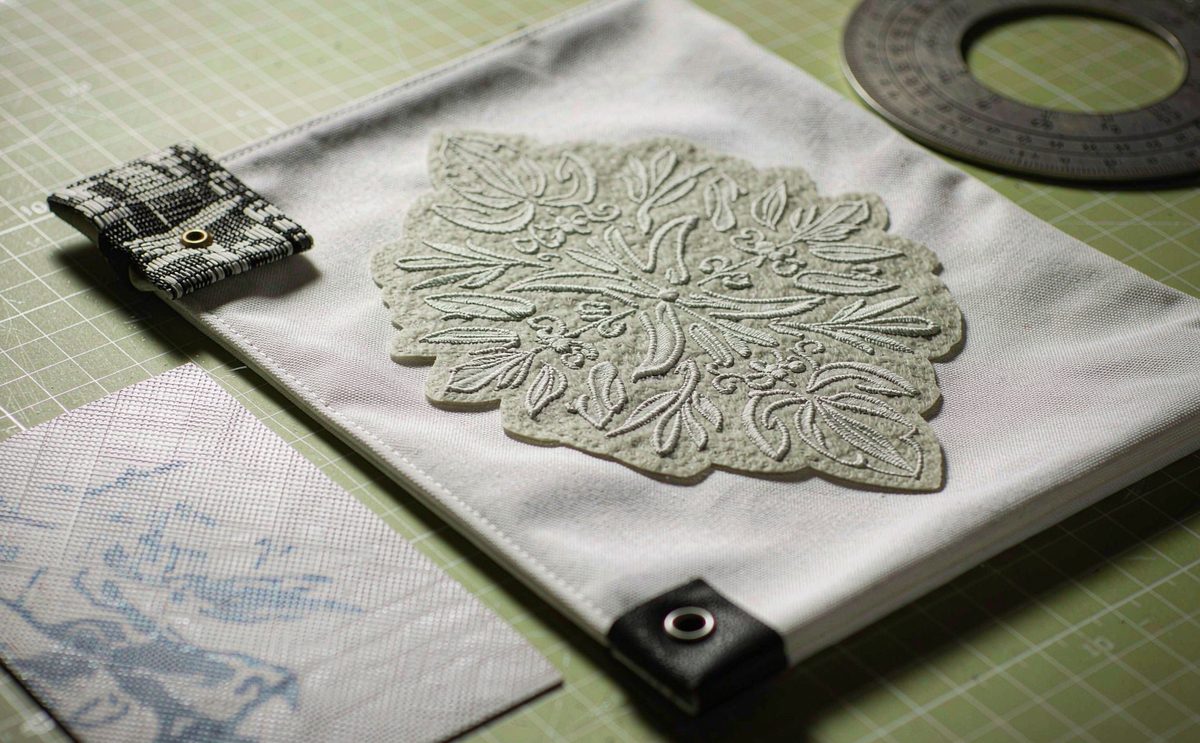
A debossed or embossed patch on a PU panel is the fourth option and it is the one that reads as premium in a photograph. It also has the longest lead time, because the tooling has to be cut. If a brand wants a metal or a leather patch, the tooling decision has to be made at the sampling stage and the tooling cost belongs in the sample budget rather than in the unit cost. Ask for the tooling as a separate line and it becomes a one-off rather than a surprise that is quietly amortised into the first order.
Placement matters as much as method. A mark placed where a bag rests on the ground will abrade. A mark placed at the top of a panel, or on a webbing end, or on a patch that can be replaced, will not. The practical rule for a tote is to print on the front panel at least 40 mm above the base seam, and to put a secondary woven label at the interior seam where it will be seen by the user rather than by the street. The methods and their durability are compared in more detail in the custom tote bags for crowdfunding guide.
Production planning when there are no pre-orders to match
Without a backer count the production plan has to be driven by a calendar. A Reg CF brand typically needs three things in the twelve months after the raise: perks for investors during the raise, samples for a trade season six to nine months out, and stock for a launch nine to twelve months out. Each of those has a production event behind it, and the three events can share one setup if they are planned together rather than sequentially. The saving from doing so is the entire setup amortisation on the second and third runs.
The mechanism is a held specification. When the first order is placed, the production programme records the fabric reference, the hardware set, the thread, the print file and the tooling. If those are stockable, a second run of 300 units can be scheduled in 6 to 10 working days of sampling plus 35 to 50 days of bulk rather than the full development cycle. If the specification uses a bespoke dyed fabric or a custom moulded puller, the second run needs the mill or the moulding minimum again, which is where the saving disappears.
Capacity matters on the third event, because a launch order is the one that will be large. The production programme we work with runs 7 lines and 149 machines across a 4,950 square metre SGS-verified facility with a capacity of 200,000 pcs per month, which is ample for a consumer brand's first two years and is not the constraint. What is a constraint in practice is the material, not the machine time. A brand that wants a specific recycled fabric with a specific certification should ask at the first order how long that fabric takes to be woven, and should hold the answer as a planning number.
Timing the run against the raise and the retail launch
A Reg CF raise has an open-ended calendar, and that is exactly why the bag order needs fixed dates. Working backwards from the moment the bags are needed, the schedule has four fixed blocks: sampling at 6 to 10 working days, revision and a second sample at the same length, bulk at 35 to 50 days, and inspection at AQL 2.5 to ISO 2859-1 plus inland haul and freight. The realistic total from brief to delivery is 55 to 90 days for a sea shipment and 30 to 50 for an air one, before any customs time in the destination country.
On top of that sits the drawdown pattern of the raise itself. Reg CF portals release funds on their own schedule, and a company that commits to a purchase order before the money is available is taking a working capital risk it does not need to take. The commercial terms of T/T 30/70 mean 30 percent at order and 70 percent before shipment, so the deposit is the commitment point. Place the order when the raise is far enough along that the deposit is covered, and the remaining 70 percent will fall due inside the bulk window when more of the money has arrived.
The third timing issue is the retail calendar. A trade show season has fixed dates and a bag ordered for one has a hard deadline that no amount of goodwill will move. If the brand intends to show at a spring event, the brief has to be complete roughly four months earlier and the sample approval two months before the event. Since 2004 the founder of this programme has run production on the same principle for founders and for brands: the calendar is the only thing that cannot be negotiated, so build everything else around it.
Disclosure, perks and what the portal will let you promise
Perks on a Reg CF raise are regulated differently from rewards on a rewards platform, and the difference is that a perk cannot be used to sell the investment. Portal rules require the investment and the perk to be presented separately, and the value of the perk to be disclosed. Confirm the current rules with your portal and your counsel before the page is built, because a bag described as a limited edition exclusive at a 5,000 dollar tier creates an inference that is better avoided.
There is a tax side as well. An investor perk is generally treated differently from a rewards fulfilment, and the treatment depends on how the company accounts for it and where the investor is. This is a question for the company's accountant rather than for a bag supplier, and it should be asked before the tier structure is published. What can be said without qualification is that the bag spend should be recorded as an operating expense of the raise, and that the quantity should be disclosed honestly on the page if a quantity is stated.
The last disclosure point is the one brands forget: if the page says the bag is made from recycled material, or that it is made in a particular place, that claim has to be true and supportable. A material claim should be backed by the supplier declaration and, if a percentage is stated, by a certificate for the specific fabric. Our sourcing partner issues the material declaration and arranges the certificates, and the standard document set is described in the bag manufacturing guide for campaign creators. Since 2014 we have seen more page copy rewritten after a claim than before one.
A merch plan for a Reg CF raise
- Decide the primary purpose first: investor perk, retail sample, community item or content prop
- Budget 3 to 8 percent of the intended raise, with freight and samples as separate lines
- Consolidate colourways so the 500 pcs per style and per colourway minimum is met once rather than three times
- Choose a tote or a duffle for the first product unless the brand is already a bag brand
- Specify for a year of use: box stitched handles, a base stiffener, a slip pocket and a key clip
- Pick a branding method for durability, and ask for tooling as a separate line
- Ask which components are stockable, so a reorder can run in 6 to 10 working days of sampling
- Brief four months before the first hard date, and approve the sample two months before it
- Confirm the portal's perk disclosure rules with counsel before the page is built
- Record the full specification at the first order, so the third run reuses the setup
That list is long and it is the same list a serious brand would work through with any supplier. The difference on a Reg CF programme is sequencing, because the raise has no closing date to force the decisions. A brand that works through it before the page goes live will have bags in hand during the raise, which is the single most persuasive thing a consumer brand can show an investor. A brand that works through it afterwards will have spent the raise on expedited freight. Our programme coordinator will run the list in one call and return a costed plan.
Key takeaways
- O
- n
- a
- R
- e
- g
- C
- F
- r
- a
- i
- s
- e
- t
- h
- e
- b
- a
- g
- i
- s
- c
- a
- p
- i
- t
- a
- l
- e
- x
- p
- e
- n
- d
- i
- t
- u
- r
- e
- o
- n
- t
- h
- e
- b
- r
- a
- n
- d
- ,
- n
- o
- t
- a
- c
- o
- s
- t
- o
- f
- f
- u
- l
- f
- i
- l
- l
- i
- n
- g
- o
- r
- d
- e
- r
- s
- ,
- a
- n
- d
- i
- t
- s
- h
- o
- u
- l
- d
- b
- e
- s
- p
- e
- c
- i
- f
- i
- e
- d
- a
- n
- d
- t
- i
- m
- e
- d
- l
- i
- k
- e
- t
- h
- e
- r
- e
- t
- a
- i
- l
- p
- r
- o
- d
- u
- c
- t
- i
- t
- w
- i
- l
- l
- b
- e
- c
- o
- m
- e
- .
Tell us the raise size, the investor tier structure and the first hard date, and we will return a costed bag programme through our quote page, or email service@junyuanbags.com.
Frequently Asked Questions
What is the minimum order for a bag on a Reg CF programme?
The minimum is 500 pcs per style and per colourway. On a Reg CF programme the first order is usually placed at the minimum plus the known near-term need, which for an early brand means 500 to 1,000 units across one or two colourways. Holding the surplus is normally cheaper over two years than placing a small first order and a larger second one, because the setup is paid once.
How much should a Reg CF brand spend on bags?
The working range is 3 to 8 percent of the amount the company intends to collect, with the lower end for a tote and the upper end for a structured duffle. On an indicative USD 400,000 raise that is USD 12,000 to USD 32,000. Keep freight and the sample cost as separate lines, because at 500 units freight and duty can add 15 to 30 percent to the FOB unit.
Is a bag on a Reg CF raise the same as a rewards perk?
No. The investor receives the bag as recognition, not as consideration for the investment, and the spend is an operating expense of the raise rather than a cost of goods sold. The portal will require the investment and the perk to be presented separately, and it will require the value of the perk to be disclosed. Confirm the current rules with your portal and with counsel before the page is built.
How long does a Reg CF bag order take?
Allow 6 to 10 working days for the first sample, the same again for a revision and a second sample, then 35 to 50 days for bulk, then inspection and freight. The realistic total from brief to delivery is 55 to 90 days by sea and 30 to 50 days by air, before customs time in the destination country. Brief four months before the first hard date in the calendar.
Should the first product be a tote, a duffle or a backpack?
A tote or a duffle, unless the brand is already a bag brand. A tote is the cheapest to make and ship, has the largest print area and is the most likely to be used by someone who is not a bag person. A duffle is the more substantial gift at a higher investor tier. A backpack is the most expensive and the most specification sensitive, which makes it a poor first product.
Which branding method lasts longest on a merch bag?
Embroidery is the most durable and the most expensive, and it will outlast the bag. A woven label is cheap, durable and subtle. Screen print is durable on a woven fabric, while a heat transfer on a coated fabric will lift at the edge over time. A debossed or embossed patch reads as premium and needs tooling, which should be quoted as a separate line.
How many colourways should a Reg CF brand order?
One or two. Each colourway carries its own minimum, so three colourways means 1,500 units before a single retail order exists. The usual structure is one base colour with a single accent, or two colourways of 250 to 300 units where the outer fabric is dyed rather than printed and the setup is shared. A third colourway is a second-year decision, made after the retail order tells you which one sells.
Can a reorder be faster than the first order?
Yes, if the components are stockable. Where the fabric reference, the hardware set and the print file are held, a second run can be sampled in 6 to 10 working days instead of the full development cycle, and bulk still takes 35 to 50 days. Where the specification uses a bespoke dyed fabric or a custom moulded puller, the mill or moulding minimum applies again.
What does a Reg CF bag cost to land?
Indicatively USD 9 to 16 landed for a tote or a simple duffle at 500 to 1,000 units, before duties. Sea freight and duty typically add 15 to 30 percent to the FOB unit at that volume, and an air shipment adds substantially more. Ask for the FOB Xiamen unit, the freight and the duty as three separate numbers rather than as one landed figure.
When should the purchase order be placed during the raise?
When the deposit is covered. The commercial terms are T/T 30/70, so 30 percent falls at order and 70 percent before shipment. Placing the order when the raise is far enough along to cover the deposit means the balance falls due inside the bulk window, by which time more of the money has arrived. Avoid committing before the funds schedule is clear.
Can the page describe the bag as a limited edition?
It can, but only if it is true and if it is disclosed as a perk separate from the investment. A limited edition claim at a high investor tier risks implying scarcity that drives the investment decision, which is the inference the portal rules exist to prevent. Confirm the wording with counsel before the page is published, and keep the claim narrow enough that the bag can still be used a year later.
What documentation should a Reg CF brand request?
A material declaration for the outer, the lining and the trim, plus any certificate that supports a recycled or a certified fabric claim. If the page states a recycled percentage, the certificate has to be for the specific fabric. The inspection standard applied to the bulk is AQL 2.5 to ISO 2859-1, and the inspection report should be requested as a document rather than as a summary.
People Also Ask
Is a bag a good investor perk?
Yes, if it is useful and substantial. A tote or a duffle that will be used for a year carries the brand further than a branded item that is photographed once and shelved.
What is Reg CF?
Regulation Crowdfunding, the framework that lets private companies raise from non-accredited investors through a registered portal such as Republic. The annual cap has been revised upward over time, so confirm the current figure with your portal and counsel.
How is a Reg CF perk different from a Kickstarter reward?
A reward is what a backer buys. A perk is recognition for an investment and cannot be the reason someone invests. The accounting treatment differs as well, so ask your accountant.
Should the bag match the future retail product?
If the brand sells bags, yes. The sample run should be made on the same line and from the same fabric reference as the future bulk, or the sample will not represent the product a buyer is being shown.
How many bags do we need for a trade show?
Commonly between 100 and 400 units for a season, covering samples, gift with purchase and staff use. Order them with the investor perks so the three share one setup.
What makes a tote feel expensive?
A heavier fabric, a base stiffener that lets it stand, a box stitched handle and a woven label at the interior seam. None of these costs much, and all of them are noticed.
Can we put the raise on the bag?
Better not. A bag printed with a campaign or a raise date has a short usable life, and a Reg CF brand needs the bag to work for a year or more after the raise closes.