Custom Diaper Backpacks for Crowdfunding: The Parenting Niche That Converts
Why do custom diaper backpacks convert on crowdfunding campaigns? Because parenting backers pledge on organisation, one-handed access and wipeable interiors rather than on logos. The sourcing picture is equally concrete: 500 pcs per style and colourway is the minimum order, sampling takes 6-10 working days and 12-15 for complex builds, production 35-50 days after deposit and approved pre-production sample, and pre-shipment inspection is set at AQL 2.5 to ISO 2859-1. Quotations are issued FOB Xiamen on T/T 30/70 terms.
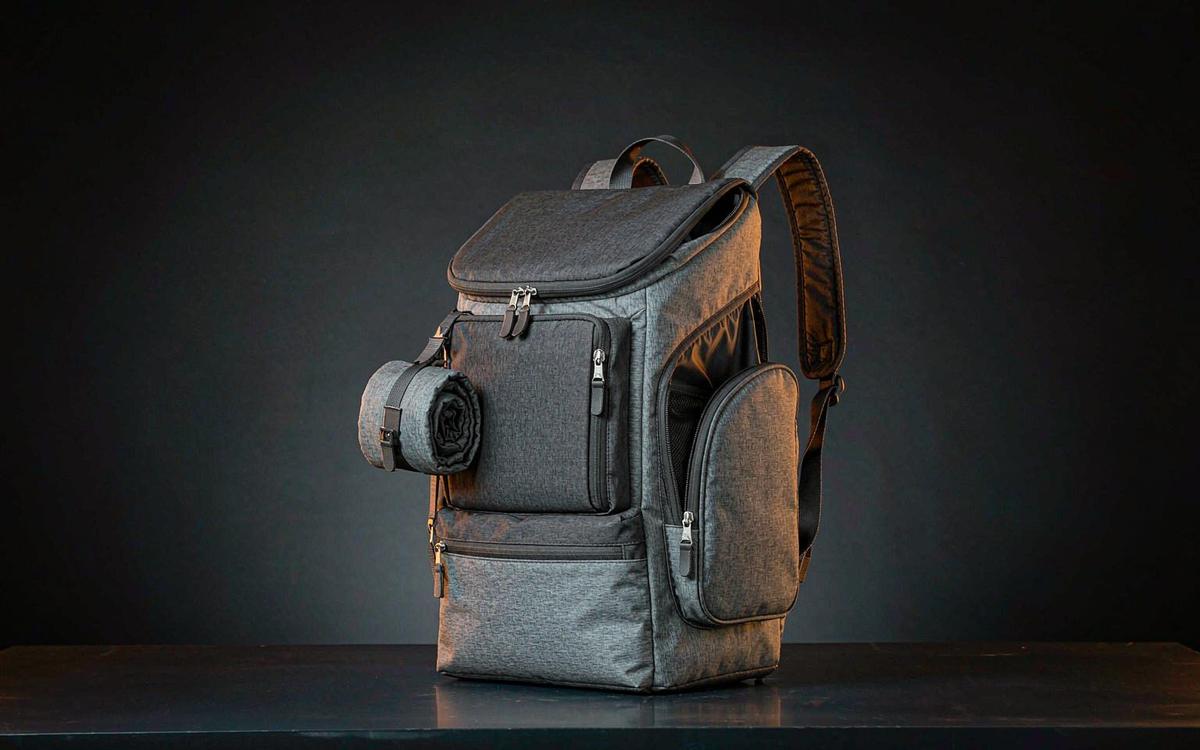
- Why parenting audiences pledge for bag campaigns
- Reading demand before you write the tech pack
- Feature architecture a parent backer actually uses
- Fabric, lining and hardware grades for a diaper build
- Unit cost drivers and a realistic cost breakdown
- What the 6-10 working days of sampling window must prove
- Chemical compliance and testing for baby-adjacent goods
- Inspection checkpoints and the AQL 2.5 plan
- Reward tier maths, packaging and fulfilment
- Writing the RFQ and comparing quotations
- Production window and delivery timeline to backers
Why parenting audiences pledge for bag campaigns
Parenting is one of the few consumer categories where a bag is genuinely a daily-use tool rather than an accessory. A parent leaves the house with feeding kit, changes of clothes, wipes, bottles, snacks and a device, and carries all of it for four to eight hours at a time. That repetition creates a very specific buying behaviour: the purchase is justified by use frequency, not by novelty, and the buyer researches compartment layout before colour. For a campaign creator this is valuable, because it means the product page can be built around demonstrable function rather than around a story.
- Daily-use frequency makes the reward feel like a replacement purchase rather than an impulse purchase.
- Compartment organisation is reviewable, so a spec table on the campaign page directly raises perceived value.
- Gifting demand is strong: parenting bags are bought by partners, grandparents and baby-shower guests.
- Backers in this niche ask detailed pre-launch questions, which is a useful signal of intent to pledge.
- Repeat purchase is realistic once a second child arrives, which supports a re-order rather than a one-off.
The commercial consequence is that a parenting-niche bag campaign can carry a higher reward price than a general-purpose daypack of the same size, provided the specification justifies it. Insulated bottle wells, a wipeable lining, a fold-out changing surface and stroller attachment hardware are all features a backer can price against retail equivalents. They are also features a production team can cost precisely. The risk is the opposite one: a campaign that reads as a generic backpack with a baby print will not convert, because this audience checks the specification sheet. Category context sits on our custom backpacks for Kickstarter pillar and on custom bags for Kickstarter.
Key takeaways
- Parenting backers convert on demonstrable organisation, one-handed access and cleanable interiors, not on artwork.
- The minimum order is 500 pcs per style and colourway, so a two-colourway launch is a 1,000 pcs commitment.
- Sampling runs 6-10 working days and 12-15 for builds with moulded panels or custom hardware; production 35-50 days.
- Insulated bottle wells, wipeable linings and stroller clips are the three features that most affect both unit cost and backer perception.
- Plan compliance as a baby-adjacent product: control coatings, inks and hardware at sourcing stage and screen on a production-representative sample.
Reading demand before you write the tech pack
The most expensive mistake in this niche is drafting the tech pack before validating which feature cluster the audience wants. A diaper backpack has at least four plausible positioning routes, and each one changes the tooling, the sample count and the unit cost. Decide the route first, then write the specification around it, because switching route after the first sample round costs a second full sampling cycle and pushes the production window out by a month.
| Route | Core promise | Spec consequences | Cost pressure |
|---|---|---|---|
| Organiser | Everything has a place | High pocket count, elastic loops, labelled dividers | More pattern pieces, more labour minutes |
| Hygiene | Wipeable and washable | TPU or PU laminated lining, sealed seams, removable mat | Laminated fabric cost, seam sealing operation |
| Travel-system | Clips to the stroller | Reinforced strap anchors, clip hardware, load testing | Hardware sourcing and pull-test validation |
| Minimal | Looks nothing like a diaper bag | Clean shell, hidden function, premium hardware | Better fabric grade and tighter finish tolerance |
Validate the route cheaply. Run a short survey with two or three renders per route and ask respondents to rank feature clusters rather than to pick a colour, because the ranking tells you which sample to build first. Cross-check against review language in the retail category: recurring complaints about a specific failure, such as insulated pockets that only fit narrow bottles, are a product brief in plain sight. The output you want is a one-page feature priority list with three must-haves, three should-haves and an explicit list of things you will not build. That list is what a sourcing partner can quote against, and it is what stops scope creep in sampling.
Feature architecture a parent backer actually uses
Feature architecture means the physical arrangement of compartments, openings and hardware, and it is where a parenting bag succeeds or fails. The governing constraint is that the wearer often has one hand free. Any feature that requires two hands, a flat surface or a search through the main compartment will not be used, however good it looked in the render. Design for a single-handed grab from a bag worn on one shoulder, and put the three most frequent items within reach of that hand.
| Feature | Frequency of use | Build note | Cost impact |
|---|---|---|---|
| Insulated side bottle wells | Very high | Two wells sized to a 70 mm diameter bottle, elasticated top | Low to medium |
| Wide top opening | Very high | U or D shaped opening with a stiffened frame | Medium |
| Wipeable full lining | High | PU or TPU laminated polyester, wiping tested | Medium |
| Fold-out changing mat | High | Removable pad in a rear sleeve, wipeable face | Medium |
| Stroller clip webbing | High | Reinforced anchor with bar-tack, rated clip | Low to medium |
| Front wipes pocket | Medium | External access slit or zip, one-hand pull | Low |
| Soiled-item wet bag | Medium | Sealed lining compartment, weld or tape seams | Medium |
| Laptop or tablet sleeve | Low to medium | Padded sleeve sized to a stated device | Low |
Two details separate a convincing build from a disappointing one. The first is bottle well diameter: insulated wells cut for a slim bottle will not take a wide-neck bottle or a sippy cup, and backers notice immediately. Specify the diameter in the tech pack and check it with a physical bottle at sample stage. The second is the opening geometry: a wide U-shaped opening with a stiffened frame lets a parent see the whole interior at once, which is the single most photographed feature in this category. Both are cheap to specify and expensive to retrofit after tooling. Prototyping practice for this stage is covered on crowdfunding bag sample prototyping.
Fabric, lining and hardware grades for a diaper build
Material selection here is driven by cleanability and weight rather than by abrasion resistance alone. A parenting bag is wiped down, not washed, and it is carried for long stretches, so the shell needs to be light and the lining needs to be non-absorbent. The usual specification is a polyester or nylon shell in the 300D to 600D range with a water-repellent finish, paired with a laminated polyester lining. Recycled polyester with GRS documentation is a credible upgrade in this niche because the audience responds to it, provided the transaction certificate is held.
- Shell: 300D to 600D polyester or nylon with a durable water-repellent finish, tested for colour fastness to rubbing.
- Lining: PU or TPU laminated polyester, light in colour so contents are visible, with a documented coating.
- Insulation: closed-cell foam with a wipeable facing, not a foil laminate that delaminates after repeated wiping.
- Webbing: 25 mm polyester webbing for stroller anchors with a bar-tack at every load point.
- Hardware: branded or unbranded POM and metal components with a documented finish and a pull-test result.
- Thread: bonded polyester thread in a gauge matched to the fabric weight, with a stitch count stated per 30 mm.
Hardware is where cheap quotations hide. A clip that carries the bag on a stroller handle is a load-bearing component, and a clip that was sourced on price will fail in the field long before the fabric does. Specify the hardware by material and by rated load, ask for the test result rather than the catalogue picture, and make the pull test part of the sample approval rather than an optional extra. The same logic applies to zips: a parenting bag is opened dozens of times a day, so the zip specification, the puller attachment and the stitch density around the tape all need stating in the tech pack. More on component sourcing is on bag manufacturing for campaign creators.
Unit cost drivers and a realistic cost breakdown
Creators ask how much a custom diaper backpack costs per unit, and the honest answer is that the feature set moves the number more than the fabric does. The cost breakdown that matters separates material, labour, hardware, tooling and compliance, because each behaves differently at volume. Material cost falls with quantity but not dramatically; labour minutes fall as the line learns the pattern; tooling is a fixed charge that amortises across the run; compliance testing is largely fixed per style. Understanding that shape is what lets you judge whether a quotation is realistic.
| Cost element | Behaviour with volume | Typical share | What the buyer can control |
|---|---|---|---|
| Shell and lining material | Modest reduction at higher quantity | 25 to 35 percent | Fabric grade, laminate choice, recycled content |
| Hardware and zips | Reduction at quantity breaks | 12 to 20 percent | Specification and brand of component |
| Cutting and sewing labour | Falls as the line learns | 20 to 30 percent | Pocket count, seam complexity, stitch count |
| Tooling and sampling | Fixed per style | 3 to 8 percent amortised | Number of sample rounds and moulded parts |
| Compliance testing | Fixed per style or material set | 2 to 5 percent | Number of clauses and markets tested |
| Packing and labelling | Near-linear | 4 to 8 percent | Polybag, hangtag, insert, carton spec |
The practical buying advice is to ask every production partner for the same cost breakdown structure so the quotations line up side by side. A quotation that arrives as a single unit price hides the decisions you most need to see: which fabric grade, which hardware, how many labour minutes and whether testing is included. Ask for the unit price at two quantity points as well, typically at the 500 pcs minimum and at a realistic stretch quantity, because the delta tells you how much volume pricing is actually available. If the delta is near zero, the run is already at its efficient size and a stretch goal will not improve your margin. Budget structure is set out further on custom bags for Kickstarter.
What the 6-10 working days of sampling window must prove
Sampling takes 6-10 working days for a standard construction and 12-15 working days for complex builds with moulded panels, custom hardware or bonded seams. That window is short, which means the brief has to be complete when it starts. A sample round spent resolving a question that could have been answered in the tech pack is the most common cause of a slipped campaign delivery date, and it is entirely preventable. Treat the sample as a verification exercise, not as a design exercise.
- Confirm every dimension in the pack, and check the bottle wells against a physical bottle rather than against the drawing.
- Load the bag to a realistic weight and wear it on one shoulder for an hour, noting strap comfort and panel contact.
- Wipe the lining with a standard baby wipe and inspect for delamination, colour transfer or tackiness after drying.
- Operate every zip and clip 50 times, then re-check stitch integrity at the tape ends and around the puller.
- Attach the stroller clips to a handle and pull to the rated load, checking the bar-tack and the webbing anchor for movement.
Define the approval criteria before the round starts and write them into the sample request. A sample that comes back with six comments is a normal outcome, not a failure; a sample that comes back with six comments and no agreed criteria turns into an argument about who pays for the second round. Agree in advance what constitutes approval, how many rounds are included in the sampling charge, and what happens if the third round is needed. Then freeze the specification: every change after pre-production sample approval resets the 35-50 day bulk production clock and can invalidate a compliance test already commissioned. Volume planning for first runs is covered on low MOQ bag production for creators.
Chemical compliance and testing for baby-adjacent goods
A bag sold to parents sits close to infants, is handled constantly and is chewed on if a strap ends up in reach. That is enough to justify treating it as a higher-scrutiny product even where the letter of the regulation treats it as a general article. The practical approach is to control inputs at sourcing stage and then screen the finished article, rather than to build first and test later. Retrofitting compliance after a failed screening means re-sourcing components and re-running production, which is the single most expensive outcome available in this niche.
- Request material declarations for coatings, laminates, inks and plastics as part of the quotation request, not after bulk.
- Screen for lead in metal hardware, rivets, zip pullers and printed inks, and for phthalates in soft plastics and coatings.
- Hold OEKO-TEX Standard 100 certification or equivalent documentation for textiles where the market expects it.
- Keep GRS transaction certificates where recycled content is claimed, so the marketing claim is defensible.
- Assess California Prop 65 exposure for the United States market and apply a warning where the assessment requires one.
- Maintain REACH declarations for the European Union market and EU GPSR technical documentation with traceability.
Third-party screening is only meaningful on a sample built from the materials and components that will actually run in bulk. A test report on a hand-made prototype with substitute hardware does not cover the production run, and it will not satisfy a retail buyer or a marketplace asking for documentation.
Timing matters as much as scope. Third-party testing typically takes one to three weeks depending on the laboratory and the clauses involved, so it must run in parallel with the second sample round rather than after it. Build the testing slot into the campaign schedule before launch, and state the standards you are testing to on the campaign page, because this audience asks. Our programme coordinators treat the compliance file as a sample-stage deliverable for exactly this reason. Detailed QC method is documented on Kickstarter campaign bag QA and QC.
Inspection checkpoints and the AQL 2.5 plan
Pre-shipment inspection runs at AQL 2.5 to ISO 2859-1, which sets the sample size and the accept and reject numbers against the lot size. For a parenting bag, the standard random sample is necessary but not sufficient, because the defects that generate returns are functional rather than cosmetic. Add a defined set of special checks to the inspection worksheet so that the specific risks of this build are tested on every inspection rather than discovered by backers.
| Check | Method | Tolerance | Why it matters |
|---|---|---|---|
| Bottle well diameter | Physical gauge or bottle fit | Must accept the stated diameter | Most photographed failure in the category |
| Lining wipe test | Wipe, dry, inspect | No delamination or colour transfer | Hygiene promise in the campaign copy |
| Stroller clip pull | Rated load, sustained pull | No anchor movement or stitch failure | Load-bearing safety component |
| Zip cycle | Open and close repeatedly | No snag, no tape separation | Highest-frequency moving part |
| Insulation seam | Visual and touch inspection | No gap or delamination | Function claim made on the page |
| Odour check | Open carton assessment | No persistent solvent odour | Drives returns in baby-adjacent goods |
Structure the inspection in three stages rather than one. An incoming material check confirms the fabric, laminate and hardware against the approved reference before cutting starts. An in-line check during the first day of bulk catches pattern and stitch issues while they are still cheap to correct. A pre-shipment inspection at AQL 2.5 then governs release. Ask for photographs of every defect found and a written disposition for each, because the report is what you will use to negotiate a rework or a credit. That three-stage structure is standard practice for the campaigns our production team supports.
Reward tier maths, packaging and fulfilment
Reward pricing in this niche should be built backwards from landed cost per unit, not forwards from a competitor's reward price. Take the unit cost at your realistic quantity, add the compliance and tooling amortisation, add packing, then add freight and any duty to the destination markets you promised. The number that remains is what you have to play with. A reward priced at 79 USD against a landed cost of 52 USD looks healthy until duty and a second freight leg are added.
- Set the early-bird tier at a level you can still honour if material costs move before the deposit is paid.
- Price add-ons separately: a wet bag, a pacifier pouch or a second strap set are cheap to make and easy to upsell.
- Decide the colourway policy before launch, because a second colourway is a separate 500 pcs commitment.
Packaging is a real cost line and a real damage risk. A structured backpack ships best flat-packed with internal stuffing to hold shape, in an individual polybag with a hangtag and a carton spec that states the pack quantity and the carton strength. Under-specifying the carton is a false economy: crushed cartons at the destination turn into replacement units that cost more than the saving. Plan fulfilment early, because the carton dimensions you choose set your freight cost for every destination. Our guidance on this stage sits on crowdfunding rewards fulfilment.
Writing the RFQ and comparing quotations
A request for quotation that says diaper backpack, 500 pcs will attract three wildly different prices, none of which are comparable. The value of a well-built RFQ is not politeness; it is comparability. Give every production partner the same drawings, the same material specification, the same hardware grade, the same quantity points, the same trade term and the same testing scope, and the returned numbers become meaningful.
- Attach dimensioned drawings or a full tech pack with tolerances, not renders alone.
- Name the fabric by denier and construction, and the lining by laminate type and weight.
- Specify hardware by material and rated load, and state the pull-test requirement.
- Ask for unit price at 500 pcs and at a stated stretch quantity so volume pricing is visible.
- Require the cost breakdown by element, and ask whether compliance testing is included or excluded.
- State the trade term, FOB Xiamen, and the payment terms you expect, T/T 30/70.
- Ask for the sampling lead time in working days and the number of rounds included.
When the quotations arrive, score them on more than price. Lead time certainty, sample responsiveness, willingness to name the component sources and clarity about what is excluded are all predictors of whether the run will land on schedule. A quotation that is 8 percent cheaper and vague about hardware will cost more than 8 percent by the time the pull test fails. Shortlist three, place a paid sample order with two, and award the bulk order on sample quality and communication rather than on price alone. Comparable guidance is on custom backpacks for Kickstarter and indiegogo crowdfunding bags.
Production window and delivery timeline to backers
The critical path for a parenting bag campaign is longer than most creators plan for, because sampling, testing and bulk production partly overlap and partly do not. production 35-50 days after deposit and approved pre-production sample. Sampling takes 6-10 working days, or 12-15 for complex builds, and testing typically adds one to three weeks that can run alongside the second sample round. Freight to the primary destination then adds its own leg, and that leg is the one most campaigns underestimate.
| Step | Duration | Runs alongside | Gate |
|---|---|---|---|
| RFQ and quotation comparison | 1 to 2 weeks | Campaign page build | Three comparable quotations received |
| Sampling round one | 6-10 working days | Testing scope agreed | Dimensions and fit confirmed |
| Sampling round two and testing | 6-10 working days, testing 1 to 3 weeks | Compliance file assembled | Pre-production sample approved |
| Bulk production | 35-50 days | Freight booking | Deposit paid and sample approved |
| Inspection and release | Within the production window | Carton packing | AQL 2.5 report accepted |
| Freight and fulfilment | Varies by mode and market | Backer address capture | Landed cost reconciled |
Work the sequence backwards from the delivery month you intend to publish, and then add a buffer that you do not tell backers about. Publishing the honest month and delivering two weeks early is a far better outcome than publishing an optimistic month and delivering late, because this audience communicates and late parenting rewards generate the loudest comment threads. Where a campaign needs a faster route, the lever is usually fewer colourways and simpler hardware, not a compressed production window. Further reading across the niche is on the blog.
In parenting categories the specification sheet is the advertisement. Budget for the features, not for the artwork.
Campaign bag specialist, parenting range briefing
- Custom bags for Kickstarter
- Custom backpacks for Kickstarter
- Crowdfunding bag sample prototyping
- Kickstarter campaign bag QA and QC
- Crowdfunding rewards fulfilment
- Low MOQ bag production for creators
Turn a parenting bag concept into a costed specification
Send your feature priority list, target reward price and delivery month to service@junyuanbags.com. Our production team will return a cost breakdown by element, a sampling and testing schedule, and a realistic production window you can publish as a delivery date.
Frequently Asked Questions
What is the MOQ for a custom diaper backpack order?
The minimum order quantity is 500 pcs per style and colourway. A single style in two colourways is therefore a 1,000 pcs commitment. Most first campaigns launch one colourway and add a second as a stretch goal once funding is confirmed.
How long does sampling take for a parenting backpack?
Sampling takes 6-10 working days for a standard construction and 12-15 working days for complex builds with moulded panels, custom hardware or bonded seams. Two rounds are typical, and each round starts from a frozen specification agreed in advance.
How much does a custom diaper backpack cost per unit?
Unit cost depends more on feature count than on fabric grade. Material typically accounts for 25 to 35 percent of cost, labour 20 to 30 percent and hardware 12 to 20 percent. Ask for a cost breakdown by element at 500 pcs and at a stretch quantity so volume pricing is visible.
Which features most affect the unit cost of a diaper backpack?
Insulated bottle wells, a laminated wipeable lining, a fold-out changing mat and stroller clip hardware are the four biggest movers. Each adds pattern pieces, labour minutes or a hardware line item, and together they can move unit cost by 4 to 7 USD. A high pocket count raises sewing minutes more than any single material upgrade.
What fabric and lining specification should I ask for?
A 300D to 600D polyester or nylon shell with a water-repellent finish, paired with a PU or TPU laminated polyester lining. The laminate is what makes the interior wipeable, so specify it by type and weight, and request the coating declaration at quotation stage.
How should insulated bottle pockets be sized?
Specify the internal diameter in the tech pack and check it against a physical bottle at sample stage. Design to roughly 70 mm so the well takes a wide-neck bottle and a sippy cup, because wells cut for a slim bottle are one of the most photographed failures in this category.
Does a diaper backpack need safety testing?
Treat it as a higher-scrutiny product because it sits close to infants. Screen for lead in hardware and inks and for phthalates in coatings and soft plastics, hold OEKO-TEX Standard 100 or equivalent textile documentation, and test on a production-representative sample rather than a prototype.
How long does third-party testing take?
Third-party screening typically takes 1 to 3 weeks depending on the laboratory and the number of clauses. It should run in parallel with the second sample round rather than after it, and it must be commissioned on a sample made from production materials, not from a hand-made prototype.
What does AQL 2.5 mean for my inspection?
AQL 2.5 to ISO 2859-1 sets the sample size and the accept and reject numbers against your lot size. For a parenting bag, add special checks for bottle well diameter, lining wipe performance, stroller clip pull strength and zip cycling to the standard worksheet.
What are the payment and trade terms?
Quotations are issued FOB Xiamen on T/T 30/70 terms: 30 percent deposit to release sampling and materials, and 70 percent before shipment. Confirm both terms in the RFQ so that returned quotations are directly comparable.
How long is bulk production after sample approval?
production 35-50 days after the deposit is paid and the pre-production sample is approved. Any specification change after that approval resets the clock, so freeze the specification and the label artwork before the window starts.
How should I plan the campaign delivery date?
Work backwards from the delivery month: 1 to 2 weeks for quotation, 6-10 working days per sample round, 1 to 3 weeks for testing run in parallel, then 35-50 days of bulk production. Add an unpublished buffer of at least two weeks for freight and customs.
People Also Ask
Are diaper backpacks a good product for a Kickstarter campaign?
They suit crowdfunding well because the audience buys on daily-use function and reads specification sheets closely. That makes a detailed feature table a conversion asset rather than clutter, provided the build genuinely delivers the organisational features promised.
What makes a diaper bag different from a regular backpack?
Insulated bottle wells, a wipeable laminated lining, one-handed access and stroller attachment hardware. Those four features change the pattern, the material list and the hardware sourcing, which is why a generic backpack with a print will not convert in this niche.
How many colourways should a first parenting campaign launch?
One. Each colourway is a separate 500 pcs commitment, so a two-colourway launch doubles the minimum. Add the second colourway as a stretch goal once funding is confirmed and the size split is clear.
Why do parenting bag campaigns get late?
Usually because the sample round was used for design rather than verification, or because compliance testing was commissioned after bulk instead of alongside the second sample. Both are scheduling decisions made before launch, not production problems.
Can I reuse a diaper bag design for a second product?
Yes, and it is the cheapest product development available. The pattern, the hardware set and the compliance file already exist, so a second size or a wet bag add-on needs sampling but not a full redevelopment cycle.