Custom Duffel Gym Bags for Crowdfunding: Sizes, Pockets and Materials
How do you specify a duffel gym bag for a crowdfunding reward so the sample matches the promise? Start with cut dimensions rather than a litre claim, then fix pocket architecture, fabric denier, lining coating and hardware grade. A 40-litre duffel at 500 pcs per colourway samples in 6-10 working days, runs 35-50 days in bulk after the deposit and approved pre-production sample, and ships after inspection at AQL 2.5 to ISO 2859-1 on FOB Xiamen terms. This article goes through each specification decision in the order a programme coordinator reads it.
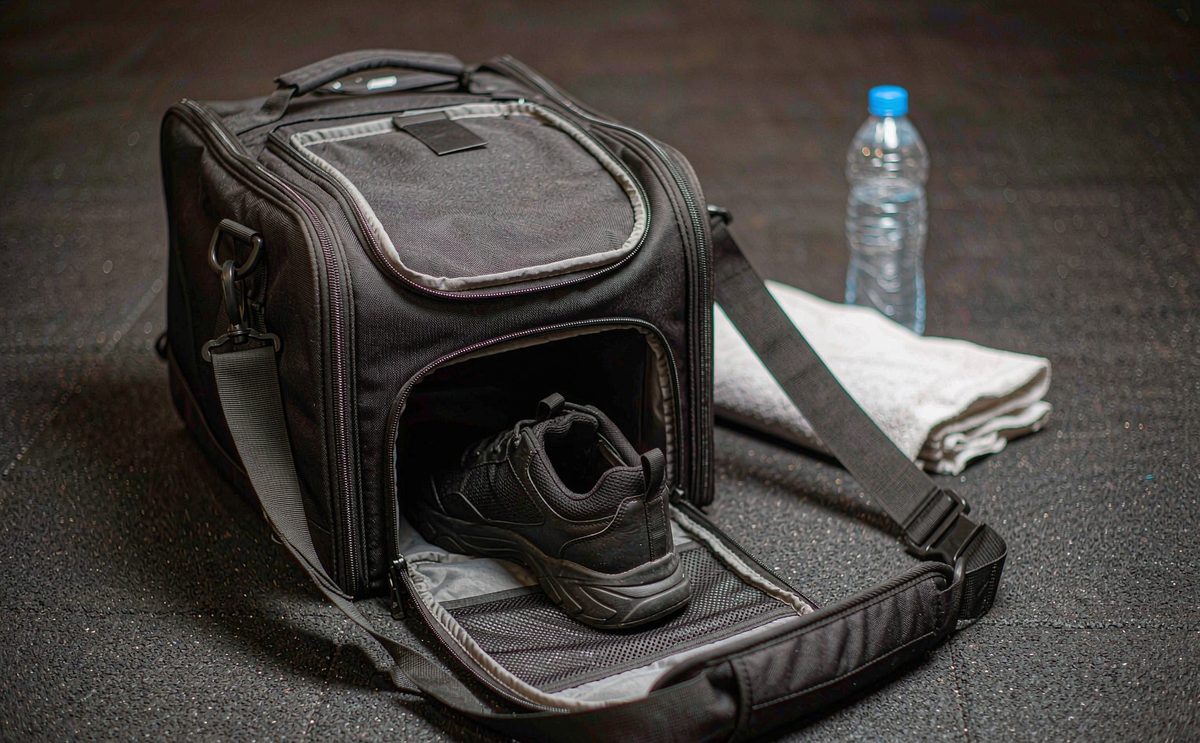
- How capacity claims translate into cut dimensions
- Choosing a size ladder for a duffel reward line
- Pocket architecture: what backers actually use
- Zips, pullers and hardware grades for a duffel
- Face fabric options from 300D to 1680D
- Linings, coatings and odour management
- Base construction: feet, panels and structure
- Strap systems and load paths on a duffel
- Cost impact of each specification decision
- The sampling checklist for a duffel build
- Specification errors that surface at inspection
- Writing the duffel spec into your RFQ
How capacity claims translate into cut dimensions
A litre figure is a marketing number and a cut dimension is a manufacturing number, and the gap between them causes more sampling disputes than any other specification issue. Nominal capacity is usually stated as the volume of the main cavity measured to the inside of the panels with the bag empty and fully expanded. Real usable capacity is lower, because a packed bag does not expand into a perfect rectangular prism and because internal pockets consume space that the nominal figure counts.
The practical method is to work backwards from what the bag must hold. A full training kit is a pair of trainers, a towel, a change of clothes, a wash bag and a water bottle. Packed, that occupies roughly 28-34 litres with reasonable compression. A duffel advertised as 40 litres will hold it comfortably with room to spare; a duffel advertised as 30 litres will hold it only if the interior is a single undivided cavity. State the cut dimensions in centimetres with tolerances, and let the litre figure follow from a measured fill test during sampling rather than the other way round.
| Nominal capacity | Typical cut dimensions | Realistic packed load | Best reward use |
|---|---|---|---|
| 30 litres | 48 x 26 x 26 cm | 22-26 litres usable | Light gym session, no shoes |
| 40 litres | 55 x 30 x 30 cm | 32-36 litres usable | Full kit with trainers; the hero size |
| 50 litres | 62 x 33 x 33 cm | 40-45 litres usable | Team kit, weekend hybrid |
| 60 litres | 70 x 35 x 36 cm | 48-54 litres usable | Travel crossover, higher freight cost |
| 25 litres | 44 x 24 x 24 cm | 18-22 litres usable | Studio or yoga session only |
Tolerance matters as much as the target. A plus or minus 1 cm tolerance on each axis of a 40-litre bag moves the internal volume by several litres, which is the difference between a reward that fits the promised kit and one that does not. Write the tolerance into the pack and measure it on the sample at three points per axis. Our custom duffle bags page carries the same figures in a category context.
- Minimum order quantity
- 500 pcs per style / colourway
- Sampling
- 6-10 working days (12-15 for complex builds)
- Bulk production
- 35-50 days after deposit + approved pre-production sample
- Inspection
- AQL 2.5 to ISO 2859-1
- Trade term
- FOB Xiamen
- Payment
- T/T 30/70
- Production floor
- 4,950 m² SGS-verified, 137 staff, 7 lines, 149 machines
- Monthly capacity
- 200,000 pcs per month
- Programme contact
- service@junyuanbags.com
Key takeaways on duffel specification
- Work backwards from the kit the bag must hold, then let the litre figure follow a measured fill test.
- State cut dimensions in centimetres with a stated tolerance, not a capacity claim alone.
- Pocket count is the highest-visibility feature and the largest labour cost after the shell.
- Zip gauge is what backers read as durability; a #5 coil on a 60-litre bag is under-specified.
- Fix the base and strap roots in the pack, because those are the two failure points that generate returns.
Choosing a size ladder for a duffel reward line
A size ladder is a commitment ladder. Every additional size is another 500 pcs minimum, another pattern set, another sampling programme and another inspection protocol. For a first campaign the strongest structure is a single hero size at 40 litres plus a smaller studio size if the audience splits, and nothing else. Creators who launch three sizes routinely find that one of the three takes 70% of pledges and the other two consume working capital that would have funded a re-order.
- Launch one hero size; add the second size only if pre-launch survey data shows a genuine split in the audience.
- Keep the two sizes on the same fabric, hardware and decoration set so material purchasing combines.
- If a second size is unavoidable, make it smaller rather than larger: the freight penalty on a 60-litre bag is severe.
- Price the second size during the original RFQ so activating it after funding is a confirmation, not a negotiation.
- Remember that a size variant is a separate style for minimum purposes; a colourway variant is a separate colourway.
The freight asymmetry is worth spelling out because it surprises people. Volumetric weight scales with the cube of linear dimension, so moving from 40 litres to 60 litres increases packed volume by roughly half while the selling price typically rises by far less. On a 500 pcs air-freighted partial shipment that difference is material. On ocean freight it is absorbed more easily, which is why a larger duffel is viable on a sea-shipped programme and marginal on an air-shipped one.
Pocket architecture: what backers actually use
Pockets are the most argued-about part of a duffel design and the part most often over-specified. Every pocket adds a panel, a closing method, at least one additional sewing operation and usually a binding or binding tape. Six pockets on a 40-litre duffel can add more labour minutes than the entire shell. The useful discipline is to name each pocket by the item it holds and delete any pocket that cannot be named that way.
| Added operations | Backer use frequency | Verdict | |
|---|---|---|---|
| Shoe compartment, end access | Panel, zip, binding, optional vent | High | Keep; strongest feature on a gym bag |
| Wet or damp lining pocket | Coated lining, sealed seam | High for swimmers | Keep on swim or triathlon lines |
| Exterior quick-access zip | Panel, zip, binding | High | Keep; phone, keys, wallet |
| Interior mesh organiser | Mesh panel, elastic or zip | Medium | Keep if it replaces a loose pouch |
| Two symmetrical end pockets | Two panels, two zips | Low | Often one is unused; consider one |
| Decorative front slip pocket | Panel, binding, optional magnet | Low | Delete unless it carries branding |
Placement beats count. A pocket positioned where the hand naturally falls when the bag is slung over a shoulder gets used; the same pocket on the opposite end panel does not. During sampling, load the bag and walk with it, then note which closures you actually reach for. That exercise takes ten minutes and routinely removes two pockets from a design, which is a direct saving in labour minutes and a direct improvement in how clean the finished bag looks on camera.
Zips, pullers and hardware grades for a duffel
The zip is the part of a duffel that backers touch every single time they use it, and it is the part most often specified incompletely. A tech pack that says heavy duty zip is not a specification: gauge, type, slider count, puller style and tape colour are all separate decisions, and each has a cost consequence. On a 40-litre duffel the main opening is typically a #8 or #10 coil, and on a 60-litre bag a #8 is under-specified because the opening length and the load on the tape both increase.
| Element | 30-40 litre duffel | 50-60 litre duffel | Notes |
|---|---|---|---|
| Main opening zip | #8 coil, single or dual slider | #10 coil, dual slider | Dual slider lets the bag open from either end |
| Secondary pocket zips | #5 coil | #5 or #8 coil | Match tape colour to the lining |
| Puller | Moulded or cord with branded tab | Moulded, larger for gloved use | Custom tooling adds 15-20 days |
| End hardware | D-rings, triglides, snap hook | Heavier gauge D-rings | Rating should be stated in the pack |
| Strap webbing | 25 mm polyester | 38 mm polyester | Wider webbing spreads load on heavy kits |
| Base feet | Optional on 30-40 litre | Recommended on 50-60 litre | Lifts the bag off wet ground |
Custom pullers are the single biggest cause of sampling overrun on a duffel programme, because tooling has to be cut and trialled before the first unit can be sewn. That is 15-20 days added before sewing starts, which on a campaign calendar is often the difference between launching with a physical sample and launching with a render. Use a catalogue puller for the first run and reserve custom tooling for the re-order, when you have volume data and a second funding cycle behind you.
Face fabric options from 300D to 1680D
Duffels consume a lot of cloth: a 40-litre bag uses roughly three to four square metres of face fabric including the base and end panels. That is why fabric choice dominates the materials line on a duffel more than it does on a smaller product, and why a denier change of one grade has a visible effect on unit cost. The decision is not simply higher is better; it is which grade matches the reward tier and the use case.
- 300D polyester with PU coating is the entry grade: light, cheap, adequate for a studio or yoga bag that never meets concrete.
- 600D polyester with PU or PVC backing is the mainstream grade and the correct default for a 40-litre gym duffel at a mid tier.
- 900D or 1000D polyester, often in a ripstop weave, suits team kit bags and any bag with defined abrasion zones at the base.
- 1680D ballistic nylon is a premium grade with a distinctive sheen and hand feel; it justifies a high tier and photographs very well.
- RPET 600D with GRS documentation supports a recycled claim but requires the certificate to cover the specific fabric lot.
- TPU laminated fabrics support a water-resistance claim and weld rather than sew, which changes the machine set and the sampling profile.
Coating is the half of fabric specification that gets ignored. A PU coating adds water resistance and body to a cloth; a PVC backing adds stiffness and weight; a TPU laminate adds both and costs the most. Coatings also affect how a fabric takes print and how it behaves under a heat-transfer press, which is why a decoration method chosen before the fabric is fixed can fail at sampling. Confirm the coating and the decoration method together, and get a decorated swatch approved before the sampling slot is booked.
Linings, coatings and odour management
The lining is where a gym bag either succeeds or fails at its actual job, which is carrying damp kit without becoming unpleasant. An uncoated 210D or 300D polyester lining is cheap and breathable and will absorb moisture and odour. A TPU-coated or antimicrobial-treated lining wipes clean, resists odour and costs more per metre. A duffel that carries sweaty training kit three times a week needs the coated lining, and a duffel that carries a yoga mat and a water bottle does not.
Colour is a second decision that campaigns underestimate. A dark lining hides soiling and is the default for a gym bag; a light lining makes the interior easier to see into and photographs better in a reward video but shows every mark. Some programmes use a light lining only in the shoe or wet compartment and a dark lining in the main cavity, which is a small additional material complexity and a genuine usability improvement.
A sealed compartment holding damp trainers becomes an odour problem within a week. Specify ventilation explicitly: a mesh panel, a set of grommets, or a wipe-clean coated lining. Whichever you choose has to be in the tech pack, because ventilation cannot be added after the shell is closed and cannot be inspected if nobody wrote it down.
Where a claim is made about odour or antimicrobial performance, the evidence has to exist before the campaign page is written. Ask which test reports cover the specific lining lot being purchased, keep the certificate numbers in the campaign folder, and make sure the claim language on the page matches what the certificate actually supports. Our QA and QC page lists the documentation we recommend keeping for a reward programme.
Base construction: feet, panels and structure
The base of a duffel is the highest-abrasion surface on the product and the cheapest place to buy durability. Three approaches exist, in ascending order of cost: a doubled face fabric panel, a coated higher-denier panel, and a rigid insert with moulded feet. The rigid insert changes the packing profile because the bag no longer collapses, which raises volumetric freight on every unit shipped. That trade-off should be made deliberately rather than by default.
- Doubled face fabric: cheapest, adds a small amount of structure, collapses for packing. Suitable for a studio or light gym bag.
- Coated higher-denier panel: adds abrasion resistance without changing the packing profile. The sensible default for a 40-litre gym duffel.
- Rigid insert with covered board: holds shape, protects contents, adds weight and volume. Justified on a team kit or a premium tier.
- Moulded feet: lifts the bag off wet ground, adds a hardware line and an assembly operation. Reads well in photography and in use.
- Full perimeter binding: protects the seam where the base meets the body, which is where abrasion failures usually start.
There is a sampling test for this that costs nothing and prevents returns. Load the bag to 10 kg, set it down on a concrete floor fifty times, and inspect the base seam and the binding. Then repeat with the bag wet. A base specification that survives that test will survive a season of gym use; one that shows abrasion after fifty repetitions will generate complaints within a month of delivery.
Strap systems and load paths on a duffel
A duffel carries load through two routes: the hand handles and the shoulder strap. Both terminate in seams, and both are specified far too loosely in most creator tech packs. The handles are usually a webbing loop or a padded wrap that runs under the body of the bag, and the shoulder strap attaches at D-rings or webbing tabs at each end. In both cases the load path runs through the body seam, which means the body seam has to be built to carry it.
- Specify bar-tack or box-stitch reinforcement at every strap and handle termination; straight stitch alone is the most common field failure.
- Run handle webbing continuously under the base panel rather than terminating it at the body seam, where possible.
- State webbing width and weave density; 25 mm is standard for a 40-litre bag and 38 mm is better at 60 litres.
- Choose between a fixed and a detachable shoulder strap; detachable adds hardware and a clip that can fail.
- Where a padded strap is specified, name the foam thickness and the covering fabric, or the sample will not match the bulk.
Load testing belongs in the sampling protocol rather than in the marketing copy. Fill the bag to the heaviest realistic kit, carry it by each route for a defined distance, and inspect the terminations for stitch distortion or webbing slip through the adjuster. Photograph the result. A campaign bag specialist can tell from those photographs whether the load path is sound, and the photographs become part of the inspection reference set for the bulk run.
Cost impact of each specification decision
| Decision | Cost effect | Where it lands | Negotiable? |
|---|---|---|---|
| Fabric denier and coating | High | Materials line | Yes, by grade |
| Pocket and compartment count | High | Labour minutes | Yes, by deletion |
| Zip gauge and puller type | Medium to high | Hardware line | Yes, catalogue vs custom |
| Decoration method and size | Medium to high | Decoration line | Yes, by stitch or film area |
| Base construction | Medium | Materials and labour | Yes |
| Lining coating | Medium | Materials line | Yes |
| Strap width and padding | Low to medium | Materials and labour | Yes |
| Carton and packing specification | Low per unit, high in freight | Packing and freight | Yes, by density |
Read the table as a negotiation map. The two lines that move most are fabric and pocket count, and both are under the creator's direct control. The two lines that campaigns over-focus on are decoration and packing, which matter but are smaller. When a quotation comes back above your target, the fastest path to a lower number is to reduce pocket count and move one denier grade down on the face fabric, not to ask for a discount on a specification you have already fixed.
The sampling checklist for a duffel build
Sampling runs 6-10 working days on a standard duffel and 12-15 working days when the build includes a bonded seam, a moulded component or an unusual divider geometry. The value of that window depends entirely on what gets measured. A photograph answers whether the bag looks right; a tape measure, a scale and a fill test answer whether it is right. Build the measurement sheet before the sample ships so that review is one pass.
- Weigh the empty unit to 10 grams and record it against the campaign copy.
- Measure external dimensions at the widest points on all three axes and compare against the stated tolerance.
- Run the fill test with the actual kit the reward promises to hold, and photograph it loaded.
- Cycle every zip twenty times under light load and note any binding at the corners of a curved opening.
- Fill the shoe or wet compartment, seal it, lay the bag flat overnight on absorbent paper and check for transfer.
- Lift at 10 kg by each handle and by the shoulder strap and inspect every termination for distortion.
- Set the loaded bag down on concrete fifty times and inspect the base seam and binding.
- Confirm pieces per carton and carton dimensions so freight can be quoted on measured volumetric weight.
Write the revision list as a numbered document with each item tied to a pack clause, and return it in one pass. Creators who send a paragraph of impressions usually need a third round; creators who send a clause-referenced list usually finish in two. Our sample prototyping page sets out the pack document section by section and the low minimum production page explains how quantity interacts with these choices at 500 pcs.
Specification errors that surface at inspection
Pre-shipment inspection at AQL 2.5 to ISO 2859-1 samples a statistically determined number of units and measures them against agreed defect classes. What it cannot do is catch a specification error that was never written down. The failures below are the ones that pass a generic checklist and then generate backer complaints, which is why each belongs in the inspection protocol as a named, checked item rather than as a general expectation of quality.
- Shade variation between the body and the base panel when two fabric lots are used in one bag.
- Lining pulled tight across a curved opening so the bag does not open to its stated dimension.
- Zip tape colour mismatched to the lining, visible whenever the bag is opened.
- Decoration positioned by eye rather than to the stated coordinate, drifting across the run.
- Ventilation grommets omitted because the pack said ventilated without naming the method.
- Strap adjuster slipping under load because webbing width and hardware gauge were not matched.
- Carton marking errors that create a sorting delay at the fulfilment warehouse and a dispatch delay to backers.
The mitigation is an in-line check during the sewing window rather than only a final gate. A defect trend found on day 20 of a 35-50 day run is correctable; the same trend found on day 45 means sorting finished goods and a second inspection that adds 10-15 days. Agree in advance who pays for re-inspection, and require the report to be issued to you and not only to the production partner.
Writing the duffel spec into your RFQ
A request for quotation is only as accurate as the specification inside it. For a duffel programme, that means cut dimensions with tolerances, a named pocket list with each closing method, fabric by denier weave and coating, lining by denier and coating, zip gauges by position, hardware references, strap width and termination method, base construction, decoration method and coordinates, and the packing specification. Add quantity per colourway, target delivery month, destination market and inspection standard, and a unit cost and a production window come back in one exchange.
- Quantity per style and per colourway, with the minimum understood as 500 pcs per style and colourway.
- Capacity expressed as cut dimensions with tolerances, not as a marketing litre figure alone.
- Fabric, lining and hardware named by grade, reference or supplier code wherever one exists.
- Decoration method, artwork dimensions and measured placement coordinates from a stated seam.
- Inspection standard: AQL 2.5 to ISO 2859-1 unless you have a documented reason to tighten or loosen it.
- Trade term FOB Xiamen and payment T/T 30/70, or a stated alternative.
- Any stretch-goal variants priced now so a re-order is a confirmation rather than a fresh negotiation.
Stock fabric in a stock colourway is worth 15-25 days against a custom dye, and catalogue hardware rather than a moulded puller is worth 15-20 days before the first unit is sewn. On a campaign calendar that is usually the difference between launching with an approved physical sample and launching with a render.
Once the quotation is accepted the sequence is fixed: sampling slot released, two rounds planned at 6-10 working days each, written pre-production approval, 30% deposit under T/T 30/70, 35-50 days of bulk production, inspection at AQL 2.5, then FOB Xiamen release and transit. Budget 12-16 weeks from specification lock to backer doorstep. Our crowdfunding rewards fulfilment page covers the destination side and the bag manufacturing guide explains how each pack clause becomes a line operation.
- Custom duffle bags for Kickstarter
- Custom gym bags for Kickstarter rewards
- Custom sports bags for Kickstarter
- Crowdfunding bag sample prototyping
- Kickstarter campaign bag QA and QC
- Low minimum bag production for creators
- Crowdfunding rewards fulfilment
- Request a quotation
Turn your duffel spec into a costed programme
Send us your dimensions, pocket list, fabric grade and target quantity. As your production partner we will return a unit cost with a line-by-line breakdown, a sampling estimate and a booked production window. Write to service@junyuanbags.com or use the quotation form.
Frequently Asked Questions
What size duffel bag works best as a crowdfunding reward?
40 litres is the strongest single size, with cut dimensions around 55 x 30 x 30 cm and roughly 32-36 litres of usable packed volume. It holds a full training kit including trainers with room to spare. Add a second size only if pre-launch survey data shows a genuine split in your audience, because each size is another 500 pcs commitment.
How many pockets should a duffel gym bag have?
Four is usually the practical maximum: a shoe or wet compartment, an exterior quick-access zip, an interior organiser and one end pocket. Every pocket adds a panel, a closing method and sewing operations, and six pockets can add more labour minutes than the entire shell. Name each pocket by the item it holds and delete any that cannot be named.
Which fabric denier should a 40-litre duffel use?
600D polyester with a PU or PVC backing is the correct default for a 40-litre gym duffel at a mid reward tier. Drop to 300D for a light studio bag that never meets concrete, and move to 900D or 1000D ripstop where the bag has defined abrasion zones at the base.
What zip gauge does a duffel main opening need?
A #8 coil is standard on a 30-40 litre duffel and a #10 coil with a dual slider is correct at 50-60 litres, because opening length and tape load both increase with size. Secondary pockets run #5. Always specify gauge, type, slider count, puller style and tape colour separately.
How long does sampling take for a custom duffel bag?
6-10 working days for a standard build and 12-15 working days when the build includes bonded seams, a moulded component or an unusual divider geometry. Budget two rounds, so 12-20 working days of calendar, before the pre-production sample exists and can be approved in writing.
What is the minimum order quantity for a custom duffel bag?
500 pcs per style and per colourway. A 40-litre duffel in black and the same duffel in navy are two commitments unless the colourways are pre-negotiated as a split within one run, which requires identical face fabric and construction across the split.
Should a duffel lining be coated or uncoated?
Coated if the bag carries damp kit three times a week, uncoated if it carries a yoga mat and a water bottle. A TPU-coated or antimicrobial-treated lining wipes clean and resists odour but costs more per metre. An uncoated 210D lining is cheap and breathable and will absorb moisture and odour.
How much does a shoe compartment add to a duffel?
It adds a divider panel, a second zip, binding and optionally a vent, which is one of the larger single feature costs on a duffel. It is also the most requested feature in fitness reward surveys, so it usually earns its cost on a mid or premium tier and not on an entry-tier bag.
What moulded base and feet should a duffel specify?
A coated higher-denier base panel is the sensible default for a 40-litre duffel. A rigid insert holds shape but stops the bag collapsing, which raises volumetric freight on every unit. Moulded feet add a hardware line and an assembly operation but lift the bag off wet ground, which photographs and performs well.
How is a duffel bag inspected before shipment?
Pre-shipment inspection at AQL 2.5 to ISO 2859-1, general inspection level II, against written defect classes. For a duffel those classes should include zip failure, strap termination failure, compartment leakage, shade variation between panels and decoration misregistration over 2 mm.
Does a bigger duffel cost much more to ship?
Yes. Volumetric weight scales with the cube of linear dimension, so moving from 40 to 60 litres increases packed volume by roughly half while the selling price usually rises by less. That makes a larger duffel viable on an ocean-shipped programme and marginal on an air-shipped one.
When does bulk production start on a duffel order?
It starts when two conditions are met together: the 30% deposit under T/T 30/70 has landed and the pre-production sample has been approved in writing. production 35-50 days depending on material availability, decoration complexity and how many colourways are on the run.
What tolerance should be specified on duffel dimensions?
Plus or minus 1 cm on each axis is a reasonable working tolerance. Tighten to 5 mm on dimensions that affect a fitted component such as a base insert or a divider. Remember that 1 cm on each axis of a 40-litre bag moves internal volume by several litres, so measure the sample at three points per axis.
Can a duffel be specified with recycled fabric?
Yes. RPET 600D with GRS documentation supports a recycled content claim, and the certificate must cover the specific fabric lot you are buying. Confirm availability before the sampling slot is booked, because RPET grades in the required colourway are not always held in stock.
People Also Ask
What is the difference between a duffel and a gym bag?
In production terms, very little: both are soft cylindrical or rectangular bags with a main opening and a shoulder strap. Duffel usually implies a larger capacity and a U-shaped opening; gym bag implies 30-45 litres with a dedicated shoe or wet compartment. The specification differences are capacity and pocket layout.
Should I choose one duffel size or offer a ladder?
One hero size at 40 litres for a first campaign. Each additional size is another 500 pcs minimum, another pattern set and another sampling programme, and one size typically takes the majority of pledges while the others consume working capital.
Is a wet compartment worth the extra cost on a duffel?
Usually yes on a mid or premium tier and for swim or triathlon audiences. The cost sits in the coated lining, the sealed divider seam and the second exterior zip. On an entry tier, a removable pouch achieves the same result at a fraction of the cost.
How do I check a duffel sample is built to last?
Fill it to 10 kg, carry it by each handle and the shoulder strap, set it down on concrete fifty times, cycle every zip twenty times and inspect every strap termination for stitch distortion. Photograph each result so it becomes part of the bulk inspection reference set.
What should go in a duffel bag RFQ?
Cut dimensions with tolerances, a named pocket list with closing methods, fabric and lining by denier and coating, zip gauges by position, hardware references, strap width and termination, base construction, decoration method and coordinates, packing spec, quantity, delivery month and inspection standard.