Custom Duffle Bags for Indiegogo: Multi-Platform Reward Strategy
A duffle bag is the easiest travel reward to run across two platforms, because one pattern serves several sizes, colourways and tiers without new tooling. The complication is not the product, it is the mechanics: fixed versus flexible funding changes when money is certain, Indiegogo InDemand keeps selling after the campaign, and shipping is collected differently on each platform. This guide sets out how to design one duffle programme that feeds both, how to plan the production quantity when two platforms contribute, and how to keep a single 35-50 day bulk window on schedule while both are still selling.
- Why duffle bags suit a multi-platform reward strategy
- Fixed versus flexible funding, and what it changes
- Indiegogo InDemand and the second sales channel
- Sequencing two launches without cannibalising
- Reward tier architecture that works on both platforms
- Currency, price display and payment behaviour
- Shipping and duty collection across platforms
- Production planning when two platforms feed one order
- MOQ and colourway planning across platforms
- Timeline: aligning sampling and bulk with two launches
- Fulfilment and inventory split between platforms
- What to standardise so one product serves both
Why duffle bags suit a multi-platform reward strategy
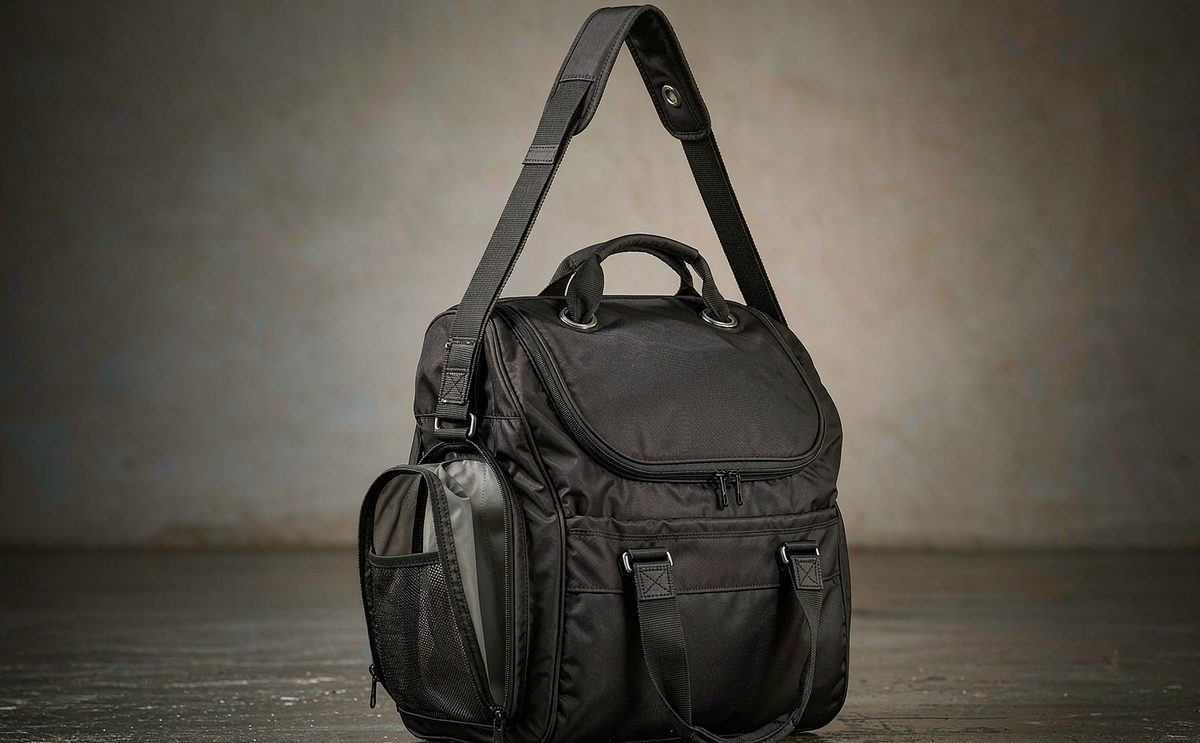
A duffle is the most flexible travel product a creator can build, and flexibility is exactly what a multi-platform strategy needs. One pattern can be scaled into a 30 L gym size, a 45 L weekend size and a 60 L travel size with the same construction logic, the same hardware and the same sewing operations. That means a creator can offer three distinct-looking reward tiers from one development effort, and can place different sizes on different platforms without creating three separate products or three separate minimums per colourway.
The second reason is that duffles carry no moulded tooling in their standard form. There is no shell to tool, no frame to mould and no telescopic mechanism to qualify. Development cost is therefore dominated by sampling and pattern work, which is low, and the fixed cost that has to be amortised across two platforms is small. That matters commercially: a strategy that splits demand across two platforms produces smaller runs per platform but a larger combined run, which is the opposite of what tooling-heavy products want and exactly what a low-fixed-cost product tolerates.
The third reason is shipping behaviour. A soft duffle packs flat or compressed compared with a structured case, which keeps parcel dimensional weight under control and makes it viable to ship to more countries at an acceptable rate. On a multi-platform campaign the destination mix widens, because each platform attracts a slightly different geographic audience, and a product that becomes uneconomic at long distances limits that advantage. A duffle in the 40 to 60 L range typically packs into a carton that keeps it inside standard parcel bands rather than oversized ones.
- One pattern scales into several sizes, giving multiple tiers from one development effort.
- No moulded tooling in standard construction, so fixed cost stays low and splitting demand is affordable.
- Shared hardware and webbing across sizes means combined component buying, which improves unit cost.
- Flat or compressible packing keeps parcels inside standard bands as the destination mix widens.
- Colourways differentiate the platforms without creating new styles, provided each colourway clears the minimum.
The obvious caution is that flexibility becomes a liability if it is unconstrained. A creator who offers four sizes in three colourways across two platforms has created twelve stock-keeping combinations, each of which has to be forecast, packed and fulfilled, and several of which will not reach an efficient quantity. The discipline is to decide the matrix before the campaign opens and to cap it. Two sizes and two colourways across two platforms is usually the practical maximum for a first multi-platform run. More combinations produce forecasting error, and forecasting error on a made-to-order product is expensive because it cannot be corrected after bulk starts.
Fixed versus flexible funding, and what it changes
The funding model is the single biggest mechanical difference between the two platforms, and it changes what a creator can safely promise. On a fixed-funding campaign, funds are only collected if the goal is met, so production cannot be committed until the campaign closes successfully. On a flexible campaign, funds are collected whether or not the goal is reached, which means money arrives before the volume is known. That sounds like an advantage and it partly is, but it creates a commitment problem: backers have paid, the creator has an obligation, and the quantity may be too small to produce efficiently.
The production consequence is concrete. The minimum order quantity is 500 pcs per style and per colourway, and a flexible campaign that collects 180 orders has a fulfilled obligation it cannot efficiently meet. Options are to consolidate colourways, to run at a loss, or to refund. The sensible approach is to set the flexible goal at or above the quantity needed to meet the minimum in the colourways offered, and to treat any amount below that as a signal to consolidate rather than to produce. A creator should decide the consolidation rule before launch rather than improvising it while backers wait.
| Dimension | Fixed funding | Flexible funding | Production consequence |
|---|---|---|---|
| When money is collected | Only if the goal is met | As pledges arrive | Flexible campaigns create obligation before volume is known |
| Volume certainty at close | Known at close | Known at close, but partial funds exist earlier | Do not commit bulk on partial funds |
| Minimum quantity risk | Goal can be set at or above the minimum | Funds may arrive below the minimum | Set a consolidation rule before launch |
| Refund exposure | No funds if the goal fails | Funds collected regardless | Refund costs are real on a failed flexible goal |
| Stretch goal behaviour | Adds volume late | Adds volume continuously | Plan the bulk quantity as a range, not a number |
Platform fees are broadly comparable, with both platforms commonly charging around 5 percent of funds raised, plus payment processing that typically adds several percent depending on the country and method. Treat total deductions of roughly 8 to 12 percent as the planning figure in both cases rather than assuming one platform is materially cheaper. The real economic difference between platforms is not the fee; it is the demand each one reaches and the post-campaign sales channel, which is the next section.
Indiegogo InDemand and the second sales channel
The most valuable difference for a bag programme is what happens after the campaign. Indiegogo offers a continuation channel in which a funded campaign keeps taking orders at fixed pricing after the live period ends. For a physical product with a 35-50 day production window, that continuation is structurally useful: it means the order book keeps growing while production is already running, so a second production quantity can be planned with real demand behind it rather than with a forecast.
Used well, a continuation channel changes the shape of the production plan. Instead of one order at the funded quantity, a creator plans an initial run at a conservative quantity and a follow-on run once continuation demand is visible. That two-step plan has a real cost, because two runs mean two setups, and it has a real benefit, because it avoids committing to a quantity that never sells. For a duffle, where setup cost is low and there is no tooling, the two-step approach is usually the better trade.
- Plan the initial run at a conservative quantity that clears the minimum comfortably, then follow on once demand is visible.
- Keep the continuation price above the campaign price, because the discount was the reason to back early rather than buy later.
- State clearly on the page how long the continuation channel will run, so that the promise is bounded.
- Use continuation demand to decide whether a second colourway is worth its 500 pcs minimum.
- Confirm that lead times quoted on the continuation listing reflect the follow-on production window, not the first one.
One operational trap: lead time promises on the continuation listing. A backer ordering in month three is quoted a delivery estimate, and that estimate has to reflect a fresh production window rather than the one already running. Quoting the first run's timing on a continuation listing produces a wave of late orders and complaints. Our programme coordinators ask creators to publish two different lead times, one for the live campaign and one for continuation, and to update the continuation figure whenever the production schedule changes.
Sequencing two launches without cannibalising
There are three workable sequences. The first is a single product on both platforms simultaneously, which maximises reach but splits demand and doubles the support burden. The second is a primary launch followed by a secondary window, in which one platform runs first and the second opens once the first closes, using the first campaign's social proof. The third is one platform for the launch and the second as the continuation channel, which is the cleanest structure for a physical product and the one most bag campaigns should choose.
The cannibalisation risk is real in the first two. If the same audience sees the same product at two prices, the lower price wins and the higher one looks dishonest. The way to avoid it is to differentiate the offer rather than the product: different sizes, different colourways, or different bundles. A Kickstarter campaign offering a 45 L weekender and an Indiegogo campaign offering a 60 L travel duffle plus a packing cube set are not competing for the same pledge even though the underlying construction is shared. Differentiate the offer, standardise the build.
Sequencing also affects the production plan in a way creators underestimate. If the second platform opens three months after the first, the second order may arrive after the first bulk run has shipped, which means a second run with a fresh 35-50 day window and a fresh sampling decision if anything changed. That is acceptable, but it must be planned: the second run needs its own deposit, its own production slot and its own freight booking. Our production team asks for the intended sequence at quotation stage so that capacity can be reserved rather than negotiated later.
Reward tier architecture that works on both platforms
A tier structure that survives both platforms has three levels and a small number of add-ons. The early bird is a capped quantity at the deepest discount. The standard tier is the default and is priced from the landed cost model. The bundle tier adds low-cost accessories that raise average pledge value far more than they raise cost. Anything beyond that tends to create forecasting noise, and on a two-platform campaign noise compounds, because each platform contributes an uncertain share of each tier.
The most common structural error on a multi-platform campaign is offering a different bag style on each platform. That doubles the development effort, doubles the sampling rounds and creates two 500 pcs minimums where one combined run would have reached a better price band. The alternative is to offer the same construction with a different configuration: a different size, a different colourway, or a different accessory bundle. The backer perceives a distinct offer; the production side sees one product family and one component buy.
| Tier | Kickstarter offer | Indiegogo offer | Shared production element |
|---|---|---|---|
| Early bird | 30 L gym duffle, capped at 15% of volume | 30 L gym duffle, capped at 15% of volume | Same shell, same hardware, one colourway |
| Standard | 45 L weekender, two colourways | 45 L weekender, two colourways | Same pattern, combined colourway run |
| Bundle | 60 L travel duffle plus packing cube set | 60 L travel duffle plus laundry bag | Same duffle, different accessory |
| Add-on | Packing cubes, strap, toiletry kit | Packing cubes, strap, toiletry kit | Bought at combined volume |
| Continuation | Not applicable after close | 60 L at post-campaign price | Follow-on run planned from real demand |
Price the tiers from the landed cost rather than from the other platform. Each platform has a slightly different audience and a slightly different currency mix, so copying a price across both usually means one of them is mispriced. Build the model once with FOB, freight, duty, handling and parcel, then apply the platform-specific fee and currency assumptions per platform. A difference of 5 to 10 percent in the pledge between platforms is normal and defensible when the fee and currency assumptions genuinely differ.
Currency, price display and payment behaviour
Both platforms display prices in a selected currency, and a meaningful share of backers pledge in a currency other than the one the production invoice is settled in. That introduces two exposures. The first is display rounding: a pledge set at a round number in the display currency converts to an awkward amount in the settlement currency, and over thousands of backers small differences accumulate. The second is movement between funding and settlement, because the campaign collects over weeks and production is paid in stages under T/T 30/70.
The practical mitigations are simple. Set the pledge in the settlement currency first and let the platform display the converted figure, rather than choosing a pleasing display number and accepting whatever it converts to. Build a currency buffer of 3 to 5 percent into the cost model. Where a campaign expects a large share of pledges in one non-settlement currency, consider whether the deposit schedule can be aligned so that the largest payment falls when the rate is known rather than before.
- Set the pledge in the settlement currency and let the platform convert for display.
- Add a 3 to 5 percent currency buffer to the landed cost model.
- Model fee and processing assumptions per platform, since the mix of payment methods differs.
- Plan the deposit schedule against the collection schedule, because production is paid in stages while pledges arrive continuously.
- Re-check the model if the exchange rate moves more than the buffer before the deposit is due.
Payment behaviour also differs in a way that affects cash flow rather than cost. Some platforms collect shipping at pledge time and some collect it later through a pledge manager, and some campaigns run pre-order style collection after the live period ends. The production side does not care which, but the deposit timing does, because a 30 percent deposit is due before bulk starts. A creator whose funds are still being collected when the deposit falls needs either a credit arrangement or a later production slot, and discovering that at deposit time costs weeks.
Shipping and duty collection across platforms
Shipping is where multi-platform campaigns most often lose money, because the two platforms handle it differently and creators assume one behaviour applies to both. On some setups shipping is collected at pledge time as a flat per-region rate; on others it is collected after the campaign through a pledge manager or a survey. The risk in the first model is that the flat rate is set before the real freight quotation exists. The risk in the second is that some backers never complete the survey, leaving units unshippable and funds short.
The fix is to quote freight from a real carton specification rather than from an assumption, and to set regional rates with a buffer. A duffle that compresses well keeps parcel costs manageable, but the rate still varies substantially by region, and a single worldwide rate almost always loses money on the longest routes. Set three or four regional bands, add a buffer of 10 to 15 percent for rate movement, and re-quote before dispatch if the campaign has been running for more than a season.
- Quote shipping from the actual carton dimensions and packed weight, not from a similar product.
- Set three or four regional bands rather than one worldwide rate.
- Add a buffer of 10 to 15 percent for carrier rate movement during the campaign.
- If shipping is collected after the campaign, plan a follow-up sequence and a deadline, and decide what happens to unclaimed units.
- Decide whether duty is prepaid or payable on delivery, and state it on the page, because unexpected duty is a major complaint source.
Duty treatment deserves a line on the campaign page either way. A backer who receives a parcel with an unexpected duty invoice blames the creator, not the customs authority, and the complaint appears in the comments where everyone reads it. Where the campaign ships to a fulfilment warehouse in the destination region first, duty is paid once on import and the domestic parcels carry no further charge, which is usually the smoother backer experience. That decision is covered on crowdfunding rewards fulfilment.
Production planning when two platforms feed one order
The central planning question is when to commit the bulk quantity. Both platforms may still be selling while production needs to start, and the 35-50 day window means the decision has a long lead. There are three positions a creator can take. Commit at the funded quantity and accept the risk of under-supply. Wait for both platforms to close and accept a later delivery month. Or commit to a base quantity and plan a follow-on run from continuation demand.
For a duffle, the third is usually right, and for a specific reason: there is no tooling to amortise and setup cost is low, so a second run does not carry a large fixed penalty. A product with moulded tooling would face the opposite calculation. The base quantity should clear 500 pcs per style and per colourway with margin, and the follow-on run is planned once demand is visible. That structure also protects the campaign from the worst outcome, which is producing 2,000 units against demand of 700.
| Strategy | Delivery timing | Inventory risk | Best when |
|---|---|---|---|
| Commit at funded quantity | Earliest possible | Under-supply if demand keeps growing | The campaign will not continue selling |
| Wait for both to close | Latest, often 6-10 weeks later | Lowest, since demand is known | Backers accept a later month and cash allows |
| Base run plus follow-on | Base ships on schedule, second later | Balanced, with two setups | A continuation channel is in use, which is the usual case |
Whichever is chosen, the colourway allocation has to be decided at the same time, because colourway is a per-minimum dimension and cannot be adjusted after cutting starts. If two platforms each offer two colourways, the total may look comfortable while each colourway sits near the minimum. Consolidating to one shared colourway across both platforms is often the cheapest structural decision available, and it also simplifies the packing and fulfilment split described below.
MOQ and colourway planning across platforms
The minimum is 500 pcs per style and per colourway, and this is where two-platform plans most often break. A campaign offering two colourways on each of two platforms has four minimums to satisfy, and if each platform contributes roughly equally, each colourway may land near 250 units. The options are to consolidate colourways across platforms, to drop a colourway from one platform, or to accept a price penalty for running below the efficient quantity.
Consolidation is usually the right answer and it is rarely noticed by backers. Two platforms rarely share the same audience in full, so a colourway offered only on one platform does not need to be offered on the other, and the colourway that appears on both can be run at the combined quantity. The discipline is to decide the colourway matrix at quotation stage, because a change after sampling means a new material buy, a new approval and possibly a new sample round at 6-10 working days each.
- Treat each colourway as its own 500 pcs minimum, not the campaign total.
- Consolidate the shared colourway across platforms so it reaches the combined quantity.
- Offer a platform-exclusive colourway only if that platform alone can reach the minimum.
- Decide the matrix before sampling closes, because a later change costs a material buy and a sample round.
- Use accessories and bundles rather than extra colourways to differentiate the two offers.
There is a subtler version of the same issue with sizes. A 30 L, a 45 L and a 60 L duffle are three styles for minimum purposes even though they share a pattern, because each is a distinct cutting and sewing job with its own components and its own packing configuration. If the campaign expects 900 units split across three sizes, none of them reaches an efficient quantity. The usual fix is to launch with two sizes and add the third as a stretch goal or as a follow-on run once demand is real. Volumes and their price effect are explained in low MOQ bag production for creators.
Timeline: aligning sampling and bulk with two launches
A two-platform plan adds a moving part to the schedule: the second sales window. Sampling takes 6 to 10 working days per round, or 12 to 15 for a complex build, and bulk takes 35 to 50 days after deposit and approved pre-production sample. If the second platform opens while the first run is already in bulk, a follow-on run cannot start until the first is finished or until capacity is allocated, and capacity allocation has to be arranged in advance rather than requested.
The cleanest structure is to finish sampling before either platform opens. That requires developing the product ahead of launch, which costs money before any revenue exists, and it is the single highest-value schedule decision on a multi-platform campaign. A campaign that begins sampling after funding adds a month before bulk can start, and if the second platform is still selling during that month, the delivery promises on both platforms come under pressure simultaneously.
- Develop and sample the product before either platform opens, allowing two to three rounds at 6-10 working days each.
- Approve the pre-production sample and lock the component list, including part numbers for zips, webbing and hardware.
- Open the primary platform and run it to close.
- Commit the base quantity with a deposit under T/T 30/70 and start the 35-50 day bulk window.
- Open or continue the second channel while bulk runs, quoting a lead time that reflects a follow-on run.
- Take continuation demand, then plan the follow-on run with real numbers rather than a forecast.
- Ship the base run, then the follow-on run, with separate freight bookings and separate inspection dates.
Build in buffer for the two stages that slip most often: sample approval and component arrival. Both are outside the production window and both can add two to three weeks. A published delivery month that assumes neither will slip is a promise made on the best case. Our programme coordinators publish the schedule as stages rather than as a single date, because a stage-based schedule makes a slip visible weeks earlier and gives the creator something concrete to say in an update.
Fulfilment and inventory split between platforms
Fulfilment is where a two-platform plan either holds together or becomes a spreadsheet problem. The decision to make is whether to ship from one inventory pool or to allocate per platform. Allocation sounds fair and is almost always wrong, because demand forecasts per platform are uncertain and an allocation leaves one pool short while the other holds stock. A single pooled inventory with a priority rule is simpler and more robust: ship in pledge order, or ship by destination zone, and let the pool balance itself.
The exception is a genuine difference in promise, such as a platform-exclusive colourway or a bundle that only one platform sold. Those are real inventory categories and should be tracked separately, because shipping the wrong variant to a backer produces an exchange that costs more than the unit. Track by variant rather than by platform: colour, size and bundle are the dimensions that matter, and the platform a pledge came from is a reporting field rather than a stock category.
- Pool inventory and ship by pledge order or by destination zone rather than allocating per platform.
- Track stock by variant, since colour, size and bundle are the dimensions that determine what a backer receives.
- Reserve the replacement pool of 1 to 3 percent before dispatch starts, not from what is left afterwards.
- Plan the follow-on run's freight separately, because a second booking has its own rate and timing.
- Keep one survey or pledge-manager dataset as the single source of truth for addresses, or duplicates will ship.
One further trap: address data held in two places. A two-platform campaign often produces two backer lists, and if both are exported into the fulfilment process separately, duplicates and stale addresses appear. Consolidate into one dataset with a platform field, run a validation pass before dispatch, and treat the validated list as the only one the warehouse works from. The cost of getting this wrong is reshipments, and reshipment of a bulky duffle is expensive relative to its unit cost.
What to standardise so one product serves both
The whole strategy rests on standardisation, and the list is short. Standardise the shell fabric and denier across sizes and colourways, so material is bought at combined volume. Standardise the hardware set: zip gauge, sliders, pullers, webbing, buckles and strap hardware. Standardise the lining and internal organisation where it is not the differentiating feature. Standardise the construction and seam specification, so the same operators and the same jigs run every variant. Differentiate only in size, colourway, print or embroidery, and accessory bundle.
That standardisation does three things at once. It improves the unit price, because component and material lines are bought once at the combined quantity. It improves quality consistency, because one construction repeated across variants produces fewer process errors than three constructions run side by side. And it improves schedule reliability, because a standardised product can move between production slots without requalification. On a two-platform campaign, where the schedule is already the fragile part, that last benefit is the one that protects the delivery promise.
| Element | Standardise or differentiate | Reason |
|---|---|---|
| Shell fabric and denier | Standardise | Combined material buy improves unit cost |
| Colourway | Differentiate, within minimums | Creates a distinct offer without a new style |
| Size | Differentiate, but cap at two or three | Gives tiers, but each size is its own minimum |
| Zip gauge, sliders, pullers | Standardise | Combined component buy and one approval |
| Webbing, buckles, strap hardware | Standardise | Visibility of a shared quality standard across tiers |
| Lining and internal organisation | Standardise unless it is the feature | Unseen differences add cost without adding perceived value |
| Print or embroidery | Differentiate | Cheap to vary and highly visible |
| Accessory bundle | Differentiate | Raises pledge value without a new style |
For a creator weighing whether this strategy is worth the added complexity, the honest test is volume. If the combined campaign is likely to stay near a single minimum, one platform is simpler and cheaper. If the combined demand is likely to exceed one minimum comfortably, and especially if a continuation channel will keep selling after the live period, then a standardised duffle programme across two platforms is one of the few ways to reach a better price band without committing to a single large forecast. Platform-specific guidance is on Indiegogo crowdfunding bags, and the product category detail is on custom duffle bags for Kickstarter.
Standardise the build and differentiate the offer. Two platforms should never mean two products.
Programme coordinator, multi-platform briefing
- Minimum order quantity
- 500 pcs per style / colourway
- Sampling
- 6-10 working days, 12-15 for complex builds
- Bulk production
- 35-50 days
- Inspection
- AQL 2.5 to ISO 2859-1
- Platform deductions
- Typically 8-12% of funds raised
- Currency buffer
- 3-5% in the landed cost model
- Shipping buffer
- 10-15% for carrier rate movement
- Replacement reserve
- 1-3% of units
- Sizes per launch
- Cap at two, add a third as a stretch goal
- Commitment strategy
- Base run plus follow-on from continuation demand
- Trade term
- FOB Xiamen
- Payment terms
- T/T 30/70
Plan a duffle programme that works on two platforms
Send your size and colourway matrix, target volumes per platform and destination regions to service@junyuanbags.com. Our production team will return a standardisation plan, a base-run quantity and a schedule that covers both launch windows.
Frequently Asked Questions
Why is a duffle bag a good product for a two-platform campaign?
One pattern scales into several sizes with the same hardware and operations, and standard duffle construction carries no moulded tooling. That keeps fixed cost low, so splitting demand across platforms does not force a large tooling amortisation into a small first run.
What is the minimum order quantity when two platforms contribute?
The minimum is 500 pcs per style and per colourway, and it applies per colourway rather than to the campaign total. Consolidate a shared colourway across both platforms so it reaches the combined quantity rather than splitting into two sub-minimum runs.
How does flexible funding change my production plan?
Funds arrive before the volume is known, so you can hold an obligation below the efficient quantity. Set the goal at or above the quantity needed to clear the minimum in the colourways offered, and decide a consolidation rule before launch rather than after.
Should I commit the bulk quantity while the second platform is still selling?
Usually commit a base quantity that clears the minimum with margin, then plan a follow-on run from continuation demand. Because a duffle has no tooling to amortise, a second run carries a small penalty compared with the risk of over-producing.
How much do platform fees and payment processing take?
Plan on roughly 8 to 12 percent of funds raised when the platform fee and payment processing are combined. Both major platforms charge a comparable headline rate, so the real economic difference is audience and post-campaign sales, not the fee.
How should I handle currency on a two-platform campaign?
Set the pledge in the settlement currency and let the platform display the converted figure, then add a 3 to 5 percent currency buffer to the cost model. Align the deposit schedule with the collection schedule, since production is paid in stages.
What shipping rates should I publish across two platforms?
Quote from the actual carton dimensions and packed weight, set three or four regional bands rather than one worldwide rate, and add a buffer of 10 to 15 percent for carrier movement. State whether duty is prepaid or payable on delivery.
How many sizes should a first multi-platform duffle launch offer?
Cap it at two. Each size is its own style for minimum purposes even when the pattern is shared, so a 900-unit campaign split three ways leaves every size below an efficient quantity.
Should I allocate inventory per platform?
No. Pool the inventory and ship by pledge order or destination zone, because per-platform forecasts are uncertain. Track stock by variant, since colour, size and bundle determine what a backer receives, and treat the platform as a reporting field.
What lead time should I quote on a continuation listing?
A separate one from the live campaign. A backer ordering during continuation is buying into a fresh production window, so quote the follow-on timing and update it whenever the schedule changes rather than reusing the first run's date.
How long do sampling and bulk take on a two-platform programme?
Sampling runs 6 to 10 working days per round, or 12 to 15 for a complex build, and bulk runs 35 to 50 days after deposit and approved sample. Finish sampling before either platform opens so the delivery promises on both are achievable.
What should I standardise across the two offers?
Shell fabric and denier, zip gauge and hardware, webbing and buckles, lining and construction. Differentiate in size, colourway, print or embroidery and accessory bundle, which are cheap to vary and highly visible to backers.
People Also Ask
Can I run the same bag on Kickstarter and Indiegogo at the same time?
You can, but simultaneous launches split demand and double the support burden. A cleaner structure is one platform for the live campaign and the second as a continuation channel selling after the first closes.
Does Indiegogo InDemand help a bag campaign?
Yes, because orders keep arriving while production is already running. That lets you plan a follow-on run from real demand instead of a forecast, which is the main risk on a made-to-order product.
How do I avoid the two offers cannibalising each other?
Differentiate the offer rather than the product: different size, colourway or bundle built on shared construction. The backer sees a distinct choice while production sees one product family and one component buy.
What is the biggest cost risk on a two-platform campaign?
Colourways. Each is its own 500 pcs minimum, so two platforms each offering two colourways can leave every colourway below an efficient quantity. Consolidate the shared colourway across both.
Should shipping be collected at pledge time?
Either model works if the rate is quoted from real carton data. Collecting later through a pledge manager risks incomplete surveys, so plan a follow-up sequence, a deadline and a rule for unclaimed units.
Is a follow-on production run expensive?
For a duffle, no. Without tooling to amortise, the penalty is a second setup rather than a second tooling charge, which is why a base run plus a follow-on run is usually the best structure.
How do I keep one delivery promise across two platforms?
Publish the schedule as stages rather than as one date, finish sampling before launch, and keep buffer for sample approval and component arrival, which are the two stages that most often add two to three weeks.