Custom Duffle Bags for Kickstarter: From Gym to Weekend — Reward Versatility
Can one custom duffle bag serve both the gym backer and the weekend-trip backer on a Kickstarter campaign? Yes, and it usually costs less than funding two separate products. A single duffle platform built on a 500 pcs minimum per style and colourway supports three reward tiers from one material and tooling set, samples in 6-10 working days, and runs production 35-50 days with inspection at AQL 2.5 to ISO 2859-1. This article sets out the specification, cost and QC decisions that let one silhouette cover both jobs.
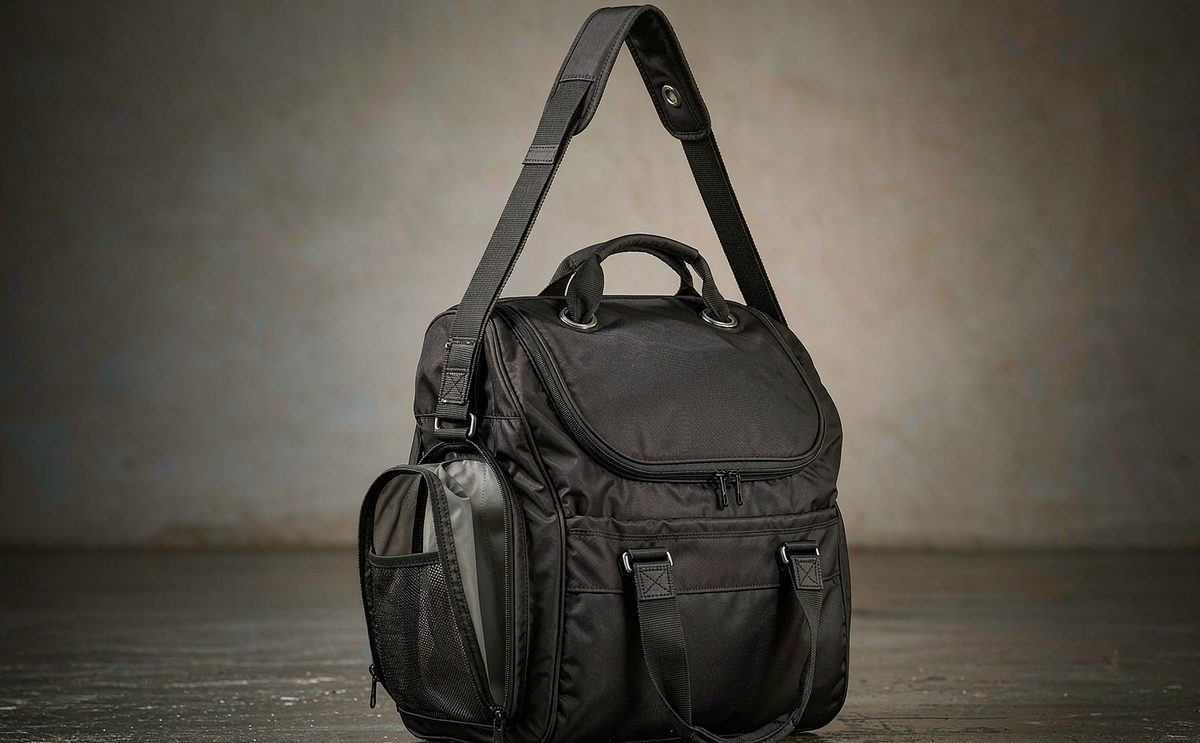
- Why one duffle silhouette has to serve two different backers
- Construction decisions that set the unit cost
- Fabric, lining and hardware grades a dual-use duffle needs
- Capacity, dimensions and where the carry-on line sits
- Shoe pocket, wet-dry separation and compartment count
- Strap systems: hand carry, shoulder sling and backpack conversion
- Branding methods that survive repeated laundering
- Cost breakdown for a 500 pcs duffle run
- Round-one sampling checks that catch real defects
- Inspection points that are specific to duffles
- Volumetric weight, packing and freight on a structured duffle
- Reward tier architecture built on one duffle body
- The RFQ pack for a duffle programme
Why one duffle silhouette has to serve two different backers
A duffle is the most forgiving format in a campaign reward catalogue. It has no frame to fit, no back panel to sculpt, and no suspension geometry to get wrong, which means a single body can be dressed up or down through fabric, trim and compartment count without changing the underlying pattern. For a creator working to a 500 pcs minimum per style and colourway, that matters more than anything else on the page: the minimum is committed once, and the reward ladder is then built by varying what goes inside and on top of the same shell.
The two audiences are genuinely different, though, and pretending otherwise produces a product that satisfies neither. The gym backer wants wipe-clean lining, a ventilated shoe pocket, a wet compartment for a towel or swimsuit, and a shape that drops into a locker without fighting it. The weekend backer wants a shoulder strap that does not bruise, a body that holds its shape when half empty, an external quick-access pocket for a passport or phone, and dimensions that survive a gate-side sizing cage. Both want the same thing at the margin: a bag that does not look like gym kit on a Friday night.
The production answer is a shared platform with a differentiated trim package. As a campaign bag specialist, the approach we recommend is to specify the base body once, lock it through sampling, and then create the tier differences through elements that do not disturb the sewing sequence: lining colour, zip puller finish, pocket configuration, strap padding and branding method. That keeps the 6-10 working days of sampling window intact for a second variant instead of restarting a full round, and it keeps the 35-50 day bulk window running across both tiers in one booking. Start from the custom duffle bags for Kickstarter category page if you are still fixing the body shape.
Key takeaways on duffle reward versatility
- One locked body supports three tiers; vary trim, lining and compartments, not the pattern.
- The 500 pcs minimum applies per style and colourway, not per campaign, so tier variants must be planned inside one commitment.
- Gym use drives lining and ventilation; weekend use drives structure and carry comfort.
- Branding method decides whether the bag survives a washing machine and still looks like a reward.
- Volumetric weight, not unit weight, sets the freight line on a structured duffle.
- Minimum order quantity
- 500 pcs per style / colourway
- Sampling
- 6-10 working days (12-15 for complex builds)
- Bulk production
- 35-50 days after deposit + approved pre-production sample
- Inspection
- AQL 2.5 to ISO 2859-1
- Trade term
- FOB Xiamen
- Payment
- T/T 30/70
- Production floor
- 4,950 m² SGS-verified, 137 staff, 7 lines, 149 machines
- Monthly capacity
- 200,000 pcs per month
- Programme contact
- service@junyuanbags.com
Construction decisions that set the unit cost
Two duffles can look identical on a campaign page and differ by 40 per cent in unit cost, and the difference is almost never the fabric. It is the construction sequence: how many panels, how many binding operations, whether the base is reinforced, and whether the lining is sewn in or floated. Every one of those adds minutes on the line, and minutes are what a quotation is actually made of. A creator who understands which operations cost money can spend deliberately instead of discovering the unit cost after the campaign has priced the reward.
| Construction choice | What it buys the backer | Effect on unit cost and calendar |
|---|---|---|
| Two-panel barrel body | Low cost, fast sewing, classic shape | Baseline; cheapest body on the line |
| Four-panel body with piped seams | Better shape retention and a tailored look | +8-14% unit cost, +2-3 sampling days |
| Reinforced base board with feet | Bag stands up when loaded, base resists abrasion | +6-10% unit cost, +1-2 days for board sourcing |
| Fully bound internal seams | No raw edges, cleaner interior, easier to wipe | +10-16% unit cost, adds a full sewing operation |
| Floating lining versus sewn-in lining | Floating is cheaper; sewn-in holds shape | +4-7% unit cost for sewn-in |
| Moulded end caps or structured ends | Premium silhouette, holds form empty | +20-30% unit cost, +4-6 sampling days |
The pattern to notice is that structure costs money twice: once in material and once in labour. A duffle that stands up empty needs a base board, feet, and usually a denser interlining, and each of those has to be sourced before sampling begins. If the reward tier does not need the bag to stand up, say so in the tech pack, because the absence of that requirement is worth real money across 500 units and often several days of calendar. Our crowdfunding bag guide walks through how specifications translate into a cost breakdown before you send an RFQ.
Fabric, lining and hardware grades a dual-use duffle needs
Dual use is hard on materials. A gym bag meets sweat, damp towels, chlorine and the inside of a car boot; a weekend bag meets pavement, airport floors, hotel bathrooms and overstuffing. The face fabric has to handle abrasion and light moisture, the lining has to handle wiping and odour, and the hardware has to handle being grabbed one-handed while the other hand holds a coffee. Specify all three in the tech pack with a denier, a weave and a coating, not with a photograph of a fabric you liked.
- Face fabric: 600D polyester with a PU backing is the workhorse grade; 900D or 1050D nylon costs more but resists abrasion noticeably better on a bag that meets pavement.
- Coating: a PU or TPU backing of 0.3-0.5 mm is usually enough for a duffle; heavier coatings crack at fold points after repeated packing.
- Lining: 210D polyester is standard; a 210D ripstop with an antimicrobial finish is the sensible upgrade where a shoe or wet compartment sits against it.
- Zips: number 8 or number 10 coil on the main opening, with a number 5 on internal pockets; a duffle main zip is the single most-loaded component on the bag.
- Pullers: metal gives a premium hand feel and adds roughly 8-12 grams; moulded rubber pulls are quieter in a gym locker room and cheaper at volume.
- Webbing: 25 mm for a shoulder strap is minimum; 38 mm with a removable pad is the point at which a loaded weekend load becomes comfortable.
- Hardware finish: specify plating and a salt-spray expectation; sweat and chlorine are corrosive and a cheap finish shows it within weeks.
Where a campaign promises recycled content, ask for the documentation at the sampling stage rather than the bulk stage. A recycled polyester claim needs a Global Recycled Standard certificate traced to the fabric lot, and an OEKO-TEX Standard 100 certificate covers the chemical safety of the finished textile. Both are documents a production team has to request from the material mill, and requesting them after bulk has been cut is how a compliance claim turns into a relabelling exercise. REACH and Prop 65 obligations apply on the European and Californian sides respectively, and CPSIA applies where a bag is marketed to children.
Capacity, dimensions and where the carry-on line sits
Capacity is the number backers shop by and the number creators get wrong. A 40-litre duffle sounds generous but packs differently from a 40-litre backpack, because a duffle wastes volume around soft items and a backpack wastes volume against a curved back panel. The practical approach is to fix the external dimensions first, derive the capacity from them, and then state both on the campaign page. Stating a capacity without dimensions invites returns from backers who measured a locker, a boot or a gate cage and found the bag did not fit.
| Capacity | Typical dimensions (cm) | Primary use the backer buys it for | Freight note |
|---|---|---|---|
| 20-25 L | 45 x 24 x 24 | Daily gym bag, swim kit, short training session | Packs flat; lowest volumetric cost |
| 30-35 L | 50 x 28 x 26 | Gym plus work day, overnight kit | Standard carton density; good freight efficiency |
| 40-45 L | 55 x 30 x 28 | Weekend trip, two-night stay, cabin-friendly | Near the carry-on sizer on some airlines |
| 50-60 L | 60 x 34 x 32 | Long weekend, sports team kit, group travel | Volumetric weight begins to dominate |
| 70-90 L | 72 x 38 x 36 | Expedition kit, checked luggage replacement | Chargeable weight driven by volume, not mass |
The carry-on question deserves a specific decision rather than a hope. Airlines publish their own cabin baggage allowances and they differ, and the widely used industry reference point is the IATA cabin baggage suggestion of a bag around 55 x 40 x 20 cm including handles and wheels. A duffle that exceeds that on any dimension may still be accepted on many carriers and refused on others, which is why the honest campaign copy says the bag is designed to fit most major carry-on sizers rather than promising compliance everywhere. Our custom travel bags for Kickstarter page carries the full discussion for travel-led programmes.
Shoe pocket, wet-dry separation and compartment count
Compartments are where a dual-use duffle either earns its price or becomes a bag with too many zips. Each pocket adds a zip, a panel, binding and a sewing operation, and each one is a place where the cost breakdown moves and a defect can hide. The discipline is to give every compartment a named job in the tech pack. If you cannot say what goes in it and why it needs to be separated from the main body, it is costing money and adding failure points for no backer benefit.
- Ventilated shoe pocket: worth including on a gym-led tier. Grommets or a mesh panel cost little and prevent the odour complaint that dominates duffle reviews.
- Wet-dry separation: a lined internal pocket with a welded or taped seam holds a swimsuit or towel. Taped seams add a step and should be quoted, not assumed.
- External quick-access pocket: the weekend backer uses this for passport, phone and boarding pass. Place it so it is reachable while the bag is on the shoulder.
- Internal mesh organiser under the lid: cheap, useful, and the cheapest way to make a simple body feel specified.
- End-cap pocket: often specified as a laundry or shoe compartment; it costs more than an internal pocket because it changes the end panel construction.
- Water bottle sleeve: adds a panel and a base; omit it unless the gym tier genuinely needs it, because bottles are the most common cause of interior flooding complaints.
Count the zips before you sign the quotation. A duffle with a main opening, an end shoe pocket, an external quick pocket and an internal wet pocket has four zips, and four zips is four components that can jam, misalign or show a wavy seam. On a 500 pcs run inspected at AQL 2.5, a zip defect rate that would be invisible on a 50-unit pilot shows up clearly in the inspection report, and zip defects are among the most common causes of a first inspection failing on bag programmes.
Strap systems: hand carry, shoulder sling and backpack conversion
The strap package is the fastest way to move a duffle between tiers, and it is also the most common source of comfort complaints. A gym duffle carried fifteen metres from a car to a locker needs almost nothing: two webbing handles with a padded wrap is enough. A weekend duffle carried eight hundred metres through a terminal needs a detachable padded shoulder strap with a swivel clip at each end, because a fixed strap on a loaded duffle twists, and a twisting strap is what makes backers say the bag pulls.
Backpack conversion is the expensive option and the one creators most often underestimate. Adding two padded shoulder straps means adding load points, reinforcement patches and a strap-hiding panel so the bag still looks like a duffle when the straps are stowed. That is real pattern work: budget 4-6 additional sampling days and expect the unit cost to move 15-25 per cent. If the conversion is the headline feature of the campaign, it is worth it. If it is a nice-to-have listed fifth on the feature list, it is the most expensive line on the specification and should be cut before tooling is ordered. Stitched load points should be tested for strength against a stated method such as ASTM D5034 for fabric tensile behaviour, and strap attachment should be load-tested on the sample rather than assumed.
Branding methods that survive repeated laundering
A gym bag gets washed. That single fact eliminates several otherwise sensible branding methods, and it is the reason a production partner will ask what the backer is expected to do with the bag before recommending a decoration route. Heat-transfer vinyl that looks crisp on a sample can lift at the edges after three warm washes; a screen print on a coated nylon needs the correct ink system or it cracks along the fold; embroidery is durable but adds weight and stiffness to a panel that wants to drape.
| Method | Durability in a gym-use bag | Cost and calendar impact |
|---|---|---|
| Flat embroidery | Excellent; survives washing and abrasion | Moderate cost; +3-5 sampling days for tape |
| 3D puff embroidery | Good; foam can compress over time | Higher cost; +4-6 sampling days |
| Screen print on coated fabric | Fair; needs the right ink or it cracks | Low unit cost; +3-5 days for films |
| Heat transfer vinyl | Poor to fair; edge lift after warm washes | Low cost; +2-4 days, fastest route |
| Woven label or patch | Excellent; the safest choice on a washable bag | Low cost; +2-3 days, no tooling |
| Rubber or silicone badge | Excellent and premium in hand feel | Higher cost; +15-20 days for tooling |
| Debossed or embossed PU patch | Good; edge wear over long use | Moderate cost; +8-12 days for tooling |
The recommendation that holds across most programmes is a woven label or a flat embroidery for the hero mark, and a rubber or woven badge only where the tier price supports it. Where a campaign wants a large graphic, print it on a panel that does not fold in use, and ask for a wash test on the pre-production sample rather than trusting the sample photograph. Branding coordinates belong in the tech pack as a measured distance from a named seam, not as a mark on a render.
Cost breakdown for a 500 pcs duffle run
A quotation for a duffle is built from material, trim, labour, decoration, packing and the overheads attached to the production window. Creators who ask only for a unit cost get a number they cannot act on; creators who ask for a cost breakdown can see which line to change when the number is too high. Below is a representative structure for a mid-specification 40-litre duffle at 500 pcs, expressed as a share of FOB unit cost, so you can see where the leverage is.
| Cost element | Share of FOB unit cost | Levers available to the creator |
|---|---|---|
| Face fabric and lining | 22-30% | Denier, coating weight, recycled content |
| Trim: zips, webbing, hardware | 14-20% | Zip brand and size, metal versus moulded pullers |
| Cutting and sewing labour | 18-26% | Panel count, bound seams, pocket count |
| Decoration and branding | 5-12% | Method, stitch count, number of placements |
| Internal structure: board, interlining | 4-8% | Whether the bag must stand up empty |
| Packing, polybag and cartons | 3-6% | Retail packaging versus bulk pack |
| QC, inspection and compliance | 2-5% | AQL level, in-line checks, testing |
| Overheads and margin | 10-16% | Volume, colourway count, window position |
On a 500 pcs duffle the three largest controllable lines are fabric, trim and labour, together 54-76 per cent of FOB unit cost. Cutting a pocket saves a few cents; dropping from 900D to 600D face fabric or removing a bound internal seam saves dollars. Make the big decisions in the tech pack, not in a post-quotation negotiation.
Volume pricing behaves predictably at this scale. Moving from 500 to 1,000 pcs on the same specification typically improves unit cost by 6-12 per cent, mostly through material purchase and line efficiency rather than through labour. Moving from one colourway to three splits the same run into smaller lots and pushes unit cost back up by 4-9 per cent, which is why the tier strategy and the colourway strategy have to be decided together. If you are weighing a pilot run against a full commitment, our low minimum bag production page explains how the 500 pcs figure interacts with re-orders.
Round-one sampling checks that catch real defects
Sampling on a duffle programme runs 6-10 working days for a standard build and 12-15 for a complex one. What matters is not the days but what you do with the unit when it arrives. A round-one sample review that consists of holding the bag and deciding whether it looks good will miss every defect that later costs money: zip alignment, binding tension, base board fit, strap load points and internal seam finish. Review against the pack, clause by clause, and write the revision list as a numbered document.
- Measure external dimensions at three points and compare against the pack tolerance, including the bag packed to stated capacity.
- Open and close every zip ten times and check for snagging at the ends and for wavy tape along the seam.
- Load the bag to its stated capacity with a representative weight and carry it for ten minutes; note strap twist and handle bite.
- Check the base board sits flat and the feet, if specified, are aligned and not pulling the panel.
- Inspect internal seams for raw edges, skipped stitches and uneven binding width.
- Confirm branding placement against the measured coordinate and photograph it beside a scale reference.
- Confirm the packing unit: pieces per carton, carton dimensions and whether retail packaging was inserted.
- Log every finding with a pack clause reference, then return one numbered revision list.
A second round is the normal outcome, not a failure, and budgeting two rounds before the campaign page goes live is what separates a page with real photography from a page with renders. Remote approval saves courier transit but not decision time, so the sample still needs to be measured and photographed deliberately. Our crowdfunding bag sample prototyping page sets out the document structure and the approval discipline in more detail.
Inspection points that are specific to duffles
Pre-shipment inspection runs at AQL 2.5 to ISO 2859-1 on campaign programmes, which means a statistically determined sample is drawn from the finished run and examined against agreed defect classes. The generic defect classes are the same as for any sewn bag, but the failures that actually appear on duffles are specific enough to be worth naming in the purchase order before production starts. Naming them is free; discovering them in a failed inspection costs ten to fifteen days.
- Main zip tape waviness along the opening, caused by feeding tension rather than by the zip itself.
- Handle and strap load-point stitching: check stitch density and bar-tack placement on every unit drawn.
- Base board misalignment, which shows as a bag that rocks or does not sit flat when empty.
- Binding width variation at the ends, the most visible cosmetic defect on an otherwise sound bag.
- Lining twist, where the lining is sewn in rotated and pulls the interior pockets out of alignment.
- Hardware plating defects: pits, colour variation between the puller and the slider, and rough slider action.
- Odour, which is a real defect class on a gym bag and should be checked on units drawn from sealed cartons.
- Print or embroidery registration drift across a run, checked against the approved pre-production sample.
An in-line check during the sewing window is worth more than a stricter final gate, because a defect trend found on day 20 is correctable while the same trend found on day 45 means sorting finished goods. Agree in advance who pays for a re-inspection, and keep the approved pre-production sample as the reference unit the inspector measures against. Our Kickstarter bag QA and QC page lists the defect classes we log and the evidence pack we issue with every inspection report.
Volumetric weight, packing and freight on a structured duffle
A duffle is mostly air, and air is what freight is charged on. Air and express carriers bill on chargeable weight, the greater of actual and volumetric weight, and a 45-litre duffle packed at low density can be billed at two to three times its actual mass. That is why a structured bag that holds its shape empty is a nicer product and a worse freight proposition, and why the packing specification belongs in the quotation rather than in a conversation after production.
Compression is the lever. Packing duffles nested, with the smaller sizes inside the larger, and shipping them flat rather than stuffed, can cut carton volume by 20-35 per cent and is usually worth more than negotiating the freight rate. Under FOB Xiamen the goods are delivered on board at Xiamen and risk transfers there, with ocean freight, insurance, clearance and inland delivery arranged on your side through a forwarder or fulfilment partner. Budget 18-30 days port to port to the US West Coast and 28-38 days to Northern Europe by sea, or 3-8 days by air when a subset of backers needs units ahead of an event. Our crowdfunding rewards fulfilment page covers the destination side of that handover.
Reward tiers are a promise about a date as much as about a product; the freight plan is part of the promise.
Kickstarter Creator Handbook
Reward tier architecture built on one duffle body
Once the body is locked, the tier ladder is a trim and compartment exercise, and it can be designed to make the middle tier the obvious choice. The pattern that works is to give the entry tier a visible but cheap upgrade path and the top tier one genuinely structural feature rather than three cosmetic ones. Backers upgrade for function they can name, and a laundry list of small differences reads as padding.
| Tier | What changes from the base body | Cost and calendar impact |
|---|---|---|
| Core: gym | Base body, 210D lining, ventilated shoe pocket, woven label | Baseline; single colourway at 500 pcs |
| Plus: gym and weekend | Removable padded shoulder strap, external quick pocket, taped wet pocket, embroidery | +9-15% unit cost; shares the same run |
| Deluxe: travel | Backpack conversion straps, reinforced base with feet, rubber badge, second colourway | +22-35% unit cost; +4-6 sampling days |
The arithmetic to watch is the colourway count, not the tier count. Three tiers built on one body in one colourway is a single 500 pcs commitment and one production booking. Three tiers in three colourways is three commitments and a longer window, and it is the most common reason a campaign order that looked comfortable at quotation stage becomes tight at production stage. Decide the colourway split during the RFQ, price the stretch variants then, and the re-order becomes a confirmation rather than a new negotiation.
The RFQ pack for a duffle programme
A request for quotation returns a unit cost, a sampling estimate and a production window in one exchange when the information in it is complete, and three rounds of questions when it is not. The seven items below are what a programme coordinator needs before a duffle can be quoted accurately. Missing hardware references and missing packing specification are the two omissions that most often turn an optimistic quotation into a revised one.
- Tech pack with external dimensions, tolerances, panel layout, material denier and coating, and hardware references.
- Quantity per style and per colourway, with the 500 pcs per style and colourway minimum understood.
- Compartment list with a named purpose for each pocket and the zip size specified for each opening.
- Branding method, stitch count or print colours, and placement coordinates measured from a named seam.
- Strap package: webbing width, padding specification, and whether backpack conversion is required.
- Target delivery month and destination market, so freight, duty and compliance can be quoted correctly.
- Inspection standard: AQL 2.5 to ISO 2859-1 unless you have a reason to tighten or loosen it.
Send that pack to request a quotation with your target delivery month and you will receive the three numbers that matter: unit cost, sampling days and bulk window. Payment runs T/T 30/70, with the 30 per cent deposit released on written approval of the pre-production sample and the 70 per cent balance due after a passed inspection and before cargo release. Our production team works from 4,950 m² of SGS-verified floor with 137 staff across 7 lines and 149 machines, running 200,000 pcs per month, and has supported 20+ crowdfunding campaigns since 2014.
- Custom duffle bags for Kickstarter
- Custom travel bags for Kickstarter
- Crowdfunding bag sample prototyping
- Kickstarter campaign bag QA and QC
- Low MOQ bag production for creators
- Crowdfunding rewards fulfilment
- Crowdfunding bag guide
- Request a quotation
Build three reward tiers on one duffle body
Send us your tech pack, target quantity per colourway and delivery month. As your production partner we will return a unit cost, a sampling estimate and a booked 35-50 day production window. Write to service@junyuanbags.com or use the quotation form.
Frequently Asked Questions
What is the minimum order quantity for a custom duffle bag on Kickstarter?
The minimum is 500 pcs per style and per colourway. A duffle offered in black, navy and olive counts as three separate 500 pcs commitments unless it is negotiated as one colourway split inside a single production run. Most creators launch one hero colourway at 500 pcs and add variants on the re-order.
How long does sampling take for a custom duffle bag?
Sampling runs 6-10 working days for a standard build and 12-15 working days for a complex one. Budget two rounds before the campaign page goes live, so 12-20 working days of calendar. Backpack conversion straps, moulded end caps and custom rubber badges are the features that push a build into the longer window.
Can one duffle design really serve both gym and weekend backers?
Yes, when the base body is locked once and the tiers are differentiated by trim, lining and compartments rather than by pattern. A 40 L body with a ventilated shoe pocket, a taped wet pocket and a removable padded shoulder strap covers both jobs, and the tier ladder can be built without restarting the sampling round.
Which capacity sells best as a dual-use duffle reward?
The 30-45 L band is the safest commercial choice. It holds a full gym kit with shoes, packs a two-night weekend, and stays near widely used cabin baggage dimensions. Below 25 L the weekend backer does not see a travel bag; above 60 L the gym backer sees a bag too large for a locker.
How much does a custom duffle bag cost per unit at 500 pcs?
FOB unit cost depends on fabric denier, trim specification and labour content. On a representative 40 L build, face fabric and lining account for 22-30 per cent of unit cost, trim 14-20 per cent, and cutting and sewing labour 18-26 per cent. Send a tech pack for a cost breakdown rather than a single number.
What branding method survives a washing machine on a gym bag?
Flat embroidery and woven labels are the safest, both surviving 30 or more warm washes. Heat-transfer vinyl is the fastest and cheapest route but tends to lift at the edges after 3 or 4 washes. Screen print on coated fabric needs the correct ink system or it cracks at fold points.
Should a duffle reward include backpack conversion straps?
Only if conversion is a headline feature of the campaign. It adds 15-25 per cent to unit cost and 4-6 sampling days, because it needs load-point reinforcement and a strap-hiding panel. If it sits fifth on the feature list, it is the most expensive line in the specification and should be cut before tooling.
What inspection standard should a duffle campaign specify?
AQL 2.5 to ISO 2859-1 at general inspection level II is the default for reward-grade bag runs. Retail-facing programmes sometimes tighten to AQL 1.5 and simple promotional pouches may accept AQL 4.0. Name the standard, the level and the defect classes in the purchase order before production starts.
What defects are most common on a duffle production run?
Main zip tape waviness, handle load-point stitching, base board misalignment and binding width variation are the 4 that appear most often. Odour is a genuine defect class on a gym bag and should be checked on at least 2 units drawn from sealed cartons. Naming these in the purchase order costs nothing.
How does volumetric weight affect duffle freight costs?
A duffle is mostly air, and carriers bill on chargeable weight, the greater of actual and volumetric. A 45 L duffle can be billed at two to three times its actual mass. Nesting sizes, shipping flat and compressing cartons typically cuts volume 20-35 per cent, which is worth more than rate negotiation.
What does FOB Xiamen mean for a duffle order?
FOB Xiamen means goods are delivered on board the vessel at Xiamen and risk transfers there. Packing, port delivery and loading are handled on our side; ocean freight, insurance, clearance and inland delivery to your fulfilment warehouse are yours. Budget 18-30 days transit to the US West Coast and 28-38 days to Northern Europe by sea.
When is the deposit due and how much is it?
Payment is T/T 30/70. The 30 per cent deposit falls due when the pre-production sample is approved in writing, and it releases materials and the production slot. The 70 per cent balance falls due after a passed pre-shipment inspection and before cargo release. The deposit must sit inside your funding target.
How many colourways should a first duffle campaign launch with?
One. Each additional colourway is a separate 500 pcs commitment and splits the run into smaller lots, typically pushing unit cost up 4-9 per cent. Launch a single hero colourway at 500 pcs and use the re-order to add a second colourway once demand is proven.
What compliance documentation does a duffle bag need?
It depends on destination and claims. REACH applies in the EU, Prop 65 in California, CPSIA where a bag is marketed to children, and EU GPSR for general product safety. A recycled content claim needs GRS certification traced to the fabric lot, and OEKO-TEX Standard 100 covers textile chemical safety. Request these at sampling stage.
People Also Ask
Is a duffle or a backpack the better first crowdfunding reward?
A duffle is usually cheaper and faster to sample because it has no frame or suspension, typically 6-10 working days against 12-15 for a structured travel backpack. A backpack carries a higher perceived value and supports a higher reward price. Choose the duffle when budget and calendar are tight.
How do I make a duffle feel premium without raising unit cost much?
Change the trim, not the body. A metal puller, a denser webbing on the shoulder strap, a contrast lining and a woven badge cost a few cents each and read as quality. Structural changes such as a moulded base or bound internal seams cost dollars.
What size duffle fits in a gym locker?
Most gym lockers take a bag up to roughly 45 x 25 x 25 cm, which points to a 20-30 L duffle. If the campaign targets gym backers specifically, publish external dimensions on the page rather than capacity alone, because lockers are measured in centimetres.
Can I add a second duffle size after the campaign funds?
Yes, but it is a new 500 pcs commitment and a new sampling round. Price the variant during the original RFQ so the re-order is a confirmation rather than a fresh negotiation, and expect 6-10 working days of sampling plus a share of a 35-50 day bulk window.
Should reward photography use a sample or a render?
A sample, always. Completing two sampling rounds before launch costs 12-20 working days and lets the page show a real unit, a real zip and real branding. Campaign pages built on renders routinely under-deliver on perceived quality and generate more post-campaign questions from backers.