Custom Travel Bags for Crowdfunding: Carry-On, Packing Cubes and Accessories
Should a travel campaign ship a single carry-on or a full system with packing cubes and accessories? A set lifts perceived value and pledge price, but every additional item is a separate 500 pcs style with its own sampling round. Carry-on bags sample in 6-10 working days, cubes in 6-10, production 35-50 days, and inspection sits at AQL 2.5 to ISO 2859-1. This article covers the specification, kitting and cost structure of a multi-piece travel reward.
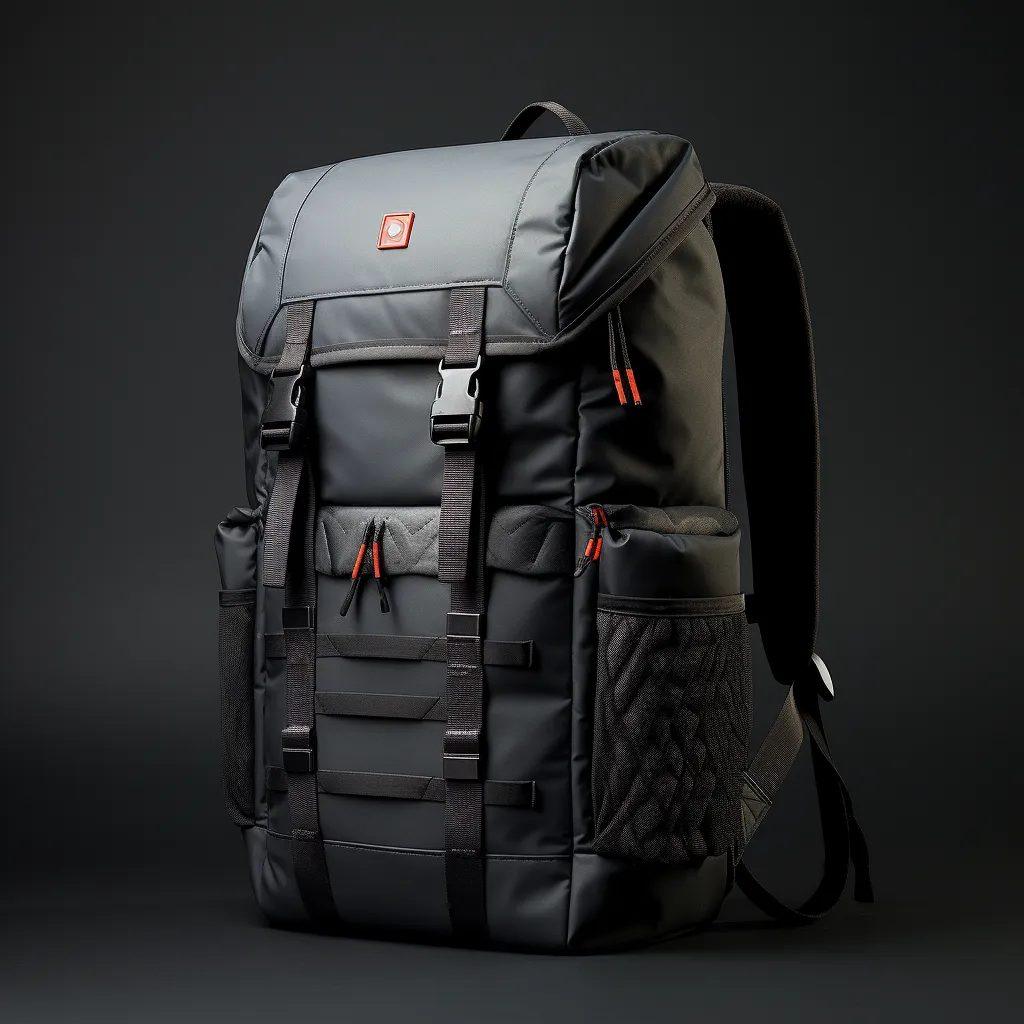
- Why a travel programme is a system, not a single bag
- Specifying the carry-on body: dimensions, frame and opening
- Packing cubes as a manufactured reward
- Costing a bag-plus-cube set: where the margin is won
- Accessory items that extend the reward without new tooling
- MOQ and the set problem: one style or several
- Sampling a multi-component travel set
- Compliance and labelling for a multi-piece reward
- Kitting, packing and the freight profile of a set
- Inspection across a multi-component order
- Reward tier design for a travel system
- The RFQ for a travel set programme
Why a travel programme is a system, not a single bag
The travel category rewards completeness. A backer comparing two carry-on rewards at similar prices will almost always favour the one that arrives with a cube set, a laundry pouch and a shoe bag, because travel is an activity that generates loose items and the promise of order is part of the product. That is a genuine marketing advantage and it is worth pursuing, provided the sourcing side is planned for what it actually is: a multi-style programme with a kitting operation at the end of it.
Each piece behaves differently in production. The carry-on body is a structured sewn product with a frame or base board, hardware and a branding programme; it sits at the long end of the sampling window and dominates the unit cost. A packing cube is a lightweight sewn product with a zip, a mesh panel and a webbing pull; it samples quickly, costs a fraction of the body, and packs at very high density. A laundry pouch or a shoe bag sits between the two. Treating them as one line item in a quotation is the most common planning error in this category, because it hides the fact that the cheap items are the ones that consume the packing labour.
The commercial logic still favours the set, and it favours it by a wide margin. A carry-on body that costs a given amount to make can be bundled with three cubes whose combined cost is a small fraction of the body, and the bundle can be presented at a pledge level that is 30-50 per cent above the bag alone. The margin on the bundle is better than the margin on the bag, because the perceived value of the cubes is far higher than their manufactured cost. The work is in getting the kitting, the packing and the minimum commitments right, which is what the rest of this article covers. Start from custom travel bags for Kickstarter for the format context.
Key takeaways on travel set programmes
- The body dominates unit cost; the cubes dominate packing labour and count as separate styles.
- Cube sets deliver perceived value far above manufactured cost, which is why bundles out-margin single bags.
- Every component is a 500 pcs style, so a four-piece set is a 2,000 pcs commitment in one colourway.
- Kitting must be specified: which pieces are assembled, how, and in what bag, before freight is quoted.
- Compliance labelling is required per piece when pieces are sold or used separately.
- Minimum order quantity
- 500 pcs per style / colourway
- Four-piece set commitment
- 2,000 pcs in one colourway
- Sampling
- 6-10 working days (12-15 for complex builds)
- Bulk production
- 35-50 days after deposit + approved pre-production sample
- Inspection
- AQL 2.5 to ISO 2859-1
- Trade term
- FOB Xiamen
- Payment
- T/T 30/70
- Production floor
- 4,950 m² SGS-verified, 137 staff, 7 lines, 149 machines
- Monthly capacity
- 200,000 pcs per month
Specifying the carry-on body: dimensions, frame and opening
The body is where the money and the calendar go, and it is the piece that determines whether the campaign survives contact with an airline. Two decisions dominate: the external dimensions and the opening geometry. Dimensions decide the carry-on claim; opening geometry decides whether the bag is pleasant to live with, and it is the attribute backers mention most in reviews after durability.
On dimensions, be conservative and be honest. Airlines publish their own cabin baggage allowances and they differ, and the widely used industry reference point is the IATA cabin baggage suggestion of a bag around 55 x 40 x 20 cm including handles and wheels. A bag at 55 x 36 x 23 cm fits many sizers and fails others, so campaign copy should say the bag is designed to fit most major carry-on sizers rather than promising universal acceptance. Oversizing by three centimetres to gain four litres is a bad trade when the campaign's credibility rests on the carry-on claim.
| Opening type | Backer experience | Cost and calendar effect |
|---|---|---|
| Full clamshell, 180-degree zip | Packs flat like a suitcase; best for cubes | Baseline for a travel body |
| Top-load U-zip | Familiar, cheaper, harder to pack | -6-10% unit cost, -1-2 sampling days |
| Three-sided D-zip | Fast access, popular on travel backpacks | +4-8% unit cost, +2-3 sampling days |
| Roll-top with side zip | Variable volume, weather resistant | +8-14% unit cost, +3-5 sampling days |
| Front panel drop-down | Structured, premium feel, suits cubes | +12-20% unit cost, +4-6 sampling days |
The internal structure is the second cost decision. A travel body needs at least a base board and, if it is a backpack format, a frame sheet and a back panel; a duffle-format carry-on needs less. If the bag must stand up empty for the campaign photography to work, that is a specification with a cost attached and it should be written down rather than assumed. Our custom bags for Kickstarter pillar page carries the wider format comparison for creators still deciding between a backpack-format and a duffle-format carry-on.
Packing cubes as a manufactured reward
A packing cube looks like the simplest item in the set and it is the one most often specified badly, because creators assume a cube is a cube. It is not: the difference between a cube made from 70D ripstop with a number 3 coil zip and one made from 210D with a number 5 zip is felt immediately by the backer, and the wrong mesh specification produces a cube that tears at the seam after a dozen trips. Specify the cube as carefully as the body, because it is the piece the backer touches every single trip.
- Shell fabric: 70D or 105D ripstop nylon is the standard for a lightweight cube; 210D polyester is heavier, cheaper and less compressible.
- Mesh panel: a no-seeum or fine mesh for ventilation; coarse mesh snags on garment labels and looks cheap on a premium set.
- Zip: number 3 or number 4 coil with an auto-lock slider; a non-locking slider on a cube lets the zip creep open under compression.
- Puller: a webbing loop or a moulded pull; metal pulls on cubes add weight and rattle inside the body.
- Seams: bound or turned internal seams; raw edges inside a cube are the single most visible quality signal.
- Handle: a webbing loop on one corner, bar-tacked, so a cube can be pulled from a packed bag.
Cube sizing is a system decision rather than an aesthetic one. A three-cube set is normally specified as small, medium and large with capacities around 3, 6 and 12 litres, chosen so the three nest inside the body and fill it efficiently. The test to run at sampling is physical, not arithmetic: place the cubes in the body, close it, and check the body still closes comfortably and the cubes do not fight the corners. A set that fits on paper and bulges in reality will generate the packing complaint that dominates travel-set reviews.
| Cube | Capacity | Suggested dimensions (cm) | Cost position |
|---|---|---|---|
| Small | 3 L | 25 x 18 x 8 | Lowest; smallest marker and zip |
| Medium | 6 L | 32 x 23 x 9 | Low; shares trim with the others |
| Large | 12 L | 40 x 30 x 10 | Low; largest fabric area in the set |
| Shoe cube | 8 L | 34 x 22 x 12 | Moderate; needs a stronger base panel |
| Laundry pouch | 10 L | 38 x 28 x 8 flat | Lowest; often a drawcord, no zip |
Costing a bag-plus-cube set: where the margin is won
The economics of a travel set are unusually favourable, and it is worth understanding exactly why before negotiating. A three-cube set typically adds 8-15 per cent to the manufactured cost of a carry-on body, while it supports a bundle price 30-50 per cent above the bag alone. That gap exists because backers price cubes against retail cube sets rather than against their manufactured cost, and because the marginal cost of a cube inside an existing production booking is genuinely low: the material is cheap, the sewing is fast, and the trim is shared.
| Component | Share of set FOB cost | Perceived share by the backer |
|---|---|---|
| Carry-on body | 78-88% | 60-70% |
| Three-cube set | 8-15% | 25-32% |
| Laundry pouch or shoe bag | 2-5% | 5-8% |
| Kitting, carton and insert | 2-4% | Not visible |
| Compliance and testing | 1-3% | Not visible |
The margin is won on perceived value and lost on kitting. Assembling the set — folding, nesting, inserting a card, bagging and cartoning — is manual work that is quoted per unit and can quietly consume the advantage if it is not specified tightly. Two instructions keep it under control: state the nesting sequence in the packing specification, and state whether the set ships nested inside the body or as a separate retail-style pack. Nested inside the body saves carton volume and removes a packing step; a separate pack looks more retail and costs more in both labour and freight.
A three-cube set adds roughly 8-15 per cent to set cost and supports a bundle price 30-50 per cent above the bag alone. No other single line in a travel specification delivers that ratio. Protect it by specifying the nesting sequence and the packing method before the freight quotation is requested.
Accessory items that extend the reward without new tooling
Accessories are where a campaign can add visible generosity at low cost, provided each one is chosen for what it costs to make rather than for how it photographs. The rule is simple: an accessory that reuses existing materials, existing trim and an existing sewing operation is cheap, and one that introduces a new material, a new component or a new process is not. Sorting the accessory list by that test usually reorders it significantly.
- Laundry pouch in matching fabric with a drawcord: reuses the shell fabric and a cord lock; among the cheapest additions available.
- Shoe bag in the cube fabric with a webbing loop: reuses the cube marker and trim.
- Cable or tech pouch in lining fabric: reuses lining offcuts and a small zip; very low marginal cost.
- Compression strap set in matching webbing: reuses webbing and existing hardware.
- Luggage tag in PU or webbing with a printed or debossed mark: low cost, high perceived value, and a branding surface.
The accessories to be careful with are the ones that look cheap but are not: a moulded component needs tooling and adds 15-20 days, a metal component needs plating and a corrosion expectation, and anything with electronics adds an assembly stage, a safety check and a compliance obligation that can reach into battery transport rules. Where a creator wants one of these, the right move is to make it the headline of a top tier rather than a bundled extra, so the cost sits in the tier price where it belongs.
MOQ and the set problem: one style or several
The minimum is 500 pcs per style and colourway, and in a travel set every distinct piece is a distinct style. A body plus a three-cube set is four styles and a 2,000 pcs commitment in one colourway. Add a laundry pouch and it is five styles and 2,500 pcs. Add a second colourway and the whole thing doubles. This is the constraint that quietly decides how generous a travel set can be, and it needs to be modelled before the reward ladder is published rather than after.
| Set configuration | Styles | Total pcs, one colourway | Assessment |
|---|---|---|---|
| Body only | 1 | 500 pcs | Lowest risk, weakest reward story |
| Body + 3 cubes | 4 | 2,000 pcs | Standard set; the recommended configuration |
| Body + 3 cubes + laundry pouch | 5 | 2,500 pcs | Strong story; needs proven demand |
| Body + 3 cubes, 2 colourways | 8 | 4,000 pcs | Retail-scale commitment |
| Cubes only as add-on | 3 | 1,500 pcs | Low-risk entry into the category |
Two structural workarounds exist. The first is to treat the cube set as a single style with size variants inside one commitment, which is a negotiation rather than a rule and should be raised during the RFQ. The second is to launch the body first at 500 pcs and offer the cube set as an add-on priced during the original RFQ, so the cubes become a re-order rather than part of the first commitment. Our low minimum bag production page explains how creators structure these split commitments in practice.
Sampling a multi-component travel set
Sampling runs 6-10 working days for a standard build and 12-15 for a complex one. On a set, the practical approach is to sample the body and the largest cube together in round one, because those two carry almost all the risk, and to approve the smaller cubes against the largest once its construction is settled. Sampling every piece independently doubles the decision load and produces five reference standards that will disagree with each other at inspection.
- Release the body and the largest cube to the sample line in one booking, with a written start and completion date.
- Measure the body externally at three points, including handles and any protrusion, against your stated carry-on claim.
- Test the clamshell or D-zip opening under load with the body packed to capacity; check zip track and corner stress.
- Place the full cube set inside the body, close it, and confirm it closes without strain and the corners are not fighting.
- Open and close every cube zip ten times and check for creeping on a non-locking slider.
- Confirm the nesting sequence physically and record it as the packing specification.
- Return one numbered revision list covering all pieces, each item tied to a pack clause and a component identifier.
- Approve the body as the reference unit and the largest cube as the reference for the remaining cube sizes.
One test deserves specific mention because it is the one that generates the most post-delivery complaints: the fit test. A cube set specified arithmetically to fill a body usually fails physically, because the body's internal dimensions are smaller than its external ones by the thickness of the structure and the lining, and because cubes bulge when filled. Always specify cube dimensions from a measured internal dimension of the approved body sample, never from the body's external figure. Further approval discipline is set out on our crowdfunding bag sample prototyping page.
Compliance and labelling for a multi-piece reward
A multi-piece reward raises a question that a single bag does not: which pieces need their own labelling. The practical answer is that any piece that a backer might use or resell separately should carry its own identification, and the outer piece should carry the full compliance information for the set. Where pieces are permanently bundled and not sold separately, a single labelling set on the body plus a material identification on each cube is usually sufficient, but that judgement depends on the destination market and should be confirmed rather than assumed.
On substance, the obligations are the familiar ones and they attach to the material set rather than to the piece count. REACH applies in the European Union, Prop 65 in California, CPSIA where an item is marketed to children, EU GPSR for general product safety, and OEKO-TEX Standard 100 or GRS where textile safety or recycled content is claimed. One test programme on one material set normally covers every piece in the set, which is another argument for specifying a common material across the body and the cubes. Request the certificates at sampling stage, because a claim made on the campaign page has to be defensible by the time the inspection report is issued.
Kitting, packing and the freight profile of a set
Kitting is the operation that turns five production runs into one reward, and it is quoted per unit. It covers folding or nesting the pieces, inserting any printed card, bagging, assembling the set, and cartoning. Specified tightly it is a small line; left open it becomes the difference between a set that ships on budget and one that does not. State the nesting sequence, the bag type, whether an insert card is included and who prints it, the pieces per carton and the carton dimensions.
Freight on a travel set is dominated by the body, because the body is the volume. Nesting the cubes inside the body is the single most effective lever available: it removes the cube volume from the shipment entirely, typically saving 12-20 per cent of chargeable weight on the set. Under FOB Xiamen the goods are delivered on board at Xiamen and risk transfers there; ocean freight, insurance, clearance and inland delivery to your fulfilment point are arranged on your side. Budget 18-30 days port to port to the US West Coast and 28-38 days to Northern Europe by sea, or 3-8 days by air for a partial shipment. Our crowdfunding rewards fulfilment page covers the destination side of that handover.
Inspection across a multi-component order
Inspection runs at AQL 2.5 to ISO 2859-1, and on a set the question is how to structure the draw. The recommended structure is one inspection visit with a sub-lot per component, sized under general inspection level II, reported in a single document. That gives one visit cost, one report, and the ability to see whether a defect is concentrated in the body, in the cubes, or across the kitting operation — which is the diagnosis that actually matters when something goes wrong.
- Confirm the sub-lot size per component before inspection day so the draw cannot be disputed afterwards.
- State one defect class list and apply it to every component; a relaxed class for the cheap pieces is how a set develops a weak link.
- Inspect the kitting outcome, not only the pieces: correct piece count, correct nesting, correct insert, correct carton marking.
- Use the approved body sample as the reference for shade and branding, and check cube shade against the body shade under the same light.
- Check cube zip action on every unit drawn; a creeping slider is the most common cube defect and is invisible in a photograph.
- Require the report to be issued to you before the 70 per cent balance is released, not only to your production partner.
The defect that is unique to sets is a shortage or a mismatch inside the kit: a carton with two cubes instead of three, or a cube in the wrong colour. It is a packing failure rather than a sewing failure, and it is prevented by specifying a piece-count check at the packing station and a carton weight tolerance check at the loading station. Both are cheap controls. Our Kickstarter bag QA and QC page lists the defect classes we log and the evidence pack issued with an inspection report.
Reward tier design for a travel system
A travel system gives a campaign something a single bag does not: a natural ladder where each step adds a piece rather than a feature. That is easier for a backer to evaluate than a feature ladder, because the added value is physical and countable. The structure that works is body alone at the entry, body plus cubes at the core, and body plus cubes plus accessories at the top, with the core tier priced to be the obvious choice.
| Tier | Contents | Cost position | Role in the ladder |
|---|---|---|---|
| Core | Carry-on body only | Baseline | Anchor; proves the body is affordable |
| Plus | Body + three-cube set | +8-15% versus core | The tier you want to sell |
| Complete | Body + cubes + laundry pouch + shoe bag | +12-22% versus core | Headline tier; highest pledge |
| Add-on | Cube set sold separately | Priced during the RFQ | Captures backers who already own a bag |
The add-on line is worth planning deliberately. A cube set offered as a separate add-on captures backers who like the cubes but already own a bag they trust, and it does so without changing the body commitment, because the cube set is already a style in the programme. Price it during the original RFQ so it can be switched on the moment the campaign funds, and hold the re-order option open for the case where it outsells expectations. The crowdfunding bag guide covers pledge ladder mechanics from the campaign side.
The RFQ for a travel set programme
A set RFQ is quoted in one exchange when the component list and the kitting instruction are stated explicitly, and in three exchanges when they are not. The items below are what a programme coordinator needs before a travel set can be priced accurately. The two omissions that most often turn an optimistic quotation into a revised one are a missing kitting instruction and a missing packing specification.
- Tech pack for the carry-on body: external dimensions with tolerance, opening geometry, materials, hardware references, structure.
- Cube specification: shell fabric, mesh, zip size and slider type, seam finish, handle, and capacity per cube.
- Accessory list, with each item's material and whether it reuses existing trim.
- Quantity per style and per colourway, with the 500 pcs per style and colourway minimum understood.
- Kitting instruction: nesting sequence, bag type, insert card, pieces per carton, carton dimensions.
- Target delivery month and destination market, so freight, duty and compliance are quoted correctly.
- Inspection standard: AQL 2.5 to ISO 2859-1, with the sub-lot per component structure stated.
Send that pack to request a quotation with your target delivery month and you will receive a unit cost per component, a sampling estimate and a booked 35-50 day production window. Payment runs T/T 30/70, with the 30 per cent deposit released on written approval of the pre-production sample and the 70 per cent balance due after a passed inspection and before cargo release at FOB Xiamen. Our production team works from 4,950 m² of SGS-verified floor with 137 staff across 7 lines and 149 machines, running 200,000 pcs per month, and has supported 20+ crowdfunding campaigns since 2014.
- Custom travel bags for Kickstarter
- Custom bags for Kickstarter campaigns
- Low MOQ bag production for creators
- Crowdfunding bag sample prototyping
- Kickstarter campaign bag QA and QC
- Crowdfunding rewards fulfilment
- Crowdfunding bag guide
- Request a quotation
Turn your carry-on into a travel system
Send us the body tech pack, the cube specification and your kitting instruction. As your production partner we will return a per-component unit cost, a sampling plan and a booked production window. Write to service@junyuanbags.com or use the quotation form.
Frequently Asked Questions
What is the minimum order quantity for a travel bag plus packing cube set?
Each distinct piece is a style at 500 pcs per style and colourway. A body plus a three-cube set is four styles and 2,000 pcs in one colourway. Add a laundry pouch and it becomes five styles and 2,500 pcs. Raise the possibility of treating the cube set as one style during the RFQ.
How much does a three-cube set add to the cost of a carry-on reward?
A three-cube set typically adds 8-15 per cent to the manufactured cost of a carry-on body, while supporting a bundle price 30-50 per cent above the bag alone. That gap is why bundles out-margin single bags, provided the kitting and packing specification is controlled.
How long does sampling take for a travel set?
Sampling runs 6-10 working days for a standard build and 12-15 for a complex one. Sample the body and the largest cube together in round one, since those two carry most of the risk, then approve the smaller cubes against the largest once its construction is settled.
What fabric should packing cubes be made from?
A 70D or 105D ripstop nylon is the standard for a lightweight cube. A 210D polyester is cheaper and heavier but less compressible. Use a fine no-seeum mesh for the ventilation panel, and specify a number 3 or number 4 coil zip with an auto-lock slider.
How should cube dimensions be chosen to fit the carry-on body?
From the measured internal dimensions of the approved body sample, never from the external figure. Internal dimensions are smaller by 2-4 cm in each direction because of structure and lining thickness, and cubes bulge by a further 1-2 cm when filled. Always run a physical fit test during sampling, not an arithmetic one.
What is the best way to ship a travel set?
Nest the cubes inside the body. The body dominates the volume, so removing the cube volume from the shipment typically saves 12-20 per cent of chargeable weight. Both ocean and air freight bill on chargeable weight, the greater of actual and volumetric.
Do packing cubes need their own compliance labelling?
Any piece a backer might use or resell separately should carry its own identification, and the outer piece should carry full compliance information for the set. Where pieces are permanently bundled, 1 labelling set on the body plus material identification on each of the 3 cubes is usually enough. Confirm against the destination market.
What inspection structure suits a multi-component travel order?
One inspection visit with a sub-lot per component sized under ISO 2859-1 general inspection level II, reported in a single document at AQL 2.5. That gives one visit cost and shows whether a defect sits in the body, in the cubes, or in the kitting operation.
What is the most common defect on a travel set order?
A shortage or mismatch inside the kit: a carton with 2 cubes instead of 3, or a cube in the wrong colour. It is a packing failure, not a sewing failure. Specify a piece-count check at the packing station and a carton weight tolerance check at loading.
Which carry-on opening geometry should a crowdfunding bag use?
A full 180-degree clamshell is the baseline for a travel body because it packs flat and suits cubes. A top-load U-zip is 6-10 per cent cheaper but harder to pack. A front drop-down panel costs 12-20 per cent more and reads as premium.
Can a carry-on reward promise airline compliance?
Only with care. Airlines publish differing allowances, and the widely used industry reference is the IATA cabin baggage suggestion of roughly 55 x 40 x 20 cm. Honest copy says designed to fit most major carry-on sizers rather than promising universal acceptance.
When are payments due on a travel set order?
Payment is T/T 30/70. The 30 per cent deposit falls due on written approval of the pre-production sample and releases materials and the production slot. The 70 per cent balance falls due after a passed pre-shipment inspection and before cargo release at FOB Xiamen.
Should the cube set be bundled or sold as an add-on?
Both. Bundle it in the 2 upper tiers to lift perceived value, and offer it separately as an add-on to capture backers who already own a bag. Price the add-on during the original RFQ so it can be switched on the moment the campaign funds.
How many accessories should a travel set include?
Only the 3 or 4 that reuse existing materials, trim and sewing operations. A laundry pouch, a shoe bag and a webbing luggage tag are all cheap. Anything moulded adds 15-20 days for tooling, and anything metal or electronic introduces plating or safety obligations that belong in a top-tier price.
People Also Ask
Are packing cubes worth adding to a crowdfunding travel reward?
Yes. They add 8-15 per cent to manufactured cost while supporting a bundle price 30-50 per cent higher, because backers value cubes against retail cube sets rather than against their production cost. The risk is kitting and packing labour, which must be specified.
How many cubes should a starter set contain?
Three: small, medium and large at roughly 3, 6 and 12 litres. That covers undergarments, garments and bulkier items, nests inside the body, and keeps the set at four styles including the body under the 500 pcs per style minimum.
Can I launch the body first and add cubes later?
Yes, and it is a sensible risk-reducing path. Launch the body at 500 pcs, offer the cube set as an add-on priced during the original RFQ, and treat the cubes as a re-order once demand is proven rather than part of the first commitment.
What makes a packing cube feel cheap to a backer?
Raw internal seams, a coarse mesh that snags, and a non-locking zip slider that creeps open under compression. Bound or turned internal seams, fine no-seeum mesh and an auto-lock slider are the three specifications that prevent that impression.
Does a travel set cost more to freight than a single bag?
Marginally, if the cubes are nested inside the body it is almost free. The body dominates the volume, so nesting removes the cube volume from the shipment and typically saves 12-20 per cent of chargeable weight against shipping them separately.