Indiegogo Backpack MOQ: A Small-Batch Strategy for Flexible Funding
A backpack is the most MOQ-sensitive reward on Indiegogo, because a structured bag with custom hardware carries the largest setup of any bag category. The working minimum is 500 pcs per style and per colourway, sampling runs 6 to 10 working days and 12 to 15 on a complex build, and bulk takes 35 to 50 days. Hit it with one shell in one or two colourways rather than with three sizes. Use a modular construction so a 30 L and a 22 L share panels, hardware and tooling, and treat the surplus from a partially funded campaign as inventory for InDemand rather than as waste.
- What the 500 pcs minimum actually applies to
- Flexible funding and the shortfall volume
- One shell, three products: modular design against the minimum
- Colourway consolidation that keeps the page attractive
- Material choices that lower the effective minimum
- Sharing components across tiers and across campaigns
- The cost curve at 150, 300 and 500 units
- The surplus is not dead stock
- InDemand cadence and the second run
- A small-batch plan for an Indiegogo backpack
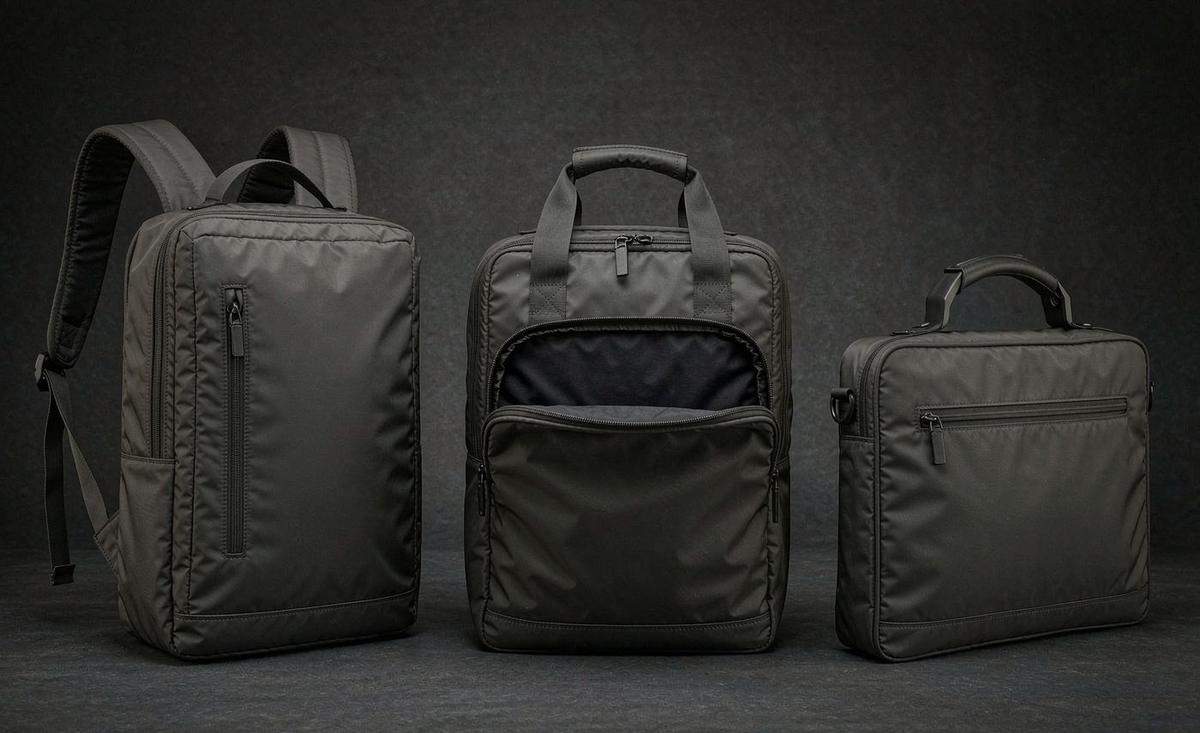
A backpack is the reward that teaches creators what a minimum order quantity means, and it does it the hard way. The number is 500 pcs per style and per colourway, and a structured backpack with custom hardware carries the largest setup cost of any bag category, so the penalty for missing it is also the largest. This guide is for creators planning a backpack reward on Indiegogo with a realistic chance of missing target, and it is about making the minimum work for the campaign rather than against it: a modular shell that serves several products, colourway consolidation that keeps the page attractive, material choices that reduce the fabric minimum, and a plan for the surplus. The production constants hold: sampling is 6 to 10 working days, 12 to 15 on a complex construction, bulk is 35 to 50 days, inspection runs to AQL 2.5 to ISO 2859-1 and the terms are FOB Xiamen with T/T 30/70.
What the 500 pcs minimum actually applies to
The minimum is applied per style and per colourway, and the two halves of that sentence are separate obligations. A style is a distinct construction: a 30 L backpack and a 22 L backpack are two styles even if they look similar, because they have different panels, different pattern pieces and different cutting markers. A colourway is a distinct fabric or trim combination on the same style. One style in three colours is 1,500 units. Two styles in two colours is 2,000.
The minimum exists because of setup. A backpack line has to cut the pattern, set the machines, thread the right thread, load the right webbing and fit the right hardware, and every one of those steps is the same whether 50 or 5,000 units follow. There is also a material minimum, which is the one creators feel more directly: a fabric mill sells by the roll, a zip supplier sells in length increments, and a hardware supplier sells in lots. A backpack uses more different materials than any other bag, so it hits more minimums at once.
The third obligation is the least discussed and often the largest: tooling. A custom moulded puller, an embossed patch die, a branded buckle or a bespoke back panel mould each has a tooling cost, and each is priced regardless of the order size. On a backpack with three custom components, the tooling can be a larger line than the fabric. The discipline is to ask for tooling as a separate line in the quotation, because then it can be amortised deliberately rather than hidden in a unit price that will be compared against a competitor's. The units and colourways are explained further in how bag MOQ works.
Flexible funding and the shortfall volume
Flexible funding means a campaign keeps what it raises, so a backpack campaign that lands at 40 percent of target still owes a reward. It also means the shortfall is knowable before it happens, which is the useful part. Model three cases: the target case, a two thirds case and a 40 percent case. For each, work out how many backers land on the backpack tier, because the headline number is not the order. On a typical three tier structure the backpack tier draws 45 to 60 percent of backers.
The arithmetic is unkind in the 40 percent case. A campaign targeting 1,200 backers with a backpack tier drawing half of them expects 600 units and meets the minimum. At 40 percent of target it expects 240, which is under it, and the unit cost at 240 is meaningfully higher than at 500 because the setup and the material minimums spread across less than half the volume. The campaign is now producing its most expensive reward at the point it has the least money, which is exactly the situation flexible funding creates.
The two responses that work are structural rather than financial. The first is to put the backpack at a tier high enough to carry a 240 unit unit cost, which usually means a price 15 to 25 percent above the comfortable one. The second is to make the backpack an add-on available at every tier, which lifts the attach rate and therefore the volume without a new style. The response that does not work is discovering the minimum after the campaign closes, because at that point the only lever left is the price and the price was published.
One shell, three products: modular design against the minimum
The most effective MOQ tactic for a backpack is modular design. A modular construction uses one base shell, one back panel and one harness across several products, and differentiates them with a component that is cheap to change. A 30 L travel pack and a 22 L day pack can share the back panel, the shoulder straps, the harness webbing, the zip specification and all of the hardware, differing only in the length of the body panel. In production terms they share a marker, a hardware set and most of the setup.
What this does to the minimum depends on how the supplier counts a style, and that is a conversation to have before the design is fixed rather than after. In practice a shared shell with a different body panel length is usually treated as one style with a size variant rather than as two styles, because the cutting marker and the hardware are common. That can bring two products inside a single 500 unit minimum instead of two. It is the single largest saving available to a backpack campaign and it is decided at the drawing stage.
The differentiation then comes from something cheap. A front panel in a different fabric, a different printed patch, a removable hip belt, a different internal divider or a laptop sleeve at a different size all create a visibly different product from a shared shell. Each of them is a small production event rather than a new style, and each can be introduced as a stretch goal without a second minimum. A stretch goal that adds a removable hip belt costs a few dollars; one that adds a new size costs 500 more units.
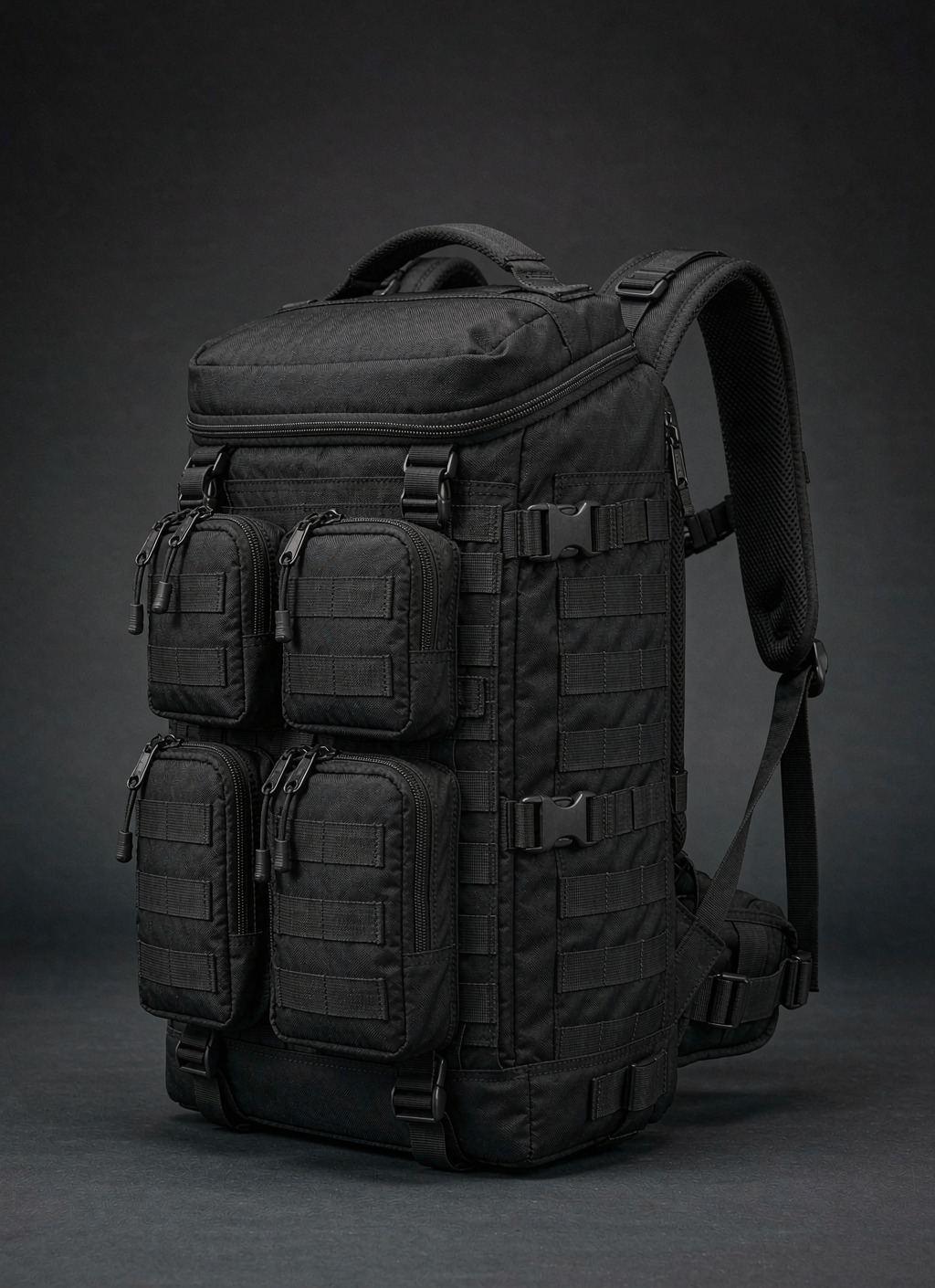
There is a design cost to modularity, and it is worth being honest about it. A modular shell is a compromise: the 22 L will carry a harness designed for the 30 L, and one of the two will be slightly over specified. In most cases the compromise is invisible to the backer and it buys a viable production plan. Our production team will tell you where the compromise lands in a given design, and will say whether it is worth it. On the campaigns this programme has supported since 2014, it usually is.
Colourway consolidation that keeps the page attractive
Colourways are the most expensive thing on a backpack page, because a printed or a dyed outer in a second colour usually carries its own setup and its own minimum. Four colourways of a structured backpack is a 2,000 unit commitment, which very few Indiegogo campaigns can absorb. The page still needs to look like there is a choice, and three patterns deliver that without four minimums.
The first is a base colour with an accent. One outer fabric in one colour, with the zip tape, the puller, the webbing and the binding in a second. The accent components are shared across the range in that one colour, and the outer stays a single fabric lot. This reads as two or three products on a page and it is one colourway in production. The second is a shared outer with a different printed panel, where the print screen is shared and only the substrate changes.
The third is the unlock pattern: launch with one colourway, and promise a second at a defined funding level. This is genuine because the stretch goal funds the second run, and it protects the campaign from a 1,000 unit commitment on day one. The rule for making it credible is to state the unlock level and the first run quantity on the page. A page that says 500 units in black, with a second colourway unlocking at 150 percent, is telling the truth about its production plan and gains trust from it.
Material choices that lower the effective minimum
Not all materials carry the same minimum, and a backpack campaign can lower its effective minimum by choosing materials that are stock items. A stock fabric in a supplier's standard colour range has no weaving minimum, because the mill holds it. A bespoke dyed fabric has a lot minimum, which for a woven can be several hundred metres and for a coated fabric more. The saving from using a stock colour is not only the money, it is the two to four weeks of lead time the mill would have needed.
The same logic applies to hardware and to zips. A standard coil zip in a standard colour is a stock item with a length increment; a branded or a custom coloured zip has a minimum and a lead time. A standard ladder lock or buckle is a stock item; a custom moulded one has a tooling cost and a moulding lot. A backpack has more of these components than any other bag, so the cumulative effect is large. Ask which of the specified components are stock items and mark each one in the tech pack.
| Component | Stock option | Custom option | Impact on the effective minimum |
|---|---|---|---|
| Outer fabric | Mill stock colour in a standard weave | Bespoke dyed or woven to order | Removes a lot minimum of several hundred metres |
| Coating | Standard PU on a stock base | Specialised coating to order | Removes a coating run minimum and two to four weeks |
| Zip | Standard coil in a standard colour | Branded teeth or a custom tape colour | Removes a length lot and a lead time |
| Buckles and ladder locks | Catalogue acetal hardware | Custom moulded tooling | Removes the tooling cost entirely |
| Pullers | Standard moulded with a printed mark | Custom moulded with a logo | Removes a tooling cost of several hundred dollars |
| Webbing | Standard width in a stock colour | Woven jacquard with a logo | Removes a weaving minimum |
There is a counter argument worth hearing. A backpack built entirely from catalogue components looks like one, and a campaign is competing on a page against brands with distinctive materials. The balance most campaigns land on is to stock the invisible components and customise the two that are visible: the outer fabric or the print, and the puller. That gives a distinctive product with one lot minimum and one tooling cost, which a 500 unit run can absorb.
Sharing components across tiers and across campaigns
The same logic that shares a shell across sizes shares components across tiers. A two tier backpack campaign can differentiate a standard and a premium tier with an internal organiser panel, a laptop sleeve size or a hip belt, all of which share the base construction and the hardware. The premium tier then carries a higher price and a small incremental cost, which is exactly the structure a campaign wants, and the whole thing is one production event.
Sharing across campaigns is the version creators forget. A creator who plans to run a backpack in 2026 and a duffle in 2027 can specify the same zip, the same webbing, the same hardware finish and the same backing fabric across both, and the second product then inherits a stocked component set. Across the production programme, the same principle is how a 7 line facility with 149 machines and a capacity of 200,000 pcs per month keeps short runs affordable for small brands.
The mechanism for this is a recorded specification. At the first order, the production programme records the fabric references, the hardware set, the thread, the print files and the tooling numbers against the creator's name. A second product that reuses them skips development. A second product that does not has to start again. It costs nothing to record and it is the difference between a 6 to 10 working day sampling cycle on the second product and a full development cycle.
The cost curve at 150, 300 and 500 units
The shape of the curve is the thing to internalise, because it decides whether a shortfall is survivable. On a structured backpack the setup and the tooling are large and the material is a smaller share of the unit cost than on a simple bag, so the curve is steep at the low end and flattens gradually. Indicatively, a unit cost at 150 units can be 45 to 70 percent above the cost at 500, and the cost at 300 can be 15 to 30 percent above it. There is no cliff at 500 and there is no discount for 480.
The practical meaning is that the minimum is not a threshold worth defending at any price. If the shortfall case says 240 units, paying an extra 25 percent per unit on 240 units is cheaper than buying 500 and holding 260 of them, unless those 260 will sell. The decision is an inventory decision rather than a production one, and it depends entirely on whether the campaign expects InDemand volume. A campaign that expects a strong InDemand tail should buy the 500. One that does not should consider the 240.
There is also a second order effect on the freight. A smaller shipment fits a smaller freight mode, and at 240 units the consolidated sea option may not be available at all, which pushes the campaign towards air or towards a parcel model. That is a cost the 240 unit case has to carry. The honest way to compare the two options is to price both of them landed, with the freight for each, and to compare the totals rather than the unit prices.
The surplus is not dead stock
If the campaign buys 500 and needs 240, the 260 left over are the part creators fear, and the fear is usually misplaced. Three things determine whether surplus bag stock is dead. The first is whether the branding is campaign specific. A backpack with a campaign name, a launch date or a backer count embroidered on it cannot be sold afterwards. The same bag with a clean brand mark can. The second is whether the colour is durable. A fashion colour will date; a black or a neutral will not.
The third is whether there is a channel. For most Indiegogo backpack campaigns there are three: the InDemand store, a direct web store, and a marketplace listing. All three will absorb a few hundred units over a year if the product is good and the branding is clean. The one that costs nothing is InDemand, because the campaign page already exists and the audience already trusts it. A campaign that plans for InDemand from the start is planning its surplus disposal at the same time.
There is one design decision that makes all three channels viable, and it is worth making twice: put the campaign specific content on a removable element. A woven patch that says the campaign name can be replaced with one that says the brand. A hangtag with the launch date can be cut off. A printed inner lining with the campaign artwork is invisible from outside and costs nothing to keep. The result is a product that carried the campaign and then became a normal product, which is what most creators actually want.
InDemand cadence and the second run
InDemand keeps the page selling after the live window, and on a backpack it is where the surplus and the profit both come from. The discipline is a monthly cadence. Collect InDemand orders for four weeks and place one reorder, rather than four weekly ones. On a structured backpack the setup is the largest single cost, so the saving from consolidating orders into one run is larger here than in any other bag category, and it is usually 15 to 30 percent per unit.
The second run will be faster if the specification was recorded and stockable. Sampling on a repeat runs 6 to 10 working days rather than the full development cycle, and bulk is 35 to 50 days. The constraint on a repeat is usually the material rather than the machine time: if the outer fabric was a mill stock colour the repeat is straightforward, and if it was a bespoke weave the mill minimum applies again. Ask the question at the first order, when the answer can still influence the design.
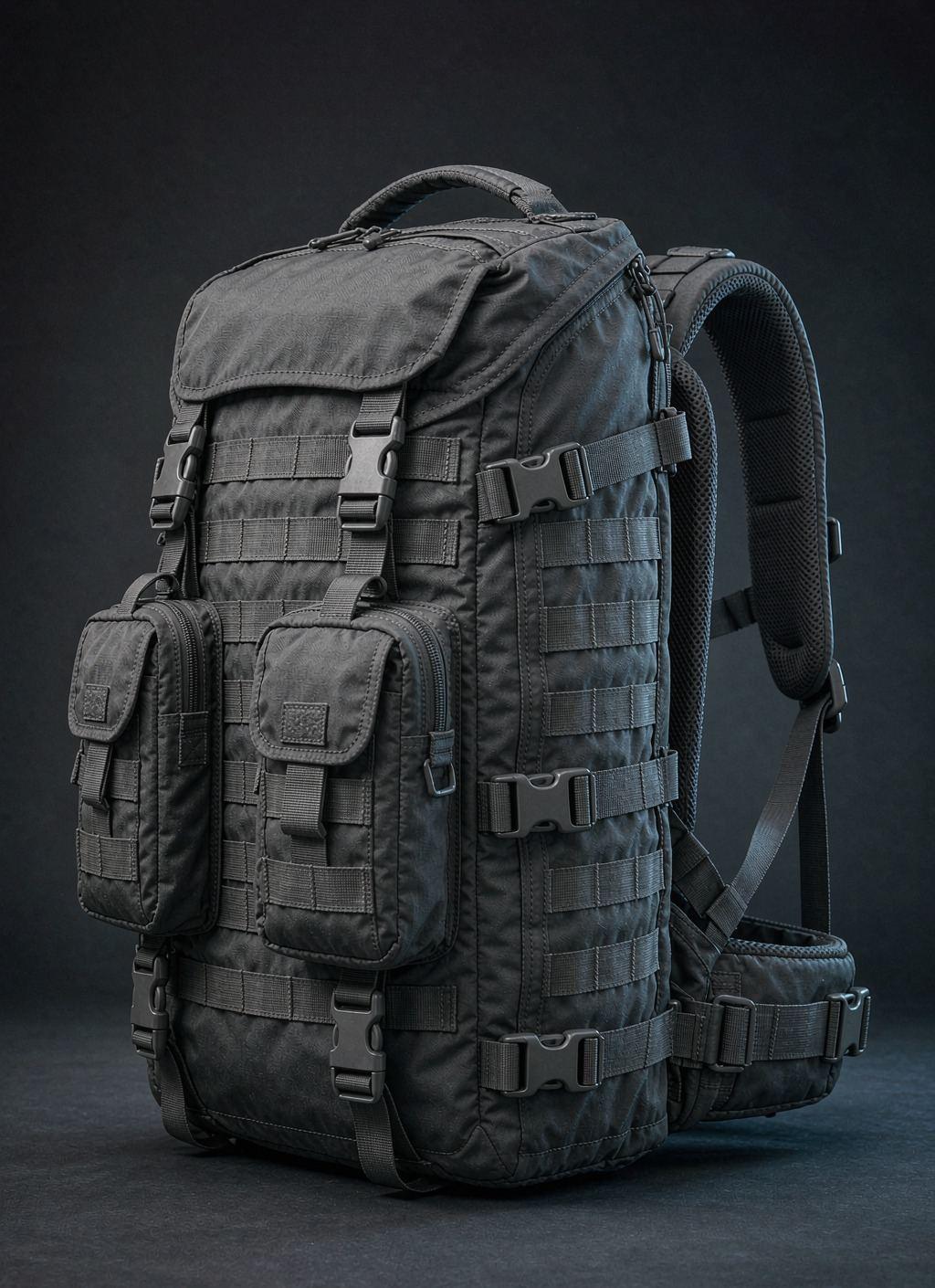
The third thing to plan is the point at which the product graduates. A backpack that is selling consistently on InDemand at 200 to 400 units a month has become a product line, and at that point the economics change: the campaign can move to larger runs, hold fabric, and negotiate on the components it now buys repeatedly. The production side scales easily, because a 4,950 square metre SGS-verified facility has room for it. The constraint will be the creator's cash cycle, not the line.
A small-batch plan for an Indiegogo backpack
- Model the shortfall case at 40 percent of target before the page exists, and let it set the tier price
- Design one shell with a size variant rather than two styles, and have the conversation before the drawing is fixed
- Consolidate colourways to a base colour with an accent, or a shared outer with a printed panel
- Stock the invisible components and customise the two visible ones: the outer and the puller
- Ask for tooling as a separate line, so it is amortised deliberately rather than hidden
- Make the backpack an add-on at every tier to lift the attach rate above 50 percent
- Put campaign specific content on a removable patch or hangtag, and keep the brand mark clean
- Price the shortfall case and the 500 unit case both landed, and compare totals not unit prices
- Plan InDemand as a monthly reorder cadence with a published dispatch window
- Record the full specification at the first order so a second product inherits it
Ten items and most of them are free. The two that cost money are the tooling and the 500 unit commitment, and both are cheaper when they are planned than when they are discovered. A campaign that works through the list before the page is published will know its unit cost at 40 percent of target, which is the number that decides whether the campaign can survive its own success. A campaign that works through it afterwards will be negotiating with a purchase order it cannot change.
Key takeaways
- A
- b
- a
- c
- k
- p
- a
- c
- k
- r
- e
- w
- a
- r
- d
- b
- e
- a
- t
- s
- t
- h
- e
- 5
- 0
- 0
- p
- c
- s
- m
- i
- n
- i
- m
- u
- m
- w
- i
- t
- h
- a
- s
- h
- a
- r
- e
- d
- s
- h
- e
- l
- l
- ,
- s
- t
- o
- c
- k
- c
- o
- m
- p
- o
- n
- e
- n
- t
- s
- a
- n
- d
- a
- p
- a
- g
- e
- t
- h
- a
- t
- p
- r
- o
- m
- i
- s
- e
- s
- o
- n
- e
- c
- o
- l
- o
- u
- r
- w
- a
- y
- ,
- n
- o
- t
- w
- i
- t
- h
- a
- d
- i
- s
- c
- o
- u
- n
- t
- i
- t
- c
- a
- n
- n
- o
- t
- a
- f
- f
- o
- r
- d
- .
Send the size, the feature list and the shortfall volume, and we will return a modular design view and a unit cost at 150, 300 and 500 through our quote page, or email service@junyuanbags.com.
Frequently Asked Questions
What is the minimum order for an Indiegogo backpack?
The minimum is 500 pcs per style and per colourway. A structured backpack carries the largest setup of any bag category, so the penalty for missing it is the largest too. Sampling takes 6 to 10 working days, 12 to 15 on a complex construction, and bulk takes 35 to 50 days. A shared shell with a size variant can often bring two products inside one minimum.
How does flexible funding change a backpack order?
It means the obligation to produce can arrive at a volume the budget was not built for. A campaign targeting 1,200 backers with the backpack tier drawing half of them expects 600 units; at 40 percent of target it expects 240, which is under the minimum. Model that case before the page exists and let it set the tier price rather than the reverse.
Can two backpack sizes share one minimum?
Often yes, if they share a shell. A 30 L and a 22 L that use the same back panel, the same harness, the same webbing, the same zip and the same hardware, differing only in the body panel length, are commonly treated as one style with a size variant. That decision has to be made before the drawing is fixed, because it shapes the pattern.
How many colourways should a backpack campaign offer?
One, visually presented as two or three. Four printed or dyed colourways means 2,000 units, which few Indiegogo campaigns can absorb. The better structure is one outer colour with an accent on the zip tape, the webbing and the binding, or a shared outer with a different printed panel where the print screen is common.
What is the cheapest way to make a backpack distinctive?
Stock the invisible components and customise the two visible ones. Use a mill stock fabric with a custom print, and a standard moulded puller with a printed mark, and keep the buckles, the ladder locks, the webbing and the zip tape as catalogue items. That is one lot minimum and one tooling cost.
How much more does a short run cost?
Indicatively, a unit cost at 150 units can be 45 to 70 percent above the cost at 500, and at 300 units 15 to 30 percent above it. There is no cliff at 500, so the decision is an inventory one: if the surplus will sell on InDemand, buy 500; if it will not, price 240 landed and compare the totals rather than the unit prices.
What tooling does a backpack need?
A custom moulded puller, an embossed patch die, a branded buckle or a bespoke back panel mould. Each is priced regardless of order size, and on a backpack with three custom components the tooling can be a larger line than the fabric. Ask for it as a separate line in the quotation so it can be amortised deliberately.
What happens to the surplus units?
They become inventory if the branding allows it. A bag with a campaign name, a launch date or a backer count on it cannot be resold; the same bag with a clean brand mark can. Put campaign specific content on a removable patch or hangtag, and the surplus sells through InDemand, a web store or a marketplace over a year.
How should InDemand reorders be scheduled?
On a four week cadence. Collect orders for a month and place one reorder rather than four weekly ones, because the setup on a structured backpack is the largest single cost and consolidating saves 15 to 30 percent per unit. A recorded and stockable specification can be reordered in 6 to 10 working days of sampling.
Can a second product reuse the first specification?
Yes, and it should. Recording the fabric references, the hardware set, the thread and the print files at the first order means a second product skips development. A backpack and a duffle specified with the same zip, webbing and hardware finish mean the duffle inherits a stocked component set and a shorter sampling cycle.
Should the backpack appear at more than one tier?
Yes. Put it at one tier and make it an add-on at every other tier, which lifts the attach rate without a new style. Differentiate a standard and a premium tier with an internal organiser, a laptop sleeve size or a hip belt, all of which share the base construction and the hardware and are one production event.
Is 480 units possible if that is all the campaign needs?
Not below the stated minimum of 500 pcs per style and per colourway. The two alternatives are to consolidate colourways so the 500 is met by one, or to accept a short run at a unit cost 15 to 70 percent higher depending on the volume. Compare both options landed, with the freight for each, and decide from the totals.
People Also Ask
What does MOQ mean on a backpack order?
Minimum order quantity, applied per style and per colourway. For a backpack it is 500 pcs, and it exists because of the setup and the material minimums rather than because of the labour.
Why is a backpack MOQ higher than a tote?
Because a backpack has more components and more setup. It uses more fabric types, more hardware and more pattern pieces, so it hits more supplier minimums at once.
Can I negotiate below the minimum?
Not below 500 pcs per style and per colourway. What you can do is reduce the number of styles and colourways the minimum applies to, which is usually worth more than a discount.
What is a modular bag design?
One base shell shared across several products, differentiated by a cheap component such as a front panel, a printed patch or an internal divider. It lets several products share one setup.
How do I make one colourway look like three?
Use a base colour with an accent on the zip tape, the webbing and the binding, or a shared outer with a different printed panel where the print screen is common.
Is a short run ever the right choice?
Yes, when the surplus will not sell. If InDemand volume is unlikely, paying 25 percent more per unit on 240 units is cheaper than holding 260 unsold bags.
How long does a repeat order take?
Six to 10 working days of sampling for a recorded specification and 35 to 50 days of bulk. The constraint is usually the material rather than the machine time, especially for a bespoke fabric.