Indiegogo Cosmetic Bags: Planning a Beauty Reward on Flexible Funding
Flexible funding changes the arithmetic of a cosmetic bag reward. On Indiegogo a campaign can keep the money it raises even when it misses target, which means it can also owe its backers a bag at 40 percent of the volume the budget was built for. The working minimum is 500 pcs per style and per colourway, sampling runs 6 to 10 working days and 12 to 15 on a complex build, and bulk takes 35 to 50 days. Plan the colourways so the 500 unit minimum is met by one style rather than four, specify a welded or heat sealed liner that survives a wipe test, and treat InDemand as a second order rather than as a rounding error.
- What flexible funding does to a cosmetic bag order
- Sizing a cosmetic bag reward for a partially funded campaign
- The unit cost build for a beauty bag
- The liner, the wipe and the wet test
- Colourways, prints and the MOQ per colourway problem
- Compliance for a bag that holds cosmetics
- InDemand and the post-campaign reorder
- Kitting: bag plus product versus bag only
- Photography and the sample that sells the tier
- A ten point plan for an Indiegogo beauty bag
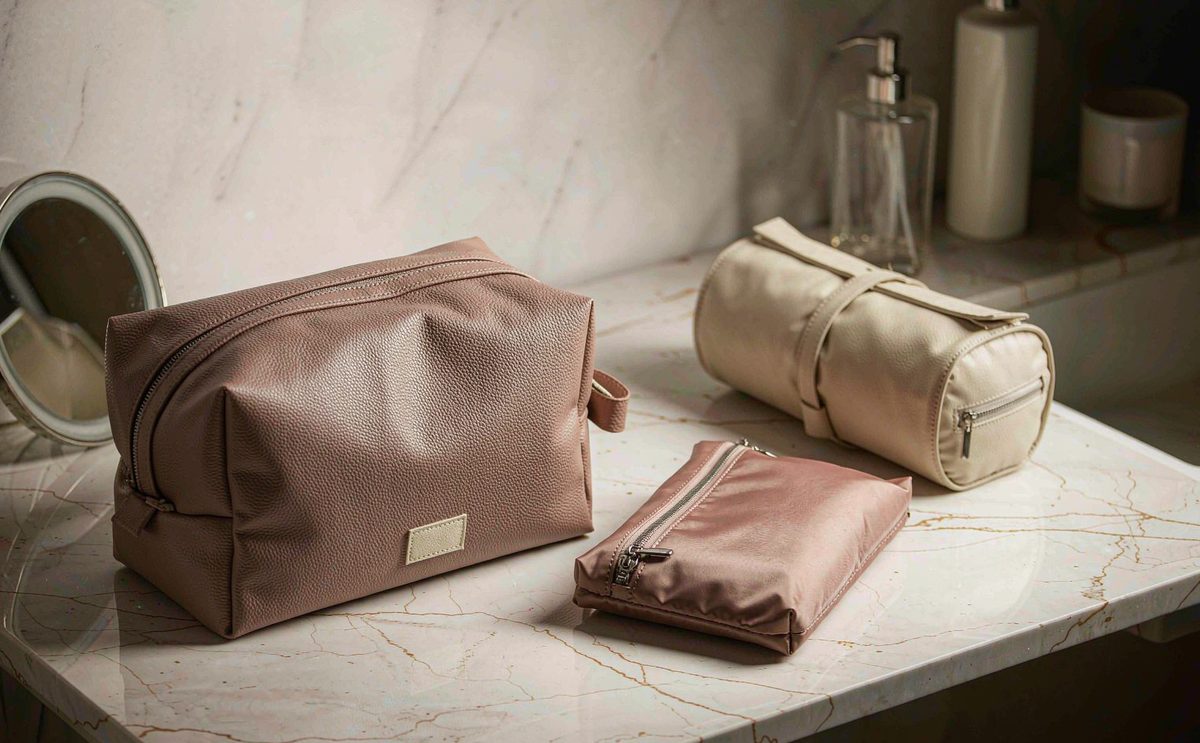
A cosmetic bag looks like the easiest reward in the beauty category. It is small, it packs flat, it ships cheaply and it photographs beautifully. It is also the reward most likely to be caught out by flexible funding, because the economics of a small bag depend on hitting a volume that a partially funded campaign will not reach. This guide is for beauty creators planning a cosmetic bag reward on Indiegogo, and it deals with the specific decisions that flexible funding forces: how to size the order against a 500 pcs per style and per colourway minimum, how to specify a liner that survives contact with oils and creams, how to handle colourways when the minimum applies per colour rather than per style, and how to treat InDemand once the live window closes. The production numbers are fixed. Sampling is 6 to 10 working days, 12 to 15 on a complex construction, bulk is 35 to 50 days, inspection runs to AQL 2.5 to ISO 2859-1 and the terms are FOB Xiamen with T/T 30/70.
What flexible funding does to a cosmetic bag order
On a fixed funding campaign, missing the target means no money and no obligation. On a flexible funding campaign, missing the target means the money arrives anyway and so does the obligation. That is a genuine advantage for a creator who would otherwise lose everything, and it is a genuine problem for a physical reward, because the cost curve is not linear. A bag quoted at 500 units might cost 40 percent more per unit at 150, and the campaign that closes at 40 percent of target is now producing at the expensive end of the curve with the small end of the budget.
Two mechanisms do most of the damage. The first is the fixed cost of a production run: pattern making, cutting dies, print screens or plates, and the setup time on the line. These are charged regardless of how many units follow, so they are spread over 150 units instead of 500 and the unit cost rises. The second is the material minimum. A fabric mill will sell you a roll, not a metre, and if a cosmetic bag uses a printed outer and a coated liner the two rolls together may cover far more units than 150 of them. Ask for the material yield per unit before you set the tier price, not after.
The practical defence is to design the reward so the shortfall produces something saleable. If the campaign closes at 40 percent and you are obliged to buy 500 units, the surplus is not waste if the bag is generic enough to sell afterwards. A cosmetic bag with a bold brand print and a launch date on the label is dead stock. The same bag with a clean logo and a timeless colour is stock for a post-campaign store, a retail conversation or a later bundle. Our Indiegogo and multi-platform crowdfunding guide covers the platform mechanics; this is the production side of the same decision.
Sizing a cosmetic bag reward for a partially funded campaign
Start from the shortfall scenario rather than from the target. If the target is 1,500 backers and the bag is the reward at the middle tier, the order you will actually place depends on how many of those backers pick the bag tier rather than on the headline number. A reasonable planning split for a three tier beauty campaign is that the bag tier draws 45 to 60 percent of the backers. At 1,500 backers that is 675 to 900 bags, comfortably over the minimum. At 40 percent of target it is 270 to 360, which is under it.
There are three responses and they can be combined. The first is to set the bag as a reward at two or three tiers rather than one, which lifts the share of backers who receive it and usually raises the count by 20 to 30 percent. The second is to make the bag an add-on available to every backer, which is a small incremental cost and a substantial incremental volume. The third is to accept the minimum and plan the surplus as inventory. The one response that does not work is to discover the MOQ after the campaign closes, because at that point the only choices are a much higher unit cost or a much angrier comment section.
A useful discipline is to write the shortfall plan into the campaign page itself. If the page says the bag will be produced in a first run of 500 and that additional colourways unlock at defined funding levels, a partial campaign has a defensible story and the production programme has a defined quantity. Since 2014 the campaigns we have supported that published their production logic have had fewer disputes about delays than the ones that published only a mood. We have supported more than 20 crowdfunding campaigns on this basis, and the pattern holds across them.
The unit cost build for a beauty bag
A cosmetic bag is cheap in absolute terms and sensitive in relative ones. A trim that costs 20 cents on a backpack can add 8 percent to the unit cost of a small pouch, because the labour of attaching it dominates the material. The build below is indicative for a 22 by 15 by 8 cm pouch with a printed outer and a coated liner, at the 500 unit minimum, and is intended as a structure to fill with your own quotes.
| Element | Indicative share of unit cost | What moves it |
|---|---|---|
| Outer fabric and print | 22 to 30 percent | Print method: digital, rotary or heat transfer |
| Liner fabric and coating | 14 to 20 percent | TPU versus PEVA versus uncoated |
| Zip, puller and trim | 12 to 18 percent | Branded puller, metal versus coil |
| Cutting and sewing labour | 25 to 35 percent | Number of panels and the liner insertion method |
| Labels and packaging | 5 to 9 percent | Sewn label, hangtag, polybag, carton |
| Setup amortised at 500 units | 6 to 12 percent | Screens, dies, plates and pattern work |
The line to watch is the setup amortisation. Over 500 units it might add 6 to 12 percent; over 150 units it can add more than 25. Two consequences follow. The first is that a second colourway is not free: a printed outer in a second colour usually needs its own print setup, and it carries its own 500 unit minimum. The second is that a reorder is much cheaper than the first order, because the setup is already paid. A campaign that plans one 500 unit run plus a 300 unit InDemand reorder will usually pay less per unit across the two than a single 800 unit run placed early and guessed.
For a beauty tier the useful rule is that the bag should absorb a defined share of the pledge. On an Indiegogo beauty campaign the physical reward typically consumes 25 to 40 percent of the tier price once freight and fees are in. If your build says 60 percent, the tier is too cheap, and if it says 12 percent, backers will read the bag as an afterthought and the page will convert worse. A campaign bag specialist will tell you which side of that band a given specification lands on.
The liner, the wipe and the wet test
The liner is where a cosmetic bag succeeds or fails, because a cosmetic bag is the one bag that will definitely meet oils, creams, foundation and alcohol. An uncoated polyester liner will stain and retain odour. A coated liner that has been poorly bonded will delaminate at the seam. The three workable options are TPU lamination, PEVA or EVA sheeting, and a heat sealed welded construction with no sewn seam at the base. Each has a different failure mode and a different cost.
The test is simple and it should be written into the sample approval. Spread a small amount of a typical oil based product on the liner, leave it for 24 hours, then wipe with a damp cloth and look for staining and odour retention. Repeat with an alcohol based product. Then turn the bag inside out and flex the liner seam 50 times, and check the coating does not lift. This takes a day and it prevents the most common negative review a beauty bag receives, which is that it looks lovely and stains immediately.
There are three construction details that support the liner. The first is a bound internal seam rather than a raw one, because a raw seam wicks. The second is a gusseted base that lets the bag stand up on a counter, which is the feature beauty buyers mention most and which adds only a small labour cost. The third is a zip rated for the number of cycles a daily use bag will see: a cosmetic bag is opened several times a day, so the zip is the highest cycle component on the product and the cheapest thing to under specify.
Colourways, prints and the MOQ per colourway problem
The minimum is applied per style and per colourway, and that single sentence decides the shape of a beauty campaign. A creator who offers four printed colourways is committing to four fabric lots and four print setups, and the effective minimum becomes 2,000 units. Very few beauty campaigns need that. The alternative is to separate colour from print: one fabric colour with four print placements will often carry a lower setup burden than four fabric colours with the same print, because the print screen is shared and only the substrate changes.
Digital printing changes the economics again, and it is worth asking about when the run is short. A digital print has little or no screen cost and a high per metre cost; a rotary or heat transfer print has a setup cost and a low per metre cost. On a 500 unit cosmetic bag the crossover usually sits in the low hundreds of units, which means short runs favour digital and repeat runs favour rotary. Ask the production team for both quotations, because the difference on a small printed item is often the difference between a viable tier and a loss making one.
Practical colourway planning for a beauty bag tends to land on one of three patterns. One base colour with one accent, which meets the minimum with 500 units and looks intentional. Two colourways of 250 each, which is viable when the outer is dyed rather than printed and the setup is shared. Or a single colourway with a stretch goal that unlocks a second one at a defined funding level, which lets the campaign promise variety without committing to it. The consolidation tactics behind these are set out in low MOQ bag production for creators.
Compliance for a bag that holds cosmetics
The bag itself is a container, not a cosmetic, and that distinction matters. A cosmetic product has its own regulatory regime in every market, including ingredient listing and responsible person requirements in the EU and labelling rules elsewhere. The bag does not. But the bag is in prolonged contact with the product, and a buyer or a marketplace will ask about the materials. The documentation to request is a material declaration covering the outer, the liner and the coating, plus any restricted substance testing you intend to rely on.
For a reward that will be sold in California, Proposition 65 is the requirement that catches people out, and it applies to bags as to many other consumer goods. For a reward that will reach the EU, REACH restricted substances apply to the articles, and if the bag is marketed for children the requirements are stricter. If the cosmetic inside the bag is an aerosol or an alcohol based product, the combination also affects the dangerous goods classification of the parcel, which is a shipping question rather than a bag question and one that will change the freight quote.
None of this is a reason to avoid the category, but it is a reason to request the documentation at the sampling stage. Our sourcing partner issues the material declaration and arranges the test reports, and the inspection standard applied to the bulk is AQL 2.5 to ISO 2859-1. The document set that normally accompanies a campaign order is described in bag QC and compliance for Kickstarter campaigns. For a beauty reward, add one item to that set: a migration or odour result for the liner, because it is the material in contact with the product.
InDemand and the post-campaign reorder
InDemand keeps the campaign page selling after the live window closes, and for a beauty bag it is the difference between one order and a permanent product line. The mistake is treating it as a continuation of the first run. It is a second production event with its own timing, and it behaves differently in three ways. The quantities are smaller, the colourway mix shifts towards whatever sold best, and the timing is unpredictable enough that holding fabric is a judgement call rather than a plan.
The reorder economics are good, because the setup is paid. A second run of 200 to 400 units will typically cost 15 to 30 percent less per unit than a first run of the same size, because there are no new screens, no new dies and no new pattern work. The risk is material. If the print was a bespoke dyed fabric, the mill may require the original lot quantity again, and a reorder of 300 units may not be possible without buying 500 units of fabric. Ask at the first order what the fabric minimum for a repeat is, and record the answer.
The scheduling discipline is to treat InDemand on a monthly cadence rather than a continuous one. Collect orders for four weeks, place a single reorder, and publish a single dispatch date for that batch. A continuous trickle of reorders produces a continuous trickle of short runs, and short runs are where the unit cost lives. A monthly cadence on a cosmetic bag, with 35 to 50 days of bulk and 6 to 10 working days if a new sample is needed, means publishing a four to six week dispatch window and then beating it.
Kitting: bag plus product versus bag only
Many beauty campaigns want the bag to arrive filled with product, and this is the decision that most often breaks a fulfilment plan. There are three levels. The bag alone, which is the simplest and which lets the backer keep the packaging. The bag with a printed card inside and the product shipped separately, which keeps the parcel under one kilo and avoids mixing regulated and unregulated goods in the same customs entry. The bag filled and sealed at origin, which is the most attractive on the page and the most complex to execute.
Filling at origin means the product has to arrive at the packing site, be collated with the bag, be packed to a cosmetic standard and then be declared together at customs. If the product is a liquid or an aerosol, the combined parcel may be reclassified for customs and for dangerous goods. If the product is made in a different country from the bag, the country of origin declaration becomes a two line problem. And the labour of collation sits at origin where it is cheap, but the risk of a mismatch between the product batch and the bag batch sits with the campaign.
The middle option is usually the right one on a first campaign. Ship the bag from the production programme to the fulfilment point, ship the cosmetic product to the same point from its own supply chain, and collate there under a single pick and pack. It costs a little more in handling and it removes the customs reclassification and the batch mismatch. Our programme coordinator will tell you which of the three is appropriate for a given product, and will say so before you design the page rather than after.
Photography and the sample that sells the tier
A cosmetic bag sells on the page before it exists, which means the pre production sample carries the whole conversion rate. Two things follow. The sample has to be made in the production material rather than in a substitute, because a photographed substitute will not match the delivered colour. And the sample has to be photographed in a way that shows the interior, since the interior is the feature that answers the buyer's real question, which is whether it will hold their things without staining.
Build the sample schedule backwards from the launch date. Sampling is 6 to 10 working days on a standard construction and 12 to 15 on a complex one, photography and page build add 7 to 14 days, and most creators want a second sample after the first reveals a change. Working backwards, the sample should be commissioned four to six weeks before launch. Our partner workshop can produce a pre production sample in the production material, and the practical notes on what to check are in the bag sampling and prototyping guide.
One specific note for beauty. If the photographed bag contains product, use the real product in the real size. A prototype photographed with a taller bottle than the final one is a misrepresentation, and under consumer protection rules in most markets a representation on a campaign page is enforceable. Photograph the empty bag with dimensions on the page as well, and the page will convert nearly as well with far less exposure.
A ten point plan for an Indiegogo beauty bag
- Model the shortfall case first and decide what the surplus becomes before the page goes live
- Consolidate to one colourway or one base colour with two accents, so the 500 pcs per style and per colourway minimum is met once
- Specify a wipe clean liner and write the 24 hour oil and alcohol test into the sample approval
- Ask for the setup cost as a separate line, so a reorder quote is meaningful
- Commission the pre production sample in the production fabric four to six weeks before launch
- Request the material declaration and the liner test report at sampling, not at bulk
- Publish the production logic on the page: run size, unlock levels and a delivery range
- Decide the kitting model early, and default to collating at the fulfilment point
- Plan InDemand on a four week cadence with a published dispatch window
- Keep the print and the dye decisions separable, so a reorder does not require a fabric lot
Two of those ten items are the ones that most often get skipped, and they are worth explaining. The shortfall model is skipped because it is uncomfortable to write down: it forces a founder to accept that the campaign may raise 40 percent of target and to decide what happens then. The sample schedule is skipped because a cosmetic bag looks simple enough to commission late. Together they account for most of the emergencies we see, and both are free to fix before the page goes live. A programme coordinator will walk through the list with you in a single call, and the output of that call is a purchase order that can actually be placed.
Key takeaways
- A
- c
- o
- s
- m
- e
- t
- i
- c
- b
- a
- g
- r
- e
- w
- a
- r
- d
- i
- s
- w
- o
- n
- o
- n
- t
- h
- e
- l
- i
- n
- e
- r
- ,
- t
- h
- e
- c
- o
- l
- o
- u
- r
- w
- a
- y
- c
- o
- n
- s
- o
- l
- i
- d
- a
- t
- i
- o
- n
- a
- n
- d
- t
- h
- e
- s
- h
- o
- r
- t
- f
- a
- l
- l
- p
- l
- a
- n
- ,
- n
- o
- t
- o
- n
- t
- h
- e
- o
- u
- t
- e
- r
- f
- a
- b
- r
- i
- c
- .
Send the dimensions, the liner requirement and the colourway split, and we will return a unit cost build and a sample schedule through our quote page, or email service@junyuanbags.com.
Frequently Asked Questions
What is the minimum order for an Indiegogo cosmetic bag?
The minimum is 500 pcs per style and per colourway. A printed outer in a second colourway carries its own setup and its own minimum, so four printed colourways effectively commit you to 2,000 units. Sampling takes 6 to 10 working days, 12 to 15 for a complex construction, and bulk takes 35 to 50 days. Consolidating to one base colour with two accents is normally the cheapest way through.
How does flexible funding change the bag order?
It means you can owe backers a bag even if you miss target, at a volume the budget was not built for. The setup and the material minimums are fixed regardless of quantity, so they spread across fewer units and the unit cost rises sharply below about 300. Model the shortfall case first, and decide in advance what the surplus becomes so it is inventory rather than waste.
Which liner should I use for a cosmetic bag?
The three workable options are TPU lamination, PEVA or EVA sheeting, and a welded construction with no sewn seam at the base. TPU is the most durable and the most expensive, PEVA is the middle option and a welded base removes the wicking path entirely. Specify a bound internal seam, and test the liner with both an oil based and an alcohol based product over 24 hours.
How long does a cosmetic bag take to produce?
Allow 6 to 10 working days for a standard sample, 12 to 15 for a complex construction, then 35 to 50 days for bulk. Commission the pre production sample four to six weeks before launch to leave room for a second sample, and add 7 to 14 days for photography and page build. A reorder is faster because the setup is already paid.
Can I offer four printed colourways?
Technically yes, and commercially it is usually a mistake. Each printed colourway carries its own 500 unit minimum and its own print setup, so four colourways means 2,000 units. The better structure is one base colour with two or three print placements, or a single colourway with a stretch goal that unlocks a second at a defined funding level. Ask for both a printed and a dyed quotation, because the minimums differ.
Is digital printing better for a short run?
Usually. Digital printing has little or no screen cost and a high per metre cost, while rotary or heat transfer has a setup cost and a low per metre cost. On a cosmetic bag the crossover typically sits in the low hundreds of units, so short runs favour digital and repeat runs favour rotary. Ask for both quotations before you commit.
Does the bag need cosmetic compliance?
The bag is a container, not a cosmetic, so the cosmetic regime applies to the product and not to the bag. But the bag is in prolonged contact with the product, so request a material declaration covering the outer, the liner and the coating, and add a liner migration or odour result. For California sales consider Proposition 65, and for EU sales consider REACH restricted substances.
Should the bag ship filled with product?
Usually not on a first campaign. Filling at origin risks a customs reclassification if the product is a liquid or an aerosol, and it creates a batch mismatch risk between the product and the bag. The safer model is to ship the bag and the product separately to the fulfilment point and collate there under a single pick and pack.
How does InDemand change the reorder?
InDemand turns the bag into a permanent product line with a second production event. The setup is already paid, so a reorder of 200 to 400 units typically costs 15 to 30 percent less per unit. The risk is material: a bespoke printed or dyed fabric may require the original lot quantity again, so ask at the first order what the fabric minimum is for a repeat.
What share of the tier price should the bag cost?
On a beauty campaign the physical reward typically consumes 25 to 40 percent of the tier price once freight and fees are in. Above 60 percent the tier is underpriced and the margin disappears; below 12 percent backers read the bag as an afterthought and the page converts worse. Build the landed number before you set the price, and rebuild it when the freight quote arrives, because a small light bag gains the most from consolidation.
When should I commission the sample I photograph?
Four to six weeks before launch. Sampling runs 6 to 10 working days, 12 to 15 on a complex build, and most creators want a second sample once the first reveals a change. Commission it in the production material rather than a substitute, or the photographed colour will not match the delivered one. Add 7 to 14 days for page build after the second sample lands, and keep one sample back as the reference the bulk is matched against.
What should I check when the sample arrives?
Run the wipe test with an oil based and an alcohol based product over 24 hours, then flex the liner seam 50 times and check the coating does not lift. Check the gusseted base stands up on a counter, cycle the zip 100 times, and confirm the printed colour matches the reference under daylight. Record each result before you approve.
People Also Ask
Is a cosmetic bag a good crowdfunding reward?
Yes. It is small, flat packing and cheap to ship, and it photographs well. Its risks are the colourway minimum and the liner performance, both of which are manageable if they are decided early.
What size cosmetic bag sells best?
A pouch around 22 by 15 by 8 cm, which holds a daily set without becoming a toiletry bag. A gusseted base that lets it stand on a counter is the single most valued feature.
Can I order fewer than 500 cosmetic bags?
Not below the stated minimum of 500 pcs per style and per colourway. The workable route is to consolidate colourways, or to combine a first production run with a post-campaign store that absorbs the surplus.
What zip should a cosmetic bag use?
A coil zip with a branded puller, rated for high cycle use. The zip is opened several times a day and is the most frequently replaced component, so it is the cheapest thing to under specify.
How much does a cosmetic bag cost per unit?
Indicatively the outer fabric and print take 22 to 30 percent of the unit cost, the liner 14 to 20 percent, trim 12 to 18 percent, labour 25 to 35 percent, packaging 5 to 9 percent and amortised setup 6 to 12 percent.
Does InDemand require a new sample?
Not if the specification is unchanged. A reorder reuses the screens, dies and patterns, which is why it costs less per unit. A specification change will add 6 to 10 working days.
Can the bag be sold in retail after the campaign?
Yes, and it should be planned that way. Keep the branding clean and avoid a campaign date on the label, so the surplus from a partially funded campaign becomes sellable stock rather than dead inventory.