Kickstarter Anti-Theft Backpack: Features That Justify a $149 Reward
Which anti-theft features actually justify a 149 USD Kickstarter reward? The answer is measurable: lockable zip systems, a cut-resistant layer in the shell, RFID-shielded card slots and hidden back-panel access add roughly 11 to 18 USD to the bill of materials over a standard commuter pack. Sampling runs 6-10 working days, or 12-15 for hardware-heavy builds, and production 35-50 days. Minimum order is 500 pcs per style and colourway, inspected to AQL 2.5 before shipment on FOB Xiamen terms.
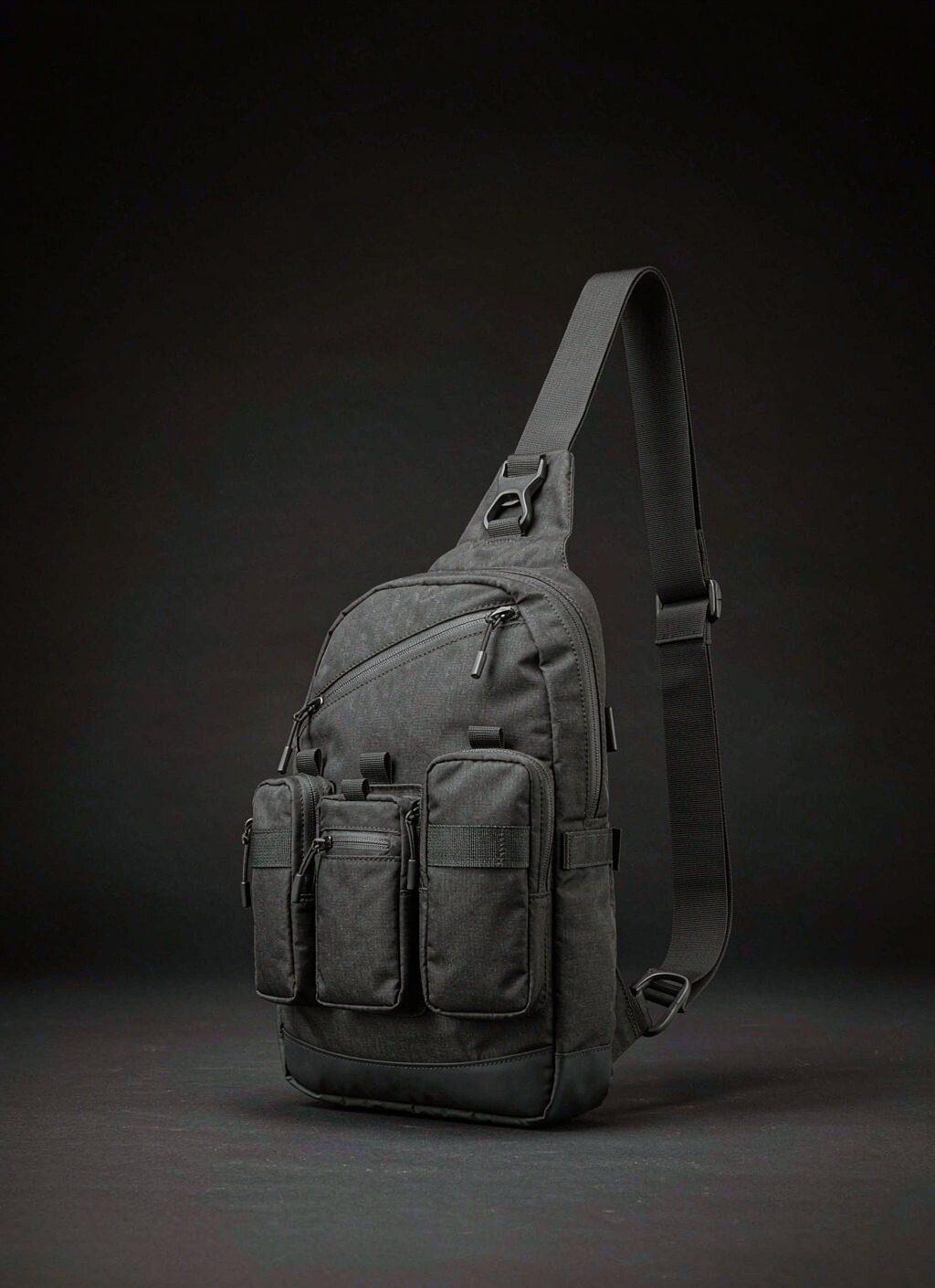
- Why 149 USD is a threshold, not a rounding error
- What belongs in an anti-theft specification
- Lockable zip systems and their real cost
- Cut-resistant layers: fabric, mesh and seam choices
- Hidden access points and where they cost money
- RFID shielding: what it does and what it costs
- The bill of materials behind a 149 USD pledge
- Claim substantiation: what you may say on a page
- Sampling hardware-heavy builds and approval gates
- Production reality on a 500 pcs security build
- Inspection points specific to security features
- Positioning the reward: tiers, add-ons and re-order
Why 149 USD is a threshold, not a rounding error
A 149 USD pledge sits in a band where backers compare you against established retail products rather than against other campaigns. Below roughly 99 USD, a bag reward is judged on design and novelty; above roughly 150 USD, it is judged on specification and durability. That shift changes what you must put in the bag. At 149 USD a backer expects a named zip brand, a laptop compartment with real padding, a credible security story and hardware that does not feel hollow. If any of those are missing, the comment section will say so within a day of launch.
The economics follow the same logic. A standard commuter backpack at 500 pcs might land at 26 to 34 USD FOB Xiamen. Adding genuine security hardware, a cut-resistant layer,RFID shielding and a moulded back panel moves that to roughly 37 to 52 USD before freight. After sea freight of 6 to 11 USD and duty, landed cost lands somewhere near 50 to 68 USD. Against a 149 USD pledge, less platform fee and processing, that leaves contribution in the 60 to 80 USD range, which is what funds photography, contingency and a re-order. Cutting spec to widen that gap is the decision that kills the campaign's reviews.
Key takeaways
- At 149 USD, backers benchmark your bag against retail products, not against other campaigns.
- Genuine security hardware and materials typically add 11 to 18 USD to unit cost over a commuter pack.
- Named hardware brands cost more per unit but convert better and reduce pre-launch scepticism.
- Claims such as slash-proof or theft-proof must be substantiated; describe the construction instead.
- Complex hardware builds need 12-15 working days of sampling rather than the standard 6-10.
What belongs in an anti-theft specification
Anti-theft is a marketing phrase covering four distinct engineering features. Treating them as one vague promise is how campaigns end up with a product that cannot be described accurately in the campaign copy. Separate them in your tech pack, cost them separately, and specify an inspection check for each. That structure also lets you run stretch goals, because each feature is a discrete line item that can be added to the build without redesigning the bag.
- Lockable zip systems: interlocking sliders, concealed slider garages, or a loop that accepts a padlock.
- Cut-resistant layer: high-tenacity fabric or stainless steel mesh laminated between shell and lining.
- Hidden access: rear-panel entry to the main compartment so the opening faces the wearer's back.
- RFID shielding: a metallised fabric layer around card slots, with a defined shielding performance claim.
- Anchor point: an internal webbing loop or a strap that can be secured to a fixed object.
- Concealed pockets: internal or back-side pockets that are not visible from the outside of the bag.
The critical discipline is that each feature has to survive contact with a production line. A laminated cut-resistant layer changes how the panel feeds through a sewing machine and can break needles; a moulded back panel needs tooling and a longer sampling window; an interlocking zip system changes the assembly sequence. Tell your production team which features are non-negotiable at quotation stage so the line is set up for them rather than adapted later. Our custom backpacks for Kickstarter pillar explains how panel count and assembly sequence drive unit cost.
Lockable zip systems and their real cost
The zip is the single most visible security feature and the one backers test first. Three approaches dominate. Interlocking sliders are two pullers on the same chain that lock together when brought into contact, and they cost roughly 1.20 to 2.40 USD more per bag than a standard slider set. A slider garage is a moulded or fabric housing that hides the puller when closed, adding 0.60 to 1.20 USD. A padlock loop with a compatible third-party lock adds almost nothing to unit cost but requires the backer to use a separate lock, which some reviewers treat as an incomplete solution.
| Option | Added unit cost | Assembly impact | Backer perception |
|---|---|---|---|
| Interlocking sliders | 1.20 to 2.40 USD | Low, standard chain with paired pullers | Strong, works without accessories |
| Moulded slider garage | 0.60 to 1.20 USD | Low, but needs panel shaping | Moderate, hides the puller only |
| Padlock loop plus D-ring | 0.20 to 0.50 USD | Minimal, webbing and rivet | Weak unless a lock is bundled |
| Branded water-resistant zip | 1.80 to 3.50 USD | Low, choice of chain supplier | Strong, brand name reassures |
| Concealed rear zip run | 2.00 to 4.00 USD | Moderate, changes panel sequence | Strong, opening faces the back |
Specify the chain as well as the puller. A number 8 coil chain with a water-resistant coating is a different product from a number 8 chain without one, and the coating matters if you intend to describe the bag as weather resistant. Ask for the cycle test result: a zip specified at 5,000 cycles is a meaningful claim and one that can be verified during inspection. Unbranded chains can meet the same specification, but named chains convert better on a campaign page and reduce the number of pre-launch questions about durability.
Cut-resistant layers: fabric, mesh and seam choices
A cut-resistant layer is the most expensive security addition and the one most often misrepresented. The practical options are a high-tenacity fabric such as a heavy aramid or UHMWPE blend, a laminated stainless steel micro-mesh, or a dense woven barrier layer used only in the panels most likely to be cut. Full-bag lamination adds weight, stiffens the panel and roughly doubles the panel material cost. Panel-specific protection in the back and side panels is the compromise most campaigns use: meaningful protection where it matters, without turning a 900 gram daypack into a 1.4 kilogram one.
Be precise about what the layer does. A cut-resistant panel resists a slash from a blade; it does not make the bag impossible to open or to steal. Campaign copy that says slash-proof sets an expectation you cannot test cheaply and creates a warranty exposure. Describe the construction instead: name the layer, name where it sits, and state the panel coverage. If you commission a cut-resistance test, ask for the test method and the blade type so the result can be quoted accurately. This is also the moment to confirm what the layer does to sewability, because needle breakage and skipped stitches are the most common defects on these builds.
A claim of theft-proof or slash-proof is not testable at a campaign budget and invites chargebacks. Naming the material, its location and its coverage is both accurate and more persuasive to an informed backer, and it is the wording that survives review by platform trust and safety teams.
Hidden access points and where they cost money
Rear-panel access is the feature that most convincingly signals a security design, because it is visible in photographs and immediately understood. It is also the most expensive structural change. Opening the main compartment through the back panel means the panel becomes a load-bearing, zip-carrying assembly that must still sit comfortably against the wearer's spine. That requires a moulded or laminated panel with foam channels, and the zip run has to be shaped so the panel flexes without binding the chain.
- Moulded EVA back panel with air channels: typically 2.50 to 5.00 USD added, plus tooling if bespoke.
- Shaped rear zip run with binding and storm flap: 2.00 to 4.00 USD added, moderate assembly impact.
- Reinforced panel frame so the opening does not deform when loaded: 1.00 to 2.00 USD added.
- Hidden back-side pocket with a flat profile: 0.80 to 1.60 USD added, low assembly impact.
- Internal anchor loop for securing the bag to a fixture: under 0.30 USD, negligible impact.
The hidden pocket is the cheapest high-perception feature on the list. A flat pocket between the back panel and the lining, sized for a passport or a phone, costs under two dollars and is easy to photograph. It also solves a real problem for backers who travel, which is why it appears in unboxing videos more often than the cut-resistant layer does. Pair it with the anchor loop and you have two security talking points for under two dollars of unit cost, which is the best ratio in the whole specification.
RFID shielding: what it does and what it costs
RFID shielding blocks the radio frequency field used by contactless payment cards and some access badges, preventing a reader from interrogating a card inside the bag. The material is a metallised non-woven or a copper-nickel plated fabric laminated to a base cloth. As a liner around a card slot panel it typically adds 0.90 to 2.20 USD per bag, and the cost scales with the area covered rather than with the number of slots. Shielding the whole main compartment is possible but adds weight and cost for little practical benefit, since most backers carry cards in one wallet.
Ask the material supplier for shielding attenuation data by frequency band, because contactless payment operates at one frequency and some access cards operate at another. A lining that attenuates one band well may do little at the other, and a campaign page that implies universal protection is making a claim no test supports. The honest and still persuasive wording is that the card slots are lined with a shielding fabric tested to attenuate the 13.56 MHz band used by contactless payment cards. Our production team can line a card panel at sampling stage so you can test it with a phone before the campaign launches.
The bill of materials behind a 149 USD pledge
The table below is a representative build for a 20 to 24 litre anti-theft commuter backpack at 500 pcs, quoted FOB Xiamen. It assumes a branded water-resistant zip, a cut-resistant layer in the back and side panels, a moulded back panel with rear access,RFID-shielded card slots and a laptop sleeve sized for a 16 inch device. Use it as a template for your own RFQ rather than as a price list, because fabric grade and hardware brand move these figures more than anything else.
| Line item | Cost per unit | Share of materials | Notes |
|---|---|---|---|
| Shell fabric, 600D recycled polyester with coating | 6.40 | 19 percent | GRS-certified option adds 0.40 to 0.90 |
| Lining and internal panels | 3.10 | 9 percent | Dyed to match, colourfastness checked |
| Cut-resistant layer, back and side panels | 5.80 | 17 percent | Coverage drives cost more than grade |
| Moulded EVA back panel with air channels | 4.20 | 12 percent | Tooling amortised over the run |
| Zips, branded water-resistant, interlocking sliders | 4.90 | 14 percent | Named chain, cycle tested |
| Hardware: buckles, adjusters, D-rings | 2.30 | 7 percent | Catalogue components unless custom |
| RFID shielding liner for card panel | 1.60 | 5 percent | Sized to slot panel area |
| Webbing, binding, foam, thread | 2.40 | 7 percent | Consumables, priced per roll |
| Labels, hangtag and polybag | 0.90 | 3 percent | Branding method priced separately |
| Cut, make and trim labour | 11.20 | Assembly across allocated line | |
| Overhead, QC and packing | 3.10 | Includes inline and final inspection |
Summed, that build lands around 45.90 USD FOB at 500 pcs, falling to roughly 39 to 42 USD at 2,000 pcs as fabric and hardware lots price down and labour efficiency improves. Add sea freight of 6 to 11 USD and duty, and landed cost sits near 55 to 68 USD. Against a 149 USD pledge, after a platform fee near 5 percent and payment processing of 3 to 5 percent, contribution is roughly 65 to 78 USD per unit before marketing and contingency. That is a healthy tier, and it is also a warning: at 99 USD the same build leaves under 30 USD, which does not cover a re-order. Freight and duty planning is covered in the crowdfunding bag guide.
Claim substantiation: what you may say on a page
Campaign pages for security products attract scrutiny, and the claims that cause trouble are the absolute ones. Waterproof, slash-proof, theft-proof and unhackable are all claims that either require a defined test standard or should not be made. Water-resistant is defensible with a coating specification and a spray test result. Cut-resistant is defensible if you name the layer and its coverage. RFID-blocking is defensible if you cite the frequency band and the attenuation measured. The pattern is consistent: describe the construction and cite the test, rather than promising an outcome.
- List every performance claim you intend to make, and match each one to a test method you can commission.
- Ask your sourcing partner which claims are supported by existing supplier test reports and which need new testing.
- Budget for testing before launch, because a report commissioned after funding cannot be used in campaign copy.
- Keep the technical file: specification, test report and approved sample reference, for each claim.
- Check destination market rules, including EU GPSR obligations for products sold into the European Union.
Compliance is not only about the bag body. Hardware and textiles sold into the United States are subject to CPSIA limits on lead and phthalates, California Prop 65 requires a warning where a listed substance is present above a threshold, and REACH governs substances of very high concern for the European Union. A metallised RFID liner and coated fabrics are exactly the kind of components worth screening. Build compliance testing into the pre-production plan rather than discovering it after the goods are packed.
Sampling hardware-heavy builds and approval gates
A security build is a complex build by definition, which moves sampling from the standard 6-10 working days to 12-15 working days. The extra time goes into sourcing hardware, fitting laminated panels to the line, and resolving the fit issues that only appear when a stiff panel meets a curved zip run. Plan two sample rounds and treat the first as a fit and function exercise, not as the finished article. The second round produces the pre-production sample that bulk is matched against, and it should be signed off in writing with a retained reference sample.
- Minimum order quantity
- 500 pcs per style / colourway
- Sampling lead time
- 12-15 working days for hardware-heavy builds
- Bulk production
- 35-50 days after deposit and approved pre-production sample
- Inspection standard
- AQL 2.5 to ISO 2859-1
- Trade term
- FOB Xiamen
- Payment terms
- T/T 30/70
- Production floor
- 4,950 m2, SGS-verified
- Team and equipment
- 137 staff / 7 production lines / 149 machines
- Monthly capacity
- 200,000 pcs
- Campaign experience
- 20+ crowdfunding campaigns supported since 2014
Approval gates protect the schedule. Agree in advance what the sample must demonstrate: zip pullers lock and release 50 times without failure, the rear panel zip runs without binding when the bag is loaded to capacity, the cut-resistant layer shows no delamination after flexing, and the RFID card panel blocks a contactless read in a bench test. Write those checks into the sample approval form. When the sample passes them, bulk is booked with the 30 percent deposit and the 35-50 day window starts. Full process detail is on crowdfunding bag sample prototyping.
Production reality on a 500 pcs security build
At 500 pcs per style and colourway, a hardware-heavy bag is a small run by line standards, and small runs are where cost surprises live. Hardware suppliers quote in lots, so a bespoke buckle may be priced the same for 500 or 2,000 pcs. Fabric mills have minimum dye lots, so a custom colour may carry a surcharge below a certain metre count. Tooling for a moulded back panel is a fixed cost that is amortised over only 500 units. All three push the 500 pcs unit cost up, and all three are visible in a quotation if you ask for the breakdown.
The mitigations are practical. Use catalogue hardware in a standard finish instead of a bespoke moulding; accept a mill's stock colour rather than a custom dye lot; share tooling cost across the run and plan a re-order within six months so the amortisation improves. Then consider whether one colourway at 1,000 pcs converts better than two colourways at 500 pcs each. In most campaigns we support it does, because a security feature story sells on function rather than on colour choice. Order planning is set out on bag manufacturing for campaign creators.
Inspection points specific to security features
Generic inspection misses security defects, because the failures are in the feature rather than in the seam. A bag can pass a standard AQL 2.5 inspection and still ship with interlocking sliders that do not engage, or an RFID liner that was omitted from the panel. Add feature-specific checks to the inspection specification, define the defect class for each, and require photographic evidence in the inspection report. Inspection runs to AQL 2.5 under ISO 2859-1, which sets the sample size and the accept and reject numbers, but the defect list is yours to write.
| Feature | Check | Method | Defect class |
|---|---|---|---|
| Interlocking sliders | Pullers engage and release cleanly | Operate 20 cycles on 8 pcs per lot | Major |
| Rear access zip | Runs without binding when loaded | Load to 8 kg, open and close 20 times | Critical |
| Cut-resistant layer | Present in specified panels | Panel-by-panel check on 8 pcs | Critical |
| RFID liner | Blocks a contactless read | Bench test with phone on 8 pcs | Major |
| Anchor loop | Load tested to specification | Pull test to 15 kg on 5 pcs | Major |
| Hidden pocket | Dimensions and closure correct | Measure against tech pack on 8 pcs | Minor |
Run an inline inspection while the line is running, not only a final one. On a complex build, a fault in the rear-panel assembly sequence will be repeated on every unit until someone stops it, and finding that at final inspection means reworking the whole lot. An inline check at the point where panels are joined catches it after 50 units rather than after 500. Carton transit testing to ISTA 3A practice is also worth agreeing for a bag with a moulded panel, because a stiff panel transmits impact differently in a drop. The full sequence is documented on Kickstarter campaign bag QA and QC.
On a security build, the feature is the product. If the slider does not lock, the backer does not care how good the stitching is.
Campaign bag specialist, sample approval briefing
Positioning the reward: tiers, add-ons and re-order
A 149 USD hero reward needs a ladder around it that does not cannibalise it. The standard structure is an early bird at 119 to 129 USD for the first 150 to 300 units, the standard reward at 149 USD, and a duo pack at 279 USD that lifts average pledge value without new engineering. Avoid a lower-priced tier with the security features removed, because a decontented version muddies the story and invites backers to ask what was taken out. If you need a lower entry point, make it an accessory bundle rather than a weaker bag.
- Combination cable lock sized for the padlock loop: roughly 2 to 4 USD landed, 19 USD as an add-on.
- RFID-blocking card wallet in matching material: roughly 3 to 5 USD landed, 24 USD as an add-on.
- Rain cover with reflective print: roughly 2 to 3 USD landed, 15 USD as an add-on.
- Replacement slider and puller kit: under 1 USD landed, 9 USD as an add-on and a warranty saver.
Plan the re-order before the campaign closes. If the bag funds well, a second run within six months improves hardware lot pricing, amortises the back-panel tooling across more units and keeps the supply of catalogue components warm. Ask your sourcing partner to hold the specification and the approved reference sample so the re-order matches the first run exactly; a re-order that differs in fabric hand or hardware finish is noticed immediately by repeat backers. For adjacent categories, see custom laptop bags for Kickstarter and custom travel bags for Kickstarter, and browse more category guides on the blog.
Cost your anti-theft build before you publish the pledge
Send the feature list and target quantity to service@junyuanbags.com. Our production team will return a line-by-line cost breakdown at 500 and 2,000 pcs, flag which claims are testable at your budget, and confirm the 12-15 working day sampling window for a hardware-heavy build.
Frequently Asked Questions
What anti-theft features justify a 149 USD backpack reward?
Four features carry the price: interlocking or lockable zip sliders, a cut-resistant layer in the back and side panels, rear-panel access to the main compartment, and RFID-shielded card slots. Together they typically add 11 to 18 USD over a standard commuter pack, taking unit cost to roughly 37 to 52 USD at 500 pcs before freight.
How much does a cut-resistant layer add to unit cost?
Full-bag lamination roughly doubles panel material cost and adds noticeable weight. Panel-specific protection in the back and side panels typically adds 4 to 7 USD per unit at 500 pcs, which is the compromise most campaigns choose. Always state the coverage in the campaign copy rather than implying the whole bag is protected.
How long does sampling take for an anti-theft backpack?
Hardware-heavy builds need 12-15 working days rather than the standard 6-10, because of hardware sourcing, laminated panel handling and zip run fitting. Plan two rounds: a fit and function sample, then a pre-production sample signed off in writing. production 35-50 days after deposit and approval.
Can I describe the bag as slash-proof on the campaign page?
No, not without a defined test you can produce on request. Substantiating an absolute cut claim typically costs 500 to 3,000 USD per panel specification, and it still creates warranty and chargeback exposure. Describe the construction instead: name the material, its location and the panel coverage, which is both accurate and more credible to an informed backer.
Does RFID shielding actually work in a backpack?
A metallised shielding liner attenuates the field used by contactless cards, and card slots lined with it typically block a 13.56 MHz contactless read in a bench test. Performance is frequency-specific, so ask the supplier for attenuation data by band. Shielding the whole main compartment adds weight and cost for little practical benefit.
How much does RFID shielding add to the unit cost?
Lining a card slot panel typically adds 0.90 to 2.20 USD per bag, and cost scales with the area covered rather than the number of slots. Covering the full main compartment can push that above 4 USD. Bench-test the sample with a phone before launch so the claim on the page matches the performance of the production unit.
What is the minimum order quantity for an anti-theft backpack?
500 pcs per style and per colourway. Because hardware is quoted in lots and tooling is amortised over the run, a single colourway at 1,000 pcs usually prices better per unit than two colourways at 500 pcs each. Catalogue hardware in a standard finish keeps the 500 pcs cost down.
Which inspection checks catch security feature defects?
Add feature-specific checks to the AQL 2.5 inspection: slider engagement over 20 cycles, rear zip operation under an 8 kg load, panel-by-panel confirmation of the cut-resistant layer, and a bench test of the RFID liner. Classify omitted panels and binding zips as critical defects, and require photographs in the report.
Do I need compliance testing for an anti-theft backpack?
Yes if you sell into regulated markets. CPSIA limits lead and phthalates for the United States, Prop 65 may require a warning, REACH governs substances of very high concern for the European Union, and EU GPSR applies to products placed on the EU market. Coated fabrics and metallised liners are worth screening before bulk.
How should I structure reward tiers around a 149 USD bag?
Use an early bird at 119 to 129 USD capped at 150 to 300 units, the standard reward at 149 USD, and a duo pack near 279 USD. Avoid a decontented lower tier with the security features removed, because it undermines the story and prompts questions about what was cut.
What does a moulded back panel cost?
A moulded EVA panel with air channels typically adds 2.50 to 5.00 USD per unit at 500 pcs, plus tooling if the shape is bespoke. Tooling is a fixed cost, so amortising it over 500 units is expensive; a re-order within six months improves the effective cost considerably.
Can I reuse the tooling if I re-order the same bag?
Usually yes, provided the specification is unchanged and the tooling is retained against your programme, typically for 12 to 24 months after the last order. Ask for that in writing at quotation stage, along with retention of the approved reference sample, so the second run matches the first in fabric hand and hardware finish.
People Also Ask
Are anti-theft backpacks worth the extra cost?
For a campaign, yes if the features are real and costed. Lockable zips, a cut-resistant layer and RFID shielding add 11 to 18 USD to unit cost and support a 149 USD pledge with 65 to 78 USD of contribution, which is far more than a decontented commuter pack can carry.
What is the difference between water-resistant and waterproof?
Water-resistant is defensible with a coating specification and a spray test result. Waterproof implies a defined standard and usually sealed seams and a tested construction. Use water-resistant unless you have commissioned the test, because the stronger claim is the one that generates returns.
How do backers test anti-theft features?
They test what they can test quickly: whether the sliders lock, whether a phone can read a card through the panel, and whether the rear opening is genuinely hidden. Those three checks appear in most unboxing videos, so sample and inspect for them specifically.
Why is rear-panel access more expensive?
The back panel becomes a load-bearing, zip-carrying assembly that must still sit comfortably against the spine. That needs a moulded or laminated panel and a shaped zip run, which typically adds 2 to 4 USD plus tooling over a standard front-opening design.
Should the anti-theft bag be one colourway or several?
One colourway at 1,000 pcs usually prices better than two at 500 pcs each, because hardware lots and dye lots break at higher volumes. Security features sell on function rather than on colour choice, so the extra colourway rarely earns back its cost penalty.