Kickstarter Backpack QC: What AQL 2.5 Inspection Actually Checks
What does AQL 2.5 inspection actually check on a Kickstarter backpack order? It sets a statistical sample size and an accept or reject number against ISO 2859-1: a 1,200 pcs lot at General Inspection Level II draws 80 units, with 5 defects accepted and 6 rejecting the lot. It does not, on its own, test fabric strength, water resistance or transit survival. Those need ISO 811, ASTM D5034 and ISTA 3A commissioned separately, before the 35-50 day production window closes.
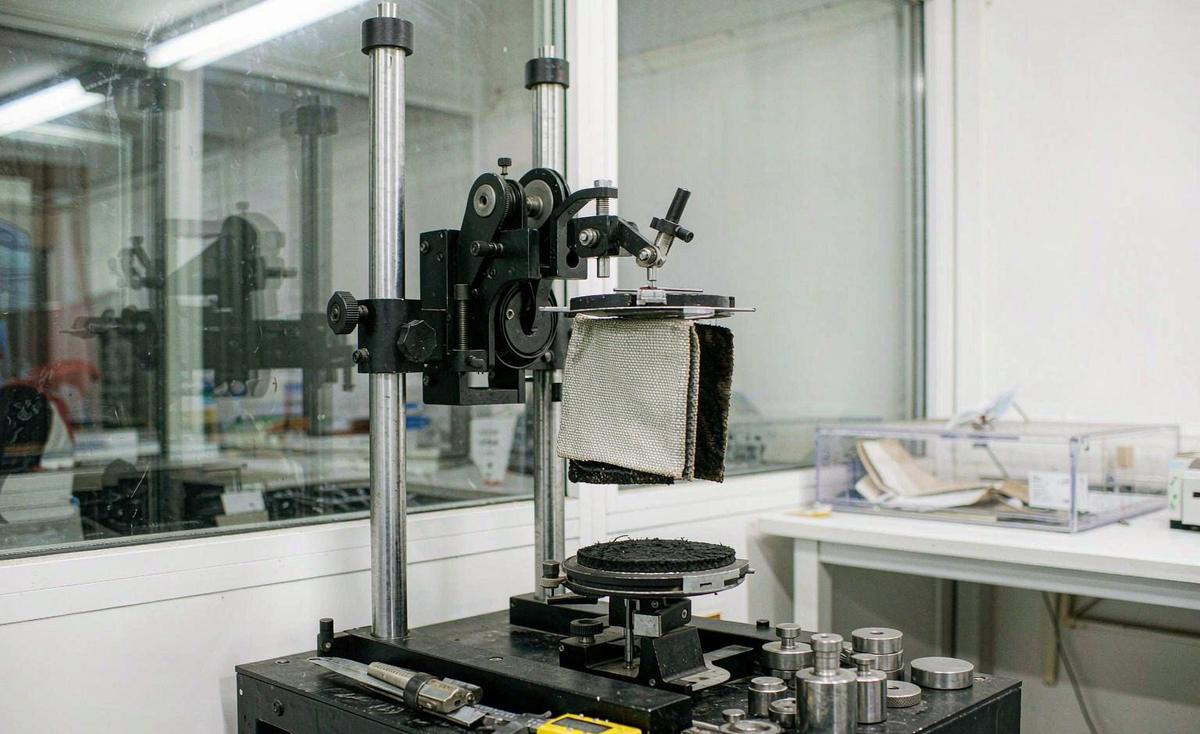
- What AQL 2.5 means on a purchase order
- Reading the ISO 2859-1 sampling plan for a bag lot
- Defect classes: critical, major and minor on backpacks
- Checks before a single panel is cut
- In-line checkpoints during the bulk run
- Fabric and seam testing: ISO 811 and ASTM D5034
- Hardware, zip and strap testing
- Transit testing to ISTA 3A and carton specification
- How to read a pre-shipment inspection report
- Where AQL 2.5 stops: the gaps to close
- Writing the QC clause into the purchase order
What AQL 2.5 means on a purchase order
AQL stands for acceptance quality limit, and it is the worst tolerable process average when a continuing series of lots is submitted for acceptance sampling. That definition matters more than the slogan. AQL 2.5 is not a promise that 2.5 percent of your bags will be defective, and it is not a guarantee that the lot contains fewer than 2.5 percent defects. It is the defect rate at which the sampling plan in ISO 2859-1 will still accept most lots. Read the clause that way and you will stop being surprised by what inspection does and does not catch.
Two consequences follow. First, a lot can pass inspection and still contain defects, because the plan samples a fraction of the lot and accepts a defined number of non-conformities. Second, a single inspection tells you very little about a supplier's process average; the switching rules in ISO 2859-1 exist precisely because a run of results is more informative than one result. For a campaign bag buyer, the practical reading is this: AQL 2.5 is a release gate for a specific lot, not a quality guarantee for a brand.
- AQL is expressed as a percentage or as non-conformities per 100 units, and 2.5 is a common commercial default for sewn goods.
- The plan assumes random sampling from the lot, so the cartons must be selected randomly and not from the top of the stack.
- Critical defects are normally treated with a zero acceptance number regardless of the AQL agreed for major defects.
- AQL applies to the lot presented. If the lot is presented late or partially packed, the sampling basis changes.
- The same AQL can produce very different protection at different lot sizes, which is why sample size must be stated, not just the AQL value.
The buyer decision, then, is not whether to use AQL 2.5 but what to attach to it. Agreeing AQL 2.5 without naming the inspection level, the defect classification list and the special checks is agreeing to very little. State General Inspection Level II, single sampling, normal inspection, and attach a defect dictionary written for your specific bag. Our production team works to that structure because it removes the argument at the point where it is most expensive: the week before shipment. Background method sits on Kickstarter campaign bag QA and QC.
Key takeaways
- AQL 2.5 is a lot release gate under ISO 2859-1, not a warranty on defect-free goods.
- Sample size depends on lot size and inspection level: a 1,200 pcs lot at Level II draws 80 units with 5 accepted and 6 rejecting.
- Critical defects are normally zero-acceptance, separate from the AQL agreed for major and minor defects.
- Attribute sampling cannot catch fabric strength, coating failure or transit damage; commission ISO 811, ASTM D5034 and ISTA 3A separately.
- Write the inspection level, defect dictionary and rework responsibility into the purchase order before the 35-50 day window starts.
Reading the ISO 2859-1 sampling plan for a bag lot
ISO 2859-1 is the standard for sampling procedures for inspection by attributes. The plan is read in three steps: determine the sample size code letter from the lot size and the general inspection level, read the sample size for that code letter, then read the accept and reject numbers for that sample size at your chosen AQL. Most commercial bag orders use General Inspection Level II with single sampling and normal inspection. Using Level I halves the sample size and materially weakens the protection, which is worth knowing if a quotation quietly proposes it.
| Lot size (pcs) | Code letter | Sample size | Accept | Reject |
|---|---|---|---|---|
| 151 to 280 | G | 32 | 2 | 3 |
| 281 to 500 | H | 50 | 3 | 4 |
| 501 to 1,200 | J | 80 | 5 | 6 |
| 1,201 to 3,200 | K | 125 | 7 | 8 |
| 3,201 to 10,000 | L | 200 | 10 | 11 |
| 10,001 to 35,000 | M | 315 | 14 | 15 |
| 35,001 to 150,000 | N | 500 | 21 | 22 |
Two features of that table surprise first-time buyers. The first is that the acceptance number rises more slowly than the sample size, so larger lots are not proportionately riskier in percentage terms but do admit more defective units in absolute terms. A 315-unit sample that accepts 14 defects can pass a lot in which roughly 4 percent of units carry a major defect. The second is that ISO 2859-1 includes switching rules: a run of accepted lots can move you to reduced inspection, while repeated rejections move you to tightened inspection, where the sample size stays similar but the acceptance number drops. For a one-off campaign run there may only be one lot, so state normal inspection explicitly.
A purchase order that says AQL 2.5 without naming General Inspection Level II and single sampling is incomplete. Level I would cut the sample on a 1,200 pcs lot from 80 units to 32, which halves your chance of catching a systematic fault before shipment.
Defect classes: critical, major and minor on backpacks
Attribute inspection sorts every non-conformity into a class, and the class determines the acceptance number applied to it. Critical defects are those that make the product unsafe or non-compliant, and they are normally zero-acceptance: one is enough to reject. Major defects are those a backer would notice and would likely return the product over. Minor defects are workmanship issues that a reasonable customer would accept on a first glance but might notice on close inspection. The classification is where most disputes start, so it belongs in writing before the run.
| Class | Definition | Backpack examples | Typical acceptance |
|---|---|---|---|
| Critical | Unsafe, illegal or non-functional | Broken load-bearing strap anchor, exposed needle or sharp point, missing compliance label, magnet release on a children's product | Zero |
| Major | Backer would return it | Zip fails to close, seam opening over 10 mm, panel misalignment over 5 mm, logo misapplied, lining delamination | AQL 2.5 |
| Minor | Noticeable on close review | Loose thread over 5 mm, light soiling that wipes off, slight colour shade variance within tolerance, minor creasing from packing | AQL 4.0 |
Write the dictionary with measurements rather than adjectives. Seam opening over 10 mm is classifiable by an inspector in a consistent way; poor stitching is not. Where a defect type is common in your category, give it its own line. Backpacks generate recurring arguments about panel symmetry, print registration, strap length mismatch between left and right, and foam density in the back panel, so state tolerances for each. A left strap 8 mm longer than the right is visible on the wearer and is exactly the sort of thing that becomes a comment thread after delivery.
One classification decision deserves its own line: a functional failure is major even if it looks minor. A zip garage that catches, a buckle that is stiff to release, a bottle pocket that does not fit the stated bottle diameter, or a magnetic closure that opens under its own load are all functional defects. Backers judge the bag by using it, not by looking at it. Our programme coordinators ask creators to classify by use consequence first and by appearance second, which is also the sequence a reviewer will follow. Category-specific checks are set out on custom backpacks for Kickstarter.
Checks before a single panel is cut
The cheapest defect to fix is the one found before cutting. An incoming material check confirms that the fabric, lining, foam, webbing, hardware and printed panels match the approved reference and the declared specification. It is a short exercise and it prevents the worst outcome available: a full bulk run built on the wrong substrate. On a 500 pcs minimum order, a wrong fabric is not a sample problem, it is the entire campaign.
- Verify fabric denier, construction and finish against the approved reference swatch, and check the roll lot number is recorded.
- Check coating or laminate adherence by a tape or wipe test on an offcut before the roll is released to cutting.
- Confirm hardware finish, dimensions and quantity against the specification, and retain samples from the incoming lot.
- Confirm printed or embroidered panels against the approved artwork, including colour reference and placement marks.
- Record the findings with photographs so that a later dispute about material identity has evidence attached.
This stage also covers the label and packaging file. Tracking labels, warning text, care labels and hangtag artwork should all be approved at sample stage, because label printing sits on the critical path at packing. If a compliance result arrives late and forces a warning onto the label, the packing date slips, and the packing date is the last step before the production window closes. Treat artwork approval as a QC deliverable with a date attached, not as a marketing task that can finish whenever. Sample-stage discipline is described on crowdfunding bag sample prototyping.
In-line checkpoints during the bulk run
An in-line inspection happens while production is running, typically when the first units come off the line and again at a midpoint. Its purpose is different from pre-shipment inspection: it catches a systematic error at the point where the remaining quantity can still be corrected. A pattern error found on day two costs a day of rework; the same error found at pre-shipment costs the whole run. For a campaign with a published delivery month, in-line checks are the single highest-value QC spend available.
- Approve the first-off unit against the approved pre-production sample before the line is released to run at speed.
- Check the first 20 to 30 units for dimensional accuracy, seam consistency and hardware function.
- Re-check after any material roll change or hardware lot change, because substitutes are the most common source of drift.
- Verify that operators are working to the current version of the tech pack, not to an earlier revision.
- Record the in-line findings in writing, with photographs, and confirm the corrective action before the line resumes.
In-line checks also catch the quiet problem of process drift. As a line learns a pattern, labour minutes fall and consistency usually improves, but the same learning can produce shortcuts: a skipped back-tack, a reduced stitch count, a bar-tack replaced by a plain stitch. Those shortcuts are invisible on a finished bag and are the leading cause of field failures months after delivery. Ask for the in-line report as a matter of routine rather than as an exception, and ask specifically about attachment points, because every load-bearing strap on a backpack is an attachment point. Production structure is covered on bag manufacturing for campaign creators.
Fabric and seam testing: ISO 811 and ASTM D5034
Attribute sampling counts defects; it does not measure performance. If your campaign page says the bag is water resistant, that claim has a test behind it, and the test is ISO 811. ISO 811 determines the resistance of textile fabrics to water penetration by measuring hydrostatic pressure, reported as a hydrostatic head in millimetres of water. A fabric that holds 1,500 mm before the third drop penetrates is a different product from one that holds 300 mm, and only a test tells you which you bought. Commission it on the actual production fabric, not on the mill's datasheet.
| Test | Standard | Property measured | How a buyer uses the result |
|---|---|---|---|
| Hydrostatic head | ISO 811 | Resistance to water penetration, mm H2O | Substantiates a water-resistant or waterproof claim |
| Grab breaking strength | ASTM D5034 | Fabric breaking force and elongation | Sets a minimum strength for shell and lining |
| Abrasion resistance | ISO 12947 or ASTM D3884 | Cycles to fabric breakdown | Predicts panel wear on high-contact areas |
| Colour fastness to rubbing | ISO 105-X12 | Transfer under dry and wet rubbing | Prevents colour transfer onto clothing |
| Colour fastness to light | ISO 105-B02 | Fading under artificial light | Relevant for dyed and printed panels |
| Spray test | ISO 4920 or AATCC 22 | Surface wetting rating | Screens the durable water-repellent finish |
| Seam strength | ISO 13935-2 or ASTM D1683 | Force to break a sewn seam | Validates stitch type and stitch density |
ASTM D5034 is the grab test for breaking strength and elongation of textile fabrics, and it is the standard way to put a number on fabric strength rather than a description. Specify a minimum breaking force for the shell and lining by direction, because warp and weft values differ, and confirm that the seam strength test is run on the actual stitch construction used in production. A strong fabric with an inadequate stitch count still fails at the seam, which is why seam strength is worth commissioning alongside fabric strength rather than instead of it.
Timing is the practical constraint. Laboratory testing typically takes one to three weeks depending on the laboratory and the number of methods, and it must run on production-representative material. Commission it during sampling, in parallel with the second sample round, so it finishes before bulk starts rather than after bulk finishes. Testing after bulk is a description of what you shipped, not a control over what you are about to ship. Compliance context and scheduling sit alongside Kickstarter campaign bag QA and QC.
Hardware, zip and strap testing
Hardware fails differently from fabric. Fabric degrades gradually and visibly; a clip, a buckle or a zip either works or it does not, and when it fails the bag is unusable rather than merely worn. That makes hardware the highest-consequence component in the bill of materials and the one most often sourced on price. Specify hardware by material and by rated load, then verify rather than assume.
- Strap anchor pull test: apply the rated load to the webbing anchor and hold, checking for stitch movement or fabric tear.
- Buckle and clip cycle test: operate repeatedly to the stated cycle count and re-check for cracking or release failure.
- Zip cycle test: run the slider the full length of the tape repeatedly, then inspect the tape, teeth and puller attachment.
- Slider pull-off test: confirm the puller does not separate from the slider body under a defined load.
- Plastic hardware cold check: confirm POM components do not become brittle at the low end of your destination climate range.
- Coating adhesion on metal hardware: check for flaking after abrasion, since flaking exposes base metal and invites corrosion.
For any load-bearing component, state the test method and the acceptance criteria in the purchase order, and ask for the result as a document rather than as an assurance. Where a campaign bag carries a device, a camera or a bottle in an external pocket, the attachment is load-bearing even though it looks decorative. A strap anchor that holds a 2 kg load statically may fail under the repeated shock loading of a walking pace, which is why dynamic or repeated-load testing is worth requesting on the anchors that carry the most weight.
Transit testing to ISTA 3A and carton specification
A bag can pass every attribute and laboratory check and still arrive damaged, because the failure happens in transit rather than in production. ISTA 3A is the general simulation performance test for individual packaged products shipped through a parcel delivery system, and it is the appropriate reference for a backer parcel shipped direct to a consumer. It combines conditioning, drop testing at heights set by package weight, and random vibration with and without a top load, which is a reasonable simulation of what a parcel courier actually does to a box.
The results feed straight back into the carton specification and the packing method. Drop damage on a structured backpack usually shows as crushed panels, deformed foam or scuffed corners, and the fix is internal stuffing, a corner-post arrangement or a stronger carton grade. Under-specifying the carton is a false economy: the saving per carton is small, and a single percentage point of transit damage on a 500 pcs run generates replacement units, reshipment cost and backer correspondence that dwarf it. Pack method and carton spec belong in the RFQ so freight and packing are quoted on the same basis.
Most campaign bag damage claims originate at the carton, not at the bag. Specify the carton grade, the pack quantity, the internal stuffing and the closure method in the purchase order, and validate the packed carton to ISTA 3A before committing to a freight booking.
Freight mode matters too. A parcel shipment to individual backers sees more handling events than a palletised shipment to a fulfilment warehouse, so the same bag needs a tougher pack in the direct-ship case. Decide the fulfilment model early, because it determines the carton specification, and the carton specification determines freight cost to every destination. Guidance on that choice is on crowdfunding rewards fulfilment.
How to read a pre-shipment inspection report
A pre-shipment inspection report is a decision document, and it should let you decide within an hour whether to release the shipment. Insist on a consistent structure: lot identification and quantity presented, the sampling plan actually used with code letter and sample size, a defect count by class, photographs of every defect found, and a disposition for each. A report that gives a pass or fail verdict without the underlying counts is not a decision document; it is an opinion.
| Report element | Why it matters | Red flag |
|---|---|---|
| Lot size and cartons presented | Confirms the sampling basis | Quantity differs from the packing list |
| Code letter and sample size | Confirms the inspection level used | Level I used where Level II was agreed |
| Defect count by class | Allows you to apply your own criteria | Defects listed without classification |
| Photographs of every defect | Evidence for a rework or credit claim | Summary photographs only |
| Carton and packing check | Covers quantity, marking and closure | Packing omitted from the report |
| Special checks performed | Confirms your product-specific tests | Special checks marked as not applicable |
Agree the consequences in advance. If the lot is rejected, who pays for rework, who pays for re-inspection, and what happens to the delivery date? These are negotiation questions and they are worth settling when both parties still want the order, not when a container is waiting. Most purchase orders settle them in one sentence, and that sentence is what determines whether a rejection becomes a two-week delay or a six-week one. Our production team treats the rework clause as standard content because a campaign delivery date is a public promise.
Where AQL 2.5 stops: the gaps to close
Attribute sampling has real limits, and knowing them is what separates a QC plan from a QC slogan. A random sample drawn at 80 units from 1,200 will routinely miss a fault that affects only a small share of the run, and it will miss anything that only appears after use. Odour, colour shift over time, coating degradation, foam compression set and hardware fatigue are all outside the scope of a visual attribute check. Each needs either a laboratory method or a defined field test.
- Odour: not caught by attribute inspection; assess an opened carton and, for baby-adjacent or enclosed products, commission screening.
- Colour consistency across rolls: check shade against the approved reference at incoming inspection, not at pre-shipment.
- Dimensional drift: measure on the first-off unit and at in-line, because a pattern error is systematic rather than random.
- Functional fit: a bottle pocket, a device sleeve or a tripod holder needs a physical gauge check, not a visual check.
- Packing quantity errors: confirm carton counts at packing, because short shipment is discovered by backers, not by inspection.
The second limit is statistical and worth stating plainly: accepting a lot at AQL 2.5 does not mean the lot is 2.5 percent defective or better. It means the sample drawn met the acceptance criteria for that plan. Bags that fail in month three of use are usually the result of a process variable that the plan never measured. That is why the combination of incoming checks, in-line checks, laboratory tests and transit simulation is the actual quality system, and AQL 2.5 is only the final gate within it.
Writing the QC clause into the purchase order
Everything above only binds if it is written into the order. A QC clause for a campaign bag purchase should be short enough to be read and specific enough to be enforced. Name the standard, the inspection level, the sampling scheme, the defect classes with their acceptance numbers, the special checks, the laboratory tests and their methods, the transit test, and the consequences of rejection. Attach the defect dictionary as a schedule so it is part of the contract rather than an email.
| Item | What to state | Typical wording |
|---|---|---|
| Sampling standard | ISO 2859-1 | Single sampling, General Inspection Level II, normal inspection |
| Acceptance quality limit | By defect class | Critical 0, major AQL 2.5, minor AQL 4.0 |
| Defect dictionary | Attached schedule | Classified with measurable tolerances |
| Special checks | Product-specific | Fit gauge, wipe test, pull test, zip cycle |
| Laboratory tests | Named standard and method | ISO 811, ASTM D5034, ISO 105-X12 as applicable |
| Transit test | ISTA 3A | Packed carton validated before freight booking |
| Report requirements | Structure and evidence | Photographs, counts by class, packing check |
| Rejection consequences | Cost and time | Rework and re-inspection cost, delivery impact stated |
Then schedule the inspections against the production window. production 35-50 days after deposit and approved pre-production sample, and each inspection should have a date in that window rather than a hope attached to it. Book the pre-shipment inspection when packing is complete, not while packing is finishing, because sampling from a partially packed lot undermines the random basis the plan depends on. Where a creator is running a first campaign, our programme coordinators will set those dates into the schedule at quotation stage so they are visible before the deposit is paid. Planning guidance is also on low MOQ bag production for creators and custom bags for Kickstarter.
AQL 2.5 tells you when to stop arguing about a lot. It does not tell you whether the bag is any good.
Programme coordinator, QC briefing
- Inspection standard
- AQL 2.5 to ISO 2859-1
- Sampling scheme
- Single sampling, General Inspection Level II, normal inspection
- Critical defects
- Zero acceptance
- Major defects
- AQL 2.5
- Minor defects
- AQL 4.0
- Fabric water resistance
- Hydrostatic head to ISO 811, reported in mm H2O
- Fabric strength
- Grab test to ASTM D5034, minimum force by direction
- Transit simulation
- ISTA 3A on the packed carton
- Bulk production
- 35-50 days
- Minimum order quantity
- 500 pcs per style / colourway
- Trade term
- FOB Xiamen
- Payment terms
- T/T 30/70
- Kickstarter campaign bag QA and QC
- Custom backpacks for Kickstarter
- Crowdfunding bag sample prototyping
- Crowdfunding rewards fulfilment
- Bag manufacturing for campaign creators
- Contact for a quote
Get a QC plan written into your next bag quotation
Send your tech pack and target delivery month to service@junyuanbags.com. Our production team will return an inspection specification with sample sizes, a defect dictionary and the laboratory and transit tests your build actually needs.
Frequently Asked Questions
What does AQL 2.5 mean in plain terms?
AQL 2.5 is the worst tolerable process average at which an ISO 2859-1 sampling plan will still normally accept lots. It is a release gate for one lot, not a guarantee that the lot contains fewer than 2.5 percent defects, so it must be paired with incoming and in-line checks.
How many units are inspected from a 1,200 pcs bag order?
At General Inspection Level II with single sampling and normal inspection, a 501 to 1,200 pcs lot takes code letter J and a sample of 80 units. At AQL 2.5 the acceptance number is 5 and the rejection number is 6 for major defects.
What is the difference between AQL 2.5 and AQL 4.0?
Both are ISO 2859-1 acceptance quality limits, but 2.5 is stricter. On a 125-unit sample, AQL 2.5 accepts 7 major defects while AQL 4.0 accepts 10. Most bag orders use AQL 2.5 for major defects and AQL 4.0 for minor ones.
Which inspection level should I specify?
Specify General Inspection Level II with single sampling and normal inspection. Level I would reduce the sample on a 1,200 pcs lot from 80 units to 32, roughly halving your chance of detecting a systematic fault before shipment.
Are critical defects included in the AQL 2.5 count?
Normally no. Critical defects are treated as zero-acceptance regardless of the AQL agreed for major defects, so 1 critical finding rejects the lot while 5 major defects are still acceptable on an 80-unit sample. Define critical as unsafe, illegal or non-functional in the defect dictionary.
Does AQL 2.5 cover fabric strength or water resistance?
No. Attribute sampling counts visible and functional defects only. Water resistance needs ISO 811 for hydrostatic head and fabric strength needs ASTM D5034 for grab breaking force. Commission both on production-representative material during the 6-10 working days of sampling window.
What hydrostatic head should a water-resistant backpack fabric meet?
ISO 811 reports the result in millimetres of water, and the right minimum depends on the claim you make. Set the threshold in the specification and test the production fabric, because a mill datasheet does not cover the coated fabric that actually runs on your order.
What is ISTA 3A and when does it apply?
ISTA 3A is the general simulation performance test for individual packaged products shipped through a parcel delivery system. It applies when backer parcels ship direct to consumers, combining drop testing at weight-based heights with random vibration with and without a top load.
How long does third-party laboratory testing take?
Typically 1 to 3 weeks depending on the laboratory and the number of methods commissioned. Book it to run in parallel with the second sample round so results land before the 35-50 day bulk production window opens, not after it closes.
Who pays when a lot fails inspection?
Agree it before the 30 percent deposit is paid. A standard clause puts rework and re-inspection cost with the production side and states the delivery impact in days, typically 7 to 14 for a rework on a 500 pcs run. Without that sentence a rejection becomes an open negotiation.
Should inspection happen before or after packing?
Pre-shipment inspection should happen when packing is complete, because sampling from a partially packed lot undermines the random selection the ISO 2859-1 plan depends on. Carton quantity, marking and closure should also be part of that inspection.
Can I request tightened inspection?
Yes. ISO 2859-1 switching rules move to tightened inspection after repeated rejections, keeping a similar sample size but lowering the acceptance number, typically by 1 to 2 units. For a single campaign lot, state normal inspection and request tightened explicitly if you want it.
People Also Ask
Is AQL 2.5 good enough for a crowdfunding bag order?
It is the standard commercial gate for sewn goods and a reasonable default, but on its own it only covers visible and functional attributes. Pair it with ISO 811, ASTM D5034 and ISTA 3A, plus in-line checks during the 35-50 day window.
Why did my bags pass inspection but still get complaints?
Because attribute sampling accepts a defined number of defects and does not test performance over time. Odour, coating degradation, foam compression and hardware fatigue all fall outside the visual plan and need laboratory or field tests.
What sample size applies to a 500 pcs minimum order?
A 281 to 500 pcs lot takes code letter H and a 50-unit sample at General Inspection Level II, with 3 major defects accepted and 4 rejecting at AQL 2.5. Confirm the level in the purchase order so the basis is fixed.
Should I pay for a third-party inspector?
For a first campaign run, usually yes. An independent report with photographs and defect counts gives you evidence for a rework or credit claim, which is worth more than the inspection fee on a 500 pcs order.
When should fabric testing be commissioned?
During sampling, in parallel with the second sample round. Testing takes 1 to 3 weeks and must run on production-representative material, so booking it after bulk only tells you what you already shipped.