Kickstarter Backpack Sampling: 3 Rounds That Get the Sample Right
How many sample rounds does a Kickstarter backpack need? Three: a construction prototype at 6-10 working days, a true-material specification sample, and a pre-production unit built on the bulk line. Each round answers one question, each costs a few hundred dollars, and together they prevent a 500-unit remake. Inspection closes the loop at AQL 2.5 to ISO 2859-1 before shipment.
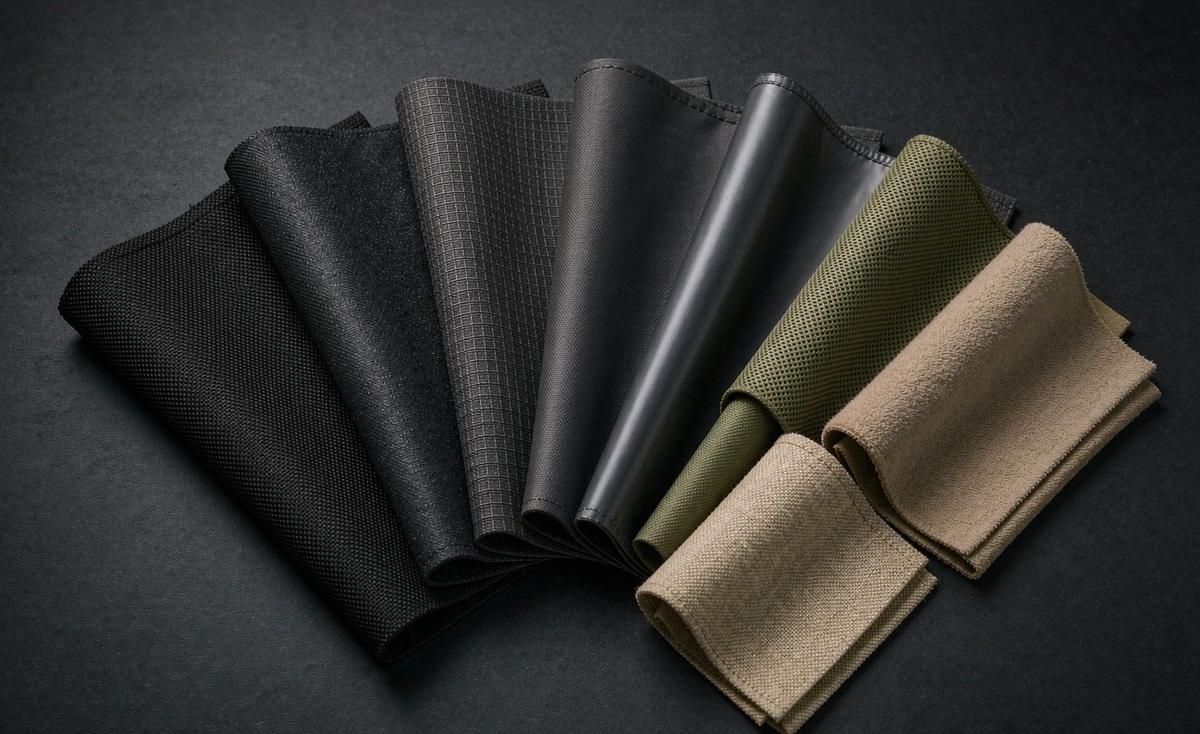
- Why three sample rounds beat one expensive guess
- Round one: the construction prototype
- Round two: the true-material specification sample
- Round three: the pre-production reference unit
- A fourteen-point measurement checklist for every round
- What sampling costs and who pays for the changes
- Writing change notes that land in one pass
- Faults typical to each round and their fixes
- Agreeing tolerances in writing before bulk
- When a build needs a fourth touchpoint
- Mapping three rounds onto a campaign calendar
- Turning the approved unit into a line reference
Key takeaways
- Round one proves the silhouette and structure; it is not the place to judge colour or final fabric hand.
- Round two must use genuine production materials, because substitute fabric invalidates most of what you learn from it.
- Round three is built on the actual bulk line with batch materials, and becomes the sealed reference for inspection.
- Standard rounds take 6-10 working days each; complex constructions with moulded or welded parts take 12-15.
- Write one consolidated change note per round. Fragmented feedback across ten emails guarantees something gets missed.
- Sample fees are small against committed bulk spend: skipping round three exposes the entire 500 pcs minimum order.
Why three sample rounds beat one expensive guess
Creators ask whether three sample rounds are really necessary, and the honest answer is that three is already the compressed version. Brand programmes routinely run five or more iterations. What crowdfunding timelines allow is a tight three-round structure in which every round has exactly one job, every round is paid for deliberately, and no round is spent discovering something the previous round should already have established.
The economics are straightforward. A sample round typically costs a few hundred dollars plus courier. A bulk run of 500 pcs at even a modest unit cost represents a five-figure commitment. The ratio between protecting that spend and the cost of protecting it is therefore of the order of twenty to one or better. Creators who try to collapse three rounds into one usually pay for it twice, once in remake cost and once in a missed delivery window that their backers notice.
There is also a communication argument. Crowdfunding audiences reward visible diligence. Unboxing videos and update posts that show a first wrinkled prototype next to a finished unit perform well because they demonstrate that somebody was paying attention to detail. The sampling programme is not only a technical gate, it is campaign content that justifies a premium reward tier.
One more reason matters for creators working without in-house technical staff: sampling is where cost is actually decided. Panel count, seam construction and operation sequence are all frozen during these rounds, and each one converts directly into labour minutes and therefore into unit cost. Our bag manufacturing notes for campaign creators explain how those upstream choices show up later in a cost breakdown, which is useful reading before you issue your first set of change notes.
Round one: the construction prototype
The first sample exists to answer structural questions and nothing else. Does the silhouette hold its shape when empty? Does the base sit flat? Is the strap geometry comfortable under a 6 kg load? At this stage the technician usually cuts from available stock fabric in a neutral colour, since the purpose is to validate pattern and assembly logic before any mill commitment is made.
- Panel geometry: count every panel and ask whether two could be merged to reduce stitch length and labour minutes.
- Volume check: fill the pack with measured litre beads to verify claimed capacity rather than trusting the drawing.
- Load path: identify where weight transfers from strap webbing into the body panel, since that junction usually fails first.
- Access logic: open every zipper with the pack loaded and note anything that binds, catches or needs two hands.
- Assembly feasibility: ask the technician directly which operations were difficult, because difficulty becomes cost and defect rate in bulk.
Expect this round to reveal that several things in your render were optimistic. That is normal and it is the cheapest possible moment to learn it. Resist the temptation at this stage to comment on colour, hardware finish or embroidery quality: none of those can be judged because none of them are final yet. Reviewers who mix round-one and round-three criteria into one feedback email slow down every round that follows.
An empty backpack hides roughly half of its problems. Stuffer habits differ between flat and structured designs, but as a working rule load round one with 5-7 kg distributed as a real user would, hang it for an hour, then photograph all six faces. Shape memory faults and strap spread only appear under sustained load.
Round two: the true-material specification sample
Round two is where budget and honesty meet. This unit must be built from the actual material you intend to run: the exact denier, the exact coating, the exact lining weight, the exact hardware from the exact supplier. Anything substituted here produces a sample that photographs beautifully and tells you almost nothing about how the bulk 500 pcs will behave.
| Element | Final in round two? | Why it matters |
|---|---|---|
| Shell fabric and coating | Yes | Fabric hand, drape and dye strength drive perceived quality in photography |
| Lining and internal panels | Yes | Changes here alter internal dimensions and fit of sleeves |
| Zippers and sliders | Yes | Gauge and pull style change both cost and user experience |
| Foam density in straps and back panel | Yes | Directly determines comfort and long-term compression set |
| Branding execution | Yes | Embroidery, woven labels or prints introduce their own tolerances |
| Carton and polybag specification | No | Packing can be confirmed at pre-production stage |
| Barcode and retail labelling | No | Applied later provided artwork is ready |
This round frequently produces the largest number of specification changes, because this is the first time the design meets physical reality at full quality. Budget for it mentally as well as financially. The most common outcome is a fabric upgrade request after the creator handles a lighter shell and decides it feels unconvincing for a premium reward position, and that decision must be made here rather than after bulk materials arrive.
Hardware should be verified at this point too. Pull every buckle twenty times, run every zipper fifty cycles, and load every strap junction that carries weight. Where a laboratory test is planned, such as strap tensile verification referenced to ASTM D5034 for fabric strength, request it against this round's materials so that any failure is discovered while you can still substitute.
Choose shell grade deliberately rather than by feel alone. Denier, coating and construction together determine abrasion behaviour, perceived quality and price, so it helps to review the mapping set out in our custom backpacks for Kickstarter reference before locking the specification. A change requested here costs nothing beyond another build, whereas the same change requested after bulk materials arrive costs the material itself.
Round three: the pre-production reference unit
The third unit is built on the production line, by line operators rather than sample technicians, using materials drawn from the batch that will run bulk. That distinction is the entire point. It tests repeatability, meaning whether the people and machines that will make your 500 units can achieve what skilled sample hands achieved in round two.
- Confirm the unit is assembled from the confirmed bulk batch of fabric, not a residue roll from the sample room.
- Request two identical units rather than one, because one stays with you and one stays sealed at production.
- Compare it against round two for any silent drift in hand-feel, colour or stiffness.
- Sign the approval document and record the exact unit reference and date in your change log.
- Release the balance payment only against this approval, since it is the trigger for bulk material release.
Once that unit is signed, it becomes the contractual reference for everything that follows. Delivery disputes, inspection arguments and rework requests all resolve by comparing finished cartons against the sealed unit. Keep yours in a cool dry place and photograph it under neutral lighting, because colour memory is unreliable after several weeks and your own reference unit will be the only credible evidence you have.
A fourteen-point measurement checklist for every round
Subjective feedback such as 'the proportions feel off' costs days. Measurable feedback such as 'reduce top panel height by 12 mm' costs nothing. Use the checklist below for every sample you receive, record numbers rather than impressions, and you will generate change notes that a technician can execute without a follow-up call.
| Check | Method | Typical tolerance to agree |
|---|---|---|
| External dimensions | Measure flat on a table, three points per axis | Plus or minus 5 mm |
| Claimed volume | Litres via measured bead fill | Plus or minus 3% |
| Total weight | Empty, including all removable parts | Plus or minus 20 g |
| Strap width at shoulder | At the widest point under load | Plus or minus 2 mm |
| Strap length range | Fully extended and fully retracted | Plus or minus 10 mm |
| Back panel dimensions | Height and width at contact area | Plus or minus 4 mm |
| Laptop sleeve internal | Clear internal space, all four sides | Plus or minus 3 mm |
| Base flatness | Gap under a straight edge when unloaded | Under 3 mm |
| Stitch density | Stitches per inch on load seams | Minimum 7 per inch |
| Colour match | Compare against a Pantone reference under D65 light | Delta E under 1.5 commercially |
| Zipper cycle | Fifty cycles with light load | No catch or slider spread |
| Buckle retention | Loaded pull to production use level | No slip or deformation |
| Panel symmetry | Compare left and right seam positions | Plus or minus 3 mm |
| Water shedding | Where applicable, see our waterproofing notes | Per agreed test standard |
Recording these numbers has a second benefit. When you later negotiate a re-order, a dated measurement record makes it easy to show whether the repeat run matched the original. Programmes that keep this discipline re-order faster because they can approve against history rather than restarting review from zero.
What sampling costs and who pays for the changes
Sample fees vary with complexity, but the structure is consistent: you pay for each round, typically a few hundred dollars per unit including labour and courier, and you pay a separate charge if the change requested was outside the original specification. Changes inside the agreed brief, meaning corrections needed to meet what was already documented, should not carry development charges.
- Round fee: covers pattern amendment, cutting, assembly and internal review at the sample bench.
- Material charge: applies where a round requires new fabric purchase beyond mill minimums already held.
- Courier charge: usually the largest single line on small programmes, and one reason to consolidate rounds.
- Tooling: charged once where moulded or embossed parts are involved, sometimes creditable against bulk.
- Development charge: only appropriate where you materially change the brief after it was costed.
Air freight or express courier is almost always the right choice for samples even though it is expensive per kilogram, because three weeks saved on a courier decision protects a backer delivery date worth far more. Ask whether sample fees are deductible against bulk: many programmes credit the sampling cost back once the production deposit is paid, which means diligent sampling can be close to free.
A round costs roughly the same whether you send three changes or fourteen, so batch your notes. Reviewers who send piecemeal observations over several days cause rework mid-round, and each unplanned rework resets part of the 6-10 working day clock.
Writing change notes that land in one pass
The most common cause of a wasted round is ambiguity. A note that says 'improve the strap comfort' will produce something; whether it produces what you intended is a coin toss. Write each item as a location, a measurement and an action, ideally with a marked-up photograph. That format takes maybe twice as long to compose and removes an entire category of misunderstanding.
- Number every item so the response can reference the same numbers rather than paraphrasing back to you.
- Attach a photograph with the location circled, taken in daylight rather than under mixed indoor lighting.
- State the dimension you want and the dimension you observed, using the same unit system throughout.
- Separate mandatory changes from desirable ones, so cost conversations can happen without re-reading everything.
- Ask for written confirmation of which items were actioned before the next round ships.
Keep one consolidated log rather than a thread. A shared document listing round number, date sent, items requested and items completed becomes your project record, and it is what you will want to hand over if you ever change production arrangements mid-programme. Detailed guidance on the whole mechanism, including how patterns are amended between rounds, sits in our crowdfunding bag sample prototyping notes.
Faults typical to each round and their fixes
Experience across more than 20 supported campaigns shows that fault types cluster by round. Knowing which cluster belongs where helps you diagnose quickly, and helps you decide whether a given fault is a genuine defect or an artefact of the round you are reviewing.
| Fault observed | Most likely cause | Remedy belonging to this round |
|---|---|---|
| Silhouette collapses when empty | Insufficient internal structure or foam density too low | Add a frame sheet or increase EVA density before round two |
| Zipper binds around a curve | Pattern geometry pulls the tape out of plane | Amend pattern; do not simply change to a heavier zipper |
| Colour reads wrong under photography | Dye lot or coating sheen differs from reference | Request a lab dip rather than adjusting the photograph afterwards |
| Straps spread under load | Webbing anchor point too narrow or bar-tack insufficient | Widen reinforcement and add a box stitch |
| Bulk unit stiffer than round two | Batch fabric resin content differs from sample roll | Hold both units and specify acceptable hand-feel range |
| Seam puckering on curves | Feed tension inconsistent on curved sections | Adjust operator technique and machine feed settings |
Notice that several remedies involve pattern change rather than material substitution. Substituting material to fix a geometry problem is a common trap: it adds cost and usually leaves the underlying fault in place. Ask your production partner to separate structural commentary from material commentary in every response, and hold them to it.
Agreeing tolerances in writing before bulk
Nothing in manufacturing is exact, and pretending otherwise creates arguments. Every dimension has some acceptable range, and agreeing those ranges in writing before bulk begins is what allows an inspector to make a defensible call later. Without documented tolerances, both sides argue from memory, and the party holding the goods generally wins.
- Document tolerances for every measurement in the fourteen-point checklist, even where they feel obvious.
- Agree acceptable colour deviation using a physical reference standard rather than a descriptive phrase.
- Define what counts as a critical, major and minor defect for your product specifically.
- Record who pays for rework when a unit falls outside tolerance, and how quickly replacement stock is scheduled.
- Confirm that the pre-production sample itself is accepted as the appearance reference.
These agreements then feed the inspection plan. When bulk completes, a random draw is inspected at AQL 2.5 to ISO 2859-1, and the tolerance document determines whether each observed fault is a defect at all. Our Kickstarter bag QA and QC reference sets out how sampling sizes and accept thresholds scale with order quantity.
When a build needs a fourth touchpoint
Three rounds cover the great majority of campaign backpacks, but some constructions genuinely need more. Anything involving moulded components, welded seams, an internal aluminium stay, integrated electronics channels or unusual closure hardware will typically need added development attention, and complex builds are quoted at 12-15 working days per round for exactly that reason.
The tell is usually cost. If your RFQ shows tooling above a modest four-figure level, or if the technical review flagged novel assembly steps, plan additional development time now rather than discovering it in week two. Adding a focused structural sub-round is far cheaper than absorbing a fourth general round caused by an unresolved geometry question that nobody isolated early.
Electronics deserve separate mention. A power bank pocket with a cable port is ordinary. A sewn-in charging harness is not: it introduces component sourcing, safety documentation and possibly additional certification depending on destination market. Treat any wired element as its own workstream with its own sample, running parallel to the three textile rounds rather than inside them.
Mapping three rounds onto a campaign calendar
Assume 6-10 working days per round for a standard build, three to six days courier each way, and three to five days for your own review and photography per round. That places sampling at roughly eight to eleven weeks from design freeze, followed by 35-50 days of bulk once deposit and pre-production approval are in place. Working backwards, a campaign promising October delivery should be finalising round one around late spring.
- Weeks 1-2: tech pack freeze, round one released.
- Weeks 3-4: round one review, consolidated change notes issued.
- Weeks 5-6: round two built with true materials, laboratory requests filed in parallel.
- Weeks 7-8: material sign-off, photography assets captured for the campaign page.
- Weeks 9-10: round three built on the bulk line, approval given.
- Week 11 onwards: deposit released, production 35-50 days, then inspection and freight.
Two things compress this calendar usefully. First, run laboratory testing against round two materials rather than waiting for round three, since results typically arrive after the sample itself. Second, capture campaign photography from round two or three rather than from a rendered model, because backers respond far better to real product and because it removes a retouching round from your critical path.
A third lever is decision discipline. Every day your review notes sit unread is a day added to the calendar, and camera-teams, copywriters and fulfilment quotes all wait behind the same approvals. Assign one person authority to sign off each round, set a fixed review appointment the day the courier tracking shows arrival, and treat adherence to that appointment as seriously as the review itself. Programmes that follow this habit routinely finish sampling in seven weeks; those that review opportunistically take twelve.
Creators planning reward quantities around a 500 pcs minimum order should also read our notes on low MOQ bag production for creators, since design decisions made during sampling directly determine how your order splits across colourways.
Turning the approved unit into a line reference
Approval is not the end of sampling, it is the beginning of repeatability. The sealed reference travels to the line, where supervisors use it to set machine tensions, check colour before cutting begins and verify that the hundredth unit matches the first. Without it, operators work from memory, and memory drifts over a multi-week run.
Ask how the reference will be handled on the floor. Good practice keeps it under controlled conditions with a second sealed duplicate held separately, and uses it for a comparison check at the start of each shift and again after any material change. That single discipline is one of the strongest predictors of consistent bulk output we see across the programmes coordinated by our production team.
Once cartons are packed, packing density, carton strength and labelling still have to survive transit to individual backers rather than to a warehouse. The packing decisions you document now, including polybag specification and any protective interleaving for coated shells, are outlined in our crowdfunding rewards fulfilment guide. The crowdfunding bag guide adds a consolidated specification checklist you can copy into your own tech pack before the next programme.
At the end of bulk, pre-shipment inspection runs at AQL 2.5 against ISO 2859-1, comparing cartons to that same reference before goods leave on FOB Xiamen terms with T/T 30/70 payment. If re-orders follow later, keep the reference indefinitely: it is the only artefact that lets you prove a repeat run matches what backers already own.
- Crowdfunding bag sample prototyping
- Kickstarter campaign bag QA and QC
- Low MOQ bag production for creators
- Custom backpacks for Kickstarter creators
- Request a quotation
- Crowdfunding bag guide
- Minimum order quantity
- 500 pcs per style / colourway
- Sampling per round
- 6-10 working days (12-15 days for complex builds)
- Recommended rounds
- 3: construction, specification, pre-production
- Bulk production
- 35-50 days after deposit and approved pre-production sample
- Inspection standard
- AQL 2.5 to ISO 2859-1
- Trade term
- FOB Xiamen
- Payment terms
- T/T 30/70
- Production floor
- 4,950 m2, SGS-verified; 137 staff / 7 lines / 149 machines
- Monthly capacity
- 200,000 pcs
- Company foundation
- 2014, trade roots since 2004
- Contact
- service@junyuanbags.com
Start your three-round sampling programme
Send us your tech pack and we will schedule construction, specification and pre-production rounds on a dated calendar, with a shared change log so every revision is traceable. Write to service@junyuanbags.com for the sample quotation.
Frequently Asked Questions
How many sample rounds should a Kickstarter backpack go through?
Three is the practical minimum for any style that backers will pay a premium for: one construction prototype in stock fabric, one true-material specification unit, and one pre-production unit built on the bulk line. Builds above ordinary complexity usually need additional development attention, which is why complex sampling is quoted at 12-15 working days rather than 6-10.
How long does each backpack sample round take?
Each standard round takes 6-10 working days to build, and complex constructions take 12-15 working days. Courier adds roughly three to six days each way and your own review typically adds three to five days. Plan around eight to eleven weeks total from tech pack freeze to pre-production approval for a standard build.
How much does a custom backpack sample cost?
Most rounds run 150-400 dollars, covering pattern amendment, cutting, assembly and internal review, while express courier typically adds 40-90 dollars per shipment. Tooling for moulded or embossed parts is charged separately, often 200-800 dollars, and is sometimes creditable against bulk. Many programmes deduct 100% of sample fees once the production deposit is paid.
Should I pay for a sample before choosing a production partner?
Yes, one paid round with your preferred candidate is the cheapest diligence available. A single round reveals build quality, communication discipline and whether the team can interpret your tech pack, none of which a quotation can demonstrate. Weigh the few hundred dollars against the 500 pcs minimum you are about to commit.
What belongs in a change note after receiving a sample?
Each note should carry a number, a photographed location, the observed dimension and the requested dimension in consistent units. Separate mandatory from desirable changes so costing conversations are clean. Batch all notes into one document per round, because piecemeal feedback reopens part of the 6-10 working day clock each time.
Why must round two use production materials rather than substitute fabric?
Fabric hand, drape and stiffness change how a pack behaves and photographs, and batch variation in finished weight routinely reaches 8-10% between rolls. A substitute-fabric sample can therefore look excellent and still mislead you about the bulk output. Insist on the exact denier, coating, lining weight and hardware you intend to run across all 500 pcs.
What is a pre-production sample and why is it signed off?
It is built on the actual line by operators rather than sample technicians, using materials from the intended bulk batch, so it proves repeatability across a 500 pcs run rather than one-off craftsmanship. Signing it establishes the reference for bulk and inspection and triggers the balance payment. Keep one unit and request a sealed duplicate.
Which tolerances should be agreed before bulk begins?
Agree every dimension in your measurement checklist, practical examples being plus or minus 5 mm on external dimensions, 3 mm on panel symmetry and a minimum stitch density of 7 per inch on load seams. Also define critical, major and minor defect classes and acceptable colour deviation against a physical reference. Written tolerances let inspectors make defensible calls later.
What faults typically appear in round one versus round three?
Round one reveals structural problems such as collapse when empty, awkward load paths or zippers binding on curves, often requiring pattern amendments of 5-15 mm. Round three reveals drift, for example bulk fabric feeling stiffer because resin content differs. Each cluster has a different remedy, so diagnose by round rather than treating every fault identically.
Can sample photography be used on the campaign page?
Yes, and it should be. Shooting round two or three beats a rendered model for conversion, since backers see real fabric behaviour and it removes one retouching cycle from your critical path. Shoot under 5500K daylight with a scale reference and run 50 zipper cycles beforehand, so the closure photographs at its settled state rather than brand new.
Do I need extra rounds if my backpack has moulded or welded parts?
Usually yes. Moulded pulls, embossed plates, welded seams and internal stays add development steps outside ordinary textile assembly, which is precisely why complex builds are quoted at 12-15 working days per round. If your RFQ shows tooling above roughly four figures, plan a focused structural sub-round rather than adding a fourth general one later.
How does sample approval connect to pre-shipment inspection?
The approved pre-production unit becomes the reference an inspector compares finished cartons against. At the end of bulk, a random draw is inspected at AQL 2.5 to ISO 2859-1, and your written tolerance document determines whether each observed deviation counts as a defect. Keep the reference unit indefinitely, particularly if a re-order follows.
People Also Ask
Can I skip the pre-production sample to save a week?
You can, and it is usually a mistake. That step is the only checkpoint proving the bulk line and batch materials can reproduce what the sample bench achieved. Skipping it risks the entire 500 pcs run to save perhaps seven calendar days.
Why does my bulk backpack feel stiffer than the approved sample?
Batch fabric can differ slightly in resin content or finishing from the roll used for round two. This is why round three must use batch materials and why a physical hand-feel range should be agreed in writing before bulk cutting starts.
Should I test in a laboratory before or during sampling?
File the request during the specification round, using true production materials, so that a failed result can be resolved by substitution rather than by rework. Results usually arrive after the unit itself, and each standard commonly returns within five to fifteen working days.
How do I know when a sample is good enough to approve?
When every item on your measurement checklist falls within the tolerances agreed beforehand, and you would be content to receive any one of the next 500 units looking identical. If approval rests on a feeling, extend the checklist instead.
What if I want a fourth change after approval?
Request it immediately and in writing, expecting both a revised unit price and a revised schedule. Changes asked for before materials are cut are usually inexpensive against 500 pcs, while the same request made mid-run costs rework plus several weeks of delay.