Kickstarter Bag Campaign FAQ: The 20 Questions Creators Ask Most
The twenty questions we are asked most often about running a bag campaign, answered in numbers rather than adjectives. The short version: 500 pcs per style and colourway, sampling at 6 to 10 working days per round, bulk at 35 to 50 days, inspection to AQL 2.5 to ISO 2859-1, FOB Xiamen with T/T 30/70, and roughly 120 to 160 days from launch to delivery. Every answer below carries the figure you would need to plan against, and the ten themes are ordered the way a project actually unfolds.
- Questions 1 to 3: cost, MOQ and what drives the unit price
- Questions 4 to 6: sampling, revisions and sample fees
- Questions 7 to 9: materials, hardware and construction
- Questions 10 to 12: branding, colourways and packaging
- Questions 13 to 15: timeline, booking and production slots
- Questions 16 to 17: quality control, defects and compliance
- Questions 18 to 19: freight, duties and fulfilment
- Question 20: what happens after the campaign ends
- The twenty answers in one reference table
- Five questions to ask any production partner before you sign
- What to send with your first enquiry
These are the questions our team fields most often from creators planning a first or second bag campaign, grouped into ten themes and answered with the specific figures we quote from. The list is deliberately blunt about numbers, because the most common reason a campaign goes wrong is that the creator planned against a figure they were given in passing rather than one they were given in writing. Where an answer gives a range, the range is real: it reflects the difference between a simple flat construction and a structured multi-panel bag with custom hardware, and it is not a hedge.
Two caveats before the list. First, this article covers the product and programme questions. Platform mechanics, tax treatment and marketing are covered in their own guides, and each is linked where relevant. Second, any figure here should be confirmed in writing with a validity date before it is used to set a funding goal, because fabric and hardware prices move and a quotation taken at sampling stage can expire before the run is booked. The crowdfunding bag guide carries the same figures in a planning-table format, and the production partner guide covers how to evaluate the partner who gives them to you.
Ask for every figure in writing with a validity date. A number quoted in passing at sampling stage is not a number you can set a funding goal against four months later.
Questions 1 to 3: cost, MOQ and what drives the unit price
Question 1: what is the minimum order quantity? The minimum is 500 pcs per style and per colourway. The reason is technical before it is commercial: a dye lot, a print setup and a cutting marker all have a threshold below which unit cost climbs steeply and consistency suffers. The practical consequence for a campaign is that three colourways of one bag is a 1,500 pcs commitment, not a 500 pcs one. Where a creator wants visible choice without three fabric lots, the usual answer is a trim-driven variation, changing the zip tape, the lining and the pull colour rather than the shell fabric.
Question 2: what does a bag cost to make? For a first campaign, plan on a landed FOB cost in the region of USD 8 to 24 per unit depending on construction. A simple drawstring or flat pouch sits at the bottom of that band; a structured multi-panel backpack with branded hardware sits at the top. The six layers behind that number are fabric, hardware, labour, trim and branding, packing, and tooling. Tooling is the one that does not scale away: a moulded zip pull or a debossed badge carries a one-off charge of USD 300 to 2,500.
Question 3: what drives the unit price most? In order: the fabric specification, which can move the price by USD 3 to 11 per unit across credible options for the same bag; the panel and stitch count, which drives labour and matters more than the size of the bag; and the hardware, where branded parts from a recognised brand add USD 1.20 to 4.50 over unbranded equivalents. A quoted unit price is only comparable between two partners if the specification behind it is identical, and a gap of USD 2.80 is usually a fabric downgrade or an unbranded zip rather than a margin difference.
Questions 4 to 6: sampling, revisions and sample fees
Question 4: how long does sampling take? 6 to 10 working days per round for a standard construction and 12 to 15 working days for a complex one. That figure covers the pattern, cutting and sewing of one unit. It does not include courier transit, which is typically 3 to 7 days each way, or your own review time. A realistic round door to door is 2.5 to 4 weeks, and a realistic project needs two to three rounds.
Question 5: what does a sample cost and is it refundable? A sample typically costs 1.5 to 3 times the unit price, because making one unit absorbs a disproportionate share of the setup. Most programmes credit some or all of that fee against the bulk order once it is placed, but the terms vary and should be confirmed in writing rather than assumed. Courier charges are additional and are rarely credited. The more useful question is not whether the fee is refundable but how many rounds you will need, because a second round costs more in calendar time than in money.
Question 6: how many rounds should I plan for and how do I reduce them? Plan for two, allow for three. The three things that reduce the count all happen before the first unit is cut: a dimensioned drawing rather than a reference image, since most first-round problems are dimensional; a stated tolerance, because a specification to the millimetre with no tolerance generates arguments rather than samples; and a hardware decision made before sampling, because changing a zip in round two changes the panel geometry and effectively restarts the round. More detail is in the sampling and prototyping pillar.
Questions 7 to 9: materials, hardware and construction
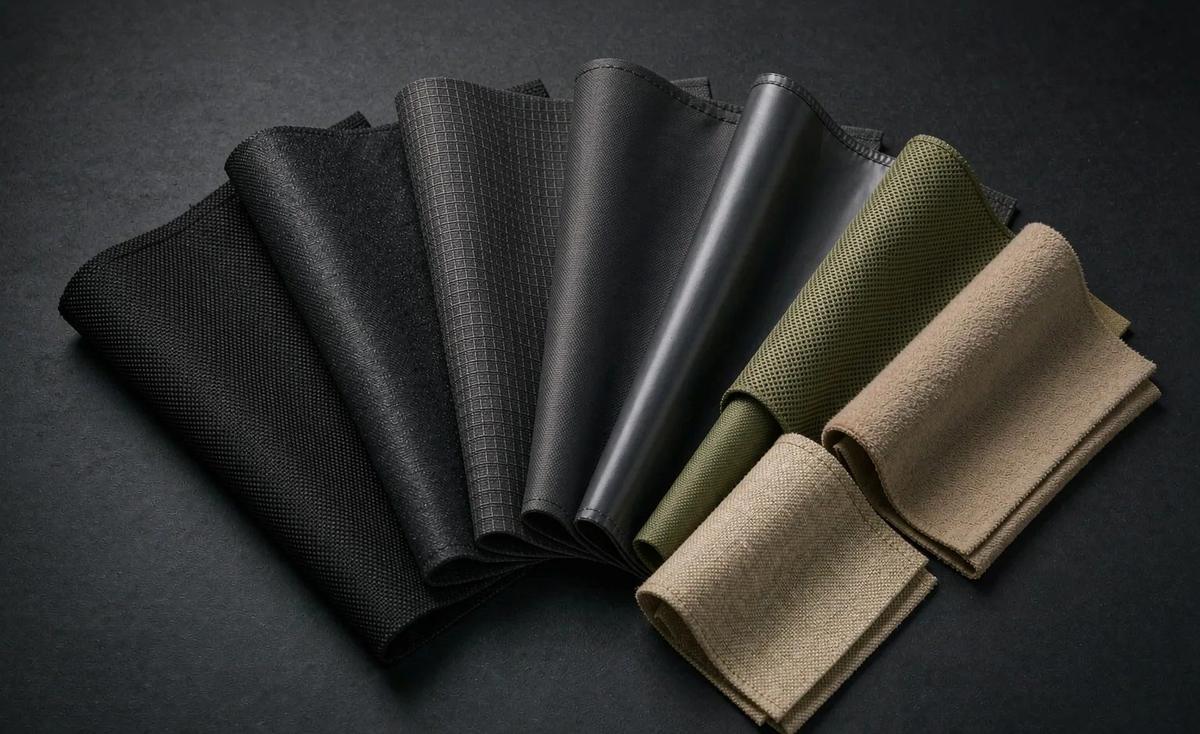
Question 7: which fabric should I choose? The usual shortlist for a campaign bag is polyester in the 300D to 1000D range for value and colour range, nylon in comparable deniers for abrasion resistance and a better hand feel at a higher price, recycled RPET where a sustainability claim is part of the proposition, and coated or laminated fabrics where water resistance is central. Recycled fabric typically adds 8 to 18 percent to material cost plus 2 to 4 working days while certification is collected, and the transaction certificate should be requested at quotation stage rather than after production.
Question 8: is branded hardware worth it? Usually yes, and it is the highest-return upgrade in the specification. Branded zips, buckles and sliders add USD 1.20 to 4.50 per unit and remove the single most common source of field failure. They also support a USD 8 to 15 increase in the credible reward price, which makes the upgrade self-funding. The exception is a very low price point, where the hardware cost is a large share of the total and the audience is not evaluating components.
Question 9: how do I know the construction will hold? Ask two questions. What is the stitch specification, meaning stitches per inch and the seam type at each stress point, and what load or cycle testing has been done or will be done. For a bag with a harness or a load-bearing strap, a strap-pull test and a cycle test on the zip are the two that matter most. Where a campaign is making a durability claim, the test should exist before the claim is published. The QA and QC pillar sets out what to put in a bag-specific inspection checklist.
Questions 10 to 12: branding, colourways and packaging
Question 10: which branding method should I use? Four methods cover most campaign requirements. Embroidery costs roughly USD 0.60 to 1.80 depending on size and colour count, plus a digitising fee of USD 40 to 120 for a new file, and it reads well on fabric. Heat transfer costs USD 0.35 to 0.90 and suits fine detail and small marks. A woven label costs USD 0.12 to 0.45 and is the cheapest durable option. A debossed or moulded badge costs USD 0.55 to 1.40 plus tooling of USD 300 to 2,500, and it reads as premium on a structured bag.
Question 11: how many colourways should I offer? Two, for a first campaign. The minimum applies per style and per colourway at 500 pcs, so three colourways is a 1,500 pcs commitment with three fabric lots to match. The second reason is error: the colourway split has to be decided before the run is booked, and a wrong guess leaves an unsold colour in a warehouse and a stock-out on the popular one. If backers need more visible choice, vary the trim rather than the shell.
Question 12: what should the packing specification be? At minimum, a polybag for protection in transit, a hangtag or insert card, and a carton with a stated units-per-carton figure and a carton marking. Cost is typically USD 0.55 to 1.60 per unit in total. Two decisions matter more than they appear: whether the polybag is required for the transit leg, since a six-week sea voyage does real damage to an unprotected bag, and whether the carton size has been optimised against the freight cost, because a carton that is 20 percent too large is 20 percent more freight for the same goods.
Questions 13 to 15: timeline, booking and production slots
Question 13: how long does the whole project take? Plan 120 to 160 days from launch to delivery for a first campaign. Bulk production is only 35 to 50 days of that. The rest is sampling, pre-production sign-off, inspection, freight, clearance and fulfilment, and those are the phases that slip. The two levers that compress the total are sampling before launch, which saves 6 to 10 weeks, and a single colourway with stock hardware, which saves 2 to 4 weeks. Full breakdown in the project timeline guide.
Question 14: when should I book the production slot? As soon as the survey has closed and the colourway split is confirmed, because the run is booked per style and per colourway. The payment structure is T/T 30/70: 30 percent deposit to book the slot and reserve the material, and 70 percent balance against the shipping documents before release. Before paying the deposit, confirm the quotation validity and the material reservation in writing, because a quotation taken at sampling stage usually carries a 30 to 60 day validity and can expire before the run is booked.
Question 15: what happens if the campaign overfunds? The run gets larger and the schedule gets longer. A 35 day window at 500 units does not automatically hold at 2,000, because a production line has finite daily throughput, and a freight plan built for consolidated cartons may need to move to a part-container. The fix is to agree the scenario plan before launch: the material lead time, the production days and the freight mode for your minimum, expected and stretch cases, so material can be reserved rather than sourced reactively when the campaign exceeds expectations.
Questions 16 to 17: quality control, defects and compliance
Question 16: what inspection standard should I require? Inspection to AQL 2.5 to ISO 2859-1, which defines the sample size relative to the lot size and the acceptance number for minor, major and critical defects. It is important to understand what that does and does not do: it establishes whether a lot is acceptable against an agreed threshold, not whether every unit is perfect. On a run of a few hundred to a few thousand units the plan permits a small proportion of minor and major defects, which is a commercial compromise rather than a defect in the process.
Question 17: what about compliance and material restrictions? Three regimes matter most for bags. REACH governs chemical substances in articles sold into the European market. CPSIA governs lead and phthalates in the United States, and matters most for any component a child could mouth. Proposition 65 in California requires a warning where a listed substance is present above a threshold. The practical requirement is to tell your production partner your destination markets at quotation stage, because the material has to be specified to meet them and a fabric that is compliant for one market is not automatically compliant for another. Full detail in the QA and QC pillar.
One more question belongs here because it is asked late and matters early: what is the defect allowance in the production agreement? The inspection standard sets an acceptance threshold for the lot, but it does not say what happens to the units that fall outside it, nor who pays for the replacement stock. The usual arrangement is a 2 to 4 percent replacement or spare allowance, produced with the run or held from it, which covers warranty claims, transit damage and address failures over the months after delivery. Agreeing that number before the deposit is paid is much easier than negotiating it after the inspection report lands.
Questions 18 to 19: freight, duties and fulfilment
Question 18: what does shipping cost and how long does it take? FOB Xiamen covers the goods loaded at the port of departure. Everything after that is additional and commonly adds 18 to 35 percent to the FOB value. Sea freight runs 35 to 60 days door to door including export handling, clearance and inland delivery. Air freight runs 5 to 10 days at roughly 3 to 6 times the sea rate per kilo. The structure that works for most campaigns is sea for 90 to 95 percent of units, with 5 to 10 percent flown ahead as a buffer for the first wave, replacements and press units.
Question 19: who pays duty and VAT, and what can go wrong? Duty and import VAT are paid by the importer of record, which is usually the creator or the fulfilment partner acting on their behalf. Bags are classified under their own HS code, and the rate depends on the outer surface material, so a textile outer and a plastic-coated outer can be classified differently. The two failure modes are a shipment held because no importer of record was appointed, and a VAT bill falling due before the parcels can be released. Both are preventable with a decision made before launch. The duty and tax detail is in the tax and customs guide
Two further numbers belong in this answer because they are what the fulfilment partner will ask for. The packed weight and the packed dimensions of a single unit, which drive the parcel rate, and the units per carton with the carton weight and dimensions, which drive the freight quote and the warehouse receiving plan. Both are known from the packing specification in question 12 and both are routinely requested too late. A campaign that can supply them at quotation stage gets a freight number that holds, and one that cannot gets an estimate that moves.
Question 20: what happens after the campaign ends
Question 20: can I reorder, and does it get easier? Yes, and it gets materially easier. On a reorder the patterns exist, the material sources are proven, the line has run the product before, and the sampling risk has already been absorbed. A repeat run typically needs no development sampling at all, only a pre-production confirmation unit, which removes 6 to 15 working days from the calendar. The 500 pcs per style and colourway minimum still applies, but because the specification is proven the risk in committing to it is much lower.
The second-run decision is where most bag brands actually become profitable, and two things drive it. The first is that the fixed costs are already paid: the tooling, the digitising files, the pattern development and the sampling rounds do not repeat. The second is that the audience from the first campaign is the cheapest available traffic, with repeat backers converting at two to four times the rate of cold visitors. A creator who plans for a second run from the beginning, by keeping the specification documented and the patterns owned, is in a much stronger position than one who treats the campaign as a one-off.
The practical advice is to keep the technical file. This means the dimensioned drawing, the materials list with supplier references, the hardware list, the stitch specification, the branding artwork in vector form, and the inspection report from the first run. That file is what makes a reorder a two-week conversation rather than a two-month one, and it is what allows a second production partner to quote accurately if the first relationship does not work out. It costs nothing to keep and it is the most valuable artefact a campaign produces after the product itself.
The twenty answers in one reference table
| Question | Short answer | The figure to plan against | Where it is decided |
|---|---|---|---|
| 1 Minimum order quantity | Per style and per colourway | 500 pcs | At quotation stage |
| 2 Unit cost, first campaign | Depends on construction | USD 8 to 24 FOB | After the specification is frozen |
| 3 Biggest cost driver | Fabric, then panel count | USD 3 to 11 spread on fabric | In the tech pack |
| 4 Sampling per round | Standard or complex build | 6-10 or 12-15 working days | Before launch where possible |
| 5 Sample fee | Multiple of unit price | 1.5 to 3 times | Credit terms in writing |
| 6 Sample rounds needed | Plan two, allow three | 2 to 3 rounds | Reduced by a dimensioned drawing |
| 7 Recycled fabric premium | Material cost uplift | 8 to 18 percent | Certificate at quotation |
| Question | Short answer | The figure to plan against | Where it is decided |
|---|---|---|---|
| 8 Branded hardware uplift | Per unit, versus unbranded | USD 1.20 to 4.50 | In the hardware list |
| 9 Embroidery versus transfer | Per unit plus digitising | USD 0.60 to 1.80 / USD 0.35 to 0.90 | In the branding drawing |
| 10 Moulded badge | Unit plus tooling | USD 0.55 to 1.40 plus USD 300 to 2,500 | Before sampling |
| 11 Colourways on a first run | Two maximum | 500 pcs each | Before the campaign page is published |
| 12 Packing per unit | Polybag, card, carton | USD 0.55 to 1.60 | Before the freight quote |
| 13 Launch to delivery | First campaign total | 120 to 160 days | Before the delivery date is published |
| 14 Payment structure | Deposit and balance | T/T 30/70, FOB Xiamen | Confirm validity before deposit |
| Question | Short answer | The figure to plan against | Where it is decided |
|---|---|---|---|
| 15 Inspection standard | Acceptable quality limit | AQL 2.5 to ISO 2859-1 | In the purchase agreement |
| 16 Post-port freight | Added to FOB value | 18 to 35 percent | At the freight booking |
| 17 Sea versus air transit | Door to door | 35 to 60 days / 5 to 10 days | Mode split before booking |
| 18 Importer of record | Pays duty and import VAT | Appointed before shipment | In the fulfilment contract |
| 19 Compliance regimes | REACH, CPSIA, Prop 65 | Stated at quotation | Destination markets in the brief |
| 20 Reorder sampling | Confirmation unit only | 0 to 10 working days | Keep the technical file |
Five questions to ask any production partner before you sign
The answers to the twenty questions above are only as good as the partner giving them, so it is worth having a short list of qualifying questions that apply whoever you are speaking to. First: what is the quotation validity period, in writing? A partner who will not state a validity window is telling you something about how they handle a price movement. Second: what exactly is included in the FOB price? Specifically, whether packing, cartons and any brand labelling are inside it or on top of it.
Third: how many sample rounds are included, and what happens if a fourth is needed? This sounds minor and it is the clearest indicator of how a partner handles a specification that turns out to be harder than expected. Fourth: what is the inspection process, and will you get the report? A partner who inspects to a named standard and shares the report is a different proposition from one who says the goods are checked. Fifth: who is the single point of contact for the programme? A named coordinator with a decision mandate prevents the most common communication failure, which is a question sent to three people and answered by none.
Two further questions are worth asking and rarely are. What is your weekly capacity commitment for this run, which tells you what happens if the campaign overfunds. And can you send production photographs at each stage boundary, which is how a problem in week three gets resolved rather than discovered in week eight. A partner who agrees to both without hesitation is demonstrating process rather than promising outcomes, which is the thing worth paying for. The production partner guide develops this into a fuller evaluation checklist.
Send us the five qualifying questions along with your brief, and our programme coordinator will answer all five in writing before you commit to anything.
What to send with your first enquiry
The difference between a quotation that takes three days and one that takes three weeks is almost entirely the quality of the first enquiry. Six things make it fast. The use case in one sentence, which sets the category and the features. The capacity in litres and the external dimensions, which set the panel geometry. A reference image or a sketch, which does not need to be dimensioned but should show what you have in mind. The target quantity and the colourway split, stated against the 500 pcs per style and colourway minimum.
The fifth item is the target landed cost, which is the most useful number a creator can bring and the one most often omitted. Knowing that the reward has to land at USD 22 or below for the tier to work allows the specification to be built to a number, which is a far more productive conversation than showing a picture and asking what it costs. The sixth is the delivery window and the destination mix, because those determine the freight mode, the packing specification and the material compliance requirements.
What you do not need at this stage is a finished tech pack, a confirmed colour, or a final decision on hardware. Those are the outputs of the conversation rather than its inputs, and a good partner will help you reach them. What matters is that the brief is specific enough for the specification to be costed, and honest about the two constraints, being the price and the date. Every compromise in a bag programme is a trade between those two, and a partner who knows both from the first email will produce a better answer than one who is told about them later.
Key takeaways
- T
- h
- e
- n
- u
- m
- b
- e
- r
- s
- t
- o
- p
- l
- a
- n
- a
- g
- a
- i
- n
- s
- t
- a
- r
- e
- 5
- 0
- 0
- p
- c
- s
- p
- e
- r
- s
- t
- y
- l
- e
- a
- n
- d
- c
- o
- l
- o
- u
- r
- w
- a
- y
- ,
- 6
- t
- o
- 1
- 0
- w
- o
- r
- k
- i
- n
- g
- d
- a
- y
- s
- p
- e
- r
- s
- a
- m
- p
- l
- e
- r
- o
- u
- n
- d
- ,
- 3
- 5
- t
- o
- 5
- 0
- d
- a
- y
- s
- b
- u
- l
- k
- ,
- A
- Q
- L
- 2
- .
- 5
- ,
- F
- O
- B
- X
- i
- a
- m
- e
- n
- ,
- T
- /
- T
- 3
- 0
- /
- 7
- 0
- a
- n
- d
- 1
- 2
- 0
- t
- o
- 1
- 6
- 0
- d
- a
- y
- s
- f
- r
- o
- m
- l
- a
- u
- n
- c
- h
- t
- o
- d
- e
- l
- i
- v
- e
- r
- y
- .
Frequently Asked Questions
What is the minimum order for a custom bag campaign?
The minimum is 500 pcs per style and per colourway. The reason is technical as much as commercial: a dye lot, a print setup and a cutting marker all have a threshold below which unit cost climbs and consistency suffers. Three colourways of one bag is therefore a 1,500 pcs commitment rather than 500 pcs. For visible choice without three fabric lots, vary the trim instead.
How much does a custom bag cost per unit?
For a first campaign, plan a landed FOB cost of roughly USD 8 to 24 per unit. A simple drawstring or flat pouch sits at the bottom, a structured multi-panel backpack with branded hardware at the top. The six layers are fabric, hardware, labour, trim and branding, packing, and tooling, with tooling carrying a one-off charge of USD 300 to 2,500 for moulded or debossed parts.
How long does sampling take for a bag?
Six to ten working days per round for a standard construction and 12 to 15 working days for a complex one, covering pattern, cutting and sewing of one unit. Add 3 to 7 days of courier transit each way plus your review time, so a realistic round is 2.5 to 4 weeks door to door. Plan for two rounds and allow for three.
How much does a bag sample cost?
Typically 1.5 to 3 times the unit price, because making one unit absorbs a disproportionate share of setup. Some programmes credit part or all of the fee against the bulk order, but the terms vary and should be confirmed in writing rather than assumed. Courier charges are additional. The more important question is how many rounds you will need, since a second round costs more in calendar time than in money.
Is branded hardware worth the extra cost?
Usually yes, and it is typically the highest-return upgrade in a specification. Branded zips, buckles and sliders add USD 1.20 to 4.50 per unit and remove the most common source of field failure. They also support a USD 8 to 15 increase in the credible reward price, which makes the upgrade self-funding. The exception is a very low price point where the audience is not evaluating components.
Which fabric should I choose for a campaign bag?
The usual shortlist is polyester in 300D to 1000D for value and colour range, nylon in comparable deniers for abrasion resistance and hand feel at a higher price, recycled RPET where a sustainability claim is part of the proposition, and coated or laminated fabrics where water resistance is central. Recycled fabric adds 8 to 18 percent to material cost plus 2 to 4 working days for certification.
How should I brand my campaign bag?
Four methods cover most requirements. Embroidery costs USD 0.60 to 1.80 per unit plus USD 40 to 120 for a new digitising file. Heat transfer costs USD 0.35 to 0.90 and suits fine detail. A woven label costs USD 0.12 to 0.45 and is the cheapest durable option. A debossed or moulded badge costs USD 0.55 to 1.40 plus tooling of USD 300 to 2,500.
How many colourways should a first campaign offer?
Two, at most. The minimum applies per style and per colourway at 500 pcs, so three colourways is a 1,500 pcs commitment with three fabric lots to match. The second reason is error: the colourway split has to be decided before the run is booked, and a wrong guess leaves an unsold colour in a warehouse and a stock-out on the popular one.
What should the packing specification include?
At minimum a polybag for protection in transit, a hangtag or insert card, and a carton with a stated units-per-carton figure and carton marking. Cost is typically USD 0.55 to 1.60 per unit in total. Two decisions matter more than they appear: whether the polybag is required for a six-week sea voyage, and whether the carton size has been optimised against freight cost.
How long does a bag campaign take from launch to delivery?
Plan 120 to 160 days for a first campaign. Bulk production is only 35 to 50 days of that. The rest is sampling, pre-production sign-off, inspection, freight, clearance and fulfilment, and those are the phases that slip. Sampling before launch saves 6 to 10 weeks, and a single colourway with stock hardware saves a further 2 to 4 weeks.
What are the payment terms for a bag production run?
T/T 30/70 on FOB Xiamen terms: 30 percent deposit to book the production slot and reserve the material, and 70 percent balance against the shipping documents before the goods are released. Before paying the deposit, confirm the quotation validity and the material reservation in writing, because a quotation taken at sampling stage usually carries a 30 to 60 day validity window.
What inspection standard should I require?
Inspection to AQL 2.5 to ISO 2859-1, which defines the sample size relative to lot size and the acceptance number for minor, major and critical defects. Understand what it does and does not do: it establishes whether a lot is acceptable against an agreed threshold, not whether every unit is flawless. Hold a 2 to 4 percent replacement stock allowance for what passes at the threshold.
People Also Ask
What is the MOQ for custom bags?
500 pcs per style and per colourway. Three colourways of one bag is a 1,500 pcs commitment, not 500 pcs.
How long does bag sampling take?
6 to 10 working days per round for a standard build, 12 to 15 for a complex one, plus 3 to 7 days courier each way.
How much does a bag sample cost?
Typically 1.5 to 3 times the unit price, plus courier charges. Confirm whether any of it is credited against the bulk order.
What are the payment terms?
T/T 30/70 on FOB Xiamen: 30 percent deposit to book the slot, 70 percent balance against the shipping documents.
How long is bulk production?
35 to 50 days from the confirmed start date, depending on panel count, custom hardware and whether fabric needs dyeing or printing.
What inspection standard is used?
AQL 2.5 to ISO 2859-1. It sets an acceptance threshold for a lot rather than guaranteeing every unit is perfect.
Can I reorder after the campaign?
Yes, and it is faster. With patterns and materials proven, a repeat run typically needs only a confirmation unit rather than development sampling.
What compliance rules apply to bags?
REACH for the European market, CPSIA for the United States, and Proposition 65 in California. State your destination markets at quotation stage.