Kickstarter Gym Bags: 7 Designs That Fit Fitness Campaign Rewards
Which gym bag designs actually fit a fitness campaign reward line? Seven formats cover almost every fitness campaign: the barrel duffle, the convertible backpack duffle, the wet-dry duffle, the shoe-pocket training duffle, the foldable training tote, the kit cube organiser and the roll-top training pack. Each carries a different panel count, a different unit cost band and a different sampling profile. All seven can be produced at 500 pcs per style and colourway, with sampling at 6-10 working days and production 35-50 days. This article scores each one against reward-tier reality.
- What makes a gym bag reward work at each price tier
- Design 1: the classic barrel duffle
- Design 2: the convertible backpack duffle
- Design 3: the wet-dry compartment duffle
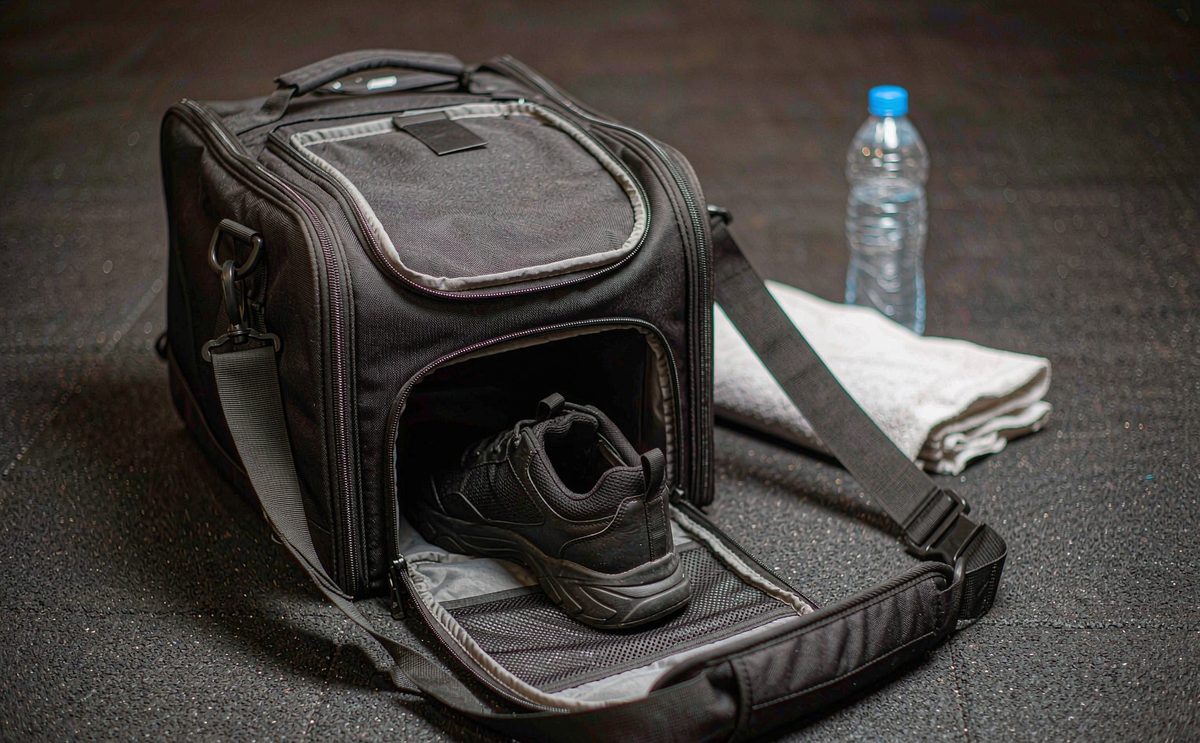
- Design 4: the shoe-pocket training duffle
- Design 5: the foldable training tote
- Design 6: the kit cube organiser
- Design 7: the roll-top training pack
- Seven designs scored side by side
- Why two designs beat five on a first run
- Stretch goals that do not break the 500 pcs minimum
- Turning a shortlist into a quotation request
What makes a gym bag reward work at each price tier
A gym bag reward fails in one of two ways. Either it costs more to make than the tier price supports, or it costs so little that backers do not believe the tier is worth pledging for. The designs below are scored against both failure modes, because the useful question is not which bag is best but which bag is defensible at a stated pledge level with a stated unit cost. A design that reads as premium at 1680D and $140 will read as thin at 300D and $45, and the same silhouette can be wrong at both ends.
Three variables decide the answer for any gym bag format. Panel count drives labour minutes, which is the biggest single component of unit cost on a soft bag. Hardware grade drives both cost and perceived durability, and backers judge durability largely from the zip. Compartment count drives both and is the feature most often named in reward copy, which makes it the highest-leverage decision a creator makes. Everything else is surface treatment.
The numbers underneath all seven designs are fixed: a minimum of 500 pcs per style and colourway, sampling at 6-10 working days for a standard build and 12-15 for a complex one, production 35-50 days after the deposit and the approved pre-production sample, inspection at AQL 2.5 to ISO 2859-1, FOB Xiamen and T/T 30/70 payment terms. Our custom gym bags page covers the category as a whole; this article stays on the seven formats.
Key takeaways on choosing a gym bag format
- Panel count drives labour minutes, which drives unit cost more than fabric on a soft bag.
- Zip gauge and puller quality are what backers read as durability on a photograph.
- Compartment count is the highest-leverage reward-copy decision available to a creator.
- Run two designs on a first campaign, not five: five designs is five minimum commitments.
- Stretch goals should add decoration or accessories, never a new silhouette.
Design 1: the classic barrel duffle
The barrel duffle is the reference format against which every other gym bag is judged, and for good reason: it is the cheapest serious bag to make and the easiest to photograph. A single curved main opening, two end panels, a base panel and a webbing carry handle set with a detachable shoulder strap. Panel count is low, the pattern is simple, and the sewing sequence is short. On a 500 pcs run in 600D polyester this is the format that reliably lands in the lowest unit cost band of the seven.
| Attribute | Typical specification | Campaign note |
|---|---|---|
| Capacity | 30-50 litres | 40 litres is the strongest single size for a hero tier |
| Panel count | 6-9 including base and ends | Low panel count keeps labour minutes down |
| Main zip | #8 or #10 coil, single slider | A U-shaped opening needs a higher gauge than a straight one |
| Fabric | 600D polyester, PU backed | 1.3-1.5 cost index versus 300D baseline |
| Decoration | Embroidery on end panel or woven label | End panel is flat and stable, ideal for a crest |
| Sampling | 6-10 working days | Standard build unless custom hardware is specified |
The weakness of the barrel is differentiation. Because the silhouette is generic and the tooling is common, a barrel duffle has to earn its price through fabric, hardware and branding rather than through shape. Creators who launch a barrel at a premium tier without a material or feature story tend to be compared unfavourably against retail equivalents during the campaign, which is a comparison you cannot win on price and should not attempt on features alone.
There is a specification detail on the barrel that separates a bag that lasts from one that does not, and it is the end panel seam. A barrel duffle is loaded and unloaded through a curved opening that puts repeated tension on the junction between the body and each end panel. If that seam is a single flat-felled pass in a lightweight thread, it will distort within a season. Specify a bound or piped seam with a defined stitch density and, where the budget allows, a bar-tack at each end of the zip run. That is three lines in a tech pack and it is the difference between a reward that survives and one that generates a replacement request.
For creators whose audience is closer to general travel than to the gym, the same silhouette in a larger capacity becomes a different product with a different buyer, and the specification should move with it. Our custom travel bags page sets out where the crossover sits; for a fitness campaign, staying under 50 litres keeps the product legible as a gym bag rather than competing with a weekend bag.
Design 2: the convertible backpack duffle
The convertible adds a stowable harness system to a duffel body, which is genuinely useful and genuinely more expensive. Two padded straps, a back panel with light foam, a webbing attachment system with hardware adjustment, and a pocket or sleeve into which the straps disappear when the bag is carried by hand. Panel count rises by four to six pieces, labour minutes rise materially, and the attachment points become load-bearing seams that need a specified stitch type and a bar-tack reinforcement.
- Strap attachment must be bar-tacked or box-stitched at the root; a single pass of straight stitch is the most common field failure on this format.
- The stowage sleeve adds a panel and a closing method, usually a hook-and-loop tab or a short zip.
- Back panel foam adds thickness, which reduces usable internal volume for the same external dimension.
- Load testing should be specified: fill to 8-10 kg and carry for a defined distance during sampling.
- The harness adds hardware: adjusters, ladderlocks or triglides, each a named line in the quotation.
The reward-copy advantage is strong. Carry it three ways is a sentence that photographs well and answers the commuter-gym hybrid buyer who is really asking whether one bag can replace two. That buyer exists in volume in every fitness campaign, which is why the convertible justifies its higher unit cost more often than a spec sheet suggests. Where the budget is tight, a compromise is a fixed harness rather than a stowable one, which removes the sleeve and the stowage hardware while keeping most of the perceived benefit.
Design 3: the wet-dry compartment duffle
A wet-dry duffle adds a separated, lined cavity for damp kit, usually accessed from the exterior so wet items never pass through the main compartment. The construction is more demanding than it looks: the divider has to be sealed, the lining has to be coated, and the seam between lining and shell has to survive flexing. Done properly it is one of the few bag features backers will pay a premium for. Done badly it leaks into the main cavity and generates the worst kind of campaign comment.
The cost sits in three places. The coated lining is more expensive per metre than an uncoated one. The separating panel and its seam sealing add operations. And the second exterior zip adds hardware and an opening that has to be bound cleanly. Expect the wet-dry version of an otherwise identical duffle to sit above the plain version in unit cost, and expect sampling to move toward the 12-15 working day end if the divider geometry is unusual. Our wet-dry gym bag guide discusses the compartment question in detail.
Never publish a waterproof claim on a bag whose compartment is merely water-resistant. Fill the compartment, seal it, lay the bag flat overnight on absorbent paper and photograph the result during sampling. That photograph is both your QC evidence and your campaign asset, and it protects the claim if a backer challenges it.
Design 4: the shoe-pocket training duffle
The shoe-pocket duffle is the wet-dry concept narrowed to a single use case, and it is the most requested feature in fitness reward surveys because it solves a problem every gym-goer has. The compartment is usually a zippered end pocket, sized to take a pair of trainers, with ventilation via a grommet or mesh panel. The engineering question is sizing: a compartment that fits a size 42 running shoe comfortably will not fit a high-top basketball shoe or a lifting shoe with a raised heel.
| Footwear type | Typical length required | Compartment note |
|---|---|---|
| Running shoe, size 42-44 | 30-32 cm | Baseline; most compartments are designed to this |
| Training or cross-trainer, size 44 | 32-34 cm | Wider toe box; check width not just length |
| High-top basketball shoe | 34-36 cm plus shaft height | Needs a taller compartment or a diagonal layout |
| Weightlifting shoe with raised heel | 30-32 cm, higher stack | Heel wedge adds vertical clearance |
| Cycling shoe with cleat | 30-32 cm | Cleat protrusion can abrade an uncoated lining |
| Wrestling or grappling shoe | 28-30 cm | Fits comfortably; compartment can be smaller |
Ventilation is the detail that separates a good shoe pocket from a bad one. A sealed compartment holding damp trainers becomes an odour problem within a week, so specify either a mesh panel, a set of grommets, or a coated wipe-clean lining. Mesh is cheapest and reads well in photography; grommets are discreet; a coated lining is the most durable and the most expensive. Whichever you choose, write it into the pack as a named component, because ventilation is not something that can be added later.
Design 5: the foldable training tote
The foldable tote is the volume play. Lightweight 210D or 300D polyester, minimal hardware, a stuff sack or an integrated pouch, and a packed-flat footprint small enough to fit inside another bag. Unit cost is the lowest of the seven and freight is dramatically cheaper because units can be packed at very high density. It is the design to choose when the reward strategy is to give every backer something physical at a low tier rather than to sell a hero product at a high tier.
- Fabric at 210D-300D keeps both material cost and packed volume minimal.
- Hardware can be reduced to a single zip and a pair of webbing handles.
- The stuff sack is either integrated with a turning closure or separate with a drawcord.
- Packing density is excellent: 50-100 units per carton depending on size.
- Print coverage is the main cost variable; a full-panel sublimation print costs more than the bag itself.
The risk with a foldable tote is that it reads as a giveaway rather than a reward. If you use it, put it deliberately at the entry tier and be explicit in the copy that it is a secondary bag rather than the hero product. Campaigns that accidentally position a tote as the main reward and then reveal the price point discover that backers feel the tier was overpriced, which is a trust problem that costs more than the margin gained.
There is also a durability floor worth respecting. A 210D shell is fine for a bag that carries a change of clothes and a water bottle, and it is not fine for a bag that carries a pair of trainers and a lifting belt every day. If the tote is going to be used hard, move to 300D with a PU backing and reinforce the handle roots, which adds a small amount of material cost and a large amount of field life. The low minimum production page explains how quantity interacts with choices like this at 500 pcs.
Printing is where a foldable tote either becomes distinctive or becomes generic. A full-panel dye-sublimation print turns the flat panels into a canvas and is the cheapest way to make this format feel custom, because the panels are already flat and the print is applied before sewing. Screen printing on the assembled bag is cheaper still at one or two colours but limits placement to accessible flat areas. Whichever method you choose, confirm the print is tested for crocking and wash fastness, because a printed panel that transfers colour onto gym kit is a returns problem that no campaign update can talk its way out of.
Design 6: the kit cube organiser
The kit cube is a structured, usually rectangular organiser with internal dividers, designed to sit inside a larger bag or to be carried alone for a specific discipline. It is the least obvious of the seven and the most interesting commercially, because it targets a niche buyer precisely and therefore converts at a higher rate than a general gym bag. Think a swim kit cube, a lifting belt and wrap organiser, or a yoga strap and block carrier.
Structurally it needs more than it appears to: a base insert or frame panel to hold shape, internal dividers that are usually hook-and-loop adjustable, a mesh or clear top panel so contents are visible, and a carry handle. Panel count is moderate but the assembly sequence is longer than the panel count suggests, because dividers are fitted after the shell is turned. Sampling usually sits at the standard 6-10 working days unless the divider system is custom.
Commercially the kit cube works best as a bundle component rather than as a standalone reward, which lifts average pledge value without adding a second production programme. The cube and the duffle can share a fabric and a colourway, which means the 500 pcs minimum applies to each but the material purchase can be combined. That combination is one of the few genuine economies available to a small campaign, and it should be raised in the RFQ rather than assumed.
Design 7: the roll-top training pack
The roll-top is the premium format of the seven. A welded or TPU-laminated body, a roll closure with a side-release buckle or a magnetic fastener, an exterior access pocket, and usually a harness rather than a simple strap. It reads as technical, photographs as premium and supports a water-resistance claim more credibly than any other format here. It also sits at the top of the unit cost range and at the long end of the sampling window.
The reason is the closure. A roll-top requires the body to be cut with sufficient length above the opening for three or four rolls, the closure hardware to be rated and finished, and the side seams to be sealed if a water-resistance claim is made. On a laminated fabric the seams are welded rather than sewn, which is a different machine set and a different operator skill. Budget 12-15 working days for sampling and expect the bulk window to sit above 40 days on a first run.
Seven designs scored side by side
| Design | Panel count | Cost band | Sampling | Best reward tier |
|---|---|---|---|---|
| Barrel duffle | 6-9 | Low to mid | 6-10 days | $55-85 hero tier |
| Convertible backpack duffle | 12-16 | Mid to high | 6-10 days | $95-130 hybrid tier |
| Wet-dry compartment duffle | 10-14 | Mid to high | 6-10 days | $85-120 feature tier |
| Shoe-pocket training duffle | 11-15 | Mid | 6-10 days | $75-110 mainstream tier |
| Foldable training tote | 4-6 | Lowest | 6-10 days | $25-45 entry tier |
| Kit cube organiser | 8-12 | Low to mid | 6-10 days | $45-70 bundle add-on |
| Roll-top training pack | 14-18 | Highest | 12-15 days | $130-190 premium tier |
Read the table as a selection tool rather than a ranking. The foldable tote has the lowest cost band and is not therefore the best choice; it is the best choice for an entry tier where every backer receives something physical. The roll-top has the highest cost band and is not therefore the best choice either; it is the right choice when the campaign positioning is technical and the audience will pay for a water-resistance story. Match the format to the tier, then match the specification to the format.
Why two designs beat five on a first run
Five designs at 500 pcs each is 2,500 units of commitment, five sets of patterns, five sampling programmes and five inspection protocols. Two designs at 500 pcs each is 1,000 units, two patterns and one shared material purchase if the fabrics are common. The second structure is what a first campaign can actually execute inside a 12-16 week calendar from specification lock to backer doorstep, and it leaves cash available for a re-order once demand is proven.
- Pick one hero format that carries the core tier and one secondary format for either the entry or the premium end.
- Share fabric and hardware references between the two so material purchasing combines and shade matching is consistent.
- Run sampling for both in parallel rather than sequentially; the sampling clock is per unit, not per programme.
- Keep the decoration identical across both so one digitising or screen set covers the line.
- Reserve the third format as a stretch goal priced during the original RFQ, so activation is a confirmation not a negotiation.
There is a second argument for two designs that has nothing to do with cost. Reward pages with more than two bag options split the vote and slow the decision, because backers comparing four similar bags at four prices take longer to pledge than backers choosing between a clear good and a clear better. Campaign conversion data across the fitness category consistently favours a short, legible tier ladder over a wide one, and the production plan should reinforce that rather than fight it.
Stretch goals that do not break the 500 pcs minimum
The 500 pcs minimum applies per style and colourway, which means a stretch goal that introduces a new silhouette introduces a new commitment. The stretch goals that work are the ones that add value without adding a production programme: a second colourway negotiated as a split within the existing run, an additional decoration element, a sourced accessory added to the bundle, or an upgraded packaging specification. All four can be priced during the original RFQ and activated by a single email.
| Stretch goal | New minimum commitment | Added lead time | Verdict |
|---|---|---|---|
| Second colourway as a run split | No, if pre-negotiated | 2-5 days for shade approval | Best option |
| Extra embroidery position | No | 2-4 days in decoration | Good, low risk |
| Sourced accessory in the bundle | Accessory MOQ applies | Matches accessory lead time | Good, but quote it early |
| Retail carton upgrade | No | 3-5 days in packing | Good, cheap perceived lift |
| New silhouette | Yes, 500 pcs | Full 6-10 working days of sampling | Avoid on a first campaign |
| Custom moulded puller | No, but tooling cost | 15-20 days before sewing | Avoid unless premium tier |
Turning a shortlist into a quotation request
A shortlist becomes a quotation when it becomes a specification. For each of the two designs you intend to run, write the capacity, the panel count you expect, the face fabric by denier and coating, the lining, the zip gauge and type, the hardware references, the decoration method and coordinates, and the packing specification. Add the quantity per colourway, the target delivery month, the destination market and the inspection standard, and a campaign bag specialist can return a unit cost, a sampling estimate and a production window in one exchange.
- Choose the two formats from the seven and write down why each matches its tier.
- Draft the tech pack for each, using stock fabric and catalogue hardware wherever possible.
- Send both packs in one RFQ so materials and production slots can be planned together.
- Request a cost breakdown by line so you can adjust fabric or decoration independently.
- Confirm the inspection standard as AQL 2.5 to ISO 2859-1 and get the defect classes written into the order.
- Book the sampling slot in writing with start and completion dates for each round.
- Approve the pre-production sample in writing, then release the 30% deposit under T/T 30/70.
The calendar that follows is predictable: 6-10 working days per sampling round with two rounds planned, then 35-50 days of bulk production, then inspection at AQL 2.5, then FOB Xiamen release and transit. Our sample prototyping page sets out the pack document in detail and the QA and QC page lists the defect classes we log on bag runs.
Stock fabric and catalogue hardware are worth 15-25 days and 15-20 days respectively on a first run. Every day saved here can be spent on a second sampling round, which is the single highest-return use of calendar on a campaign bag programme because it is where construction errors are found on one unit instead of five hundred.
- Custom gym bags for Kickstarter
- Custom sports bags for Kickstarter
- Custom duffle bags for crowdfunding
- Low minimum bag production for creators
- Crowdfunding bag sample prototyping
- Crowdfunding rewards fulfilment
- More campaign bag articles
- Request a quotation
Score your two shortlisted designs
Send us both tech packs with your target quantities and delivery month. As your production partner we will return a unit cost per design, a sampling estimate and a booked production window. Write to service@junyuanbags.com or use the quotation form.
Frequently Asked Questions
How many gym bag designs should a first campaign produce?
Two is the practical answer. One hero format for the core tier and one secondary format for the entry or premium end. Five designs means five 500 pcs commitments, five pattern sets and five sampling programmes, which a first campaign rarely has the cash or the 12-16 week calendar to execute.
Which gym bag format has the lowest unit cost?
The foldable training tote, because it uses 210D-300D fabric, minimal hardware and packs at 50-100 units per carton. The classic barrel duffle is next at 600D with six to nine panels. Both are appropriate at low to mid reward tiers; neither should carry a premium tier on its own.
Which gym bag format takes longest to sample?
The roll-top training pack, at 12-15 working days, because a laminated body needs welded seams and the roll closure needs rated hardware and extra body length above the opening. All six other formats sample at the standard 6-10 working days when stock fabric and catalogue hardware are used.
What size shoe compartment should a gym bag specify?
Design to 32-34 cm internal length, which fits a running shoe at size 42-44 and most cross-trainers. A high-top basketball shoe needs 34-36 cm plus shaft height, and a weightlifting shoe needs extra vertical clearance for the raised heel. Verify with a physical shoe during sampling.
Is a wet-dry compartment worth the added unit cost?
Usually yes on a mid or premium tier, because it is one of the few bag features backers actively search for and will pay for. The cost sits in the coated lining, the sealed divider and the second exterior zip. It is not worth it on an entry-tier bag where a simpler removable pouch achieves the same result cheaply.
Can two gym bag designs share one production run?
They can share a material purchase and a production slot, but each remains a 500 pcs minimum per style and colourway. Sharing fabric and hardware references lets the material order combine, keeps shade matching consistent and usually improves both unit costs slightly through a larger combined fabric buy.
How much does a convertible backpack harness add to cost?
The harness adds four to six panels, a padded back panel with foam, strap webbing, adjusters or ladderlocks, and a stowage sleeve with its own closure. It is the largest single structural cost addition of the seven formats and typically moves the design from the mid to the high cost band.
What is the minimum order quantity for each gym bag design?
500 pcs per style and per colourway for every format. A barrel duffle in black and a barrel duffle in navy are two commitments unless the colourways are pre-negotiated as a split within one run, which requires identical face fabric and construction across the split.
How long does bulk production take for 1,000 gym bags?
Plan 35-50 days after the 30% deposit and the written pre-production approval. Two designs at 500 pcs each produced in parallel usually sit in the middle of that range, because material purchasing combines but sewing capacity is allocated across two lines or two sequential bookings on one line.
Should a foldable tote be the hero reward?
Rarely. A foldable tote reads as a giveaway rather than a reward, and positioning it as the hero product tends to make backers feel the tier was overpriced. It works best at an entry tier where every backer receives something physical, with a structured duffle as the hero tier above it.
What inspection standard applies to a multi-design gym bag run?
AQL 2.5 to ISO 2859-1 at general inspection level II, applied per design. Write separate defect classes for each format, because the failure modes differ: a wet-dry compartment leaks, a convertible harness pulls at the strap root, and a roll-top closure distorts under load.
How are gym bags shipped from FOB Xiamen?
Goods are delivered on board the vessel at Xiamen and risk transfers there. Ocean transit is 18-30 days to the US West Coast and 28-38 days to Northern Europe. Freight is usually charged on volumetric weight because soft bags are low-density, so pack 10-20 units per carton and confirm carton dimensions during sampling.
Can a stretch goal add a third gym bag design later?
It can, but it creates a new 500 pcs commitment and a fresh 6-10 working days of sampling programme. The better stretch goals add value without a new silhouette: a second colourway pre-negotiated as a run split, an extra embroidery position, a sourced accessory, or a retail carton upgrade.
What capacity works best for a hero gym bag tier?
40 litres is the strongest single size for a hero tier, because it holds a full training kit including shoes without becoming a travel bag. Offering 30 and 50 litre variants doubles your commitment, so most first campaigns launch one hero size and add a second size on re-order once demand data exists.
People Also Ask
Which gym bag style sells best on Kickstarter?
The classic barrel duffle at around 40 litres converts most reliably as a hero tier, with the shoe-pocket variant close behind. Both match a mainstream price point and both photograph clearly. Premium campaigns do better with a roll-top, but that format needs a higher pledge to cover its build cost.
Is it better to offer one bag or a bag plus accessories?
A bag plus a small sourced accessory usually lifts average pledge value more than offering a second bag size. The accessory adds perceived value without a new 500 pcs bag commitment, though the accessory carries its own minimum and should be quoted during the original RFQ.
How do I know if my gym bag reward is priced correctly?
Request a cost breakdown by line, then check that the tier price covers unit cost, freight, platform fees, payment processing and a replacement reserve. A common rule is that unit cost should sit at roughly a quarter to a third of the tier price on a physical reward.
Should gym bag rewards be unisex or sized?
Unisex. Bags do not need sizing, and introducing size variants multiplies your minimum commitment without adding perceived value. Spend the differentiation budget on colourway, capacity or feature instead, all of which backers notice more than a nominal size label.
Can I photograph prototypes before bulk production starts?
Yes, and you should. Completing two sampling rounds before launch means reward photography shows a real unit rather than a render. It also means the published delivery month rests on a schedule that has already been tested once, which removes four to six weeks from the post-campaign calendar.