Kickstarter Market Totes: Nylon Builds, Foldable Packs and Everyday Carry
A market tote reward comes down to three decisions: the nylon you specify, whether it folds into its own pocket, and how it carries a full load day after day. A 210D to 420D nylon shell with a polyurethane coating, a reinforced handle join and a base that holds its shape puts the unit in a tier backers understand. Minimum order is 500 pcs per style and per colourway, sampling runs 6 to 10 working days, bulk runs 35 to 50 days, and inspection holds at AQL 2.5 to ISO 2859-1. This guide walks each decision in the order a creator has to make it.
- What a market tote has to survive
- Nylon against polyester and canvas
- Denier, weave and coating on a spec sheet
- Foldable construction and the pack-down test
- Handle engineering: the first part to fail
- Gussets, base panels and load shape
- Everyday carry organisation backers actually use
- What a foldable nylon tote costs to make
- Sampling a foldable tote in 6 to 10 working days
- Reward tier design for a market tote
- Carton packing and freight on a light, foldable bag
- QC checkpoints before a market tote ships
What a market tote has to survive
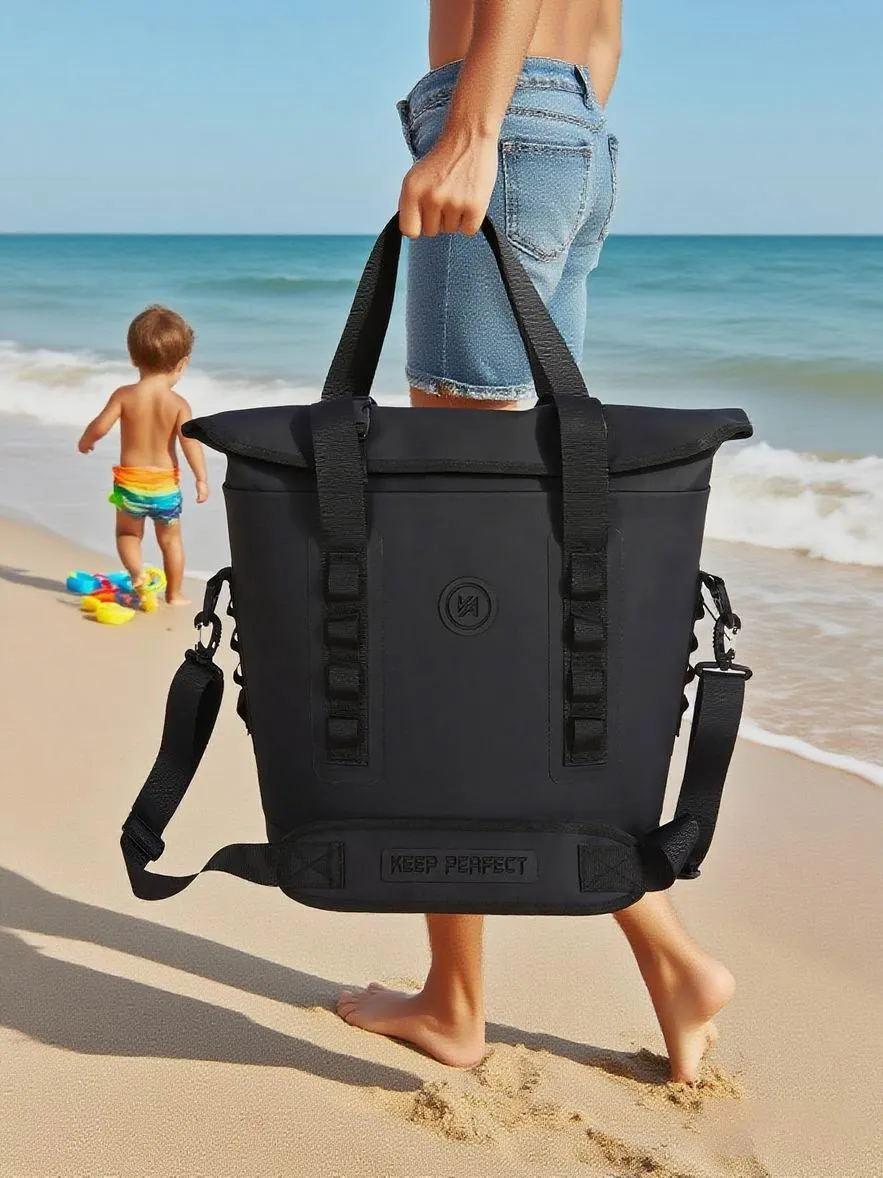
A market tote is not a shopping bag that gets used once a month. On a campaign it is sold as the bag a backer grabs every morning, and the use pattern reflects that: a trip to the market with five to eight kilograms of produce, a detour to the library, a wet umbrella, a bottle of wine in the bottom, then the whole thing stuffed into a backpack or a glove box until the next run. That cycle repeats several times a week, and it is far more demanding than the flat, empty tote photographed on a campaign page. When a tote reward comes back with complaints, the complaints are almost never about colour. They are about a handle that tore out, a coating that peeled inside the fold, or a base that sagged into a U shape after a month of carrying jars.
The practical consequence for a creator is that the brief has to name the load and the cycle before the fabric is chosen. We ask three questions at the start of any custom tote programme: what weight will the bag carry regularly, how many times a week, and how often will it be washed or wiped. Answer those and the fabric weight, the handle join and the coating all follow. Skip them and the team is guessing, and a guessed specification is what produces the sample that looks right on a desk and fails in a supermarket car park. A market tote specification is a load-bearing specification, and it should be written as one.
Name the load, the cycle count and the wash frequency before you pick a fabric. Every other line in the specification follows from those three numbers.
Nylon against polyester and canvas
Three material families compete for this reward, and each one makes a different promise to a backer. Nylon is the strongest per gram, takes a fine weave that folds down small, and costs more than polyester at the same denier. Polyester is cheaper, holds print colour well, and is slightly heavier for the same strength. Canvas is the heaviest and the least packable, but it reads as premium to a segment of backers and takes a screen print beautifully. For a foldable market tote the decision usually lands on nylon, because folding is the whole product promise and nylon folds into a smaller, softer bundle without creasing permanently.
Recycled content changes the calculation slightly. A GRS-certified recycled nylon costs a premium over virgin at the moment, typically a meaningful step up on fabric cost per bag, but it supports a sustainability claim that a segment of backers actively looks for. If the campaign story is built on that claim, the certificate paperwork has to be requested at sampling time, not at bulk time, because traceability documents are issued against a specific fabric lot. Our production team flags this on the first sample round so the document trail exists before the campaign page goes live and makes the claim.
| Material | Typical weight | Behaviour in use | Cost position | Campaign fit |
|---|---|---|---|---|
| 210D nylon ripstop | Very light | Folds smallest; scuffs on rough surfaces | Mid fabric cost | Best for a packable hero reward |
| 420D nylon | Light to mid | Strong, softer hand, folds acceptably | Mid to high | Best balance of strength and packability |
| 600D polyester | Mid | Holds shape; bulkier fold | Low to mid | Budget tier or a structured tote |
| 10 oz canvas | Heavy | Does not fold small; creases | Mid | Premium aesthetic, not a packable |
| Recycled nylon, GRS certified | Light to mid | Same as virgin nylon | Premium | Sustainability-led campaigns |
If the reward is being positioned as a foldable, packable everyday bag, the choice is between 210D ripstop and 420D plain weave, and the decision is really about how rough the backer is. A ripstop grid stops a small puncture from becoming a tear, which matters when a bag is stuffed into a backpack alongside keys and a water bottle. A 420D plain weave has no grid to see but takes abrasion better across a flat surface. Both fold well. Our sourcing partner will quote both against the same pattern so the cost difference is a number on a table rather than a preference. Creators weighing a tote against other reward categories can compare the trade-offs in the custom bags for Kickstarter overview.
Denier, weave and coating on a spec sheet
Denier is the thickness of the individual yarn, not the strength of the fabric, and reading it correctly saves money and disappointment. A 210D fabric can be stronger than a badly woven 420D fabric, because weave density and finishing matter as much as yarn thickness. What a creator should ask for is the full fabric construction: denier, thread count per inch in both directions, weave type, coating type and coating weight in grams per square metre. A specification that gives all five numbers can be sourced from more than one mill and still come out consistent. A specification that only says 420D nylon can be met with material that behaves completely differently.
Coating is the line most often left off a brief, and it is the line that decides whether a market tote survives a wet load. A polyurethane coating on the reverse side of the fabric is what stops a damp bottle from soaking through to a backer's shirt, and it is what protects the fold from wicking. Typical coatings on a tote run from light to moderate, and the water resistance of a finished tote fabric is usually expressed as a hydrostatic head figure in millimetres. A tote does not need the figures a tent needs. It needs enough to survive condensation and a wet umbrella, and it needs the coating to stay bonded after a few hundred fold cycles.
- Denier: yarn thickness, 210D to 420D is the useful window for a foldable tote
- Thread count: weave density, ask for warp and weft figures, not a single number
- Weave: ripstop grid for puncture resistance, plain weave for a cleaner print surface
- Coating: polyurethane on the reverse, weight quoted in grams per square metre
- Finish: a durable water repellent top finish helps a market tote shed light rain
Foldable construction and the pack-down test
Folding is a construction problem, not a fabric problem. The two common approaches are an integrated pocket that the bag turns inside out into, and a separate stuff sack that packs away with the bag. The integrated pocket is cheaper, has nothing to lose, and puts a stress concentration at the pocket mouth that has to be reinforced. The separate sack costs a little more, packs marginally larger, and is easier to get right on the first sample. Most market tote rewards use the integrated pocket because the bag and the packing solution cannot be separated, and that is the version a backer shows to a friend.
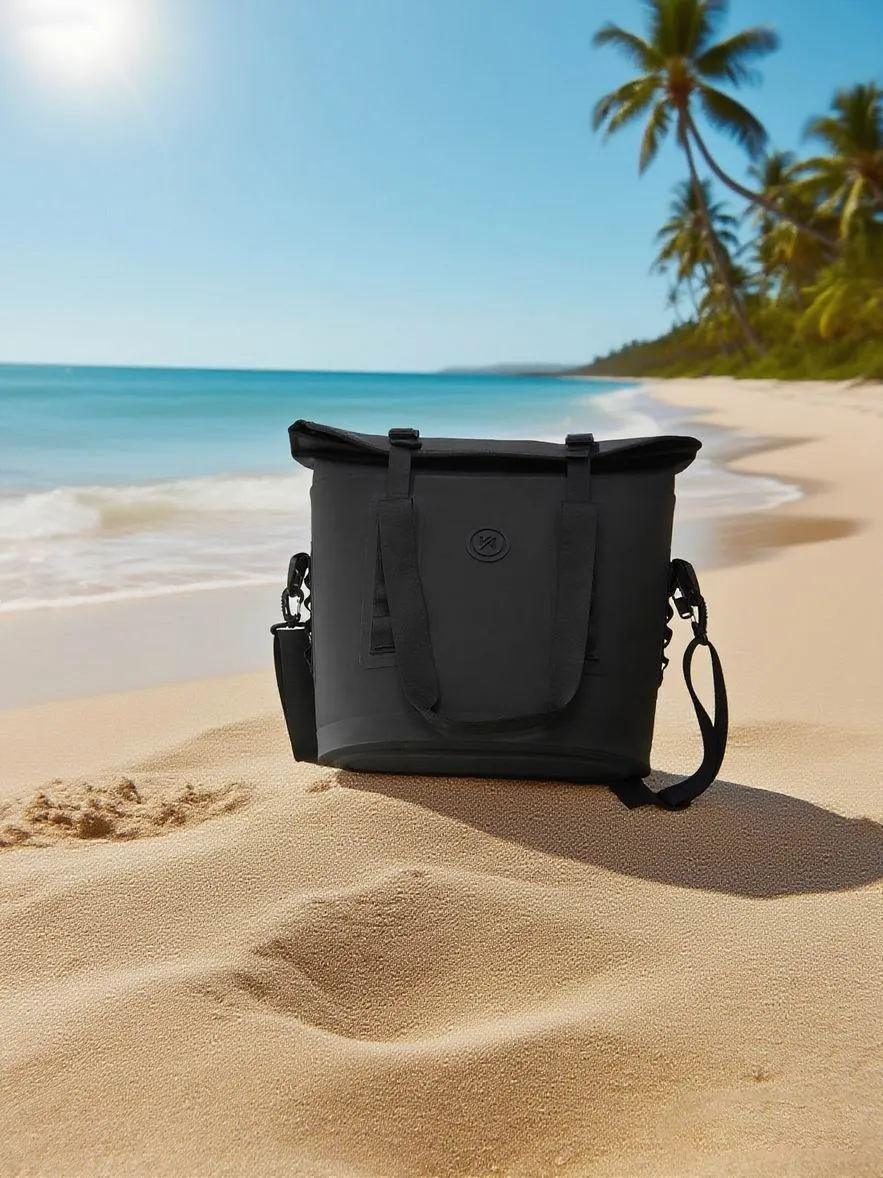
The pack-down test is simple and should be written into the sample approval criteria. Fold the bag the way the campaign video will show, measure the folded footprint, then repeat the fold two hundred times and measure again. A construction that relies on a tight tolerance will get sloppier with repetition, and the second measurement is the honest one. A realistic target for a market tote sized around thirty litres is a folded bundle in the region of a large smartphone footprint in two dimensions and a few centimetres thick. Larger than that and the folding promise stops being a reason to pledge.
One more construction detail decides whether the bag folds flat or fights back: the seam allowance inside the pocket. If the internal seams are bulky, the bag never compresses properly and the pocket sits lumpy. Binding those seams or trimming them close is an operation that adds a small amount of labour and removes most of the bulk. Our production team raises it on the first sample review because it is far cheaper to fix in the pattern than to explain to backers in the comments section of a campaign.
Handle engineering: the first part to fail
Handles carry the entire load and they are the single most common failure point on a tote reward. Three variables matter: the webbing or fabric used, the width, and the join. A webbing handle twenty to twenty-five millimetres wide spreads the load across a shoulder far better than a narrow one, and the difference in comfort between twenty and twenty-five millimetres is noticeable to a backer carrying six kilograms of shopping. Fabric handles made from the shell material look cleaner and fold flatter, but they need a folded and topstitched construction to reach the same strength, and they are the version most likely to creep at the join.
The join is where engineering earns its money. A handle stitched straight onto the top edge of the bag will pull out, so the standard is to run the webbing down the body of the bag and stitch a box or an X pattern through both the webbing and a reinforcement panel. Bar-tacks at the stress corners, a hidden reinforcement panel inside the shell, and a stitch density that is specified rather than assumed all belong on the tech pack. A load test is worth requesting on the sample: fill the bag to roughly three times the rated carry weight and hold it. If the join holds at three times the stated load, it has margin for the backer who overfills it.
- Handle width
- 20 to 25 mm webbing for shoulder carry
- Handle drop
- 25 to 30 cm shoulder, 10 to 12 cm hand carry
- Join pattern
- Box or X stitch through webbing and reinforcement panel
- Stitch density
- Specified in stitches per inch, checked at incoming inspection
- Sample load test
- Hold roughly 3x the rated carry weight
Gussets, base panels and load shape
A tote without a gusset is a flat envelope, and a flat envelope is what makes a bag of groceries feel unstable. A boxed gusset running down both sides and across the base turns the same pattern into a three-dimensional container that stands up on a counter while it is being loaded. The cost of adding a gusset is small: one extra panel, two extra seam runs, a slightly larger cutting marker. The benefit is disproportionate, because a bag that stands up while being packed is the difference between a reward that feels designed and one that feels like a giveaway.
The base is the other half of load shape. A removable polypropylene board slipped into a sleeve at the bottom of the bag keeps jars and bottles upright and stops the base from sagging, and it can be taken out when the bag is folded. The alternative is a doubled or coated fabric base with no board, which folds more easily but lets the bottom bulge under a heavy load. For a market tote, where jars and bottles are the whole point, the board is usually worth the extra component. It is a cheap part, it survives washing, and it is the sort of detail backers mention unprompted in a five-star review.
Volume should be stated in litres on the campaign page, and it should be measured rather than estimated. A tote in the twenty-five to thirty-five litre range covers a normal market run without becoming unwieldy, and it is the size band most backers already own and understand. Our team measures the finished sample by filling it with a known volume and records the figure on the approval sheet, so the number printed on the campaign page is the number a backer can verify at home.
Everyday carry organisation backers actually use
Organisation is where a market tote earns its everyday carry status, and it is also where cost creeps in unnoticed. Every pocket is an extra panel, an extra cutting operation and extra sewing time, and a tote with eight pockets can cost meaningfully more to make than the same tote with three. The pockets that get used are predictable: a slip pocket for a phone on the inside, a key clip or a small zip pocket for valuables, and an external slip pocket for a water bottle or a folded list. Pockets beyond that tend to be photographed once and then ignored.
Placement matters as much as count. An internal pocket that sits below the load line is unusable once the bag is full, so pockets should occupy the upper third of the interior wall or the exterior faces. A bottle pocket on the outside of a tote has to be cut wide enough to take a bottle that is actually sold in the backer's country rather than the narrowest bottle on the shelf, which sounds obvious and is missed regularly. Our production team asks for the bottle diameter a creator expects and cuts the pocket to that plus clearance, because a pocket that only fits one brand of bottle is a review waiting to happen.
| Feature | Backer value | Cost impact | Recommendation |
|---|---|---|---|
| Internal phone slip pocket | High, used daily | Low | Always include |
| Internal zip valuables pocket | High | Medium, needs a zipper and facing | Include on mid and premium tiers |
| Key clip on a webbing tab | Medium | Very low | Include, it photographs well |
| External bottle pocket | Medium to high | Medium, extra panel | Include, size to a real bottle |
| External mesh slip pocket | Medium | Low to medium | Optional, good for a market list |
| Internal divider panel | Low on a tote | High | Skip it, it fights the load |
What a foldable nylon tote costs to make
Unit cost on a foldable nylon market tote is driven by fabric area, component count and sewing minutes, and the ranges below are the sort of figures a creator should expect when the specification is realistic. Fabric is usually the largest single line on a nylon build, followed by labour. Hardware is small unless the design calls for metal fittings. Print method is a separate decision with its own cost curve, and it is worth reading sublimation against screen print before the artwork is committed, because the choice interacts with fabric choice.
| Cost line | Entry specification | Mid specification | What moves the number |
|---|---|---|---|
| Shell fabric | Polyester, lighter denier | 210D to 420D nylon | Fibre type, denier, coating weight, recycled content |
| Handles | Shell fabric, folded | 25 mm webbing | Webbing width, reinforcement panel, join pattern |
| Hardware | None or one snap | Snap plus base board | Metal fittings cost more than plastic |
| Organisation | One slip pocket | Three pockets plus key clip | Pocket count is direct labour |
| One colour screen print | Full coverage sublimation | Coverage area and colour count | |
| Packing | Bulk carton | Individual polybag or folded band | Retail-ready packing adds labour |
The number that matters to a campaign is not the unit cost on its own, it is the unit cost against the pledge level. A tote that costs a third of the pledge price leaves room for shipping, platform fees and the unexpected costs that always appear during fulfilment. If the arithmetic leaves less than that, the options are to simplify the specification, move the reward up a tier, or reduce the fabric area. Our programme coordinator will run that arithmetic with a creator before a deposit is paid, because changing a specification before sampling costs nothing and changing it after bulk starts costs a great deal.
Sampling a foldable tote in 6 to 10 working days
Sampling runs 6 to 10 working days for a standard build, and 12 to 15 working days when the pattern is complex or the fabric has to be sourced specially. A foldable tote with an integrated pocket, a reinforcement panel and a base board sits comfortably in the standard window provided the fabric is available in the chosen colour. The delay that catches campaigns out is rarely the sewing. It is a fabric or hardware item that has to be ordered in, which is why a creator should confirm fabric availability before the pattern is cut rather than after the first sample review.
The most valuable use of a sample round is photography. A campaign page that shows a real, folded, loaded tote converts better than one with renders, and the sample is what makes that possible. Book the sample prototyping window so the unit exists before the page goes live, then use the same unit for the pack-down sequence in the video. Two rounds is the normal budget: one to check the construction and one to check the corrected version, with the second round usually shorter than the first because the pattern already exists.
- Send the brief with load target, dimensions, fabric preference and artwork position
- Confirm fabric and hardware availability before the pattern is cut
- Review sample one for construction, folding behaviour and handle join
- Mark corrections on the physical unit and photograph them
- Approve sample two and lock the specification for bulk
- Hold the approved unit as the golden reference for the bulk run
Reward tier design for a market tote
A market tote sits naturally in the entry to mid range of a reward ladder, and it does two jobs. As an entry reward it converts a casual visitor who likes the project but does not want the hero product. As a mid reward it anchors a bundle, paired with a smaller item such as a pouch or a bottle. The mistake is putting a well-specified tote too low in the ladder, which trains backers to value it cheaply and leaves no room for the margin that pays for shipping. A foldable nylon tote with a reinforced handle and three pockets is not a giveaway and should not be priced like one.
Colourway strategy follows from the minimum order. Because the commitment is 500 pcs per style and per colourway, a launch in three colours is three commitments, and most first-time campaigns are better served by one hero colourway plus a stretch goal that unlocks a second. If the extra colourway is genuinely part of the appeal, our team can discuss running two colours inside one production run, but the cleanest path for a first campaign is a single colourway that sells out and a second run that follows demand. Creators planning a low first run should read the low minimum production guide before committing.
Carton packing and freight on a light, foldable bag
A foldable nylon tote is one of the most freight-friendly rewards a campaign can ship, and that is a real advantage over structured bags. Folded flat, a tote occupies a fraction of the volume of the same bag assembled, so a carton holds far more units and the landed cost per unit improves. The trade-off is that folding at the destination takes labour, either at a fulfilment centre or in the backer's hands. Most campaigns ship the tote folded with a band or in a polybag and let the backer open it, which is the cheapest option and matches how the product is marketed anyway.
Because bulk production runs 35 to 50 days after the deposit and the approved sample, the freight booking should be planned in the same window rather than after the goods are finished. Shipping terms are FOB Xiamen, with payment on T/T 30/70, and the deposit is what books the production slot. Capacity across the programme runs to 200,000 pcs per month over seven lines, so a tote order in the thousands does not compete for scarce capacity. What it does compete for is a slot in the calendar, and slots are released against a confirmed deposit rather than an intention.
QC checkpoints before a market tote ships
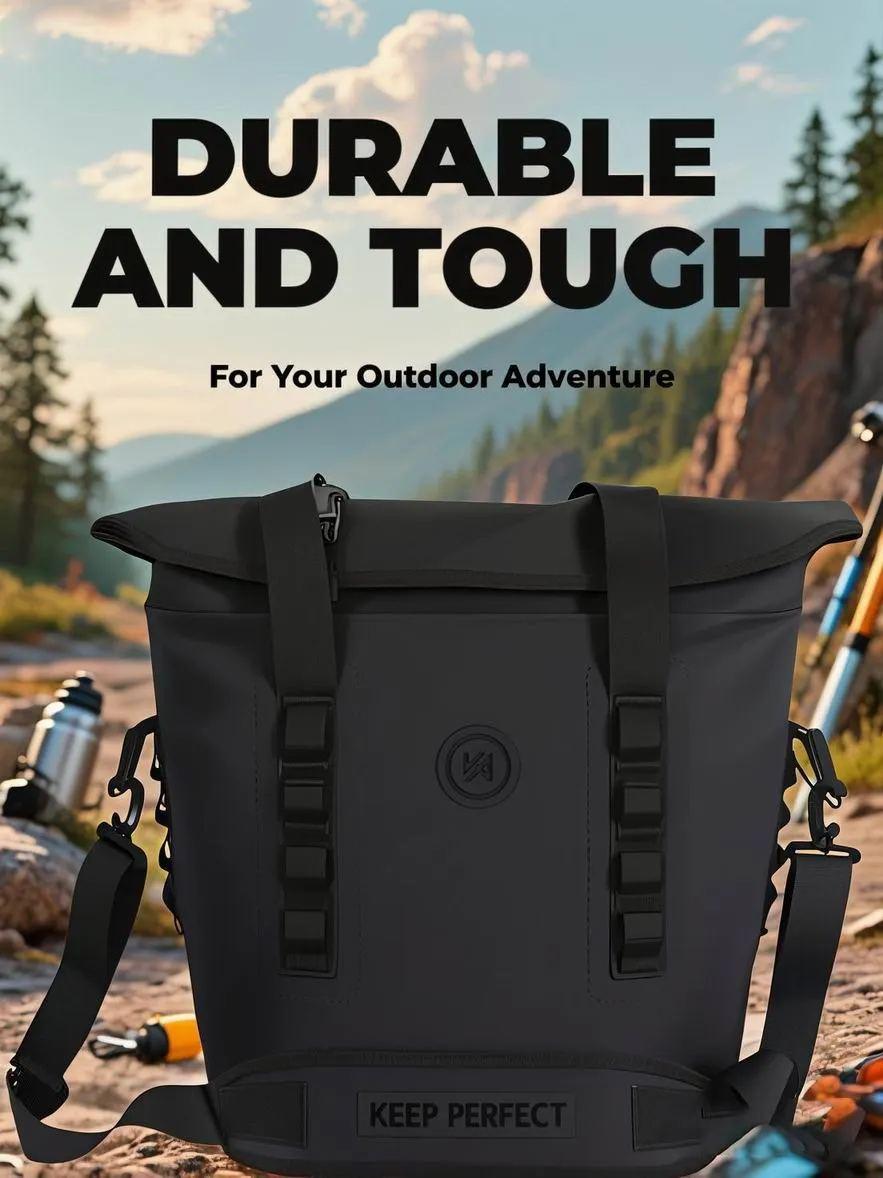
Inspection holds at AQL 2.5 to ISO 2859-1, and on a tote the inspection plan should be written around the failure modes rather than applied generically. The four checks that matter are the handle pull test, coating adhesion across the fold, stitch density at the join, and dimensional consistency against the approved sample. A generic inspection that only counts pieces and looks at colour will pass a batch with a weak handle join, which is precisely the defect that generates returns three weeks after delivery.
Our team also runs a fold cycle check on a sampled basis from the bulk lot, folding a sample of units repeatedly and inspecting the pocket mouth and the coating afterwards. It is a five-minute check that catches the defect a single visual inspection cannot see. Creators who want to understand what an inspection report actually contains, and how to read a failure rate, will find the campaign QA and QC guide useful before they approve a shipment.
The final checkpoint is the golden sample comparison. The approved sample is held as the reference, and the bulk lot is checked against it for fabric hand, colour, stitch, dimensions and print placement. Any drift is recorded and either accepted within tolerance or corrected before the cartons close. This is the last moment at which a correction is cheap, and it is the reason the approval sample should be signed off deliberately rather than quickly.
Order the fabric before the pattern is cut. Availability, not sewing time, is what pushes a sample past the 10 working day window.
Key takeaways
- A
- m
- a
- r
- k
- e
- t
- t
- o
- t
- e
- r
- e
- w
- a
- r
- d
- s
- u
- c
- c
- e
- e
- d
- s
- w
- h
- e
- n
- t
- h
- e
- f
- a
- b
- r
- i
- c
- f
- o
- l
- d
- s
- s
- m
- a
- l
- l
- ,
- t
- h
- e
- h
- a
- n
- d
- l
- e
- j
- o
- i
- n
- i
- s
- e
- n
- g
- i
- n
- e
- e
- r
- e
- d
- f
- o
- r
- t
- h
- r
- e
- e
- t
- i
- m
- e
- s
- t
- h
- e
- s
- t
- a
- t
- e
- d
- l
- o
- a
- d
- ,
- a
- n
- d
- t
- h
- e
- i
- n
- s
- p
- e
- c
- t
- i
- o
- n
- p
- l
- a
- n
- t
- e
- s
- t
- s
- t
- h
- e
- f
- o
- l
- d
- i
- n
- s
- t
- e
- a
- d
- o
- f
- o
- n
- l
- y
- c
- o
- u
- n
- t
- i
- n
- g
- c
- a
- r
- t
- o
- n
- s
- .
Send us a brief with your load target, dimensions and fabric preference, and our production team will come back with a sampling plan and a unit cost for custom tote bags.
Frequently Asked Questions
What is the minimum order for a custom market tote?
The minimum is 500 pcs per style and per colourway. A tote offered in two colourways counts as two separate commitments unless the split is agreed inside a single production run. Most first-time campaigns launch one hero colourway and hold the second for a re-order once demand is visible. Our programme coordinator can quote a two-colour split if the campaign genuinely needs it at launch.
Which nylon denier should a foldable market tote use?
The useful window is 210D to 420D. A 210D ripstop folds smallest and resists puncture propagation, while a 420D plain weave takes abrasion better across flat surfaces and feels more substantial in the hand. Both fold well and both sit in a similar cost band. The decision turns on how rough the backer is likely to be, not on which number sounds stronger on a campaign page.
How long does sampling take for a foldable tote?
Standard sampling runs 6 to 10 working days. Builds with a complex pattern, a specially sourced fabric or an unusual hardware item run 12 to 15 working days. The most common cause of delay is not sewing but waiting on a fabric or fitting that has to be ordered in, which is why availability should be confirmed before the pattern is cut rather than after the first sample review.
Can a market tote really be washed?
Yes, with a specification that anticipates it. A nylon shell with a polyurethane coating survives a cool machine wash far better than a coated canvas or a bag with a bonded base board that is not removable. The details that matter are a removable base board, bound internal seams and a coating that stays bonded through repeated wetting. Ask for a wash test on the sample if the campaign page promises machine washing.
What does a handle load test actually involve?
The sample bag is filled to roughly three times the rated carry weight and held, then the join is inspected for creep or stitch failure. A market tote rated at six kilograms of everyday carry should hold around eighteen kilograms in the test without the join moving. Passing at three times the rated load gives margin for the backer who overfills the bag, which is most backers at some point.
Should a market tote have a base board?
For a market tote, usually yes. A removable polypropylene board in a sleeve at the base keeps jars and bottles upright and stops the base sagging under load, and it can be taken out when the bag is folded. It is a low-cost component that survives washing. A doubled fabric base without a board folds more easily but bulges under weight, which is the complaint most often seen on boardless totes.
How many pockets should a market tote have?
Three working pockets covers most use: an internal phone slip, an internal zip pocket for valuables, and an external bottle pocket. Beyond that the cost rises and the usage falls. Pockets below the load line are unusable once the bag is full, so placement in the upper third of the interior or on the exterior faces matters more than the count. A key clip on a webbing tab is cheap and photographs well.
What is the difference between an integrated pocket and a stuff sack?
An integrated pocket is the bag turning inside out into its own pocket, so nothing can be lost and the pack is slightly smaller. It puts stress at the pocket mouth, which has to be reinforced. A separate stuff sack costs a little more, packs marginally larger and is easier to get right on the first sample. Most market tote rewards use the integrated pocket because the folding promise is the product.
How much does bulk production cost to schedule?
Bulk production runs 35 to 50 days after the deposit and the approved sample. The deposit books the production slot, and slots are released against a confirmed deposit rather than an intention. Payment terms are T/T 30/70 and shipping is FOB Xiamen. A creator should plan freight booking inside the same window rather than waiting until the goods are finished.
Can recycled nylon be used for a market tote?
Yes. A GRS-certified recycled nylon behaves like virgin nylon in use and carries a premium on fabric cost. The important step is requesting the traceability documentation at sampling time rather than at bulk time, because certificates are issued against a specific fabric lot. If the campaign page makes a recycled content claim, the paperwork has to exist before the claim is published.
What inspection standard applies to a tote order?
Inspection holds at AQL 2.5 to ISO 2859-1. On a tote the plan should be written around the failure modes: handle pull test, coating adhesion across the fold, stitch density at the join, and dimensional consistency against the approved sample. A generic count-and-colour check will pass a batch with a weak handle join, which is the defect that generates returns weeks after delivery.
How should a market tote be positioned in the reward ladder?
It belongs in the entry to mid range, priced so the unit cost leaves room for shipping, platform fees and contingency. A well-specified foldable nylon tote with a reinforced handle is not a giveaway and should not be priced like one. It also anchors a bundle well, paired with a smaller item such as a pouch. Putting it too low trains backers to value it cheaply.
People Also Ask
Are nylon totes better than canvas for crowdfunding?
For a foldable reward, yes. Nylon folds smaller, weighs less and resists damp better. Canvas reads as premium and prints beautifully but does not pack down. Choose nylon when the campaign promise is packability, and canvas when the promise is a structured, heavyweight aesthetic.
What size should a market tote be?
Twenty-five to thirty-five litres covers a normal market run without becoming unwieldy. Measure the finished sample by filling it with a known volume, then print that figure on the campaign page so a backer can verify it at home.
Do foldable totes need a coating?
A light to moderate polyurethane coating on the reverse of the fabric stops damp soaking through and protects the fold from wicking. A tote does not need tent-level waterproofing, but it does need enough coating to survive a wet umbrella and condensation.
How small should a foldable tote pack down?
A thirty litre tote should fold to roughly a large smartphone footprint in two dimensions and a few centimetres thick. Test it by folding two hundred times and measuring again, because the second measurement is the honest one.
Can I launch two colourways on a first campaign?
Yes, but each colourway carries its own 500 pcs commitment. Most first campaigns launch one hero colourway and use a stretch goal to unlock a second, which keeps the initial commitment to a single minimum.
When should I order samples for a summer market tote?
Roughly four to six months before the delivery month. That allows sampling before the page goes live so the campaign can be photographed with a real unit, then a booked production slot well ahead of the seasonal peak.
Does a tote need a zip closure?
Not for a market tote. An open top is faster to load and cheaper to make. A snap or a magnetic closure at the top adds a little security without the cost and failure risk of a full zipper, and it keeps the fold clean.