Kickstarter Reward Tiers for Bags: A Ladder That Lifts Pledges
Average pledge, not backer count, decides whether a bag campaign clears its goal. A five-tier ladder with a genuine anchor at the top and a bundle in the middle can lift average pledge by 20-40% without changing the product. The mechanics that work are limited early bird allocations, colourway choices that cost nothing to add, and add-ons kept separate from tiers. Every tier still has to clear its landed cost after fees of roughly 5% plus 3-5% and postage by zone.
- Why average pledge decides the campaign
- The anatomy of a five-tier bag ladder
- Anchoring: what the top tier is really for
- Early bird allocations and what they cost you
- Colourway and bundle mechanics that cost little
- Add-ons versus tiers: where each belongs
- The margin check each tier has to pass
- Stretch goals tied to production reality
- Tier copy: what to write in sixty words
- How the ladder changes on Indiegogo and multi-platform runs
- Measuring and correcting tiers mid-campaign
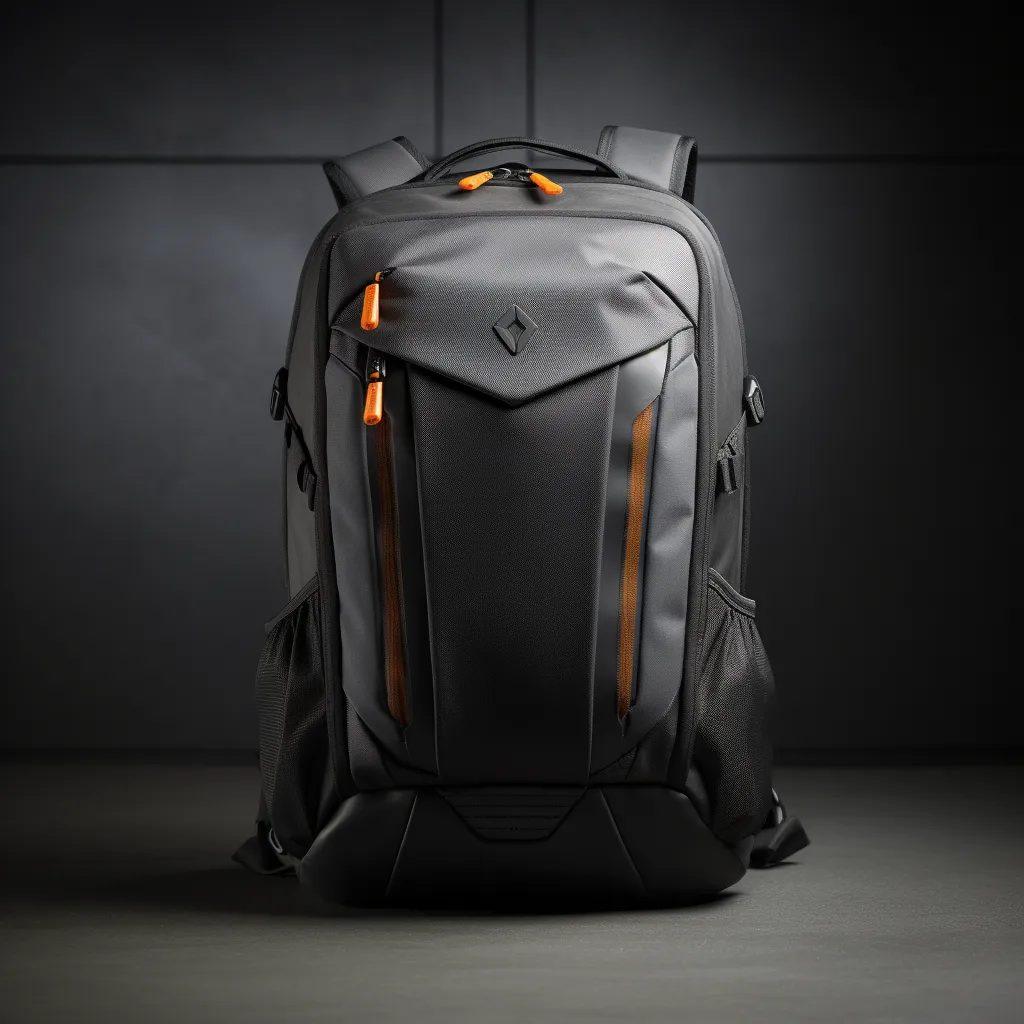
A bag campaign with 1,000 backers at 79 US dollars raises 79,000 US dollars. The same campaign with 900 backers at 108 US dollars raises 97,200. Same product, same audience, same marketing spend, and a materially different outcome, because average pledge multiplied by backer count is the only arithmetic the platform cares about. Tier structure is the highest-leverage thing you control after the product itself, and it costs nothing to get right. Our team has supported 20+ crowdfunding campaigns and tier structure is where the largest free gains sit.
Why average pledge decides the campaign
The funding goal is fixed, so the number of backers you need is the goal divided by average pledge. Raising average pledge from 79 to 108 US dollars cuts the required backer count by roughly a quarter, which matters enormously because backers are the expensive part. Every backer has an acquisition cost, a support cost and a probability of a support question later. Fewer backers at a higher pledge is not just better arithmetic, it is a simpler campaign to run and to deliver.
There is a second effect that is easy to miss. Average pledge is an input to platform ranking and to press interest, because both respond to momentum, and a campaign that looks like it is doing well attracts more of both. A campaign at 150% of goal with a high average pledge reads as a success. One at 150% with a low average pledge reads as a discount, and discounts attract backers who are more price-sensitive, more demanding and more likely to complain later.
The third effect is on the production side, and it is the one that connects tiers to sourcing. A higher average pledge means fewer units per backer is not the goal, but a better mix is. A bundle tier turns one acquired backer into two units with one postage event, which improves unit economics in both directions: more units toward the 500 pcs per style and colourway minimum, and lower postage per unit. That is why the bundle sits at the centre of the ladder rather than at the top. The fulfilment pillar covers the postage side, and the bag guide carries the wider framework.
The anatomy of a five-tier bag ladder
Five tiers is the number that works for bags. Fewer and you lose the anchor and the bundle; more and backers spend their time comparing instead of pledging. The five are: a limited early bird at the lowest price, a standard single at your target price, a bundle of two units, a colourway or accessory tier, and a premium anchor at the top. The standard single and the bundle should carry most of the volume, and the premium anchor should carry a small share while doing most of the psychological work.
Price spacing matters more than price level. Work in ratios rather than in round numbers. If the early bird is 79 and the standard is 99, the step is 25%, which reads as a meaningful early-bird benefit without making the standard price feel punitive. If the bundle is 175 against a standard of 99, the second unit costs 76, a discount of roughly 23%, which is enough to motivate a bundle without cannibalising the standard tier. The premium anchor should be roughly 1.6 to 2.0 times the standard.
Write the contents of each tier as a measured list, not as adjectives. A tier described as the complete set forces the backer to scroll. A tier that reads one 22-litre backpack in charcoal, one packing cube set of three, one woven luggage tag, ships in October tells the backer exactly what arrives and when. Specificity converts, and it also protects you, because the tier description becomes the specification of what you owe.
| Tier | Price (USD) | Contents | Target share of backers |
|---|---|---|---|
| Early bird single | 79 | One bag, limited to 150 units | 15-20% |
| Standard single | 99 | One bag, colourway choice | 40-45% |
| Duo bundle | 175 | Two bags, any colourways | 20-25% |
| Bundle plus accessory | 235 | Two bags plus matching pouch | 8-12% |
| Premium anchor | 299 | Three bags, all colourways, numbered tag | 3-5% |
Anchoring: what the top tier is really for
The premium tier exists to make the middle tier look reasonable, and it should be priced to be chosen by only a small share of backers. At 299 US dollars against a standard of 99, most backers will not take it, and that is the point. Its effect is on the comparison: a backer who sees 79, 99, 175 and 299 reads 99 as the sensible entry and 175 as good value for two. Remove the 299 and the same backer reads 175 as expensive. Anchoring is the cheapest margin protection available.
The anchor has to be genuine, though. A tier priced high with nothing extra in it reads as a donation request and damages trust. Give it something that costs you little and is valued highly: all colourways in one order, a numbered or personalised tag, early dispatch from the first production batch, or a version in a material not offered elsewhere. Numbered and limited mechanics work particularly well on bags because ownership identity is part of why people buy them.
There is a production constraint on the anchor. If it includes a variant that is not in the main run, it creates a second style with its own minimum of 500 pcs, which is almost never worth it. Design the anchor so that every item in it comes from the same production run with the same materials, and the only difference is quantity, packaging or a small added accessory. That keeps the schedule and the minimum intact while the psychological work gets done.
Early bird allocations and what they cost you
Early birds create launch-day velocity, which is what platform discovery rewards, and they cost you margin on the units they cover. The question is how many to allocate. Too few and the tier sells out in minutes, which produces a burst of frustration and no lasting benefit. Too many and you have discounted a large share of the campaign for no reason. A workable allocation is 10-20% of your expected backer count, sized so it sells out within the first 24 to 72 hours.
The mechanics matter as much as the number. State the allocation explicitly and count down publicly, because scarcity without a visible count reads as a bluff. Consider a tiered early bird: 50 units at the lowest price, then 100 at a middle price, then the standard. This captures the urgency benefit twice and recovers some margin from backers who arrive on day two. It also smooths the demand curve, which helps your production planning because it tells you earlier what the mix looks like.
Check the early bird against the margin floor before you publish it. An early bird at 79 US dollars against a landed cost of 48.50 US dollars leaves roughly 30 US dollars before fees, and fees at 8-10% remove about 7. That leaves around 23 US dollars of contribution, which is fine. The same early bird at 59 US dollars leaves around 4 US dollars, which is not, and a campaign that sells 200 units at 59 has converted its launch momentum into a loss. Test the lowest tier against the fee stack first.
Colourway and bundle mechanics that cost little
Colourway choice is the most efficient tier mechanic available to a bag campaign, because it feels like a meaningful choice and costs almost nothing to provide, provided the colourways are planned into the run. A bag offered in three colourways where the backer chooses at survey time has the same production cost as one offered in a single colourway, as long as each colourway clears its own minimum. The minimum is per style and per colourway, so three colourways at 500 each is a 1,500-unit commitment, not a 500-unit one.
That arithmetic drives the colourway decision. If your pessimistic volume is 900 units, three colourways is not viable and two is marginal. Offer two colourways and let one of them be limited, which produces the scarcity mechanic without a third production commitment. If your pessimistic volume is over 1,500, three colourways works and the choice becomes a genuine tier differentiator. Confirm the volume case with your production partner before you design the ladder around it.
Bundles are the other cheap mechanic, and they are the one that does the heavy lifting on unit economics. A duo bundle at 175 against a single at 99 gives the backer a discount and gives you two units, one pick-pack event and one postage charge in most weight bands, depending on whether the pair fits one parcel. Confirm that with your 3PL, because two parcels cost more than one heavier parcel. The budget article shows how the zone-weighted postage feeds into this, and the low minimum production page explains the colourway rule.
Add-ons versus tiers: where each belongs
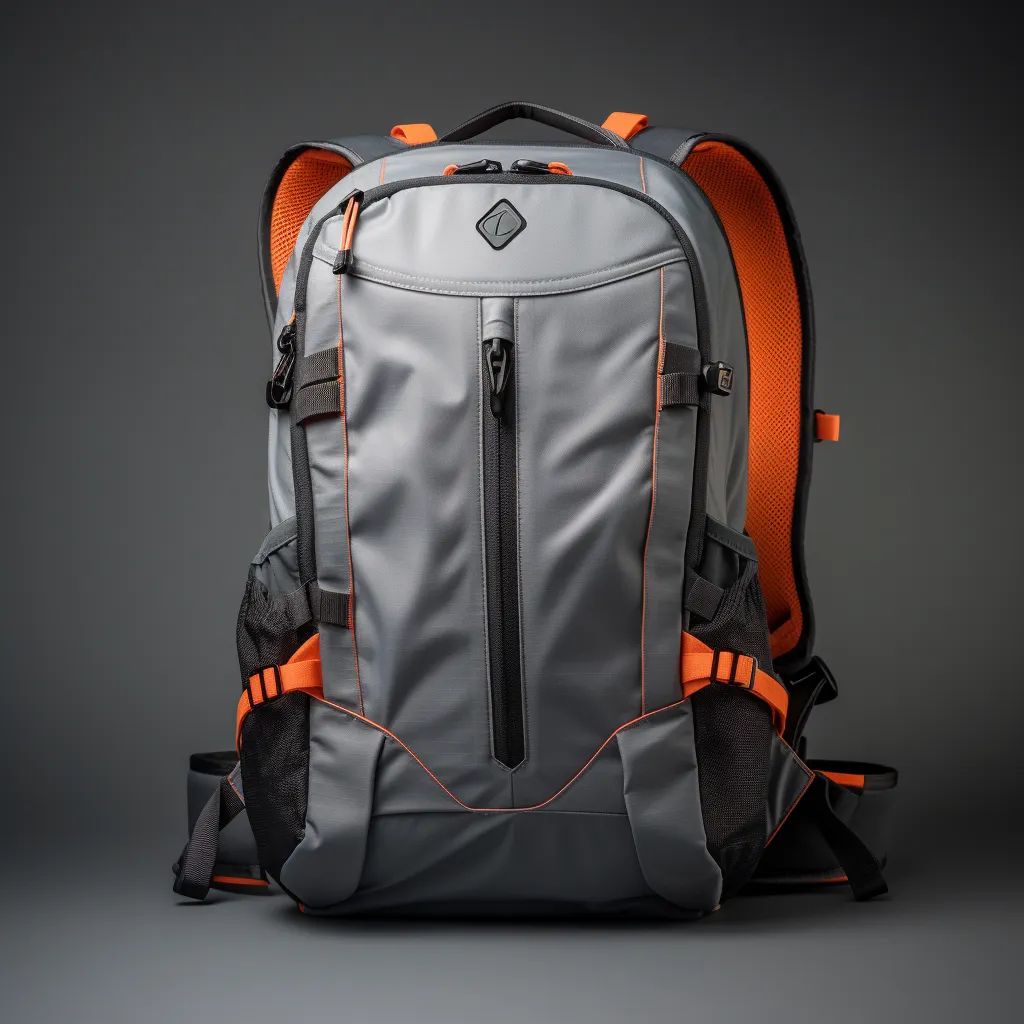
Add-ons are items a backer attaches to an existing pledge; tiers are complete pledge levels. Keeping them separate is one of the clearest improvements a bag campaign can make. When accessories sit inside tiers, every combination becomes a tier, the list grows, and backers spend minutes comparing instead of seconds pledging. When accessories sit as add-ons, the ladder stays at five and a backer who wants a pouch adds it in one click without changing their pledge level.
The rule for what belongs where is about decision order. Anything that changes how many bags the backer receives is a tier, because it is the primary decision. Anything that accompanies a bag, such as a pouch, a strap, a patch or a tag, is an add-on, because it is a secondary decision made after the first one. Put the primary decision in the ladder and the secondary decision in the add-on list, and both decisions get made faster.
Add-ons also protect your production plan. An add-on can be capped, delayed or cancelled without dismantling a tier, and it can be priced to reflect a small run. Our standard minimum applies per style and colourway, so an add-on pouch at 500 pcs is a real commitment, but it is a separate one from the main bag and can be made in a shared material to keep the run efficient. Ask your production partner which add-ons share a material bill with the main product, because those are the cheap ones.
The margin check each tier has to pass
Every tier needs its own margin calculation, because the assumptions differ. Take the tier price, subtract platform and payment fees of roughly 5% plus 3-5% of gross, subtract the landed cost of every item in the tier, subtract the postage for that tier's parcel weight and zone, and subtract an allocation for returns. What remains is contribution. Then check it against a target, and 20% of tier price is a reasonable floor for a first campaign, because below that you have no buffer for the things that go wrong.
Run it on the duo bundle as an example. Price 175, fees around 15, landed cost for two units at 48.50 each is 97, but postage is one parcel rather than two, say 13 rather than 19.60. Contribution is roughly 50 US dollars, or about 29% of price, which is healthier than the single unit's contribution of roughly 23 US dollars on 99. The bundle is not just a volume play, it is a margin play, because it halves the postage per unit and shares the acquisition cost across two units.
This is also where currency and duty belong. If you price in US dollars and pay production costs in another currency, a movement of a few percent erodes contribution on every tier, and a tier already at 20% cannot absorb it. Add a currency line to the model and re-check the lowest tier first, because it has the thinnest buffer. The full formula, including the fee stack and the volume breaks, is set out in the pricing strategy article.
Stretch goals tied to production reality
Stretch goals are announced as funding milestones and they are where campaigns quietly break their own schedules. The safe stretch goals are the ones that add no new component and no new process: an extra colourway using the same fabric in a different dye, a free accessory that shares a material bill, upgraded packaging, or a second strap set. Each of those can be absorbed into the existing run with a modest addition to the purchase order.
The dangerous stretch goals are the ones that add tooling or time. A moulded component, a custom zipper pull, a new lining print or an electronic accessory each add a one-off cost, a sampling round and a lead-time risk. A moulded part can move sampling from 6-10 working days to 12-15 working days and add weeks to a 35-50 day production run. If a stretch goal is worth doing, qualify it before launch so that hitting the milestone is a purchase order rather than a new development project.
There is also a cash dimension. A stretch goal that adds 3 US dollars per unit across 1,500 units is 4,500 US dollars of additional goods value, and under T/T 30/70 that is an additional deposit. Successful campaigns have been squeezed by their own stretch goals at exactly this point. Model the stretch goal in the 150% and 200% scenarios before you announce it, and prefer goals whose cost is fixed rather than per-unit.
Announce each stretch goal with the funding threshold, the added item and the delivery impact stated together. A goal that says what backers get and confirms the month still holds is worth more than one promising something larger while silently moving the date. Our team will confirm before launch which candidate goals can be absorbed without touching the schedule.
Tier copy: what to write in sixty words
Tier copy has a job and it is not persuasion, it is clarity. Sixty words is enough for most tiers if every word carries information. State what arrives, in what quantity, in what colourway, when it ships, and what makes this tier different from the one above and below it. Avoid adjectives: rugged, premium and ultimate mean nothing to a backer who is trying to work out whether the bag fits a 16-inch laptop.
The structure that works is a one-line summary, a measured contents list, and a shipping line. The summary restates the product in the buyer's language. The contents list answers the question the backer will ask in the comments if you do not. The shipping line states the month and the destination coverage, including whether duties are included, because that is the second most common comment question after dimensions. Put the price at the top of the block where the platform displays it and do not repeat it in the copy.
Write the copy against the specification, not against the render. Every measured claim in the tier description should be a line in your spec, so that the promise and the product are the same document. A tier that promises a suspended laptop sleeve for devices up to 16 inches is a spec line with a tolerance, and it becomes an inspection criterion. Our team inspects to AQL 2.5 to ISO 2859-1 against a golden sample, and the tier copy is a useful checklist for what the golden sample has to prove.
How the ladder changes on Indiegogo and multi-platform runs
The same five-tier ladder works on other platforms, but two mechanics change. Indiegogo offers flexible funding, which means backers can pledge toward a goal that is not met, and it offers in-demand continuation after the campaign closes. Both change tier design. With flexible funding the early bird allocation matters less as an urgency device and more as a reward for early commitment, and the premium anchor matters more, because there is no all-or-nothing moment concentrating demand into the final 72 hours.
Running two platforms in sequence, such as a Kickstarter campaign followed by an Indiegogo in-demand period, requires the ladder to be identical or deliberately different, never accidentally different. Backers compare, and a tier priced 15 US dollars lower on the second platform generates messages from the first campaign's backers. The clean approach is to hold prices level and change only what is available: the second run offers leftover colourways, a later dispatch month, or an accessory bundle that was not offered the first time.
The production implication is that a second platform run is usually a re-order, not a second production. That is good news for cost, because tooling is already amortised and the specification is qualified, and it means the second run can be smaller and faster. Confirm the minimum applies again per colourway, and plan the fabric buy across both runs at the outset rather than discovering a dye-lot difference between them. Our multi-platform page covers the sequencing, and the fulfilment pillar covers dispatching two waves.
Measuring and correcting tiers mid-campaign
Watch three numbers daily: average pledge, tier distribution and conversion rate from page view to pledge. Average pledge tells you whether the ladder is working. Tier distribution tells you where volume is concentrating, and if 70% of backers sit in the early bird the standard tier is mispriced. Conversion tells you whether the problem is the page or the traffic, because a healthy conversion with weak volume is a reach problem, while weak conversion with healthy volume is a page problem.
Corrections are possible, but they are constrained. You can add a tier, add an add-on, or raise an allocation; you generally should not change the price of an existing tier, because backers who pledged at the old price will notice and say so. If the early bird sells out in two hours and the standard tier stalls, the fix is a middle tier at a price between the two rather than a discount on the standard. If the bundle is outselling the single, raise its prominence on the page rather than its price.
The operational correction matters too. If the mix shifts toward bundles, your unit count per backer rises, which moves you toward the minimum faster but also raises the goods value and the deposit. Recalculate the unit projection at the midpoint of the campaign and tell your production partner, because a mix shift changes fabric buying and possibly the production slot. Our programme coordinator re-runs the volume projection with creators at the campaign midpoint for exactly this reason.
Send us your tier ladder and target volumes, and we will check each tier against landed cost and the production minimum.
Frequently Asked Questions
How many reward tiers should a bag campaign have?
Five works well: a limited early bird, a standard single, a duo bundle, a bundle with accessory, and a premium anchor. Fewer and you lose the anchor and the bundle mechanic; more and backers spend time comparing rather than pledging. Price them in ratios rather than round numbers, with the standard as the reference, the bundle around 1.75 times it, and the anchor around 2 to 3 times it.
How much should an early bird tier be discounted?
Around 20-25% below the standard tier, which on a 99 US dollar bag means roughly 79. Allocate 10-20% of your expected backer count so the tier sells out in the first 24 to 72 hours, and state the allocation with a public countdown. Check the discounted price against the fee stack and landed cost first, because an early bird at 40% off often leaves single-digit contribution.
Does the premium tier need to sell well?
No. Its job is anchoring: it makes the middle tiers look reasonable. Target 3-5% of backers. It must still be genuine, so include something that costs little and is valued highly, such as all colourways in one order, a numbered tag or early dispatch from the first batch. Keep every item in it within the same production run so it does not create a second style with its own minimum.
How many colourways can I offer on a campaign bag?
It depends on volume, because the minimum is 500 pcs per style and per colourway, so three colourways is a 1,500-unit commitment rather than 500. At a pessimistic volume of 900 units, offer two. Above 1,500, three works and becomes a genuine tier differentiator. Confirm the volume case with your production partner before designing the ladder around colourway choice.
Should accessories be tiers or add-ons?
Add-ons. Anything that changes how many bags a backer receives is a tier, because it is the primary decision. Anything that accompanies a bag, such as a pouch, strap or patch, is an add-on, a secondary decision made after the first. Keeping accessories as add-ons holds the ladder at five tiers, speeds up the pledge decision, and lets you cap or cancel an item without dismantling a tier.
What margin should each tier carry?
Aim for at least 20% of tier price as contribution after fees, landed cost, postage and a returns allocation. Take the tier price, subtract platform and payment fees of roughly 5% plus 3-5%, subtract the landed cost of every item, subtract zone-weighted postage and an allocation for returns. Check the lowest tier first, because it has the thinnest buffer and cannot absorb a freight or currency movement.
Are bundle tiers more profitable than single tiers?
Usually yes. A duo bundle at 175 against a single at 99 has double the landed cost but roughly one postage charge if the pair fits one parcel, so contribution per unit improves. It also shares the backer acquisition cost across two units and moves you toward the production minimum faster. Confirm with your 3PL whether two bags ship as one parcel, because two parcels cost more than one heavier parcel.
What makes a stretch goal safe for a bag campaign?
One that adds no new component and no new process. Extra colourways in the same fabric, a free accessory sharing a material bill, upgraded packaging or a second strap set can all be absorbed into the existing run. Anything needing tooling, a custom zipper pull or a new lining print adds a sampling round and weeks to a 35-50 day production run.
Can I change tier prices during a live campaign?
Avoid it. Backers who pledged at the old price will notice and say so publicly. If the early bird sells out and the standard tier stalls, add a middle tier at a price between the two rather than discounting the standard. If one tier is outselling the others, change its prominence on the page rather than its price. Add an add-on if you need a new entry point.
How do I know if my tier structure is working?
Track three numbers daily: average pledge, tier distribution and page-view-to-pledge conversion. If 70% of backers sit in the early bird, the standard tier is mispriced. Healthy conversion with weak volume is a reach problem, while weak conversion with healthy volume is a page problem. Recalculate unit projections at the midpoint, because a mix shift toward bundles changes your fabric buy and deposit.
How does tier structure affect production planning?
Directly, because the tier mix determines unit count per backer and therefore whether you clear 500 pcs per style and colourway. A mix heavy on bundles produces more units from fewer backers, which helps clear the minimum but raises goods value and the deposit under T/T 30/70. Recalculate the projection at the campaign midpoint and share it with your production partner before fabric is bought.
What should tier copy say in sixty words?
State what arrives, in what quantity and colourway, when it ships, and what makes the tier different from the one above and below it. Use a one-line summary, a measured contents list and a shipping line that covers destination and whether duties are included. Avoid adjectives, and write every measured claim against a line in your specification so the promise and the product match.
People Also Ask
How many tiers should a bag campaign have?
Five: early bird, standard single, duo bundle, bundle with accessory, and a premium anchor at roughly 2 to 3 times the standard.
How big should the early bird discount be?
About 20-25% below standard, allocated to 10-20% of expected backers so it sells out in the first 24 to 72 hours.
Do premium tiers need to sell?
No. They anchor the middle. Target 3-5% of backers, but make them genuine with colourways, a numbered tag or early dispatch.
How many colourways can I offer?
Two at a pessimistic volume near 900 units, three above 1,500, because the minimum is 500 pcs per style and per colourway.
Accessories as tiers or add-ons?
Add-ons. Tiers are for how many bags; add-ons are for what accompanies them.
What margin should a tier carry?
At least 20% of tier price after fees of 5% plus 3-5%, landed cost, zone-weighted postage and a returns allocation.
Can I change prices mid-campaign?
Avoid it. Add a middle tier or an add-on instead, and change a tier's prominence on the page rather than its price.
What is a safe stretch goal?
One adding no new component or process: a colourway, a shared-material accessory, upgraded packaging or an extra strap set.