Tech Bag Logistics: CPSIA Compliance and Battery Shipping Rules
A tech bag reward ships under two rulebooks at once. Product safety: CPSIA lead and phthalate limits, tracking labels, and a certificate held by the importer of record. Transport: UN 38.3 test summaries, watt-hour ratings and the packing instruction your carrier will enforce. Both must be ready before the vessel or aircraft loads, not after. Plan 7-15 working days for third-party lab testing and treat battery documentation as a booking condition. Our production team builds both tracks into the same schedule as sampling (6-10 working days) and mass production 35-50 days), because a held parcel costs more than the test.
- Why tech bags carry a heavier compliance burden
- CPSIA in plain terms: scope, limits and who is on the hook
- The three tests that gate a shipment
- When a tech bag is treated as a children's product
- Power banks, lithium cells and watt-hour ratings
- Packing instructions PI965 to PI967 explained
- Air versus sea: choosing a mode for battery rewards
- The document pack your forwarder will ask for
- Building the compliance timeline backwards
- What compliance costs in a campaign budget
- The pre-booking checklist
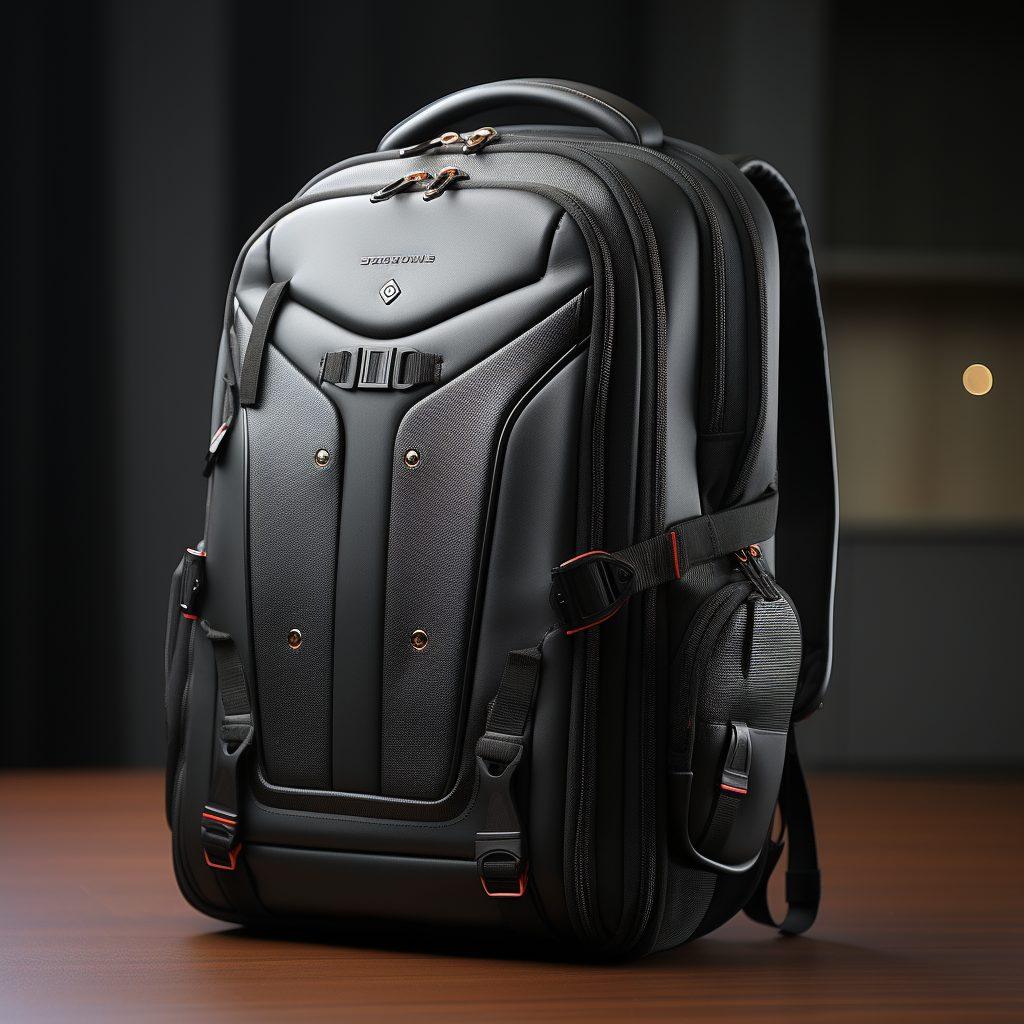
A canvas tote and a laptop backpack leave the same port, but they do not travel under the same rules. The tote is a sewn textile article, and its file is a fabric composition statement plus a lead test if it is aimed at children. A tech bag carries that same textile file plus an electrical one, because the moment you ship a power bank, a wireless charging pad or an LED-lit interior, your parcel becomes a consignment containing lithium cells. That second file is governed by dangerous-goods regulation rather than consumer-product law, and it is enforced by carriers, not only by customs.
This matters to a crowdfunding creator for one practical reason: the failure mode is not a fine, it is a stalled shipment. A parcel held at a sorting hub for missing battery documentation does not arrive a week late; it can be returned, destroyed, or re-booked at several times the original rate. Backers never read the compliance detail, they read the delivery date. Our production team therefore treats documentation as a schedule item with a date attached, in the same way it treats a zipper lead time. Anyone planning a custom bag programme for a campaign should put the document list into the critical path from week one, and our campaign bag sourcing hub keeps that list alongside the production calendar.
Why tech bags carry a heavier compliance burden
Three features separate a tech bag from a general bag in the eyes of a regulator. The first is an energy source: any cell, whether removable or built into a panel, brings the UN Manual of Tests and Criteria into scope. The second is heat and charging: a bag with an integrated charging port is, to a carrier, an article containing equipment with a power source, and some carriers treat it more strictly than a plain bag with a loose power bank inside. The third is claim surface: anti-theft, RFID-blocking, water-resistant and shock-proof claims are the ones that attract substantiation requests from marketplaces later, and the evidence has to exist at the time you make the claim.
There is also a fourth, quieter burden: component provenance. A power bank bought from a marketplace to bundle with your bag will arrive with a test summary that may be a photocopy of a photocopy, or with none at all. A carrier can reject it. When our sourcing partner buys cells for a programme, the UN 38.3 test summary and the cell maker's specification sheet are requested before the purchase order is placed, not after. That single ordering decision removes most battery-related delays.
The cost of this burden is front-loaded and small relative to the risk. Third-party testing for a single material set typically runs in the low hundreds of US dollars per substrate group, and most tech bag campaigns need two or three groups tested: outer fabric and coating, printed or coated trim, and any plastic hardware. That is a rounding error next to a re-booked air shipment or a refund wave from backers who were promised delivery in a fixed month. The discipline is not spending more, it is spending earlier.
CPSIA in plain terms: scope, limits and who is on the hook
The Consumer Product Safety Improvement Act is United States law, and it attaches to the article placed into commerce, not to the workshop that sewed it. If a bag is a children's product, the importer of record needs a Children's Product Certificate supported by third-party testing at a CPSC-accepted laboratory, plus a permanent tracking label on the product and on its packaging. General-use bags are not exempt from everything: lead limits on accessible substrates still reach them, and state-level warnings such as California Proposition 65 sit alongside federal rules.
The numbers worth memorising are narrow and specific. Total lead in accessible substrates is capped at 100 ppm for children's products. Phthalates DEHP, DBP and BBP are limited to 0.1% each in children's toys and childcare articles, with three more restricted phthalates applying to anything that can be placed in a child's mouth. Those are the figures a lab report will show, and they are the figures a marketplace or retail buyer will ask to see a year after your campaign ends. For a creator the practical reading is about material selection: coatings, PVC trims, screen-print inks and elastic are the usual sources of a fail, not the face fabric.
Who is on the hook is worth settling in writing before you quote a delivery date. In practice the brand on the label carries the certificate obligation. If you ship direct to US backers in your own name, that is you. If you ship through a 3PL that acts as importer of record, the obligation can move, but only if the contract says so. Our programme coordinator raises this question at the same moment as the freight quote, because the answer changes which documents must be complete before the vessel loads, and it changes who pays for a re-test if one is ordered.
If you cannot name your importer of record in writing, assume you are it. Every certificate, label and test report then has your brand name on it.
The three tests that gate a shipment
Most tech bag programmes need three families of test, and each one has a different owner, a different clock and a different consequence if it is skipped. Substance testing covers lead and phthalates on accessible materials and is performed by a CPSC-accepted (or EU-recognised) laboratory on physical samples, usually pulled from the pre-production sample or from the first production run. Battery testing is the UN 38.3 series, performed by the cell maker, and you receive a test summary rather than commissioning it yourself. Performance testing covers the claims you make: water resistance, abrasion, strap strength, zipper cycles. It is not always mandatory, but it is what defends the copy on your campaign page.
Sequencing is where programmes go wrong. Substance testing needs a sample that is representative of production, which means it cannot be commissioned meaningfully before the first sample exists. Our standard sampling window is 6-10 working days, extending to 12-15 working days for complex builds with moulded parts, welded seams or multi-panel print. Testing then runs in parallel with your page build, not after it. Booking the lab slot when the sample ships, rather than when the sample arrives, is the single easiest way to save two weeks.
The pass mark also needs agreeing in advance. Inspection on our programmes runs to AQL 2.5 to ISO 2859-1, which is a sampling plan for defects, not a chemical test. A bag can pass AQL inspection and still fail a lead test, because the two look at different things: one counts visible and functional faults in a sample of cartons, the other measures chemistry in a material. Treat them as two gates. A programme that only runs the inspection gate has a documentation hole that usually surfaces at customs, at a marketplace listing, or in an angry backer message.
| Document | Issued by | Trigger | Typical lead time |
|---|---|---|---|
| Children's Product Certificate (CPC) | Brand / importer of record | Product is a children's product | 1-2 days after the lab report lands |
| Third-party lab test report | CPSC-accepted laboratory | Before first shipment | 7-15 working days |
| UN 38.3 test summary | Cell or battery maker | Any lithium cell shipped | Request before buying; 0-10 days |
| Safety data sheet (SDS/MSDS) | Battery maker | Freight booking | Same week as the cell purchase |
| Permanent tracking label artwork | Brand | Children's product | 1-2 days, plus production time |
| General Certificate of Conformity | Brand | General-use product with an applicable rule | 1 day |
When a tech bag is treated as a children's product
The test is not whether you marketed the bag to children. It is whether the product is designed or intended primarily for children 12 years or younger, judged on a set of factors: subject matter, whether it is represented in advertising as a children's item, whether it is sold in a children's department, and whether a reasonable person would classify it as a children's product. A small backpack with cartoon graphics and adjustable straps sized for a primary school pupil will read as a children's product. A 26-litre laptop backpack sized for a 17-inch machine will not, even if a teenager buys it.
The grey zone is where campaigns get caught. Sizing down an adult backpack into a 'junior' colourway, adding reflective cartoon pulls, or selling a 'kids tech bundle' with a tablet sleeve can pull an otherwise general-use article into children's product territory, with all the certificate and tracking label consequences that follow. The cost difference is real but not catastrophic: one extra lab test group and a label. The timeline difference is what hurts, because it adds 7-15 working days to a schedule that was already tight.
Our recommendation is to decide the classification during design, not during freight booking. If a bag will be offered in a children's size, our production team flags it at spec stage so the tracking label is designed into the woven label layout and the interior print, rather than added as a sticker on a finished carton. A tracking label applied after packing is the most common reason a children's product fails a marketplace intake review, because it is illegible, on the wrong surface, or missing from the polybag.
Power banks, lithium cells and watt-hour ratings
Every lithium cell has two numbers that determine how it may travel. Watt-hours (Wh) is the nominal voltage multiplied by the amp-hour capacity, and it must be marked on the cell itself. Lithium content in grams applies to lithium metal cells, which are rare in bags. A typical 10,000 mAh power bank at 3.7 V nominal is about 37 Wh, which sits under the 100 Wh threshold that separates the 'small cell' regime from the fully regulated one. Above 100 Wh and up to 160 Wh, the shipment moves into a category that requires airline approval and quantity limits per package.
State of charge is the second gate. For lithium-ion cells shipped by air, the recommended state of charge is no more than 30%, and this is not advice a carrier treats as optional. A power bank arrives from the cell maker at whatever charge it left with, so someone has to discharge it before packing. In practice that means a step on the packing line, a record of it, and a packing instruction that says so. Our partner workshop handles this as a documented line item in the packing spec, because a pallet of fully charged power banks is exactly the profile that gets pulled at an air cargo terminal.
There is also a design decision hiding in here. A bag with a removable power bank in a dedicated pocket can be shipped with the cell packed separately under its own instruction, which is often simpler than shipping an article containing a battery installed. A bag with the cell built in and non-removable must be shipped as an article containing a battery, under the instruction for equipment containing cells, which usually means the outer carton needs the lithium battery mark and the package must pass the relevant packaging tests. Removing the cell from the bag is a design choice that materially reduces shipping friction.
Packing instructions PI965 to PI967 explained
The IATA packing instructions are the operational heart of battery shipping, and there are three you will meet. PI965 covers lithium-ion cells or batteries shipped alone, which is the case when you ship power banks as a separate carton from the bags. It splits into sections: Section IA and IB for cells above a certain watt-hour threshold handled as fully regulated dangerous goods, and Section II for small cells in equipment-limited quantities, which is where most consumer power banks land when packed to the limits.
PI966 covers cells packed with equipment, and PI967 covers cells contained in equipment. A power bank in the same carton as a bag, but not installed in it, is PI966. A power bank installed in the bag's charging pocket, shipped as one retail unit, is PI967. Each has its own package quantity limits, its own marking requirement, and its own version of the lithium battery mark. Getting the classification wrong is not a paperwork nicety: it changes the limit on how many units may go in one box, and it changes whether the shipment can travel on a passenger aircraft.
Section II of PI965 is the one most crowdfunding rewards rely on, and it has two conditions creators overlook. The package limit restricts the number of cells or the net mass per package, and the mark must be the current lithium battery mark with a telephone number for additional information. Old-style labels with a different design are still circulating from older stock, and a carrier will reject them. Our team checks the artwork version against the current edition before packing, and photographs one packed carton per shipment so the evidence exists if a terminal queries it.
Air versus sea: choosing a mode for battery rewards
Mode choice is a cost, speed and acceptance triangle. Sea freight accepts battery-containing consignments under the IMDG Code with fewer watt-hour restrictions per package, costs a fraction of air per kilogram, and typically adds three to five weeks of transit from FOB Xiamen to a US or European 3PL. Air freight is faster and, for small cells handled under Section II, workable, but it is the mode where documentation is checked hardest and where a rejection is most expensive. Postal and courier channels are a third path for direct-to-backer parcels and have their own, often stricter, acceptance rules for lithium.
The decision most creators get wrong is splitting the consignment without telling the forwarder. If bags go by sea and power banks follow by air in a separate booking, both shipments still have to clear customs with consistent documentation, and the battery shipment will arrive first and sit in a warehouse. The cleaner pattern is to ship the bags by sea to the 3PL, ship the cells by sea in the same booking under PI965 Section II, and then let the 3PL install and dispatch. Where a campaign cannot wait, ship a partial air top-up of completed units for the earliest backers and hold the sea consignment for the rest.
Whichever mode you pick, the cost is not just freight. Battery consignments can attract a dangerous-goods surcharge, a documentation fee per shipment, and in some cases a required dangerous-goods packer certification for the party closing the box. Ask for all three in the quote rather than discovering them on the invoice. Our programme coordinator requests the surcharge schedule at the same time as the freight quote so the landed cost model built in the campaign budget planning stage already contains the real number.
The document pack your forwarder will ask for
A forwarder does not want your campaign page. It wants a short, specific set, and it wants it before booking rather than after. The core pack is: commercial invoice with correct HS classification and declared value, packing list with carton count, weights and dimensions, the battery declaration naming the packing instruction and watt-hours per cell, the UN 38.3 test summary for each cell model, the safety data sheet, and the dangerous-goods declaration if the consignment is fully regulated. Add the certificate of origin if you are claiming a preference, and any product certificate the destination requires.
Two of these are routinely wrong. The commercial invoice under-declares value to save duty, which is a customs fraud exposure rather than a saving, and it is the fastest way to lose a shipment at a border. And the packing list is produced from the order rather than from the packed cartons, so it disagrees with the physical shipment by a few cartons. Our team produces the packing list from the inspection and packing record, with AQL 2.5 inspection results attached, so the numbers on the document are the numbers in the container.
Send the pack early and re-send it once. A forwarder that receives the battery declaration a week before the cargo is ready can pre-clear acceptance with the carrier. One that receives it on the day of the booking will find that the carrier has no slot, or that the packing instruction does not match the carton specification. Pre-clearance costs nothing and removes the most common source of a multi-week slip in a tech bag programme.
Building the compliance timeline backwards
Work backwards from the delivery month you promised on the campaign page. Put the fulfilment window first, then freight and customs, then mass production at 35-50 days, then the post-campaign lock, and then place the compliance milestones where they have to sit. Substance testing at 7-15 working days must complete inside the production window or before it, which means samples must exist early enough to test. Battery documentation must be in hand before booking, which means cells must be purchased before the packing date, not during it.
| Step | Timing | Depends on | Output |
|---|---|---|---|
| Buy cells and collect UN 38.3 summary | Before pre-production sample | Charge time and courier return | Cell spec sheet on file |
| Commission substance testing | On pre-production sample dispatch | Sample build 6-10 working days | Lab report in 7-15 working days |
| Finalise tracking label artwork | With the spec, before tooling | Children's product decision | Label in woven label layout |
| Pre-clear battery acceptance | 7-10 days before booking | Packing instruction chosen | Carrier acceptance in writing |
| Book freight | After production, before inspection close | Packing list from packed cartons | Booking with DG surcharge agreed |
| Ship and clear | Transit by mode | Consistent document pack | Delivery to 3PL |
The failure pattern is always the same shape: the calendar is built forwards, the documents are requested at the end, and the last item to arrive is the one that gates the shipment. Building it backwards forces the uncomfortable questions early. If the lab report needs 15 working days and production needs 35, and the campaign ends on a fixed date, then the sample has to be dispatched on a date you can calculate today. Our production team writes that date into the programme schedule before the first sample is cut.
What compliance costs in a campaign budget
Compliance is a small line with a large tail. Budget for it explicitly rather than absorbing it into overhead. A realistic set for a tech bag campaign shipping into the United States and the European Union includes third-party substance testing, battery documentation collection, dangerous-goods packing and surcharges, label artwork and printing, and a contingency for one re-test. On a programme of 1,000 to 3,000 units these items are a small percentage of the goods value, and they are the cheapest insurance available against a missed delivery window.
The tail is where it bites. A re-test after a material change costs the same as the first test. A re-booked air shipment after a rejection can cost more than the entire compliance budget. A refund wave from backers who were promised a month you missed costs more than both. When we model the landed cost with a creator, we carry compliance as a per-unit figure plus a fixed figure, so that the tier pricing built on top of it already contains the real cost rather than an optimistic zero.
One practical note on payment timing: our standard terms are T/T 30/70, with the deposit released when the production slot is booked. Compliance costs land early in that schedule, which means they are working capital rather than a post-campaign expense. Put them in the pre-launch budget, not in the money you expect to receive from the platform payout.
One further line deserves its own entry: the cost of a rejection. A held consignment costs the original freight, the return movement, terminal storage and a re-booking, and it costs them while backers are waiting. Set against that, the cost of doing the work properly is small. Our team treats compliance spend as insurance with a stated premium rather than as an overhead to trim when a programme runs over.
The pre-booking checklist
Before any freight booking is made, the following should be true. Every cell model in the shipment has a UN 38.3 test summary and a safety data sheet on file. The watt-hour rating is marked on each cell and matches the document. The packing instruction has been chosen and the carton specification matches it, including package quantity limits. The lithium battery mark artwork is the current edition and includes a contact telephone number. Substance testing is complete with a report in hand, and if the product is a children's product, the certificate and tracking label are done. The importer of record is named in writing.
- UN 38.3 summary and SDS collected for every cell model, before the cells are bought
- Watt-hour marking physically verified on the cell, not just on the spec sheet
- Packing instruction matched to whether the cell is alone, packed with, or inside the bag
- Lithium battery mark artwork checked against the current edition, with a contact number
- Substance test report complete, and children's product certificate issued if applicable
- Importer of record named in writing in the 3PL or forwarder contract
- Packing list generated from packed cartons, with AQL 2.5 inspection results attached
None of these items is difficult on its own. The programmes that miss their delivery window are the ones that discovered them in sequence rather than in parallel. If you want the list turned into a dated schedule for your own spec, send us a brief through the quote and enquiry page and our programme coordinator will map it against your sampling and production dates. For the quality side of the same programme, the bag QC and compliance pillar covers inspection planning in detail, and the rewards fulfilment guide picks up the story once cartons land at your 3PL.
Send us your tech bag spec and target delivery month, and we will return a compliance and freight schedule built backwards from that date.
Frequently Asked Questions
Does CPSIA apply to a laptop backpack sold to adults on Kickstarter?
CPSIA applies to all consumer products for lead limits on accessible substrates, but the heavier children's product rules only attach if the bag is designed or intended primarily for children 12 or younger. A 26-litre laptop bag sized for a 17-inch machine is a general-use article; a small bag with cartoon graphics and child-sized straps is not. The general-use route still needs lead testing at 100 ppm on accessible materials and, where applicable, a General Certificate of Conformity. Decide the classification at design stage, because it adds 7-15 working days of lab time if you change it later.
What watt-hour limit changes how a power bank reward can ship?
The threshold that matters is 100 Wh per cell. A typical 10,000 mAh power bank at 3.7 V nominal is about 37 Wh and sits in the smaller-cell regime, which most campaigns rely on. Between 100 and 160 Wh the shipment is fully regulated: airline approval, quantity limits per package and a dangerous-goods declaration. Above 160 Wh, air carriage as cargo is generally not permitted. Check the marking on the cell itself, because the rating printed on a retail box can disagree with the cell inside.
Do I need a UN 38.3 test if my supplier already ships power banks worldwide?
You need the UN 38.3 test summary for the specific cell model you are shipping, and you need it in your own file before you book freight. A claim that a maker ships worldwide is not a document. Request the summary and the safety data sheet before you place the purchase order, not after, because a seller who cannot produce them within a few days usually cannot produce them at all. Carriers and terminals check the document, they do not accept assurances, and a missing summary is grounds to hold or return the consignment.
Which packing instruction applies when the power bank sits in a bag pocket?
It depends on whether the cell is installed in the bag at the time of shipment. If a power bank is packed in the same carton as the bag but not inserted, that is PI966, cells packed with equipment. If it is installed in the bag's charging pocket and shipped as one retail unit, that is PI967, cells contained in equipment. If the cells travel in their own carton, separate from the bags, that is PI965. Each has its own package quantity limits, marks and acceptance conditions, so decide before you write the carton specification.
How long should I allow for CPSIA testing before a campaign ships?
Allow 7-15 working days for third-party laboratory testing once a representative sample exists, and add courier time in both directions. That means testing cannot start before your sample is built, and our sampling window is 6-10 working days, or 12-15 working days for complex builds with moulded parts or welded seams. Booking the laboratory slot when the sample ships rather than when it arrives saves up to two weeks. Schedule mass production 35-50 days with the test running in parallel, not after it.
Is it cheaper to ship bags by sea and batteries by air?
Splitting the consignment usually costs more than it saves. Sea freight from FOB Xiamen to a US or European 3PL typically adds three to five weeks of transit but carries a much lower rate per kilogram and accepts battery consignments under the IMDG Code. Air is faster but checked harder, and a battery rejection at an air cargo terminal is the most expensive failure in this list. The cleaner pattern is one sea booking with the cells under PI965 Section II, or a partial air top-up for the earliest backers only.
Who is legally responsible for the Children's Product Certificate?
The importer of record, which in practice is the brand whose name is on the label. If you ship direct to US backers under your own name, that is you. If a 3PL or distributor acts as importer of record, the obligation can move, but only if the contract states it in writing. Ask the question before you quote a delivery date, because the answer determines who commissions the testing, who signs the certificate, and who pays for a re-test if a marketplace or customs authority orders one.
What is the state of charge rule for shipping lithium cells by air?
The recommended state of charge for lithium-ion cells shipped by air is no more than 30%. Cells arrive from the maker at whatever charge they left with, so discharging before packing has to be a documented step on the packing line, with a record and a packing instruction that states it. A pallet of fully charged power banks is exactly the profile that gets pulled at an air cargo terminal. Our partner workshop handles discharge as a line item in the packing specification rather than as an informal instruction.
Does AQL 2.5 inspection cover compliance testing?
No. AQL 2.5 to ISO 2859-1 is a sampling plan for visible and functional defects in a sample of cartons, while compliance testing measures chemistry in a material or performance against a claim. A bag can pass AQL inspection and still fail a lead test, because the two look at different things. Run both gates: inspection on the packed shipment, and laboratory testing on representative material. The inspection record does, however, give you a packing list generated from real cartons, which is what your forwarder needs.
Can I add a power bank as a stretch goal after the campaign has launched?
You can, but plan it as a documentation project, not only a sourcing one. A new cell model means a new UN 38.3 summary, a new safety data sheet, a revised battery declaration and possibly a different packing instruction, all of which sit on the critical path before booking. It also changes the carton specification and the dangerous-goods surcharge. If a stretch goal involving electronics is likely, qualify the cell and collect its documents before launch so the addition is a purchase order rather than a new compliance exercise.
What is a permanent tracking label and where does it go?
A permanent tracking label is a distinguishing mark on a children's product and on its packaging that identifies the maker, the location and date of production, and batch or run information such as a lot number. It must be permanent, which rules out a sticker applied at packing time. Design it into the woven label layout and the interior print at spec stage so it survives laundering and handling. A label added after packing is the most common reason a children's product fails a marketplace intake review.
How do I budget for compliance on a 1,000-unit tech bag run?
Carry compliance as a fixed figure plus a small per-unit figure rather than as overhead. The fixed side covers third-party substance testing, label artwork and any dangerous-goods packing certification. The per-unit side covers the surcharge, documentation fees and the small printing cost of marks and labels. On a run of 1,000 to 3,000 units these are a small percentage of goods value. Add a contingency for one re-test, because any material change after testing invalidates the report and the second test costs the same as the first.
People Also Ask
Do tech bag rewards need CPSIA testing?
Yes for lead on accessible substrates, and full children's product testing if the bag is intended for children 12 or younger. General-use bags need the lighter set.
Can I ship a power bank with a bag campaign reward?
Yes, provided you have the UN 38.3 summary, the cell is marked with its watt-hour rating, and you pack under the correct IATA instruction, usually PI965 Section II.
What is the 100 Wh rule for shipping batteries?
Cells at or below 100 Wh fall into the smaller-cell regime most campaigns use. Above 100 Wh and up to 160 Wh the shipment is fully regulated and needs airline approval.
How long does CPSIA lab testing take?
Typically 7-15 working days once a representative sample exists. Add courier time and start from a sample built in a 6-10 working days of sampling window.
Is sea or air better for battery-containing rewards?
Sea is cheaper and accepts batteries under IMDG, with three to five weeks of transit from FOB Xiamen. Air is faster but documentation is checked harder and rejections cost more.
What documents does a freight forwarder need for lithium?
The battery declaration with packing instruction, the UN 38.3 test summary, the safety data sheet, and a commercial invoice and packing list that match the physical cartons.
Who signs the children's product certificate?
The importer of record, usually the brand on the label. If a 3PL imports on your behalf, the contract must say so in writing or the obligation stays with you.