Kickstarter Travel Bag Logistics: Oversized Parcel Shipping
A travel bag reward is billed on volume, not on weight. A 45 L duffle weighing 1.2 kg can be charged as if it weighed 8 kg or more once carton dimensions are converted with a carrier divisor, and a rolling carry-on can cross an oversize threshold on length plus girth alone. That single fact moves the cost of a travel campaign more than any production decision. This guide sets out the dimensional weight maths, the thresholds that trigger surcharges, how to engineer the carton, when to consolidate into a regional warehouse, and how to plan reverse logistics before the first parcel leaves.
- Why travel bags break standard parcel economics
- Dimensional weight in plain numbers
- Carton engineering: size, strength and protection
- Oversize thresholds and how carriers define them
- Choosing the inbound route: LCL, FCL and air
- Regional fulfilment: consolidation versus direct dispatch
- Country cost bands and what drives them
- Building a shipping cost model before launch
- Transit damage: what ISTA predicts and what it does not
- Delivery timelines from production to doorstep
- Returns, replacements and reverse logistics
- A packing and shipping checklist
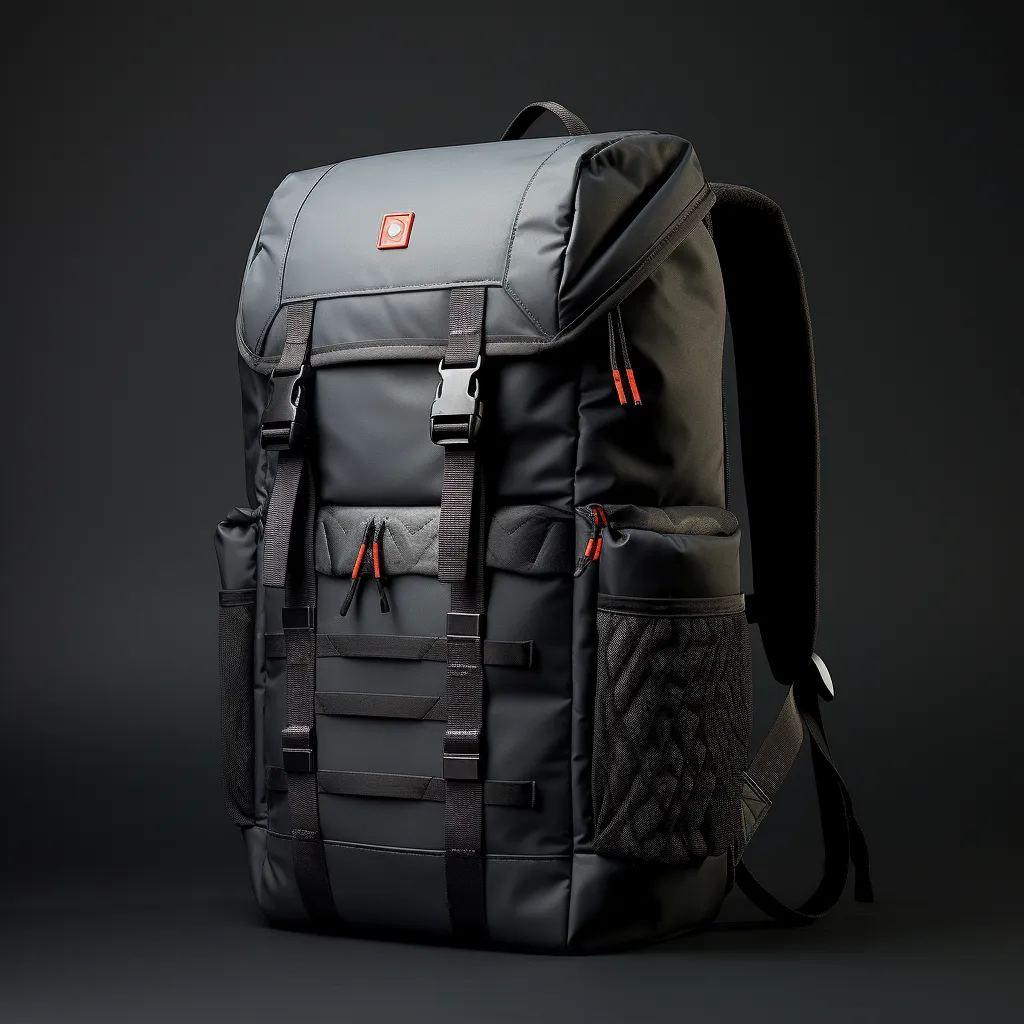
Why travel bags break standard parcel economics
Parcel networks were designed around dense, boxy goods. Travel bags are the opposite: light, bulky, compressible and awkwardly shaped. A 45 L duffle can weigh under 1.5 kg empty and occupy a carton of more than 40 litres, which means the space it takes on a vehicle costs the carrier far more than the weight it adds. Carriers recover that through dimensional weight, a notional billing weight calculated from carton volume, and they bill on whichever is greater, the actual weight or the dimensional weight.
The consequence for a campaign is that the shipping line in the budget is driven by the carton, not by the product. Creators who model shipping from product weight routinely underestimate it by a factor of two or more, and the error appears after funding, when the only remedies are to ask backers for more money or to absorb the difference. A travel campaign should therefore treat carton dimensions as a cost specification, decided during development and validated before the freight quotation is requested, rather than discovered at the packing line.
There is a second structural difference. Travel bags are individually large, so a campaign cannot rely on the consolidation effects that make small goods cheap. A parcel containing one duffle is one parcel; there is no combining. The only consolidation available is upstream, at the container or pallet level, which is why the inbound freight decision and the fulfilment model interact so strongly. Get the upstream consolidation right and the last mile is manageable; get it wrong and every parcel carries a share of an inefficient inbound cost.
- Bulk density is low, so dimensional weight almost always exceeds actual weight on travel products.
- One bag per parcel means no downstream consolidation, so upstream consolidation carries all the savings.
- Carton size is a design decision with a direct cost consequence, not a packing afterthought.
- Oversize thresholds are triggered by length plus girth, so a few centimetres can change the rate band.
- Return and replacement parcels are disproportionately expensive, because bulky goods cost more to move in both directions.
The practical starting point is to measure the actual product, packed as it will ship, before the campaign page is written. A compressed duffle, a duffle in a product box and a rolling carry-on in a fitted carton produce three very different billing outcomes, and the difference between them can exceed the entire production cost saving from a larger run. Our programme coordinators ask for the packed carton specification at quotation stage so that freight and production are quoted on the same basis. The fulfilment model choice is set out on crowdfunding rewards fulfilment.
Dimensional weight in plain numbers
Dimensional weight is calculated by multiplying the three carton dimensions and dividing by a divisor set by the carrier and the service. In metric air and express contexts a common divisor is 5,000 cubic centimetres per kilogram, with 6,000 also used; in US domestic parcel a common divisor is 139 cubic inches per pound, with 166 used on some services. The carrier then bills the greater of dimensional and actual weight. Because the divisor varies by carrier and service, the same carton can produce materially different charges on two quotation sheets, which is why comparing carriers on headline rates alone is misleading.
Worked example, metric. A carton measuring 60 x 40 x 30 cm has a volume of 72,000 cubic centimetres. Divided by 5,000, that is 14.4 kg of dimensional weight. The duffle inside weighs 1.4 kg and the carton and packing add another 0.6 kg, so actual weight is 2.0 kg. The parcel is billed at 14.4 kg, more than seven times its actual weight. Compressing the same duffle into a carton of 50 x 35 x 22 cm gives 38,500 cubic centimetres and 7.7 kg of dimensional weight, which nearly halves the charge for no change to the product.
| Product | Carton (cm) | Volume (cm3) | DIM weight (kg) | Actual weight (kg) |
|---|---|---|---|---|
| Packing cube set, 3 pieces | 35 x 25 x 8 | 7,000 | 1.4 | 0.6 |
| 45 L duffle, compressed | 50 x 35 x 22 | 38,500 | 7.7 | 1.4 |
| 45 L duffle, in a product box | 60 x 40 x 30 | 72,000 | 14.4 | 2.0 |
| Framed travel backpack, 40 L | 55 x 38 x 28 | 58,520 | 11.7 | 1.8 |
| Soft rolling carry-on | 62 x 42 x 30 | 78,120 | 15.6 | 3.4 |
| Hard shell carry-on | 66 x 45 x 32 | 95,040 | 19.0 | 4.2 |
Three levers follow from that table, and they are ranked by effect. The first is carton size, which scales cubically, so a 10 percent reduction in each dimension removes roughly 27 percent of the volume. The second is product compression or flat packing, which is a design decision made months earlier: a duffle designed to fold and a duffle designed to hold its shape are different freight products. The third is packing method, where vacuum or compression packing and a fitted rather than oversized carton each remove volume at low cost.
A travel reward is billed on carton volume through a carrier divisor. A 45 L duffle in a loose carton can bill at more than seven times its actual weight, while the same duffle compressed bills at under four times.
Carton engineering: size, strength and protection
A carton has to satisfy three requirements that pull against each other. It must be small to control dimensional weight. It must be strong enough to survive the parcel network. And it must protect the product from scuffing, corner impact and compression. Optimising one at the expense of the others is the most common logistics error on travel campaigns: a minimal carton saves freight and generates damage, an over-strong carton prevents damage and inflates the bill.
The resolution is to separate strength from size. Strength comes from board grade and construction, which add millimetres, while size comes from the internal fit, which adds centimetres. Spending on a better board in a tight-fitting carton usually costs less in total than spending on a larger carton of weaker board, because the freight saving from a smaller carton compounds across every parcel in the campaign. Specify the board grade, the flute, the closure method and the internal protection as named items rather than as a description.
- Board grade and flute: specify both, and match them to the packed weight and the parcel journey length.
- Internal fit: the product should not move, because movement scuffs hard shells and deforms soft ones.
- Corner protection: moulded or board corner posts cost cents and prevent the most common damage claim.
- Inner sleeve or wrap: prevents surface scuffing, which is the leading cosmetic return reason on travel products.
- Closure method: tape width and pattern, or strapping for heavier cartons, since opening in transit is catastrophic.
- Void fill: use the minimum that prevents movement, because fill adds volume as well as weight.
Then validate the result. ISTA 3A is the general simulation for individual packaged products shipped through a parcel delivery system, and it is the right reference for a backer parcel. Where cases ship unitised on a pallet into a regional warehouse, ISTA 3E is the comparable reference. Validation should happen before the freight booking, because a change to the carton after booking means a re-quote and often a change of rate band. Our production team quotes packing and freight together for this reason, so the carton is a costed specification rather than a packing decision made on the line.
Oversize thresholds and how carriers define them
Beyond dimensional weight, carriers apply surcharges when a parcel crosses dimensional thresholds. The definitions vary by carrier and country, but the common pattern is a threshold on the longest side and a second threshold on length plus girth, where girth is the distance around the parcel at its widest point. A typical structure charges an additional handling fee once the longest side exceeds a figure in the region of 100 to 120 cm, and a larger surcharge once length plus girth exceeds a figure in the region of 250 to 300 cm. Confirm the exact figures with the carrier being used, because they change and they differ between services.
The important consequence is that thresholds create cliffs rather than slopes. A carton 2 cm under the limit costs one rate; the same carton 2 cm over costs that rate plus a surcharge, and the surcharge can be a large fraction of the base charge. That is why the carton should be designed with the threshold as a hard constraint rather than as an aspiration, and why a small change in packing method can be worth more than a negotiation on the headline rate. Design so that the finished carton sits comfortably below the limit, with margin for the tape, the label and any deformation in transit.
| Trigger | Typical structure | Design response |
|---|---|---|
| Longest side over a set figure | Additional handling fee | Compress or re-orient the product so the longest side falls below the limit |
| Length plus girth over a set figure | Larger surcharge | Reduce the two smaller dimensions, since girth is driven by all four sides |
| Actual weight over a set figure | Heavy parcel charge | Rare on travel products, but relevant for hard shell cases |
| Non-conveyable shape or packaging | Manual handling fee | Keep the carton a regular rectangular prism, with no straps or protrusions |
| Remote or extended area delivery | Zone-based fee | Publish regional shipping rates rather than one worldwide figure |
| Residential delivery | Per-parcel fee | Include it in the published rate, since nearly all backers are residential |
Two further charges are routinely omitted from campaign budgets: residential delivery and remote area fees. Nearly every backer parcel is residential, so the residential fee applies to essentially the whole campaign, and remote area fees apply to a minority of destinations at a much higher rate. Include both in the published regional rate rather than discovering them per parcel. Where a campaign ships to many countries, group destinations into three or four bands and set the rate from the worst case in each band rather than from the average.
Choosing the inbound route: LCL, FCL and air
Before parcels exist, the goods have to arrive in the destination region. The three options are less-than-container load, full container load, and air. LCL consolidates with other shippers and is charged by volume, which suits a 500 to 1,500 unit campaign that cannot fill a container. FCL charges for the container and suits volumes that can fill one, which for travel products is often a lower unit count than creators assume because the goods are bulky. Air is charged on dimensional weight at a much higher rate and is justified only when the schedule demands it.
The break-even is a volume calculation, and volume is what travel products have plenty of. A 20-foot container holds roughly 33 cubic metres of usable space and a 40-foot container roughly 67, while a packed rolling carry-on carton occupies on the order of 0.078 cubic metres. That means a 20-foot container is filled by a few hundred cases rather than by thousands, and many travel campaigns that assume they need LCL are in fact close to a full container. Ask for the container utilisation estimate in cartons before choosing, because the difference between LCL and FCL per unit is often larger than any production saving available at higher volume.
- LCL: charged by volume, no container minimum, longer handling chain and more handling events per carton.
- FCL: charged per container, fewer handling events, faster clearance, and often cheaper per unit than expected on bulky goods.
- Air freight: charged on dimensional weight at a high rate, justified for a launch deadline or a small urgent top-up run.
- Sea plus inland: the standard structure, with inland delivery by truck or rail to the fulfilment warehouse.
- Air for a partial run: a useful tactic, shipping a first batch by air to meet the earliest delivery promises and the remainder by sea.
That last tactic is worth knowing because it solves a real problem. Campaigns often have a group of backers with an early delivery promise and a larger group with a later one. Shipping the early group by air and the remainder by sea costs more per unit on the air portion but protects the schedule where it matters, and it is cheaper than shipping everything by air. Our team models this split when a campaign has tiered delivery promises, because the alternative is a whole campaign held to the speed of its slowest freight mode.
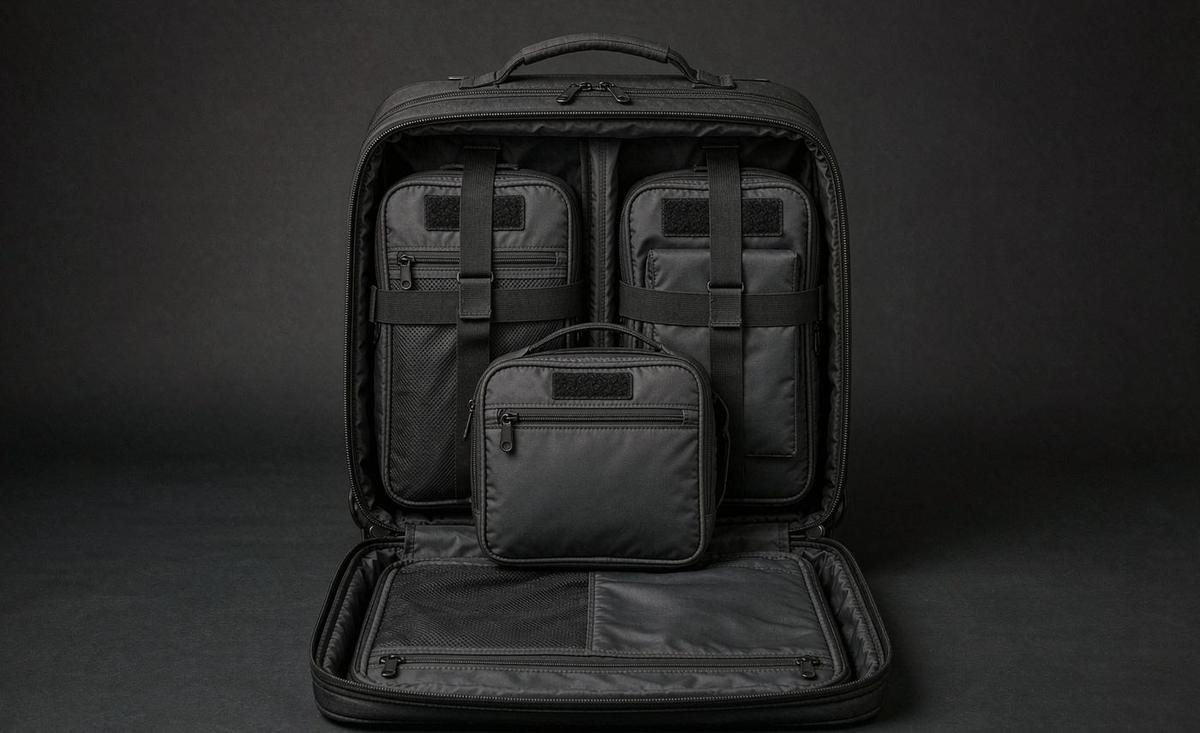
Regional fulfilment: consolidation versus direct dispatch
The choice is between shipping every parcel from the origin country directly to each backer, or importing once into a regional warehouse and dispatching domestically. Direct dispatch avoids a handling step but multiplies customs events, makes duty unpredictable for the backer, and produces long, expensive final legs. Consolidation adds a warehouse step but converts an international parcel into a domestic one for most backers, which is usually cheaper, faster and far more predictable in duty terms.
For travel products consolidation is almost always right, for a reason specific to bulky goods: the international leg is the expensive part, and it is far cheaper to move 1,000 cartons as one consolidated import than as 1,000 individual parcels. The saving on the international leg typically exceeds the cost of warehousing and domestic dispatch with margin. The exception is a campaign concentrated in a single country with a short international leg, where direct dispatch can compete.
| Dimension | Consolidated via regional warehouse | Direct dispatch to backers |
|---|---|---|
| Import duty | Paid once on import, predictable | Paid per parcel, unpredictable for the backer |
| Customs events | One per shipment | One per parcel |
| Final leg cost | Domestic parcel rate | International parcel rate |
| Delivery time after arrival | Short, typically days | Long and variable by destination |
| Returns handling | Possible, with a domestic address | Impractical or very expensive |
| Quality intervention | Possible before dispatch | None, defects go straight to backers |
| Best for | Most travel campaigns with a multi-country backer base | Single-country campaigns with a short international leg |
Consolidation also creates something direct dispatch cannot: a point of intervention. Goods arriving at a warehouse can be inspected, re-cartoned, or held while a problem is resolved. That matters on a travel campaign, where a defect discovered at the origin is far cheaper to fix before dispatch than after. A consolidated model also makes the replacement reserve usable, because spare units sit in the same warehouse as the pick face rather than in another country. The model choice is developed further on crowdfunding rewards fulfilment.
Country cost bands and what drives them
Shipping cost per backer varies far more by destination than any campaign-level decision. The drivers are distance from the warehouse, parcel network density in the destination country, fuel and currency adjustments, and remote area coverage. A useful approach is to group destinations into bands and price each band from its own quotation rather than from a single global average, because an average produces a rate that is too high for the near band and too low for the far one.
The second driver is delivery performance rather than price. Some destinations have reliable last-mile networks and some do not, and a cheap rate into an unreliable network produces support tickets, lost parcels and replacements that cost more than the rate saving. Ask the fulfilment partner for observed delivery performance by destination before committing to a rate, and treat a destination with poor performance as a candidate for a different carrier rather than for a lower price.
- Group destinations into three or four bands and quote each separately rather than averaging.
- Include residential delivery and remote area fees in the published rate rather than adding them later.
- Ask for observed delivery performance by destination, not only the rate.
- State whether duty is prepaid or payable on delivery, and be consistent across the campaign.
- Set the rate from the worst case in each band, since a band priced on the average loses money on the far destinations.
Currency and seasonal adjustments deserve a line in the model. Carriers apply fuel and seasonal surcharges that move during a campaign, and a campaign that funds in one quarter and ships in another can face a materially different rate. Build a buffer of 10 to 15 percent into the published shipping rate for movement between funding and dispatch, and re-quote before the freight booking if more than a season has passed. Where a campaign publishes shipping as a flat figure collected at pledge time, that buffer is the difference between a shipping line that breaks even and one that loses money.
Building a shipping cost model before launch
Shipping should be modelled before the campaign page is written, because the published shipping rate is a promise. The model has five lines: inbound freight and insurance to the destination region, duty and clearance, inland delivery to the warehouse, warehousing and pick and pack, and the final parcel to the backer. Each is quoted from real carton data, and each should carry a buffer, because all five move between funding and dispatch.
- Fix the packed carton specification, including dimensions, weight, board grade and protection, before requesting any freight quotation.
- Compute dimensional weight with the divisor used by each candidate carrier, and compare on billed weight rather than on headline rate.
- Check each carton against the carrier's oversize thresholds for longest side and length plus girth, and redesign if it sits close to a limit.
- Decide inbound mode by container utilisation, not by habit, and model LCL, FCL and air at the expected volume.
- Add duty, clearance, inland delivery, warehousing, pick and pack, and the final parcel, each with its own buffer.
- Group destinations into bands and price each from the worst case in the band.
- Add a 10 to 15 percent buffer for rate movement, and re-quote before booking if the campaign has run for more than a season.
Worked example at 1,000 units of a soft rolling carry-on into one region. Inbound sea freight and insurance might land at USD 5-9 per unit, duty and clearance at USD 2-5, inland delivery at USD 1-2, warehousing and pick at USD 2-4, and the final domestic parcel at USD 12-22 depending on zone. The total is roughly USD 22-42 per unit, which on a 1,000-unit campaign is USD 22,000 to 42,000, and which is larger than the entire production cost difference between the 500 and 2,000 volume tiers. That is the scale of the decision.
Sensitivity matters as much as the base case. Re-run the model with freight 30 percent higher and with a 5 percent adverse currency move, because both happened repeatedly in recent cycles and both are outside the creator's control. If the reward tier goes negative under either scenario, the answer is a cheaper carton or a higher published shipping rate, not a hope that rates fall. A shipping line that only works in the base case is not a plan. Production cost behaviour by volume is set out in custom travel bags pricing by volume.
Transit damage: what ISTA predicts and what it does not
Transit simulation is the best available predictor of arrival condition, and it is worth understanding what it does not cover. ISTA 3A combines atmospheric conditioning, drop testing at heights set by package weight, and random vibration with and without a top load. That is a reasonable simulation of a parcel network, and it catches the two dominant failure modes on travel products: corner crushing and surface scuffing. It does not, however, reproduce every handling event, and it cannot predict the outlier, such as a parcel left in the rain or a carton that falls off a belt into a conveyor gap.
What simulation also does not cover is the damage that only appears after unpacking. Hard shell cases can arrive with a hairline crack that is invisible until the case is loaded, and soft cases can arrive with a deformed internal frame that looks like a packing crease. Both are detected by a post-transit functional check: open the case, extend the handle, roll it, close it, and inspect the shell under light. Add that check to the warehouse inbound procedure, because it catches damage while the shipment is still in one place and a claim is still possible.
- Validate the packed carton to ISTA 3A for parcels or ISTA 3E for unitised loads before the freight booking.
- Specify corner protection and an inner sleeve, which address the two dominant failure modes at low cost.
- Add a post-transit functional check at the warehouse: open, extend, roll, close, inspect under light.
- Photograph any damage on arrival and hold the carton, because carrier claims need evidence and the packaging.
- Track damage rate by destination band, since a high rate in one band may indicate a carrier rather than a carton problem.
Damage rate is the number to manage. A campaign should be tracking arrivals and aiming to keep transit damage low single digits as a percentage of units. Above that, the cause is usually the carton or a specific carrier lane rather than the product, and the response is to change the packing or the lane rather than to accept the loss. Every damaged unit costs a replacement, a reshipment and a support conversation, and on bulky goods the reshipment alone can exceed the unit cost. Inspection and QC practice is covered in Kickstarter travel bag QC and AQL 2.5 checks.
Delivery timelines from production to doorstep
The delivery month a creator publishes has to be built from the whole chain, not from the production window alone. Bulk production runs 35 to 50 days after deposit and approved pre-production sample. Add packing, inbound freight of roughly 25 to 45 days by sea to most major regions, clearance and inland delivery of several days to two weeks, warehouse receiving and pick and pack of one to two weeks, and the final parcel of a few days to several weeks depending on destination and service. The realistic total from deposit to doorstep is therefore often 12 to 20 weeks, and a campaign that publishes a date based on the production window alone will miss it.
| Stage | Typical duration | Can it be compressed? |
|---|---|---|
| Bulk production | 35-50 days | Limited, only with capacity reserved in advance |
| Packing and carton validation | 6-10 working days | Yes, if the carton was validated during sampling |
| Inbound sea freight | 25-45 days by region | Only by switching to air, at high cost |
| Clearance and inland delivery | 5-15 days | Yes, with documents prepared before arrival |
| Warehouse receiving and pick pack | 6-10 working days | Yes, with pre-advice and data sent early |
| Final parcel to backer | 2-21 days by destination | Partly, by service selection |
| Contingency | 10-15 days | Should not be removed |
Several of those stages can be compressed by preparation rather than by payment. Documents prepared before the vessel arrives remove days from clearance. Backer address data validated before the goods arrive removes a week from pick and pack. Carton validation completed during sampling removes the packing-validation step entirely. These are free compressions, and they are worth more than air freight because they cost nothing and reduce risk at the same time.
Publish the timeline as stages rather than as a single month. A stage-based schedule is more credible, it gives the creator something concrete to say in an update, and it makes a slip visible weeks earlier than a single date would. Where a campaign has backers with trip deadlines, ask for them early and prioritise those parcels, because a travel reward delivered after the trip has passed is a failure regardless of how well the rest of the campaign performed.
Returns, replacements and reverse logistics
Bulky goods make reverse logistics genuinely hard, and the decision should be taken before dispatch rather than when the first return request arrives. The three options are to accept returns to a regional address, to replace without requiring return, and to repair with a shipped part. For travel products, replace or repair without return is usually cheaper, because the return leg costs as much as the outbound leg and the returned unit has little residual value once it has been used.
That makes the spares strategy the practical answer. Hold a finished-goods reserve of 1 to 3 percent of units and a component allocation of casters, axles, handle sections and sliders at 1 to 2 percent. A backer with a failed caster can then be sent a part in an envelope rather than a case in a carton, which costs a small fraction as much and converts a negative review into a positive one. The reserve has to survive into the review window, which on travel products often arrives months after delivery and frequently after the first holiday season.
- Decide the returns policy before dispatch, and state it plainly, because an unclear policy generates more support tickets than a strict one.
- Hold a finished-goods reserve of 1 to 3 percent and a component allocation of 1 to 2 percent.
- Ship parts rather than products wherever a part solves the problem, since bulky goods cost as much to return as to send.
- Keep the reserve in the same warehouse as the pick face so a replacement is a domestic parcel.
- Track the reason for every replacement, because a pattern in the reasons points at a specification problem rather than a logistics one.
Where a return genuinely is required, provide a regional address rather than an international one. A backer asked to ship a suitcase abroad will not do it, and the resulting dispute costs more than the unit. A regional returns address, even if it is only used occasionally, is what makes the stated policy credible. Some campaigns use a local disposal or donation instruction for low-value returns instead, which is cheaper and acceptable to most backers when it is explained in advance rather than imposed afterwards.
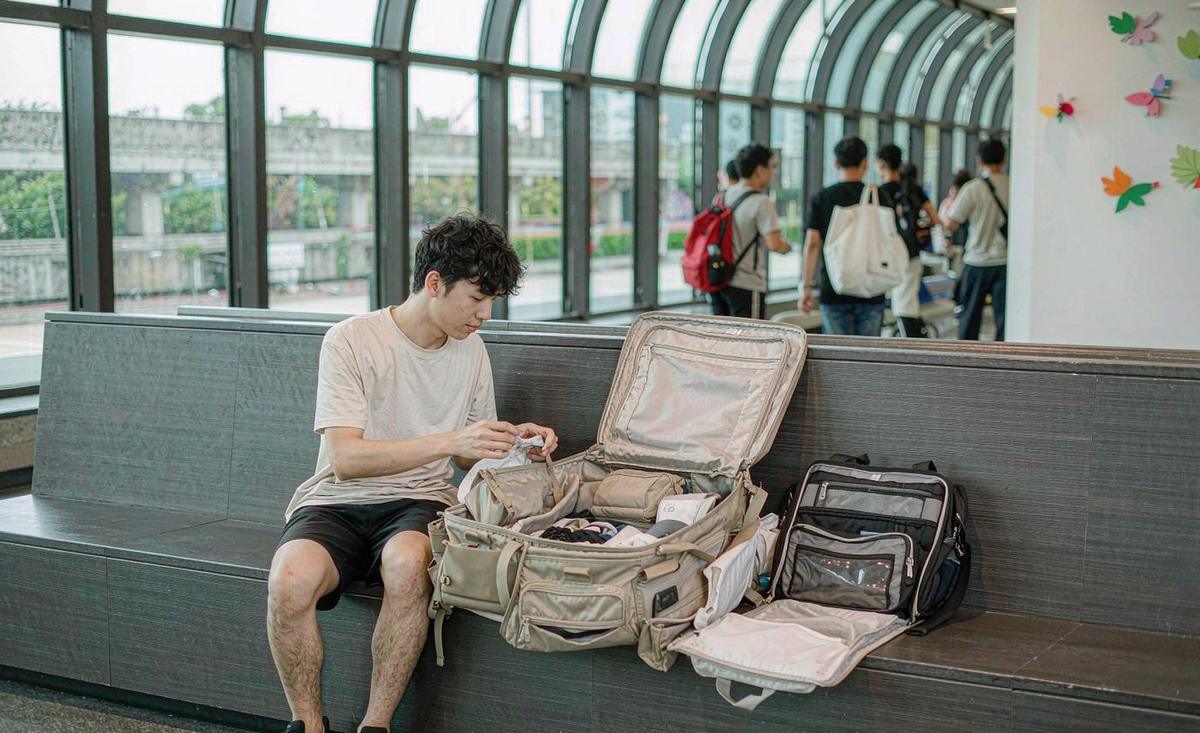
A packing and shipping checklist
The checklist below is what our production team works through before a travel campaign books freight. It is deliberately ordered by consequence rather than by chronology: the items at the top change the cost structure, and the items at the bottom protect the delivery promise. A campaign that works through it during development will quote shipping accurately on the page; a campaign that reaches it at packing time will be making decisions under time pressure, which is the worst position from which to choose a freight mode.
| Item | Decision required | When |
|---|---|---|
| Packed carton dimensions | Fixed and recorded, with the product packed as it will ship | During sampling |
| Dimensional weight | Calculated with the carrier's actual divisor | Before quoting freight |
| Oversize thresholds | Checked against longest side and length plus girth | Before carton approval |
| Board grade and closure | Specified by grade, flute and tape pattern | During sampling |
| Internal protection | Sleeve and corner posts specified | During sampling |
| Transit validation | ISTA 3A or 3E on the packed carton | Before freight booking |
| Inbound mode | LCL, FCL or air, chosen by container utilisation | At quotation |
| Fulfilment model | Consolidated or direct, and the warehouse location | Before the campaign launches |
| Duty treatment | Prepaid or payable on delivery, stated on the page | Before the campaign launches |
| Destination bands | Three or four bands, priced from the worst case | Before the campaign launches |
| Address data | One validated dataset with a platform field | Before goods arrive |
| Replacement reserve | 1-3% finished goods, 1-2% components | Before dispatch |
Two items on that list are worth restating because they are the ones most often skipped. Carton validation during sampling costs a few days at a point in the schedule when days are available, and it prevents a re-quote and a possible rate band change at a point when they are not. One validated address dataset prevents duplicate and stale shipments, which on bulky goods are among the most expensive errors available, because each one costs two outbound legs and a support conversation.
For creators planning a travel reward, the logistics decisions above are larger in money terms than most production decisions, and they are made later, when there is less room to change them. Treat the carton as a costed specification, choose the fulfilment model before the page launches, and build the published delivery month from the whole chain. Category guidance is on custom travel bags for Kickstarter, and the fulfilment model choice is developed on crowdfunding rewards fulfilment.
On a travel campaign, the carton is a costed specification. Five centimetres on each dimension is worth more than a whole volume tier on the production price.
Programme coordinator, logistics briefing
- Dimensional weight, metric
- Length x width x height in cm, divided by 5,000 or 6,000
- Dimensional weight, US
- Length x width x height in inches, divided by 139 or 166
- Bulk production
- 35-50 days
- Inbound sea freight
- 25-45 days by region
- Deposit to doorstep
- Commonly 12-20 weeks
- Transit validation
- ISTA 3A parcels, ISTA 3E unitised loads
- Freight rate buffer
- 10-15%
- Replacement reserve
- 1-3% finished goods, 1-2% components
- Minimum order quantity
- 500 pcs per style / colourway
- Trade term
- FOB Xiamen
- Payment terms
- T/T 30/70
Get your travel reward freight modelled before you launch
Send your packed carton dimensions, unit volumes and destination mix to service@junyuanbags.com. Our production team will return a dimensional weight calculation, a carrier threshold check and a landed shipping cost per destination band.
Frequently Asked Questions
What is dimensional weight and how is it calculated?
It is a notional billing weight derived from carton volume. Multiply the three dimensions and divide by the carrier divisor, commonly 5,000 or 6,000 in cubic centimetres per kilogram, or 139 cubic inches per pound for US domestic. The carrier bills the greater of dimensional and actual weight.
Why is my travel bag shipping quote so much higher than the product weight suggests?
Because the parcel is billed on volume. A 45 L duffle in a 60 x 40 x 30 cm carton has a dimensional weight of 14.4 kg at a 5,000 divisor while weighing about 2 kg packed, so it bills at roughly seven times its actual weight.
How can I reduce dimensional weight without changing the product?
Reduce carton size first, because volume scales cubically: cutting each dimension by 10 percent removes about 27 percent of the volume. Then compress or flat pack the product and use a fitted carton with minimal void fill rather than an oversized one.
What triggers an oversize surcharge?
Carriers typically set a threshold on the longest side and another on length plus girth, where the common structure falls in the region of 100 to 120 cm for the longest side and 250 to 300 cm for length plus girth. Confirm the exact figures with your carrier, since they differ by service and change over time.
Should I ship LCL or a full container?
Ask for container utilisation in cartons before deciding. A 20-foot container holds roughly 33 cubic metres, and a packed rolling carry-on carton occupies about 0.078 cubic metres, so a few hundred cases can fill one. Many travel campaigns that assume LCL are close to a full container.
Is air freight ever justified for a travel bag campaign?
For a whole campaign, rarely, because air is charged on dimensional weight at a high rate. It is justified for a partial run, shipping an early-delivery batch by air and the remainder by sea, which protects the earliest promises without paying air rates on everything.
Should I ship direct to backers or into a regional warehouse?
Consolidation into a regional warehouse is usually right for bulky goods, because the international leg is the expensive part and moving 1,000 cartons as one import is far cheaper than 1,000 international parcels. It also gives a point of inspection before dispatch.
How long does delivery actually take after production finishes?
Commonly 12 to 20 weeks from deposit to doorstep: production 35-50 days, sea freight at 25-45 days, clearance and inland delivery at 5-15 days, warehousing and pick pack at 6-10 working days, then the final parcel. Publish the schedule as stages rather than as one month.
How much buffer should I add to published shipping rates?
Add 10 to 15 percent for carrier rate movement between funding and dispatch, and re-quote before booking if more than a season has passed. Also include residential delivery and remote area fees in the published rate, since nearly all backer parcels are residential.
What transit test should I use for a suitcase shipped to backers?
ISTA 3A for individual packaged products through a parcel delivery system, which is the direct-to-backer case. Use ISTA 3E where cases ship unitised on a pallet into a warehouse. Validate before the freight booking so a carton change does not force a re-quote.
How should I handle returns on a bulky travel product?
Usually replace or ship a part rather than requiring a return, because the return leg costs as much as the outbound one. Hold a finished-goods reserve of 1 to 3 percent and a component allocation of 1 to 2 percent, and provide a regional returns address where a return is genuinely needed.
What is the single most effective logistics decision on a travel campaign?
Fixing the packed carton specification during sampling. It sets dimensional weight, determines whether oversize thresholds are crossed, and drives the freight quotation, and it is far cheaper to change before production than at the packing line.
People Also Ask
Does compressing a duffle really reduce shipping cost?
Yes, and substantially. A 45 L duffle compressed into a 50 x 35 x 22 cm carton has a dimensional weight of 7.7 kg versus 14.4 kg in a loose 60 x 40 x 30 cm carton, which nearly halves the charge for an identical product.
Why did my shipping cost rise after the campaign funded?
Usually because the rate was modelled on product weight rather than carton volume, or because fuel, seasonal and residential fees were excluded. Re-quote from actual carton dimensions and add a 10 to 15 percent buffer.
Do hard shell cases cost more to ship than soft ones?
Yes, because they cannot be compressed and need larger, stronger cartons with more protection. A hard shell carry-on in a 66 x 45 x 32 cm carton bills at about 19 kg dimensional weight versus about 15.6 kg for a soft rolling carry-on.
How many destination bands should I publish?
Three or four. A single worldwide rate almost always loses money on the longest routes, while too many bands complicate the page. Price each band from the worst case in it rather than from the average.
Should duty be prepaid or paid by the backer on delivery?
Prepaid is the smoother experience, because an unexpected duty invoice generates complaints the creator is blamed for. Consolidating into a regional warehouse lets duty be paid once on import, so domestic parcels carry no further charge.
What is the cheapest way to handle a damaged or failed unit?
Ship a component rather than a product. A replacement caster or zip slider sent in an envelope costs a fraction of a bulky reshipment, which is why a 1 to 2 percent component allocation should sit alongside the 1 to 3 percent finished-goods reserve.
Can I speed up delivery without paying for air freight?
Partly. Prepare customs documents before the vessel arrives, validate backer addresses before the goods do, and validate the carton during sampling. These remove one to three weeks at no cost beyond preparation.