The Ultimate MOQ & Lead Time FAQ for Kickstarter Bag Rewards
What are the real MOQ and lead time numbers for a Kickstarter bag reward? The minimum is 500 pcs per style and colourway. Sampling takes 6-10 working days, or 12-15 for complex builds. production 35-50 days after the deposit and the approved pre-production sample. Inspection sits at AQL 2.5 to ISO 2859-1, trade terms are FOB Xiamen, payment is T/T 30/70.
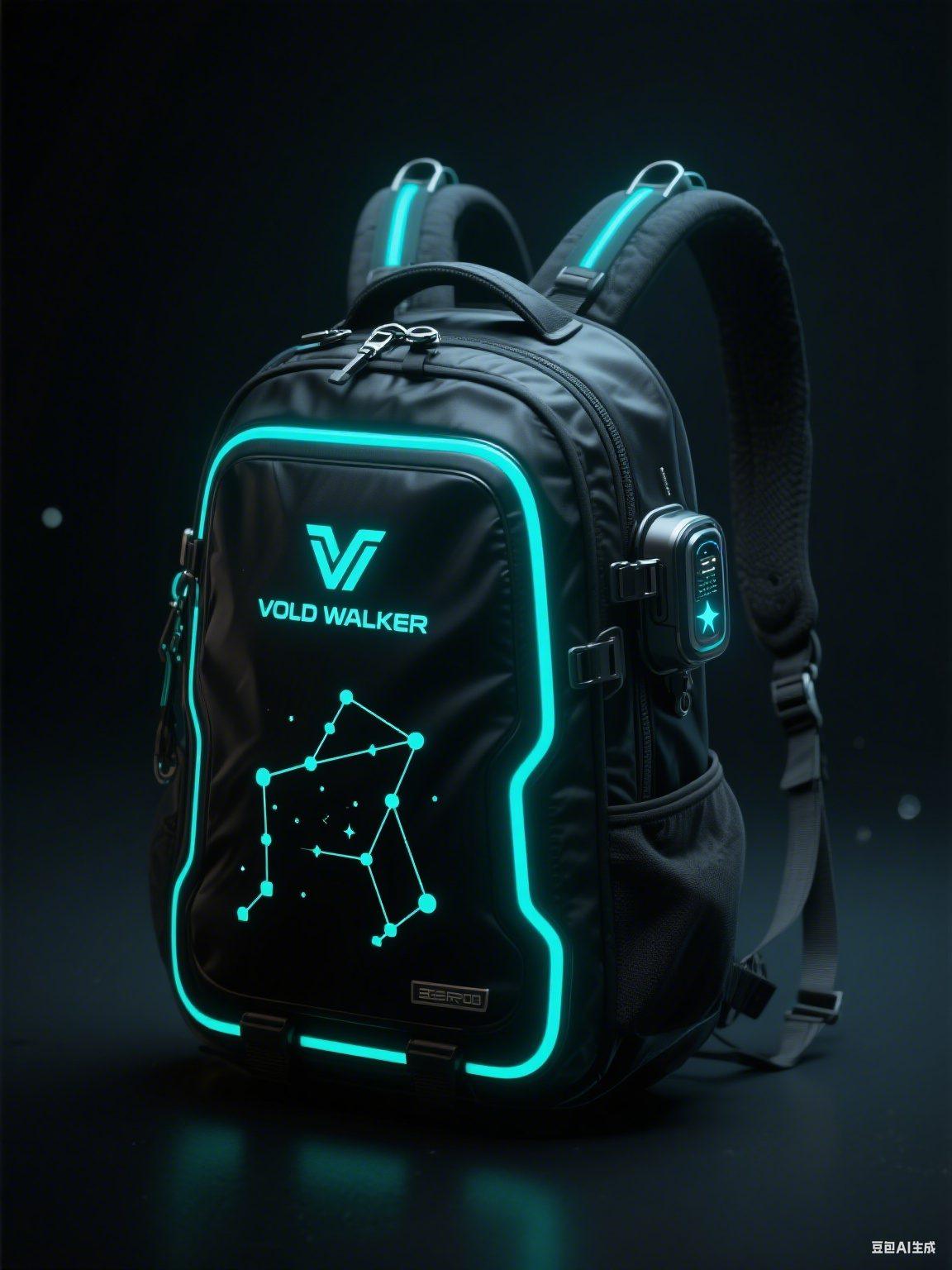
- Why MOQ exists on a sewn bag
- What 500 pcs per style and colourway means
- Forecasting quantities from reward tiers
- Sampling: the 6-10 and 12-15 day windows
- What a campaign bag quotation contains
- The pre-production sample and what starts the clock
- Anatomy of the 35-50 day bulk window
- Inspection at AQL 2.5 to ISO 2859-1
- Freight, trade terms and FOB Xiamen
- Payment milestones: how T/T 30/70 maps to the calendar
- Re-orders, pilot runs and volume pricing
- Building the backwards plan from a delivery month
Why MOQ exists on a sewn bag
A minimum order quantity is not an arbitrary hurdle. On a sewn bag it reflects genuine fixed costs that are incurred once per style regardless of how many units are made. Pattern development, marker making, sample-line setup, cutting jigs, hardware tooling, screen or embroidery tape production, and the material purchase minimums imposed by the mill all fall into that category. Below a certain quantity those costs cannot be spread thinly enough to produce a sensible unit price.
The second driver is production efficiency. A cutting table and a sewing line are set up for a style and then run it. The setup consumes time whether the run is 50 pieces or 5,000, and the changeover between styles consumes more. A very short run therefore occupies a disproportionate share of line capacity for the number of units it produces, which is why the unit price for a 100 pcs run is typically far higher per piece than for a 500 pcs run rather than merely five times higher.
Understanding which costs are fixed is what makes MOQ negotiable in the right way. Splitting a colourway within a single production run shares the pattern, the markers and the line setup, so it costs far less than running a second style. Choosing catalogue hardware instead of custom tooling removes a fixed cost entirely. Those are the two levers that genuinely change what a programme can afford at first-run volumes. Our low minimum production page covers this in detail.
- Minimum order quantity
- 500 pcs per style / colourway
- Sampling
- 6-10 working days (12-15 for complex builds)
- Bulk production
- 35-50 days after deposit + approved pre-production sample
- Inspection
- AQL 2.5 to ISO 2859-1
- Trade term
- FOB Xiamen
- Payment
- T/T 30/70
- Production floor
- 4,950 m² SGS-verified, 137 staff, 7 lines, 149 machines
- Monthly capacity
- 200,000 pcs per month
- Programme contact
- service@junyuanbags.com
Key takeaways on MOQ and lead time
- MOQ is 500 pcs per style and per colourway, and each colourway is its own commitment.
- Sampling runs 6-10 working days per round, or 12-15 for complex builds; budget two rounds.
- The bulk clock starts on deposit plus approved pre-production sample, not on campaign close.
- Inspection at AQL 2.5 to ISO 2859-1 happens on packed cartons, before cargo release.
- Plan backwards from the published delivery month, not forwards from launch.
What 500 pcs per style and colourway means
The phrase has two halves and both matter. Per style means per distinct bag construction: a tote and a backpack are two styles even if they share a fabric. Per colourway means each colour variant of that style is its own commitment. A backpack offered in black, navy and olive is three colourways of one style, and therefore three minimums unless the run is negotiated as a colourway split within a single production.
| Reward structure | Styles | Colourways | Minimum commitment |
|---|---|---|---|
| One tote, one colour | 1 | 1 | 500 pcs |
| One tote, three colours | 1 | 3 | 1,500 pcs unless split in one run |
| Tote plus pouch add-on, one colour each | 2 | 1 each | 1,000 pcs |
| Backpack, two sizes, one colour | 2 | 1 each | 1,000 pcs |
| Hero bag plus companion cube, two colours | 2 | 2 each | 2,000 pcs unless split |
- Confirm in writing whether a colourway split shares one production run or triggers separate minimums.
- Sizes within one style usually share the minimum; check this before assuming.
- Companion pieces are separate styles with their own minimum unless bundled into the hero run.
- Ask for unit pricing at 500, 1,000 and 2,000 pcs to see where volume pricing starts to bite.
- Model the fully funded case, where every stretch goal and variant applies.
Forecasting quantities from reward tiers
Quantity forecasting on a campaign is an exercise in ratios rather than absolutes. Before launch you have a mailing list and a conversion range; during the campaign you have a funding curve. The useful output is a split: how many backers will sit in the early bird tier, how many in the standard tier, how many will take the premium tier, and how many will add a companion piece.
| Tier | Typical share | Backers at 400 | Units of the hero bag |
|---|---|---|---|
| Early bird, single unit | 30-40% | 120-160 | 120-160 |
| Standard, single unit | 35-45% | 140-180 | 140-180 |
| Premium, bundle | 10-15% | 40-60 | 40-60 plus companions |
| Add-on only | 5-10% | 20-40 | 20-40 companion units |
| Replacement buffer | 3-5% | 12-20 | 12-20 held in reserve |
The replacement buffer is the line most creators forget and later regret. Reward bags get damaged, lost and mis-shipped, and a backer who reports a problem expects a replacement, not an apology. Holding 3-5% of the run back for this purpose is cheaper than a second production run, and it protects the campaign's reputation during the period when reviews and unboxing posts matter most.
Sampling: the 6-10 and 12-15 day windows
Six to ten working days is the standard window from a released specification to a physical sample ready for review. Twelve to fifteen working days applies where the build is complex. It is worth knowing what those days contain, because the answer determines which parts of the schedule you can argue with and which you cannot.
| Build type | Sampling window | What drives the longer window |
|---|---|---|
| Flat tote or pouch | 6-8 working days | Few panels, standard sequence |
| Standard backpack | 8-10 working days | More panels, hardware, structure |
| Structured duffle | 10-12 working days | Base panel and internal structure |
| Custom hardware or moulded part | 12-15 working days | Tooling cut and trialled before sewing |
| Bonded or welded construction | 12-15 working days | New jig plus process trials |
| Integrated electronics | 12-15 working days | Extra assembly and safety checks |
Plan for two rounds, not one. The first round almost always produces a revision list, and the second round restarts the same clock from day one. That is 12-20 working days of calendar before a pre-production sample can exist, and it is the difference between photographing a real unit on your campaign page and photographing a render. See sample prototyping for the sequence.
Budget two sampling rounds before the campaign page is published. One round finds the construction problems; the second confirms the corrections and becomes the unit you approve for bulk. A third round is common on structured builds and should be treated as contingency, not as the plan.
What a campaign bag quotation contains
A quotation for a campaign bag run is a set of lines, not a single number. Understanding the lines is what lets you compare two offers properly, because the cheapest unit price is frequently the one that has quietly excluded tooling, packing or compliance testing. Ask for the breakdown rather than the total.
| Line | What drives it | Buyer check |
|---|---|---|
| Unit cost | Fabric, hardware, panel count, labour time | Confirm the quantity the price assumes |
| Tooling or screens | Custom hardware, print colours, embroidery tapes | Ask which tooling is reusable on re-order |
| Sampling | Rounds required and build complexity | Confirm whether it is credited against bulk |
| Packing | Polybag, inserts, labels, cartons, labour | Confirm whether it is included or a separate line |
| Compliance testing | Destination market and channel | Name the standards: CPSIA, REACH, Prop 65, EU GPSR |
| Freight | Volume and mode, not unit weight | Confirm the cubic metre figure used |
The comparison that matters is landed cost per tier: unit cost, plus packing, plus freight allocated per unit, plus the replacement buffer, plus platform and payment fees. Two quotations that differ by a few cents on unit price can differ by far more once packing and freight are allocated, which is why the breakdown matters more than the headline.
The pre-production sample and what starts the clock
This is the single most misunderstood line in a campaign production schedule. production 35-50 days after the deposit and the approved pre-production sample. Both conditions must be met. A deposit sent without an approved sample does not start the clock, and an approved sample without a deposit does not either. Creators who assume production began on the day the campaign closed routinely lose two to four weeks to this misunderstanding alone.
| Milestone | Trigger | What it releases |
|---|---|---|
| Tech pack complete | Specification signed off | The quotation and sampling slot |
| Sample round one | Pack released to the sample line | The revision list |
| Sample round two | Revision list returned | The candidate pre-production sample |
| Pre-production sample approved | Written sign-off with date | The trigger for the 30% deposit |
| Deposit paid | T/T 30/70 first payment | Materials and the production slot |
| Inspection passed | AQL 2.5 result issued | The 70% balance and cargo release |
Because the pre-production sample gates the deposit, it is also the last moment at which a design change is cheap. After approval, the same change means re-cut markers, reissued material orders, and in the worst case a partially sewn run that has to be reworked. Creators who treat approval as a formality and keep refining afterwards are the ones who end up publishing delay updates.
Anatomy of the 35-50 day bulk window
Thirty-five to fifty days covers material purchase and receipt, cutting, printing or embroidery, sewing across seven production lines, assembly, in-line quality control, finishing, packing and the pre-shipment inspection. The spread between 35 and 50 is not slack; it reflects material lead time, order size, decoration complexity and where the order sits relative to other bookings.
| Window | Stage | Evidence you should receive |
|---|---|---|
| Days 1-7 | Material purchase, receipt and shade checking | Material lot record and shade approval photographs |
| Days 5-12 | Cutting, panel preparation and bundling | Cut quantity confirmation against the order |
| Days 8-20 | Branding application: embroidery, print or transfer | First-off decoration approval photograph |
| Days 12-35 | Sewing and assembly across the allocated lines | Weekly production status with units completed |
| Days 25-40 | In-line quality control and finishing | Defect log with categories and counts |
| Days 35-45 | Packing, carton marking and container planning | Packing list and carton dimension confirmation |
| Days 42-50 | Pre-shipment inspection at AQL 2.5 and release | Inspection report with accept or reject outcome |
Capacity shapes what is schedulable. A production floor of 4,950 m² with 137 staff, 7 lines and 149 machines, running at 200,000 pcs per month, can absorb a 500 pcs campaign order without disturbing other bookings. That headroom is why a modest campaign order can still be scheduled inside 35-50 days while a 20,000 pcs order placed in the same week cannot. Book the window before you need it rather than after the campaign closes.
Inspection at AQL 2.5 to ISO 2859-1
Pre-shipment inspection to AQL 2.5 under ISO 2859-1 is the standard gate before cargo leaves. It is a sampling procedure: a statistically determined number of units is drawn from the finished run and examined, with acceptance and rejection thresholds set by the inspected quantity. AQL 2.5 is a general inspection level appropriate to reward-grade bag programmes; creators shipping into retail channels sometimes tighten to AQL 1.5, and creators shipping a simple promotional pouch sometimes accept AQL 4.0.
| Class | Examples on a bag run | Typical treatment |
|---|---|---|
| Critical | Missing logo, broken load-bearing strap, exposed sharp hardware | Reject the lot |
| Major | Seam failure, zip malfunction, ink bleed visible at 1 m | Rework, then re-present |
| Minor | Slight placement shift within tolerance, small loose thread | Accept within the logged rate |
| Packing defect | Wrong barcode, missing insert, unnumbered carton | Major if it blocks reconciliation |
| Presentation | Creasing from folding, polybag scuff | Minor unless it affects retail sale |
Inspection adds days that creators routinely omit. A failed inspection is worse: rework, re-presentation and a second inspection can add ten to fifteen days to a run that was otherwise finished. The cheapest mitigation is an in-line check during the sewing window, when a defect trend is still correctable, rather than a single gate at the end when the only remedy is sorting finished goods. Our QA and QC page sets out the defect classes we log.
Freight, trade terms and FOB Xiamen
FOB Xiamen means the goods are delivered on board the vessel at Xiamen, with costs and risk transferring at that point. Cartons are packed, marked and delivered to the port; loading, ocean freight, insurance, duty clearance and inland delivery to your fulfilment warehouse are yours to arrange. For a campaign creator this is the right term when you have a freight forwarder or a fulfilment partner handling the destination side, which is the case for most reward programmes shipping into the US or EU.
| Mode | To US West Coast | To Northern Europe | Cost index |
|---|---|---|---|
| Ocean freight, standard | 18-30 days port to port | 28-38 days port to port | 1.0, baseline |
| Ocean freight, express service | 14-20 days port to port | 24-30 days port to port | 1.4-1.6 |
| Air freight, consolidated | 5-8 days door to airport | 5-8 days door to airport | 4.0-5.5 |
| Air freight, priority | 3-5 days door to door | 3-5 days door to door | 6.0-8.0 |
| Rail to EU, where available | Not applicable | 18-24 days to EU inland | 1.8-2.2 |
Two further days disappear into clearance and inland haulage at the destination, and programmes with a fixed event date should add a further week of contingency rather than assuming the first available sailing. Volumetric weight catches campaigns out more often than actual weight: a structured backpack or a duffle packed at low density can be charged on volume rather than mass, which changes the freight line in your budget and sometimes the mode you should choose. Our crowdfunding rewards fulfilment page covers the destination side.
Quotation validity is worth confirming, because fabric and hardware prices move. A quotation is normally held for a stated number of days, after which it is re-confirmed against current material costs. Where a campaign is planned several months ahead, ask for an indication now and a firm quotation closer to the production slot, and ask which lines are fixed and which float with material prices.
Payment milestones: how T/T 30/70 maps to the calendar
T/T 30/70 is a two-stage telegraphic transfer: 30% paid to release the production slot and purchase materials, 70% paid against the approved inspection and before cargo release. The structure matters to the calendar because the first payment is what converts a quotation into a booked window. Until it lands, your order is an intention, and the slot it would have occupied can be allocated elsewhere.
- Quotation accepted and purchase order issued with specification, quantity, price, AQL and delivery window stated.
- Pre-production sample approved in writing; this is the trigger for the deposit, not the PO date.
- 30% deposit remitted; materials released and the production slot confirmed with start and completion dates.
- Production runs with weekly status reports; in-line quality control logged against defect classes.
- Pre-shipment inspection at AQL 2.5 completed and the report issued to you.
- 70% balance remitted against a pass result; cargo released for loading at FOB Xiamen.
For a campaign creator the cash planning point is simple: the 30% deposit on a 500 pcs order must be inside the funding target, because it falls due weeks before platform funds have fully settled and before any late pledges are collected. Creators who model only the full unit cost and forget the deposit timing end up delaying their own production start by a month while they wait for cash.
Re-orders, pilot runs and volume pricing
The first run is the expensive one, because it carries the development cost. A re-order of the same specification starts with the pattern, the markers, the jigs and, where it applies, the tooling already in hand, so the unit cost falls and the sampling estimate is normally shorter than the original 6-10 working days. This is the strongest commercial argument for resisting mid-run changes: every change resets the advantage the second run would have had.
| Order quantity | Unit cost index | Development cost | Note |
|---|---|---|---|
| 500 pcs | 1.00, baseline | Carried in full | The standard first-run minimum |
| 1,000 pcs | About 0.88-0.93 | Spread across more units | Most common first re-order |
| 2,000 pcs | About 0.80-0.87 | Largely amortised | Typical retail entry volume |
| 5,000 pcs | About 0.72-0.80 | Fully amortised | May justify upgraded packing |
| 10,000 pcs | Subject to quotation | Negligible per unit | Capacity and slot planning apply |
Ask for the volume schedule at quotation stage rather than discovering it later. Knowing that a 1,000 pcs re-order lands roughly 7-12% below the first-run unit cost changes how you price the premium tier and how you decide whether to consolidate colourways into a single run. It also tells you what the retail margin would look like if the campaign leads to a wholesale conversation.
A specification change after bulk approval costs you twice: once in rework and re-approval during the current run, and again on the re-order, because the second run no longer repeats an existing engineered product. Decide during sampling, when changes are cheap and reversible.
Where a campaign is likely to lead to a retail conversation, ask for the volume schedule across 500, 1,000, 2,000 and 5,000 pcs at quotation stage. The difference between tiers is what determines whether a wholesale price is viable, and knowing it during the campaign means the retail conversation starts with a number rather than an estimate.
Building the backwards plan from a delivery month
Work backwards rather than forwards. Fix the month you promised backers, subtract transit and clearance, subtract inspection and packing, subtract the production window, subtract sampling, and whatever remains is the date your specification must be locked by. Most creators discover that the specification date is uncomfortably early, which is the useful part of the exercise: it tells you now, rather than in a campaign update, whether the promise is achievable.
| If you promise delivery in | Bulk must start by | Sample approved by | Spec locked by |
|---|---|---|---|
| March 2027 | Early January 2027 | Late December 2026 | Early December 2026 |
| May 2027 | Early March 2027 | Late February 2027 | Early February 2027 |
| July 2027 | Early May 2027 | Late April 2027 | Early April 2027 |
| September 2027 | Early July 2027 | Late June 2027 | Early June 2027 |
| November 2027 | Early September 2027 | Late August 2027 | Early August 2027 |
The sequence below is the working calendar for a standard build with stock materials, two sampling rounds and a 500 pcs first run. Adjust the material line first if your pack uses custom-dyed fabric or moulded hardware, because that is the line that moves most. Everything else shifts with it.
- Day 0: tech pack complete and RFQ issued; quotation returned with sampling estimate.
- Day 3: sampling round one released; 6-10 working days for a standard build.
- Day 14: revision list returned as a single numbered document tied to pack clauses.
- Day 26: sampling round two complete; sample measured against the pack.
- Day 30: pre-production sample approved in writing; this gates the deposit.
- Day 32: deposit paid under T/T 30/70; production slot confirmed in writing.
- Days 35-80: bulk production running with weekly status reports.
- Days 80-85: pre-shipment inspection at AQL 2.5 to ISO 2859-1.
- Day 86: balance paid; cargo released for loading at FOB Xiamen.
- Days 88-118: ocean transit, then receipt and dispatch at the fulfilment partner.
If you want every number priced before you publish a delivery date, send the complete pack, the quantity per style and colourway, the target delivery month, the inspection standard, the trade term and the destination market. Request a quotation with the whole structure, and see the crowdfunding bag guide for the full programme sequence. The Indiegogo page covers platform-specific timing where your campaign is not on Kickstarter.
- Low minimum bag production for creators
- Crowdfunding bag sample prototyping
- Kickstarter campaign bag QA and QC
- Crowdfunding rewards fulfilment
- Crowdfunding bag guide
- Request a quotation
Get every number before you publish a date
Send us your tech pack, quantity per style and colourway, target delivery month and destination market. As your production partner we will return a unit cost, a sampling estimate, a production window and a freight volume. Write to service@junyuanbags.com or use the quotation form.
Frequently Asked Questions
What is the minimum order quantity for a custom Kickstarter bag reward?
The minimum is 500 pcs per style and per colourway. A backpack in black, navy and olive counts as three separate 500 pcs commitments unless the run is negotiated as one production with a colourway split. Most creators launch a single hero colourway at 500 pcs and add variants on re-order.
How long does sampling take for a custom bag?
Sampling takes 6-10 working days for a standard build and 12-15 working days for a complex one. A flat tote or pouch typically sits at 6-8 days, a standard backpack at 8-10 days, and anything with custom moulded hardware or bonded construction at 12-15 days.
When does the 35-50 day bulk production window begin?
It begins when two conditions are met together: the 30% deposit under T/T 30/70 has landed and the pre-production sample has been approved in writing. Neither alone starts the clock. Creators who assume production began on campaign close typically lose two to four weeks.
Can two colourways share one 500 pcs minimum?
Only if the run is negotiated as a single production with a colourway split, which is common but not automatic. Without that agreement each colourway is its own 500 pcs commitment. Ask for the split to be priced and confirmed in writing before you publish it as a stretch goal.
How many sampling rounds should a campaign plan for?
Plan two rounds at 6-10 working days each, so 12-20 working days before a pre-production sample exists. Round one finds construction and proportion issues; round two confirms corrections. A third round is common on structured builds and belongs in contingency, not in the plan.
What inspection standard should a bag reward specify?
AQL 2.5 to ISO 2859-1 at general inspection level II is the standard for reward-grade bag runs. Retail-facing programmes sometimes tighten to AQL 1.5 and simple promotional pouches may accept AQL 4.0. Name the standard, the level and the defect classes in the purchase order.
What does FOB Xiamen mean for a crowdfunding campaign?
FOB Xiamen means goods are delivered on board the vessel at Xiamen and risk transfers there. Packing, port delivery and loading are handled on our side; ocean freight, insurance, clearance and inland delivery are yours. Budget 18-30 days transit to the US West Coast and 28-38 days to Northern Europe.
How does the T/T 30/70 payment structure work?
Payment is 30% to release materials and the production slot, triggered by written approval of the pre-production sample, then 70% against a passed pre-shipment inspection and before cargo is released. The deposit must sit inside your funding target because it falls due before all pledges settle.
Can the production schedule be compressed for a tight deadline?
Partly. Stock fabrics instead of custom-dyed saves 15-25 days, catalogue hardware instead of custom tooling saves 15-20 days, and answering technical queries within 24 hours keeps sampling moving. Sewing days and inspection cannot be compressed; a build needing 40 days on the line needs 40 days.
What is a pre-production sample and why does it matter?
A pre-production sample is built from the exact materials, hardware and branding method that bulk will use, not from substitutes. It is the approval gate for the 30% deposit and the reference unit the inspector measures the finished run against at AQL 2.5. Approving it means accepting the specification as built.
How much production capacity is available for a campaign order?
A 4,950 m² SGS-verified production floor with 137 staff, 7 production lines and 149 machines running at 200,000 pcs per month has ample headroom for a 500 pcs campaign order. That headroom is why a modest order can be scheduled inside 35-50 days while a much larger booking in the same week cannot.
What should an RFQ include to get an accurate lead time?
Include the tech pack, quantity per style and colourway, target delivery month, destination market, inspection standard such as AQL 2.5, trade term such as FOB Xiamen, and any stretch-goal variants. Missing material or hardware detail is the most common reason a quoted 35-50 day window proves optimistic.
People Also Ask
Is 500 pcs too many for a first crowdfunding bag run?
For most first campaigns, no. Five hundred pieces per style and colourway is where unit cost stabilises on a sewn bag, and it typically covers a core reward tier of 300-400 backers plus replacements, press units and samples.
How early should I contact a production partner before launch?
Ideally 12-16 weeks before launch. That allows two sampling rounds at 6-10 working days each, a quotation cycle and a reserved production slot. Contacting at 4-6 weeks usually forces a single round and a render-based page.
Does a re-order cost less than the first run?
Usually yes. The pattern, markers, jigs and any tooling already exist, so development cost is not repeated and the sampling estimate is shorter than the original 6-10 working days. Ask for the standing volume schedule at 500, 1,000 and 2,000 pcs when you place the first order.
What happens if my pre-shipment inspection fails?
It triggers rework or re-sorting of the finished run plus a second inspection, adding roughly 10-15 days. Agree in advance who pays for re-inspection. The cheaper mitigation is an in-line check during sewing, when a defect trend is still correctable rather than finished.
Should I ship rewards by air or by sea?
Sea is the default for a full run, at 18-38 days depending on destination. Air compresses transit to 3-8 days and is normally used for a partial shipment ahead of an event or a review date.