Stretch Goals for Bag Campaigns: Colourways, Add-Ons and Bundle Design
A bag campaign stretch goal is a production commitment, not a marketing idea. A new colourway is 500 pcs at the minimum per style and per colourway, so the unlock threshold has to be set from real preference data rather than round numbers. Value-adding goals such as add-ons, upgrades and bundles cost little and create no new minimum. This article sets out the two categories, the threshold arithmetic, bundle design rules, ladder sequencing and what to do when a goal unlocks that should not have.
- What a stretch goal really costs on a bag campaign
- The two categories: style-creating and value-adding
- Colourway goals and the MOQ arithmetic
- Setting thresholds from real preference data
- Add-on goals: the cheapest excitement available
- Bundle design: what to put together and what to leave apart
- Sequencing the ladder for momentum
- The survey problem: allocating unlocked variants
- A worked stretch ladder with numbers
- Communicating goals without over-promising
- When a goal unlocks that should not have
Stretch goals are the part of a campaign page that creators write last and regret longest. The reason is structural: every goal is a promise about what you will manufacture, and the promises are made before anyone knows how many backers there will be. Written properly, a ladder is a production plan expressed in public. Written carelessly, it is a set of commitments you will spend the fulfilment period apologising for.
What a stretch goal really costs on a bag campaign
For a digital project, a stretch goal costs development time and nothing else. For a bag, a stretch goal can create an entirely new manufacturing commitment. The minimum is 500 pcs per style and per colourway, which means a goal that unlocks a fourth colourway is a 500 unit commitment in a colour that perhaps 12 per cent of your backers want. That is the arithmetic most ladders skip, and it is why campaigns end up with inventory they cannot move.
There is also a second cost that is less visible: complexity in the production run. Each additional colourway means another fabric lot to source, another dye lot to match, another setup on the line, and another chance that one of them is slightly off. A run of 1,500 units in one colour is a simpler job than 1,500 units split across three, and simpler jobs finish closer to the 35 to 50 day window that bulk production normally occupies. Complexity is a real schedule risk, not just a cost line.
- Unit cost: what the unlocked item adds to the cost of each reward shipped.
- Minimum commitment: whether the goal creates a new 500 pcs obligation or not.
- Schedule risk: whether it adds a fabric lot, a setup or a finishing operation.
- Survey load: whether it adds a question that will lower response rate.
- Fulfilment load: whether it adds a pick and pack line to every parcel.
Our campaign bag specialist reviews ladders with creators before launch and the most useful thing that review does is add a column. Most ladders are written with a goal name and a threshold. Adding three columns, for unit cost, new commitment and schedule risk, changes which goals survive. Items that looked free turn out to create commitments, and items that looked expensive turn out not to. The exercise takes an hour and it is the highest-value hour in the whole page build.
The two categories: style-creating and value-adding
Every stretch goal on a bag campaign falls into one of two categories, and knowing which one you are writing determines what the threshold should be. Style-creating goals produce a new style or a new colourway: a fourth colour, a larger size, a different hardware finish that requires separate sourcing. Each one creates a fresh 500 pcs per style and per colourway commitment. Value-adding goals increase what the backer receives without creating a new style: a pouch in an existing colour, a strap upgrade using hardware already in the run, a packaging upgrade, a care kit.
| Goal type | Excitement | Adds to unit cost | New commitment | Threshold basis |
|---|---|---|---|---|
| New colourway | High | Low | 500 pcs minimum | Preference share times backers |
| New size | Medium | High | 500 pcs plus tooling | Backer count above 900 |
| Matching pouch add-on | Medium | 4 to 7 dollars | Only if a new style | Attachment rate forecast |
| Strap or hardware upgrade | Medium | 3 to 6 dollars | None if existing hardware | Unit cost margin only |
| Packaging upgrade | Low | 1 to 3 dollars | None | Any threshold |
| Bundle with existing item | High | Bundled cost | None if same style | Margin per bundle |
The pattern in that table is the whole method. Colourways and sizes are exciting and expensive in commitment. Add-ons and upgrades are moderately exciting and cheap in commitment. A well-built ladder alternates them, so momentum is maintained without stacking style commitments, and the total number of separate 500 pcs obligations stays inside what the campaign can actually absorb. A ladder of five colourways is a 2,500 pcs commitment that no first campaign should take.
Colourway goals and the MOQ arithmetic
Here is the calculation, and it is worth doing on paper for every colourway goal you write. Take your realistic backer count at the threshold, multiply by the share of preference that colourway is likely to take, and check whether the result clears 500. If your campaign is at 800 backers and the new colourway polls at 18 per cent, that is 144 units, which does not clear the minimum. You would be ordering 500 units to serve 144 backers, and the other 356 would sit in a warehouse.
Working backwards gives you the threshold. To serve a colourway with a 500 pcs minimum at an 18 per cent preference share, you need roughly 2,800 backers. At a 30 per cent share you need about 1,700. At 45 per cent, about 1,100. Those numbers are much higher than most ladders assume, which tells you something useful: colourway goals are appropriate for large campaigns and inappropriate for small ones. A campaign expecting 700 backers should be offering two colourways at launch and no colourway goals at all.
A colourway goal at 500 pcs needs roughly 2,800 backers at an 18 per cent preference share, and about 1,100 at 45 per cent. Size the goal to the campaign, not the campaign to the goal.
The alternative for smaller campaigns is to make the colourway goal a swap option rather than an additional production run. Instead of unlocking a fourth colour alongside the existing three, you unlock the ability to substitute one: if the fourth colour polls above a stated share after launch, it replaces the weakest of the three in the production order. That keeps the total commitment flat while still giving backers a genuine choice, and it is the structure our programme coordinator recommends for campaigns below 1,000 backers.
Setting thresholds from real preference data
Thresholds set from round numbers are the most common error. A goal at 150,000 dollars because 100,000 feels too low and 200,000 feels unreachable has no relationship to what the goal costs. Thresholds should be set from two inputs: the number of backers at which the goal becomes affordable, and the funding curve you expect between now and the end of the campaign. Both are estimates, but the first is an estimate with arithmetic behind it and the second is a guess dressed as a number.
- Poll colourway preference on your waitlist before launch, with at least 200 responses, and record the actual shares.
- Convert each goal into a backer count using the preference share and the 500 pcs minimum.
- Add a margin for non-responders: if you expect 85 per cent survey response, divide by 0.85.
- Convert the backer count into a funding figure using your expected average pledge including add-ons.
- Round up to the nearest sensible number, never down, and state the basis on the page if you want credibility.
Step three catches people out. A survey response rate of 85 per cent means 15 per cent of backers have not told you their colourway, and you still have to produce for them. If your calculation says 590 backers are needed to justify a colourway at 500 units, and only 85 per cent will tell you what they want, you need about 694 backers in total before the goal is safe. It is a small adjustment and it is the difference between a colourway that clears and one that leaves you with 200 spare units.
Add-on goals: the cheapest excitement available
Add-ons are the most under-used stretch mechanism on bag campaigns, and they solve the problem that colourway goals create. A matching pouch, a packing cube, a strap pad or a wet compartment insert can be offered as an add-on at any point, and if it is made from fabric and hardware already in the run it creates no new style commitment. The backer perceives an expansion of the range; you have added a cutting pattern and a small amount of assembly time.
The economics are attractive because add-on pricing is not anchored to the reward price in the way tiers are. A pouch that adds 4 to 7 dollars to manufactured cost can be listed at 19 to 29 dollars, and the attachment rate on a well-presented add-on typically sits between 30 and 50 per cent of backers. That is a material contribution to average order value, and because the item shares materials with the hero product it does not complicate the production run in the way a new colourway does.
One caveat on add-on sizing: an add-on that is a distinct style still carries its own minimum, so a pouch offered in a new colour is a commitment even though a pouch in an existing colour is not. If you want add-on excitement without commitment, design the add-on around the fabric and trim already in the run and offer it in the launch colourways only. That single constraint is what keeps an add-on ladder genuinely cheap to serve.
- Use existing fabric and trim wherever possible, so the add-on is a cutting pattern rather than a sourcing project.
- Keep the add-on list to four items; beyond that the pick and pack error rate rises noticeably.
- Price add-ons on perceived value, not on a fixed markup over cost, because they are discretionary purchases.
- Announce add-ons as unlocks rather than listing them from day one, which gives the campaign news to post.
Bundle design: what to put together and what to leave apart
A bundle is a stretch goal that packages two or more items at a combined price, and it works when the bundle is genuinely cheaper than the parts and genuinely useful as a set. The classic bag bundle is the hero bag plus a matching pouch, or the hero bag plus a packing cube set. Both work because the second item is something a meaningful share of backers would have bought anyway, so the bundle converts an existing intention into a higher pledge rather than inventing an upsell.
The rule for bundle pricing is to discount the second item, not the first. If the bag is 129 dollars and the pouch is 29 dollars, the bundle should be around 145 to 149 dollars, not 129. Discounting the hero product trains backers to wait for bundles and devalues the core reward, while discounting the add-on reads as a genuine set price. Backers are good at arithmetic and will notice if a bundle is more expensive than its parts, which is a comment section problem waiting to happen.
What should not be bundled: items with different delivery implications, and items that need separate 500 pcs commitments unless the campaign is large enough. A bundle that includes a new colourway pouch creates a commitment in that pouch colour, and if only 90 backers take the bundle you have 410 units of pouch in a colour nobody asked for. Bundle existing configurations, or bundle items that are neutral in colour, and keep the new-colourway decisions separate from the bundle decisions.
Sequencing the ladder for momentum
Order matters more than most creators think, because the ladder is read top to bottom and the first two goals set expectations for the rest. Put the most exciting affordable goal first, not the cheapest. A packaging upgrade at the top of the ladder tells backers the remaining goals will be trivial, and they stop caring. A colourway or a bundle at the top signals that the ladder is worth following, even if the threshold is higher.
Then alternate. A style-creating goal, then two value-adding goals, then another style-creating goal if the campaign is large enough. The alternation does two things: it keeps the perceived value climbing without stacking commitments, and it means that if the campaign stalls halfway up the ladder, the goals that unlocked were the cheap ones. A ladder that front-loads colourways and stalls at goal two leaves you with commitments you cannot serve; a ladder that front-loads add-ons and stalls at goal two leaves you with almost nothing extra to produce. The ladder is also only one part of the structure, and our piece on the five campaign formulas that keep funding shows how it interacts with the tier design underneath it.
- Goal one: the most exciting goal you can afford, at a threshold you expect to clear in week one.
- Goals two and three: value-adding, cheap in commitment, quick to unlock, keeps the news cycle going.
- Goal four: a second style-creating goal only if the campaign is tracking above 1,500 backers.
- Final goal: something memorable rather than something expensive, because it is the one people quote.
- State the production implication of each goal on the page; informed backers find this reassuring rather than dull.
The survey problem: allocating unlocked variants
Every stretch goal that adds a variant creates a survey question, and every survey question costs response rate. A campaign with four colourways, two sizes and three add-ons needs a survey that most backers will not complete properly, and an incomplete survey is a production planning problem. You cannot allocate 500 unit colourway runs against 60 per cent response data without either guessing or chasing people individually for weeks.
The defence is to keep the survey at four questions regardless of how many goals unlocked, and to make the allocation decisions that can be deferred, deferred. Add-ons can be confirmed later than colourways because they are smaller commitments. Sizes usually cannot be deferred because they affect the cutting plan. Colourways cannot be deferred because they affect fabric ordering. Rank the questions by production impact and only ask the ones that cannot wait, handling the rest through the pledge manager after the first survey closes.
Also state a default and a deadline in the survey itself, and repeat both in an update. A default of the primary colourway, applied to anyone who has not responded by the stated date, means production can start on schedule rather than waiting for the last 8 per cent. Backers who miss the deadline and receive the default colour have been told in advance, twice, which is the difference between a disappointed backer and an angry one.
A worked stretch ladder with numbers
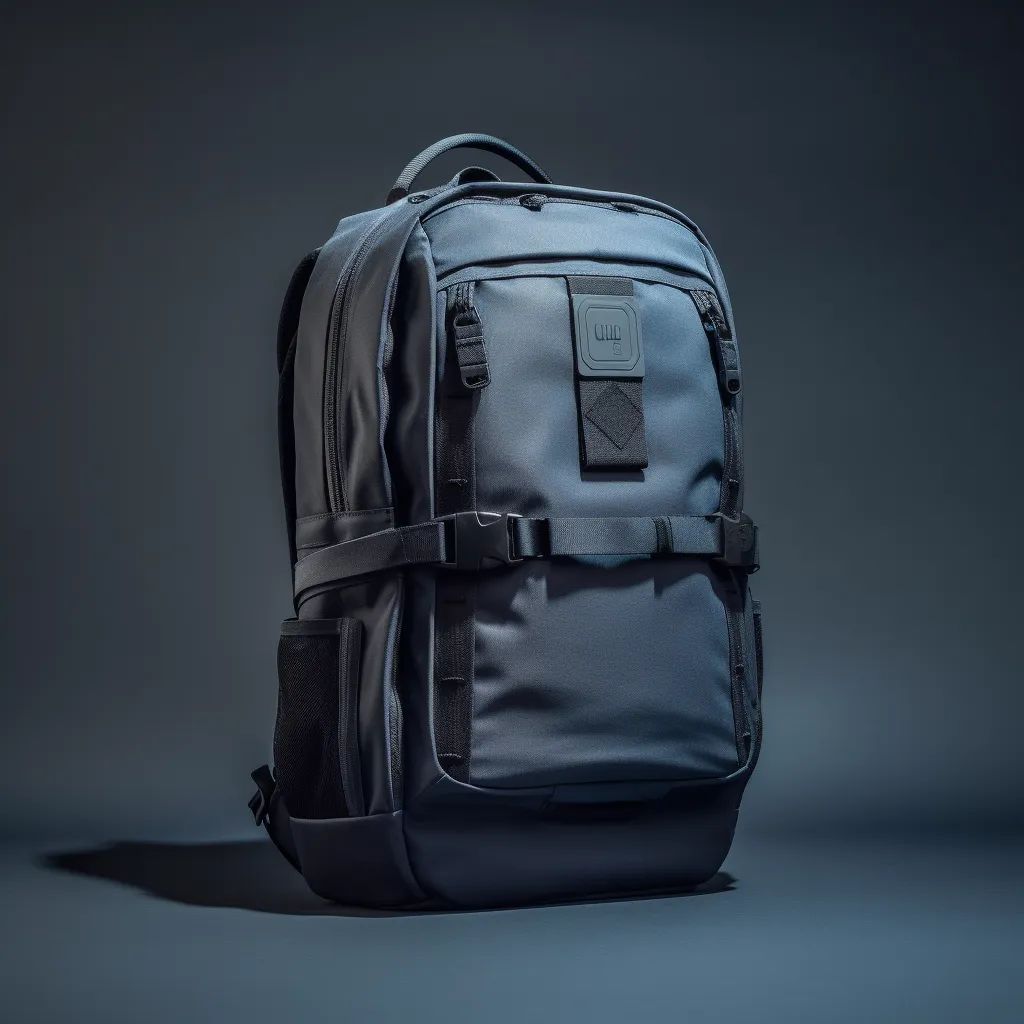
Here is a ladder for a commuter backpack with a realistic projection of 1,100 backers and an average pledge of 132 dollars including add-ons. Goal one at 90,000 dollars: a matching pouch add-on, 4 to 7 dollars per unit, no new style commitment, unlocked at roughly 680 backers. Goal two at 115,000 dollars: a padded strap upgrade using hardware already in the run, 3 to 6 dollars per unit, no new commitment, unlocked at roughly 870 backers.
| Goal | Threshold | Backers needed | Unit cost added | New commitment |
|---|---|---|---|---|
| Matching pouch add-on | 90,000 dollars | About 680 | 4 to 7 dollars | None |
| Padded strap upgrade | 115,000 dollars | About 870 | 3 to 6 dollars | None |
| Third colourway | 150,000 dollars | About 1,140 | 0 | 500 pcs minimum |
| Packaging upgrade | 165,000 dollars | About 1,250 | 1 to 3 dollars | None |
| Packing cube bundle | 185,000 dollars | About 1,400 | Bundled cost | Only if new style |
The third colourway is the only goal in that ladder that creates a commitment, and it is placed third deliberately, at a threshold that requires about 1,140 backers. At a projected preference share of 32 per cent, 1,140 backers produces roughly 365 units for that colourway, which still does not clear 500. The honest conclusion is that the goal should either be pushed higher, to about 1,600 backers, or replaced with a swap option that keeps the total commitment flat. That is what running the numbers does: it converts an attractive idea into an affordable one, or removes it.
Communicating goals without over-promising
Write each goal as a statement of what you will produce, not as a statement of what backers will get. There is a difference and it matters. We will produce a third colourway if we reach 150,000 dollars is a commitment you control. You will be able to choose a third colourway is a promise you may not be able to keep if the colourway does not clear its minimum. The second version is the one that generates complaints when the survey only offers two options.
Also state what happens if a goal unlocks but the variant does not clear its minimum. This is unusual on campaign pages and it is one of the most credibility-building things you can write, because it demonstrates that you have thought about the production side. One sentence is enough: if an unlocked colourway does not reach 500 units in the survey, we will offer the closest alternative and confirm by email before production starts. That sentence has settled more potential disputes than any amount of enthusiasm.
The second communication decision is whether to publish the numbers behind a threshold. Most creators do not, on the assumption that backers are not interested in production arithmetic. In practice the opposite is true on hardware campaigns: backers who have been burned before actively look for signs that the creator understands manufacturing, and a note explaining that a colourway needs 500 units to produce is one of the strongest such signs available. It costs two lines and it pre-empts the why can I not choose question.
Third, decide in advance how you will announce an unlock, and write the template before launch. The unlock update should confirm what was unlocked, restate the delivery estimate unchanged, and say when the choice will be collected. Keeping the delivery estimate in the unlock update matters, because an announcement that only talks about new features without restating the date tends to be read as a distraction from a schedule problem that has not been mentioned.
When a goal unlocks that should not have
It happens: a goal unlocks at a backer count that does not justify it, usually because the campaign outperformed in the final 48 hours and the survey data arrived late. You now have a choice between producing an uneconomic variant and disappointing the backers who pledged partly because of it. Neither is pleasant, and the right answer depends on the size of the shortfall rather than on principle.
If the shortfall is small, say 380 units against a 500 minimum, producing the extra 120 is usually the right call: the cost of 120 units is real but finite, and the cost of reneging on a public goal is larger and lasts into your next campaign. If the shortfall is large, say 190 units against 500, produce the nearest viable alternative and communicate early, with the numbers, and with a genuine remedy such as a discounted add-on or a partial credit. Backers accept arithmetic they can see; they do not accept vague reassurance.
Key takeaways
- E
- v
- e
- r
- y
- s
- t
- r
- e
- t
- c
- h
- g
- o
- a
- l
- i
- s
- a
- p
- r
- o
- d
- u
- c
- t
- i
- o
- n
- c
- o
- m
- m
- i
- t
- m
- e
- n
- t
- .
- P
- r
- i
- c
- e
- i
- t
- ,
- s
- i
- z
- e
- t
- h
- e
- t
- h
- r
- e
- s
- h
- o
- l
- d
- f
- r
- o
- m
- p
- r
- e
- f
- e
- r
- e
- n
- c
- e
- d
- a
- t
- a
- ,
- a
- n
- d
- s
- t
- a
- t
- e
- w
- h
- a
- t
- h
- a
- p
- p
- e
- n
- s
- i
- f
- t
- h
- e
- v
- a
- r
- i
- a
- n
- t
- d
- o
- e
- s
- n
- o
- t
- c
- l
- e
- a
- r
- i
- t
- s
- m
- i
- n
- i
- m
- u
- m
- .
Whichever way you build the ladder, the production constants do not change: 500 pcs per style and per colourway, sampling at 6 to 10 working days for standard styles or 12 to 15 for complex ones, bulk at 35 to 50 days, inspection at AQL 2.5 to ISO 2859-1, and FOB Xiamen terms with T/T 30/70 payment. Our low MOQ bag production page explains how those minimums interact with a first campaign, and the crowdfunding bag guide places stretch goals in the wider timeline.
Send us your draft stretch ladder and we will price each goal and tell you which thresholds are safe at 500 pcs per style.
Frequently Asked Questions
What does a new colourway stretch goal actually cost?
It creates a 500 pcs commitment per style and per colourway, plus another fabric lot, another dye match and another line setup. At an 18 per cent preference share you need roughly 2,800 backers to justify it; at 45 per cent, about 1,100.
What is the difference between a style-creating and a value-adding goal?
A style-creating goal, such as a new colourway or size, produces a fresh 500 pcs minimum. A value-adding goal, such as a pouch add-on or a packaging upgrade, increases what backers receive without a new commitment. Alternate them.
How should I set a stretch goal threshold?
Convert the goal into the backer count it needs, divide by your expected survey response rate to allow for non-responders, multiply by your average pledge, then round up. Round numbers chosen for how they look have no relationship to cost.
Are add-on goals cheaper than colourway goals?
Yes, when the add-on uses fabric and hardware already in the run. A pouch adding 4 to 7 dollars to unit cost can be priced at 19 to 29 dollars and typically attaches to 30 to 50 per cent of backers, without creating a new minimum.
How should I price a bundle?
Discount the second item, not the hero product. If the bag is 129 dollars and the pouch is 29 dollars, price the bundle at 145 to 149 dollars. Discounting the hero trains backers to wait for bundles and devalues the core reward.
How many stretch goals should a bag campaign have?
Four to five is typical, with only one or two creating new style commitments. Front-load the exciting affordable goals, keep the colourway goals higher up the ladder, and end with something memorable rather than expensive.
Can I offer more than four colourways?
Only if your backer projection supports it. Each colourway is a separate 500 pcs commitment, and the third and fourth colours typically attract 12 to 18 per cent of preference each, which rarely clears the minimum below about 2,800 backers.
How many questions can the backer survey have?
Four at most. Colourway, size or variant, address confirmation and anything regulated. Rank questions by production impact and defer the rest to the pledge manager, because each extra question lowers response rate.
What happens if an unlocked colourway does not reach 500 units?
State the rule on the page in advance. If the shortfall is small, producing the extra units is usually cheaper than reneging on a public goal. If it is large, offer the closest alternative with the numbers and a genuine remedy.
Should I promise backers a choice or promise production?
Promise production. We will produce a third colourway at 150,000 dollars is a commitment you control. You will be able to choose a third colourway is a promise you may not keep if the colourway does not clear its minimum.
Is a swap option better than an additional colourway?
For campaigns below about 1,000 backers, usually yes. A swap lets a new colour replace the weakest existing one in the production order, which gives backers a real choice while keeping the total commitment flat.
Do stretch goals change the production timeline?
They can. Each new colourway adds a fabric lot, a dye match and a line setup, which adds schedule risk to the 35 to 50 day bulk window. Value-adding goals such as packaging upgrades add almost nothing to the schedule.
People Also Ask
Are stretch goals free to add on a bag campaign?
No. A new colourway or size creates a 500 pcs commitment per style and per colourway, plus a fabric lot and a line setup.
How many backers justify a new colourway?
About 2,800 at an 18 per cent preference share and about 1,100 at 45 per cent, because the colourway must clear 500 units on its own.
What is the cheapest stretch goal for a bag?
A value-adding goal such as a packaging upgrade at 1 to 3 dollars per unit, or an add-on made from fabric and hardware already in the run.
Should bundles discount the bag or the add-on?
The add-on. Discounting the hero product trains backers to wait for bundles and devalues the core reward for everyone who pledged early.
What is a swap option stretch goal?
A new colourway that replaces the weakest existing one in the production order instead of adding to it. It gives backers choice while keeping the total commitment flat.
How many stretch goals should I write?
Four to five, with only one or two creating new style commitments. Alternate style-creating and value-adding goals to keep momentum.
What if a goal unlocks but the colourway is uneconomic?
Small shortfalls are usually worth producing. Large ones should be handled with the numbers, an alternative offered and a genuine remedy such as a discounted add-on.
Do stretch goals affect the bulk production window?
Style-creating ones can, because each adds a fabric lot and a setup to the 35 to 50 day window. Value-adding ones rarely do.