Canada Kickstarter Custom Bags: A Delivery Programme Built for Canadian Backers
Canadian campaigns stretch across six time zones, a bilingual labelling regime and a winter shipping window. This page sets out the calendar, landed cost, Quebec language requirements and CBSA routing from Xiamen to a Canadian address.
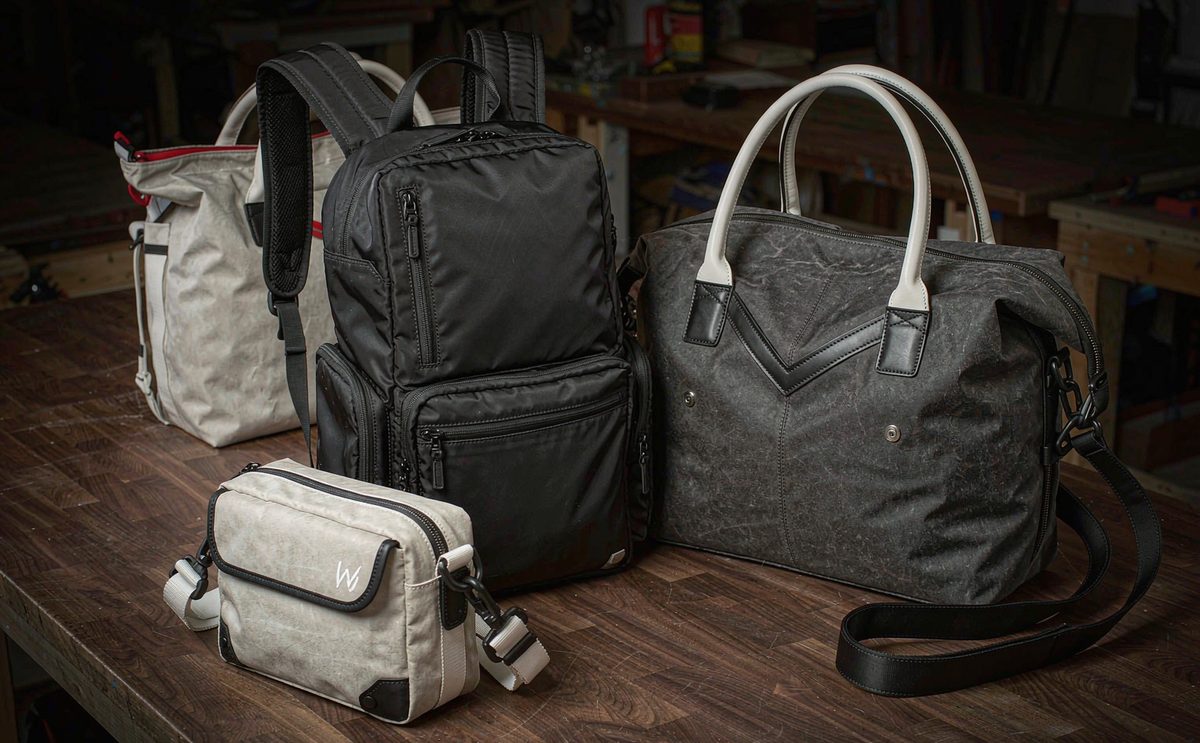
Kickstarter creators in Canada run campaigns for a population spread across six time zones and roughly 5,000 kilometres of geography, which makes the last mile rather than the production stage the harder part of delivery. This page sets out what a Canadian campaign needs from a bag production programme: the calendar that survives a winter shipping window, the landed-cost lines through CBSA, bilingual labelling obligations that reach into Quebec, and a freight plan that reaches a rural address as reliably as a Toronto one.
What a Canadian Kickstarter bag programme involves
A funded Canadian campaign typically sells a ladder rather than a product: an early-bird tier, a core reward, a bundle, and occasionally a second size for a specific use. The complication is not the number of tiers but the number of language variants on the packaging, because a reward destined for Quebec and one destined for Alberta are the same bag in two different boxes. Production planning therefore starts with the artwork, not with the fabric: the 500-pcs minimum applies per style and colourway, and each packaging variant is its own print run.
Key takeaways
- 500 pcs per style and colourway, with bilingual artwork locked before the print screens are cut.
- Quebec applies its own language rules: French and English with equivalent prominence on goods sold there.
- Vancouver, Toronto and Montreal do not share a freight plan — the province you fulfil into sets the route.
- GST or HST is assessed at clearance; first-time importers routinely budget freight and forget the tax line.
No Canadian warehouse: what serving Canadian creators actually covers
There is no Canadian warehouse behind this page and no stock held in the country. Cutting, sewing, printing, assembly and inspection all happen at one production base — 4,950 m² SGS-verified, 137 staff, 7 lines, 149 machines, roughly 200,000 pcs a month — before the goods sail from Xiamen.
Your published delivery date therefore has to include a broker entry, the tax assessment and an inland move that may cross four provinces. None of those shorten because the sewing line did. Campaigns that publish a date derived from the inland leg rather than from production are the ones that do not have to post an apology update.
Ask for the quotation split in two blocks. Unit cost, tooling and sampling are production-side lines; freight, duty, GST and provincial taxes, clearance and last-mile are destination-side. Only the second block can be handed to a Canadian fulfilment partner later, and only if it was never blended into a single per-unit figure.
Building the calendar backwards, with winter in the model
Canadian creators should plan around two things most of the world does not: a wider mail geography and a winter shipping window. Sampling is 6-10 working days for standard builds and 12-15 for complex ones; courier transit to most Canadian addresses is three to five days. production 35-50 days after deposit and an approved sample, then come export packing, ocean transit to Vancouver or Montreal, clearance and inland transport that can add 1,000 kilometres of road on its own.
| Stage | Elapsed time | Who signs off | What slips it |
|---|---|---|---|
| Specification review and quotation | 1-2 working days | Creator | Missing target retail price or undefined quantity band |
| Sampling | 6-10 days, 12-15 complex | Creator | Revisions to hardware, foam density or panel count |
| Sample courier to Canada | 3-5 days plus border handling | Carrier | Peak-season capacity holds and customs questions |
| Bulk production | 35-50 days | Production team | Printing passes or trims added after sample approval |
| AQL 2.5 inspection | 1-2 days | QC liaison | Marginal results requiring rework and reinspection |
| Ocean transit and clearance | 20-40 days plus inland | Freight partner | Winter weather, port congestion, documentation holds |
Add it together and a sea-freight plan to a Canadian address runs roughly 65-100 days end to end, while air brings that to 25-35. Campaigns promising a December delivery should be very sure the mode supports it; see low MOQ bag production for creators for how volume interacts with that choice.
Landed cost to a Canadian address: what sits beyond the unit price
FOB Xiamen covers the bag, its polybag and the export carton, and stops there. After it: ocean or air freight, terminal handling, the broker entry with the CBSA, duty at the commodity-code rate, GST or HST at the rate for the destination province, and an inland leg that can cross half a continent.
| Line | Basis | What decides the number |
|---|---|---|
| Unit cost, FOB Xiamen | Per piece | Style complexity, fabric GSM, printing passes, hardware spec |
| Tooling, screens and moulds | One-off per design | Number of print screens, custom pulls, thermoformed panels |
| Freight | Per cubic metre or per kilo | Mode, season, port pair, fuel and peak-season surcharges |
| Customs duty | Percentage of value for duty | Tariff classification, country of origin, dominant material |
| GST and provincial tax | Percentage of value | 5% GST federally, plus provincial rates that vary by destination |
| Clearance and fees | Per shipment | Broker fees, courier handling charges, storage during exams |
| Inland delivery | Per pallet or carton | Distance from Vancouver or Montreal, rural surcharges |
| Contingency | Percentage of landed cost | Rework, carton damage, replacement of failed units |
GST is charged federally at 5%, but provincial sales tax sits on top in most provinces and is harmonised in others. Model the tax against the destination province your fulfilment sits in, not against a single national rate, or the landed figure at 500 units will miss by several points.
Reserve 3-5% of landed cost for rework, winter transit damage and failed units. Canadian winter is a genuine schedule variable — road and rail legs into the Prairies and the East slow down, and a campaign that promised a January delivery has to price that in.
Bilingual labelling and Quebec language requirements
Canada is bilingual at the federal level and Quebec applies its own language rules to goods sold there. In practice that shapes artwork earlier than most creators expect. Packaging, labelling and any instructions or warranty text are expected in both English and French, and Quebec's Charter of the French Language imposes requirements on marks, inscriptions and accompanying documentation. Because all of this is printed before construction finishes, the decision belongs at the artwork lock rather than at the shipping stage.
- Bilingual English and French text on packaging, hangtags and any insert card shipped with the reward.
- Quebec language rules applied to inscriptions, instructions and warranty or documentation copy.
- Trademark treatment checked so a registered mark is not inadvertently forced into translation.
- Fibre content labelling where the outer cloth is presented as a named fibre or blend.
- Care instructions printed in both languages where you make care claims.
- Country of origin marking that is permanent, legible and not misleading.
- ISPM 15 heat-treated wood for any pallet or crate used on the shipment.
CBSA clearance and the route your shipment takes
How goods enter changes what gets paid and by whom. A commercial shipment through a port requires a broker or a warehouse account; a courier parcel stream handles lower-declaration parcels differently and charges its own handling fee. Canada operates a low de minimis threshold relative to the value of a typical campaign shipment, which means duty and tax are realistically in scope rather than theoretical.
| Route | Who pays duty and tax | Backer experience | Best suited to |
|---|---|---|---|
| FOB Xiamen plus your broker | Creator or your 3PL | Broker and tax invoice arrive at clearance | Established sellers with a customs relationship |
| DDP to a Canadian address | Prepaid inside the freight quote | No tax or duty demand downstream | First-time importers and mixed backer addresses |
| Split air and sea legs | Prepaid per leg | Consistent across both modes | Campaigns with staggered tier delivery |
| Direct consignment to a Canadian fulfilment warehouse | Handled under their account | Depends on warehouse terms | Creators already running a 3PL relationship |
The costly pattern is choosing the cheapest route and then paying courier handling per parcel while each one is assessed separately. Consolidating into one entry converts a thousand small problems into one large, solvable one.
What the AQL 2.5 inspection must check on a Canadian lot
Canadian inspection has to satisfy two audiences: the physical standard of AQL 2.5 under ISO 2859-1, and a bilingual market. Roughly a quarter of Canadian consumers read French first, and Quebec applies its own language rules to goods sold there, so packaging that is English-only is a market-access defect rather than a cosmetic one.
- Bilingual consumer text. French and English on packaging and on any card that travels with the reward, with both languages given equivalent prominence in Quebec.
- Metric-first measurement. Dimensions, weights and capacities in metric units; imperial equivalents may follow but must not replace them.
- Textile fibre content and care in both official languages, consistent with the fibre analysis on file.
- Country of origin marking legible and permanent, as required under the marking rules enforced at the border.
Because bilingual artwork is a print decision, it has to be approved before the screens are cut. Retrofitting French onto a printed carton means reprinting it, and reprinting means the schedule moves.
Freight into Canada: choosing a defensible mode
Three modes serve Canada, and the choice interacts with the coast. Air express is five to ten days on chargeable weight and priced accordingly. Ocean to Vancouver is the shortest Pacific leg; ocean via an Eastern port trades transit for a shorter inland move. A sea-air split occasionally beats both on the door-to-door figure.
| Mode | Transit to Canada | Cost basis | Use it when |
|---|---|---|---|
| Air express | 6-10 working days door to door | Chargeable weight | Samples, early-bird batches, deadline rescue |
| Sea LCL to Vancouver | 18-25 days port to port | Per cubic metre plus destination charges | Under roughly 10 m³ with flexible timing |
| Sea FCL, either coast | 18-25 west, 30-38 east | Per container plus inland haulage | A single large tier consigned to one 3PL |
- Price Vancouver and Eastern routing separately: a Vancouver discharge is the short Pacific leg, an Eastern one cuts the inland move to Ontario and Quebec.
- Book early into the winter months; Prairies and Eastern road and rail legs slow down and the delay compounds with the ocean leg.
- Confirm whether broker entry fees are inside the quote or billed separately per entry.
- Ask for the commodity code and duty rate, then add GST or HST at the rate for the province you will fulfil into.
Working across eleven to sixteen hours of time difference
China Standard Time runs fifteen or sixteen hours ahead of Canadian Eastern time and eleven or twelve ahead of Pacific depending on daylight saving. That gap is either an obstacle or throughput depending on how decisions move. Run deliberately it is throughput: a specification sent from Toronto on Tuesday evening is reviewed overnight and answered before Wednesday gets going there.
- Eleven to sixteen hours is a wide gap: treat it as a full-day cycle and send one consolidated message per day rather than several.
- Set a fixed overlap window — early morning Pacific time is late evening in China.
- Provincial holidays differ; confirm who is working on the day you need an approval.
Six mistakes that put Canadian reward bags late
- Publishing a delivery month without counting CBSA clearance, provincial tax and inland transport across 1,000 kilometres.
- Adding a third stretch-goal colourway without re-checking the 500 pcs per colourway minimum.
- Locking artwork before French copy exists, then discovering the bilingual relabelling has to be reprinted at the finish line.
- Accepting a low headline quote that omitted tooling, then meeting the screen charge after the money was committed.
- Choosing the cheapest parcel route and paying per-parcel handling fees that exceed the freight saving.
- Treating inspection as paperwork and authorising shipment against a report nobody on your side actually read.
Routing across six time zones, and the GST/HST line
Geography drives the Canadian decision. A Vancouver delivery is the shortest Pacific leg and the cheapest inland move; a Toronto or Montreal delivery usually justifies an East-coast discharge or a US-port-plus-cross-border move, and each has a different broker arrangement. Whichever route you take, GST or HST is assessed at clearance on the value of the goods, and a first-time importer who budgets only for freight discovers the tax line after the goods have already moved.
- Send the five-line specification plus the province you will fulfil into, so bilingual artwork and the tax rate are right first time.
- Receive a quotation with unit-cost tiers at three volumes and every fixed charge listed separately.
- Approve the spec sheet and fund a sample — 6-10 working days, 12-15 for complex builds.
- Approve the pre-production reference, then inspect to AQL 2.5 with the bilingual checks included.
- Pay the 30% deposit, run 35-50 days of bulk, release the 70% balance and route to the coast you priced.
Bag type, quantity per colourway, launch date, Canadian province and target pledge. You receive a 3-tier unit cost band, every fixed line itemised separately, and Vancouver or Eastern routing with GST/HST modelled for each.
Frequently Asked Questions
What is the minimum order for a Canadian Kickstarter bag campaign?
The minimum is 500 pcs per style and per colourway. A campaign promising three colourways of one backpack needs 1,500 pieces across the run, so how wide the reward ladder goes is a volume decision at least as much as a design one. A single-colourway run starts at 500.
How long does sampling take when the sample has to reach Canada?
Build time is 6-10 working days for standard styles and 12-15 for complex builds such as bonded panels or moulded backs. Courier transit to most Canadian addresses adds 3-5 days plus border handling. Allow roughly three calendar weeks from funding the sample to having it in your hands for photography.
Do I have to print French on my reward bags and packaging?
If any part of your campaign reaches Quebec, plan for it. Quebec language rules apply to inscriptions, instructions and documentation, and the decision belongs at artwork lock. Adding French copy after 500 cartons are made costs far more than printing it the first time.
How much duty and tax should I budget on bags imported to Canada?
Budget GST at 5% federally, provincial sales tax on top in most provinces, and duty set by tariff classification rather than category. Rates move materially between classifications, so have a broker confirm the line rather than applying a single national percentage to the whole order.
What inspection standard applies to my Canada-bound bulk order?
Bulk is inspected to AQL 2.5 under ISO 2859-1. The sampling plan is sized to your lot, defects are classified as critical, major or minor, and accept or reject thresholds follow the standard. The report is issued before freight is booked so a marginal result can still be reworked.
Can you ship to remote and rural Canadian addresses?
Yes, through whichever carrier your fulfilment plan uses, but expect surcharges and longer tail time. Build the rural component into the published delivery promise rather than promising identical dates nationwide, because the last 10% of addresses absorb a disproportionate share of delays.
Does the Canadian winter actually affect my reward delivery date?
It can. Weather, reduced capacity and holiday volume compress schedules every November through January, and the combined effect is commonly 7-14 extra days on top of the standard plan. A December promise on sea freight needs a large buffer, or a switch to air for the affected tiers.
Can part of my order go by air and the rest by sea?
Yes, and Canadian campaigns do it often. Early-bird tiers travel by air at 6-10 working days door to door while the balance sails at 18-25 days port to port. The premium is steep on bulky items, so reserve it for tiers where the promised date genuinely justifies it.
What payment terms apply to a Canadian campaign order?
Standard terms are T/T: a 30% deposit releases materials and books the bulk slot, and the 70% balance falls due against delivery of the inspection report and packing record. Bank transfer fees sit with each side. The deposit is what secures your place in the schedule.
Do you hold Canadian inventory for backer replacements?
There is no Canadian warehouse or inventory pool behind this service. Replacement units ship from the same production origin, typically taking 20-30 days to reach a Canadian address. That is why a 3-5% contingency line belongs in the budget before the campaign closes.
What should a complete quote request include for a Canadian shipment?
Send 5 essentials: bag type, quantity per colourway, campaign launch date, the destination address including province, and the pledge price your unit economics must hold. Anything beyond those five can be proposed back by the programme team, including fabric choice, hardware specification and print method.
How long is bulk production and what adds time?
production 35-50 days after the deposit clears and the pre-production sample is approved. What adds time is change: printing passes, hardware swaps or trim substitutions introduced after approval restart material lead times. Locking the specification before the deposit is the biggest schedule lever available.
People Also Ask
How much does it cost to make 500 custom bags for a Kickstarter campaign?
Unit cost reflects style complexity, fabric weight, printing passes and hardware, with tooling as a one-off line and freight, duty, GST and provincial tax on the destination side. Base any published reward price on three volume tiers rather than one figure.
Why is the MOQ set per colourway rather than per order?
Each colourway needs its own dye lot, its own printing set-up and its own minimum run through the line. Setting the minimum per order would leave partial dye lots and idle machine time, which is why it works the way it does.
What happens if my lot fails inspection at AQL 2.5?
A failed lot goes to rework and reinspection when defects are correctable, or to a remake when they are structural. Nothing ships on a failed report, which is why inspection is booked at lot completion rather than discovered at arrival.
How long does sea freight take from Xiamen to Canada?
Roughly 18-25 days port to port into Vancouver and about 30-38 days to eastern destinations, plus clearance and inland transport. With a 35-50 day build and export packing, a realistic plan to a Canadian address sits around 65-100 days.
Do bilingual labels have to be printed or can I add stickers later?
Printed from the start is safer. Stickers applied after construction add labour, look improvised to backers and can fail adhesion on coated fabrics. Decide the bilingual requirement at artwork lock and it becomes a normal line item rather than a rescue.