France Kickstarter Custom Bags: A Delivery Programme Built for FR Backers
French campaigns run inside Europe's most detailed circular-economy framework, where producer responsibility and French-language labelling gate distribution before goods clear customs. This page sets out the calendar, landed cost and freight choices.
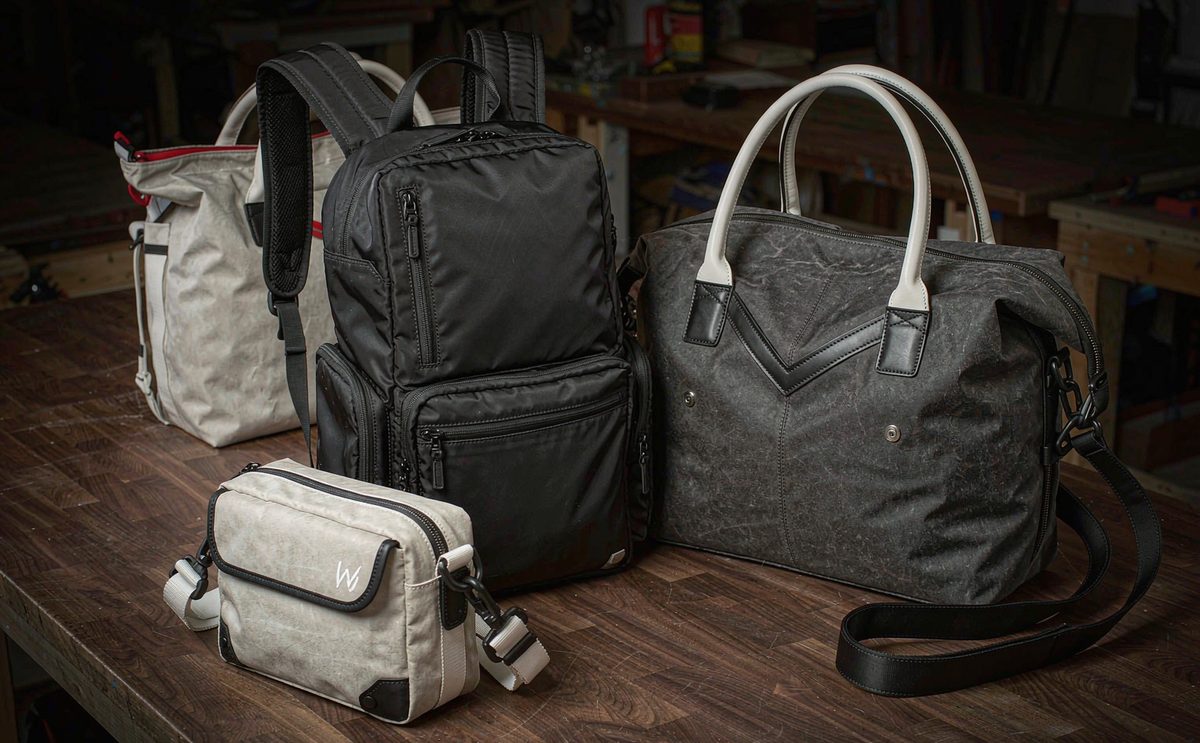
Kickstarter creators in France operate inside the most detailed circular-economy framework in Europe, where extended producer responsibility attaches to textiles and where labelling obligations are enforced in French. This page sets out what a French campaign needs from a bag production programme: the calendar that absorbs a registration step, the landed-cost lines through EU customs, the Triman sorting mark and EPR obligations that gate lawful distribution, and a freight choice that reaches French backers without a documentation hold.
What a French Kickstarter bag programme involves
French campaigns usually build a narrow ladder and describe it precisely — one hero reward, an early-bird tier, and a bundle that pairs the bag with an accessory rather than a second colourway. That helps on the production side, because fewer colourways means fewer fabric minimums and fewer print set-ups against the 500-pcs per style and colourway floor. It also helps on the compliance side: every distinct packaging variant has to carry the correct marking, and the artwork cycle is where that gets decided.
Key takeaways
- 500 pcs per style and colourway; the Triman mark and sorting information are printed, not applied later.
- French-language consumer text is a legal requirement on packaging and on documents that travel with the reward.
- AGEC extended producer responsibility identifies who answers for the product category once it is on the market.
- Import VAT at 20% is funded at clearance and recovered afterwards — budget the cash flow, not just the cost.
No French warehouse: what serving French creators actually covers
Nothing is warehoused in France and no inventory is held there. The bag is cut, sewn, printed, assembled and inspected at one SGS-verified base of 4,950 m² with 137 staff, 7 lines, 149 machines and roughly 200,000 pcs of monthly capacity, and it departs from Xiamen.
The date you publish therefore has to absorb clearance, the VAT cash-flow step and an inland leg — none of which move faster because production did. French campaigns tend to promise later and deliver closer, and that is the habit worth copying: set the public date from the slowest step in the chain.
Ask for the quotation split in two blocks. Unit cost, tooling and sampling are production-side lines; freight, duty, 20% import VAT, clearance and last-mile are destination-side. Only the second block can be handed to a European fulfilment partner later, and only if it was never blended into a single per-unit figure.
Building the calendar backwards from a French launch
French campaigns tend to promise realistic delivery dates, partly because registration-dependent steps push the timeline longer than creators expect. Sampling is 6-10 working days for standard builds and 12-15 for complex ones; courier transit to most French addresses is three to five days. production 35-50 days after deposit and an approved sample, then come export packing, the international leg, EU customs clearance and inland delivery.
| Stage | Elapsed time | Who signs off | What slips it |
|---|---|---|---|
| Brief and cost band | 1-2 working days | Creator | No target retail price, or a quantity spread across too many colourways |
| Artwork with Triman and sorting information | 2-4 working days, iterative | Creator and print team | Sorting mark missing from the print-ready file |
| Sampling, including the printed carton | 6-10 days, 12-15 complex | Creator | Hardware, foam density or panel-count revisions after the first build |
| Sample courier into France | 3-5 days plus customs handling | Carrier | Peak-season capacity holds and import questions on a declared sample |
| Bulk production | 35-50 days | Production team | Extra printing passes or trims introduced after the reference is approved |
| AQL 2.5 inspection, marking checks included | 1-2 days | QC liaison | Marginal results, or French-language text rejected at the final read |
| International leg and clearance | 20-40 days depending on mode | Freight partner | Mode availability, documentation mismatch, customs exams |
Rail through the China-Europe corridor typically runs 18-22 days, ocean into Le Havre or Marseille roughly 30-40 days port to port, and air runs 6-10 working days door to door. Choosing among them before campaign copy is written is what lets a delivery promise survive; see low MOQ bag production for creators.
Landed cost to a French address: what sits beyond the unit price
FOB Xiamen gets you the bag, packed, in an export carton. The lines that follow are ocean or rail freight, terminal handling, clearance, duty at the commodity-code rate, import VAT at 20%, and the inland move on from Le Havre or Marseille.
| Line | Basis | What decides the number |
|---|---|---|
| Unit cost, FOB Xiamen | Per piece | Style complexity, fabric GSM, number of printing passes, hardware specification |
| Print plates and tooling | One-off per design | Screens per colour per placement, plus any thermoformed panel |
| Packaging artwork and carton print | One-off, then per carton | Number of packaging variants and how many carry the sorting information |
| Freight | Per cubic metre or per kilo | Ocean, rail or air, plus season and the port or terminal pair |
| Duty and import VAT together | Percentage of customs value | Tariff classification and origin, then 20% VAT on the duty-inclusive figure |
| Producer-responsibility contribution | Per unit or per category | The AGEC category the bag falls into and the scheme it is declared under |
| Clearance and handling | Per shipment | Broker fees, terminal handling, storage during an exam |
| Inland delivery | Per pallet or carton | Distance from Le Havre, Marseille or the rail terminal you discharge at |
Import VAT sits at 20% and is normally recoverable where you hold a French VAT registration, so it behaves as a funded cash-flow item rather than a true cost. Skip it in the plan and you will be short at clearance; book it as a cost and you will price yourself unnecessarily high.
Budget 3-5% of landed cost for rework, transit damage and inspection failures. The French version of the expensive mistake is printed rather than shipped: artwork reaching the screen without the sorting information has to be redone, and every carton follows the artwork.
French language law, Triman marking and extended producer responsibility
Four obligations shape a bag campaign entering France. The Toubon law requires consumer-facing text, including instructions and warranty information, in French. The Triman sorting scheme requires recycling information shown in a standardised form on products and packaging. Extended producer responsibility requires registration and a unique identification number before textile-category items are placed on the market. And EU-level obligations — the General Product Safety Regulation and textile fibre labelling — apply alongside all three.
- French-language text for instructions, care information, warranty copy and consumer-facing explanations.
- Triman sorting information rendered in the standardised format on both product and outer packaging.
- Extended producer responsibility registration secured, with the unique identification number quoted where required.
- Textile fibre composition declared on the label where EU textile rules apply.
- An EU-established responsible economic operator named under the EU General Product Safety Regulation.
- EU REACH screening for substances of very high concern in coatings, inks, PVC finishes and hardware.
- ISPM 15 heat-treated timber for any pallet or crate used on the shipment.
Sorting marks are printed, not added later, which means the artwork cycle has to include them before construction finishes. Send fabric specification, finished-face artwork and how the reward will be packed, and these can be checked before tooling is cut. Detail sits under Kickstarter campaign bag QA and QC.
Customs clearance: consolidated consignment or per-parcel
French campaigns face a structural choice that changes the tax mechanics. Clearing one bulk consignment into a European warehouse means a single import declaration, duty and 20% VAT accounted once, then onward supply under your own VAT registration. Posting individual rewards directly to backers from outside the Union makes every parcel its own import, with VAT handling that differs below the consignment threshold and duty above it.
| Route | Who carries the marking duty | Backer experience | Best suited to |
|---|---|---|---|
| Bulk consignment into a French warehouse | Whoever places the packaged goods on the market — normally you | Domestic onward delivery, nothing to pay at the door | Campaigns using a European fulfilment partner |
| DDP direct to French backers | Prepaid and declared inside the freight quote | No customs or tax demand downstream | First-time importers and mixed backer addresses |
| Rail into France, then road distribution | Single declaration, single set of markings | Consistent across destinations | Campaigns balancing transit time against cost |
| Individual parcels posted to backers | Assessed per parcel, which multiplies the obligation | Import VAT or duty demand at the door unless prepaid | Very small campaigns with no EU entity |
Do not choose per-parcel posting without modelling what it does to the 20% line and to the producer-responsibility identification. One bulk entry is one set of obligations; thousands of parcels are thousands of them.
What the AQL 2.5 inspection must check on a French lot
The marking obligations on goods entering France are printed, not applied — which means inspection has to verify the print, not just the assembly. Alongside the physical standard of AQL 2.5 under ISO 2859-1, the release checklist covers the sorting mark, the language of the consumer-facing text and the producer-responsibility identification.
- Triman mark and sorting information. Printed on the packaging, with the sorting instructions the French scheme requires. Added as a sticker later, it does not satisfy the obligation.
- French-language consumer text on packaging and on any document that travels with the reward, per the Toubon law.
- Extended producer responsibility (AGEC) identification for the relevant product category, and the unique identifier where the scheme requires one.
- Textile composition and care in French, consistent with the fibre analysis on file.
Because these marks are printed, they have to be in the artwork that goes to the print screen — not in the packing list that follows the carton. That single sequencing decision is the difference between a one-week delay and a reprint of every carton.
Freight into France: ocean, rail or air
Three modes reach France. Air express, five to ten days on chargeable weight, is for when the schedule has already gone wrong. Ocean into Le Havre or Marseille runs 30-40 days port to port. Rail on the China-Europe corridor at 18-22 days is the option most campaigns under-price.
| Mode | Transit to France | Cost basis | Use it when |
|---|---|---|---|
| Air express | 6-10 working days door to door | Chargeable weight | Samples, early-bird batches, deadline rescue |
| Rail on the China-Europe corridor | 18-22 days terminal to terminal | Per cubic metre or wagon share | A faster option than sea without paying for air |
| Ocean to Le Havre | 30-40 days port to port | Per container plus inland haulage | Bulk rewards consigned to one 3PL in the north |
| Ocean to Marseille | 28-38 days port to port | Per container plus inland haulage | Campaigns whose backers or 3PL sit in the south |
- Compare Le Havre and Marseille on the inland leg, not only the ocean leg — the cheaper port is not always the cheaper delivery.
- Rail through the China-Europe corridor at 18-22 days is the option to price when the campaign funded later than planned.
- Confirm the artwork carrying the sorting information is signed off before the cartons are printed.
- Ask for the commodity code and duty rate, and model the 20% import VAT as a cash-flow line rather than a cost line.
Six or seven hours of overlap, and one month that is not
China Standard Time runs seven hours ahead of CET and six ahead of CEST, which is enough overlap for a same-day answer. Use it for approvals and keep routine correspondence asynchronous. Then put the French August slowdown into the calendar: artwork approvals, customs capacity and inland delivery all stretch, and a campaign that closes in July meets it immediately.
- Consolidate each day’s questions into one message — the overlap is wide enough that scattered threads cost a full cycle.
- Use late morning in France for live approvals; it is still mid-afternoon in China.
- Avoid scheduling artwork sign-off in the second half of August.
Six mistakes that put French reward bags late
- Publishing a delivery month without counting EU clearance, 20% import VAT funding and inland distribution.
- Adding a third stretch-goal colourway without re-checking the 500 pcs per colourway minimum.
- Locking artwork without the sorting information, then discovering every carton has to be reprinted.
- Accepting a low headline quote that omitted tooling, then meeting the screen charge after the money was committed.
- Placing items on the market before securing the producer-responsibility registration they depend on.
- Treating inspection as paperwork and authorising shipment against a report nobody on your side actually read.
Routing, 20% import VAT and the port-versus-rail choice
France gives you a genuine three-way choice. Ocean into Le Havre or Marseille typically runs 30-40 days port to port and suits a campaign with a long runway; rail through the China-Europe corridor runs roughly 18-22 days and suits a campaign that funded later than planned; air is the rescue mode, priced on chargeable weight. Whichever you pick, the 20% import VAT line behaves the same way — it is payable at clearance and recoverable afterwards, so it has to be funded inside the campaign budget, not after it.
- Send the five-line specification plus finished artwork that already carries the Triman mark and the sorting information.
- Receive a quotation with unit-cost tiers at three volumes and every fixed charge listed separately, including the packaging print.
- Approve the spec sheet and fund a sample of the bag and its carton — 6-10 working days, 12-15 for complex builds.
- Approve the pre-production reference, then inspect to AQL 2.5 with the French-language and marking checks included.
- Pay the 30% deposit, run 35-50 days of bulk, release the 70% balance and move on the mode you selected.
Bag type, quantity per colourway, launch date, French destination and target pledge. You receive a 3-tier unit cost band, every fixed line itemised separately, and ocean, rail and air options with the duty and 20% VAT treatment for each.
Frequently Asked Questions
What is the minimum order for a French Kickstarter bag campaign?
Five hundred pieces per style and per colourway. The French wrinkle is that each packaging variant is its own print run, so three colourways in three carton designs is three commitments on the packaging side, not one. Plan the reward ladder around one carton artwork if you can.
How long does sampling take when the sample has to reach France?
Six to ten working days to build the sample, twelve to fifteen for a complex construction, then three to five days by courier plus customs handling into France. The step campaigns forget is the carton: the printed packaging carrying the sorting information has its own proof cycle, and it has to finish before bulk, not during it.
Do I need the Triman sorting mark on my reward bags?
Products and packaging placed on the French market carry recycling sorting information in a standardised form, and textile-category items have been squarely in scope since 2022. Because the mark is printed rather than applied later, it belongs in the artwork cycle before construction finishes.
What is extended producer responsibility and do campaigns fall under it?
Introduced in France by the 2020 anti-waste circular economy law, it makes whoever places a product on the market responsible for its end-of-life treatment. It requires registration and a unique identification number before distribution, and many bags sit inside the textile scope.
Must my instructions and care information be in French?
Consumer-facing information generally does, under French language requirements dating back to 1994. That includes care instructions, warranty text and any explanation shipped with the reward, so plan the French copy alongside the spec sheet rather than after labels are printed.
Is 20% import VAT a real cost or simply cash flow?
Usually cash flow. It is charged at 20% on customs value plus duty and freight, and recovered through your French VAT return where you are registered. Treat it as a funding line covered at entry rather than as a procurement cost.
What inspection standard applies to my France-bound bulk order?
AQL 2.5 under ISO 2859-1, with the marking checks added to the protocol. Alongside the physical defects, the inspector reads the Triman mark, the sorting information and the French-language text on the packaging — because a marking defect found in France is a reprint, not a rework.
Is rail from China worth using instead of sea freight?
Often yes when timing is tight but air is uneconomic. Rail typically runs 18-22 days terminal to terminal against roughly 30-40 days for ocean into Le Havre, at a cost between the two, and suits campaigns that missed the sea booking window.
Can part of my order go by air and the rest by sea or rail?
Yes, and it is common: early-bird tiers fly at six to ten working days door to door while the balance moves by rail or ocean into Le Havre or Marseille. Price the air portion on chargeable weight, because a bulky bag is the worst possible candidate for a large air allocation.
What payment terms apply to a French campaign order?
T/T: thirty per cent on order to release fabric, trim and print screens, seventy per cent against delivery of the inspection report and the packing record. Budget the twenty per cent import VAT separately — it is assessed at clearance, not against the production invoice.
What should a complete quote request include for a French shipment?
Bag type, quantity per colourway, the destination in France, your launch and delivery dates, and artwork that already carries the sorting information. Add whether you hold a French VAT number, because that decides how the twenty per cent line is treated.
How long is bulk production and what adds time?
Thirty-five to fifty days once the deposit clears and the pre-production sample is signed off. What extends it is change after approval — an extra print pass, a swapped trim, a late decision on the sorting mark. Freeze the artwork and the specification together.
People Also Ask
How much does it cost to make 500 custom bags for a Kickstarter campaign?
Unit cost reflects style complexity, fabric weight, printing passes and hardware, with tooling as a one-off line and freight, duty, 20% import VAT and clearance on the destination side. Base any published reward price on three volume tiers rather than one figure.
Why is the MOQ set per colourway rather than per order?
Each colourway needs its own dye lot, its own printing set-up and its own minimum run through the line. Setting the minimum per order would leave partial dye lots and idle machine time, which is why it works the way it does.
What happens if my lot fails inspection at AQL 2.5?
A failed lot goes to rework and reinspection when defects are correctable, or to a remake when they are structural. Nothing ships on a failed report, which is why inspection is booked at lot completion rather than discovered at arrival.
How long does shipping take from Xiamen to France?
Air takes 6-10 working days door to door, rail typically 18-22 days terminal to terminal, and ocean into Le Havre roughly 30-40 days port to port. With a 35-50 day build and export packing, decide the mode before writing campaign copy.
Do I need an EU-established economic operator for a bag campaign?
For products made available in the Union, yes. The EU General Product Safety Regulation requires a responsible economic operator established in the EU holding technical documentation, arranged before the goods are lawfully distributed rather than after clearance.