Germany Kickstarter Custom Bags: A Delivery Programme Built for EU Backers
German campaigns ship into the strictest product-regulatory environment in Europe, where registration steps gate distribution before goods even clear customs. This page sets out the calendar, landed cost, EU compliance and ocean-versus-rail freight choices.
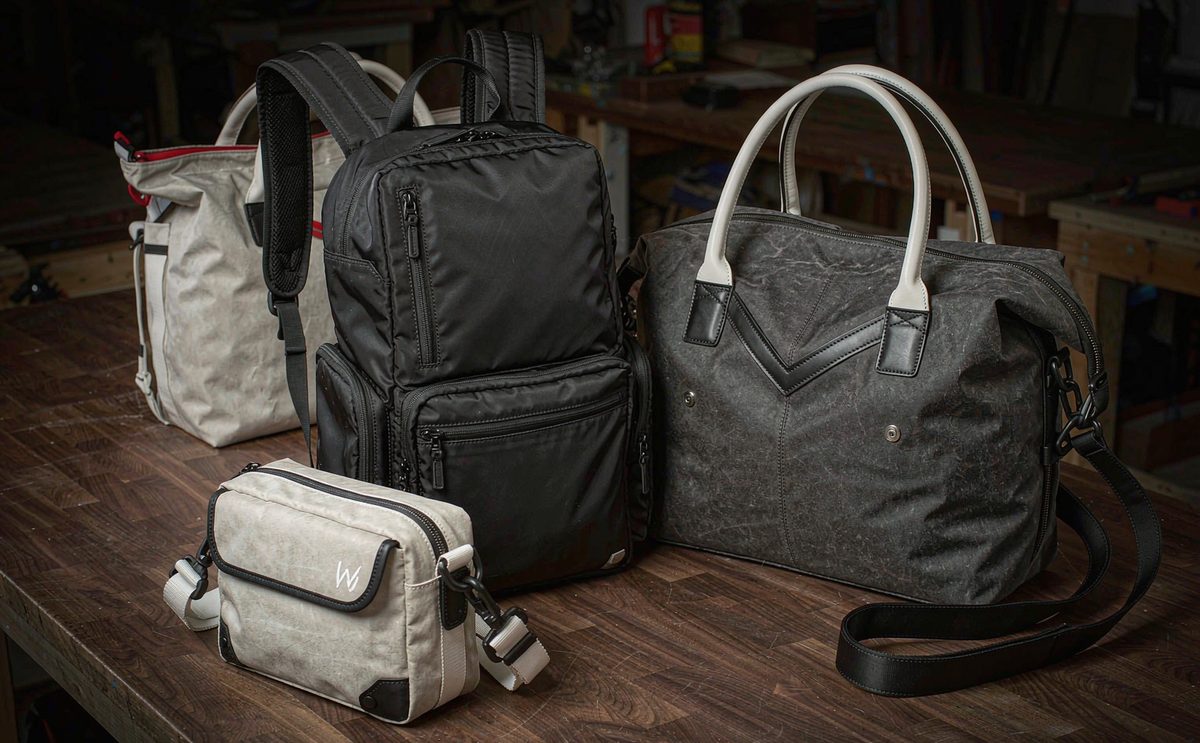
Kickstarter creators in Germany ship into the strictest product-regulatory environment in Europe, and since the EU General Product Safety Regulation took effect the obligations attach earlier in the process than most campaigns plan for. This page sets out what a German campaign needs from a bag production programme: the calendar that survives a registry requirement, the landed-cost lines through EU customs, the labelling and packaging registrations that gate lawful distribution, and a freight choice between ocean, rail and air.
What a German Kickstarter bag programme involves
German campaigns tend to be conservative on delivery dates and precise on specification, and the reward ladder reflects that: a defined core reward, a clearly described bundle, and stretch goals that add function rather than colourways. That discipline helps production, because each rung of the ladder is a real specification rather than a variation on one. What still decides affordability is the number of distinct fabric and print combinations, since the 500-pcs minimum applies per style and per colourway regardless of how similar two colourways look on a screen.
Key takeaways
- 500 pcs per style and colourway; registration obligations are unaffected by how small the run is.
- VerpackG / LUCID registration and a GPSR responsible person must be in place before packaged goods reach the market.
- Rail through Duisburg at 18-22 days is the genuine middle option between a 30-40 day ocean leg and air.
- Import VAT at 19% is payable at clearance — the mode you choose sets when it becomes recoverable.
No German warehouse: what serving German creators actually covers
No German warehouse sits behind this page and no stock is held in the country. The work is done at one verified production base — 4,950 m² checked by SGS, 137 people on 7 lines, 149 machines, about 200,000 pcs of monthly output — and the finished goods leave from Xiamen.
The published date therefore has to carry clearance, registration checks and an inland leg, and none of those respond to a faster sewing line. German campaigns that hit their stated month are usually the ones that set the date from the slowest administrative step rather than from the fastest production one.
Ask for the quotation split in two blocks. Unit cost, tooling and sampling are production-side lines; freight, duty, 19% import VAT, clearance and last-mile are destination-side. Only the second block can be handed to a European fulfilment partner later, and only if it was never blended into a single per-unit figure.
Building the calendar backwards from a German launch
German campaigns typically promise delivery four to six months after funding closes, which is realistic once the registration-dependent steps are counted. Sampling is 6-10 working days for standard builds and 12-15 for complex ones; courier transit to most German addresses is three to five days. production 35-50 days after deposit and an approved sample, then come export packing, the international leg — ocean, rail or air — EU customs clearance and inland delivery.
| Checkpoint | Days | Owner | Risk if skipped |
|---|---|---|---|
| Brief and cost band | 1-2 | Creator | No target retail price and no defined quantity band |
| Packaging registration started | Before tooling, not after | Creator | Goods cannot be distributed, and no expediting fixes it |
| GPSR responsible person named | Before artwork sign-off | Creator | No economic operator for market surveillance to reach |
| Sampling | 6-10, or 12-15 for complex builds | Creator | Hardware, foam density or panel-count revisions |
| Sample courier into Germany | 3-5 plus customs handling | Carrier | Peak-season capacity holds and import questions |
| Bulk production | 35-50 | Production team | Printing passes or trims added after reference approval |
| AQL 2.5 with traceability check | 1-2 | QC liaison | Marginal results, or units with no batch identification |
| Rail or ocean leg and clearance | 18-40 depending on mode | Freight partner | Mode availability, documentation mismatch, customs exams |
A rail plan through Duisburg typically runs 18-22 days, which sits between sea at roughly 30-40 days port to port into Hamburg and air at 6-10 working days door to door. Choosing among them before campaign copy is written is what lets a delivery promise survive; see low MOQ bag production for creators.
Landed cost to a German address: what sits beyond the unit price
What a FOB Xiamen price contains is the bag, its packing and the export carton. Beyond it sit ocean or rail freight, terminal handling, customs clearance, duty at the commodity-code rate, import VAT at 19%, and the inland leg from Hamburg, Bremerhaven or Duisburg.
| Line | Fixed or variable | What decides the number |
|---|---|---|
| Unit cost, FOB Xiamen | Variable | Style complexity, fabric GSM, printing passes, hardware specification |
| Tooling, screens and moulds | Fixed | Number of print screens, custom pulls, thermoformed panels |
| Packaging registration and scheme participation | Fixed and recurring | Weight and material of the packaging placed on the market |
| Freight | Variable | Ocean, rail or air, plus season and the terminal or port pair |
| Customs duty | Variable | Tariff classification, country of origin, dominant material |
| Import VAT at 19% | Variable, recoverable | Duty-inclusive customs value and your VAT registration status |
| Clearance and handling | Fixed | Broker fees, terminal handling, storage during an exam |
| Inland delivery | Variable | Distance from Hamburg, Bremerhaven or Duisburg |
Import VAT is charged at 19% and is normally recoverable where you hold a German VAT registration, so it behaves as a cash-flow item funded at entry rather than a cost. Except where individual parcels are posted straight to backers, which changes the collection mechanism entirely.
Set aside 3-5% of landed cost for rework, damage and failed inspection. The German failure mode is administrative rather than physical: goods that cannot be distributed because registration was never completed are worse than goods that arrive late, and no amount of expediting fixes them.
EU product compliance: GPSR, textile labelling and packaging registration
Four regimes matter to a bag campaign entering Germany. The EU General Product Safety Regulation requires an economic operator established in the Union and documented risk assessment before products are made available. The EU Textile Labelling Regulation governs fibre composition declarations. EU REACH governs substances of very high concern in coatings and finishes. And the German Packaging Act requires registration before packaging is placed on the market, with the registration number visible in the public register before distribution begins.
- EU General Product Safety Regulation: an EU-established responsible economic operator named, plus technical documentation and risk assessment held before sale.
- Textile Labelling Regulation: fibre composition declared on the label where textile rules apply.
- EU REACH screening for substances of very high concern in coatings, inks, PVC finishes and metal hardware.
- German Packaging Act registration completed before the first packaged unit is placed on the German market.
- Participation in a dual system where sales rather than pure transport packaging is involved.
- German-language labelling and instructions where consumer-facing text is required.
- ISPM 15 heat-treated timber for any pallet or crate used on the shipment.
Declare the end use, the fibre composition and the finish at quotation stage and the registration and marking requirements are identified in writing first. Discovering them after the cartons are printed turns an administrative task into a reprint.
Customs clearance: one consignment or many parcels
German campaigns face a structural choice that changes the tax mechanics. Clearing one bulk consignment into a warehouse means a single import declaration, duty and 19% VAT accounted once, then onward supply under your own VAT registration. Posting individual rewards directly to backers from outside the Union makes every parcel its own import, with VAT handling that differs below the consignment threshold and duty above it.
| Route | Registration burden | Backer experience | Best suited to |
|---|---|---|---|
| Bulk consignment into a German warehouse | One set of registrations, one declaration | Domestic onward delivery, nothing to pay at the door | Campaigns with a European fulfilment partner |
| Rail into Duisburg, then road distribution | Single declaration, inland onward | Consistent across destinations | Campaigns balancing transit time against cost |
| DDP direct to German backers | Prepaid and declared inside the freight quote | No customs or tax demand downstream | First-time importers and mixed backer addresses |
| Individual parcels posted to backers | Assessed per parcel, which multiplies the burden | Import VAT or duty demand at the door unless prepaid | Very small campaigns with no EU entity |
Avoid per-parcel posting without modelling what it does to the 19% line and to who is named as the responsible economic operator. Per-parcel looks simpler and then hands every backer an individual tax and handling event.
What the AQL 2.5 inspection must check on a German lot
German distribution is gated by registration, so inspection has to verify documentation as well as stitches. The physical standard stays AQL 2.5 under ISO 2859-1, but the release checklist adds the three things that stop a German shipment after it has already been paid for: the packaging registration, the responsible economic operator, and the traceability marking.
- Packaging registration (VerpackG / LUCID). Registration has to be completed before packaged goods are placed on the market, and the participating system has to be contracted; the registration number is checkable.
- GPSR responsible person. An economic operator established in the EU must be named, with contact details available to the market surveillance authority.
- Product identification and traceability — type, batch or serial identification that ties the unit back to the production run.
- Textile fibre composition declared in German and consistent with the fibre analysis on file.
These are pre-conditions, not afterthoughts. A lot that sews cleanly and ships without registration is the pattern that gets goods pulled from distribution rather than merely delayed, and the remedy costs more than the registration did.
Freight into Germany: ocean, rail or air
Germany is the market where all three modes are genuinely live. Air express, five to ten days on chargeable weight, is the emergency lever. Ocean into Hamburg or Bremerhaven is 30-40 days port to port. Rail through Duisburg at 18-22 days squeezes between them and is usually the best value of the three.
| Mode | Transit to Germany | Cost basis | Use it when |
|---|---|---|---|
| Air express | 6-10 working days door to door | Chargeable weight | Samples, early-bird batches, deadline rescue |
| Rail to Duisburg | 18-22 days terminal to terminal | Per cubic metre or wagon share | The default when the schedule is tight but not broken |
| Ocean to Hamburg | 30-40 days port to port | Per container plus inland haulage | Bulk rewards consigned to one 3PL |
| Ocean to Bremerhaven | 30-42 days port to port | Per container plus inland haulage | Campaigns whose 3PL sits closer to the North Sea terminals |
- Compare rail and ocean on the same date, not the same price: 18-22 days through Duisburg versus 30-40 days into Hamburg changes when VAT becomes recoverable.
- Confirm the inland leg from Duisburg, Hamburg or Bremerhaven is inside the quote.
- Check that packaging registration is complete before the goods are booked, not after they are loaded.
- Ask for the commodity code and duty rate in writing, and confirm the 19% import VAT timing against your registration status.
Same-day overlap: the one market where the clock helps
Six or seven hours separates China from Germany, which makes this the easiest market on the list to run on a daily rhythm. A specification question raised in the German morning can be answered, priced and approved inside one working day, and that is worth more than any freight mode you might optimise.
- Set one fixed approval window and keep everything else asynchronous.
- Put German public holidays and the summer shutdown in the production calendar early — the inland leg and the customs side both feel them.
- Use the overlap for decisions that need a person, not for status updates.
Six mistakes that put German reward bags late
- Publishing a delivery month without counting EU clearance, 19% import VAT funding and inland distribution.
- Adding a third stretch-goal colourway without re-checking the 500 pcs per colourway minimum.
- Placing packaged goods on the German market before completing the packaging registration the law requires first.
- Accepting a low headline quote that omitted tooling, then meeting the screen charge after the money was committed.
- Sending individual parcels straight to backers without understanding what that does to the duty and VAT treatment.
- Treating inspection as paperwork and authorising shipment against a report nobody on your side actually read.
Routing, 19% import VAT and the rail-versus-ocean choice
Germany is the one market where rail genuinely competes with ocean. Rail through Duisburg typically runs 18-22 days and lands in the middle of the range: faster than a 30-40 day ocean leg into Hamburg or Bremerhaven, cheaper than air, and exposed to fewer port-congestion surprises. The choice interacts with the 19% import VAT line, because the mode you pick sets when the goods are available to sell and therefore when the VAT becomes recoverable.
- Send the five-line specification plus your LUCID registration status and the GPSR responsible person for the EU.
- Receive a quotation with unit-cost tiers at three volumes and every fixed charge listed separately, including registration-linked lines.
- Approve the spec sheet and fund a sample — 6-10 working days, 12-15 for complex builds.
- Approve the pre-production reference, then inspect to AQL 2.5 including the batch identification check.
- Pay the 30% deposit, run 35-50 days of bulk, release the 70% balance and release rail or ocean against that date.
Bag type, quantity per colourway, launch date, German destination and target pledge. You receive a 3-tier unit cost band, every fixed line itemised separately, and ocean, rail and air options with the duty and 19% VAT treatment for each.
Frequently Asked Questions
What is the minimum order for a German Kickstarter bag campaign?
Five hundred pieces per style and per colourway, and note that the registration obligations do not scale down with a smaller run. A campaign promising three colourways commits to three fabric buys and three print set-ups, so the ladder width is what decides the number.
How long does sampling take when the sample has to reach Germany?
Six to ten working days for a standard build, twelve to fifteen where bonded panels or moulded backs are involved, then three to five days by courier plus customs handling. Start the packaging registration while the sample is being built — it is the one step that cannot be compressed later.
Do I need a responsible economic operator in the EU?
Yes. Regulation (EU) 2023/988 requires an economic operator established in the Union, holding technical documentation and a risk assessment, before products are made available. Arrange it while the run is in production rather than at clearance, because without it the goods cannot lawfully be distributed.
What does the German Packaging Act require of a crowdfunding reward?
Registration in the public register before packaged goods are first placed on the German market, plus dual-system participation where sales rather than pure transport packaging is used. Doing either after the fact risks distribution being stopped and administrative fines of up to 200,000 EUR.
Is 19% import VAT a real cost or just cash flow?
Usually cash flow. It is charged at 19% on customs value plus duty and freight, and recovered through your German VAT return where you are registered. Treat it as a funding line to be covered at entry, and choose a fulfilment route that keeps it to a single declaration.
What inspection standard applies to my Germany-bound bulk order?
AQL 2.5 under ISO 2859-1, extended with a documentation check. The protocol covers the physical defects and then confirms three things: the packaging registration is in place, the responsible economic operator is named, and every unit carries its batch identification.
Is rail through Duisburg worth using instead of sea freight?
Often yes when timing is tight but air is uneconomic. Rail usually runs 18-22 days terminal to terminal against roughly 30-40 days for ocean to Hamburg, at a cost between the two. It suits campaigns that missed the sea booking window.
Can part of my order go by air and the rest by sea or rail?
Yes. Early-bird tiers commonly fly at six to ten working days while the balance moves by rail to Duisburg or by ocean into Hamburg. Because air is priced on chargeable weight and bags are bulky, keep the air slice small and reserve it for tiers where the date, not the cost, is the constraint.
What payment terms apply to a German campaign order?
T/T: thirty per cent on order to release materials and book the line, seventy per cent against the inspection report and packing record. The nineteen per cent import VAT is a separate event at clearance and is normally recoverable where you hold a German VAT registration.
Do you hold German inventory for backer replacements?
There is no German warehouse or inventory pool behind this service. Replacement units ship from the same production origin, typically taking 30-40 days by sea before they reach a German address. That is why a 3-5% contingency line belongs in the budget.
What should a complete quote request include for a German shipment?
Bag type, quantity per colourway, the German destination, your launch and delivery dates, plus your LUCID registration status and who will be named as the responsible economic operator. Those last two change what can ship, not just what it costs.
How long is bulk production and what adds time?
Thirty-five to fifty days after the deposit and the approved pre-production reference. The delays are almost always self-inflicted: a print pass added after approval, a hardware swap, or a registration discovered late. None of them are freight problems.
People Also Ask
How much does it cost to make 500 custom bags for a Kickstarter campaign?
Unit cost reflects style complexity, fabric weight, printing passes and hardware, with tooling as a one-off line and freight, duty, 19% import VAT and clearance on the destination side. Base any published reward price on three volume tiers rather than one figure.
Why is the MOQ set per colourway rather than per order?
Each colourway needs its own dye lot, its own printing set-up and its own minimum run through the line. Setting the minimum per order would leave partial dye lots and idle machine time, which is why it works the way it does.
What happens if my lot fails inspection at AQL 2.5?
A failed lot goes to rework and reinspection when defects are correctable, or to a remake when they are structural. Nothing ships on a failed report, which is why inspection is booked at lot completion rather than discovered at arrival.
How long does shipping take from Xiamen to Germany?
Air takes 6-10 working days door to door, rail into Duisburg typically 18-22 days terminal to terminal, and ocean into Hamburg roughly 30-40 days port to port. With a 35-50 day build and export packing, plan the mode before writing campaign copy.
Do CE marks apply to bags sold in Germany?
Bags generally fall outside CE marking regimes and under the EU General Product Safety Regulation instead, which requires an EU-established economic operator and technical documentation. Assuming either that nothing applies or that CE applies both lead to the wrong preparation.