USA Kickstarter Custom Bags: A Delivery Programme Built for US Backers
US creators fund the largest share of bag campaigns and promise the tightest delivery windows. This page sets out how the production calendar, landed cost, US compliance and freight options actually fit together — from Xiamen to a US backer address.
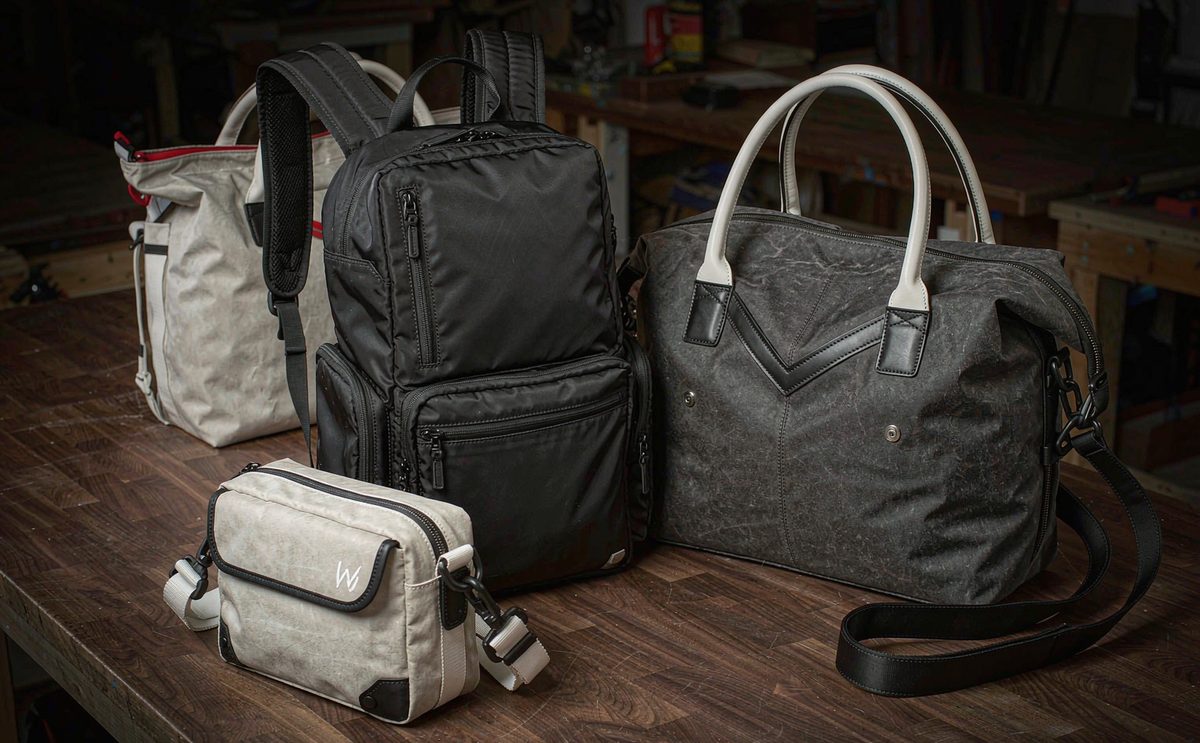
Kickstarter creators in the United States launch the largest share of bag campaigns on the platform, and face the widest spread of delivery addresses — Brooklyn walk-ups, Texas rural routes and fulfilment warehouses inside one reward list. This page sets out what a US campaign needs from a bag production programme: the calendar that fits a funding window, the landed-cost lines between Xiamen and a US address, the compliance work that clears federal and California rules, and a freight plan that lands rewards before complaint tickets start.
What a US Kickstarter bag programme actually involves
A funded US campaign rarely asks for one bag. It asks for a reward ladder — an early-bird variant at the sharpest price, a hero reward at the core tier, a bundle that pairs the bag with something else, and often a stretch-goal colourway that only exists if the campaign clears its target. Each rung is a separate specification decision, and the production plan has to hold all of them at once. The practical consequence is that the colourway count, not the unit count, is what decides whether the programme is affordable: every additional colourway restarts the 500-pcs minimum on fabric, print set-up and trim.
Key takeaways
- 500 pcs per style and colourway is the threshold that decides whether a fourth colourway is viable at all.
- CPSIA testing, fibre content labelling and country-of-origin marking are decided at artwork stage, not at the border.
- The West-coast versus East-coast choice moves both the ocean leg and the domestic leg — price them together.
- FOB and DDP are not just a price difference: they decide who is the importer of record and who carries the duty bill.
This is not a US warehouse: what serving American creators means
There is no domestic facility behind this page and no inventory sitting in an American warehouse. Cutting, sewing, printing, assembly and inspection happen at one production base — 4,950 m², SGS-verified, 137 staff across 7 lines with 149 machines and roughly 200,000 pcs of monthly capacity — and the reward bags then travel from Xiamen.
So the delivery date you publish has to include an ocean leg, a customs entry and a domestic move — three things no production schedule can compress. Campaigns that promise a month and a half usually pledged against a number they never modelled. Build the public date from the transit reality, then protect it with a buffer you do not advertise.
Ask for the quotation split in two. Unit cost, tooling and sampling belong to the production side; freight, duty, clearance and last-mile belong to the destination side. Only the second block can be reassigned to a fulfilment partner later, and only if it was never blended into a single per-unit number.
Building the production calendar backwards from the launch date
Most US campaigns fund across a 30-day window and then promise delivery three to five months out. Model it backwards. Sampling is 6-10 working days for standard builds and 12-15 for complex ones, but the physical sample still has to reach you: courier transit to most US metros is three to five days, and customs can add one or two more. production 35-50 days after deposit and an approved pre-production sample. After that come export packing, the international leg, US clearance and inland freight to the address where fulfilment happens.
| Stage | Elapsed time | Who signs off | What slips it |
|---|---|---|---|
| Specification review and quotation | 1-2 working days | Creator | Missing target price or an undefined quantity band |
| Sampling | 6-10 days, 12-15 complex | Creator | Revisions to hardware, foam density or panel count |
| Sample courier to the US | 3-5 days plus customs | Carrier | Peak-season capacity holds and customs inspection |
| Bulk production | 35-50 days | Production team | Printing passes or trims added after sample approval |
| AQL 2.5 inspection | 1-2 days | QC liaison | Marginal results that require rework and re-inspection |
| Export packing and handover | 3-5 days | Freight partner | Carton specification changes after cargo is ready |
Add the international leg and an honest sea-freight plan runs roughly 65-100 days to a US address, while air brings that to 25-35. Splitting shipment — air for early-bird tiers, sea for the balance — is common and worth modelling early; see low MOQ bag production for creators.
Landed cost: every line between the unit price and the backer's door
FOB Xiamen pricing covers the bag and the export carton, and not a single dollar after that. From there the lines are ocean or air freight, terminal handling at the discharge port, the customs entry and broker fee, duty at the commodity-code rate, and the inland move to wherever your fulfilment actually happens.
| Line | Basis | What decides the number |
|---|---|---|
| Unit cost, FOB Xiamen | Per piece | Style complexity, fabric GSM, printing passes, hardware spec |
| Tooling, screens and moulds | One-off per design | Number of print screens, custom zipper pulls, thermoformed panels |
| Freight | Per cubic metre or per kilo | Mode, season, port pair, fuel and peak-season surcharges |
| Customs duty | Percentage of declared value | HTS classification, country of origin, dominant material |
| Clearance and fees | Per shipment | Broker fees, harbour maintenance, merchandise processing |
| Inland delivery | Per pallet or carton | Distance from port to the fulfilment warehouse |
| Contingency | Percentage of landed cost | Rework, carton damage, replacement of failed units |
Split the quote in two before comparing suppliers. Unit cost, ocean or air freight and duty scale with volume; tooling, sampling, testing and the customs entry do not. A quote that blends the two looks cheaper at 500 pcs and stops being cheaper the moment a stretch goal pushes you to 1,500.
Hold 3-5% of landed cost back for rework, transit damage and units that fail inspection. The US version of the expensive case is a labelling defect found after clearance: the stock is already in the country, the label is wrong, and the fix is a rework of goods you have paid duty on.
US product compliance to clear before rewards reach backers
Soft goods are often assumed to sit outside regulation, which is how creators discover testing obligations at pledge-manager stage. Three families of rules matter: CPSIA for anything marketed to children, Proposition 65 for listed substances where backers sit in California, and country-of-origin labelling that must be permanent and legible at entry.
- CPSIA testing through a CPSC-accepted laboratory for any bag marketed to children under 12, including school-reward positioning.
- Proposition 65 warning decisions made before artwork lock rather than after cartons are printed.
- Permanent country-of-origin labelling affixed to the product and inspected on entry.
- Fibre content and care labelling consistent with anything claimed on the campaign page.
- ISPM 15 heat-treated wood for any pallet or crate used on the shipment.
Send the intended end use — everyday carry, gym, travel, school, kids — together with fabric composition and finished artwork at quotation stage and you get a written view on which tests apply before any money moves. Testing booked after tooling is testing booked twice.
Customs clearance and the choice between FOB and DDP
This single decision shapes backer experience more than any other logistics choice. Under FOB Xiamen you book the international leg, name the broker and pay duty at entry. Under a delivered duty paid arrangement freight, duty and taxes are prepaid and the goods clear without an invoice landing on anyone downstream. DDP costs more upfront and requires declaring value early; FOB looks cheaper on a quotation and moves an administrative burden onto whoever you have named as importer of record.
| Arrangement | Who pays duty | Backer experience | Best suited to |
|---|---|---|---|
| FOB Xiamen plus your broker | Creator or your 3PL | Duty invoice arrives at clearance | Established sellers with an existing customs relationship |
| DDP to a US address | Prepaid inside the freight quote | No customs charge on delivery | First-time importers and mixed backer addresses |
| Split plan: sea DDP plus an air buffer | Prepaid per leg | Consistent across both modes | Campaigns promising staggered tier delivery |
| Direct consignment to a fulfilment warehouse | Handled under their account | Depends on warehouse terms | Creators already running a 3PL relationship |
First-time US importers who choose FOB on headline price usually regret it within three weeks. The saving evaporates into broker fees, storage during an exam and the internal cost of learning customs under time pressure. DDP costs more on the quote and less on the campaign.
What the AQL 2.5 inspection must check on a US-bound lot
A US-bound lot is inspected twice: once by us against AQL 2.5 under ISO 2859-1, and once by the market, in the form of the labels a retailer, a marketplace or a backer can read. The second check is the one that gets shipments pulled, so it belongs in the inspection protocol rather than in a packing list added later.
- Tracking label (CPSIA). A permanent mark on the product and on the packaging carrying the production location, the date and a batch identifier. Missing on children’s products, it is a recall-grade defect.
- Fibre content and care (16 CFR 303 / 423). Composition by percentage and a care instruction, on a durable label, for textile bags.
- Country of origin (19 CFR 134). Legible, permanent and on the article itself, not only on the carton.
- Proposition 65 warning where a listed substance is present above the safe harbour level and no warning is on file.
Ask for the label artwork at pre-production sample stage and check it against the actual sewn label on the golden sample. A label that was approved as a drawing and produced with the wrong percentage is a labelling defect, and labelling defects do not get waived at the border.
Freight into the United States: choosing a mode you can defend
Trans-Pacific shipping offers three workable modes. Air express is five to ten days door to door and priced on chargeable weight, which suits a small high-value run and nothing else. Ocean is the default: slowest, cheapest per unit, and the only mode that makes sense at 500 pcs and above. Air-and-ocean splits the difference on cost and lands in the middle on time.
| Mode | Transit to the US | Cost basis | Use it when |
|---|---|---|---|
| Air express | 6-10 working days door to door | Chargeable weight | Samples, early-bird batches, deadline rescue |
| Sea LCL, West Coast | 18-25 days port to port | Per cubic metre plus destination charges | Under roughly 10 m³ and timing is flexible |
| Sea FCL, either coast | 18-25 days west, 30-38 east | Per container plus inland haulage | A single large tier consigned to one 3PL |
- Book three weeks ahead of cargo-ready; trans-Pacific space tightens from August and again before the December peak.
- Decide the coast before you book: Los Angeles or Long Beach shortens the ocean leg, an East-coast discharge shortens the domestic one.
- Confirm whether the quote carries terminal handling and the customs entry, or only the ocean leg.
- Ask for the commodity code your bag will be entered under and check the duty rate it carries before you commit.
Working across fifteen hours of time difference
China Standard Time runs twelve hours ahead of US Eastern and fifteen ahead of Pacific. Run deliberately, that gap becomes throughput: a specification sent from Chicago on Tuesday evening is reviewed overnight and answered before Wednesday starts there, compressing a three-day decision cycle into one calendar day.
- Send specification changes as one consolidated message; a twelve to fifteen hour gap punishes anything sent across several threads.
- Expect a written answer inside one business day, and use the overnight gap as a second working day rather than as dead time.
- Hold one fixed weekly call and keep everything else asynchronous — the gap is wide enough that an ad-hoc call culture costs a day each time.
Six mistakes that put US reward bags late
Six patterns recur on US campaigns, and each is cheaper to prevent at specification stage than to fix once cargo is moving.
- Publishing a delivery month without adding customs clearance, duty handling and inland freight to the model. Bulk production ends in Xiamen, not at a Chicago address.
- Adding a fourth stretch-goal colourway without re-checking the 500 pcs per colourway minimum. Each added colourway is a new production line item, not a tint option.
- Accepting a low headline quote that omitted tooling, then meeting the screen or mould charge after the campaign closes and the balance is committed.
- Discovering at pledge-manager stage that the product requires third-party testing whose turnaround the delivery schedule cannot absorb.
- Choosing FOB without any customs relationship, then losing two weeks to an exam while storage charges accumulate at the port.
- Treating inspection as paperwork and authorising shipment against a report nobody on your side actually read.
Routing, duty and the two decisions that shape a US launch
Two decisions dominate a US programme, and both are cheaper to make early. The first is the coast: a West-coast discharge into Los Angeles or Long Beach is the shortest ocean leg, while an East-coast or Gulf discharge adds transit but can cut the domestic leg if your backers cluster east of the Mississippi. The second is whether you clear one bulk consignment and fulfil domestically, or post individual parcels from origin — the first gives you a single customs entry and a known duty bill, the second hands each parcel to a courier with its own handling fee and its own entry threshold.
- Send the five-line specification with any reference image or existing tech pack, plus the end use so CPSIA applicability can be judged.
- Receive a quotation showing unit-cost tiers at three volumes plus every fixed charge listed separately.
- Approve the spec sheet and fund a sample — 6-10 working days, 12-15 for complex builds.
- Approve the pre-production reference, then inspect to AQL 2.5 with the US label checks inside the protocol.
- Pay the 30% deposit, run 35-50 days of bulk, release the 70% balance against the report and book the coast you chose.
Bag type, quantity per colourway, launch date, US destination and target pledge. You receive a 3-tier unit cost band, every fixed line itemised separately, and West-coast and East-coast routing with duty and clearance costs for each.
Frequently Asked Questions
What is the minimum order for a US Kickstarter bag campaign?
The minimum is 500 pcs per style and per colourway. A campaign promising four colourways of one backpack needs 2,000 pieces across the run, so colourway count is a volume decision as much as a design one. smaller test runs of one colourway are possible at 500 pcs.
How long does sampling take when the sample has to reach the United States?
Build time is 6-10 working days for standard styles and 12-15 for complex ones. Courier transit adds three to five days to most US metros, plus one or two days for customs. Plan three calendar weeks from funding the sample to holding it, rather than ten working days.
Should a first-time US importer choose FOB Xiamen or DDP delivery?
Most first-time importers should take DDP. Freight, duty and taxes are prepaid, so no customs invoice reaches a backer or your fulfilment warehouse. FOB looks cheaper but needs a broker relationship, and one exam can add 2 weeks of port storage charges.
Does CPSIA apply to my bag if it is not marketed to children?
Usually not, but the test is positioning rather than intent. If any campaign copy, image or reward tier describes school use or an age band under 12, expect children's-product obligations: lead and phthalate limits, tracking labels and third-party testing at a CPSC-accepted lab.
What inspection standard applies to my US-bound bulk order?
Bulk is inspected to AQL 2.5 under ISO 2859-1, with the sampling plan sized to the lot and defects classified as critical, major or minor. The report is issued before freight is booked, so a marginal result can still be reworked rather than discovered by backers.
How do I budget duty for a bag entering the United States?
Duty is a percentage of declared value set by the HTS line, which depends on construction and dominant material. Two plausible bag classifications can sit 10 or more points apart, so have a broker confirm the line rather than apply a figure found online.
Can you ship part of my order by air and the rest by sea?
Yes, and it is common. Early-bird or VIP tiers can go by air at 6-10 working days door to door while the balance sails. The cost premium is significant on bulky items, so it is usually reserved for tiers where the promised date justifies the air leg.
What payment terms apply to a US campaign order?
Standard terms are T/T with a 30% deposit to start materials and bulk, and a 70% balance released after the inspection report and packing record are delivered. Bank transfer fees sit with each side, and the deposit is what books your slot in production.
Do you hold inventory in a US warehouse for backer replacements?
No. There is no domestic warehouse or inventory pool behind this service. Replacement units for damaged or defective rewards ship from the same production origin, which is why the contingency row of 3-5% of landed cost matters before the campaign closes.
How quickly will I get a reply from a China-based team on US time?
Written answers arrive within one business day, and anything needing a physical check the day after. Because China Standard Time runs 12-15 hours ahead of US zones, a specification sent in the evening is typically answered before your next working morning.
What should a complete quote request include for a US shipment?
5 essentials: bag type, quantity per colourway, campaign launch date, the US destination address, and the pledge price the unit economics must hold. Anything beyond those can be proposed. They produce a 3-tier unit cost band plus itemised fixed charges.
How long is bulk production, and what adds time to it?
production 35-50 days after deposit and an approved pre-production sample. What adds time is change: printing passes, hardware swaps or trims introduced after approval restart material lead times. Locking the spec before the deposit is the single biggest schedule lever available.
People Also Ask
How much does it cost to make 500 custom bags for a Kickstarter campaign?
Unit cost depends on style complexity, fabric weight, printing passes and hardware, with tooling and screen charges added as one-off lines and freight and duty added on the destination side. Base any published reward price on a three-volume quotation rather than a single unit figure.
Why is the MOQ 500 pieces per colourway rather than per order?
Each colourway requires its own fabric dye lot, its own printing set-up and its own minimum run through the line. Treating the minimum per order rather than per colourway would leave partial dye lots and idle machine time, which is why it is set where it is.
What happens if my inspection fails at AQL 2.5?
A failed lot goes to rework and reinspection if the defects are correctable, or to a remake if they are structural. Nothing ships on a failed report. This is why inspection is booked at lot completion and before freight, when there is still room to fix it.
Do US backers have to pay customs duty on crowdfunding rewards?
They do if the shipment clears under your own broker arrangement and duty has not been prepaid. Choosing DDP moves duty and taxes into the freight quote so no customs invoice reaches the backer, which removes one of the most common complaint sources in crowdfunding fulfilment.
How early should US creators start sampling before launching?
Start far enough ahead that the physical sample is in your hands and photographed before the campaign goes live. That means three weeks for build and courier, plus revision rounds at one business day each — three to four rounds fit inside three weeks if decisions do not stall.