2026 Bag Trend Forecast: What Crowdfunding Backers Fund Next
For 2026, the bag trends most likely to fund are three clear capacity bands, recycled material with real documentation, modular interiors, repairable branded hardware and dimensions designed for the parcel. Public campaign data suggests reward pricing consolidates between USD 79 and 139 with shipping charged separately, and in our observation two colourways per style remains the practical maximum at a 500 pcs per style and colourway minimum. This forecast rates each trend for confidence, states what it costs to build and shows how to convert it into a brief.
- How this 2026 forecast was built: sources and confidence
- Trend 1: capacity consolidates into three defensible bands
- Trend 2: recycled and traceable fabric moves from claim to paperwork
- Trend 3: modular interiors and packing systems
- Trend 4: repairable hardware and serviceable construction
- Trend 5: colourway discipline, two is the working maximum
- Trend 6: freight-aware design, dimensions beat weight
- Trend 7: price bands and reward architecture for 2026
- Trend 8: destination mix and regional expectations
- What our team would not fund in 2026
- Turning the forecast into a 2026 brief and production calendar
- 2026 confidence table and the three decisions that matter
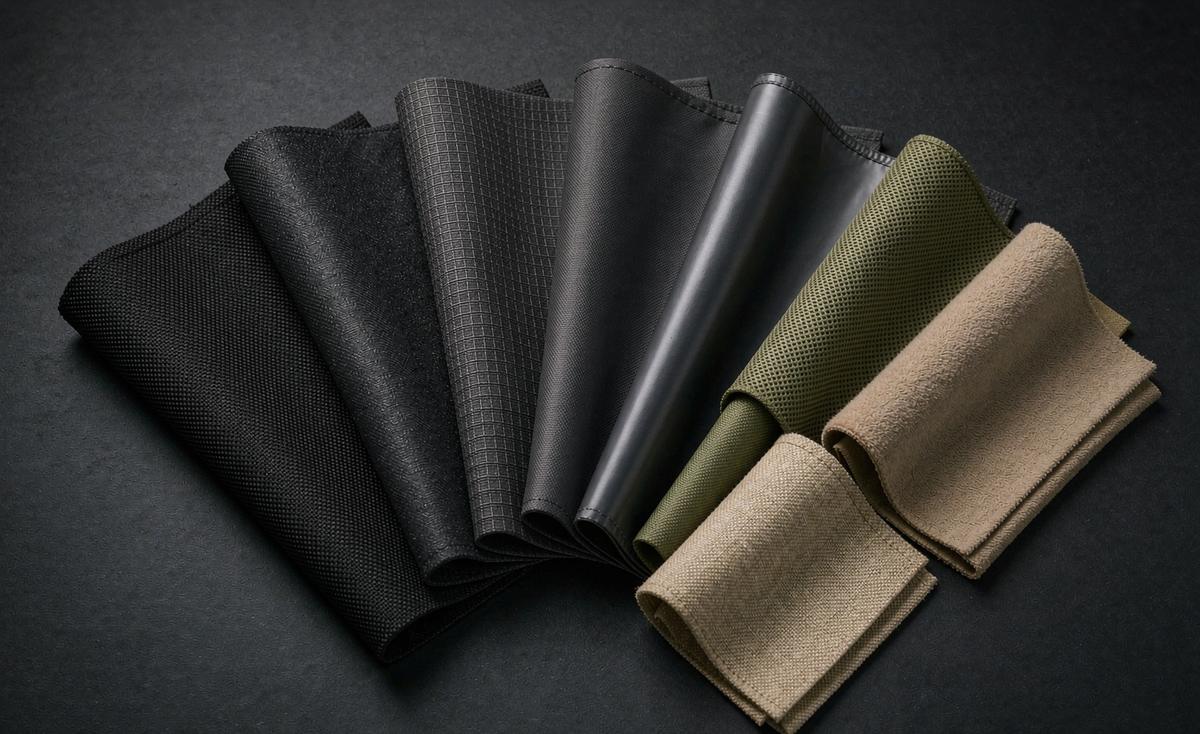
Every January the same question arrives in our inbox in a slightly different form: what should I build this year? The honest answer is that no one can tell a creator what will fund, because funding is decided by the audience a creator brings and by the page they write, and both sit outside the product. What can be forecast with some reliability is the direction of the specification: which capacity bands the market recognises, which material claims now require paperwork, which hardware choices support a higher price, and which design decisions quietly add cost to every parcel. This article forecasts those, and it states how confident we are in each one.
The forecast is written for creators planning a 2026 launch who need to freeze a specification before they take a quotation. It is deliberately numerical, because numbers are what a production partner needs and what a backer evaluates. Where a figure below appears as a range, treat the range as the honest answer and the midpoint as a planning default rather than an expectation. Every percentage in this article describes an observed range within a limited sample, not a published statistic, and the section that follows explains exactly where the sample comes from.
No figure here is a platform statistic. All of them are planning ranges drawn from programmes we supported, briefs we quoted and publicly visible campaign pages, and they are only useful for comparing directions against each other.
How this 2026 forecast was built: sources and confidence
A forecast is only as useful as its stated uncertainty, so before any trend claim this article sets out where the numbers come from and how much weight each carries. Three sources feed it. The first is the campaign programmes our team has supported directly, where we hold the specification, the sampling record, the production schedule and in many cases the outcome; that sample is small but detailed. The second is the briefs we quoted and did not win, which are informative because they show what creators are attempting twelve to eighteen months before it appears on a campaign page. The third is publicly visible campaign pages in the bag and carry categories, which is large but shallow: you can see the price, the tier structure and the backer count, but not the landed cost or the delay.
Each trend carries a confidence rating on a four-step scale, and the scale means something specific. High means our team has seen the pattern repeatedly across supported programmes and quoted briefs, and we would build a specification around it without further evidence. Medium means the direction is clear but the magnitude is uncertain, so the specification should accommodate the trend without committing fully to it. Low means the signal comes mainly from public pages or from a small number of observations, and it should be tested on a pre-launch list before it is funded. Speculative means we are extrapolating from an adjacent category, and it belongs in a stretch goal rather than in a core reward.
Two further caveats determine how the numbers should be read. All currency figures are reward prices in USD with shipping typically charged separately, because that is how most bag campaigns in this category are structured, and a reward price is not the same as the sum a backer ultimately pays once shipping and add-ons are included. All percentage figures describe ranges observed within a limited sample rather than published statistics. The crowdfunding bag guide uses the same conventions, and the category-level evidence behind several of the trends below is set out in Bag Crowdfunding Data: Which Categories Fund Fastest.
Trend 1: capacity consolidates into three defensible bands
The clearest structural change heading into 2026 is that capacity is consolidating. In our observation, campaigns that present a capacity the audience can immediately place into a known use case convert better than campaigns that present an in-between number. Three bands now carry most of the category: 20 to 28 litres for everyday carry and commuter bags with a laptop compartment, 35 to 45 litres for one-bag travel and carry-on, and under 8 litres for pouches, organisers and dopp kits. The middle ground, roughly 29 to 34 litres, tends to read as a compromise: too large for a daily commute and too small for a trip, which makes the copy harder to write and the audience harder to identify.
The mechanism behind this is that capacity is the first number a bag buyer looks for, and it does the work of a category label. A backer who sees 40 litre carry-on knows immediately whether the product is for them and can compare it against what they already own, while a backer who sees 32 litre adventure bag has to do work to place it. Public campaign data suggests that capacity stated in litres, alongside external dimensions in centimetres, appears on a growing share of funded bag pages, and pages that publish both typically attract fewer specification questions in the comments, which is a reasonable proxy for how much doubt the page left in the reader's mind.
| Capacity band | Typical use case | Reward band observed | Specification risk | Confidence |
|---|---|---|---|---|
| 20 to 28 litres | Commuter and everyday carry | USD 79 to 139 | Medium: laptop panel sizing, harness comfort | High |
| 35 to 45 litres | One-bag travel and carry-on | USD 119 to 199 | High: airline compliance, frame, true weight | High |
| Under 8 litres | Pouches, organisers, dopp kits | USD 29 to 69 | Low: flat construction, simple packing | High |
| 29 to 34 litres | In-between, no clear use case | USD 79 to 129 | High: messaging and differentiation | Low that it is worth funding |
| 45 litres and above | Expedition and multi-day | USD 149 to 249 | High: weight, unit cost, parcel size | Low |
Read the confidence column before the reward band. A 35 to 45 litre travel bag carries the highest reward band and the highest specification risk, because airline compliance is a hard constraint: a bag that measures a few centimetres over a sizer fails on the promise regardless of how well it is made. That risk is manageable, but it has to be managed in sampling, where the external dimensions are measured on a physical unit rather than on a pattern, and where a correction costs a further 6 to 10 working days. For a first campaign the 20 to 28 litre band is the more forgiving choice, and the under 8 litre band is the cheapest place to test whether an audience exists at all.
Trend 2: recycled and traceable fabric moves from claim to paperwork
Recycled content has moved from a marketing line to a documentation requirement. Two years ago a page could say recycled and be believed; in 2026, in our observation, the backers who care ask which scheme certified it and whether the certificate covers the finished bag, and a campaign that cannot answer loses credibility with exactly the segment most likely to back a sustainable product. In specification terms this means naming the recycled fabric by denier, weave and coating, stating the recycled content percentage, identifying the certification scheme, and holding the transaction certificate before the campaign closes rather than after it funds.
The cost is modest and the lead time is the real constraint. A move from a generic polyester to a recycled equivalent with documentation typically adds USD 0.60 to 2.00 per unit at 500 pcs, and in our observation it supports a reward price increase of roughly USD 10 to 25, which makes it one of the better returns available in the specification. The lead time is the harder part: certified recycled fabric is usually a booked material rather than a stock item, and our production team typically plans 2 to 4 weeks for fabric reservation before cutting. That reservation has to sit inside the pre-launch window, which means the fabric decision has to be made before the sample, not after the campaign funds.
Two failure modes recur and both are avoidable. The first is certificate scope: a document that covers the fabric but not the finished bag, or that expired before the run, will not survive a backer who checks it, and the checking rate is higher in this segment than anywhere else in the category. The second is shade consistency, because recycled yarn can vary slightly between lots, and in a category where the proposition is partly aesthetic a visible shade shift between the approved sample and the bulk is a substantive complaint rather than a tolerance issue. Both are handled the same way: request the document set with the fabric booking, and approve a bulk shade reference within the same AQL 2.5 to ISO 2859-1 inspection that covers the rest of the run.
Trend 3: modular interiors and packing systems
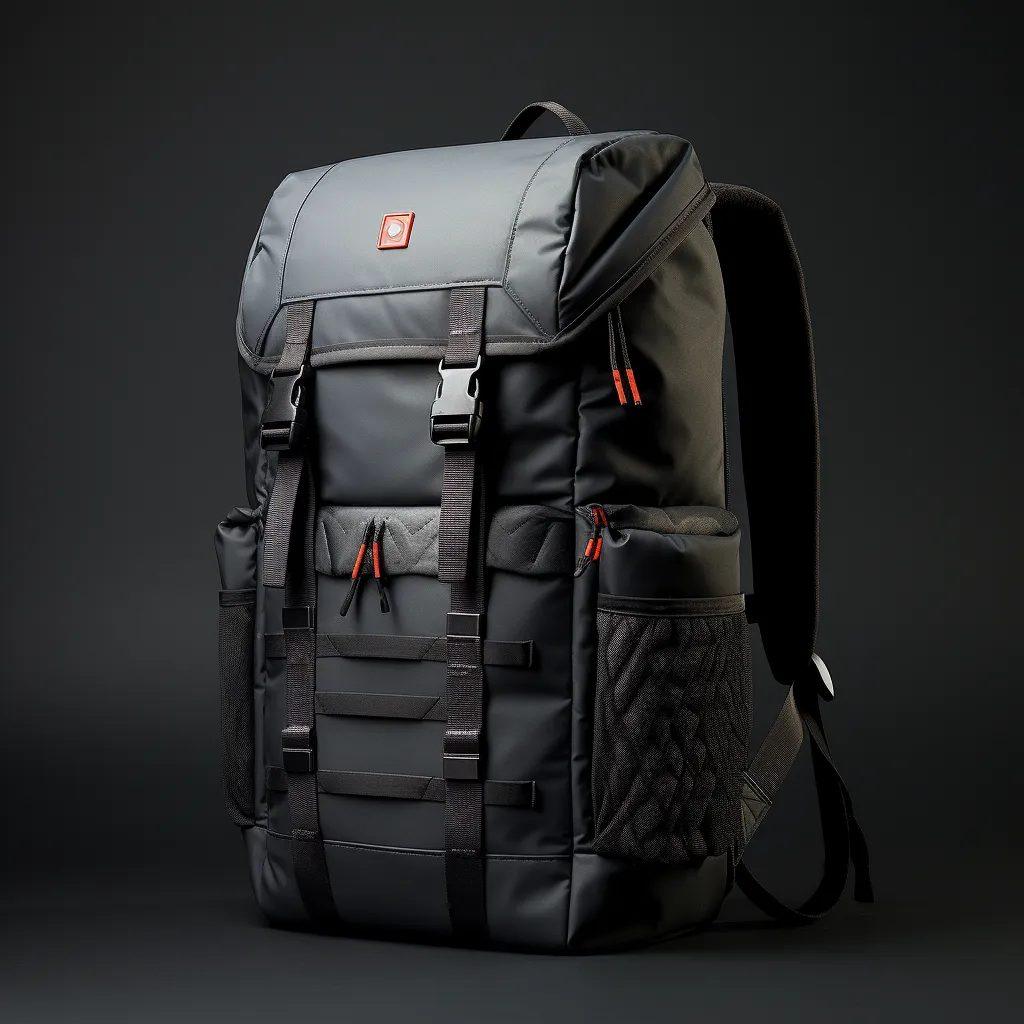
The second structural trend is modularity: interiors built from removable parts rather than fixed pockets. Across the briefs we have quoted, the share specifying a removable organiser, a divider system or a packing cube set has risen steadily, and the reason is commercial as much as functional. A modular product supports add-on revenue without a second production run, because the add-on is the same component in a different quantity, and it gives the campaign page a second purchase decision after the pledge is made, which is worth more than a larger tier menu.
The commercial effect is worth sizing before a creator commits to it. Add-ons typically lift the average pledge by 8 to 22 percent in the campaigns we have observed, at a marginal production cost that sits below the add-on price because the component is already tooled and already in the cutting marker. A packing cube set priced at USD 19 to 29 as an add-on typically costs USD 4 to 9 to produce at 500 pcs, which in our observation makes it the highest-contribution item on most tier menus. The constraint is the booking unit: 500 pcs per style and colourway applies to the cube as a distinct item, so an add-on has to be forecast rather than treated as an afterthought.
The production cost of modularity is real, and it lands in sampling time rather than in unit cost. A bag with a removable organiser, a divider panel and a structured base is a complex construction: more panels, more operations and more opportunities for a tolerance to stack across them. Sampling for that construction typically takes 12 to 15 working days rather than the 6 to 10 working days of a standard build, and it usually needs two rounds before the specification is frozen. The practical advice is to design the modularity around a single attachment interface used by every component, because each additional interface is another place where the first sample will not match the intent.
Trend 4: repairable hardware and serviceable construction
Repairability is emerging as a credible differentiator because it answers the actual objection in this category. The question a repeat backer asks is not whether the bag looks good but whether it survives two years of daily use, and a construction that can be serviced answers that more cheaply than a thicker fabric would. In specification terms this means zips named by brand and gauge, buckles and adjusters that can be replaced without unpicking the panel they sit in, bar tacked stress points rather than single-pass stitching, and a stitch density stated in stitches per inch on every load-bearing seam.
The cost is well understood and small relative to the effect. Branded hardware typically adds USD 1.20 to 4.50 per unit at 500 pcs and in our observation supports a reward price increase of USD 8 to 15, which makes it among the highest-return changes available to a creator working to a budget. It works because hardware is the most-touched part of a bag and the most likely to fail, so it is also the most noticed. Conversely, unbranded hardware on a bag priced above USD 129 is, in our observation, the single most common objection raised in the comments of a campaign page, and it is raised by the backers who were closest to pledging.
Where a creator wants to publish a repair or warranty commitment, three things have to be true first, or the commitment becomes a liability rather than an asset.
- A serviceable construction: the zip must be replaceable by a general repair shop without destroying the panel it sits in, which rules out fully bound and fully taped seams at the zip line.
- A spare parts plan: sliders, buckles and adjusters held back from the run, typically 0.5 to 1 percent of unit quantity, so a claim can be settled from stock rather than from a new production order.
- A stated claim window and process: who pays the return shipping, what counts as a defect rather than wear, and what the turnaround is.
Early-life defect claims in this category typically run at 1 to 3 percent of units in our observation, and the difference between a well-run and a badly-run campaign is not the rate but the response. A programme that can ship a replacement part from stock converts a complaint into a review; one that cannot turns the same complaint into a comment on the campaign page, where it is read by every visitor who is still deciding. Our team holds a spare-parts allowance as a standard line on the quotation for exactly this reason, and it is a small cost against a large reputational exposure.
Trend 5: colourway discipline, two is the working maximum
If there is one trend that is already settled rather than emerging, it is colourway discipline, and the economics follow directly from the booking unit. The minimum applies at 500 pcs per style and colourway, so two colourways is a 1,000 pcs commitment and three is 1,500 pcs. For a first campaign the working maximum is two, and in our observation the campaigns that offer three or more rarely sell the third in sufficient volume to justify the additional booking, the additional inventory risk and the additional chance of a split error at packing.
Public campaign data suggests the distribution of backer choice is reliably uneven. Where a choice is offered, the first colourway typically takes 55 to 70 percent of selections, the second 25 to 40 percent, and a third colourway typically under 10 percent. A third colourway is therefore not a third of the revenue; it is a small share of the revenue and a full share of the commitment. Creators often add it because three colours photograph well on the campaign page, which is a real marketing benefit and an expensive way to buy it, since the alternative is a photograph of the same bag in a second light.
Two operational details follow from the same structure. The first is when the decision is made: the colourway split has to be confirmed before the run is booked, because fabric is ordered against it and trims are matched to it, and changing it after booking is either impossible or expensive. The second is shade assessment, which should be written into the inspection rather than left to judgement on the day: a bulk shade compared against the approved reference under a stated light source, assessed within the same AQL 2.5 to ISO 2859-1 sample that covers workmanship defects. Our programme coordinator asks for the split in writing at order confirmation, because a verbal split is the most common source of a mis-packed colourway.
Trend 6: freight-aware design, dimensions beat weight
The least discussed and most reliably costly trend is freight. Bags are bulky relative to their weight, and carriers price on volumetric weight, which is computed from the carton dimensions rather than from the scale, using a divisor that typically sits between 4000 and 6000 depending on the carrier and the lane. A bag that packs to 48 x 38 x 18 cm and a bag that packs flat to 48 x 38 x 6 cm can differ by a factor of roughly three in billable weight for the same product, and that difference is paid on every single unit the campaign ships.
In our observation, freight and duties typically account for 15 to 30 percent of landed cost for a bag campaign shipped by sea, and materially more when a campaign is forced onto air freight by a slipped schedule. That share is large enough that it should influence design rather than only logistics. The design rules that follow are straightforward: prefer a construction that packs flat or nests, keep the packed carton inside a stated dimensional target, avoid a rigid frame where a semi-structured alternative performs, and size the carton to the product rather than to a convenient unit count.
The second lever is mode discipline. Sea freight for a bag run typically takes 25 to 40 days door to port depending on the lane, and air typically takes 5 to 10 days at a multiple of the cost. The campaigns that end up paying for air freight are, in our observation and almost without exception, the campaigns whose production schedule slipped and whose published delivery promise did not. That makes freight mode a scheduling decision taken months earlier, which is why the production calendar matters more than the logistics quotation. Our team quotes against FOB Xiamen and the destination mix together, because the two cannot be separated without giving a misleading number.
Trend 7: price bands and reward architecture for 2026
Reward pricing in this category has been converging for two years and 2026 is likely to continue that. The band that converts most reliably for a bag reward sits between USD 79 and USD 139 with shipping charged separately, and the strongest cluster in our observation sits around USD 89 to USD 119. Below USD 79 the economics become fragile: platform and payment fees typically take 8 to 12 percent combined, the parcel typically takes another USD 14 to 34, and whatever remains has to cover the product and the packaging. Above USD 139 the credibility requirement rises steeply and the page has to publish a full specification to survive it.
The architecture that works alongside that band has also settled. Three physical tiers with a clear progression, one early-bird tier limited to roughly 10 to 20 percent of the realistic backer count and priced 20 to 28 percent below the standard tier, and a bundle tier discounted 15 to 25 percent, which is usually the highest-contribution element because the second and third units travel in the same parcel. Add-ons then sit on top of the structure. Public campaign data suggests bundles typically lift the average pledge by 12 to 30 percent, and in our observation the add-on layer typically adds a further 8 to 22 percent.
Two cautions apply. The first is that a higher price is permitted by a better specification but not guaranteed by it: a creator who adds USD 9 of material and hardware cost and raises the reward by USD 30 will typically convert worse rather than better, unless the improvement is visible in the photography and legible in the copy. The second is that the reward price is not the whole price, and a campaign that bundles shipping into the reward has to absorb the variance across every destination in the mix, which is why most campaigns in this category charge it separately. The category-level evidence behind these bands is set out in Bag Crowdfunding Data: Which Categories Fund Fastest, and the platform comparison is in Multi-Platform Bag Campaign Conversion Benchmarks.
Trend 8: destination mix and regional expectations
For an English-language bag campaign the destination mix is remarkably stable, and it should shape both the compliance work and the fulfilment plan. In our observation, 60 to 75 percent of backers typically sit in the United States, Canada, the United Kingdom, the European Union and Australia, with the United States alone frequently 35 to 50 percent. Japan, Singapore, South Korea and Taiwan usually contribute a further 5 to 12 percent, and the remainder is dispersed across a long tail of markets that cost more to serve per parcel than they return.
That mix has three consequences. Compliance is the first: fibre content labelling, care labelling and substance restrictions differ by market, and a bag shipped into the EU and a bag shipped into the US do not carry identical obligations. Planning the label set for the top five destinations typically covers 85 to 92 percent of backers in our observation, which is a better use of a limited budget than chasing the tail. Fulfilment is the second: consolidating into one or two regional hubs usually beats shipping every parcel internationally from a single point, because the domestic leg is cheaper than the international leg on the same parcel.
Currency, duty and tax are the third consequence, and they differ enough by market to change the reward price.
- United States: duty treatment varies by material and construction, so a polyester backpack and a leather-trimmed tote are not in the same band.
- European Union and United Kingdom: import VAT applies at the destination, and a campaign that promises a delivered price has to account for it rather than absorb it later.
- Australia and Japan: low value thresholds and consumption tax treatment differ, and both should be checked before the reward price is fixed rather than after backers have pledged.
Our team quotes on FOB Xiamen with T/T 30/70, and we ask for the destination mix at quotation stage because it changes both the packing specification and the freight plan. The labelling and documentation set is worth reading alongside the custom bags for Kickstarter overview, which covers it in more depth than a forecast can.
What our team would not fund in 2026
A forecast is more useful for what it rules out than for what it predicts, and four patterns are fading in our observation, each for a structural reason rather than a temporary one. The high feature count is the first: a bag with fourteen pockets, six straps and a hidden compartment is harder to describe, harder to photograph legibly and harder to believe, and campaigns built on feature volume have been underperforming campaigns built on one clear feature executed well.
Aesthetic novelty without function is the second, with one exception: within the fashion and tote group the aesthetic is the proposition and the logic is inverted. In the technical and travel groups a distinctive shape with no functional justification tends to underperform, because the audience there evaluates capacity, weight, materials and hardware, and a shape that costs capacity to achieve is a net negative. Electronics integration is the third. A power bank, a light or a tracker turns a bag into a regulated product with battery shipping restrictions, certification obligations and a much larger failure surface, and it typically adds USD 6 to 18 per unit for a feature that few backers list as their reason to pledge.
Unbranded hardware at a premium price is the fourth, and it is the most common mistake our campaign bag specialist sees in incoming briefs. A bag priced at USD 139 with an unbranded zip invites the obvious question, and no amount of copy answers it well. The related mistake is the claim without a method: a waterproof claim with no stated coating or test method, or a recycled claim with no certificate behind it, both fail on contact with a knowledgeable backer. The general principle for 2026 is that a bag campaign is judged on whether its claims are checkable, and checkable claims cost almost nothing to add at specification stage.
Send your 2026 category, target capacity and destination mix to service@junyuanbags.com and we will tell you what the specification needs and what it costs at 500 pcs.
Turning the forecast into a 2026 brief and production calendar
The forecast is only useful if it reaches the specification in a form that can be quoted. A brief that can be quoted accurately has seven elements: the use case in one sentence, capacity in litres with external dimensions in centimetres, fabric by denier, weave and coating plus any certification requirement, hardware named by brand and gauge, the branding method and placement with a drawing, the quantity and colourway split at 500 pcs per style and colourway, and the delivery window with the destination mix. A brief carrying all seven can typically be quoted in 2 to 4 working days, and the quotation will be comparable between partners because the specification behind it is identical.
The calendar behind that brief runs in six stages, and the total is what a creator should plan the launch date around.
- Fabric and hardware reservation: 2 to 4 weeks before cutting, and longer for certified recycled material or a non-stock colour.
- Sampling: 6 to 10 working days for a standard construction and 12 to 15 working days for a complex one, typically across two rounds.
- Bulk production: 35 to 50 days from a confirmed sample, reserved fabric and deposit.
- Inspection: AQL 2.5 to ISO 2859-1, booked before the run completes rather than arranged after it.
- Freight: 25 to 40 days by sea or 5 to 10 days by air, plus destination handling and any regional hub transfer.
- Total: typically 120 to 160 days from a confirmed sample to a delivered reward, before any schedule compression from a holiday shutdown.
For 2026 specifically, one calendar item dominates everything else: the lunar new year shutdown, which falls in February 2026 and typically stops production for 1 to 3 weeks while compressing schedules for 4 to 6 weeks on either side of it. A campaign whose bulk window lands across that period will slip, because a 35 to 50 day run cannot be fitted into the days that remain. Working backwards from the intended delivery month is the only reliable way to avoid it, and our programme coordinator flags it on every quotation issued between autumn and the new year. The full sequence is set out in the Kickstarter bag project timeline.
2026 confidence table and the three decisions that matter
| Trend | What changes in the specification | Unit cost impact at 500 pcs | Confidence | Evidence base |
|---|---|---|---|---|
| Capacity consolidation | State litres, dimensions and use case | USD 0, specification only | High | Supported programmes and quoted briefs |
| Documented recycled material | Named denier, recycled percentage, certificate | +USD 0.60 to 2.00 | High | Fabric bookings and backer questions |
| Modular interiors | Removable organiser, single attachment interface | +USD 3 to 9, sampling +6 days | Medium to high | Quoted briefs and add-on performance |
| Repairable hardware | Branded zips, replaceable buckles, bar tacks | +USD 1.20 to 4.50 | High | Supported programmes and claim rates |
| Two colourway maximum | Split confirmed in writing before booking | Inventory risk rather than unit cost | High | Booking structure and observed splits |
| Freight-aware dimensions | Flat pack, carton dimensional target | Typically saves USD 3 to 12 per parcel | Medium | Freight quotations and carton data |
If a creator acts on only three things from this forecast, they should be these. Publish checkable numbers: litres, grams, denier, hardware brand and the inspection standard, because the 2026 audience evaluates on those figures and a page that supplies them is easier to buy from. Design for the parcel, because freight typically accounts for 15 to 30 percent of landed cost and it is decided by the pattern rather than by the forwarder. Freeze the specification before the quotation, because every slipped schedule our team has investigated traced back to a pre-launch decision rather than to an event on the production line.
For the trends rated medium or low, the correct response is not to adopt them or to ignore them but to test them cheaply before they reach a specification. Three tests work. Ask the pre-launch list directly, with a two-option poll on the specific attribute rather than on the whole product, because a list of 800 to 2,000 engaged subscribers typically returns enough responses to separate a real preference from noise. Build the attribute into the landing page and measure sign-ups rather than opinions, since a stated preference and a click are different things. Request the change on the sample and look at it, which at 6 to 10 working days is the cheapest evidence available and the only one that shows what the change actually does to the object. A trend that survives all three is worth writing into the brief; one that survives none of them belongs in a stretch goal, where a wrong guess costs a delay rather than the campaign.
Key takeaways
- 2
- 0
- 2
- 6
- r
- e
- w
- a
- r
- d
- s
- c
- h
- e
- c
- k
- a
- b
- l
- e
- s
- p
- e
- c
- i
- f
- i
- c
- a
- t
- i
- o
- n
- s
- :
- t
- h
- r
- e
- e
- c
- a
- p
- a
- c
- i
- t
- y
- b
- a
- n
- d
- s
- ,
- d
- o
- c
- u
- m
- e
- n
- t
- e
- d
- r
- e
- c
- y
- c
- l
- e
- d
- m
- a
- t
- e
- r
- i
- a
- l
- ,
- r
- e
- p
- a
- i
- r
- a
- b
- l
- e
- b
- r
- a
- n
- d
- e
- d
- h
- a
- r
- d
- w
- a
- r
- e
- ,
- t
- w
- o
- c
- o
- l
- o
- u
- r
- w
- a
- y
- s
- ,
- a
- n
- d
- d
- i
- m
- e
- n
- s
- i
- o
- n
- s
- c
- h
- o
- s
- e
- n
- f
- o
- r
- t
- h
- e
- p
- a
- r
- c
- e
- l
- a
- s
- m
- u
- c
- h
- a
- s
- f
- o
- r
- t
- h
- e
- b
- a
- c
- k
- e
- r
- .
Frequently Asked Questions
What bag trends are most likely to fund on Kickstarter in 2026?
In our observation the five strongest are capacity stated in one of three recognised bands, recycled fabric supported by a certificate rather than a claim, modular interiors that enable add-ons, repairable branded hardware, and dimensions designed for the parcel. Public campaign data suggests reward pricing is consolidating between USD 79 and 139 with shipping charged separately. These are planning ranges from a limited sample, not platform statistics.
What capacity should a 2026 bag campaign target?
Pick one of three recognised bands: 20 to 28 litres for commuter and everyday carry, 35 to 45 litres for one-bag travel, or under 8 litres for pouches and organisers. In our observation the 29 to 34 litre middle ground reads as a compromise and is harder to position. Publish litres together with external dimensions in centimetres, because those are the two figures backers compare.
Does recycled fabric actually help a campaign convert?
In our observation it helps when the claim is documented and hurts when it is not. A recycled fabric with a named denier, a stated recycled percentage and a valid certificate typically supports a reward price increase of USD 10 to 25 at a unit cost of USD 0.60 to 2.00. A claim with no document behind it invites the question and loses the segment most likely to back it.
How much does branded hardware add to the unit cost?
Typically USD 1.20 to 4.50 per unit at 500 pcs, and in our observation it supports a reward price increase of USD 8 to 15, which makes it one of the highest-return specification changes available. Hardware is the most-touched and most-likely-to-fail part of a bag, so backers notice it. Unbranded hardware above USD 129 is the most common objection we see raised on campaign pages.
Are modular interiors and packing cubes worth the added complexity?
Usually yes, on commercial grounds. Add-ons typically lift the average pledge by 8 to 22 percent in the campaigns we have observed, and a packing cube set priced at USD 19 to 29 typically costs USD 4 to 9 to produce at 500 pcs. The cost lands in sampling time: a complex modular build typically takes 12 to 15 working days rather than 6 to 10, and usually needs two rounds.
How many colourways should a 2026 campaign offer?
Two is the working maximum. The minimum applies at 500 pcs per style and colourway, so three colourways is a 1,500 pcs commitment rather than 500. Public campaign data suggests the first colourway typically takes 55 to 70 percent of selections, the second 25 to 40 percent and a third under 10 percent, which rarely justifies the extra booking.
Why does parcel size matter so much for a bag campaign?
Because carriers bill on volumetric weight, computed from carton dimensions with a divisor typically between 4000 and 6000, not on scale weight. In our observation freight and duties typically account for 15 to 30 percent of landed cost by sea. A construction that packs flat or nests can cut billable weight substantially on every unit, which is worth more than a small saving on fabric.
What reward price band should a 2026 bag campaign use?
Between USD 79 and 139 with shipping charged separately, clustering around USD 89 to 119 in our observation. Below USD 79 the fee layer of roughly 8 to 12 percent and a parcel cost of USD 14 to 34 leave very little contribution. Above USD 139 the credibility requirement rises sharply and the page has to publish a complete specification to survive scrutiny.
Which destinations should a bag campaign plan for?
In our observation 60 to 75 percent of backers typically sit in the United States, Canada, the United Kingdom, the European Union and Australia, with the United States alone frequently 35 to 50 percent. Planning the label and documentation set for the top five destinations typically covers 85 to 92 percent of backers, which is a better use of budget than chasing the long tail.
What bag trends should creators avoid funding in 2026?
Four, in our observation. A very high feature count that is hard to describe or believe; aesthetic novelty with no functional justification, except within the fashion and tote group; integrated electronics, which typically add USD 6 to 18 per unit plus battery shipping restrictions and certification obligations; and unbranded hardware on a bag priced above USD 129, which invites an objection the copy cannot answer.
How long does a 2026 bag production schedule take end to end?
Typically 120 to 160 days from a confirmed sample to a delivered reward. Fabric reservation takes 2 to 4 weeks, sampling takes 6 to 10 working days for a standard construction and 12 to 15 for a complex one, bulk production takes 35 to 50 days, inspection runs to AQL 2.5 to ISO 2859-1, and sea freight takes 25 to 40 days against 5 to 10 by air.
How should I use this forecast if the numbers are only observations?
Use the direction and the relative ranking, not any single figure. Every percentage here is a range observed across programmes we supported, briefs we quoted and publicly visible campaign pages, which is a limited and biased sample. The reliable outputs are the specification decisions: publish checkable numbers, design for the parcel, limit colourways to two and freeze the specification before you ask for a quotation.
People Also Ask
What bags will backers fund in 2026?
Bags with a checkable specification: a recognised capacity band, documented recycled fabric, branded repairable hardware and dimensions designed for the parcel. Aesthetic novelty alone is fading outside the fashion and tote group.
What is the best bag capacity for a campaign?
Choose 20 to 28 litres for commuting, 35 to 45 litres for one-bag travel, or under 8 litres for organisers. The 29 to 34 litre middle ground is harder to position and, in our observation, converts worse.
Is recycled fabric worth the extra cost?
Yes when documented. It typically adds USD 0.60 to 2.00 per unit and supports a price increase of USD 10 to 25. Without a certificate it invites the question that loses the sustainability-minded segment.
How many colourways should I offer?
Two. The 500 pcs minimum applies per style and per colourway, so three colourways is a 1,500 pcs commitment, and a third colourway typically takes under 10 percent of selections.
What reward price works for a bag in 2026?
USD 79 to 139 with shipping charged separately, clustering around USD 89 to 119. Fees take roughly 8 to 12 percent and the parcel costs USD 14 to 34, so below USD 79 very little contribution remains.
Why is parcel size part of the design?
Carriers bill on volumetric weight from carton dimensions, not scale weight. Freight and duties typically take 15 to 30 percent of landed cost by sea, so a flat-packing construction saves money on every unit.
What should I avoid launching in 2026?
Fourteen-pocket feature lists, electronics integration, aesthetic shapes with no function outside the fashion group, and unbranded hardware on a bag priced above USD 129.