Best Bags to Crowdfund in 2026: 8 Categories With Demand
Eight bag categories carry repeatable backer demand into 2026: everyday carry backpacks, tech and laptop carry, travel packing systems, camera and drone carry, gym duffels with shoe compartments, print-led totes, kids and school bags, and special-interest hobby carry. They differ on three axes that decide your campaign: unit cost at a 500 pcs minimum, delivery risk, and how strongly the buyer identity drives the pledge. This article ranks each category on those axes, gives the spec features backers actually ask about, and shows which ones suit a first-time creator.
- How we ranked the eight categories
- 1. Everyday carry backpacks, 18 to 26 litres
- 2. Tech and laptop bags with cable management
- 3. Travel packing systems and cube sets
- 4. Camera and drone carry
- 5. Gym duffels with shoe compartments
- 6. Print-led totes and market bags
- 7. Kids and school bags
- 8. Special-interest and hobby carry
- When each category launches best in the calendar
- Matching category to MOQ, budget and delivery risk
- What to avoid in 2026
Choosing what to crowdfund is a sourcing decision before it is a marketing one. Two categories with identical demand can have completely different economics: one clears a 500 pcs per style and colourway minimum with a unit cost a tier can carry, the other needs moulded parts, compliance testing and a longer sampling window before a single unit ships. Our production team has supported 20+ crowdfunding campaigns across most of the categories below, and the ranking here is based on what actually reaches backers on time rather than on what photographs well.
How we ranked the eight categories
Three axes decide whether a category is a good crowdfunding bet, and they are not equally weighted. Demand durability is whether people search for and buy the category every month rather than in one season. Production tractability is whether the bag can be specified, sampled in 6-10 working days and produced in 35-50 days without bespoke tooling or unusual compliance. Identity strength is whether the buyer sees the bag as part of who they are, because identity is what converts a browser into a backer at a premium price.
The second and third axes are where creators misjudge. A category with enormous demand but weak identity, such as a generic 30-litre travel backpack, is a commodity fight against established brands with retail distribution and review coverage. A category with modest but intense demand and strong identity, such as carry for a specific hobby, converts a small audience at a high rate and is far easier to win. Narrow beats broad in crowdfunding, because the campaign mechanism rewards a defined audience over a large indifferent one.
We have also excluded two categories that look attractive and are not. Luggage with wheels and telescopic handles needs tooling, drop testing and a freight profile that makes the economics hard at low volume. Leather goods at a premium price need a material story and a finishing standard that is difficult to hold consistently at 500 units without a long qualification process. Both can work, but neither belongs on a first campaign. The crowdfunding bag guide carries the full category framework, and the sourcing hub holds the volume and timing data behind each one.
1. Everyday carry backpacks, 18 to 26 litres
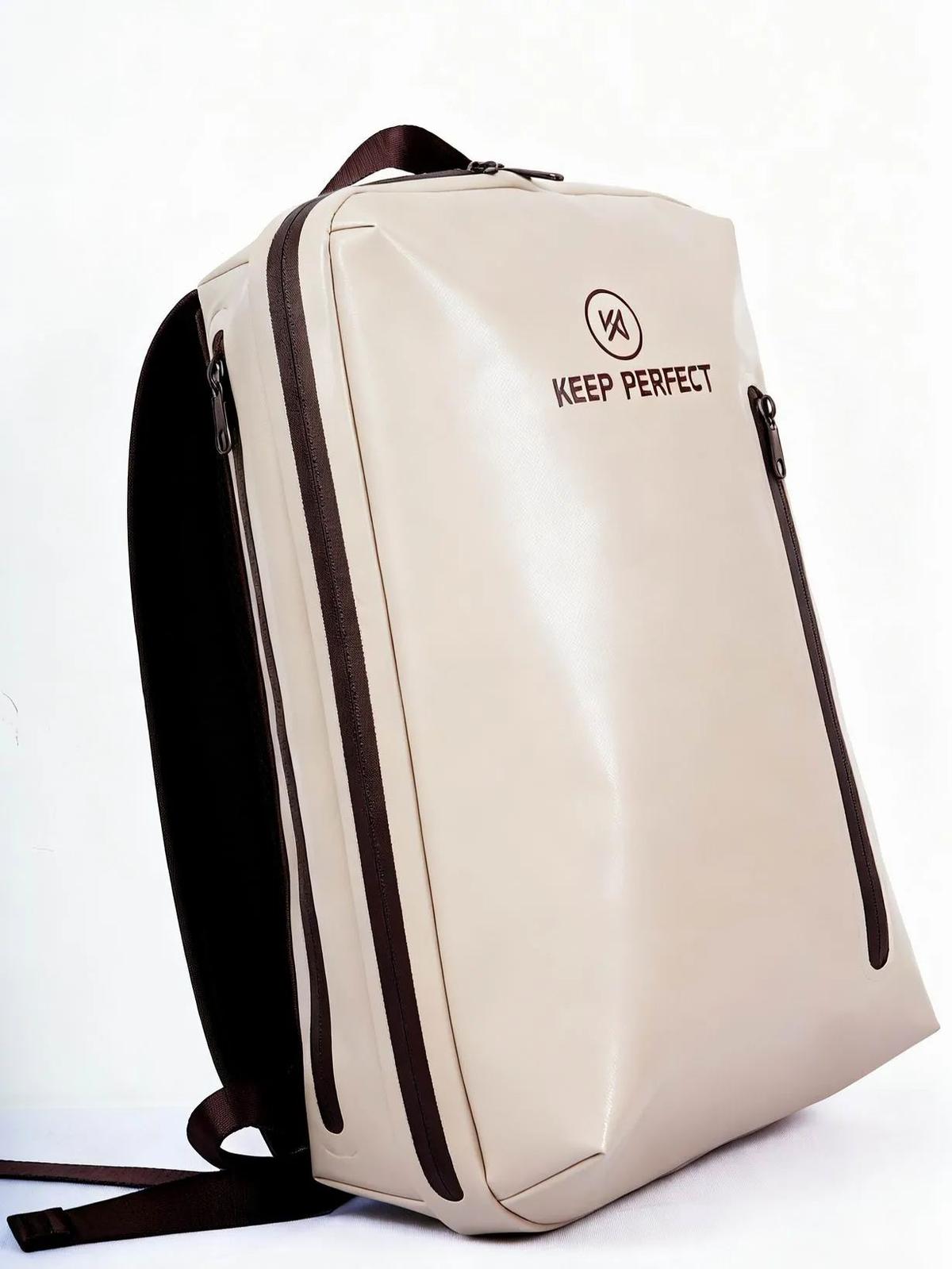
The everyday carry backpack is the default answer and still the most funded bag category, which cuts both ways. Demand is durable and year-round, and the buyer identity is real: people who care about how they carry their daily kit are a self-selecting, vocal audience. The difficulty is differentiation, because the market is crowded and backers have strong opinions about strap geometry, back panel ventilation and laptop sleeve placement. A generic 22-litre pack will not fund. One with a stated job will.
Production tractability is excellent. Panels are cut and sewn from stock fabrics, hardware is standard, and the category samples inside 6-10 working days because there is nothing to tool. Unit cost at 500 pcs is among the lowest of the eight categories for a given material grade, which leaves room in the tier price for better fabric or branded hardware. The risk is the opposite one: because it is easy to make, it is also easy for a competitor to copy, so the defensible asset is the specific layout rather than the bag itself.
The features backers ask about, in order: a laptop sleeve with a suspended bottom and a stated maximum device size, a quick-access top or side pocket, a water bottle pocket that actually holds a bottle, luggage pass-through, and a strap system that does not slip. Write each one as a measured line in the spec. A sleeve specified as fits a 16-inch MacBook Pro is testable; described as spacious it is not. Our custom backpack pillar sets out the layout options that survive a 500-unit run.
2. Tech and laptop bags with cable management
Tech carry overlaps the first category but deserves its own entry because the buyer is different and pays more. This is the commuter or remote worker who carries a laptop, a charger, a mouse, cables and a power bank, and whose pain is organisation, not capacity. The winning products specify cable channels, elastic loops with stated diameters, a dedicated tracker or card slot, and a flat-opening main compartment that clears a security checkpoint without unpacking. Backers in this category read specification tables closely and reward precision.
The complication is electronics. The moment a bag ships with a power bank, a wireless charging pad or an integrated cable, it becomes a consignment containing lithium cells, and it needs UN 38.3 documentation and the correct packing instruction. That is manageable, but it is a schedule item with a date and it belongs in the plan from week one rather than at freight booking. Our tech bag logistics article covers the two compliance tracks and the documents a forwarder will ask for.
Unit cost is higher than a plain backpack because of the interior organisation: more panels, more elastic, more binding, and often a moulded or semi-rigid tray. That pushes sampling toward the longer end, and complex builds with moulded parts move the window from 6-10 working days to 12-15 working days. The compensation is price: tech carry tiers sit comfortably above everyday carry tiers, and the buyer expects to pay for organisation, so there is more margin available to absorb the extra cost.
| Category | Demand durability | Production tractability | Identity strength |
|---|---|---|---|
| Everyday carry backpack 18-26 L | High | High | Medium |
| Tech and laptop carry | High | Medium | High |
| Travel packing systems | High | High | Medium |
| Camera and drone carry | Medium | Medium | Very high |
| Gym duffel with shoe compartment | High | High | High |
| Print-led tote and market bag | High | Very high | Medium |
| Kids and school bags | High | Medium | Medium |
| Special-interest hobby carry | Medium | Medium | Very high |
3. Travel packing systems and cube sets
Packing cubes and travel organisation sets are the quiet performer of the category list. Demand is durable and grows with travel volumes, the buyer identity is strong among frequent travellers, and the production is straightforward: lightweight fabric, mesh panels, zips and binding, with no structure to speak of. The category also has a natural bundle mechanic, because a set of three or four pieces is the product. That makes it unusually easy to build tier ladders where the step up adds pieces rather than changing the manufacturing.
The economics are the best of the eight. Unit cost is low, volumetric weight is low because the items pack flat, and the minimum of 500 pcs applies per style and colourway, which for a set means you can often cover three sizes inside one style definition if the fabric and trim are shared. Freight is cheap relative to goods value because a flat-packed cube set occupies a fraction of the volume of a structured backpack. Postage is at the lightest weight bands.
The risk is commoditisation. Cube sets are widely available at retail, so the campaign has to win on a specific claim: compression that genuinely reduces volume, a fabric with an antimicrobial or recycled story that is substantiated, or a modular system that interlocks with a specific bag. Unsubstantiated claims are the failure mode here, because this is a category where backers compare specification sheets line by line. Our travel bag pillar covers the material options and the claims that can be defended.
4. Camera and drone carry
Camera and drone carry has the strongest buyer identity of any category on this list, and it shows in conversion. Photographers and drone pilots are gear people: they know exactly what they own, they have strong opinions about access and protection, and they will pay a premium for a bag that fits a named body with two lenses or a specific drone and controller. The campaign page practically writes itself, because the spec is a compatibility list, and compatibility is the objection that the page has to answer.
Production is more demanding. Padded dividers, a semi-rigid shell, and often a moulded base or a rain cover add panels and components. Sampling moves toward 12-15 working days where moulded parts are involved, and the unit cost sits well above an everyday backpack. There is also a fit risk: if the bag does not actually hold the named camera with the named lens attached, the returns and the comment section will say so, and the fit has to be validated with the real equipment rather than with published dimensions.
Mitigate the fit risk by shipping the equipment to your production team, or by building the internal divider set adjustably with stated ranges. Our team asks for the exact device models during costing and builds the sample around them. When it works, the category rewards it: these campaigns fund at high average pledges with an audience that returns for the second product, which is the basis of a brand rather than a one-off campaign.
5. Gym duffels with shoe compartments
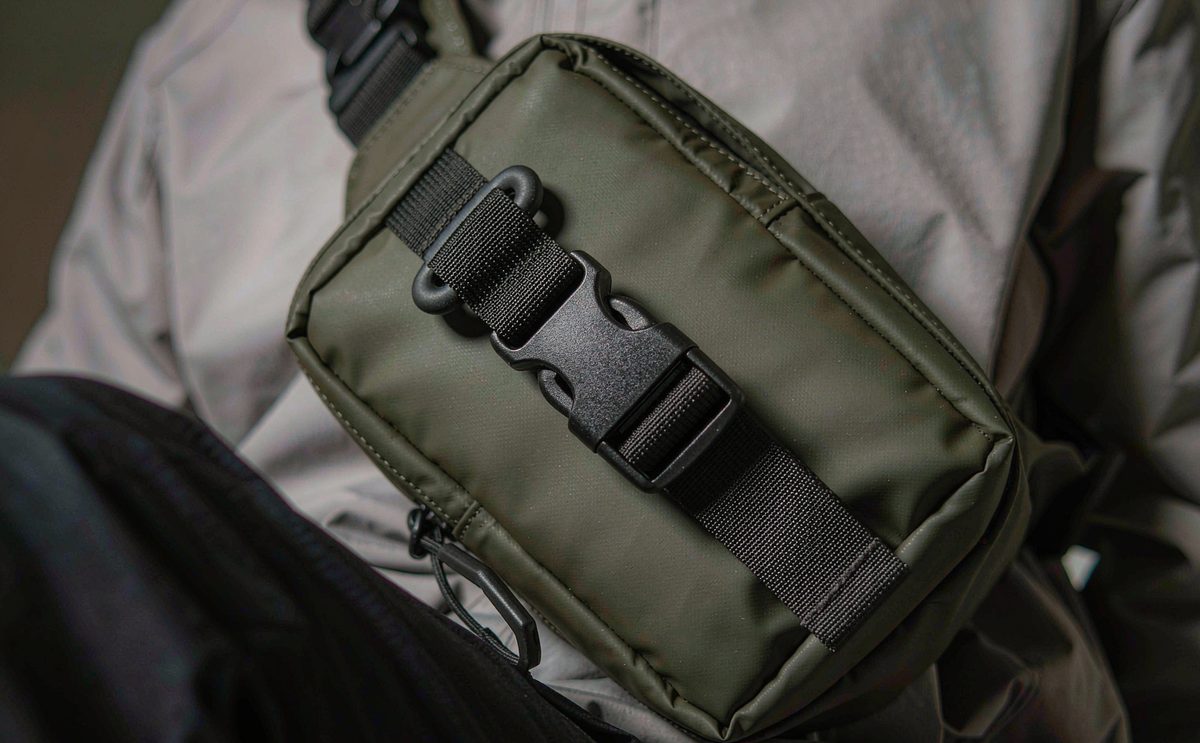
Gym and duffel bags with a ventilated shoe compartment are a durable, repeatable category with a clear buyer identity and a clear spec hook. The hook is dimensional: a compartment that fits a stated shoe size, ventilated, isolated from the main cavity. That single measurable feature is what backers ask about in the comments, and it is the line that decides whether the campaign converts. Add a wet pocket, a yoga mat strap and a water bottle sleeve and the tier writes itself.
Production tractability is high. A duffel is a panel-sewn product with standard hardware, it samples inside 6-10 working days, and the unit cost at 500 pcs is moderate. Volumetric weight is the main watch item because duffels are bulky, but they compress well when packed flat, so a sensible packing method keeps freight proportionate. This is one of the categories where a second colourway is cheap to add and works well as a stretch goal, because it uses the same pattern and trim.
The differentiation problem here is mild rather than severe, because gym bags are bought as much for identity as for function. A bag targeted at a specific training community, with the compartment sized for that community's shoes and the strap sized for their mat, outsells a general fitness bag. The sports and gym bag pillar covers the compartment configurations that hold up in production and inspection.
Freight is the main watch item for duffels, because a large unstructured bag occupies volume without much mass. Packing compressed and flat, with the fill removed, keeps volumetric weight proportionate to goods value. Confirm packed carton dimensions with your production partner and quote freight from those figures rather than from the bag's external size.
6. Print-led totes and market bags
Totes are the lowest-friction category in the list and the best choice for a first campaign with a limited budget. Demand is durable, production tractability is the highest of the eight because a tote is a handful of panels with a handle and a print, and unit cost at 500 pcs is the lowest. Sampling is quick, and the product is forgiving: there is no fit risk, no structure to engineer, and no device compatibility to validate.
What totes lack is pricing power. A plain canvas tote competes with retail at low prices, so the campaign has to win on print and story rather than on construction. That makes it the right category for creators who have an audience and an artist, and the wrong one for creators who have a construction idea. The winning versions specify fabric weight in ounces or grams per square metre, handle drop length, seam construction and print method, because those are the lines that separate a 12-dollar tote from a 45-dollar one.
Freight and postage are excellent: totes pack flat and light. The minimum of 500 pcs per style and colourway is easy to satisfy, and because the same blank can carry several prints, a campaign can offer multiple designs while treating them as one style if the base fabric and construction are identical. Confirm that interpretation with your production partner before you build the tier ladder around it, because it changes how the minimum applies.
Print method deserves an early decision, because screen, heat transfer and digital printing differ in setup cost, behaviour with colour count and durability, and the choice affects both unit price and the minimum. Ask for wash-test results on the actual fabric rather than a generic claim, and specify print placement measured from a stated seam so the sample can be approved against it.
7. Kids and school bags
Kids and school bags have durable, repeating demand with a built-in replenishment cycle, and the buyer is the parent rather than the child. That means the purchase drivers are different: safety, weight, cleanability, durability and fit to the child's height. Campaigns that win here specify empty weight in kilograms, reflective detailing, a chest strap, and a sizing guide by child height. Parents read those lines and they drive conversion more than colour does.
The complication is compliance. A bag sized and marketed for school-age children is likely to be treated as a children's product in the United States, which brings lead limits at 100 ppm on accessible substrates, third-party testing at an accepted laboratory, a children's product certificate and a permanent tracking label on both the product and the packaging. That adds 7-15 working days of laboratory time and a document obligation held by the importer of record. Plan it at design stage, not at freight booking.
There is a second constraint: safety in design. Drawstrings at the neck area, small detachable parts and long cords are regulated or discouraged for children's products in several markets. Our team flags these during the spec review and proposes alternatives such as a magnetic or clip closure. The QC and compliance pillar sets out the testing and certificate path, and it is worth reading before you commit to this category.
Durability expectations are easy to underestimate in this category. A school bag is dragged, overfilled and left on floors, so stitch density, strap attachment and base reinforcement matter more here than anywhere else. Specify reinforced stress points and a base panel in a heavier denier, and have the strap attachment tested rather than assumed.
8. Special-interest and hobby carry
The last category is a family rather than a product: carry designed for a specific pursuit. Pickleball, fishing tackle, cycling commuting, e-sports, dance, music, motorsport, and dozens of others. Each has a smaller audience than everyday carry and a far higher conversion rate within it, because the buyer has been waiting for someone to make the thing. This is the category with the best risk-adjusted return for a creator who is genuinely part of the community, and the worst one for a creator who is not.
Production varies with the product. A tackle bag needs waterproof compartments and corrosion-resistant hardware; a cycling commuter bag needs reflective panels and a helmet attachment; an e-sports bag needs rigid protection for peripherals. Most of these sample in 6-10 working days, and some with moulded or rigid elements move to 12-15 working days. Unit cost is mid to high because of lower volume and specialised components, and the compensating factor is price tolerance: a hobby buyer will pay for a bag that solves a problem nobody else has addressed.
The sourcing advantage of small categories is that the minimum works in your favour. 500 pcs is a small number in a hobby market, and a campaign that sells 700 units to a community of 40,000 people is a success rather than a rounding error. The risk is the reverse: if you misjudge the community, there is no broader market to fall back on. Validate demand carefully before committing, using the method in our market research guide.
When each category launches best in the calendar
Timing a bag campaign is not only about when your audience is online, it is about where the production and freight calendar sits relative to the delivery month you promise. Everyday carry and tech carry are effectively year-round, because the buyer replaces a worn bag whenever it fails. Travel packing systems peak ahead of the summer and the year-end travel seasons, so a campaign closing in spring can ship into the peak with the demand still warm. Kids and school bags have the sharpest window of all: they need to arrive before the academic year starts, which fixes both the launch date and the delivery date.
Gym duffels carry a secondary January peak driven by new-year behaviour, and a campaign that closes in early autumn can ride it, but the freight calendar is tightest at exactly that point. Totes are the most flexible because they are light, giftable and seasonal only by print. Hobby carry follows the hobby: pickleball and cycling in the warmer months, e-sports around the event calendar, fishing ahead of the season. Match the launch to the season and then check the production calendar against it, because a peak-season slot can be the scarce item.
The practical method is to fix the delivery month first, then walk backwards through 35-50 days of mass production, a three to five week post-campaign lock, and three to seven weeks of freight and customs. If the resulting launch week collides with a peak freight period, shift by two to three weeks rather than compress the production window. Our programme coordinator checks both calendars at the same time and will say plainly whether the month on your page is achievable. The full backwards schedule is set out in the campaign timeline article.
Matching category to MOQ, budget and delivery risk
Line the eight categories up against the three constraints that actually bind a first campaign. Against the 500 pcs per style and colourway minimum, every category on this list can be satisfied, but the ones where a single style covers several variants, such as packing cube sets and print-led totes, are the easiest. Against budget, totes and packing systems are the cheapest to land, everyday carry and gym duffels sit in the middle, and camera and tech carry are the most expensive per unit.
Against delivery risk, the ordering is close to the same. Totes, packing sets and duffels have the fewest components and the shortest paths to a repeatable run. Tech carry adds a battery documentation track. Kids bags add a laboratory testing track. Camera carry adds a fit validation track and often moulded parts. Each additional track is a place where the calendar can slip, and a first campaign should carry at most one of them.
A practical rule: pick the category where your unfair advantage is an audience, and then pick the simplest construction that serves that audience. A creator with 9,000 pickleball players reading their newsletter should make a pickleball bag, not a backpack. A creator with no audience and a strong design idea should make the simplest version of that idea, prove the delivery, and build the audience for the second product from the backers of the first. Then confirm the production timeline before you announce a month.
What to avoid in 2026
Three patterns are worth avoiding regardless of category. The first is feature inflation: a bag that promises twelve innovations usually has twelve places to fail, and the sampling window stretches with each one. The second is unsubstantiated material claims, particularly around recycled content and antimicrobial finishes, because backers and marketplaces now ask for the certificate and a claim without one becomes a refund request. The third is a delivery date chosen before the category is costed.
Also avoid the temptation to launch two categories at once in a single campaign unless they share a pattern. Two styles at 500 pcs each is a different working capital requirement from one style at 1,000, and it adds a second inspection and a second packing run. Where a second product genuinely adds value, make it an add-on using the same base construction rather than a second style, which keeps the minimum and the schedule intact.
If you have a category in mind and want it tested against cost and schedule, send us the concept through the quote and enquiry page. Our programme coordinator will tell you which of the three risks apply to it, what the sampling window looks like, and what a 500 pcs run lands at before you commit. The low minimum production page explains how small runs are structured for creators.
Send us your category and concept, and we will return the sampling window, unit cost and the risks that apply before you commit.
A fourth pattern deserves a mention: launching without a second pair of eyes on the numbers. One person who has run a campaign before, reading your cost model and your delivery date, will find the error everyone else is too close to see. Our programme coordinator does this routinely, and the corrections are small and cheap before the page goes live.
Frequently Asked Questions
Which bag category is best for a first Kickstarter campaign?
Print-led totes and packing cube sets are the lowest-risk starting points. Both sample quickly, both pack flat and light so freight and postage stay low, and both can cover several variants inside one style definition at a 500 pcs minimum. Everyday carry backpacks and gym duffels are the next tier up and work well if you have a specific layout or compartment idea. Camera, tech and kids bags each add a track that can slip the schedule.
How many units do I need to clear the minimum on a bag campaign?
The working minimum is 500 pcs per style and per colourway. A campaign with 400 backers on a single-bag tier may fall short, while one with 300 backers where half take a two-unit bundle clears it comfortably. Work out expected unit volume from your tier mix before you commit, and consider offering fewer colourways if the arithmetic is tight, because each colourway carries its own minimum.
Are packing cubes a good crowdfunding product?
Yes, and they are underrated. Unit cost is low, volumetric weight is minimal because they pack flat, and the set structure gives you a natural bundle mechanic for tier ladders. The risk is commoditisation, so the campaign needs a defensible claim such as genuine compression, a substantiated recycled fabric, or a modular system that interlocks with a specific bag. Backers in this category compare specification sheets closely.
What makes a camera bag campaign risky?
Fit risk and structure. If the bag does not hold the named camera body with the named lens attached, backers will say so publicly and returns will follow. Semi-rigid shells, padded dividers and moulded bases also push sampling from 6-10 working days to 12-15 working days. Mitigate it by shipping the actual equipment to your production team for the sample build, or by designing adjustable dividers with stated ranges.
Do kids bags need extra compliance testing?
Usually yes. A bag sized and marketed for school-age children is likely treated as a children's product in the United States, which brings lead limits at 100 ppm on accessible substrates, third-party testing at an accepted laboratory, a children's product certificate and a permanent tracking label on the product and packaging. Allow 7-15 working days of laboratory time and decide the classification during design, not during freight booking.
Can I offer several prints on the same tote style?
Often yes, if the base fabric, construction and trim are identical and only the print changes, because the minimum applies per style and colourway rather than per artwork. Confirm the interpretation with your production partner before you build the tier ladder around it, since it changes how the 500 pcs minimum applies. Print method also matters: screen, heat transfer and digital each have different setup costs and different minimum implications.
Is a tech bag with a power bank harder to ship?
It adds a documentation track rather than a hard barrier. Any lithium cell needs a UN 38.3 test summary and a safety data sheet, a watt-hour rating marked on the cell, and packing under the correct instruction, usually PI965 Section II for cells shipped separately. There is also a dangerous-goods surcharge. Collect the documents before you buy the cells, and decide during design whether the cell is removable, which materially simplifies shipping.
Which categories have the highest average pledge?
Camera and drone carry and special-interest hobby carry typically sit highest, because the buyer is a gear person with a specific unsolved problem and a high willingness to pay for a precise solution. Tech and laptop carry follows. Totes sit lowest on average pledge but compensate with the lowest unit cost and the simplest delivery, so the margin can be comparable even at a lower headline price.
Should I launch two bag styles in one campaign?
Only if they share a pattern, panels and trim. Two styles at 500 pcs each is a different working capital requirement from one style at 1,000, and it adds a second inspection and a second packing run. Where a second product genuinely adds value, make it an add-on using the same base construction, which keeps the minimum and the production schedule intact.
How does category choice affect the delivery date?
Through the number of extra tracks it adds. Totes, packing sets and duffels have few components and a short path to a repeatable run of 35-50 days. Tech carry adds battery documentation, kids bags add laboratory testing, and camera carry adds fit validation and often moulded parts. Each additional track is a place the calendar can slip, so a first campaign should carry at most one of them.
Are leather bags a good crowdfunding category?
They are difficult for a first campaign. Premium leather needs a material story, consistent finishing and a longer qualification process to hold a standard across 500 units, and the price point raises backer expectations on quality. The category can work for an experienced creator with a strong brand, but the production risk and the returns exposure are higher than for a textile bag at the same volume.
How do I know if my niche has enough demand?
Estimate the community size, then apply a realistic conversion rate. A warm, engaged audience of 5,000 to 10,000 people in a defined hobby can support 500 to 1,200 units if the product addresses a real unsolved problem. Validate with a pre-launch landing page and measure sign-up rate from each traffic source before committing. If sign-up rate is weak, the community is either too small or the problem is not real.
People Also Ask
What is the easiest bag to crowdfund?
A print-led tote or a packing cube set. Both are cheap to make, pack flat and light, and cover several variants inside one style at a 500 pcs minimum.
Which bag category has the highest average pledge?
Camera and drone carry, and special-interest hobby carry. Both serve buyers with a specific unsolved problem and a high willingness to pay.
How many units do I need for a bag campaign?
At least 500 pcs per style and colourway. Bundle tiers help you reach that unit count with fewer backers.
Are kids bags harder to produce?
They add a compliance track: lead limits at 100 ppm, third-party testing, a children's product certificate and a permanent tracking label.
Can one tote style carry several prints?
Usually, if fabric, construction and trim are identical. Confirm the interpretation before you build your tier ladder around it.
Do tech bags with power banks ship easily?
They ship fine with the right documents: a UN 38.3 summary, an SDS, a watt-hour marking and packing under the correct instruction.
Should I launch two bag styles at once?
Only if they share a pattern and trim. Otherwise use an add-on on the same base construction to keep the minimum and schedule intact.
How does category affect delivery risk?
Each extra track, such as battery documentation, lab testing or fit validation, adds a place the calendar can slip.