Bag Campaign Product Validation: Pre-Orders, Waitlists, Focus Groups
Validate a bag in four layers before you commit tooling. A waitlist proves interest in your story, a paid pre-order proves the price, a focus group proves the fit, and a sample-in-hand review proves the build. Only the last three justify a commitment of 500 pcs per style and colourway. Budget 4 to 8 weeks for validation, run sampling at 6 to 10 working days, and carry the findings into the RFQ so the quote you receive matches what backers actually asked for. This article sets out the sequence, the sample sizes worth trusting, and the point at which the data tells you to stop.
- What validation has to prove before you commit to tooling
- Why a bag is harder to validate than a gadget
- Layer one: the waitlist and the numbers that matter
- Layer two: the paid pre-order and the deposit test
- Layer three: focus groups and fit sessions that produce usable data
- Layer four: the sample-in-hand review
- Turning validation into a spec sheet your production partner can quote
- What validation does to MOQ and colourway maths
- Budgeting validation: the lines creators forget
- A worked validation scorecard
- When the data says stop
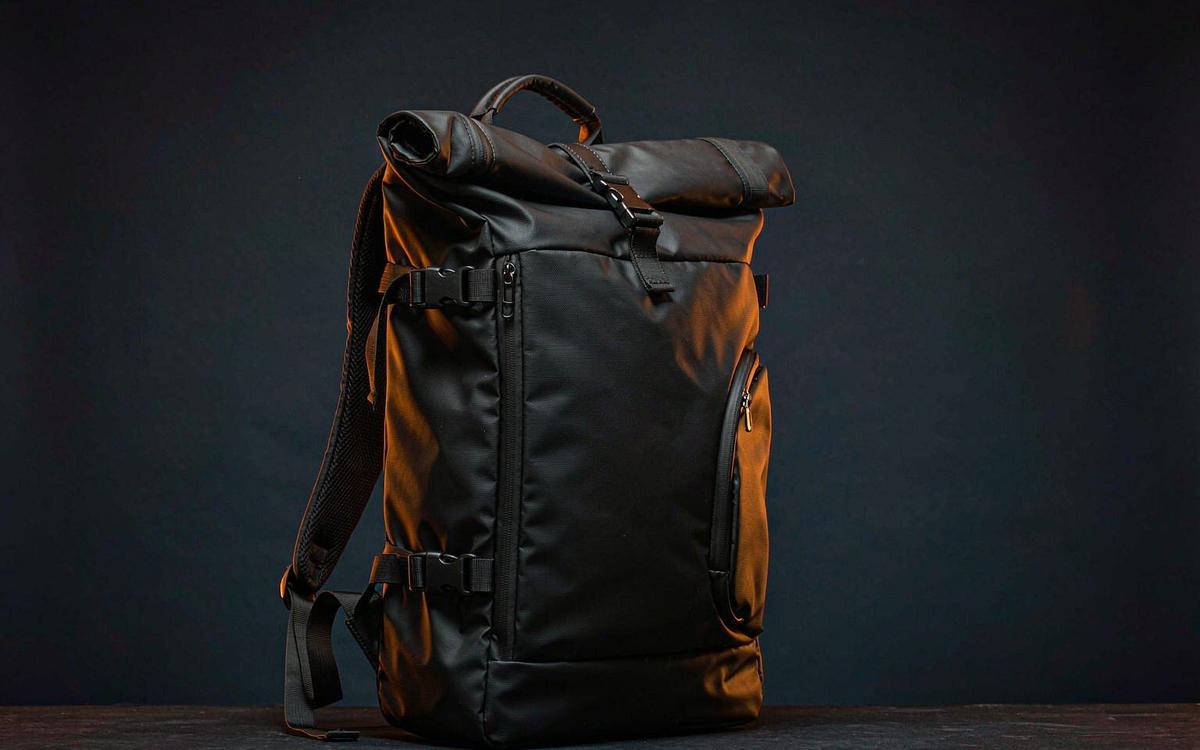
Most creators validate the story and then manufacture the product. That order is the single most expensive mistake available to a first-time bag campaign, and it is entirely avoidable. This article gives you the four-layer sequence we recommend, the sample size each layer needs before the result means anything, and the arithmetic that connects what backers say to what you can safely order at 500 pcs per style and per colourway.
What validation has to prove before you commit to tooling
Validation is not market research. It is a spending decision with three separate questions inside it, and each question needs a different instrument. The first question is whether anyone will pay your price. The second is whether the bag works when it is actually on a shoulder, loaded, in the rain, on a commute. The third is whether the design you drew can be produced at your target cost at volume with AQL 2.5 to ISO 2859-1 inspection and still look like the render.
Most creators try to answer all three with a single waitlist. That is why campaigns fund and then struggle. A waitlist of 4,000 addresses measures interest in a narrative. It says nothing about price tolerance and nothing about whether the laptop sleeve fits a 16 inch machine. Our team has watched creators convert a strong waitlist into a full colourway order and then discover at the sample stage that 60 per cent of those addresses came from one community that wanted a cheaper, simpler bag than the one on the page.
- Price proof: will a stranger pay 89 dollars, or only 59 dollars, for this exact specification?
- Fit proof: does the carry system, strap geometry and pocket layout work on real bodies and real loads?
- Build proof: can the design be produced at volume at your landed cost, on FOB Xiamen terms, without losing the detail that sold it?
- Volume proof: is the addressable demand one colourway or four, and does that change your MOQ exposure?
Notice that these are not the same audience. Price proof needs strangers who found you cold. Fit proof needs people in a room. Build proof needs your production team and a physical sample. Volume proof needs a large enough sample that a 12 per cent colour preference is a real signal rather than noise. Running them in the wrong order produces confident answers to the wrong questions, which is worse than no validation at all.
Why a bag is harder to validate than a gadget
A tech product can be validated with a specification sheet because the value lives in measurable performance: battery hours, resolution, latency. A bag's value lives in things a spec sheet cannot express. Strap padding that feels right for 40 minutes and wrong for three hours. A zip that opens smoothly 500 times and catches on the lining on the 501st. A pocket that is technically 24 cm wide but useless because the opening is 18 cm. None of that survives translation into a bullet list, and all of it is what backers write about in the comments six months after delivery.
There is a second problem, which is that bags are worn. Fit is personal and varies by torso length, shoulder width, and whether the person carries a water bottle. A gadget that fits 90 per cent of users is finished. A backpack that fits 90 per cent of torsos still generates a loud minority of returns complaints, and returns on a crowdfunded reward are far more expensive than returns on a retail order because there is no resale channel waiting.
| Validation layer | Typical cost | Time to read | Sample size | What it proves |
|---|---|---|---|---|
| Waitlist capture | Ad spend only | 2 to 4 weeks | 300 to 800 emails | Interest in the story, not the bag |
| Paid pre-order or deposit | Card fees on refunds | 1 to 3 weeks | 50 to 150 deposits | Willingness to pay the stated price |
| Focus group or fit session | Samples plus venue | 1 to 2 weeks | 8 to 15 people | Fit, carry comfort and pocket logic |
| Sample-in-hand review | Sample plus courier | 6 to 10 working days | 20 to 40 backers | Build quality against the spec |
| Survey or poll on spec | Near zero | 3 to 7 days | 150 to 400 responses | Feature ranking, not price |
The practical consequence is that you need a physical object earlier than feels comfortable. Creators often want to wait until the campaign funds before paying for samples, because samples cost money and the campaign might fail. In our experience that sequencing is backwards: a 6 to 10 working day sampling window on a standard style costs a fraction of a single production change order, and a change order after bulk has started can run into four figures and add weeks. If your design is complex, with moulded panels, welded seams or unusual hardware, allow 12 to 15 working days for sampling and start it before the campaign opens, not after.
Layer one: the waitlist and the numbers that matter
A waitlist is a cheap instrument and it is still worth building, but only if you read it correctly. The number of addresses is close to meaningless on its own. What matters is the cost per qualified address, the source mix, and the click-through rate on the first email that mentions a price. A waitlist of 800 addresses built from cold traffic at 2.50 dollars per address is a far stronger asset than 5,000 addresses harvested from one enthusiastic community, because the second list is one algorithm change away from being unreachable and will all convert or none convert.
Watch three rates. First, the landing page conversion rate: for a bag project with a clear hero image and a price range stated, a cold traffic conversion of 2 to 5 per cent to email capture is a normal band, and below 1.5 per cent tells you the offer is unclear rather than that the product is bad. Second, the email open rate on your first price-bearing message: 35 to 45 per cent is healthy for a warm list under 1,000. Third, the click rate to the campaign preview page, which should sit at 8 to 15 per cent of opens once a price is attached.
- Track cost per qualified address, not total addresses, and set a ceiling of 4 dollars before you pause the spend.
- Cap any single traffic source at 40 per cent of the total list; beyond that you are measuring a community, not a market.
- Send one price-bearing email before launch and record the unsubscribe rate; above 3 per cent your price is above what the list will carry.
- Ask one free-text question on signup: what bag do you carry now? The answers are your real competitive set.
The free-text question is the most under-used instrument in the whole stack. If 40 per cent of respondents name one incumbent product, you have learned your positioning problem for free, and you can write the campaign page against that comparison. If the answers are scattered across fifteen brands, your category is not yet defined in the buyer's mind, which means your page has to do more education and your launch will need a longer runway. This is the kind of finding that changes a campaign page more than any amount of traffic does.
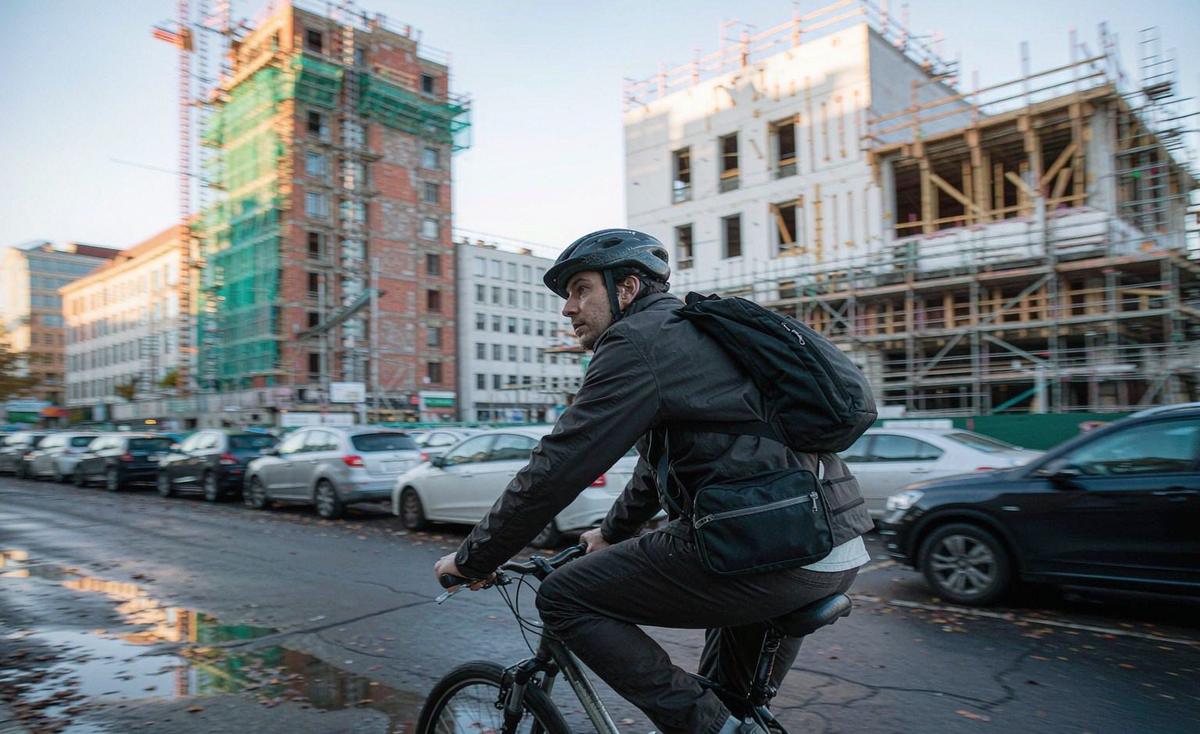
Layer two: the paid pre-order and the deposit test
A paid pre-order is the first layer that costs the respondent something, and that is exactly why it is the first layer worth trusting on price. You are not trying to raise money at this stage. You are trying to observe whether a card gets entered at 129 dollars. The cleanest version is a fully refundable deposit of 10 to 20 dollars taken through the same checkout flow you will use on launch day, with a stated refund window and a stated shipping estimate. Refund rates are the signal: under 15 per cent refund requests within 14 days suggests the price is defensible; above 30 per cent means you have found the ceiling and should re-engineer the spec down rather than discount.
There is a timing discipline here. Run the deposit test on the same page, with the same hero image and the same copy, at least three weeks before launch, so you still have time to change the reward tiers. If you run it the week before launch and the result is bad, you will launch anyway because everything else is already booked. Our campaign bag specialist team regularly sees creators run this test too late to act on, and the test then functions as an expensive ritual rather than a decision input.
A deposit test only works if the money is genuinely at risk. Free reservations produce the same numbers as a waitlist and tell you nothing new.
Structure the test so it also measures tier preference. Offer two or three reward configurations at different prices and see where deposits land. You will usually find a barbell rather than a bell curve: a cluster at the entry tier and a smaller cluster at the top tier, with the middle tier thin. That shape should directly determine how you structure the reward ladder, and it frequently argues for dropping the middle tier entirely and replacing it with add-ons. Add-ons are cheaper to serve and let backers self-select into the price they want.
Layer three: focus groups and fit sessions that produce usable data
A focus group for a bag is not a discussion. It is a structured handling session with a scorecard, and the difference matters. Recruit 8 to 15 people who match your target backer profile, put the physical sample or a close dimensional mock-up in their hands, and have them perform scripted tasks: load it with a 15 inch laptop and a 1 litre bottle, wear it for ten minutes, open and close every pocket twice, and try to find their keys blind. Record completion times and failure counts rather than opinions. Opinions are generous; failure counts are not.
The most productive questions are comparative, not absolute. Ask people to rank three strap widths, not whether the strap is comfortable. Ask which of two pocket layouts they would pay more for. Ask them to name the one thing they would delete to bring the price down 20 dollars. The deletion question is the highest-value item on the whole scorecard, because it tells you which feature is genuinely load-bearing and which is decoration you are paying to produce and ship.
- Recruit for body variance, not opinions: include at least three torso lengths and both shoulder types.
- Script five physical tasks and time them; anything over 20 seconds to retrieve a phone is a redesign trigger.
- Ask the deletion question to every participant and tally the answers; a feature named by over 40 per cent is a cost target.
- Separate the sessions by persona: commuters, travellers and gym users want different things from the same shell.
Layer four: the sample-in-hand review
The last layer is the one most creators skip and the one that de-risks the most money. Send the physical sample to 20 to 40 of your warmest waitlist members with a short structured questionnaire and a prepaid return label. You are testing build quality and expectation match: does the object that arrives look like the render they pledged against, does the material feel appropriate to the price, and does anything fail in the first week of real use. Sample production runs 6 to 10 working days for a standard style and 12 to 15 working days for complex constructions, so this layer fits comfortably inside a pre-launch runway if you plan for it.
- Sampling window, standard style
- 6 to 10 working days
- Sampling window, complex style
- 12 to 15 working days
- Bulk production window
- 35 to 50 days
- Minimum order
- 500 pcs per style and per colourway
- Inspection standard
- AQL 2.5 to ISO 2859-1
- Trade terms
- FOB Xiamen, T/T 30/70
Pay attention to the language in the returned questionnaires. Vague praise is a warning sign, not a good sign. Specific complaints are assets: a strap that slides at the 8 cm setting, a lining colour that reads cheaper in daylight than in the photograph, a zip pull that catches on a jacket. Each of those is a change you can make before bulk at the cost of a revised sample, rather than after delivery at the cost of replacements, refunds and a comment section that will follow your next campaign. If you want the detail of how a sample programme is structured, our crowdfunding bag sampling and prototyping guide sets out the sample stages and what to check at each one.
Turning validation into a spec sheet your production partner can quote
Validation produces findings. Findings only reduce risk if they survive translation into a specification that can be costed. The failure mode is a creator who learns that backers want a wider strap and then writes wider strap on the RFQ, with no dimension, no foam density and no attachment method. That is not a specification, and it will be quoted optimistically and delivered inconsistently. Every validation finding should be converted into a number with a tolerance before it leaves your desk.
- Convert each finding into a dimension or material call-out with a tolerance, not an adjective.
- Mark each line as must-have or nice-to-have, because nice-to-haves are what you trade away when the quote comes back high.
- Attach the price sensitivity result to the must-have list so your coordinator knows what the ceiling is.
- State the colourway split you intend to order, since 500 pcs per colourway is a separate commitment for each one.
- Send the RFQ with the target landed cost and the FOB Xiamen basis stated so quotes are comparable.
Once the quotes arrive, the discipline is to re-read them against the validation scorecard rather than against your hopes. If the quote comes back 12 per cent above target and your deposit test says the market ceiling is where you already are, the answer is to cut a nice-to-have, not to compress the margin and hope. Cutting a feature that 40 per cent of your focus group named as deletable is a decision with evidence behind it. Cutting quality is a decision with a comment section behind it. The full end-to-end sequence, from concept through to delivery, is laid out in our crowdfunding bag guide.
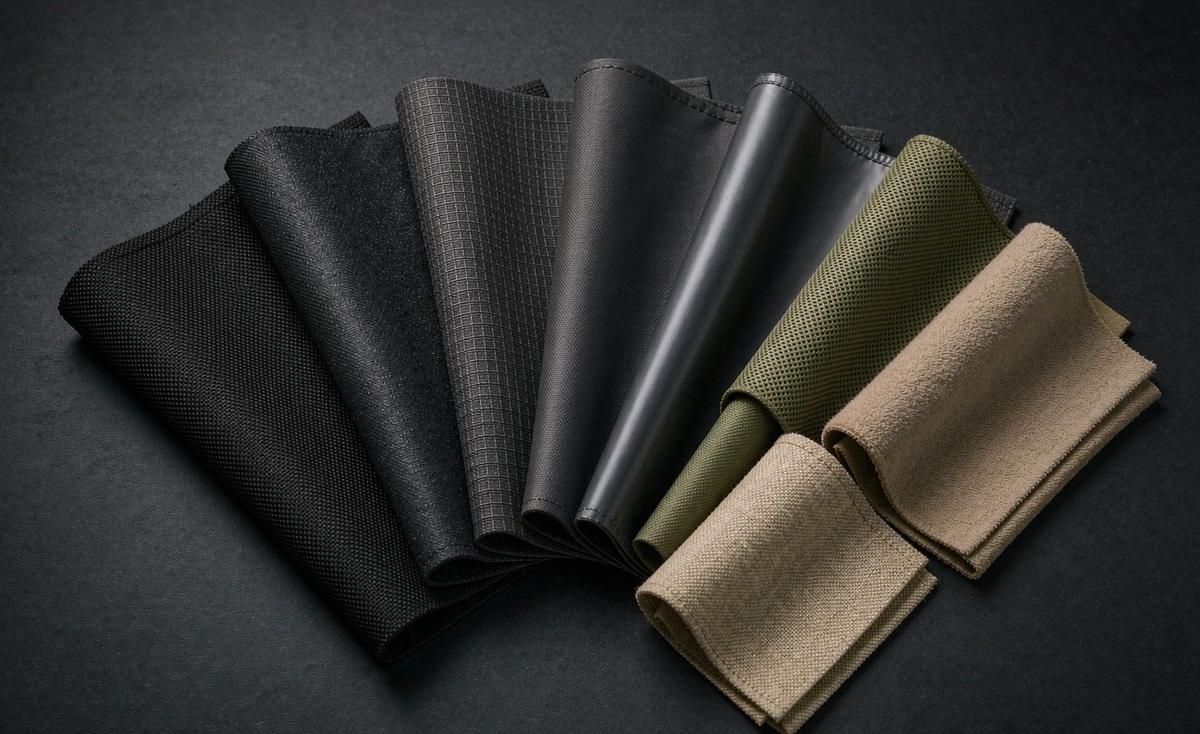
What validation does to MOQ and colourway maths
This is where validation either pays for itself or does not. The minimum commitment is 500 pcs per style and per colourway, which means a two-size backpack offered in four colours is not a 500 pcs decision, it is a 4,000 pcs decision. Validation is the only instrument you have that can tell you whether the market will absorb that. A colour preference poll on a waitlist of 600 people, run before you commit, is worth more than any amount of optimism about how well the second colourway will do.
The standard shape of the result is unhelpfully skewed. In a typical four-colour poll, the leading colourway takes 40 to 55 per cent of preference, the second takes 20 to 30 per cent, and the third and fourth split the remainder. If you order evenly across four colourways you will very likely be left with a long tail of two colours that you will be discounting eighteen months later. Ordering 60 per cent in the leading colourway and 40 per cent across two others, with the fourth held back as a stretch goal, matches the demand shape and keeps your cash out of unsold inventory.
- Order unevenly: match the colour split to the poll, not to an even distribution across the range.
- Hold colourways as stretch goals rather than launch-day options; they cost you nothing until they unlock.
- Treat every size as a style: a 26 litre and a 34 litre version are two commitments, not one.
- Check the re-order window before launch, because a second run at 500 pcs is a different decision from a first run.
Budgeting validation: the lines creators forget
Creators budget for the sample and forget everything around it. A realistic pre-launch validation budget for a single bag style sits between 1,500 and 6,000 dollars, and the sample is typically less than half of it. The rest is landing page build and hosting, cold traffic to generate a readable waitlist, card fees and refunds on the deposit test, sample courier costs in both directions, focus group incentives, and the revision round on the sample that almost everyone needs and almost nobody budgets for.
| Line item | Low | High | Notes |
|---|---|---|---|
| Prototype or pre-production sample | 250 | 700 | Per round most projects need two rounds |
| Sample courier, both directions | 80 | 260 | Expedited courier adds 120 to 200 dollars |
| Landing page and email tooling | 150 | 600 | Higher if you build a custom configurator |
| Cold traffic for waitlist | 600 | 2,500 | At 2 to 4 dollars per qualified address |
| Deposit test card fees and refunds | 120 | 500 | Depends on refund rate |
| Focus group incentives and venue | 300 | 1,400 | 8 to 15 participants |
Two of those lines are routinely skipped and both matter. The first is the second sample round: one round almost never resolves everything, and budgeting for one is how creators end up launching on an unresolved sample. The second is courier in both directions, because sending samples out to 30 backers and getting them back is a real cost, and skipping the return leg means you never get the sample back to compare against the production reference. That reference sample is what your pre-launch campaign checklist should be built around.
A worked validation scorecard
Here is what a completed scorecard looks like on a commuter backpack with a target price of 129 dollars. Layer one: 740 waitlist addresses at 2.80 dollars each, landing page conversion 3.4 per cent, email open rate 41 per cent, unsubscribe after the price email 1.9 per cent. Layer two: 94 deposits at 15 dollars, refund requests at 11 per cent within 14 days, deposits split 58 per cent entry tier, 14 per cent middle, 28 per cent top. Layer three: eleven participants, of whom four could not retrieve a phone from the side pocket in under 15 seconds, and six named the same removable organiser panel as deletable.
Layer four: 32 samples sent out, 27 returned, with three specific findings: the strap slid at the 8 cm setting on two participants, the lining colour read cheaper in daylight than in the photograph, and the zip pull caught on a rain shell. The decisions that follow are mechanical. Widen the side pocket opening by 3 cm and re-time the retrieval task. Delete the organiser panel, which removes roughly 4 per cent of unit cost and puts the quote back inside target. Change the zip pull to a corded design. Hold the fourth colourway for a stretch goal and order 60 per cent in the leading colour.
Then carry the scorecard into the purchase decision. With a 129 dollar target and a landed quote inside target after the feature deletion, the commitment is 500 pcs in the leading colourway, 350 in the second and 150 in the third, which is 1,000 pcs against a waitlist that has already produced 94 deposits. That ratio is the whole point of the exercise: you are ordering against demonstrated behaviour rather than against a projection. If the campaign goes on to raise 400 backers, you are covered. If it stalls at 150, you have a defined re-order decision rather than an unsellable warehouse.
When the data says stop
The most valuable outcome of validation is occasionally a negative one, and creators are bad at accepting it because by the time the data arrives they have already paid for photography, a video and a landing page. Set the stopping rules in advance, while you are still emotionally neutral. Our suggestion: stop or substantially redesign if the deposit refund rate exceeds 30 per cent, if cold landing page conversion sits below 1.5 per cent across two creative angles and at least 1,500 clicks, or if the sample-in-hand review produces more than four distinct functional failures across 30 samples.
These thresholds are not universal truths, they are tripwires you choose before you are invested. What makes them useful is that they are numeric and agreed in advance, so the decision is made by the rule rather than by the mood of the week. A creator who aborts a bag design at the validation stage has spent 3,000 dollars and eight weeks. A creator who discovers the same problem after delivery has spent a production run, a fulfilment cycle and their backer relationships, and the second cost is not recoverable.
Key takeaways
- V
- a
- l
- i
- d
- a
- t
- i
- o
- n
- d
- o
- e
- s
- n
- o
- t
- m
- a
- k
- e
- a
- b
- a
- d
- p
- r
- o
- d
- u
- c
- t
- g
- o
- o
- d
- .
- I
- t
- t
- e
- l
- l
- s
- y
- o
- u
- e
- a
- r
- l
- y
- e
- n
- o
- u
- g
- h
- t
- o
- c
- h
- a
- n
- g
- e
- t
- h
- e
- p
- r
- o
- d
- u
- c
- t
- ,
- t
- h
- e
- p
- r
- i
- c
- e
- o
- r
- t
- h
- e
- p
- l
- a
- n
- ,
- a
- n
- d
- e
- a
- r
- l
- y
- i
- s
- t
- h
- e
- o
- n
- l
- y
- t
- h
- i
- n
- g
- t
- h
- a
- t
- m
- a
- k
- e
- s
- t
- h
- e
- c
- h
- a
- n
- g
- e
- c
- h
- e
- a
- p
- .
Send us your validation findings and the current spec, and our campaign bag specialist will tell you which lines are quotable at 500 pcs per style and colourway before you open the campaign.
Frequently Asked Questions
How many waitlist emails do I need before a bag campaign is worth launching?
Total count matters less than quality and source mix. A readable signal usually needs 300 to 800 qualified addresses collected from cold traffic at 2 to 4 dollars each, with no single source above 40 per cent of the list. Below 300 you cannot read a colour preference reliably, because a 12 per cent difference between two colourways is within noise at that sample size.
What refund rate on a deposit test means the price is too high?
Under 15 per cent refund requests within 14 days suggests the price is defensible. Between 15 and 30 per cent is a warning zone where you should re-engineer the specification rather than discount. Above 30 per cent means you have found the market ceiling for this design, and the honest response is to remove features and lower the price, not to launch and hope.
Should I pay for samples before the campaign funds?
Yes, in almost every case. Sampling runs 6 to 10 working days for a standard style and 12 to 15 working days for complex constructions, at a cost that is a small fraction of a post-bulk change order. Launching without a physical reference sample means every later dispute about build quality is resolved against a render rather than an agreed object.
How many people should be in a bag focus group?
Eight to fifteen participants is the useful range. Below eight you cannot separate individual preference from a pattern, and above fifteen the session becomes slow without adding new findings. Recruit deliberately for body variance: at least three torso lengths, a mix of shoulder types, and people who carry the load the bag is designed for.
Does every colourway count separately against the 500 pcs minimum?
Yes. The minimum is 500 pcs per style and per colourway, so a backpack in three colours is a 1,500 pcs commitment, and two sizes in three colours is 3,000 pcs. This is why a colour preference poll before ordering matters more than instinct: ordering evenly across four colourways usually leaves you with a slow-moving tail.
What should a sample-in-hand review ask backers to check?
Ask about expectation match against the render, material feel relative to the price, and any functional failure in the first week of real use. Send 20 to 40 samples with a prepaid return label and a structured questionnaire. Vague praise is a warning sign; specific complaints about strap slide, zip catches or lining colour are assets you can fix before bulk.
How long should the whole validation phase take?
Plan for 4 to 8 weeks from landing page live to a quotable specification. That allows 2 to 4 weeks of waitlist traffic, 1 to 3 weeks for the deposit test, 1 to 2 weeks for focus sessions, and 6 to 15 working days for sampling. Compressing it below four weeks usually means you launch before the sample findings have been incorporated into the spec.
What budget should I set aside for pre-launch validation?
Between 1,500 and 6,000 dollars for a single style is a realistic range. The two lines creators most often omit are the second sample round, which most projects need, and return courier for the 20 to 40 samples you send out to backers. Both are cheap relative to a change order after bulk production has started.
Can validation change my reward tier structure?
It usually should. Deposit tests commonly show a barbell rather than a bell curve, with clusters at the entry and top tiers and a thin middle. That shape argues for dropping the middle tier and replacing it with add-ons, which are cheaper to serve and let backers self-select into the price they actually want to pay.
What is the difference between validating price and validating fit?
Price validation needs strangers who found you cold, because warm supporters will tell you your price is fine. Fit validation needs people physically handling the bag, because comfort and pocket logic cannot be assessed from a render. They are different audiences, different instruments and different answers, and a waitlist cannot substitute for either.
How do I turn a focus group finding into something a production partner can quote?
Convert each finding into a dimension, a material call-out or a tolerance, never an adjective. Wider strap is not quotable; 55 mm webbing with 8 mm foam at density 25 kg per cubic metre is. Mark each line must-have or nice-to-have, attach your price ceiling, state the colourway split and the FOB Xiamen basis, and the quote you get back will be comparable between suppliers.
When should I abandon a bag design based on validation data?
Set numeric tripwires before you start and honour them: refund rate above 30 per cent on the deposit test, cold landing page conversion below 1.5 per cent across two creative angles and 1,500 clicks, or more than four distinct functional failures across 30 sample-in-hand reviews. Deciding by rule in advance is far more reliable than deciding by mood after you have paid for photography.
People Also Ask
What is product validation for a crowdfunding campaign?
It is the process of proving price, fit and build quality before you commit to a production run. For bags it runs in four layers: waitlist, paid deposit test, focus group and sample-in-hand review.
Is a waitlist enough to validate a bag?
No. A waitlist measures interest in your story. It does not measure price tolerance or fit, which are the two things that decide whether a funded campaign stays profitable.
How much does bag sampling cost and how long does it take?
Sampling runs 6 to 10 working days for a standard style and 12 to 15 working days for complex constructions. Budget 250 to 700 dollars per round and expect two rounds.
What is the MOQ for a custom crowdfunding bag?
500 pcs per style and per colourway. Two sizes in three colourways is therefore a 3,000 pcs commitment, not a 500 pcs one.
Should colourways be ordered evenly?
Usually not. Colour preference polls are skewed, with the leading colourway taking 40 to 55 per cent. Ordering 60 per cent in the leader and holding a fourth colour as a stretch goal matches demand better.
How do I know if my bag price is too high?
Run a refundable deposit test. Under 15 per cent refunds within 14 days means the price holds; above 30 per cent means you have hit the ceiling and should cut features rather than discount.
What should I ask in a bag focus group?
Ask comparative and deletion questions: rank three strap widths, and name the one feature you would delete to cut 20 dollars. Time physical retrieval tasks rather than collecting opinions.
Can validation findings reduce my unit cost?
Yes. A feature that over 40 per cent of participants name as deletable is a cost target you can remove with evidence, which is safer than compressing quality to hit a price.