Bag Crowdfunding for First-Time Creators: Budget Realities
Most first-time creators underbudget a bag campaign by 25 to 40 percent. The gap is not the unit price; it is the seven lines around it: sampling rounds at 6 to 10 working days each, platform and payment fees of 8 to 12 percent, outbound shipping, VAT or duty on the destination side, a 500 pcs per style and colourway minimum that commits cash before pledges clear, freight, and a contingency line that should sit at 10 to 15 percent. This guide shows where the money actually goes, what each line should cost, and the seven traps that turn a funded campaign into a loss-making one.
- The seven cost lines nobody puts on the launch spreadsheet
- What one bag actually costs to make: the unit cost stack
- Platform fees, payment processing and the 8 to 12 percent layer
- Reward tier pricing that survives the fee stack
- Freight, duty and VAT: the line that breaks first campaigns
- MOQ and cash flow: financing 500 pcs before the money lands
- Sampling budget: why one round is never enough
- Contingency: how big the buffer should be and why
- Seven budget pitfalls first-time bag creators fall into
- A worked budget: 1,200 backers at USD 68
- What to do when the campaign underfunds or overfunds
The number a creator fixes on first is the unit price, because it is the only number the internet talks about. It is also the number that will hurt least if it is wrong by 10 percent. A USD 2.00 error on 1,200 units is USD 2,400. A missed duty line on the same campaign is easily USD 9,000, and a forgotten VAT registration in the destination market can stop the goods at the border after the money has already been spent. The reason first-time creators get this wrong is structural rather than careless: the platform shows a funding total, the audience sees a reward price, and nobody hands you a cost breakdown until you ask a production partner for one. This article is that breakdown. It uses the same planning model our team uses when a creator sends us a brief, and it is anchored on the numbers we can actually quote: MOQ 500 pcs per style and colourway, sampling at 6 to 10 working days (12 to 15 for complex builds), bulk at 35 to 50 days, inspection to AQL 2.5 to ISO 2859-1, and FOB Xiamen with T/T 30/70 payment terms.
Budget for the seven lines, not the one line. The campaigns that finish in profit are not the ones with the cheapest bag; they are the ones that priced freight, duty and a second sample round before launch.
The seven cost lines nobody puts on the launch spreadsheet
A bag campaign has seven cost lines, and only three of them appear in most launch plans. The first is product cost, the unit price multiplied by the quantity, plus any tooling. The second is sampling and development, which covers the pre-production rounds, the tech pack if it is drawn for you, and the courier cost of moving samples between you and the workshop. The third is content, meaning photography, video, and any 3D or render work, because a bag that has not been made yet has to be shown in some form. Those three most creators budget, roughly.
The four that get missed are where the damage happens. Platform and payment fees take 8 to 12 percent of everything pledged, and that figure rises if the campaign is run in multiple currencies. Outbound fulfilment means the carton, the pick and pack, and the parcel rate to each backer, and for a 1.5 kg bag shipped internationally that is commonly USD 14 to 34 per unit rather than the USD 8 a domestic parcel would cost. Duty, VAT and customs handling land on the destination side and are usually paid by your fulfilment partner and billed to you. Contingency is the line nobody writes down, and it is the reason a campaign that looks 18 percent profitable on paper ends up break-even.
A useful way to frame this for a first campaign is to treat the unit price as roughly 45 to 55 percent of what a backer pays, not 70 percent. If a reward is priced at USD 68, plan on USD 19 to 24 of landed product cost, USD 6 to 8 of fees, USD 16 to 26 of outbound shipping and packaging, USD 4 to 9 of duty and tax, and USD 5 to 9 of contingency and overhead. What is left is your margin, and on a first campaign it is usually thinner than the creator expects. Our crowdfunding bag guide walks through the same arithmetic from the product side rather than the finance side, and the two should be read together.
What one bag actually costs to make: the unit cost stack
Unit cost is a stack of six layers, and quoting any single layer is how misunderstandings start. The fabric layer is the largest and most variable: coated polyester at 600D sits in a very different band from 1000D Cordura, recycled RPET, or a laminated TPU shell, and the spread between the cheapest and most expensive credible option for a 25 litre backpack is commonly USD 3 to 11 per unit. The hardware layer covers zips, buckles, sliders, D-rings and any moulded part, and branded hardware from YKK or Duraflex typically adds USD 1.20 to 4.50 over unbranded equivalents while removing the single most common source of field failure.
The labour layer is driven by panel count and stitch count rather than by size, which surprises creators: a simple 30 litre duffel with six panels can cost less to sew than a 12 litre organiser with fourteen panels and a lined interior with six pockets. The trim and branding layer is where the logo goes, and a small heat-transfer mark costs USD 0.35 to 0.90 while a large multi-colour embroidery can reach USD 1.80, plus a digitising fee of USD 40 to 120 for a new file. The packing layer is the polybag, the hangtag, the carton and any insert card, commonly USD 0.55 to 1.60 per unit. The sixth layer is tooling and setup, which is the one that does not scale away: moulded pulls, custom zip sliders and debossed badges carry one-off tooling of USD 300 to 2,500 depending on complexity.
The practical consequence is that a quoted unit price is only comparable between two partners if the specification is identical. When a creator sends us a competitor quotation and asks whether we can beat it, the first thing our production team does is rebuild the specification behind it, because a USD 2.80 gap is usually a fabric downgrade, an unbranded zip, or a lower stitch density rather than a margin difference. The discipline that protects a first-time creator is to fix the specification first and negotiate the price second, which is the opposite of what usually happens. The low MOQ bag production guide shows how the same stack behaves at pilot quantities.
Platform fees, payment processing and the 8 to 12 percent layer
Platform and payment costs behave like a tax on success: they scale with the funding total, so the better the campaign performs, the more they take in absolute terms. The platform fee is the visible part. Payment processing sits on top of it and is quoted as a percentage plus a fixed per-transaction amount, which means a campaign with many small pledges loses more to processing than one with fewer large pledges. The planning figure we use with first-time creators is 8 to 12 percent of gross funding as a blended rate covering both layers, and we advise budgeting at the top of that range rather than the bottom.
Three mechanics inflate that figure in practice. Failed pledges occur when a card is declined during the post-campaign collection window; on a typical campaign a small percentage of pledges never settle, and the platform collects from the ones that do. Currency mix adds handling when backers pledge in a currency different from the campaign's, which is common for a bag campaign with a European or Australian audience. Add-ons and late pledges processed through a pledge manager carry their own processing rate, and a campaign that runs a long post-campaign store can end up paying two layers of fees on the same backer.
The correct response is not to avoid the fees, it is to price them into the reward. A USD 68 reward that the creator treats as USD 68 of revenue is really USD 60 to 63 of revenue after fees. That difference is roughly the cost of a branded zip upgrade, which is exactly the kind of trade-off a creator should be making deliberately rather than discovering later. It also changes the funding goal: a USD 30,000 goal that ignores the platform layer actually delivers about USD 26,700, which is not enough to pay for the run it was calculated to cover.
Reward tier pricing that survives the fee stack
Tier pricing is where the budget is either rescued or destroyed. The safest structure for a first bag campaign is three physical tiers plus one non-physical tier, because each additional physical tier multiplies the specification, the sampling rounds and the packing complexity. A common and workable ladder is an early-bird tier at roughly 20 to 28 percent off the intended retail price, a standard tier at full intended retail, and a bundle or family tier at a modest discount that raises average pledge value without adding a new product.
The arithmetic that matters is contribution per backer after fees and shipping, not the headline pledge. Worked backwards from a target contribution of USD 20 per unit: if the product lands at USD 21, outbound shipping and packing is USD 22, and duty and tax average USD 6, then the reward has to be priced above roughly USD 75 before the platform layer is taken into account, and closer to USD 82 once it is. That surprises most first-time creators, whose instinct is to price a backpack at USD 59 because that is what a retail backpack costs. Retail pricing and reward pricing are not the same thing because retail does not ship one unit at a time to 40 countries.
Two tactical decisions protect the margin. Charge shipping separately and show it at checkout, because a shipping-inclusive price has to carry the weighted average of every destination, and the average is dragged up by the most expensive ones. Use a bundle tier to lift average pledge value, because the second and third units in the same parcel add USD 3 to 9 of shipping rather than USD 22, and that incremental margin is the cheapest profit in the whole campaign. When creators ask us to help size a tier ladder, our production team starts from the parcel weight and the packing cube, because those two numbers determine more of the economics than the fabric choice does.
Freight, duty and VAT: the line that breaks first campaigns
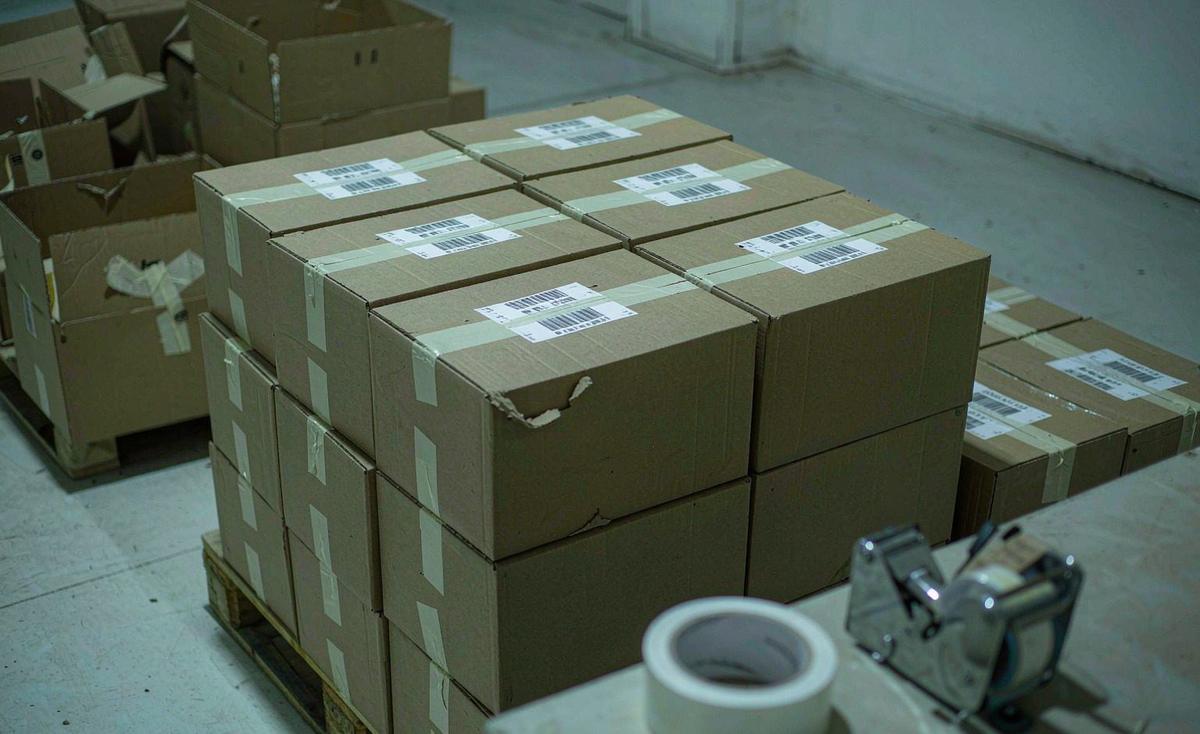
Freight is the line most often quoted for the wrong leg. A FOB Xiamen price covers the goods loaded on the vessel at the port of departure. It does not cover ocean freight, insurance, destination port handling, customs clearance, duty, import VAT, or inland delivery to the fulfilment warehouse. Those items together commonly add 18 to 35 percent to the FOB value depending on destination and mode, and for a first campaign that typically means USD 3,500 to 9,000 on a 1,200-unit run that was budgeted as though FOB were the final number.
Mode choice drives most of the variance. Sea freight for a consolidated carton shipment typically runs 25 to 40 days port to port plus clearance and inland delivery, at a cost that is a small fraction of air. Air freight runs 5 to 10 days door to door and can cost 3 to 6 times the sea rate per kilo. The right answer for most first campaigns is sea for the main run with an air top-up of 5 to 10 percent of units held back as a buffer for replacements and for the earliest regional wave. The rewards fulfilment guide explains how the onward parcel leg is then costed once the stock lands.
Duty and VAT are the part that can stop a shipment. Bags carry their own HS classification, and the duty rate applied depends on the outer surface material, so a bag with a textile outer and one with a plastic-coated outer can be classified differently and attract different rates. Import VAT is charged on the landed value including freight in most European markets, and it is recoverable only if the importing entity is registered for VAT in that market. The two failure modes we see are a shipment held because the importer of record was never appointed, and a creator discovering after the goods shipped that the VAT bill is due before the parcels can be released. Both are preventable with a decision made before launch rather than after funding.
MOQ and cash flow: financing 500 pcs before the money lands
The 500 pcs per style and per colourway minimum is a technical constraint before it is a financial one: a dye lot, a print setup and a cutting marker all have a threshold below which the unit cost climbs steeply and the quality becomes inconsistent. For a first-time creator, the more pressing consequence is timing. Production starts after funding, payment terms are T/T 30/70, which means 30 percent deposit to book the run and 70 percent against the shipping documents. That structure front-loads roughly a third of the product cost at the moment the production slot is reserved.
The cash-flow shape of a first campaign therefore looks like this: platform funds arrive a short while after the campaign closes, the deposit is due around the same time, and the balance is due four to eight weeks later when the goods are ready to ship, which is before any backer has received anything and before a second revenue event if there is one. A creator who has committed to USD 38,000 of product with a USD 30,000 funding total has a gap, and the gap is usually covered by the creator's own money or by a short-term facility. Planning for the gap is part of the budget, not an emergency measure.
Colourway is the multiplier that catches people out. 500 pcs per style and per colourway means three colourways of the same bag is a 1,500 pcs commitment, not a 500 pcs one. For a first campaign the usual advice is two colourways maximum, and to use a trim-driven variation instead of a fabric-driven one where possible, because changing the zip tape, the lining and the pull colour gives backers a visible choice without splitting the fabric lot. Where a genuine second fabric colour is required, it is worth asking whether the two can be produced in the same run with one dye lot each rather than as two separate bookings.
Sampling budget: why one round is never enough
Sampling is quoted per round, and the quote is 6 to 10 working days for a standard construction or 12 to 15 working days for a complex one. First-time creators budget one round and discover that the first sample is a conversation starter rather than a finished product. The realistic planning figure is two to three rounds, which means 12 to 30 working days of calendar time on a standard build before the pre-production sample is signed off, plus courier transit each way.
The budget line has three parts. The sample fee covers the pattern, the cutting and the sewing of a single unit and is commonly 1.5 to 3 times the unit price, because making one bag takes a disproportionate share of the setup. The courier cost of sending a 1 to 2 kg parcel internationally each way is real money at three rounds. The revision cost is the part that is usually free in cash and expensive in time, because a change to the panel layout after the first round can reset the pattern and add days. Our sampling and prototyping pillar sets out what should be locked before the first sample is cut, which is the cheapest way to reduce the number of rounds.
There is a specific pattern to why rounds are needed. The first sample reveals fit and proportion problems that cannot be seen in a drawing: a strap that sits too wide, a pocket that is 20 mm too shallow for the phone it was drawn for, a roll-top that does not roll. The second sample fixes those and reveals the second tier of problems, usually tension and hardware behaviour under load. The third, where it is needed, is typically a colour or branding correction. Budgeting for three rounds and using two is a much better position than budgeting for one and discovering you need three after the campaign has closed.
Contingency: how big the buffer should be and why
Contingency on a first bag campaign should be 10 to 15 percent of the product and logistics budget, and the justification is arithmetic rather than pessimism. Inspection to AQL 2.5 to ISO 2859-1 establishes an acceptance threshold rather than a guarantee of zero defects, and on a run of a few hundred to a few thousand units that threshold permits a small proportion of minor and major defects. A 2 to 4 percent replacement stock allowance covers warranty claims, transit damage and address failures. A 5 to 8 percent schedule buffer covers the slippage that occurs in any first production run: a fabric lot that fails a colour check and has to be re-dyed, a hardware delivery that lands late, a customs inspection that adds a week.
The contingency also has to cover price movement. Fabric and hardware are quoted with a validity window, typically 30 to 60 days, and a campaign that samples in one quarter and produces in the next can find that the quotation has expired. The pragmatic fix is to ask for the quotation validity in writing at sampling stage and to re-confirm the price before the deposit is paid. Where a raw material index is moving, our sourcing partner flags it at quotation stage so the creator can decide whether to lock the material early rather than be surprised later.
There is a second kind of buffer that costs nothing and is worth more: specification slack. A design that requires a fabric at exactly 420 gsm with a specific coating has one supplier and one price. A design that specifies a performance range, such as a water-repellent finish meeting a stated spray-test rating, has several. Writing the specification as a performance requirement rather than a brand-specific material requirement is the single cheapest risk-reduction measure available to a first-time creator, and it usually takes one sentence in the tech pack.
Seven budget pitfalls first-time bag creators fall into
The first pitfall is pricing the reward from retail rather than from landed cost, which produces a tier that is profitable at 5,000 units and loss-making at 800. The second is treating the sampling fee as the sampling budget, when the courier and revision rounds typically add as much again. The third is budgeting one colourway and offering three, which triples the minimum commitment and the fabric risk at the moment the campaign goes live. The fourth is quoting FOB and forgetting everything after the port, which understates landed cost by a fifth to a third.
The fifth pitfall is ignoring the destination tax position, where a shipment to a market that requires VAT registration can be held until the paperwork is resolved. The sixth is spending the contingency before the goods ship, usually on extra content or an upgraded photoshoot, which leaves nothing for the replacement units actually needed in month four. The seventh, and the one that does the most damage, is setting the funding goal from the product cost rather than from the total campaign cost, so that a fully funded campaign still cannot pay for itself.
Each of the seven has the same underlying cause: the number was fixed before the information existed. The fix is sequencing rather than caution. Get a specification-level quotation with validity dates, confirm the HS classification and duty position for your top three destination markets, price the outbound parcel for the actual packed weight, and then set the goal. That sequence takes about three weeks and it is the highest-return three weeks in the whole project.
- Pitfall 1: pricing from retail instead of landed cost per unit
- Pitfall 2: booking one sample round when the realistic number is two to three
- Pitfall 3: offering three colourways against a 500 pcs per colourway minimum
- Pitfall 4: treating FOB Xiamen as the final product cost
- Pitfall 5: shipping to a VAT market without an importer of record appointed
- Pitfall 6: spending the 10 to 15 percent contingency before the goods land
- Pitfall 7: setting the funding goal from product cost rather than total campaign cost
A worked budget: 1,200 backers at USD 68
The following model uses a single backpack style in two colourways, 1,200 backers at an average pledge of USD 68 after add-ons, with shipping charged separately at checkout. Gross funding on product is USD 81,600. The platform and payment layer at the top of the planning range removes roughly USD 8,800, leaving USD 72,800 before any cost. This is the number the campaign actually has to work with, and it is the number most first-time creators never calculate.
Against that: product at a landed FOB cost of USD 21.50 per unit is USD 25,800; tooling for a moulded zip pull and a debossed badge is USD 1,400; sampling across three rounds including couriers is USD 1,650; ocean freight, insurance, clearance and inland delivery on roughly 520 kg of packed cartons is USD 3,900; duty and import VAT across the destination mix is USD 6,600; outbound pick, pack and parcel at an average of USD 21 is USD 25,200; replacement and warranty stock at 3 percent is USD 780; and content, ads and miscellaneous overhead is USD 6,000. Total cost is roughly USD 71,330, leaving a contribution of about USD 1,470 on a campaign that appeared to have a USD 34 gross margin per unit.
That model is deliberately built with no padding, and it illustrates the point better than a comfortable one would: a first bag campaign priced at USD 68 with separate shipping is roughly break-even. Moving to USD 78 with the same cost base adds USD 12,000 of contribution, because every dollar above the break-even point is margin. The alternative levers are a lower landed cost through a simpler specification, a lighter packed parcel, or a higher average pledge value through a bundle tier. What does not work is hoping the fee layer is smaller than it is.
| Cost line | Planning figure | Share of spend | Paid when | If it overruns |
|---|---|---|---|---|
| Product (landed FOB) | USD 21.50 per unit | 36 percent | 30 percent deposit, 70 percent pre-shipment | Simplify the specification before cutting quality |
| Sampling, tooling and development | USD 1,400 to 4,300 | 4 percent | Before launch, tooling at sample approval | Lock the tech pack; use stock hardware on run one |
| Platform and payment fees | 8 to 12 percent of gross | 11 percent | Automatically at collection | Already fixed; price it into the tier |
| Freight, insurance, clearance | 18 to 35 percent of FOB | 5 percent | At shipment | Book sea earlier; hold 5 to 10 percent for air |
| Duty and import VAT | 4 to 12 percent of value | 9 percent | At clearance | Confirm HS class and importer before launch |
| Outbound pick, pack, parcel | USD 14 to 34 per unit | 35 percent | At dispatch | Reduce packed weight and carton size |
| Contingency and replacement | 10 to 15 percent | 3 percent | Held to month four | Do not spend it on content |
The table is a planning instrument, not a forecast. Its value is in the Paid when column, which shows that three of the eight lines fall due before a single backer has received a parcel. A campaign is not funded when it reaches its goal; it is funded when the cash-outflow schedule can be met from the inflow schedule. Reading those two schedules side by side is a 20-minute exercise and it prevents the most common failure in the category.
Send us your tier ladder, target quantity and top three destination markets, and our production team will return a specification-level budget with validity dates and a cash-flow schedule.
What to do when the campaign underfunds or overfunds
Underfunding is not the same as failing, and the two situations call for different responses. If a campaign closes below goal on an all-or-nothing platform, no money moves and the loss is the pre-launch spend. If it closes above goal but below the level needed for a 500 pcs run in each planned colourway, the decision is which variable to flex. The options, in order of how little damage they do: reduce the colourway count to one, which releases the second fabric lot; move to stock hardware where tooling was planned, which releases USD 300 to 2,500; simplify the packing to a standard carton and printed insert, which releases USD 0.40 to 1.20 per unit; or raise the deposit from a secondary source, which costs interest rather than product quality.
Overfunding is the more pleasant problem and it has its own trap. A campaign that funds at 300 percent has roughly three times the units, which means three times the fabric, three times the production days, and a freight plan that may need to move from a consolidated carton to a part-container. The schedule risk is real: a run that fits in 35 days at 500 units does not automatically fit in 35 days at 2,000, because the line has a daily throughput. The right response is to tell the production partner the upper bound of the funding scenario before launch and agree what happens at each threshold, so that the material can be reserved rather than sourced reactively.
Both cases point to the same discipline: agree the scenario plan before launch. Three numbers are enough, being the minimum viable run, the expected run and the stretch run, with the material lead time, the production days and the freight mode for each. Our programme coordinator keeps that table for every campaign we support, because a decision made in week one costs a fraction of the same decision made in week six. If you are at the point of setting a goal, the fastest useful step is to send a brief and a target quantity through the quote page and let the numbers come back before the page is published.
Key takeaways
- A
- f
- i
- r
- s
- t
- b
- a
- g
- c
- a
- m
- p
- a
- i
- g
- n
- i
- s
- w
- o
- n
- o
- r
- l
- o
- s
- t
- o
- n
- s
- e
- v
- e
- n
- l
- i
- n
- e
- s
- ,
- n
- o
- t
- o
- n
- e
- .
- P
- r
- i
- c
- e
- t
- h
- e
- f
- e
- e
- l
- a
- y
- e
- r
- ,
- t
- h
- e
- p
- o
- s
- t
- -
- p
- o
- r
- t
- f
- r
- e
- i
- g
- h
- t
- ,
- t
- h
- e
- d
- e
- s
- t
- i
- n
- a
- t
- i
- o
- n
- t
- a
- x
- a
- n
- d
- a
- s
- e
- c
- o
- n
- d
- s
- a
- m
- p
- l
- e
- r
- o
- u
- n
- d
- b
- e
- f
- o
- r
- e
- y
- o
- u
- p
- u
- b
- l
- i
- s
- h
- ,
- a
- n
- d
- t
- h
- e
- g
- o
- a
- l
- y
- o
- u
- s
- e
- t
- w
- i
- l
- l
- b
- e
- o
- n
- e
- t
- h
- e
- c
- a
- m
- p
- a
- i
- g
- n
- c
- a
- n
- a
- c
- t
- u
- a
- l
- l
- y
- p
- a
- y
- f
- o
- r
- .
Frequently Asked Questions
How much does a first bag crowdfunding campaign actually cost?
Plan on the reward price breaking down roughly as 45 to 55 percent product, 10 to 12 percent platform and payment fees, 20 to 32 percent outbound shipping and packing, 5 to 12 percent duty and tax, and 10 to 15 percent held as contingency. On a USD 68 reward that is about USD 21.50 of product, USD 7 of fees, USD 21 of outbound parcel, USD 6 of duty and tax, and USD 8 of buffer. Most first-time creators budget the product line only.
What is a realistic budget for a 500 pcs bag run?
At 500 pcs per style and colourway, expect the product line alone to run from about USD 8,000 for a simple drawstring or flat pouch to USD 22,000 for a structured multi-panel backpack with branded hardware. Add tooling of USD 300 to 2,500 if any part is moulded or custom, three sampling rounds at USD 1,100 to 1,800 including couriers, and 18 to 35 percent of FOB value for freight, clearance and inland delivery.
Why do first-time creators underbudget by 25 to 40 percent?
Because the four largest missing lines are invisible until they are invoiced. Platform and payment fees take 8 to 12 percent of gross automatically. Freight, insurance, clearance and inland delivery add 18 to 35 percent to a FOB Xiamen price. Duty and import VAT add a further 4 to 12 percent. Contingency for replacement stock and schedule slip should be 10 to 15 percent. None of these appear in a unit price quotation.
How much should I set aside as contingency?
Ten to fifteen percent of the product and logistics budget. Within that, hold 2 to 4 percent as replacement and warranty stock to cover defects, transit damage and failed addresses, and 5 to 8 percent as schedule and price buffer for a fabric re-dye, a late hardware delivery or a customs inspection. Do not spend it on content or advertising, because month four is when it is needed.
Is a USD 59 price point viable for a backpack reward?
Usually not for a first campaign with international backers. With product landing at USD 19 to 24, outbound pick, pack and parcel at USD 16 to 26, duty and tax at USD 4 to 9, and fees at 8 to 12 percent, a USD 59 reward is close to or below break-even. USD 74 to 84 with shipping charged at checkout is the range that leaves a working margin, or a bundle tier that adds units to the same parcel at USD 3 to 9 each.
How many sample rounds should I budget for?
Two to three. Each round runs 6 to 10 working days for a standard construction and 12 to 15 working days for a complex one, plus international courier transit each way. The first round surfaces proportion and fit problems, the second surfaces hardware and tension behaviour under load, and the third, where needed, is usually a colour or branding correction. Budgeting for three and using two is far safer than the reverse.
What does the 30/70 payment structure mean for cash flow?
T/T 30/70 means 30 percent deposit to book the production slot and 70 percent against the shipping documents before the goods leave. On a USD 25,800 product line that is about USD 7,740 due when the run is booked and USD 18,060 due four to eight weeks later, before any backer has received a parcel. Plan the gap explicitly, because platform funds arrive on their own schedule and the two rarely align perfectly.
Can I offer three colourways on a first campaign?
You can, but the minimum applies per style and per colourway, so three colourways is a 1,500 pcs commitment rather than 500 pcs. For a first campaign, two colourways is the practical maximum. If backers need more visible choice, vary the trim instead: different zip tape, lining and pull colour gives a distinct look without splitting the fabric lot or tripling the commitment.
What happens if my campaign funds but cannot cover a 500 pcs run?
Flex the variables in the order that costs least product quality. Reduce to a single colourway first, which releases the second fabric lot. Move to stock hardware where tooling was planned, releasing USD 300 to 2,500. Simplify packing to a standard carton and printed insert, releasing USD 0.40 to 1.20 per unit. Only then consider bridging the gap with outside funds, which costs interest rather than quality.
Does overfunding create production problems?
Yes, mainly on schedule rather than cost. A run that fits in 35 days at 500 units does not automatically fit in 35 days at 2,000, because a production line has finite daily throughput, and a freight plan built for consolidated cartons may need to move to a part-container. Agree the material lead time, production days and freight mode for your minimum, expected and stretch scenarios before launch so material can be reserved rather than reactively sourced.
Should shipping be included in the reward price or charged separately?
Charge it separately and show it at checkout. An inclusive price has to carry the weighted average of every destination, and that average is dragged upward by the most expensive markets, which means backers in nearby markets subsidise distant ones. Charging separately also keeps the reward price comparable and makes the contribution margin visible when you are setting tiers.
What are the first three numbers I should get before setting a funding goal?
A specification-level unit quotation with a stated validity window, the HS classification and duty rate for your top three destination markets, and an outbound parcel rate for the actual packed weight and carton size. With those three you can build the landed cost per unit, and the funding goal becomes arithmetic rather than a guess. Allow roughly three weeks to collect all three properly.
People Also Ask
How much does a bag crowdfunding campaign cost?
Roughly 45 to 55 percent of the reward price goes to product, 10 to 12 percent to fees, 20 to 32 percent to outbound shipping, 5 to 12 percent to duty and tax, and 10 to 15 percent to contingency. The four lines beyond product are the ones usually missed.
What is the minimum budget for a custom bag order?
At 500 pcs per style and colourway, budget USD 8,000 to 22,000 for product depending on construction, plus tooling, sampling and freight. Simple flat constructions sit at the bottom of that range and structured multi-panel bags at the top.
Why do crowdfunding bag campaigns lose money?
Because the goal is set from unit cost rather than total campaign cost. Freight after the port, destination VAT, a second sample round and the replacement stock allowance are the four lines that typically turn a funded campaign into a break-even one.
How much contingency should a campaign hold?
Ten to fifteen percent of the product and logistics budget, split into 2 to 4 percent replacement stock and 5 to 8 percent schedule and price buffer. It should still be unspent in month four, when warranty claims arrive.
Is 500 pcs too many for a first campaign?
It is the standard minimum per style and colourway, and it is workable if you plan one style in two colourways. The commitment becomes difficult only when colourways are multiplied, because 500 applies to each one separately.
What does FOB Xiamen exclude?
It excludes ocean or air freight, insurance, destination port handling, customs clearance, duty, import VAT and inland delivery to the warehouse. Those items together commonly add 18 to 35 percent to the FOB value.
Should I charge backers for shipping?
Yes. Charge it at checkout so the reward price does not have to carry the weighted average of every destination. Inclusive pricing means nearby backers subsidise the most expensive markets.