Bag Production Pilot Runs: Testing 3 Designs Before Bulk
A pilot run is a real production run at the 500 pcs minimum, made with bulk materials and bulk tooling, sold or seeded to real users before the big order is placed. Testing three designs properly costs three sample rounds at 6 to 10 working days each, plus one pilot run of 500 pcs on the winner, and the whole sequence takes roughly 9 to 12 weeks before bulk starts. Running three full pilots at 500 each is 1,500 units and usually USD 5,000 to 9,000 of committed stock, which is why the workable method is to sample three and pilot one. This guide sets out the sequence, the decision gates and the kill criteria that keep a pilot from becoming an expensive hobby.
- Why a pilot run is not a second sample
- What testing three designs actually costs
- Designing the three candidates so the test means something
- The sampling gate before any pilot is cut
- How to split a pilot run across three designs
- What a pilot run measures that sampling cannot
- Decision gates and kill criteria
- Scheduling a pilot against the campaign calendar
- Turning the pilot into the first production run
- When to skip the pilot entirely
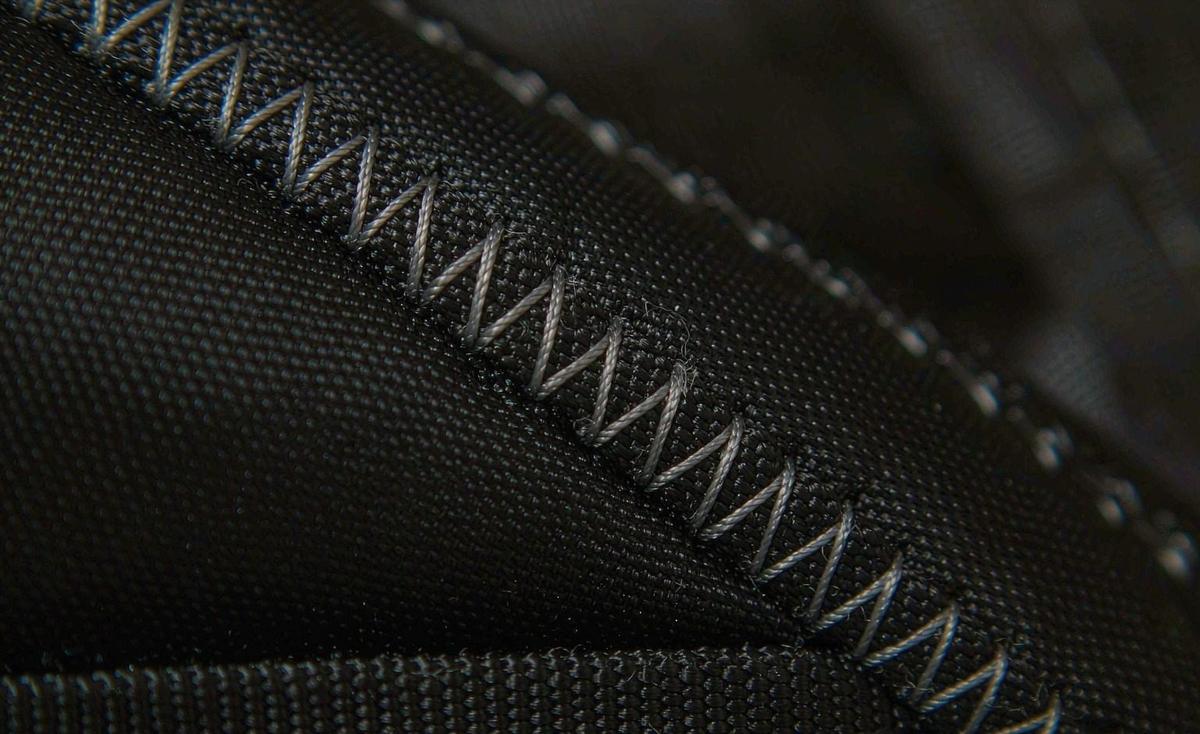
Most creators who ask about pilot runs have already had the experience that prompts the question. They approved a sample that looked right on a desk, placed a 500-unit order, and discovered something in week two of fulfilment that no amount of desk inspection would have shown: the handle stretches under a laptop, the lining catches on a zip, the bag looks cheaper in daylight than it did under studio lighting. A pilot run exists to surface exactly that class of problem, at a scale small enough to absorb and large enough to be representative. It is the step between a sample you can hold and a bulk order you cannot undo.
This article is about doing that with three candidate designs rather than one, because three is the number that makes the test statistically and commercially meaningful without becoming a sourcing project in its own right. It covers what the sequence costs, how long it takes against a campaign calendar, how to structure the split so the 500 pcs minimum does not quietly become 1,500 units, and the decision rules that stop a pilot from drifting. If the minimum itself is new to you, read the low MOQ bag production route for creators first, and treat the sampling and prototyping process as the gate that precedes everything below.
Why a pilot run is not a second sample
The distinction matters because the two are often confused and the confusion costs money. A sample is a handmade or semi-handmade unit built by a skilled machinist, usually one or two pieces, on a pattern that has not yet been graded for production and frequently with substitute materials where the bulk fabric is not yet in stock. It answers structural questions: is the proportion right, does the pocket layout work, does the closure function. A pilot run is made on the production line with production patterns, production jigs, bulk fabric from the actual mill lot and the real branding setup. It answers production and market questions, which are different questions entirely.
Three things only show up on a pilot. The first is tooling behaviour at speed. A zip that closes cleanly on a hand-assembled sample may bind once the tape is fed at production speed and the seam allowances are trimmed to the production tolerance. The second is material hand and colour in bulk. Fabric from a mill lot differs in hand and shade from the swatch or the sample-length piece, sometimes noticeably, and 500 units of a slightly wrong shade is a different problem from one sample of it. The third is labour repeatability: a skilled sample machinist can make almost any construction work once, and only a run reveals whether the average operator on the line can make it work 500 times with consistent topstitch and even handle placement.
There is also a market dimension that no sample can address. A pilot run of 500 units can be seeded to real users, photographed in real environments, and reviewed at volume. On a campaign that expects 2,000 backers, giving 60 to 100 units to superfans, reviewers and retail contacts before the campaign closes produces feedback and photography that a single sample cannot. That feedback often changes a decision worth far more than the pilot: the colourway, the size, the strap width, or whether the bag should ship at all. Sampling is a technical gate. A pilot is a technical and commercial gate together.
A sample tells you whether the bag can be made. A pilot tells you whether it can be made 500 times to the same standard, and whether anyone wants it once it is.
What testing three designs actually costs
Price the test before you run it, because the number surprises people. Three candidates can be tested two ways, and the costs differ by roughly an order of magnitude. The first way is three full pilots: 500 units of each design, at three times the MOQ, so 1,500 units in total. On a mid-weight tote at an indicative USD 3.90 FOB, that is USD 5,850 of stock, plus three sets of branding setup, plus freight on 1,500 units. Unless the three designs are genuinely going to market as three SKUs, that is not a test, it is an inventory purchase with extra steps.
The second way is the one worth doing: sample three, pilot one. Three sample rounds at 6 to 10 working days each, at a sample fee in the USD 40 to 120 band plus courier, cost roughly USD 500 to 900 all in and take three to five weeks if run in parallel rather than sequence. Then one pilot run at 500 pcs on the winner costs USD 1,950 to 2,400 plus branding setup and freight. Total committed stock is 500 units rather than 1,500, and the total cash at risk before the bulk decision is roughly USD 3,000 rather than USD 9,000. The information is nearly as good, because most of what three pilots would tell you is visible in three good samples plus one real run.
| Method | Units committed | Cash at risk | Elapsed time | Information quality |
|---|---|---|---|---|
| Three samples only | 0 | USD 500-900 | 3-5 weeks parallel | Structure and proportion only |
| Sample three, pilot one | 500 | USD 3,000-3,600 | 9-12 weeks | Production behaviour plus market read |
| Three full pilots at 500 | 1,500 | USD 8,500-9,500 | 12-16 weeks | Marginal gain over the row above |
| One pilot, no sampling | 500 | USD 2,200-2,600 | 7-9 weeks | High risk of a structural error |
Note the time column as carefully as the money column. Bulk production runs 35 to 50 days after deposit and approved pre-production sample, so a pilot sequence has to finish before the bulk slot is booked, not during it. Running three pilots sequentially costs 12 to 16 weeks and will collide with a campaign calendar. Running three samples in parallel costs three to five weeks because the pattern room can work three patterns at once, and it is the single biggest scheduling lever available. Ask for parallel sampling explicitly; it is usually possible and it is not always offered.
One cost is easy to miss and worth budgeting separately: the branding setup on each candidate. If all three designs carry the same logo in the same method, the digitising file or screen is a one-off and can be reused. If each candidate carries different artwork, or you want to compare foil against embroidery against a woven label across the three, you are paying three setups: USD 25 to 60 per embroidery digitising file, USD 15 to 35 per screen colour per placement, USD 80 to 250 per die. For a comparison test that is sometimes worth doing, but it should be a deliberate line item rather than a surprise on the invoice.
Designing the three candidates so the test means something
Three candidates that differ in every respect at once produce no usable information, because if backers prefer one you will not know why. The disciplined approach is to vary one axis per candidate and hold everything else constant. If the open question is capacity, build the same bag at 18, 24 and 30 litres with identical fabric, hardware and branding. If the open question is material, build the same bag in canvas, recycled polyester and coated nylon with identical dimensions. If the open question is price position, build a good, a better and a best version with the differences confined to lining, hardware and pocket count.
This discipline has a second benefit that matters more than the first: it keeps the bill of materials comparable, which keeps the pilot affordable. Three candidates that share a face fabric can share a mill lot purchase and can be cut in the same production window. Three candidates on three different fabrics each trigger their own lot minimum, and if you pilot all three you are buying three lots at 300 to 500 metres each rather than one. Candidates that differ only in dimensions or trim can be piloted within a single fabric purchase, and in some programmes within a single 500-unit run.
Define the winning condition before the samples are made. This is the part almost nobody does and it is the part that makes the test work. Write down, before anything is cut, what result would select candidate A, what would select B, and what would send the whole thing back to the drawing board. A usable winning condition is measurable: the 24-litre version wins if at least 60 percent of 50 seeded users report it carries a 15-inch laptop and a water bottle without strain. Without a pre-registered condition, the pilot becomes a search for evidence supporting the design you already liked, which is a well-documented way to waste USD 3,000.
- Vary one axis: capacity, material, closure type or price position. Never all four at once.
- Hold the brand constant: same logo, same placement, same method, so the only thing under test is the design variable.
- Pre-register the win condition: a measurable threshold agreed before sampling starts, not after the feedback arrives.
- Keep the fabric shared where possible: one mill lot across candidates keeps the pilot inside one purchase and one production window.
- Set a review date: a fixed calendar date on which the decision is made, whether or not the feedback feels complete.
The sampling gate before any pilot is cut
No pilot should be released until at least one candidate has passed a sampling gate. Sampling runs 6 to 10 working days for a standard bag and 12 to 15 working days for a complex one, and the clock starts when artwork, dimensions and material direction are agreed rather than when the first email arrives. Budget two rounds rather than one: the first verifies construction and proportion on the pattern, the second verifies fabric, colour and branding on the actual bulk materials. A single round is where most pilot programmes go wrong, because a first sample almost always surfaces two or three corrections that need a second build to confirm.
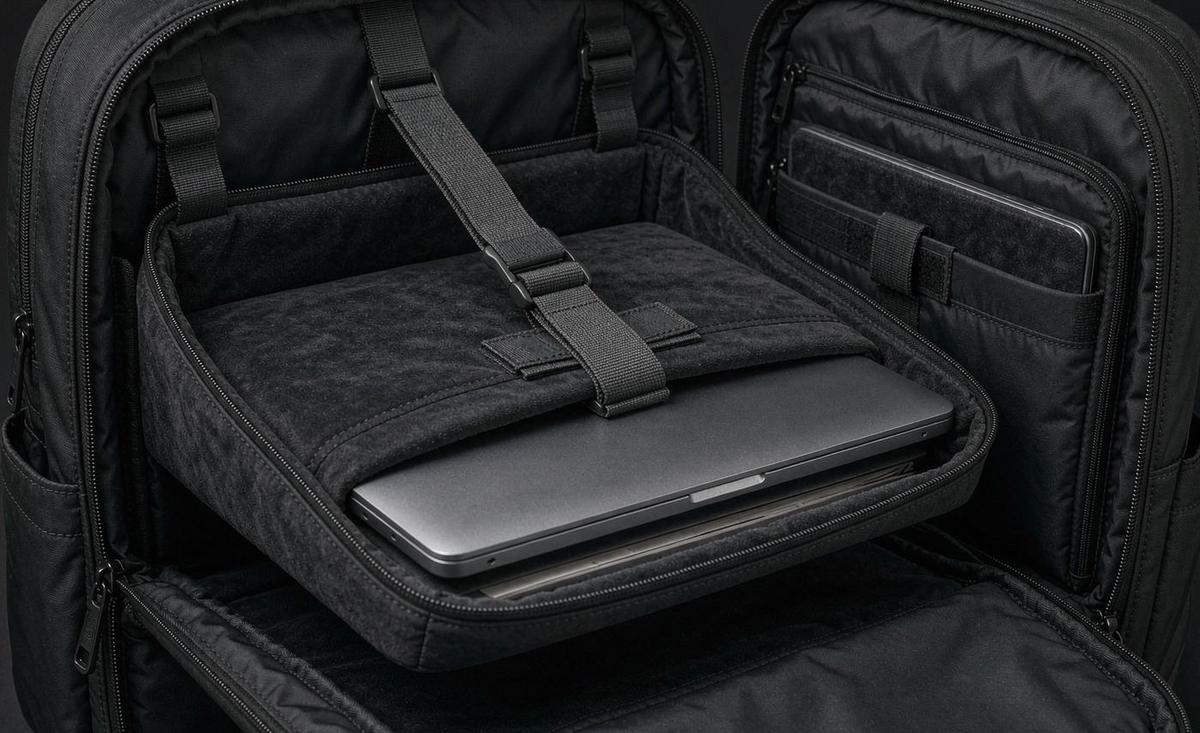
The gate should be a written checklist, not a feeling. Confirm the dimensions against the specification with the bag loaded, not empty. Confirm the closure cycles smoothly 30 times. Confirm the handle or strap attachment by pulling to roughly 1.5 times the intended carry load and holding for 30 seconds. Confirm the colour under daylight and under the lighting used for campaign photography. Confirm the branding legibility at arm's length. Confirm the lining does not catch on the zip tape. Six checks, ten minutes, and each one prevents a class of failure that would otherwise appear in 500 units rather than in one.
Colour deserves its own paragraph because it is where programmes lose the most time. A screen render differs from a dyed woven fabric, and a Pantone reference matched on polyester will not look identical on coated nylon or canvas. The workable method is physical: request a fabric swatch card or lab dip in the actual bulk base, approve it under daylight and under your shooting light, and only then approve the sample. Where a brand colour is non-negotiable, build an extra 5 to 7 working days into the plan for a second dip. Our sourcing partner handles dip submission as a tracked step, and the full sequence is set out in the crowdfunding bag sample prototyping guide.
How to split a pilot run across three designs
Here is where the MOQ bites, and where a bit of planning saves real money. The minimum is 500 pcs per style and per colourway. Three designs are three styles, so three pilot runs at the published minimum is 1,500 units. There are three legitimate ways to reduce that, in descending order of reliability. The first and best is to sample three and pilot one, which is the method recommended above and which keeps the commitment at 500 units. It gives up the ability to see production behaviour on the two losers, and in practice that is a small loss, because the losers were going to be discarded anyway.
The second is a negotiated split within one run, available when the candidates share a face fabric and differ only in dimensions, trim or pocket layout. Because the fabric purchase is one lot and the line setup can be shared, some programmes will accept a combined 500 or 600 units split across variants, for example 250 / 150 / 100. This is a negotiated arrangement rather than a published rule, it depends on the mill lot size and how busy the line is, and it usually carries a small per-unit uplift of USD 0.15 to 0.40 to cover the extra changeovers. Ask for it explicitly at quotation stage; our production partner will confirm within one exchange whether it is available for your construction.
The third is to convert the pilot into stock you will actually sell, which is less a reduction than a reframing. If the three candidates are three genuine SKUs that will all appear in the reward ladder or the post-campaign store, then 1,500 units is not a test cost, it is inventory, and the pilot is free except for the risk that one sells slowly. This is the right frame for a brand launching a collection and the wrong frame for a creator choosing one campaign reward. Being honest about which situation you are in is most of the work. Under T/T 30/70 terms, 1,500 units at USD 3.90 means USD 1,755 down and USD 4,095 before shipment, which concentrates the mind usefully.
| Approach | Units | Per-unit effect | Best used when | Main risk |
|---|---|---|---|---|
| Sample three, pilot one | 500 | No uplift | One reward is being selected | No production read on the two losers |
| Negotiated split in one run | 500-600 | USD 0.15-0.40 uplift | Candidates share fabric and differ in trim or size | Not always available; depends on line load |
| Three full pilots as SKUs | 1,500 | Best unit price | All three will genuinely go to market | USD 5,850 committed before demand is known |
What a pilot run measures that sampling cannot
Design the measurement plan before the pilot ships, because the data is only collectable once. The four things worth measuring are consistency, packing density, defect profile and user response. Consistency is measurable on the line and in your own inspection: pull ten units at random from across the run, not from the top of the first carton, and measure the same six dimensions on each. Variation above roughly 3 to 5 mm on a sewn dimension indicates a pattern or jig problem that will get worse, not better, at 5,000 units.
Packing density is the one nobody plans for and everybody pays for. Carton dimensions and units per carton determine freight cost, and a bag that packs 40 per carton instead of 30 costs roughly 25 percent less per unit to ship. Measuring the actual packed carton from the pilot lets you recalculate freight for the bulk run before the bulk run is quoted. Ask your partner for carton dimensions and units per carton with the pilot, and check whether the bag can be nested or flat-packed for shipment without creasing; on a tote or a pouch that is sometimes worth USD 0.30 to 0.60 per unit in freight.
Defect profile is what the inspection report gives you. Inspection runs to AQL 2.5 to ISO 2859-1, which sets an acceptance threshold rather than a zero-defect guarantee, so read the report for the distribution of faults rather than the pass or fail. If 60 percent of the defects found are on the handle attachment, that is a design or jig issue to fix before bulk. If they are spread evenly across ten categories, that is normal process variation and will improve slightly with repetition. Ask for the defect breakdown by category, not just the accept or reject line.
User response is the commercial half, and it needs a sample size large enough to mean something. Seeding 15 bags gives you anecdotes; seeding 60 to 100 gives you a rough rate you can act on. Structure it: a short survey with four or five fixed questions, a request for one photograph in real use, and a deadline. Expect a 40 to 60 percent response rate on a well-run seeding to superfans. The questions should be about the thing under test, not about whether people like the bag, because everyone says they like a free bag. Ask what they carried in it, what did not fit, and what they would change.
Decision gates and kill criteria
A pilot without a kill criterion is a pilot that will always pass, because sunk cost makes failure psychologically expensive. The same logic governs the decision to buy volume at all, which is set out in the unit cost curve analysis, and a pilot is only worth running when the curve shows a real step down behind it. Set the kill criteria while the pilot is still an idea. Three are worth having. The first is a structural kill: if more than 4 percent of the seeded units report a functional failure, meaning a broken strap, a failed zip or a seam opening, the design does not go to bulk and goes back to the pattern room. At a 2.5 AQL threshold, a lot can pass inspection and still contain functional faults that only emerge in use, which is exactly why user seeding and inspection are complementary rather than redundant.
The second is a commercial kill: if the landed cost of the bag, recalculated from actual pilot freight and duty, exceeds the reward tier price minus fulfilment by more than a set margin, the specification is revised or the tier is repriced before bulk. This gate exists because landed cost is estimated before the pilot and known after it, and the gap is frequently 8 to 15 percent. The third is a preference kill: if a pre-registered preference threshold is not met, for example if fewer than 50 percent of seeded users choose candidate A over B, go back to the two-candidate comparison rather than shipping the one you prefer.
Gates need owners and dates. Our programme coordinator runs pilots as a gated sequence with a named decision date at each gate, which sounds bureaucratic and is in fact the thing that keeps a nine-week test from becoming a sixteen-week one. The pattern that derails pilots is not a bad sample; it is a good-enough sample plus a creator who wants one more round of feedback. Set the date, make the call on the date, and put any residual doubt into the bulk specification as a documented change rather than into another pilot round.
Key takeaways
- S
- e
- t
- t
- h
- e
- k
- i
- l
- l
- c
- r
- i
- t
- e
- r
- i
- a
- b
- e
- f
- o
- r
- e
- t
- h
- e
- p
- i
- l
- o
- t
- s
- h
- i
- p
- s
- .
- A
- t
- e
- s
- t
- w
- i
- t
- h
- n
- o
- f
- a
- i
- l
- u
- r
- e
- c
- o
- n
- d
- i
- t
- i
- o
- n
- w
- i
- l
- l
- a
- l
- w
- a
- y
- s
- p
- a
- s
- s
- ,
- a
- n
- d
- t
- h
- e
- p
- a
- s
- s
- w
- i
- l
- l
- c
- o
- s
- t
- y
- o
- u
- t
- h
- e
- b
- u
- l
- k
- o
- r
- d
- e
- r
- .
Scheduling a pilot against the campaign calendar
Work backwards from the date bags must be in the fulfilment warehouse. Bulk production takes 35 to 50 days after deposit and approved pre-production sample. Add transit, commonly 25 to 40 days by ocean to the US or EU plus a week for customs and drayage. So the bulk deposit has to clear roughly 90 to 110 days before the delivery date. Everything in the pilot sequence has to finish before that deposit, which means the sequence must start around 150 to 190 days before delivery.
| Step | Duration | Finish before delivery | Notes |
|---|---|---|---|
| Design freeze and RFQ | 1-2 weeks | 190-175 days | Three candidates, one shared fabric where possible |
| Parallel sampling, three ways | 3-5 weeks | 170-150 days | 6-10 working days each, run together |
| Fabric dip approval if needed | 1-2 weeks | 155-140 days | Add 5-7 working days per extra dip |
| Candidate selection gate | 3-5 days | 150-135 days | Written checklist, pre-registered win condition |
| Pilot run of 500 pcs | 35-50 days | 135-95 days | Bulk timing applies; slot must be booked |
| Seeding and user survey | 3-4 weeks | 95-70 days | 60-100 units seeded, 40-60% response |
| Bulk decision and deposit | 3-5 days | 90-70 days | Kill criteria applied before deposit releases |
| Bulk production and transit | 60-90 days | 70-0 days | 35-50 days production plus ocean transit |
The two places this schedule slips are fabric approval and slot booking. Fabric approval slips because a dip is rejected and a second is requested, adding 5 to 7 working days each time, and because creators approve colour on a screen. Slot booking slips because a pilot is treated as a small order and given a slot far later than the creator assumed. Both are avoidable with one habit: at quotation stage, state the delivery date that matters and ask for the production calendar against it. Our production floor runs 7 lines with a monthly capacity of 200,000 pcs, so capacity is rarely the constraint; an unbooked slot is.
There is also a campaign-launch interaction worth planning around. If the pilot finishes before the campaign launches, the photography from seeded users becomes campaign assets and the pilot units become press stock, which is the highest-value use of a pilot there is. If the pilot finishes after the campaign closes, it can only serve the bulk decision, which is still worth USD 3,000 but returns less. Where the calendar allows, run the pilot before launch and treat the seeding as a marketing activity with a manufacturing by-product, rather than the other way round.
Turning the pilot into the first production run
The cleanest outcome is one where the pilot is not wasted. If the pilot passes every gate and the campaign needs 900 units, the pilot's 500 become the first 500 and the bulk order is the remaining 400, priced as a re-order rather than as a fresh minimum. In practice that means the pilot should be specified, tooled and branded exactly as the bulk will be, not as a cheaper test version. A pilot made with a substitute lining or a provisional logo produces results that do not transfer, and 500 units that cannot be shipped.
To make the pilot inheritable, three things have to be captured during it rather than reconstructed afterwards. First, the approved specification file: fabric reference, trim references, colour codes, stitch density, branding artwork and placement, carton spec, with a reference sample from the pilot lot retained in your office. Second, the inspection report with defect breakdown, which tells the bulk run what to watch. Third, the actual packed carton dimensions and weight, which let the bulk freight quote be accurate rather than estimated. All three are free at the time and expensive to recreate.
The re-order economics are favourable but modest. A second run of the same bag at 500 pcs typically lands 3 to 6 percent below the first, because pattern and sample development are removed while fabric lot minimums, trim minimums and line setup are still charged. What improves more than price is lead time: with the pattern, tooling and approved sample on file, the sampling round is largely removed and bulk can start sooner, commonly saving two to three weeks. Tell us at quotation stage that a re-order is likely and the pattern file will be kept live for twelve months.
When to skip the pilot entirely
Pilots are not free and they are not always correct. Skip the pilot when the design is a minor variation on something already in production: same construction, same fabric family, a dimension change of under 10 percent, or a colourway change. In that case two sample rounds and a careful specification review carry nearly all the information the pilot would, and the 9 to 12 weeks saved is worth more than the residual risk. This is common on the second and third product in a range and rare on the first.
Skip it also when the campaign timeline cannot absorb it. A pilot that pushes the bulk deposit past the point where goods can arrive before the promised ship date is worse than no pilot, because a late reward damages a campaign more than a slightly imperfect bag does. In that situation the correct move is a tighter sample gate: two rounds, a written checklist, a physical fabric approval, and a slightly larger replacement buffer of 6 to 8 percent instead of the usual 4 to 6. You are buying back the schedule with buffer rather than with time.
Skip it, finally, when the order is genuinely small and the downside is bounded. If the whole programme is 500 units and there is no bulk order behind it, there is nothing for a pilot to de-risk; the pilot is the order. Run the sampling gate properly, approve the pre-production sample physically, insist on inspection to AQL 2.5, and put the money into the buffer rather than into a second run. Our campaign bag specialist will say so plainly when a pilot is not the right instrument, because the point of the sequence is to reduce risk, not to add a step.
Send us your two or three candidate designs, shared fabric direction and campaign launch date, and our campaign bag specialist will return a parallel sampling plan and a costed pilot schedule within one working day.
Key takeaways
- S
- a
- m
- p
- l
- e
- t
- h
- r
- e
- e
- i
- n
- p
- a
- r
- a
- l
- l
- e
- l
- ,
- p
- i
- l
- o
- t
- o
- n
- e
- a
- t
- 5
- 0
- 0
- p
- c
- s
- ,
- s
- e
- e
- d
- 6
- 0
- t
- o
- 1
- 0
- 0
- u
- n
- i
- t
- s
- ,
- a
- n
- d
- a
- p
- p
- l
- y
- w
- r
- i
- t
- t
- e
- n
- k
- i
- l
- l
- c
- r
- i
- t
- e
- r
- i
- a
- o
- n
- a
- f
- i
- x
- e
- d
- d
- a
- t
- e
- .
- T
- h
- e
- p
- i
- l
- o
- t
- i
- s
- t
- h
- e
- n
- i
- n
- v
- e
- n
- t
- o
- r
- y
- ,
- n
- o
- t
- o
- v
- e
- r
- h
- e
- a
- d
- .
Frequently Asked Questions
What is a bag production pilot run?
A pilot run is a real production run, usually at the 500 pcs minimum, made with production patterns, bulk fabric from the actual mill lot and the real branding setup. It differs from a sample, which is one or two units built by a skilled machinist often with substitute materials. The pilot answers whether the design can be made 500 times consistently and whether users want it.
How much does it cost to test three bag designs?
Sampling three designs in parallel costs roughly USD 500 to 900 including sample fees of USD 40 to 120 per round plus courier, over three to five weeks. Adding one pilot run of 500 pcs on the winner brings the total to about USD 3,000 to 3,600. Three full pilots at 500 each would be 1,500 units and roughly USD 8,500 to 9,500, which is rarely justified.
Can I split a 500 pcs pilot across three designs?
Sometimes, when the candidates share one face fabric and differ only in dimensions, trim or pocket layout. Because the fabric purchase is one lot, some programmes accept a combined 500 or 600 units split across variants, typically with a per-unit uplift of USD 0.15 to 0.40 for the extra changeovers. It is negotiated rather than published, so ask at quotation stage.
How long does a pilot run programme take end to end?
Roughly 9 to 12 weeks from design freeze to bulk deposit: three to five weeks for parallel sampling at 6 to 10 working days each, one to two weeks for fabric approval if a dip is needed, 35 to 50 days for the pilot run, and three to four weeks for seeding and survey. Work backwards about 150 to 190 days from the delivery date.
What should a pilot run measure?
Four things: consistency across ten randomly pulled units, where variation above 3 to 5 mm on a sewn dimension signals a pattern or jig problem; actual packed carton dimensions and units per carton for accurate freight; the defect breakdown by category from AQL 2.5 inspection; and user response from 60 to 100 seeded units with a structured survey.
How many bags should I seed for user feedback?
Between 60 and 100 units. Below about 15 you collect anecdotes rather than a rate. Structure the seeding with four or five fixed questions, a request for one photograph in real use, and a deadline, and expect a 40 to 60 percent response rate from superfans. Ask what they carried, what did not fit, and what they would change.
What kill criteria should a bag pilot have?
Three: a structural kill if more than 4 percent of seeded units report a functional failure such as a broken strap or failed zip; a commercial kill if landed cost recalculated from actual pilot freight and duty exceeds the tier price minus fulfilment; and a preference kill if a pre-registered threshold, such as 50 percent preference for one candidate, is not met.
Does a pilot run count towards the bulk order?
Yes, if it is specified identically to bulk. With the pattern, tooling and approved sample on file, the pilot's 500 units become the first 500 and the remainder is priced as a re-order, typically 3 to 6 percent below the first run because development is removed but fabric, trim and line setup are still charged. Lead time improves more than price, usually by two to three weeks.
Should I run the pilot before or after the campaign launches?
Before, where the calendar allows. A pilot that finishes before launch turns seeded units into press stock and user photography into campaign assets, which is the highest-value use of a pilot. A pilot finishing after the campaign closes can only inform the bulk decision, which is still worth about USD 3,000 but returns considerably less.
When should I skip a pilot run altogether?
When the design is a minor variation on something already in production, such as a dimension change under 10 percent or a colourway change; when the campaign timeline cannot absorb 9 to 12 weeks without missing the ship date; or when the whole programme is 500 units and the pilot would simply be the order. Use a tighter sample gate and a 6 to 8 percent buffer instead.
How do I design three candidates so the test is meaningful?
Vary one axis per candidate and hold everything else constant. Test capacity at 18, 24 and 30 litres, or material across canvas, recycled polyester and coated nylon, or price position through lining and hardware differences. Share one face fabric where possible so the pilot stays inside one mill lot purchase, and pre-register a measurable win condition.
What branding setup costs apply to a three-design test?
If all three carry the same logo in the same method, the setup is a one-off and reusable: USD 25 to 60 for an embroidery digitising file, USD 15 to 35 per screen colour per placement, USD 80 to 250 for a foil or emboss die. If you compare foil against embroidery against a woven label across candidates, you pay three setups, which should be a deliberate budget line.
People Also Ask
What is a pilot run in bag production?
A production run of 500 pcs made with bulk materials and production tooling, used to validate the design before the bulk commitment. It differs from a sample, which is one or two handmade units that answer structural questions only.
How much does a 500 pcs pilot run cost?
Around USD 1,950 to 2,400 for a mid-weight tote at an indicative USD 3.90 FOB, plus branding setup and freight. With three parallel sample rounds before it, the total test cost is roughly USD 3,000 to 3,600.
Can I test three bag designs at one 500 pcs minimum?
Only by sampling three and piloting one, or by negotiating a split within one run when the candidates share a fabric. Three full pilots means three styles at 500 each, which is 1,500 units.
How long does sampling take for one bag design?
6 to 10 working days for a standard bag and 12 to 15 working days for a complex one, starting when artwork, dimensions and material direction are agreed. Run three candidates in parallel and the total is three to five weeks rather than fifteen.
How many units should a pilot seed to users?
60 to 100 units, with a structured four or five question survey and a deadline. Expect a 40 to 60 percent response rate. Fewer than 15 seeded units gives anecdotes rather than an actionable rate.
Should a pilot use the same materials as bulk production?
Yes, always. A pilot made with a substitute lining or a provisional logo produces results that do not transfer and 500 units that cannot be shipped to backers. Specify the pilot exactly as bulk will be.
What happens to pilot units if the design passes?
They become the first units of the bulk requirement. The remainder is ordered as a re-order, usually 3 to 6 percent cheaper per unit and two to three weeks faster, because pattern and tooling are already on file.