Bag Re-orders: How Stretch Goals Change Your Minimum Order
Stretch goals change a bag programme by changing when demand becomes knowable, not by changing the minimum itself. A re-order carries the same 500 pcs per style and per colourway minimum as the first run, bulk still takes 35 to 50 days, and a second colourway unlocked mid-campaign adds a full 500-unit block plus a fresh 6 to 10 working day sampling round. The workable plan is to order the base run against a conservative forecast before the campaign closes, reserve an adjacent production window for the stretch scenario, and place the re-order the week the backer survey closes. This guide gives the arithmetic, the calendar and the buffer policy.
- Why stretch goals break a bag demand forecast
- Additive versus multiplicative stretch goals
- Ordering before the campaign closes: what is knowable
- The survey window and the first true demand number
- Reserving the second production slot before launch
- Re-order minimums: the second run carries its own 500
- Timing the re-order against the 35 to 50 day clock
- Buffer policy for a campaign running stretch goals
- Cash and payment across two production runs
- A worked stretch goal production plan
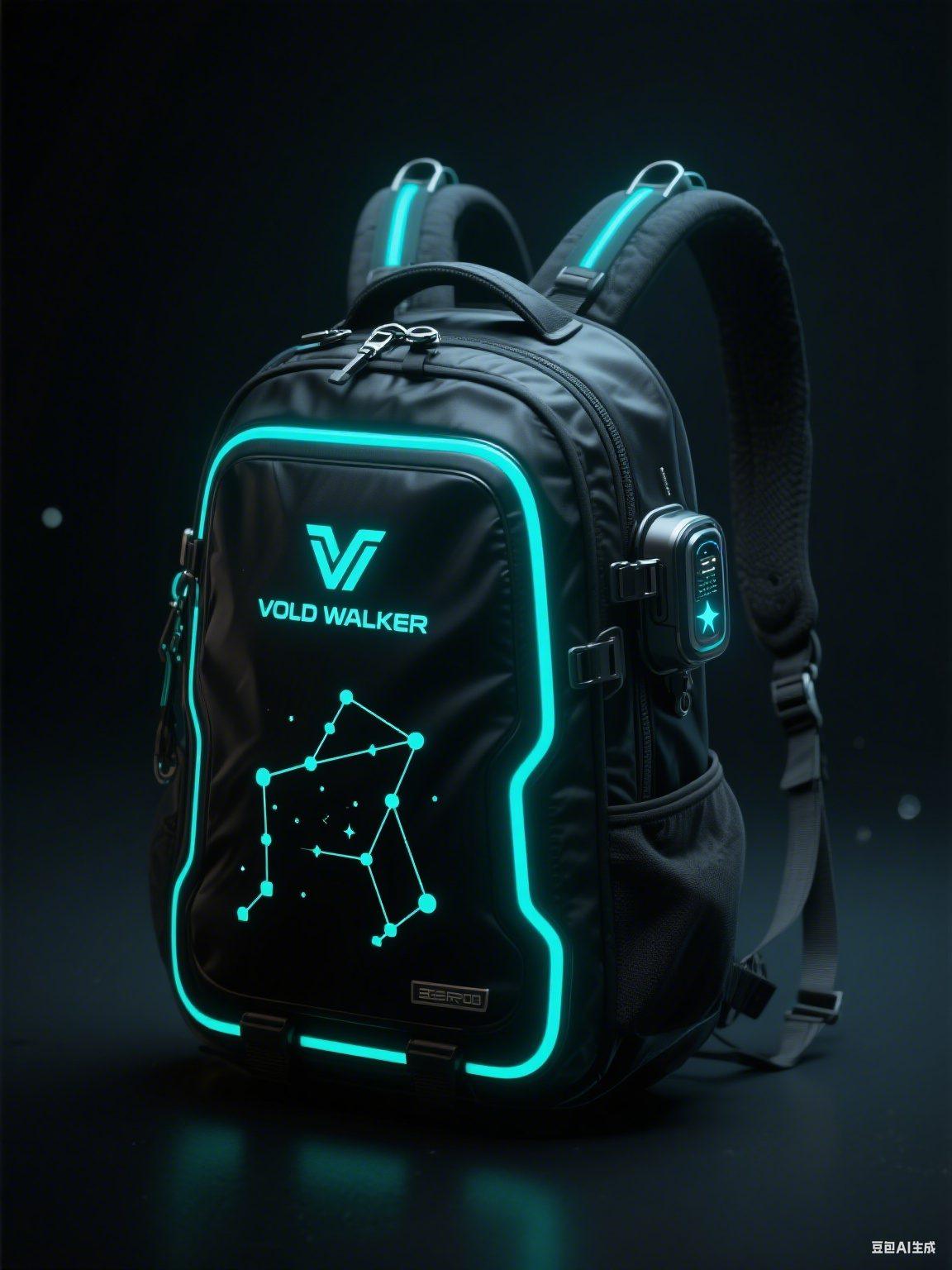
Creators tend to think of stretch goals as a marketing device that happens to have a manufacturing consequence. It is more accurate to say a stretch goal is a demand forecast with an unknown release date, and that the manufacturing consequence is the entire difficulty. A campaign that unlocks a second colourway at 150 percent funding has changed its bag requirement from 800 units to 1,300 units, in a different colour mix, at a point where the first order may already be in production and the line for the second is not booked.
This article is about handling that without either over-ordering before the campaign closes or discovering in month three that a second slot cannot be had. It covers which stretch goals change the minimum and which do not, what can be ordered before the campaign closes and what has to wait, how a reserved production window works, and the buffer policy for a campaign whose final quantity is genuinely unknown. Start with the crowdfunding bag guide for the wider programme structure and the low MOQ bag production route for creators for the mechanics of the minimum.
Why stretch goals break a bag demand forecast
A bag order has to be placed before demand is known, which is unusual in manufacturing and normal in crowdfunding. The sequence is fixed: the campaign runs for 30 to 45 days, the pledge survey closes two to six weeks after funding, and only then does the creator know the tier mix. Meanwhile the bag has to be made, which takes 35 to 50 days after deposit and approved pre-production sample, plus 25 to 40 days of ocean transit. Any creator who waits for certainty before ordering will miss their own delivery promise by two months or more.
Stretch goals make this worse in a specific way: they shift the distribution of possible outcomes rather than just raising it. A campaign with a base goal of 800 bag units and a stretch goal that adds a colourway has a demand distribution with two peaks, one around 800 and one around 1,300, and almost nothing in between. That bimodality defeats the usual hedge of ordering the midpoint, because the midpoint is the outcome least likely to occur. The correct response is not a bigger first order; it is a modular plan with a base run and a contingent second run.
There is a second-order effect that catches creators who do plan for it. Stretch goals also change the mix, not just the total. A goal that adds a bag to a lower tier changes the ratio of bag-bearing tiers, sometimes doubling units while barely moving funding. A goal that upgrades the bag on the top tier changes the specification rather than the quantity, which triggers a new sampling round at 6 to 10 working days and potentially a new style at its own minimum. Both are manageable; neither is manageable if discovered after the deposit is paid.
A stretch goal makes demand bimodal, so the midpoint hedge fails. Plan a base run plus a contingent second run with a reserved window.
Additive versus multiplicative stretch goals
The single most useful distinction in this whole subject is between stretch goals that add to the bill of materials and stretch goals that multiply the order. Additive goals are trim and accessory lines on the same bag: an extra interior pocket, a mirror, a detachable wrist strap, a key clip, a dust bag, a second woven label, a printed interior. Each is a component on the existing specification, the unit cost impact is typically USD 0.20 to 0.90, and the minimum does not change. Announce these freely.
Multiplicative goals change the purchase blocks. A new colourway adds 500 pcs of commitment because the minimum is per style and per colourway. An upgraded silhouette, such as moving from a flat pouch to a structured case, adds a new style at 500 plus a fresh sampling round of 6 to 10 working days, or 12 to 15 working days for a complex construction. A size variant adds a third block if it cannot share a combined total. These are the goals that have to be priced into the campaign before they are announced, because the cost of discovering them late is not just money but calendar.
The practical rule for campaign design is to make the visible stretch goals additive and keep multiplicative ones as late-stage, high-threshold goals with a costed plan behind them. A campaign that unlocks a detachable strap at 120 percent, a mirror at 140 percent and an interior organiser at 160 percent has three compelling updates and no change to the purchase structure. A campaign that unlocks a second colourway at 120 percent has committed to 500 more units before it knows whether 800 backers want the first colour.
| Stretch goal | Type | Effect on MOQ | Cost impact | Planning needed |
|---|---|---|---|---|
| Extra interior pocket | Additive | None | USD 0.20-0.45 per unit | Include in base spec |
| Detachable wrist strap | Additive | None | USD 0.45-0.90 per unit | Source at quotation stage |
| Mirror or dust bag | Additive | None | USD 0.30-0.85 per unit | Confirm supplier lead time |
| Second colourway | Multiplicative | Plus 500 pcs | New fabric lot, new trim | Reserve slot and dip before launch |
| Upgraded silhouette | Multiplicative | Plus 500 pcs | New style plus resampling | Sample both before launch |
| Bag added to a lower tier | Multiplicative | Plus 300-600 pcs | Volume only | Model the mix, reserve slot |
Ordering before the campaign closes: what is knowable
Two things are genuinely knowable before a campaign closes and two are not. Knowable: the design, because the silhouette, dimensions, materials and branding are decided in pre-production, and the cost structure, because a quotation at 500, 1,000 and 2,000 pcs can be obtained in advance. Not knowable: the tier mix, which is only fixed by the survey, and the funding outcome, which determines whether stretch goals unlock at all.
That asymmetry dictates the order strategy. Commit to everything that does not depend on the unknowns and defer everything that does. Concretely: freeze the design, obtain the three-quantity quotation, approve the pre-production sample, and if the campaign is likely to fund, release the deposit on a base run sized to the conservative forecast rather than to the optimistic one. A base run at 800 when the optimistic case is 1,300 leaves a known gap of 500 that can be filled by a re-order, whereas a run at 1,300 when the outcome is 800 leaves 500 units of unsold stock that no re-order can fix.
The conservative forecast should be constructed from the tier structure rather than from the funding goal. Take the number of backers needed to hit the base goal, multiply by the proportion of tiers carrying a bag, and apply a 10 to 15 percent upgrade allowance for backers who move up when a physical perk is attached. A campaign needing 1,000 backers at base funding with a bag on two tiers at 45 and 15 percent uptake is looking at roughly 600 units plus 90 of upgrades, or about 690, and should order 700 rather than 1,000.
One option is worth considering and usually worth declining: ordering the optimistic quantity and treating the surplus as post-campaign inventory. It is sometimes correct, but only when three conditions hold. The bag must be a product the brand will sell afterwards, the cash must be available without straining the fulfilment budget, and the surplus must be a size the brand can hold for six months. Most first campaigns fail at least one of those. Our campaign bag specialist will say so plainly rather than encouraging a larger order, because the failure mode of over-ordering is slow and the failure mode of under-ordering is fixable with a slot.
The survey window and the first true demand number
The backer survey is the first point at which demand is real, and the calendar around it is the most compressed part of a campaign bag programme. Surveys typically run two to four weeks, with a completion rate of 70 to 90 percent for well-run campaigns. The creator therefore has a usable number roughly three to six weeks after funding closes, and non-responders have to be estimated, usually by assuming they follow the distribution of responders, which is a reasonable assumption and errs slightly low.
The re-order decision should be made in that week, not later. Every week of delay costs a week of delivery, because bulk production is 35 to 50 days and transit is 25 to 40 days on top. A campaign that funds on 1 October, surveys through 25 October, and orders the re-order on 28 October will see those goods arrive in roughly early January. The same campaign that deliberates for three weeks will see them arrive in late January, and the difference is visible to backers.
Build the estimate with three adjustments on top of the raw survey count. Add the non-responder estimate using the responder distribution. Add a late pledge and pre-order allowance if the campaign continues through a late pledge platform, commonly 3 to 8 percent of funded backers. Add the replacement buffer of 4 to 6 percent. Subtract whatever remains unallocated from the base run. That gives the re-order quantity, and it should be rounded up to the nearest block that makes commercial sense, usually to a clean multiple of 100 or to a quantity that reaches a better price band.
Reserving the second production slot before launch
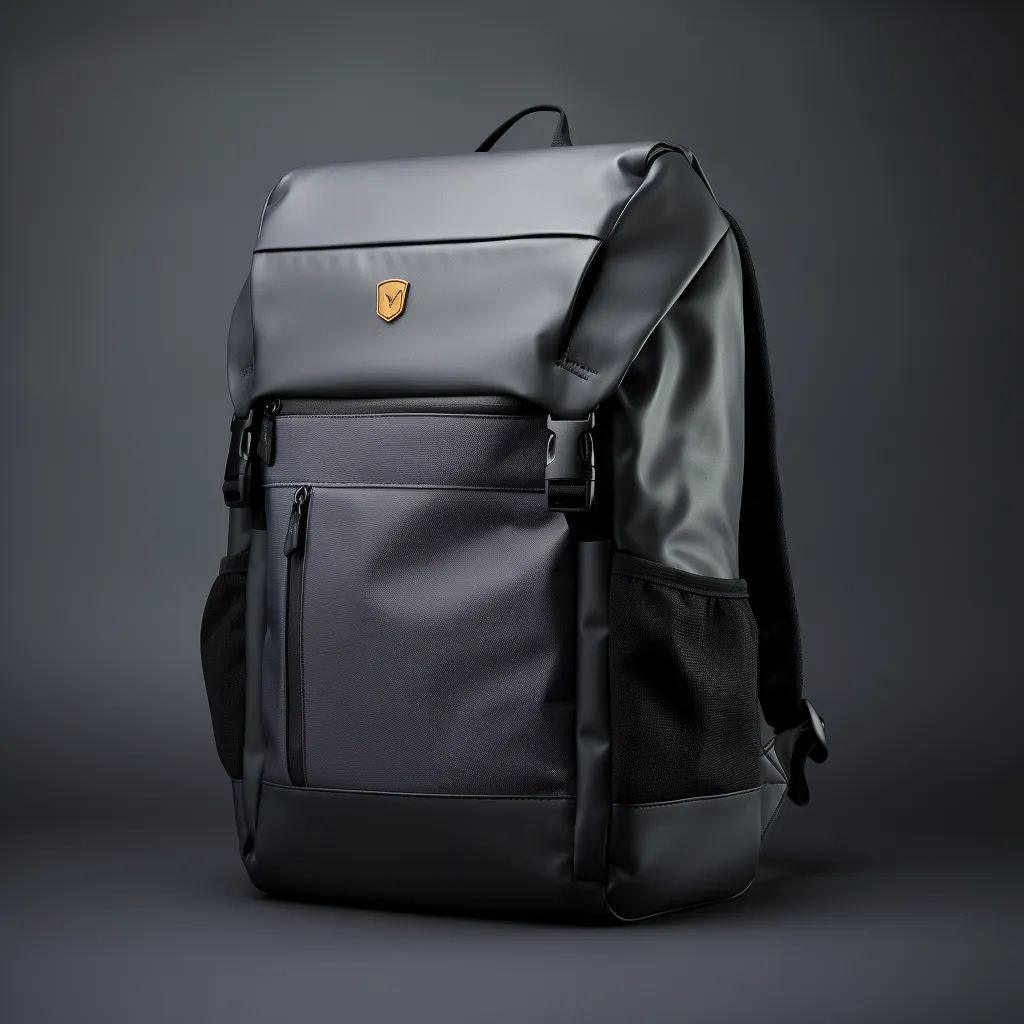
A reserved slot is the highest-value, lowest-cost instrument available to a campaign running stretch goals, and it is almost never used because creators do not know to ask. The mechanism is simple: at quotation stage, tell your partner that a stretch goal or a survey-driven re-order is likely, state the probable window, and ask for an adjacent production window to be pencilled in. It costs nothing at the time. It removes the risk that a 35 to 50 day run cannot be started when you need it, which is otherwise a real and common failure.
Why it matters is a matter of how production calendars work. A line booked for a 5,000-unit order in November cannot also run your 500-unit re-order in November. Capacity is not the constraint in general, since our production floor runs 7 lines with 149 machines and a monthly capacity of 200,000 pcs, but capacity in a specific month is finite and is allocated to whoever asks first. A pencilled window is not a firm booking and carries no obligation, and it converts an unquantifiable risk into a known date.
Ask for the reservation in writing with three things attached: the probable quantity band, for example 300 to 800 units; the probable decision date, which is when the survey closes; and the latest acceptable delivery date, which is what the promise to backers depends on. That gives the scheduling team enough to work with and gives you a written reference if the window later becomes contested. Our programme coordinator holds windows on exactly this basis for campaign clients, and the reservation is released without penalty if the stretch goal does not unlock.
Key takeaways
- A
- s
- k
- f
- o
- r
- a
- p
- e
- n
- c
- i
- l
- l
- e
- d
- s
- e
- c
- o
- n
- d
- w
- i
- n
- d
- o
- w
- a
- t
- q
- u
- o
- t
- a
- t
- i
- o
- n
- s
- t
- a
- g
- e
- ,
- w
- i
- t
- h
- a
- q
- u
- a
- n
- t
- i
- t
- y
- b
- a
- n
- d
- ,
- a
- d
- e
- c
- i
- s
- i
- o
- n
- d
- a
- t
- e
- a
- n
- d
- a
- l
- a
- t
- e
- s
- t
- d
- e
- l
- i
- v
- e
- r
- y
- d
- a
- t
- e
- .
- I
- t
- c
- o
- s
- t
- s
- n
- o
- t
- h
- i
- n
- g
- a
- n
- d
- i
- t
- i
- s
- t
- h
- e
- o
- n
- l
- y
- r
- e
- a
- l
- h
- e
- d
- g
- e
- a
- g
- a
- i
- n
- s
- t
- a
- s
- t
- r
- e
- t
- c
- h
- g
- o
- a
- l
- .
Re-order minimums: the second run carries its own 500
The point that surprises most creators is that a re-order is a new order. The minimum is 500 pcs per style and per colourway, and it applies again. A campaign that ordered 700 and needs 250 more cannot order 250; it must order 500, unless the re-order can be structured differently. That is not a technicality, it is the central constraint of stretch goal planning, and it is why the base run should be sized so that the likely gap is either below a size worth filling or close to a full block.
Three structures handle the gap. The first is to accept the 500 and hold the surplus as inventory, which is fine when the gap is 400 or more and the brand has a post-campaign sales channel. The second is to combine the re-order with a post-campaign restock, ordering 500 or 1,000 and allocating part to backers and part to the website, which is the most common and usually the most sensible resolution. The third is to combine the re-order with the stretch colourway, so the second run covers both the survey gap and the unlocked colourway in one production event.
That third structure deserves emphasis because it is where the money is. Two separate runs of 500, one for the gap and one for the new colourway, pay two line setups, two inspection visits and often two freight shipments. The same 1,000 units booked together, split 500 in the original colourway and 500 in the stretch colourway, share the setup, share the inspection and share the container, which is typically worth USD 0.20 to 0.45 per unit. It also means one delivery date rather than two, which matters enormously to backer communication.
Pricing on the re-order is worth setting expectations about. A re-order at the same quantity typically lands 3 to 6 percent below the original run, because pattern and sample development are removed while fabric lot minimums, trim minimums, line setup and branding screens are still charged. It is not a 20 percent saving and should not be modelled as one. What improves more is lead time, usually two to three weeks, because the sampling round becomes a confirmation on an existing specification rather than a 6 to 10 working day development cycle.
Timing the re-order against the 35 to 50 day clock
Work backwards from the promise made to backers. If the campaign promised March delivery, goods must be in the fulfilment warehouse by late February, which means ocean shipment in early January, which means production finished by late December, which means the deposit and approved sample in place by early to mid November. If the survey closes in late October, the window between knowing the number and needing to act is about two weeks. That is the entire decision window, and it is why the preparation has to happen before the campaign launches.
| Milestone | Date | Days before delivery | Action required |
|---|---|---|---|
| Campaign funds | 1 October | -150 | Base run deposit already released |
| Survey closes | 25 October | -125 | Re-order quantity calculated within 48 hours |
| Re-order deposit released | 30 October | -120 | Uses the reserved window |
| Confirmation sample approved | 5 November | -115 | Existing spec, no development round |
| Bulk production | 5 Nov - 20 Dec | -115 to -70 | 35 to 50 days on the reserved line |
| Inspection at AQL 2.5 | 20 December | -70 | Balance payment due |
| Ocean transit and customs | 20 Dec - 5 Feb | -70 to -25 | 25 to 40 days plus clearance |
| Goods at fulfilment warehouse | 5 February | -25 | Ready ahead of a March promise |
Two failures appear repeatedly in that schedule and both are avoidable. The first is a re-order deposit delayed by internal debate, where the creator knows the number on 25 October and releases the deposit on 20 November. Three weeks lost, and the reserved window may have lapsed. The second is a sample approval delay, because the creator decides to make a small improvement to the re-order specification, which converts a confirmation into a development round and puts the 6 to 10 working days back into the critical path. Freeze the specification for the re-order. Improvements belong in the next product, not in the stretch run.
There is one legitimate reason to accept a delay, and it is worth naming: when the re-order quantity is small enough that the 500 pcs block creates a large surplus, it can be better to wait and combine the re-order with a later restock than to ship 500 when 250 were needed. That is a cash decision rather than a schedule decision, and it should be made explicitly with the delivery promise in view. If waiting means missing the promised date for some backers, ship in two waves rather than holding everything.

Buffer policy for a campaign running stretch goals
Buffer is the cheapest insurance in a campaign and the most frequently omitted line. Inspection at AQL 2.5 to ISO 2859-1 sets an acceptance threshold rather than a zero-defect guarantee, so a passing lot can still contain units with cosmetic faults, and transit adds its own attrition. The standard allowance is 4 to 6 percent on top of confirmed backer units. For a campaign running stretch goals, hold 6 percent rather than 4, because the re-order is a separate production event with its own material lot and its own defect distribution.
Split the buffer across runs deliberately rather than taking it from the last one. On a programme of 700 base units and 500 re-order units serving 1,100 backers, hold roughly 66 units in total, about 42 against the base run and 24 against the re-order, so that replacements for early shipments are available before the second run arrives. Holding the whole buffer in the re-order means the first wave has no spare units for eight weeks, which is exactly when damage claims arrive.
There is also a mix buffer to consider, which is specific to stretch goals. If the campaign sells a black and a sand colourway and backers choose at survey time, the split is only known after the survey. Ordering 700 before the survey means guessing the split, and a guess that is wrong by 15 percent on colour leaves 105 units of the wrong colour and a shortage of the right one. Where the colour choice is made by backers, it is safer to run the base quantity in the dominant colour and carry the full second colour in the re-order, accepting that the second colour ships later, than to split the base run and get both wrong.
- Hold 6 percent, not 4 percent, when a re-order is involved, because the second run has its own material lot and defect distribution.
- Split the buffer across runs so early shipments have replacement units available before the second wave arrives.
- Do not guess a colour split on the base run; make the base run in the dominant colour and carry the second colour in the re-order.
- Track damage claims weekly and compare against the buffer consumption rate, not against the total buffer.
- Keep the surplus as website inventory rather than writing it off; it is the only stock that sells at full margin.
Cash and payment across two production runs
Terms are T/T 30/70 on FOB Xiamen: 30 percent deposit to release materials and book the slot, 70 percent balance before shipment. On a base run of 700 totes at USD 3.60 that is USD 756 down and USD 1,764 before shipment. On a re-order of 500 at USD 3.45, roughly 4 percent lower, that is USD 518 down and USD 1,207 later. Both balances fall before backers have paid for anything beyond their pledge, and the second falls while the first shipment is still being paid for.
Model the two runs against the campaign cash position, because the shape is less comfortable than it looks. Funds land at campaign close, typically minus platform fees of about 5 percent and payment processing of about 3 to 5 percent, so a campaign raising USD 40,000 nets roughly USD 36,000. Against that, the base run costs about USD 2,520 plus freight and duty, and the re-order about USD 1,725 plus freight and duty. The re-order is affordable in most cases, but it is not free, and a campaign that has committed its contingency to the base run will feel it.
Three habits protect the position. Size the base run conservatively, which keeps the second deposit small enough to be comfortable. Reserve the freight and duty money separately from the production money, at roughly 30 to 45 percent of FOB value on small shipments, because freight per unit at these volumes is punitive and goods that cannot be cleared are worse than goods that are late. Announce multiplicative stretch goals only when their cost is already funded, which in practice means having the re-order cash identified before the goal is announced rather than after it unlocks.
A worked stretch goal production plan
Take a campaign with a base funding target requiring 1,000 backers, a bag on two tiers at 45 and 15 percent uptake, and two stretch goals: a detachable strap unlocked at 130 percent, and a second colourway unlocked at 170 percent. Pre-campaign modelling puts base demand at about 600 plus a 12 percent upgrade allowance, or roughly 672, and the creators order 700 units in the primary colourway. They also tell their partner that a second colourway may unlock and ask for a pencilled window in the month after the survey closes.
The campaign funds at 185 percent with 1,950 backers. The survey returns 88 percent, showing 780 bag units in the primary colourway and 340 in the second, or 1,120 confirmed. Adding a 6 percent buffer gives 1,187. The base run of 700 covers the first wave, and the re-order is 500: 300 in the primary colourway to cover the remainder and the buffer, and 200 in the second colourway, run in the same production event. The detachable strap, an additive goal, is already in the base specification and adds USD 0.65 per unit across both runs.
The numbers work out as follows. Base run 700 at USD 3.60 plus the strap is USD 2,975. Re-order 500 at USD 3.45 plus the strap and a small split uplift of USD 0.25 is USD 1,850. Total bag spend is USD 4,825 for 1,200 units, or about USD 4.02 average, against an original 700-unit price of USD 3.60. The average rose because the second run is smaller and carries a split, and that is the honest cost of running a stretch goal. It is far less than the cost of ordering 1,200 units before the campaign closed and discovering only 700 were needed.
The alternative path makes the comparison concrete. Ordering 1,200 up front at the 1,000-unit price band of roughly USD 3.38 would have cost USD 4,056, about USD 769 less, and would have required committing that money before funding closed, with no knowledge of the colour split and no ability to adjust. The modular path cost USD 769 more and bought the correct colour mix, a smaller initial cash outlay, and the option to walk away if the campaign had funded at base level. For a first campaign, that is a good trade. Further cost behaviour across quantity bands is set out in the unit cost curve analysis.
Send us your tier structure, stretch goal list and launch date, and our campaign bag specialist will return a base run plan with a pencilled second window and a costed stretch scenario within one working day.
Key takeaways
- M
- o
- d
- e
- l
- b
- a
- s
- e
- d
- e
- m
- a
- n
- d
- c
- o
- n
- s
- e
- r
- v
- a
- t
- i
- v
- e
- l
- y
- ,
- f
- r
- e
- e
- z
- e
- t
- h
- e
- s
- p
- e
- c
- i
- f
- i
- c
- a
- t
- i
- o
- n
- ,
- r
- e
- s
- e
- r
- v
- e
- t
- h
- e
- s
- e
- c
- o
- n
- d
- w
- i
- n
- d
- o
- w
- b
- e
- f
- o
- r
- e
- l
- a
- u
- n
- c
- h
- ,
- a
- n
- d
- d
- e
- c
- i
- d
- e
- t
- h
- e
- r
- e
- -
- o
- r
- d
- e
- r
- i
- n
- t
- h
- e
- w
- e
- e
- k
- t
- h
- e
- s
- u
- r
- v
- e
- y
- c
- l
- o
- s
- e
- s
- .
Frequently Asked Questions
Do stretch goals change the 500 pcs bag minimum?
Additive goals do not: an extra pocket, a detachable strap, a mirror or a dust bag are trim and accessory lines costing USD 0.20 to 0.90 per unit. Multiplicative goals do: a new colourway adds another 500-unit block, and an upgraded silhouette adds a new style at 500 plus a fresh 6 to 10 working day sampling round, or 12 to 15 for a complex construction.
Should I order bags before my campaign closes?
Yes, for a base run sized to the conservative forecast. Design and cost are knowable in advance; tier mix and funding outcome are not. Order 700 when the optimistic case is 1,300 and fill the gap with a re-order, because a surplus cannot be fixed by any later decision and a shortfall can.
How do I estimate bag demand before the survey closes?
Take the backers needed to hit the base goal, multiply by the proportion of tiers carrying a bag, and add a 10 to 15 percent upgrade allowance for backers who move up when a physical perk is attached. A campaign needing 1,000 backers with 45 and 15 percent tier uptake is looking at roughly 600 plus 90, or about 690 units.
What is a reserved production slot and does it cost anything?
It is a pencilled production window held for a probable re-order, and it costs nothing. You state a quantity band, a decision date and a latest acceptable delivery date, and the window is released without penalty if the stretch goal does not unlock. It removes the risk of a 35 to 50 day run not being startable when you need it.
Does a re-order have the same 500 pcs minimum?
Yes. A re-order is a new order and the 500 pcs per style and per colourway minimum applies again. A campaign that ordered 700 and needs 250 more must order 500, so structure the re-order to combine the gap with a post-campaign restock or with the stretch colourway in one production event.
How much cheaper is a campaign bag re-order?
Typically 3 to 6 percent at the same quantity, because pattern and sample development are removed while fabric lot minimums, trim minimums, line setup and branding screens are still charged. Lead time improves more, usually by two to three weeks, because sampling becomes a confirmation rather than a 6 to 10 working day development round.
When should I place the re-order after the campaign funds?
In the week the survey closes. Surveys run two to four weeks with a 70 to 90 percent completion rate, and bulk production is 35 to 50 days plus 25 to 40 days of transit. A campaign funding on 1 October with a survey closing on 25 October must release the deposit by about 30 October to hit a March delivery promise.
How many spare bags should a campaign with stretch goals hold?
Six percent rather than the usual four, because the re-order is a separate production event with its own material lot and defect distribution. Split the buffer across both runs so early shipments have replacements before the second wave arrives. Inspection at AQL 2.5 sets an acceptance threshold, not a zero-defect guarantee.
Should I guess the colourway split on the first run?
No. Run the base quantity in the dominant colour and carry the second colour in the re-order. A split guessed before the survey that is wrong by 15 percent leaves about 105 units of the wrong colour on a 700-unit run, and backers choose colour at survey time, not before it.
What does a stretch goal cost in production terms?
In a worked example, a base run of 700 at USD 3.60 plus a strap came to USD 2,975, and a re-order of 500 at USD 3.45 plus a USD 0.25 split uplift came to USD 1,850, for a total of USD 4,825 across 1,200 units. Ordering 1,200 up front would have cost about USD 4,056, roughly USD 769 less, with no knowledge of the colour mix.
What payment terms apply across two campaign runs?
T/T 30/70 on FOB Xiamen for each run. A base run of 700 totes at USD 3.60 is USD 756 deposit and USD 1,764 before shipment; a re-order of 500 at USD 3.45 is USD 518 and USD 1,207. Both balances fall before backers pay beyond their pledge, so reserve freight and duty separately at 30 to 45 percent of FOB value.
What if my stretch goal upgrades the bag itself?
Sample both versions before launch. An upgraded silhouette is a new style at its own 500-unit minimum plus a 6 to 10 working day sampling round, or 12 to 15 for a complex construction. Announce it only when the cost is already funded, and keep the base specification frozen for the re-order so improvements do not enter the critical path.
People Also Ask
Do stretch goals increase bag MOQ?
Only multiplicative ones. Additive goals such as an extra pocket or a detachable strap cost USD 0.20 to 0.90 per unit and change nothing. A new colourway or an upgraded silhouette adds a full 500-unit block.
How many bags should I order before my campaign ends?
A base run sized to the conservative forecast, typically 60 to 70 percent of the optimistic case. Fill the gap with a re-order when the survey closes, because a surplus cannot be fixed later and a shortfall can.
What is a reserved production slot?
A pencilled window held for a probable re-order, requested at quotation stage at no cost, with a stated quantity band, decision date and latest delivery date. It is released without penalty if the stretch goal does not unlock.
How long does a campaign bag re-order take?
About 60 to 90 days from deposit to warehouse: 35 to 50 days of bulk production on an existing specification, plus 25 to 40 days of ocean transit and customs. Sampling reduces to a confirmation round.
Can I order just the extra 250 bags I need?
No. The 500 pcs minimum applies to the re-order as a new order. Combine the gap with a post-campaign restock or with the stretch colourway so the extra units have a planned destination.
How much buffer should a stretch goal campaign keep?
Six percent rather than four, split across both runs, because the re-order has its own material lot and defect distribution and early shipments need replacements before the second wave arrives.
Should I guess the colour split before the survey?
No. Run the base quantity in the dominant colour and carry the second colour in the re-order. A 15 percent error on a 700-unit run leaves about 105 units of the wrong colour.