Small Brand Bags: Scaling From 500 to 5,000 Pcs in 3 Re-orders
A small brand reaches 5,000 units more safely through three re-orders than through one large order. The ladder that works is 500 pcs to validate, 1,000 to 1,500 once sell-through is proven, then 2,500 to 3,000 to consolidate, with cumulative volume of roughly 4,000 to 5,000 over eighteen months. Each run carries the same 500 pcs per style and colourway minimum, sampling on re-orders drops to a confirmation round rather than 6 to 10 working days of development, and bulk stays at 35 to 50 days. Total spend is about 8 to 12 percent above a single 5,000-unit order, and peak cash tied up is roughly a third of it. This guide sets out each rung, the cash maths and the version control that keeps run three identical to run one.
- The three re-order ladder and what each rung buys
- Run one: what 500 pcs establishes beyond inventory
- Run two: scaling the winner and adding a colourway
- Run three: consolidating volume into one larger run
- The cash cycle maths behind the ladder
- Specification version control across three re-orders
- Calendar planning for three runs in eighteen months
- Keeping quality consistent from run one to run three
- When to consolidate three runs into one
- What actually changes when a brand reaches 5,000 pcs

The question small brands ask is usually phrased as a pricing question: at what point should I order bigger? It is really a risk question, and treating it as one produces a different answer. A single 5,000-unit order captures the best unit price on the curve and commits the entire cash position to one specification, one colourway and one forecast. Three re-orders across eighteen months cost roughly 8 to 12 percent more in total and keep peak inventory exposure to about a third of that figure, while letting the specification improve twice. For a brand that has not yet proven sell-through, that trade is almost always correct.
This article sets out the ladder in detail: what each rung is for, what it costs, when to move up, and how to keep the third run identical to the first. It assumes the standard 500 pcs per style and per colourway minimum, 6 to 10 working days for sampling, 35 to 50 days for bulk, AQL 2.5 to ISO 2859-1 inspection, FOB Xiamen and T/T 30/70 terms. If the minimum is unfamiliar, start with the low MOQ bag production route for creators, and read the wider custom bags for Kickstarter programme structure alongside it.
The three re-order ladder and what each rung buys
Each rung on the ladder has a different job, and confusing them is how brands end up with the wrong inventory at the wrong time. Run one validates. It is 500 pcs of one silhouette in one colourway, its purpose is to prove that the product can be made consistently and that people will buy it, and its success metric is sell-through rate rather than unit price. Run two scales. It is 1,000 to 1,500 pcs, usually adding a second colourway or a second size, and its success metric is whether the range works as a range. Run three consolidates. It is 2,500 to 3,000 pcs across the proven SKUs, and its success metric is working capital efficiency.
Cumulatively the ladder delivers roughly 4,000 to 5,000 units, which is the volume band where the unit cost curve has essentially flattened. That is not a coincidence. The point of the ladder is to arrive at the flat part of the curve having purchased every unit against demand that existed at the time of purchase, rather than arriving there having purchased 4,000 units against a forecast made in month one. The price penalty is the difference between three runs of 500, 1,500 and 3,000 and one run of 5,000, and it is smaller than most founders expect.
| Path | Run sizes | Unit prices | Total spend | Peak cash in stock |
|---|---|---|---|---|
| Three re-orders | 500 + 1,500 + 3,000 | 3.90 / 3.28 / 3.00 | USD 15,870 | USD 4,920 |
| Two re-orders | 1,000 + 4,000 | 3.38 / 2.92 | USD 15,060 | USD 11,680 |
| One large order | 5,000 in one event | 2.87 | USD 14,350 | USD 14,350 |
| Ladder premium | Versus one order | +10.6% | USD 1,520 | -66% peak exposure |
Read the last column before the third. The ladder costs USD 1,520 more across the full programme and reduces peak cash tied up in inventory from USD 14,350 to roughly USD 4,920, a reduction of about 66 percent. At a 12 percent annual cost of capital, carrying USD 14,350 of stock for twelve months costs about USD 1,722 in financing terms, which already exceeds the premium. Add the option value of being able to change the specification twice, and the ladder wins on every measure except the headline unit price.
There is one caveat worth stating plainly. The ladder assumes the re-orders actually happen and that the specification stays stable. If a brand changes fabric, hardware or construction between runs, the re-order loses most of its savings and all of its lead time advantage, because the sampling round comes back in full at 6 to 10 working days and the material minimums are re-triggered. Version control is not administration on this path; it is the mechanism that makes the path work. That is the subject of a later section and it is the one brands most often skip.
Run one validates, run two scales, run three consolidates. Judge each rung by its own metric, not by the unit price.
Run one: what 500 pcs establishes beyond inventory
Five hundred units is often described as the smallest order worth placing, and that undersells it. The first run establishes five assets that have value independent of the stock itself. The first is the pattern and marker, graded to your dimensions and proven to cut cleanly, which every subsequent run inherits. The second is the approved pre-production sample, the physical artefact both sides signed off on, which is the fastest way to resolve any later disagreement about what was agreed. The third is the bill of materials with supplier references: fabric lot code, zip tape colour code, hardware finish code, label artwork reference.
The fourth asset is the inspection baseline. Inspection runs to AQL 2.5 to ISO 2859-1, and the report from the first run tells you the defect distribution for this specific construction, which becomes the benchmark against which later runs are judged. If run one passed with 70 percent of defects in handle placement, run three should be checked with extra attention on handle placement. The fifth asset is the packed carton specification: dimensions, units per carton and gross weight, which makes every subsequent freight quote accurate rather than estimated. Freight quotes based on assumed carton dimensions are routinely wrong by 15 to 25 percent.
Run one also produces the data that decides run two. The metric that matters is sell-through rate per month, not total units sold. Five hundred units that sell out in ten weeks is a 200-unit-per-month product and supports a run two of roughly 1,500 units covering seven months plus buffer. Five hundred units that take nine months to clear is a 55-unit-per-month product and does not support a run two at all, regardless of how good the unit price looks. Track the rate from the first week of sale, not from the first month of stock arriving.
One practical instruction for run one: order the single colourway you are most confident about, and get any second look from trim rather than fabric. A variation in zip tape, puller, binding or print colour gives you two visually distinct products from one fabric lot, one mill purchase and one 500-unit run. That preserves the option to discover which look sells better without committing to a second 500 pcs per colourway block. It is the cheapest available experiment and it costs nothing to set up.
Run two: scaling the winner and adding a colourway
Run two should be triggered by data, not by enthusiasm. The trigger conditions worth adopting are: sell-through of at least 70 percent of run one, a monthly rate that implies run two will clear within six to nine months, and no unresolved structural complaint above 2 percent of units sold. All three should be true. Two out of three usually means the product is fine and the demand is not yet proven, and the correct response is a smaller run two rather than none.
Sizing run two is the second calculation. Take the observed monthly rate, multiply by the number of months you want to cover, add a 4 to 6 percent replacement buffer, and subtract whatever remains from run one. A product selling 200 units a month, with a nine-month horizon, needs 1,800 plus 108 buffer, or about 1,908, minus 40 leftover, which rounds to 1,850. Ordering 1,500 instead means reordering again in seven months and paying setup twice. Ordering 3,000 means holding stock into month fifteen. The horizon choice is a judgement about how quickly the design will age, and on a fashion-adjacent bag nine months is a reasonable ceiling.
This is also the rung where a second colourway usually appears, and it should be paid for deliberately. Because the minimum is 500 pcs per style and per colourway, a run two of 1,500 split as 1,000 in the proven colour and 500 in a new one is perfectly legitimate and costs the same per unit as a single-colour 1,500 in most programmes, because each colourway carries its own fabric lot and trim minimums. The alternative, splitting 750 and 750, is worse: neither block reaches a comfortable size and the mill lot surplus per unit is higher on both. Keep the proven colour dominant.
Sampling on run two should be short. With the pattern and specification on file, what is needed is a confirmation sample, not a development round. In practice that means one unit built on bulk materials to confirm that nothing has drifted, typically within the same 6 to 10 working days window but with no design iteration inside it. Where a new colourway is added, treat colour as the only variable: request a lab dip or a fabric swatch card in the new shade, approve it physically under daylight, and confirm it before the run is released. Our production team keeps the pattern file and approved sample live for twelve months after a run precisely to make this possible.

Run three: consolidating volume into one larger run
Run three is where the brand finally behaves like a wholesale buyer, and the behaviour change is more important than the quantity. At 2,500 to 3,000 units across proven SKUs, three things become available that were not available before. Fabric breaks become reachable: mill pricing commonly steps at 1,000 and 3,000 metres, and a run three in that band crosses them for the whole purchase. Container economics become available: 3,000 totes is a full or near-full container, which cuts ocean freight per unit by roughly half against a 500-unit less-than-container-load shipment. Line scheduling becomes predictable, because a 3,000-unit run is worth a reserved window.
Consolidation also means combining SKUs into one production event. Run three of 3,000 is usually best placed as a single order covering two or three colourways or sizes rather than three separate orders of 1,000. Booked together, the colourways share the line setup, share the inspection visit, share the container and share the administrative overhead. Booked separately three weeks apart, each pays its own setup and each re-enters the queue. Our programme coordinator will group colourways into one window where a brand flags the intention at quotation stage, and the saving is typically USD 0.20 to 0.45 per unit purely from shared setup and freight.
The risk on run three is overconfidence. A product that sold 200 units a month for eight months may not sell 200 units a month for the next fifteen, because the audience that wanted it first has been served. The discipline is to size run three to a nine to twelve month horizon at the observed rate, discounted by 15 to 25 percent for audience saturation, rather than to fifteen months at the peak rate. A brand that discounts and sells out early can reorder; a brand that does not discount and holds stock for eighteen months has converted its working capital into a warehouse.
| Horizon | Saturation discount | Units ordered | Plus 5% buffer | Comment |
|---|---|---|---|---|
| 6 months | 0% | 1,200 | 1,260 | Conservative; reorder likely within the year |
| 9 months | 15% | 1,530 | 1,607 | Balanced default for a proven SKU |
| 12 months | 20% | 1,920 | 2,016 | Reasonable where the design is not seasonal |
| 15 months | 25% | 2,250 | 2,363 | Only with stable demand and low fashion risk |
| 18 months | 25% | 2,700 | 2,835 | Upper bound; ties up cash for six quarters |
The cash cycle maths behind the ladder
Terms are T/T 30/70 on FOB Xiamen: 30 percent deposit to release materials and book the slot, 70 percent balance before shipment. That structure shapes the ladder more than most brands realise, because the deposit is paid roughly 35 to 50 days before the goods exist and the balance before they ship. On run one of 500 units at USD 3.90 that is USD 585 down and USD 1,365 about six weeks later, which is manageable for nearly every brand. On a single 5,000-unit order at USD 2.87 it is USD 4,305 down and USD 10,045 before shipment, which is a very different proposition for a business that has not yet banked the revenue.
Model the full cycle rather than the order value. Cash leaves at deposit, more cash leaves at balance, and cash returns as units sell over the following months. The gap between the two is the financing the brand is implicitly providing to itself. For the ladder, the worst point is roughly mid-run-two: run one has not fully sold, run two has just been paid for, and cumulative spend is about USD 6,500 against perhaps USD 4,000 of realised revenue. For the single large order, the worst point is much worse: USD 14,350 paid out against minimal revenue, with recovery depending entirely on the sell-through assumption being right.
Three practical habits reduce the strain. First, time run two to cash, not to stock: place the order when run one is 70 percent sold, because the revenue from those units funds the deposit. Second, keep the deposit small by keeping the run small, which is the entire argument for the ladder in one sentence. Third, hold a reserve for freight and duty equal to roughly 30 to 45 percent of the FOB value on small shipments, because freight per unit at 500 pcs is punitive and arriving goods you cannot clear is worse than not ordering them.
Key takeaways
- P
- l
- a
- c
- e
- r
- u
- n
- t
- w
- o
- w
- h
- e
- n
- r
- u
- n
- o
- n
- e
- i
- s
- 7
- 0
- p
- e
- r
- c
- e
- n
- t
- s
- o
- l
- d
- .
- T
- h
- e
- r
- e
- v
- e
- n
- u
- e
- f
- r
- o
- m
- t
- h
- e
- f
- i
- r
- s
- t
- r
- u
- n
- f
- u
- n
- d
- s
- t
- h
- e
- d
- e
- p
- o
- s
- i
- t
- o
- n
- t
- h
- e
- s
- e
- c
- o
- n
- d
- ,
- a
- n
- d
- t
- h
- e
- l
- a
- d
- d
- e
- r
- b
- e
- c
- o
- m
- e
- s
- s
- e
- l
- f
- -
- f
- i
- n
- a
- n
- c
- i
- n
- g
- .
Specification version control across three re-orders
Version control is the least glamorous part of scaling and the part that most often breaks. A re-order inherits the price and lead time advantages only if the specification is identical. The moment a brand changes the fabric supplier, the lining weight, the hardware finish or the stitch density, the re-order becomes a new development: a full 6 to 10 working days sampling round, fresh material minimums, and a re-run of everything run one already paid for. That is not to say change is wrong; it is to say change should be deliberate and costed rather than accidental.
The mechanism that prevents accidental change is a frozen specification file with supplier reference codes rather than descriptions, and it is the same discipline that protects a campaign re-order triggered by stretch goals, where the specification is frozen under time pressure rather than by choice. Not black canvas but the mill's fabric code; not matte black hardware but the finish code from the hardware catalogue; not the logo but the artwork file name and version, the method, the placement measured in millimetres from a stated seam, and the size. Descriptions drift between people and between months; codes do not. Keep a reference sample from each approved lot, labelled with the run number and date, in your own office rather than relying on photographs.
When change is genuinely needed, batch it. Accumulate the corrections from run one and run two, then apply them all in a single documented revision at the start of run three, under a new version number, with a fresh confirmation sample. This costs one sampling round instead of two or three and produces one clean baseline for the next cycle. What it avoids is the slow drift where a brand asks for six small unlogged changes over eighteen months and ends up with a product it cannot reproduce. Our sourcing partner maintains the specification file with version numbers precisely so that drift is visible when it happens.
- Record supplier codes, not descriptions: mill fabric code, hardware finish code, zip tape colour code, label artwork reference.
- Keep a physical reference sample from every approved lot, labelled with run number and date.
- Log every deviation from the frozen specification, however small, with the date and the reason.
- Batch revisions into one documented version change, applied at a run boundary with a confirmation sample.
- Re-approve branding artwork whenever the file changes, because a re-digitised logo is never identical to the original.
Calendar planning for three runs in eighteen months
Bulk production runs 35 to 50 days after deposit and approved pre-production sample, and transit to the US or EU by ocean adds roughly 25 to 40 days plus customs and drayage. Each rung therefore needs about 90 to 110 days from deposit to warehouse, plus a planning window before the deposit. Three runs across eighteen months is comfortable if they are spaced roughly six months apart, and uncomfortable if the brand tries to compress them, because the second deposit tends to land before the first run has sold through.
- Month 0: design freeze, RFQ, quotation at 500 and 1,500 pcs, parallel fabric approval if a brand colour is needed.
- Month 1: sampling at 6 to 10 working days, checklist gate, pre-production sample approval, deposit released.
- Months 2 to 3: run one in production for 35 to 50 days, inspection at AQL 2.5, balance paid, ocean transit.
- Month 4: goods in warehouse, run one on sale, sell-through tracking started from week one.
- Month 7 at 70% sold: run two quotation, confirmation sample, new colourway dip if applicable, deposit released.
- Months 8 to 10: run two in production and transit, goods arrive around month 10.
- Month 13: run three quotation with consolidated colourways, specification revision applied if needed.
- Months 14 to 16: run three in production and transit, arriving around month 16 to 17.
Two events reliably break this calendar, and both are avoidable. The first is a seasonal deadline: a brand that wants stock for a December season must have the deposit released by early September at the latest, and preferably by August, because a 35 to 50 day run plus 25 to 40 days of transit plus customs does not compress. The second is a fabric mill holiday, particularly around Lunar New Year, when mills and dye houses close for one to three weeks and lead times across the whole supply chain stretch by two to four weeks. Plan around it rather than through it.
Book slots early. Our production floor runs 7 lines with 149 machines and a monthly capacity of 200,000 pcs, so capacity is rarely the binding constraint, but a specific six-week window in a specific month is finite and is allocated to whoever asks first. Tell your partner the intended run sequence at the first quotation, and the windows can be pencilled eighteen months out at no cost. Brands that do this consistently receive their goods on time; brands that quote run by run do not.
Keeping quality consistent from run one to run three
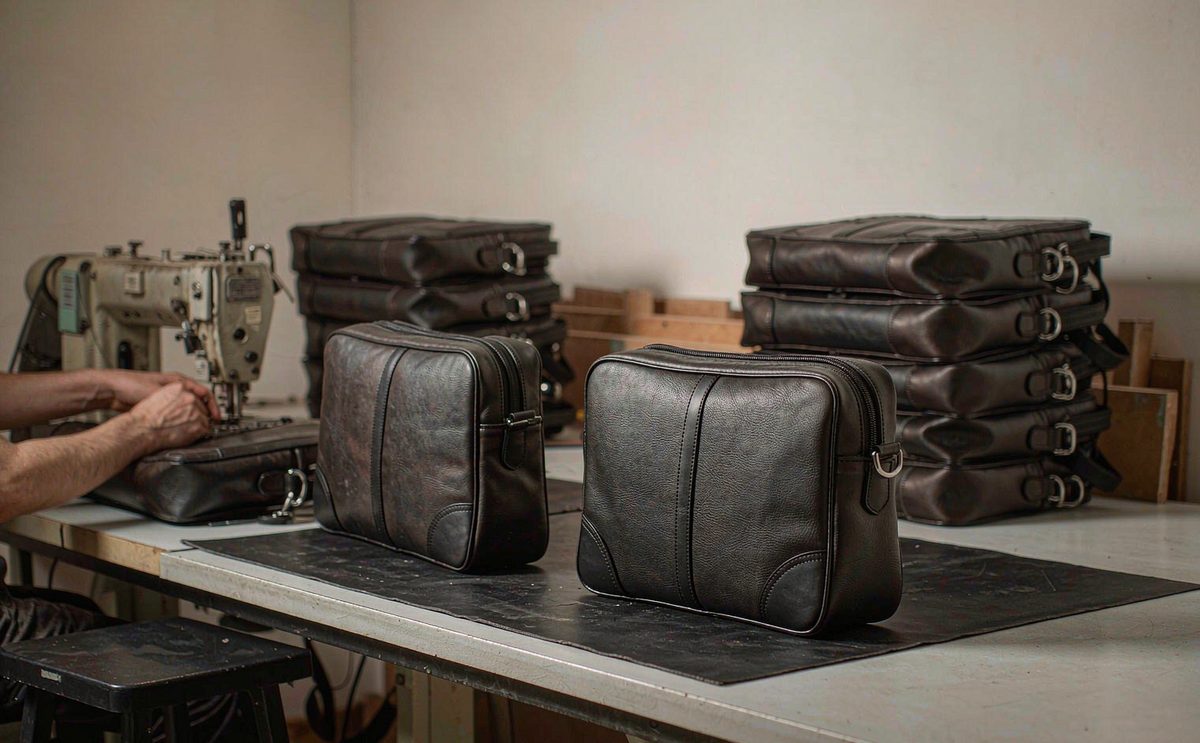
Consistency across runs is not automatic. Fabric comes from a different mill lot, operators on the line may differ, and a re-order placed eleven months later is made in a different season under different conditions. Three practices hold it together. The first is the reference sample, kept physically and sent or photographed against the new run's pre-production sample for side-by-side comparison. The second is the AQL 2.5 inspection report from each run, kept and compared, so a shift in defect distribution is visible rather than anecdotal.
The third is a defined tolerance on the things customers notice. Colour is the obvious one and the hardest, because a dyed fabric will vary slightly between lots; the workable standard is acceptance within a stated shade tolerance against the reference sample, checked under daylight and agreed in advance. Dimension is easier: a tolerance of 3 to 5 mm on sewn dimensions is realistic and should be written down. Stitch density, handled as stitches per inch or per centimetre, should be specified numerically rather than left to operator habit.
One statistical point is worth internalising. AQL 2.5 to ISO 2859-1 sets an acceptance threshold, not a zero-defect guarantee. A lot inspected at that standard and accepted can still contain a small percentage of units with cosmetic faults, and the same is true of run three as of run one. This is why the 4 to 6 percent replacement buffer should be held on every run regardless of size, and why a brand should not treat a passing inspection as a promise that every unit is perfect. It is a promise that the defect rate is below an agreed threshold.
When to consolidate three runs into one
The ladder is a default, not a rule, and there are four situations in which skipping straight to a larger order is correct. The first is a proven repeat SKU: a bag that has already run twice, sells at a stable rate, and is not fashion-exposed. There is nothing left to validate, and the setup saving from consolidating is real. The second is a known demand event, such as a confirmed wholesale order, a retail purchase order or a corporate programme with a signed quantity, where the demand is contractual rather than forecast.
The third is a material discontinuation: if the mill is dropping a colour or a finish, buying a longer run now preserves the specification for the next two years, and the carrying cost is the price of keeping the product alive. The fourth is a freight or tariff change that makes a single larger shipment materially cheaper per unit than several smaller ones; when freight per unit halves above a container threshold and a tariff increase is scheduled, consolidating ahead of it can be worth more than the inventory cost.
The test for all four is the same question: what is the probability that these extra units sell within twelve months, and what does it cost to hold them if they do not? If the probability is above roughly 80 percent, consolidate. If it is below 50 percent, ladder. Between those bounds, ladder but shorten the intervals. This is a judgement call that no spreadsheet can make for you, and it is the single most consequential decision in a small brand's sourcing programme.
What actually changes when a brand reaches 5,000 pcs
Reaching cumulative volume of 5,000 units changes four things in practice. Unit price stops moving much: on a tote, the difference between 3,000 and 5,000 pcs is typically USD 0.10 to 0.15, and between 5,000 and 10,000 it is about USD 0.13. Freight has already reached container economics by about 2,500 to 3,000 units, so nothing further is gained there. Sampling becomes a formality: with a stable specification and a live pattern, a re-order needs a confirmation sample rather than a development round, and the 6 to 10 working days is spent on verification rather than iteration.
What does change is purchasing power at the material level. At 5,000 cumulative units a brand can realistically ask for a custom Pantone dye, because the volume supports a lot of 1,000 to 3,000 metres; can justify a custom moulded puller at USD 300 to 900, because the tooling amortises across enough units; and can consider a custom woven label programme with its own minimums. Those are the changes that make a product look proprietary rather than sourced from a catalogue, and they are unavailable at 500. That is the real prize at the top of the ladder, not the USD 0.13.
The final change is administrative and quietly valuable: at this volume a brand can hold a rolling production reservation, a recurring window booked every quarter or every six months, with a standing specification and pre-agreed pricing bands. That removes the quotation and sampling cycle from the critical path entirely and turns re-ordering into a two-email transaction. Our programme coordinator sets these up with the brands that reach the third rung, and the practical effect is that re-order lead time drops from about 90 to 110 days to roughly 50 to 65 days.
Send us your silhouette, first-run quantity and intended re-order horizon, and our campaign bag specialist will return a costed three-run ladder with reserved production windows within one working day.
Key takeaways
- V
- a
- l
- i
- d
- a
- t
- e
- a
- t
- 5
- 0
- 0
- ,
- s
- c
- a
- l
- e
- a
- t
- 1
- ,
- 5
- 0
- 0
- ,
- c
- o
- n
- s
- o
- l
- i
- d
- a
- t
- e
- a
- t
- 3
- ,
- 0
- 0
- 0
- .
- T
- h
- e
- l
- a
- d
- d
- e
- r
- c
- o
- s
- t
- s
- a
- b
- o
- u
- t
- 1
- 0
- p
- e
- r
- c
- e
- n
- t
- m
- o
- r
- e
- a
- n
- d
- c
- u
- t
- s
- p
- e
- a
- k
- i
- n
- v
- e
- n
- t
- o
- r
- y
- e
- x
- p
- o
- s
- u
- r
- e
- b
- y
- t
- w
- o
- t
- h
- i
- r
- d
- s
- .
Frequently Asked Questions
Why scale to 5,000 bags through three re-orders instead of one order?
Because peak cash exposure falls by about two thirds for roughly 10 percent more total spend. Three runs of 500, 1,500 and 3,000 totes cost about USD 15,870 against USD 14,350 for one 5,000-unit order, a premium of USD 1,520, while peak cash in stock drops from USD 14,350 to about USD 4,920. The ladder also lets the specification improve twice.
What size should the first bag order be for a small brand?
500 pcs of one silhouette in one colourway, which is the standard MOQ. It establishes the pattern, the approved sample, the bill of materials with supplier codes, the AQL 2.5 inspection baseline and the packed carton specification. Get any second look from trim variation such as zip tape or puller colour rather than from a second fabric, which would trigger a second 500-unit block.
When should a brand place its second bag order?
When run one is about 70 percent sold and the monthly sell-through rate implies the new run will clear within six to nine months. Ordering at 70 percent means the revenue from run one funds the 30 percent deposit on run two. Ordering earlier ties up cash before demand is proven; ordering later risks a stockout that costs more than the deposit saving.
How do I size the second and third runs?
Take the observed monthly sell-through rate, multiply by the horizon you want to cover, add a 4 to 6 percent replacement buffer, and subtract leftover stock. For run three, discount the rate by 15 to 25 percent for audience saturation. A product selling 200 a month over a nine month horizon with a 15 percent discount orders about 1,530 units.
Does a re-order get a better unit price?
Slightly. A re-order at the same quantity typically lands 3 to 6 percent below the original run, because pattern and sample development are removed while fabric lot minimums, trim minimums, line setup and branding screens are still charged. The bigger gain is lead time, usually two to three weeks faster, because the sampling round is reduced to a confirmation.
How do I keep run three identical to run one?
Freeze the specification with supplier reference codes rather than descriptions: mill fabric code, hardware finish code, zip tape colour code, artwork file version. Keep a physical reference sample from every approved lot. Log every deviation. Batch corrections into one documented version change applied at a run boundary with a fresh confirmation sample.
What payment terms apply across the three runs?
T/T 30/70 on FOB Xiamen throughout: 30 percent deposit to release materials and book the slot, 70 percent balance before shipment. On run one of 500 totes at USD 3.90 that is USD 585 then USD 1,365. On a single 5,000-unit order at USD 2.87 it is USD 4,305 then USD 10,045, which is why the ladder suits a brand that has not yet banked the revenue.
How long does each run take from deposit to warehouse?
About 90 to 110 days. Bulk production runs 35 to 50 days after deposit and approved pre-production sample, ocean transit adds 25 to 40 days, and customs and drayage add about a week. Sampling on a first run adds 6 to 10 working days before the deposit; on a re-order it is usually a shorter confirmation round.
Can I add a second colourway on the second run?
Yes. Because the MOQ is 500 pcs per style and per colourway, a run two of 1,500 split as 1,000 in the proven colour and 500 in a new one is legitimate and usually costs the same per unit as a single-colour 1,500. Avoid splitting evenly, because neither block then reaches a comfortable size and mill lot surplus per unit rises on both.
When should a brand skip the ladder and order larger?
When the SKU has already run twice at a stable rate and is not fashion-exposed, when demand is contractual through a wholesale or corporate purchase order, when a mill is discontinuing a colour or finish, or when a scheduled freight or tariff change makes one larger shipment materially cheaper. Consolidate above roughly 80 percent probability of selling within twelve months.
What becomes possible at 5,000 cumulative bag units?
Custom Pantone dye lots of 1,000 to 3,000 metres, custom moulded hardware at USD 300 to 900 of tooling, a bespoke woven label programme, and a rolling production reservation with a standing specification. Unit price itself barely moves: the gap between 3,000 and 5,000 pcs on a tote is typically USD 0.10 to 0.15.
How much stock should a small brand hold back for replacements?
A 4 to 6 percent buffer on every run regardless of size. Inspection at AQL 2.5 to ISO 2859-1 sets an acceptance threshold rather than a zero-defect guarantee, so a passing lot can still contain units with cosmetic faults, and transit adds its own attrition. Any surplus that is not needed becomes sellable inventory rather than waste.
People Also Ask
What is the best first order size for a small bag brand?
500 pcs of one silhouette in one colourway. It is the standard MOQ and it establishes the pattern, approved sample, bill of materials, AQL 2.5 inspection baseline and carton spec that every later run inherits.
How do small brands grow a bag line from 500 to 5,000 units?
Through three re-orders spaced about six months apart: 500 to validate, 1,000 to 1,500 to scale and add a colourway, then 2,500 to 3,000 to consolidate. Cumulative volume reaches 4,000 to 5,000 over eighteen months.
Is it cheaper to order 5,000 bags at once?
Per unit yes, by about USD 1.03 on a tote, but the total programme saving is only around USD 1,520 while peak cash in stock rises from USD 4,920 to USD 14,350. The ladder is usually the better use of working capital.
How fast should a first 500 pcs run sell before reordering?
Place the second order at about 70 percent sold. Then check that the monthly rate implies the new run clears within six to nine months, and that unresolved structural complaints are below 2 percent of units sold.
Do re-orders get cheaper per unit?
Marginally, typically 3 to 6 percent at the same quantity, because development is removed but fabric, trim and setup minimums remain. Lead time improves more, usually by two to three weeks, since sampling becomes a confirmation.
How do I stop a re-order from drifting from the original spec?
Freeze the specification with supplier reference codes, keep a physical reference sample from each approved lot, log every deviation, and batch corrections into one version change applied at a run boundary.
How long does each production run take?
Around 90 to 110 days from deposit to warehouse: 35 to 50 days of bulk production, 25 to 40 days of ocean transit, and about a week for customs and drayage.