Bag Production for Etsy and Shopify Brands: The Small-Batch Reality
Etsy and Shopify brands order bags on a different logic from crowdfunding creators: no single closing date, continuous replenishment, and an assortment that multiplies the 500 pcs per style and per colourway minimum across every SKU. A brand carrying six colourways of one tote is committing 3,000 units, not 500. Sampling runs 6 to 10 working days, bulk 35 to 50 days, inspection is set at AQL 2.5 to ISO 2859-1, and terms are FOB Xiamen on T/T 30/70. This guide covers assortment maths, the cash conversion cycle, re-order point planning, seasonality and what a marketplace seller can realistically customise at this volume.
- How Etsy and Shopify demand differs from a campaign
- The assortment problem: a minimum across every SKU
- The cash conversion cycle for a small bag brand
- Re-order point planning without a campaign close
- Stocked private label versus custom at 500 pcs
- Seasonality and inventory for marketplace sellers
- Treating the 35 to 50 day lead time as inventory
- Quality, returns and review risk on marketplaces
- What a marketplace seller can customise at 500 pcs
- Moving from marketplace volume to wholesale volume
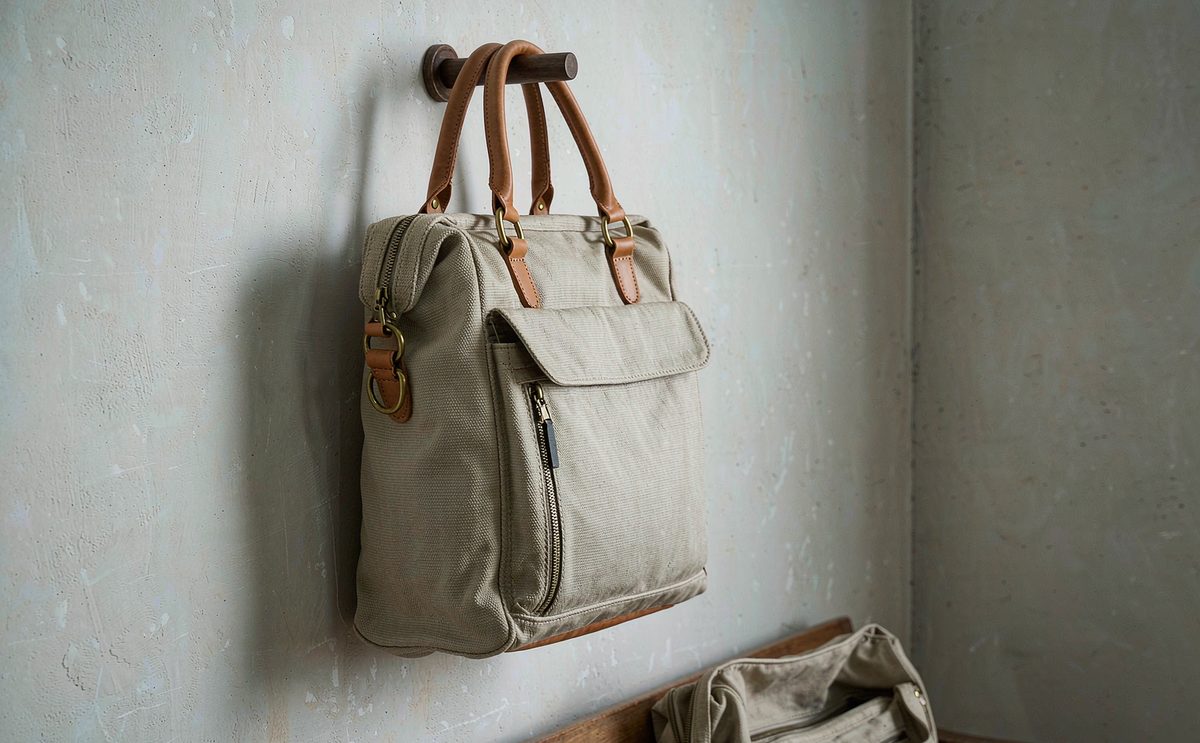
A crowdfunding creator has one advantage a marketplace seller does not: a closing date. On the day a campaign ends, demand becomes a number, and the whole production plan can be built around it. An Etsy or Shopify brand has no such moment. Demand arrives continuously, at a rate that changes with season, advertising spend and algorithm luck, and the production plan has to be built around a rate rather than a total. That single difference changes almost every sourcing decision.
This article is written for that situation. It covers the assortment arithmetic that catches marketplace brands first, the cash conversion cycle that determines whether a range is financeable at all, re-order point planning against a 35 to 50 day lead time, and what is realistically customisable at 500 pcs per style and per colourway. The wider programme structure is set out in custom bags for Kickstarter, which shares the same production mechanics, and the mechanics of the minimum are covered in the low MOQ bag production route for creators.
How Etsy and Shopify demand differs from a campaign
Four properties distinguish marketplace demand and each has a sourcing consequence. It is continuous, so inventory is replenished rather than ordered once, and the relevant metric is units per month rather than total units. It is volatile, with week-to-week swings of 30 to 60 percent driven by advertising, seasonality and platform visibility, which means any safety stock calculation has to use a volatility allowance rather than an average. It is multi-SKU, because a shop competes on range, and range multiplies minimums. It is returnable, because marketplace customers return goods at rates that campaign backers do not.
The volatility point deserves emphasis because it is the one that causes stockouts. A brand selling 150 totes a month is not selling 5 a day; it is selling 2 on a quiet day and 14 on a day after a social post lands. Safety stock sized to the average will stock out in every peak week. The standard method is to hold safety stock against the demand during the replenishment lead time, plus a buffer for demand variability over that period. With a 35 to 50 day production lead time plus 25 to 40 days of transit, the replenishment window is roughly 60 to 90 days, which is long, and that length is what makes the safety stock expensive.
Returns are the third property and the one most often ignored in sourcing. Marketplace return rates on soft goods typically run 8 to 18 percent, well above the 4 to 6 percent replacement buffer a campaign holds. Some of that stock comes back saleable and some does not. A brand planning inventory should treat a portion of returns as a permanent leakage from available stock, and should size the replacement buffer upward accordingly. It also argues for a specification that survives return handling, which means reinforced handles, a cleanable lining and packing that protects the bag in transit in both directions.
Marketplace brands buy against a rate with a 60 to 90 day replenishment window, not against a total with a closing date. Everything downstream follows from that.
The assortment problem: a minimum across every SKU
Here is the arithmetic that stops most marketplace ranges before they start. A shop wants one tote in six colourways. The minimum is 500 pcs per style and per colourway. Six colourways is 3,000 units, and at an indicative USD 3.60 FOB that is USD 10,800 committed before a single unit sells. Add a second size and it is 6,000 units, or USD 21,600. Very few small brands can finance that, and the ones that can usually should not, because demand across six colourways is never uniform.
The distribution is the problem. Colourway demand on a soft goods range is typically skewed: the top two colours account for 55 to 70 percent of units, and the bottom two account for under 15 percent combined. Ordering 500 of each means the bottom two colourways sit in a warehouse for a year while the top two stock out in ten weeks. That is the worst possible outcome, and it is produced by treating the range as six equal SKUs rather than as a distribution.
| Colourway | Equal buy of 500 | Weighted buy | Expected demand share | Months of cover |
|---|---|---|---|---|
| Black | 500 | 900 | 32% | Weighted buy matches demand |
| Natural | 500 | 700 | 24% | Weighted buy matches demand |
| Rust | 500 | 400 | 16% | Weighted buy matches demand |
| Olive | 500 | 300 | 12% | Weighted buy matches demand |
| Sand | 500 | 150 | 9% | Weighted buy matches demand |
| Rose | 500 | 150 | 7% | Weighted buy matches demand |
The weighted column shows the shape of a first buy that matches demand: 2,600 units rather than 3,000, concentrated in the colours that actually sell. But it still requires 2,600 units, which is far more than most marketplace brands can fund, and it still means 150 units each of two slow colours. The realistic answer for a first buy is narrower: two or three colourways at 500 each, chosen for breadth of appeal, with the remaining colours introduced once the rate is known. Range expansion is a second-order decision, not a first-order one.
There is a better tool available for the colours you want to offer but cannot fund, and it is the same one campaign creators use: trim-driven variation. Keep one body fabric across the range and vary the handle webbing colour, the zip tape, the puller, the print colour and the woven label. Those suppliers carry minimums far below a mill fabric lot, so a brand can offer six visibly different colourways from one fabric purchase and one 500 to 1,000 unit run, typically at an uplift of USD 0.15 to 0.40 per unit. On a tote, where the handle is the most visible non-fabric element, this works particularly well.
The cash conversion cycle for a small bag brand
The cash conversion cycle is the number of days between paying for inventory and receiving the cash from selling it, and for a marketplace bag brand it is long. Terms are T/T 30/70 on FOB Xiamen: 30 percent deposit to release materials and book the slot, 70 percent before shipment. On 500 totes at USD 3.60 that is USD 540 at deposit and USD 1,260 before shipment, roughly five to seven weeks later. Freight and duty of about USD 1,040 follow. The goods then arrive and sell over the following months.
| Day | Event | Cash out | Cash in | Cumulative position |
|---|---|---|---|---|
| Day 0 | Brief and quotation | USD 0 | USD 0 | USD 0 |
| Day 10 | Sample approved, deposit paid | USD 540 | USD 0 | -USD 540 |
| Day 50 | Balance paid, goods shipped | USD 1,260 | USD 0 | -USD 1,800 |
| Day 60 | Freight and duty | USD 1,040 | USD 0 | -USD 2,840 |
| Day 95 | Goods received, first sales | USD 0 | USD 720 | -USD 2,120 |
| Day 180 | Half the run sold | USD 0 | USD 2,880 | +USD 760 |
| Day 300 | Run sold out | USD 0 | USD 5,760 | +USD 2,920 |
The shape of that timeline is the whole financing problem. The position is negative for roughly 150 days and the trough is about USD 2,840, and both figures are for a single 500-unit order at the smallest viable size. A brand running three SKUs in parallel has three such curves overlapping, which is why the assortment decision and the cash decision are the same decision. The practical rule is to add a SKU only when the previous one has generated enough cash to fund it, rather than launching a range all at once.
Three levers shorten the cycle. Smaller, more frequent runs reduce the trough even though they raise the per-unit cost slightly. Split delivery of a single production run lets part of the stock arrive and start selling while the remainder is still being paid for. Faster transit on the first units, sending 40 to 60 units by air at roughly USD 4 to 9 per unit to open the listing early, costs money but pulls revenue forward by three to four weeks, which on a fast-selling SKU is usually worth it.
Re-order point planning without a campaign close
A campaign creator orders once against a known number. A marketplace brand has to decide, continuously, when to order again. The method is a re-order point: the stock level at which a new order must be placed so that new goods arrive before stock runs out. It is calculated as demand during the replenishment window plus safety stock. Take a SKU selling 150 units a month, or 5 per day, with a replenishment window of 75 days, being 35 to 50 days of production plus 25 to 40 days of transit plus a week of receiving.
Demand during that window is 5 times 75, or 375 units. Safety stock should cover demand variability over the window; at a coefficient of variation of about 0.35 on a 375-unit window, a service level of roughly 95 percent needs about 110 units of safety stock. The re-order point is therefore about 485 units, which conveniently sits right at the 500 pcs minimum. That is not a coincidence for many marketplace SKUs: the minimum and a sensible re-order point for a product selling 150 a month are the same number, which makes production planning unusually simple at that rate.
- Measure the rate: units sold per day over the trailing 30 days, not per month, so the number is current.
- Measure variability: the standard deviation of daily sales over the same window; a coefficient of variation above 0.5 means a larger safety stock.
- Fix the window: 35 to 50 days of production plus 25 to 40 days of transit plus about 7 days of receiving, so 67 to 97 days.
- Set the re-order point: rate times window plus safety stock, which for a 150 per month SKU lands near 485 units.
- Check against the minimum: if the re-order point is below 500, order 500 and accept the extra cover; if it is above 1,000, consider whether the rate supports it.
- Review monthly: recompute the rate and the point every month, because marketplace demand drifts with season and advertising.
One mistake is worth naming because it is common and expensive: ordering when stock runs out rather than at the re-order point. A brand that waits until the shelf is empty has committed to a stockout of the full replenishment window, which at 75 days is two and a half months of lost sales and, on a marketplace, a loss of listing momentum that takes weeks to recover. Set the re-order point in the inventory system and let it trigger the decision rather than making the decision by eye.
Stocked private label versus custom at 500 pcs
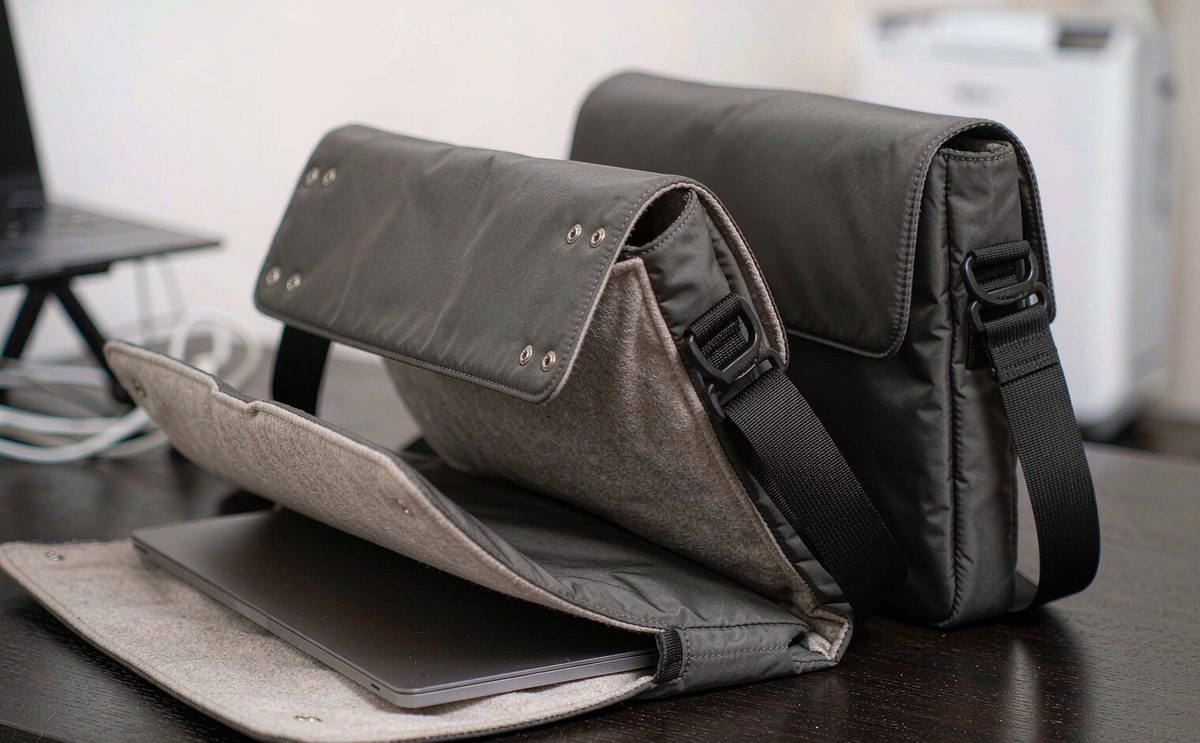
Marketplace brands have an option campaign creators do not: they can buy a stocked bag and apply branding, rather than making a custom one. A stocked programme offers an existing silhouette in an existing colour, with a woven label, a print or an embroidery applied. Minimums are often lower, frequently 100 to 300 pcs, and lead times are shorter, because the pattern and the fabric already exist. The trade is that the silhouette is not yours and neither is the colour.
The economics favour stocked private label in three situations. Testing a category, where the brand does not yet know whether bags sell at all and wants to find out for USD 600 rather than USD 2,840. Very small or very new shops, where the cash conversion trough of a custom run is unfinanceable. Fast fashion-adjacent ranges, where the design will be replaced within two seasons and the amortisation of a custom pattern does not pay.
Custom wins from about the point where a brand knows its rate and wants differentiation. At 500 pcs a custom tote at USD 3.60 FOB against a stocked equivalent at perhaps USD 4.20 with branding is cheaper per unit despite the higher minimum, because the stocked bag carries a higher base cost. Custom also delivers exclusive dimensions, exclusive fabric choice, exclusive hardware and a specification nobody else sells, which is what eventually supports a higher retail price. The usual path is stocked for the first six months, custom from the second year.
| Factor | Stocked private label | Custom at 500 pcs | Comment |
|---|---|---|---|
| Typical minimum | 100-300 pcs | 500 pcs per style and colourway | Stocked is easier to finance |
| Lead time | 20-35 days | 35-50 days plus sampling | Stocked is 3 to 5 weeks faster |
| Unit cost | USD 3.80-4.60 branded | USD 3.20-3.90 | Custom is often cheaper per unit |
| Sampling | Usually 3-5 days | 6-10 working days | Stocked skips development |
| Exclusivity | None | Dimensions, fabric, hardware | Custom supports a higher retail price |
| Best for | Testing, new shops, fast ranges | Known rate, differentiation | Most brands move from left to right |
Seasonality and inventory for marketplace sellers
Marketplace bag demand is strongly seasonal, with a peak in the fourth quarter that typically runs 1.8 to 2.6 times the annual average monthly rate, and a secondary peak around graduation and travel season. That seasonality has to be met with inventory bought months earlier, because the replenishment window is 60 to 90 days. A brand wanting stock in the warehouse by 1 October must release the deposit in early July at the latest, and preferably in June, with sampling completed before that.
The planning error is to size Q4 inventory off the Q4 rate. A brand selling 150 a month on average sells perhaps 300 a month in November and December, and needs roughly 600 to 700 units of additional cover for the two peak months, plus safety stock. Ordering that increment alone is inefficient at the minimum. The common solution is to place one larger autumn run that covers both the peak and the following quarter, sizing it at the peak rate for the peak months plus the base rate for the rest, which for this example is about 1,100 to 1,300 units.
Two calendar hazards apply specifically to imported goods. Lunar New Year closes mills, dye houses and assembly for one to three weeks, and the effect on lead times stretches two to four weeks either side of it. A brand planning a Q1 restock should have goods shipped before the holiday rather than during it. Peak season freight raises ocean rates and reduces space availability in the months before Q4, so book space earlier than the production schedule strictly requires and expect transit at the upper end of the 25 to 40 day range.
Post-season inventory is the residual risk and it should be planned rather than discovered. The discipline is to decide in advance what happens to unsold peak stock: either it carries into the following quarter at a known holding cost, or it is discounted at a stated date. A brand that has not decided will hold stock indefinitely, which is the most expensive option and the most common. Set the markdown date when the order is placed, not when the season disappoints.
Treating the 35 to 50 day lead time as inventory
The most useful reframe for a marketplace brand is to see the production lead time as a form of inventory that has to be held. Every day of lead time is a day of demand that must be covered by stock sitting in a warehouse rather than by stock that could be made. At a rate of 5 units a day, a 35 to 50 day production window plus 25 to 40 days of transit represents roughly 375 units of demand that must be pre-bought, which is most of a 500-unit minimum on its own.
That reframe produces three concrete actions. Shorten the window where it is cheap to shorten: a re-order on an existing specification removes the 6 to 10 working day sampling round and typically saves two to three weeks, which is 15 to 20 units of safety stock that no longer has to be financed. Split delivery so that part of a run arrives early and starts selling while the rest is still in transit. Book the slot early, because a production window in a specific month is finite and is allocated to whoever asks first, regardless of how much total capacity exists.
Our production floor runs 7 lines with 149 machines and a monthly capacity of 200,000 pcs, so total capacity is rarely the constraint for a brand at this scale. What is finite is a particular window in a particular month, and the way to secure it is to tell your partner the intended re-order sequence at the first quotation rather than quoting run by run. Brands that do this consistently hold a rolling reservation, a recurring window with a standing specification, which turns re-ordering into a two-email transaction and drops re-order lead time from about 90 to 110 days to roughly 50 to 65 days.
Quality, returns and review risk on marketplaces
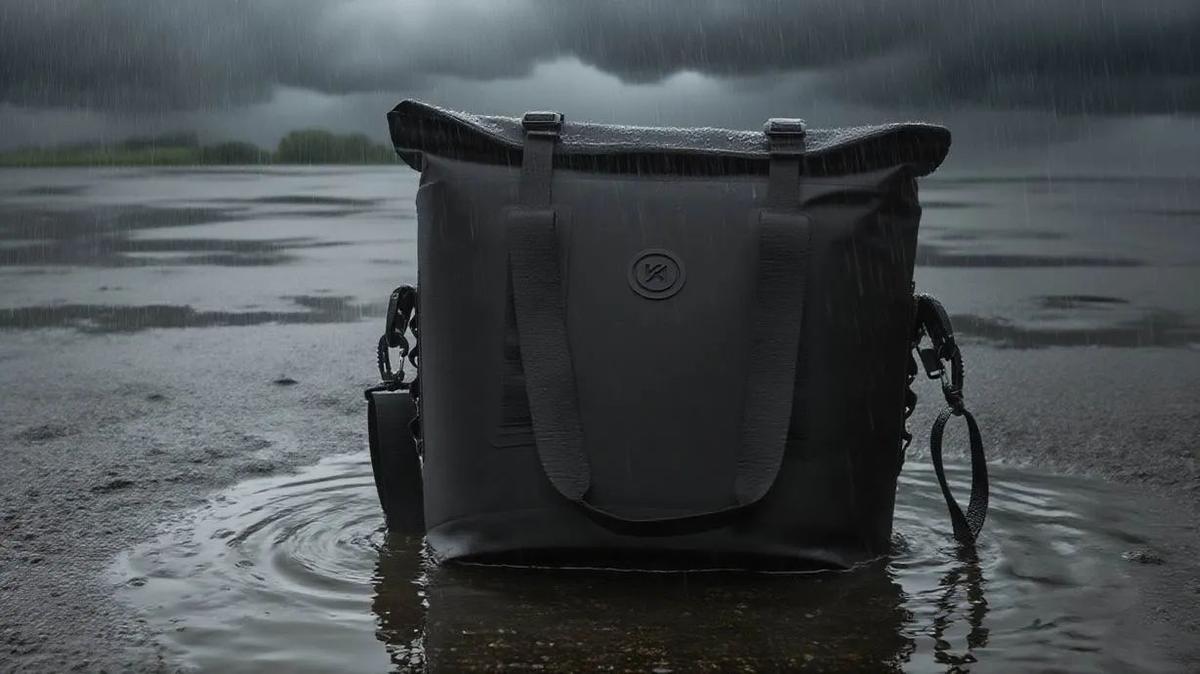
On a marketplace, quality failure is not a customer service problem, it is a listing problem. A product with a review average below about 4.3 stars loses visibility in most marketplace ranking systems, and a handful of one-star reviews describing a broken strap or a failed zip can suppress a listing for months. The cost of a quality failure is therefore not the cost of the replacement unit; it is the cost of the listing's suppressed lifetime earnings, which on a good SKU is one or two orders of magnitude larger.
That asymmetry changes where money should be spent. On a marketplace bag, spend on the failure points: handle attachment with a boxed or X-stitch and a bar-tack, a zip specified with the right tape and puller, bound internal seams on anything holding weight, and packing that protects the bag in transit. Inspection runs to AQL 2.5 to ISO 2859-1, which sets an acceptance threshold rather than a zero-defect guarantee, so a passing lot can still contain units with cosmetic faults. For a marketplace brand, request the defect breakdown by category and hold a buffer of 6 to 8 percent rather than the 4 to 6 percent a campaign uses, because returns add a second channel of attrition.
Two specification choices reduce returns measurably and both are cheap. A gusset or boxed base makes a bag work as customers expect it to, and bags that do not work as expected are returned even when nothing is broken. A cleanable or coated lining on anything that will carry cosmetics or liquids prevents the stained-lining return, which is common and entirely avoidable at USD 0.20 to 0.55 per unit. Both cost less than the return rate they prevent.
What a marketplace seller can customise at 500 pcs
More than most marketplace brands expect. At 500 pcs per style and per colourway, available without qualification: any silhouette drawn to your dimensions, fabric chosen from the existing colour card, handle type and drop, gusset construction, pocket and divider layout, closure type, lining in a contrast or coated finish, webbing and trim in brand colours, woven and printed labels, hangtags, screen print, heat transfer, foil and embroidery, and printed or branded polybags. That is enough to build a proprietary product.
Available with a fee: a foil or emboss die at USD 80 to 250, an embroidery digitising file at USD 25 to 60 per artwork, a custom hangtag die-cut, and a custom shaped metal or silicone puller with a mould at USD 300 to 900. Usually out of reach at 500: fabric dyed to an exact Pantone, which needs 1,000 to 3,000 metres; fully bespoke injection-moulded hardware at USD 1,500 to 6,000; and a custom woven jacquard or a scratch-developed sublimation print, both better spread over 2,000 units.
For a marketplace brand the highest-value customisations are the ones a customer sees in a review photograph and mentions in a review: a distinctive handle, a lined interior in a contrast colour, and a branded interior label. Those three cost perhaps USD 0.60 to 1.20 per unit in total and they are what generates the phrase customers write in reviews. A custom exterior colour is far more expensive to achieve and is mentioned far less often, because most customers bought the bag knowing what colour it was.
Moving from marketplace volume to wholesale volume
The natural progression for a successful marketplace brand is toward wholesale, and it changes the sourcing model again. Wholesale buyers place purchase orders with delivery windows and compliance requirements, they order in larger quantities, and they frequently require documentation: material declarations, test reports, sometimes social compliance documentation. A brand moving into that channel needs a specification stable enough to be documented and a partner able to produce the documentation, which is a different capability from making a good bag.
Volume economics improve sharply at this stage. Cumulative volume above roughly 5,000 units unlocks custom Pantone dye lots of 1,000 to 3,000 metres, custom moulded hardware at USD 300 to 900 amortised across enough units, and a bespoke woven label programme. Unit price itself barely moves beyond that: on a tote, the difference between 3,000 and 5,000 pcs is typically USD 0.10 to 0.15. The prize at the top is proprietary materials and documentation, not a marginally better price.
The transition should be planned as a specification freeze rather than as a volume jump. Before the first wholesale order, freeze the specification with supplier reference codes, build a documented bill of materials, keep physical reference samples from three consecutive lots, and confirm the inspection standard in writing. Our programme coordinator maintains that documentation for brands moving into wholesale, and it is the thing that makes the first wholesale delivery a non-event rather than a crisis. The ladder from a 500 pcs first buy to that point is set out in the three re-order growth path.
Send us your SKU list, monthly rate per colourway and target restock date, and our campaign bag specialist will return a costed first buy with a rolling reservation plan within one working day.
Key takeaways
- B
- u
- y
- a
- g
- a
- i
- n
- s
- t
- a
- r
- a
- t
- e
- ,
- n
- o
- t
- a
- t
- o
- t
- a
- l
- .
- N
- a
- r
- r
- o
- w
- t
- h
- e
- f
- i
- r
- s
- t
- r
- a
- n
- g
- e
- ,
- v
- a
- r
- y
- t
- r
- i
- m
- r
- a
- t
- h
- e
- r
- t
- h
- a
- n
- f
- a
- b
- r
- i
- c
- ,
- o
- r
- d
- e
- r
- a
- t
- t
- h
- e
- r
- e
- -
- o
- r
- d
- e
- r
- p
- o
- i
- n
- t
- ,
- a
- n
- d
- f
- r
- e
- e
- z
- e
- t
- h
- e
- s
- p
- e
- c
- i
- f
- i
- c
- a
- t
- i
- o
- n
- b
- e
- f
- o
- r
- e
- y
- o
- u
- c
- h
- a
- s
- e
- w
- h
- o
- l
- e
- s
- a
- l
- e
- .
Frequently Asked Questions
What is the minimum order for an Etsy or Shopify bag brand?
500 pcs per style and per colourway on a custom programme, or 100 to 300 pcs on a stocked private label programme where you apply branding to an existing silhouette. Sampling runs 6 to 10 working days, bulk 35 to 50 days, inspection is AQL 2.5 to ISO 2859-1, and terms are FOB Xiamen on T/T 30/70.
How do I offer six colourways without ordering 3,000 bags?
Two options. Carry the range on trim rather than fabric: one body fabric with variations in handle webbing, zip tape, puller, print and label, which suppliers support at far lower minimums than a mill lot. Or launch two or three colourways at 500 each and add colours once the rate is known, because colourway demand is typically skewed with the top two colours taking 55 to 70 percent of units.
How much cash does a first 500 pcs bag order need?
About USD 2,840 in total for a tote at USD 3.60 FOB: USD 540 deposit, USD 1,260 balance before shipment, and roughly USD 1,040 of freight and duty. Under T/T 30/70 the position is negative for about 150 days, with the trough at roughly USD 2,840 and break-even around day 180.
When should a marketplace brand reorder bags?
At the re-order point, which is demand during the replenishment window plus safety stock. For a SKU selling 150 a month with a 75 day window of production, transit and receiving, demand is about 375 units and safety stock about 110, so the re-order point is roughly 485 units, which conveniently sits at the 500 pcs minimum.
Should I buy stocked bags or custom bags for my shop?
Stocked private label when you are testing a category, when the shop is very new, or when the design will be replaced within two seasons: minimums of 100 to 300 pcs and lead times of 20 to 35 days. Custom once the rate is known and you want differentiation, since a custom tote at USD 3.20 to 3.90 FOB often beats a stocked equivalent at USD 3.80 to 4.60.
How do I plan inventory for the Q4 season?
Order months ahead, because the replenishment window is 60 to 90 days. Stock in the warehouse by 1 October means the deposit released in early July, with sampling done before that. Size the run at the peak rate for the peak months plus the base rate for the following quarter, typically 1,100 to 1,300 units for a brand averaging 150 a month with Q4 running 1.8 to 2.6 times the average.
What calendar hazards affect imported bag inventory?
Lunar New Year, which closes mills, dye houses and assembly for one to three weeks and stretches lead times by two to four weeks either side, and peak season freight, which raises ocean rates and reduces space availability ahead of Q4. Ship before the holiday and book space earlier than the production schedule strictly requires.
How much buffer should a marketplace brand hold?
Six to eight percent rather than the four to six percent a campaign uses, because marketplace returns on soft goods typically run 8 to 18 percent and some returned stock is not resaleable. Inspection at AQL 2.5 sets an acceptance threshold rather than a zero-defect guarantee, so request the defect breakdown by category as well as the pass or fail line.
What specification choices reduce marketplace returns?
A boxed or X-stitched handle attachment with a bar-tack, which eliminates the most reported defect; a gusset or boxed base, so the bag works as customers expect; and a coated or cleanable lining at USD 0.20 to 0.55 per unit, which prevents the stained-lining return. All three cost less than the return rate they prevent.
Can I get my own Pantone colour on 500 bags?
Usually not on the face fabric, because a custom dye lot needs 1,000 to 3,000 metres. At 500 pcs, choose the nearest colour from the existing mill card and carry the exact brand colour on webbing, zip tape, puller, print and woven labels, all of which have much lower minimums. A lab dip is possible with 5 to 7 extra working days.
What can I customise on a bag at 500 pcs?
Dimensions, silhouette, fabric from the existing colour card, handle type and drop, gusset construction, pocket layout, closure, lining in a contrast or coated finish, trim in brand colours, woven and printed labels, hangtags, screen print, heat transfer, foil, embroidery and branded polybags. Tooling items such as a custom puller mould cost USD 300 to 900.
How does moving to wholesale change bag sourcing?
It requires a stable, documented specification rather than just a good bag. Freeze the spec with supplier reference codes, build a documented bill of materials, keep reference samples from three consecutive lots, and confirm inspection in writing. Unit price barely improves beyond 5,000 units, about USD 0.10 to 0.15, so the prize is proprietary materials and compliance documentation.
People Also Ask
What is the bag MOQ for Shopify brands?
500 pcs per style and per colourway on a custom programme, or 100 to 300 pcs on a stocked programme with branding applied. Bulk takes 35 to 50 days and sampling 6 to 10 working days.
How do small shops afford six bag colourways?
Carry the variety on trim rather than fabric, so one mill lot supports several looks, or launch two or three colourways and expand later. Demand is skewed, with the top two colours usually taking 55 to 70 percent.
When should an Etsy brand reorder bags?
At the re-order point: daily rate times the 60 to 90 day replenishment window, plus safety stock. For a SKU selling 150 a month that lands near 485 units, which sits at the 500 pcs minimum.
Is stocked or custom better for a small shop?
Stocked for testing and for very new shops, at 100 to 300 pcs and 20 to 35 days. Custom once the rate is known, because a custom tote is often cheaper per unit and supports a higher retail price.
How much cash does a first bag order tie up?
About USD 2,840 for 500 totes including freight and duty, with the position negative for roughly 150 days under T/T 30/70 and break-even around day 180.
How early should I order for the Q4 season?
Release the deposit by early July for stock in the warehouse by 1 October. The replenishment window is 60 to 90 days and peak season freight makes transit slower and space scarcer.
Why are returns important in bag sourcing?
Marketplace returns on soft goods run 8 to 18 percent, well above a campaign buffer, and review averages below about 4.3 stars suppress listing visibility. Reinforced handles and a cleanable lining cost less than the returns they prevent.