Low Quantity Custom Totes: The Economics of a Small Order Explained
A custom tote at 500 pcs is dominated by four cost drivers: fabric weight, handle construction, print setup and freight volume. On a 12 oz canvas tote with cotton webbing handles and a one-colour screen print, indicative FOB Xiamen cost is about USD 3.60 at 500 pcs, USD 3.15 at 1,000 and USD 2.88 at 2,000, with roughly USD 970 of one-off setup behind the curve. Sampling runs 6 to 10 working days, bulk 35 to 50 days, and inspection is set at AQL 2.5 to ISO 2859-1. This guide breaks each driver down, shows where the money goes at small quantity, and gives the margin arithmetic for a tote reward or retail product.
- What actually drives cost on a small tote order
- Fabric weight and weave: the single biggest lever
- Handle construction: where quality and cost meet
- Print method economics at 500 pcs
- The setup cost stack behind a 500 pcs tote
- Bulk, cartons and freight: why totes punish small orders
- Unit cost at 500, 1,000 and 2,000 pcs
- What to specify at 500 pcs and what to drop
- Margin arithmetic for a tote reward or retail product
- Planning the repeat tote run
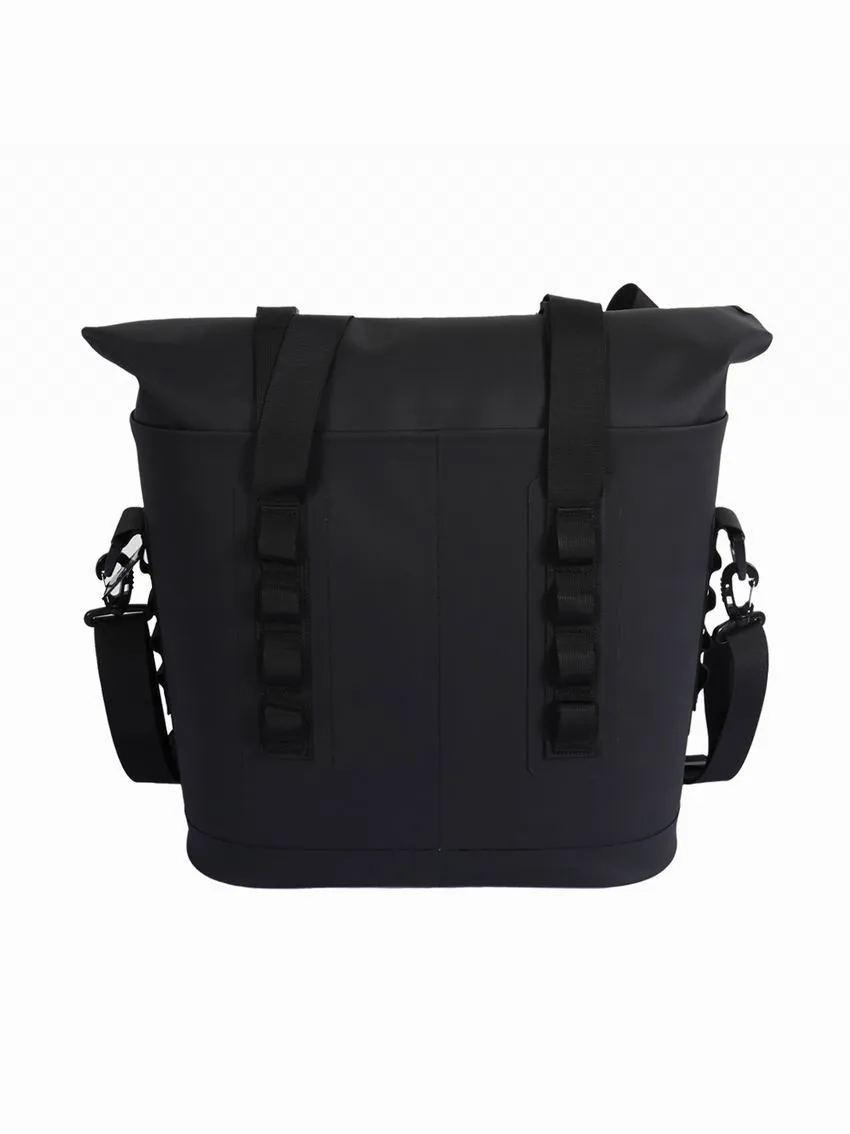
Totes are the most frequently sourced campaign bag and the least understood, because they look simple. A rectangle of fabric with two handles has no hardware, no lining in most specifications, and no closure, so creators assume the cost is mostly fabric and the rest is small. In practice a tote at low quantity is a fixed-cost product: the fabric is a modest share, the handles are a surprisingly large one, the print setup is a fixed charge that divides badly at 500, and freight on a bulky, low-density product is the line that quietly ruins the margin.
This guide takes each driver apart at the 500 pcs per style and per colourway minimum, using indicative figures for a standard tote programme on FOB Xiamen with T/T 30/70, sampling at 6 to 10 working days, bulk at 35 to 50 days and inspection at AQL 2.5 to ISO 2859-1. For the category context and construction options, see custom tote bags for Kickstarter, and for the mechanics of the minimum itself, the low MOQ bag production route for creators.
What actually drives cost on a small tote order
Four drivers account for almost the whole unit price, and they behave differently as quantity changes. Fabric is roughly 28 to 38 percent of the FOB cost on a canvas tote and scales linearly with units, so it does not improve much with volume beyond the mill lot breaks. Handles and labour are roughly 30 to 38 percent and improve modestly with volume, because the operation is repetitive and the setup is a small part of it. Print setup is a fixed charge of USD 15 to 35 per screen colour per placement and improves sharply with volume because it divides. Freight is outside FOB entirely and improves steeply, because a tote is bulky and a small shipment wastes container space.
The interaction that matters is between the second and the fourth. A tote's cost per unit falls only about 12 to 15 percent from 500 to 1,000 pcs, because most of its cost is material and labour, which do not amortise. But its landed cost falls much more sharply, because freight per unit on a bulky product halves or better between a 500-unit and a 2,500-unit shipment. A creator comparing two quotations on FOB alone will draw the wrong conclusion about which quantity to order, because the FOB curve understates the benefit of volume on this product more than on any other bag type.
There is a third consideration that is unique to totes and worth stating early: they are the cheapest bag to make and the most expensive to ship per unit of value. A tote that costs USD 3.60 to make may occupy 12 to 18 litres of packed volume and weigh 250 to 400 grams. A cosmetic pouch costing USD 4.30 occupies perhaps 2 litres. Freight is charged on volume or weight, whichever is greater, so the tote carries a freight burden per unit of product value that is several times that of a dense, small bag. That is the central economic fact about low quantity totes.
A tote is cheap to make and expensive to ship. Compare quantities on landed cost, because the FOB curve understates what volume buys on this product.
Fabric weight and weave: the single biggest lever
Fabric weight, measured in ounces per square yard for canvas or grams per square metre for synthetics, is the largest single variable in a tote's cost and the one creators specify least carefully. The common band for a campaign tote is 8 oz to 16 oz canvas, roughly 270 to 540 gsm. Moving from 10 oz to 14 oz increases fabric cost by about 35 to 45 percent, which on a tote with USD 1.25 of fabric is USD 0.44 to 0.56 per unit, and it also increases weight, which increases freight. That single specification choice can move the unit price more than any negotiation.
Choose weight by use case rather than by feel. A 6 to 8 oz cotton or a lightweight recycled polyester is right for a foldable market tote or a conference giveaway, where the bag is carried lightly and packed flat. A 10 to 12 oz canvas is the standard campaign tote and carries books, a laptop and groceries without strain. A 14 to 16 oz canvas is a premium retail tote, heavier than most campaigns need and usually only justified when the bag is the product rather than the perk. Every two ounces above 12 costs money twice, once in fabric and once in freight.
| Fabric | Weight | Fabric cost per unit | Best used for | Freight impact |
|---|---|---|---|---|
| Recycled polyester | 190-210 gsm | USD 0.55-0.75 | Foldable market tote, eco positioning | Lowest, packs flat and light |
| Cotton canvas | 8 oz / 270 gsm | USD 0.75-0.95 | Light giveaway, conference tote | Low |
| Cotton canvas | 10 oz / 340 gsm | USD 0.95-1.20 | Standard campaign reward tote | Moderate |
| Cotton canvas | 12 oz / 410 gsm | USD 1.20-1.50 | Premium reward, retail tote | Moderate to high |
| Cotton canvas | 16 oz / 540 gsm | USD 1.60-2.10 | Heavy retail tote, bag as product | High, adds 150-250 g per unit |
Weave and finish matter as much as weight. A plain weave canvas is the cheapest and most printable surface. A twill is slightly more expensive, drapes better and resists creasing in transit, which matters because a creased tote photographs badly on arrival. A coated or waxed finish adds USD 0.30 to 0.70 per unit, looks premium and repels water, but it complicates printing, because many inks do not adhere to a coated face without a pretreatment, and it can crease permanently if folded in packing.
One purchasing detail is worth knowing because it explains the 500 floor. Mills sell by the lot, commonly 300 to 500 metres for a stocked colour. A standard tote consumes roughly 0.6 to 0.9 metres of face fabric including handles and seam allowance, so 500 totes use about 350 to 450 metres and the purchase has to be rounded up to the lot. Below about 400 units, the surplus carried becomes a visible cost per bag. This is also why a heavy 16 oz canvas tote, which uses more metres per bag for the same dimensions through wider handles, has a higher effective floor than a light one.
Handle construction: where quality and cost meet
Handles are the second largest cost line on a tote and the most common point of failure, which makes them the worst place to economise. There are three constructions. Self-fabric handles, cut from the same cloth as the body, are the cheapest at roughly USD 0.25 to 0.45 per unit in labour and material, look integrated, and are the standard choice for a light tote. Cotton or polyester webbing handles cost USD 0.35 to 0.75 per unit depending on width and length, are stronger, and read as more casual. Rope or cord handles cost USD 0.60 to 1.20 and are a design choice rather than a performance one.
The cost that matters is not the handle material, it is the attachment. A handle tacked to the bag with a single line of stitching will fail under load, and handle failures are the single most reported defect on tote rewards. The standard that holds is a boxed or X-stitched attachment, where the handle end is sewn in a rectangle or an X across the bag face, plus a bar-tack at the stress point. That adds perhaps USD 0.10 to 0.20 per unit in labour and is the best value in the whole specification. Ask for it explicitly; it is not always included by default.
Length is the dimension creators get wrong most often, and it is cheap to get right. A hand-carry handle needs a drop of about 20 to 25 cm. A shoulder-carry handle needs 28 to 33 cm, and a tote intended to go over a shoulder with a coat on needs closer to 35 cm. The difference costs about USD 0.05 to 0.12 per unit in webbing and is worth more than most branding spend, because a tote that cannot be carried comfortably is a tote that is not used, and an unused tote delivers no brand impressions at all.
- Self-fabric handles: USD 0.25-0.45 per unit, integrated look, correct for a light tote.
- Webbing handles: USD 0.35-0.75 per unit, stronger, casual, available in brand colours at low minimums.
- Boxed or X-stitched attachment: add USD 0.10-0.20 per unit and eliminate the most reported defect.
- Shoulder drop of 28-33 cm: add USD 0.05-0.12 per unit and make the bag actually usable.
- Bar-tack at stress points: a few cents each, and the difference between a bag that lasts a year and one that lasts a month.
Print method economics at 500 pcs
Print is where the fixed-cost problem is most visible, because the setup is a discrete invoice. Screen printing charges USD 15 to 35 per screen, meaning per colour per placement, plus a small per-unit print cost. A one-colour print on one face is one screen. A one-colour print on both faces is two screens. A three-colour print on one face is three screens. At 500 units, two screens at USD 25 is USD 50, or USD 0.10 per unit, which is trivial. At 200 units it would be USD 0.25 per unit, which is not. This is a large part of why 500 is the floor.
Heat transfer has no screen charge and handles multi-colour and photographic artwork, at a higher per-unit cost of roughly USD 0.35 to 0.90 depending on size. At 500 units it is usually more expensive than a one or two colour screen print and cheaper than a four colour one. Digital direct-to-garment style printing on fabric panels has no setup either, and is the right choice for a full-bleed photographic print or for a run where every unit carries different artwork, but it is the most expensive per unit and the least durable under abrasion.
| Method | Setup cost | Per-unit cost | Total at 500 pcs | Best when |
|---|---|---|---|---|
| Screen print, 1 colour | USD 25 | USD 0.18 | USD 115 | Simple logo, one colour |
| Screen print, 3 colours | USD 75 | USD 0.42 | USD 285 | Multi-colour flat artwork |
| Heat transfer | None | USD 0.55 | USD 275 | Photographic or gradient artwork |
| Embroidery | USD 25-60 file | USD 0.65 | USD 365-390 | Premium tactile finish |
| Foil stamp | USD 80-250 die | USD 0.30 | USD 230-400 | Metallic finish on a coated face |
The practical guidance for a small tote run is to keep the artwork to one or two colours and one placement. Every additional colour adds a screen and every additional placement adds both a screen and a handling step. A single-colour logo printed large on one face is cheaper, more legible at distance and more durable than a four-colour logo printed small on two faces, and it survives the wash better. Where a brand needs more colour, put it on a woven label at USD 0.10 to 0.35 per unit and keep the print simple.
One technical constraint applies to screen printing on canvas specifically. Canvas has a pronounced weave, and fine detail or small type below roughly 2 mm stroke width will not hold cleanly because the ink bridges the weave. Simplify the artwork for the substrate rather than shrinking it, and ask for a strike-off on the actual bulk fabric before the run is released. A strike-off costs little and prevents the most expensive outcome in printing, which is 500 bags with a logo that reads as a blur.
The setup cost stack behind a 500 pcs tote
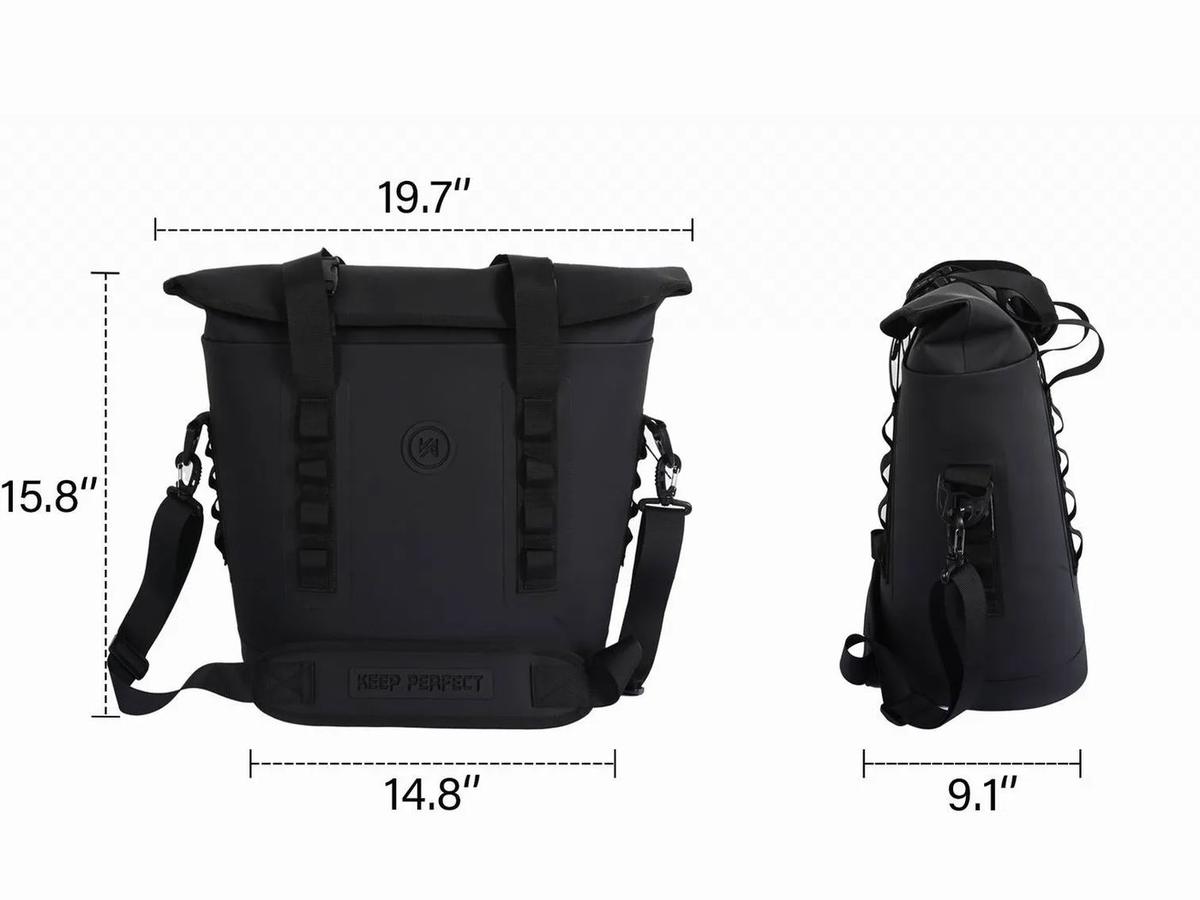
Six one-off charges sit behind every first tote order, and together they explain most of the difference between a 500-unit and a 5,000-unit price. Pattern making and marker at about USD 110 establishes the panel dimensions, the handle placement jig and the cutting efficiency. Sampling at USD 40 to 120 per round plus courier, over 6 to 10 working days, produces the approval unit. Fabric lot surplus of roughly USD 240 is the cost of rounding a 350 to 450 metre requirement up to a mill lot. Trim and label minimum waste of about USD 95 covers the woven label minimum of 500 to 1,000 pieces per artwork and any webbing roll surplus.
Line setup at roughly USD 150 is two to four hours of skilled time for threading, jig setting and first-article inspection. Print setup at USD 25 to 75 covers the screens. Total about USD 970, which is USD 1.94 per bag at 500 pcs, USD 0.49 at 2,000 and USD 0.10 at 10,000. That is the entire volume discount available on this product, and it is worth knowing precisely, because it means the maximum theoretical saving from ordering more is about USD 1.84 per unit and everything beyond that is material and labour that will not move.
Two of those six are avoidable with specification choices and should be, on a first run. Fabric lot surplus disappears if you choose a colour from the existing mill card rather than a custom dye, which would carry a 1,000 to 3,000 metre minimum. Print setup shrinks if the artwork is one colour on one face. Neither choice is visible to a backer in most cases, and together they remove roughly USD 265 from the fixed stack, or about USD 0.53 per unit at 500 pcs. That is a bigger saving than most negotiations achieve.
Bulk, cartons and freight: why totes punish small orders
Freight is the line that most often breaks a small tote programme, and it breaks because of volume rather than weight. A standard 38 x 40 x 10 cm tote, flat packed and nested, occupies roughly 1.5 to 2.5 litres per unit depending on fabric weight and whether handles are folded. Five hundred units is about 1 cubic metre of packed volume and typically 150 to 220 kg gross. That is a less-than-container-load shipment, priced at a rate per cubic metre that is several times the per-cubic-metre rate inside a full container, with a minimum charge that applies regardless of size.
The numbers are stark. Ocean freight on 500 totes typically runs USD 1.20 to 1.80 per unit; on 2,500 totes, which approaches a full container, it runs USD 0.45 to 0.75 per unit. Air freight, at roughly 4 to 7 times the ocean rate per kilogram, would be USD 4 to 9 per unit and is almost never justified on this product. The freight curve is far steeper than the FOB curve, and it is the main reason a tote programme should think in landed cost from the first spreadsheet.
| Cost element | 500 pcs | 1,000 pcs | 2,500 pcs | Behaviour |
|---|---|---|---|---|
| FOB Xiamen unit | USD 3.60 | USD 3.15 | USD 2.88 | Falls 12-15% then flattens |
| Ocean freight and handling | USD 1.50 | USD 1.05 | USD 0.60 | Falls steeply, then flat |
| Import duty, indicative | USD 0.58 | USD 0.51 | USD 0.46 | Linear percentage of value |
| Warehouse receiving and pick | USD 0.80 | USD 0.80 | USD 0.80 | Flat per unit |
| Polybag and mailer | USD 0.65 | USD 0.65 | USD 0.63 | Essentially flat |
| Indicative landed per unit | USD 7.13 | USD 6.16 | USD 5.37 | Landed falls 25%, FOB only 20% |
Two practical levers reduce freight on a tote specifically. Reduce packed volume: ask whether the totes can be flat-packed and nested in pairs or threes without creasing, which can raise the carton count by 20 to 30 percent and cut freight per unit proportionally. Fold the handles inward before packing, which saves several millimetres per unit across the carton. Both are free to request and both are frequently omitted, because nobody specifies packing method in a quotation request. Ask for carton dimensions and units per carton and calculate freight yourself before accepting a quote.
Unit cost at 500, 1,000 and 2,000 pcs
Putting the drivers together, here is the indicative build-up for a standard campaign tote: 10 oz cotton canvas, 38 x 40 x 10 cm, cotton webbing handles with a boxed attachment, one interior slip pocket, a woven brand label and a one-colour screen print on one face. Quoted FOB Xiamen on a stocked fabric colour. These are indicative figures in the range quoted most often and they move with fabric, handle and print choices as described above.
| Cost element | 500 pcs | 1,000 pcs | 2,000 pcs | Share at 500 pcs |
|---|---|---|---|---|
| Canvas fabric and lining pocket | USD 1.25 | USD 1.18 | USD 1.12 | 35% |
| Webbing handles and attachment | USD 0.62 | USD 0.57 | USD 0.53 | 17% |
| Cut and sew labour | USD 0.95 | USD 0.87 | USD 0.81 | 26% |
| Print setup amortised | USD 0.25 | USD 0.13 | USD 0.06 | 7% |
| Labels, polybag, packing | USD 0.28 | USD 0.21 | USD 0.17 | 8% |
| QC and overhead allocation | USD 0.25 | USD 0.19 | USD 0.15 | 7% |
| Indicative FOB unit | USD 3.60 | USD 3.15 | USD 2.84 | 100% |
The shape of that table is the article in miniature. Fabric and labour together are 61 percent of the 500-unit price and barely move with volume, because they are genuinely variable costs. Print setup is 7 percent and halves with every doubling, because it is genuinely fixed. So the volume benefit on a tote is real but limited to roughly USD 0.76 between 500 and 2,000 pcs, and a creator deciding whether to order 1,000 instead of 500 is deciding whether USD 0.45 per unit is worth USD 1,575 of extra committed cash. Frequently it is not.
Where the bigger quantity does make sense on a tote specifically is when it crosses a freight threshold. The 2,500-unit row in the previous table shows landed cost of USD 5.37 against USD 6.16 at 1,000, a saving of USD 0.79 per unit of which only about USD 0.27 is FOB. If a brand has a post-campaign sales channel and a tote that is not fashion-exposed, the jump to a container-sized order is the single best economic move available in this product category, and it should be evaluated on landed cost rather than on FOB.
What to specify at 500 pcs and what to drop
At 500 units the door is open on construction and closed on anything requiring a mill or a toolmaker to make something new. Specify freely: dimensions, gusset width, handle type and drop, pocket layout, closure if any, fabric from the existing colour card, webbing in a brand colour, woven or printed labels, one or two colour screen print, heat transfer, embroidery, hangtags and printed polybags. Specify with a fee: a foil or emboss die at USD 80 to 250, an embroidery digitising file at USD 25 to 60, a custom hangtag die-cut.
Drop at this quantity: fabric dyed to an exact Pantone, which needs 1,000 to 3,000 metres; a fully bespoke injection-moulded hardware part, where tooling runs USD 1,500 to 6,000 and makes no sense on a bag with no hardware; a custom woven jacquard; and a full-coverage sublimation print developed from scratch, whose strike-off costs are better spread over 2,000 units. None of these is impossible, and all of them are available at higher volume. At 500 the right move is to choose from what exists and spend the difference on handle construction, which is what backers actually notice.
One specification deserves a specific recommendation because it is cheap and disproportionately effective: a gusset. A flat tote with no gusset is the cheapest to make and the least useful, because it cannot hold anything with depth. Adding a 8 to 10 cm gusset costs roughly USD 0.15 to 0.30 per unit in fabric and labour and transforms how the bag works. A boxed base rather than a simple side gusset costs a little more and makes the bag stand up on a shelf, which matters for retail and for photography. Both are better uses of money than a second print colour.

Margin arithmetic for a tote reward or retail product
Work the margin before the specification is finalised, because at that stage the fix is a fabric weight or a print colour and afterwards the fix is the price. Take a landed cost of USD 7.13 at 500 pcs. As a campaign reward on a tier priced at USD 45 with platform fees of about 5 percent and payment processing of 3 to 5 percent, the net received is roughly USD 41, and the tote plus per-unit fulfilment of about USD 2.50 consumes USD 9.63, leaving about USD 31 to cover the campaign's other costs. That works comfortably.
As a retail product at USD 24 wholesale, the arithmetic is tighter. Landed USD 7.13 plus a wholesale margin structure leaves roughly USD 17 against a wholesale price, which is a healthy gross margin of about 70 percent on landed cost, and typical for accessories. As a gift-with-purchase threshold, the test is different: the tote has to be covered by the incremental margin on the basket it unlocks. At USD 7.13 landed, a threshold of USD 75 with a 55 percent product margin generates about USD 41 of margin, so the tote costs about 17 percent of it, which is usually acceptable but should be checked against the brand's own contribution targets.
The cash timing is the last piece. T/T 30/70 means 30 percent to release materials and book the slot and 70 percent before shipment. On 500 totes at USD 3.60 that is USD 540 down and USD 1,260 roughly six weeks later, plus freight and duty of about USD 1,040 at the landed rates above. Total cash out before a single unit sells is roughly USD 2,840, which is a modest sum for most campaigns and the reason a 500-unit tote is such a common first order. On 2,500 units the same structure commits about USD 12,500, which is a different decision entirely.
Planning the repeat tote run
Totes are the most frequently reordered bag in the category, and the repeat is where a programme becomes efficient. A re-order carries the same 500 pcs per style and per colourway minimum and typically lands 3 to 6 percent below the first run, because pattern and sample development are removed while fabric lot, trim, print setup and line setup are still charged. What improves more is lead time, usually two to three weeks, because the 6 to 10 working day sampling round becomes a confirmation on an existing specification rather than a development cycle.
Three practices make the repeat work. Freeze the specification with supplier codes: mill fabric code, webbing colour code, print artwork file version and placement measured in millimetres from a stated seam. Descriptions drift between people and months; codes do not. Keep a physical reference tote from the approved lot, weighed and measured, because a re-order that arrives 20 grams lighter is a re-order made from different fabric. Tell your partner at quotation stage that a repeat is likely within six to twelve months, so the pattern, the screens and the approved sample are kept live rather than archived.
Finally, use the first run to learn the one thing a tote programme can only learn by running: which specification customers keep. A tote that comes back in reviews as too thin should move up two ounces on the repeat; one that comes back as too small should gain 3 cm of height. That feedback is worth more than the USD 0.45 per unit available from ordering larger, and it is available only to a brand that ran 500 first rather than 2,500. The full quantity and cost behaviour across bands is set out in the unit cost curve analysis.
Send us your tote dimensions, fabric weight direction, print artwork and quantity, and our campaign bag specialist will return a costed 500 / 1,000 / 2,000 pcs quotation with carton and freight figures within one working day.
Key takeaways
- O
- n
- a
- t
- o
- t
- e
- ,
- f
- a
- b
- r
- i
- c
- w
- e
- i
- g
- h
- t
- a
- n
- d
- h
- a
- n
- d
- l
- e
- a
- t
- t
- a
- c
- h
- m
- e
- n
- t
- d
- e
- c
- i
- d
- e
- q
- u
- a
- l
- i
- t
- y
- ,
- p
- r
- i
- n
- t
- s
- e
- t
- u
- p
- a
- n
- d
- f
- r
- e
- i
- g
- h
- t
- d
- e
- c
- i
- d
- e
- c
- o
- s
- t
- ,
- a
- n
- d
- l
- a
- n
- d
- e
- d
- c
- o
- s
- t
- f
- a
- l
- l
- s
- t
- w
- i
- c
- e
- a
- s
- f
- a
- s
- t
- a
- s
- F
- O
- B
- .
- O
- r
- d
- e
- r
- 5
- 0
- 0
- ,
- t
- h
- e
- n
- r
- e
- p
- e
- a
- t
- .
Frequently Asked Questions
How much does a custom tote cost at 500 pcs?
A 10 oz canvas tote at 38 x 40 x 10 cm with webbing handles, one slip pocket, a woven label and a one-colour screen print lands at about USD 3.60 FOB Xiamen at 500 pcs, USD 3.15 at 1,000 and USD 2.84 at 2,000. Landed in the US, budget roughly USD 7.13 at 500 pcs once freight of USD 1.50, duty and fulfilment are added.
What fabric weight should a campaign tote use?
10 to 12 oz canvas, about 340 to 410 gsm, is the standard and carries books, a laptop and groceries without strain. Use 6 to 8 oz for a foldable market tote or conference giveaway, and 14 to 16 oz only where the bag is the retail product. Every two ounces above 12 costs money in fabric and again in freight.
What is the best handle construction for a tote?
Cotton or polyester webbing at USD 0.35 to 0.75 per unit, attached with a boxed or X-stitch and a bar-tack at the stress point, which adds about USD 0.10 to 0.20 and eliminates the most reported defect on tote rewards. Set the drop at 28 to 33 cm for shoulder carry, which costs USD 0.05 to 0.12 more than hand carry.
How much does tote printing cost at 500 pcs?
Screen printing charges USD 15 to 35 per screen, meaning per colour per placement, plus about USD 0.18 per unit for one colour. A one-colour print on one face totals about USD 115 at 500 pcs; three colours totals about USD 285. Heat transfer has no setup and costs USD 0.35 to 0.90 per unit, which is better for photographic artwork.
Why is freight so expensive on small tote orders?
Because totes are bulky relative to their value. A standard tote occupies about 1.5 to 2.5 litres packed, so 500 units is roughly 1 cubic metre and 150 to 220 kg, which ships as less-than-container-load at USD 1.20 to 1.80 per unit. At 2,500 units, near a full container, freight falls to USD 0.45 to 0.75 per unit.
How can I reduce freight cost on a tote shipment?
Ask for flat packing with units nested in pairs or threes, which raises the carton count by 20 to 30 percent, and for handles folded inward before packing. Always request carton dimensions and units per carton with the quotation and calculate freight yourself. Avoid air freight, which runs 4 to 7 times the ocean rate per kilogram.
What one-off costs sit behind a 500 pcs tote order?
About USD 970 in total: USD 110 for pattern making, USD 40 to 120 per sample round plus courier, USD 240 of carried fabric lot surplus, USD 95 of trim and label minimum waste, USD 150 for two to four hours of line setup, and USD 25 to 75 for print screens. That is USD 1.94 per bag at 500 pcs.
What should I avoid specifying on a tote at 500 pcs?
Fabric dyed to an exact Pantone, which needs a 1,000 to 3,000 metre lot; bespoke injection-moulded hardware at USD 1,500 to 6,000 of tooling, which makes little sense on a bag with no hardware; custom woven jacquard; and a full-coverage sublimation print developed from scratch. Choose from what exists and spend the difference on handles.
Is a gusset worth the extra cost on a tote?
Yes. A flat tote cannot hold anything with depth. An 8 to 10 cm gusset costs roughly USD 0.15 to 0.30 per unit in fabric and labour and transforms how the bag works. A boxed base costs a little more and makes the bag stand upright, which matters for retail display and for campaign photography.
What margin does a custom tote support as a reward?
At USD 7.13 landed plus about USD 2.50 of per-unit fulfilment, a tote on a USD 45 tier leaves roughly USD 31 after platform fees of about 5 percent and processing of 3 to 5 percent. As a retail product at USD 24 wholesale it carries a gross margin of about 70 percent on landed cost, which is typical for accessories.
Does a tote re-order get cheaper per unit?
Slightly, typically 3 to 6 percent at the same quantity, because pattern and sample development are removed while fabric lot, trim, print screens and line setup are still charged. Lead time improves more, usually by two to three weeks, because sampling becomes a confirmation rather than a 6 to 10 working day development round.
Should I order 2,500 totes instead of 500?
Only with a proven sales channel and a design that is not fashion-exposed. Landed cost falls from USD 7.13 to about USD 5.37, of which only USD 0.27 is FOB and USD 0.55 is freight, but committed cash rises from about USD 2,840 to roughly USD 12,500 under T/T 30/70 terms.
People Also Ask
What is the MOQ for custom tote bags?
500 pcs per style and per colourway. One silhouette in one approved fabric colour with one combination of handle, trim and print. A second colourway adds another 500-unit block.
How much does a 500 pcs tote order cost in total?
About USD 1,800 FOB at USD 3.60 per unit, plus sampling, print setup and freight. Landed in the US, budget roughly USD 3,565 for the run once freight of about USD 750, duty and per-unit packing are included.
What canvas weight is best for a tote bag?
10 to 12 oz, or about 340 to 410 gsm. It is the standard for a campaign reward and carries a laptop and groceries comfortably. Lighter for foldable market totes, heavier only when the bag is the retail product.
Why is tote freight so high at low quantities?
Totes are bulky relative to value. About 1.5 to 2.5 litres packed per unit means 500 totes fills roughly 1 cubic metre and ships as less-than-container-load at USD 1.20 to 1.80 per unit, against USD 0.45 to 0.75 near a full container.
Screen print or heat transfer for 500 totes?
Screen print for one or two flat colours: USD 15 to 35 per screen plus USD 0.18 per unit. Heat transfer for photographic or gradient artwork: no setup, USD 0.35 to 0.90 per unit.
What is the biggest hidden cost on a tote order?
Freight. It can be USD 1.50 per unit at 500 pcs against a FOB price of USD 3.60, and it is not in the factory quotation. Always request carton dimensions and units per carton and calculate it before accepting a price.
How do I make a small tote order cheaper?
Use a stocked fabric colour instead of a custom dye, keep the print to one colour on one face, and ask for flat nesting in the carton. Those three remove roughly USD 265 from the fixed stack and cut freight by 20 to 30 percent.