Crowdfunding Bag Production Partner: 7 Questions to Ask Before Signing
Seven questions separate a bag production partner who can hold a published delivery date from one who cannot. Ask them before you sign, in writing, and compare the answers side by side. The numbers to expect: a minimum of 500 pcs per style and colourway, sampling in 6-10 working days, production 35-50 days, pre-shipment inspection at AQL 2.5 to ISO 2859-1, FOB Xiamen and T/T 30/70. A party that cannot answer all seven with specifics is not a shortlist candidate.
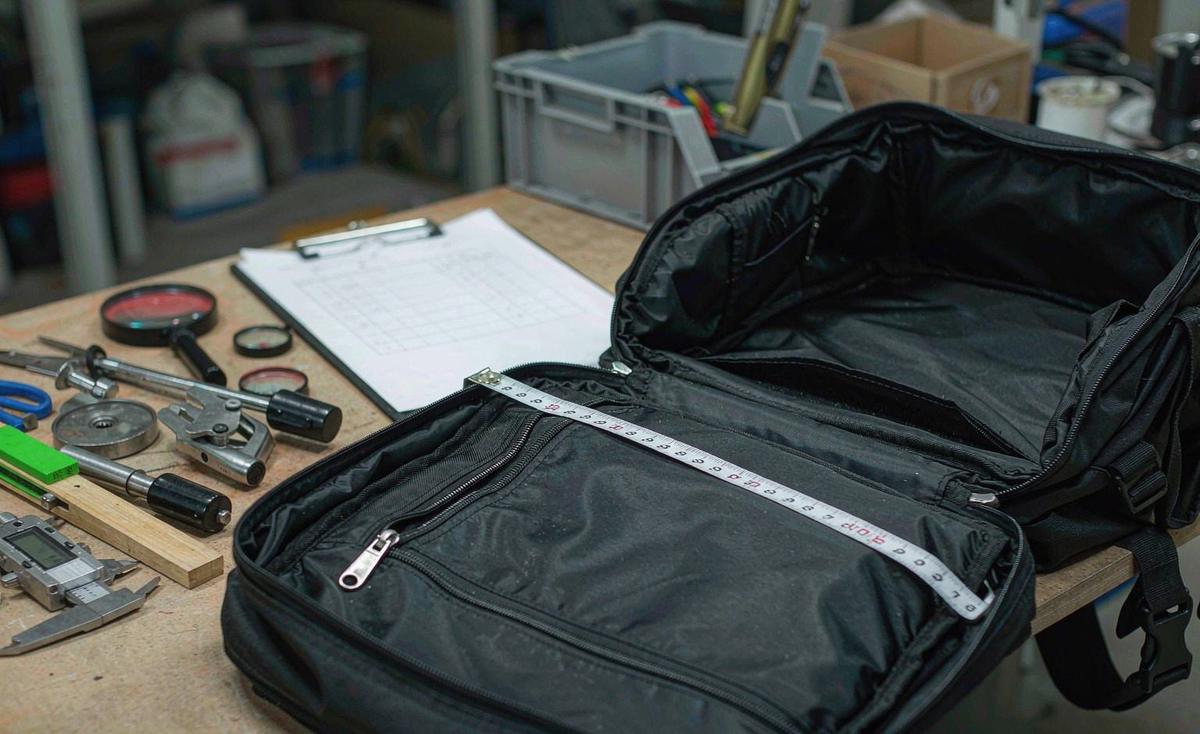
- Why seven questions, asked in this order
- Question 1: What is the minimum per style and per colourway?
- Question 2: How many working days to a physical sample, and from when?
- Question 3: Which inspection standard, and do I receive the report?
- Question 4: What exactly does the quoted price include?
- Question 5: What is the real capacity behind the promise?
- Question 6: What are the trade terms, deposit and payment triggers?
- Question 7: What happens when something goes wrong?
- Scoring the answers side by side
- Answers that should end the conversation
- What to put in writing before you sign
- Asking them in the right sequence
Why seven questions, asked in this order
A crowdfunding bag order is a fixed-date commitment with a published promise attached. That makes it unlike almost every other order a production floor receives, and it means the usual questions about price and lead time are necessary but insufficient. What a creator actually needs to know is whether the party across the table has scheduled work of this shape before, and whether it will still be answering questions in week six of a run.
Seven questions establish that, and they are ordered deliberately. The first three test whether the party operates to published parameters. The next two test commercial transparency. The sixth tests cash alignment. The seventh, which almost nobody asks, tests what happens under stress — and the answer to the seventh is the best predictor of how the programme will actually feel.
Ask all seven in writing, to every candidate, and in the same words. The comparison then becomes objective: not who sounded most confident on a call, but who returned specifics on all seven. That is the whole point of the exercise, and it takes about a week.
- Minimum order quantity
- 500 pcs per style / colourway
- Sampling
- 6-10 working days (12-15 for complex builds)
- Bulk production
- 35-50 days after deposit + approved pre-production sample
- Inspection
- AQL 2.5 to ISO 2859-1
- Trade term
- FOB Xiamen
- Payment
- T/T 30/70
- Facility
- 4,950 m² SGS-verified, 137 staff, 7 lines, 149 machines
- Capacity
- 200,000 pcs per month
- Experience
- 20+ crowdfunding campaigns supported
Question 1: What is the minimum per style and per colourway?
This is the first question because it determines whether the rest of the conversation is even relevant. A party quoting a minimum per style without stating the colourway rule will produce a budget that collapses when the campaign offers two colours. One bag in three colours is three commitments, not one, because each colourway carries its own dye lot and trim package.
Expect a single figure with the rule spelled out: 500 pcs per style and per colourway. Then ask the follow-up that most creators forget. How are sets counted? A reward sold as three nested packing cubes is normally one style at 500 sets rather than three styles at 500 pcs each, but that convention has to be agreed in writing before quotation, because the difference is a threefold change in committed volume.
Also ask how size variants are treated. Two sizes of one bag sharing the same pattern, fabric and hardware share a dye lot and a trim package, and many programmes will treat that as one style. Get the answer in the RFQ rather than discovering it when the cost arrives.
Question 2: How many working days to a physical sample, and from when?
Ask for the window in working days and ask when the clock starts. A credible answer states 6-10 working days for standard constructions and 12-15 for complex builds with custom hardware, welded seams or multi-panel print, counted from approved artwork and a settled tech pack, and excludes courier transit in both directions.
The second half of the question matters more than the first. A party that says six to ten days without saying from when is not committing to anything, because the clock can be started at artwork approval, at deposit, or at some internal milestone the creator never sees. Ask what triggers the count and what stops it, and then ask whether the prototype is built on the line that will run bulk rather than in a separate sample room.
- Trigger. Does the count start at approved artwork, at tech pack sign-off, or at deposit?
- Band. Is the answer given as a range with the complex-build figure stated separately?
- Transit. Is courier time excluded, and is it excluded in both directions?
- Line. Is the prototype sewn on the production line that will run the order?
- Revisions. Is a second round the same duration, and is it charged per round?
Budget two rounds regardless of what the answer is. Round one settles structure; round two settles colour and branding. Two rounds at 6-10 working days plus courier is four to six calendar weeks, which is the chunk of pre-launch calendar most campaigns fail to reserve. Our sampling and prototyping page sets out the revision loop in detail.
Question 3: Which inspection standard, and do I receive the report?
Quality in a crowdfunding context has two components: the physical standard and the evidence. The evidence is what a creator quotes in an update when backers ask whether the reward is any good, so the question is not only which standard applies but whether a written report is issued as a matter of course.
Expect AQL 2.5 to ISO 2859-1, with a statistically determined sample drawn from finished cartons and defects classified as critical, major or minor against tolerances agreed before the run. Expect the report before cartons are released, not after. And expect the defect classification to be agreed in advance, because critical, major and minor mean nothing if the two sides define them differently on the day.
| Sub-question | Why it matters | Credible answer |
|---|---|---|
| Which AQL and which standard? | An AQL without a standard is not enforceable | AQL 2.5 to ISO 2859-1 |
| Is a report issued? | The report is the campaign update | Issued before carton release, as standard |
| Who receives it? | Summaries hide detail | The creator receives the full report |
| How are defects classified? | Ambiguity on the day is unresolvable | Critical, major and minor agreed in writing pre-run |
| What if it fails? | A failed inspection with no remedy is a delay | Rework and re-inspection defined in the contract |
| Are tests included? | Compliance testing is separate from inspection | Priced per material per standard, booked during sampling |
Full detail on how those checks are evidenced and documented sits on the kickstarter campaign bag QA and QC page. Whatever answer you receive, the inspection clause belongs in the purchase order rather than in an email thread.
Question 4: What exactly does the quoted price include?
Two quotations can carry the same unit price and differ by a fifth in total programme cost. Ask for the unit price at three volumes and for every one-off line to be listed separately: tooling, print screens per colour per placement, embroidery digitisation, sampling per round with courier, compliance testing, inspection, and export handling to FOB Xiamen.
- Unit price at 500, 1,000 and 2,000 pcs, so the shape of the volume curve is visible before pledge prices are set.
- Tooling and moulding, itemised, with confirmation of what happens to that charge on a re-order.
- Print and embroidery set-up, counted per placement and per colour, because screens are not free.
- Sampling per round, including courier, with the expected number of rounds stated.
- Inspection and testing, stated as included or excluded, never assumed.
- Export handling to FOB Xiamen, so the trade term is real rather than nominal.
Then ask which of those lines will not be charged again on a re-order. An approved specification should not repeat tooling, print screens, embroidery digitisation or sampling, which is typically worth 8-15% of unit cost before any volume discount. A party that cannot answer that question has probably not documented re-orders before, which tells you something about how the programme will end.
Question 5: What is the real capacity behind the promise?
Capacity is not a vanity figure. It determines whether a stretch-goal top-up fits inside the original production window or gets pushed into a second run with its own deposit and its own delay. A 500-piece campaign order is small by industrial standards, which means it is also the easiest order to re-queue when a floor is under seasonal pressure.
Ask for figures that can be checked rather than adjectives. Floor area with third-party verification, staff count, number of production lines and machines, and monthly output. Here those figures are 4,950 m² SGS-verified, 137 staff, 7 production lines, 149 machines and 200,000 pcs per month. Ask also how many crowdfunding programmes have been supported, because a party that has carried 20+ campaigns has scheduled around published dates before and knows what a campaign update requires.
Key takeaways from the first five questions
- Minimum must be stated per style and per colourway, with the set-counting rule agreed in writing.
- Sampling must be stated in working days with the trigger, the transit exclusion and the build line named.
- Inspection must be AQL 2.5 to ISO 2859-1 with a report issued before carton release.
- Price must be given at three volumes with every one-off line itemised and re-order treatment stated.
- Capacity must be verifiable: floor area, staff, lines, machines, monthly output and campaign track record.
Question 6: What are the trade terms, deposit and payment triggers?
Payment structure is where a campaign's cash plan meets a production schedule. Expect FOB Xiamen and T/T 30/70: a 30% deposit to start production and 70% against shipping documents. Then ask the two questions that determine whether the campaign can actually finance the run: exactly when does the deposit fall due, and what document set triggers the balance?
The deposit belongs inside the funding target as a campaign cost line, because production does not begin until it clears. The balance falls against shipping documents, which usually lands roughly seven weeks after the deposit, while marketing, tooling and sampling were already paid months earlier. A month-by-month cash forecast covering all of that is the single most useful financial document a campaign can keep, and it cannot be built without these two answers.
Ask about the trade term alternatives too. FOB Xiamen puts the international leg in the creator's hands, which suits campaigns whose backer distribution runs through a third-party fulfilment warehouse. DDP prepays duty and taxes and removes customs charges arriving at the backer's door, but it must be priced in advance and built into the budget rather than arranged later. See rewards fulfilment for how the onward leg is planned.
Question 7: What happens when something goes wrong?
This is the question nobody asks and the one that predicts the most. Every programme of any length encounters a problem: a fabric lot is withdrawn, a trim fails inspection, a shipment misses a vessel. What distinguishes a partner from a vendor is whether that problem arrives as a dated plan or as silence followed by an apology.
- Notification standard. How quickly is a problem reported, and in what form? Expect a written notice with the cause, the options and the calendar impact.
- Substitution protocol. If a fabric lot or zip chain is unavailable, is a documented equivalent proposed with its properties stated, or is a silent substitute used?
- Failed inspection remedy. Is rework and re-inspection defined, and who bears the cost and the delay?
- Schedule slippage. Is there a stated remedy or remedy limit if the production window is missed?
- Escalation path. Is there a named individual accountable for the programme, and a route above them if that person is unavailable?
Listen to the shape of the answer as much as its content. A party that has handled problems before describes them calmly and specifically, because it has a process. A party that has not will either promise that nothing will go wrong, which is not an answer, or will describe a process so vague that it cannot be invoked. We coordinate programmes rather than sell transactions, which is why this question is answered with a protocol rather than a reassurance.
Every long programme encounters a problem. The useful answer to question seven describes a notification standard, a substitution protocol, a failed-inspection remedy and a named escalation path. If the response is reassurance rather than process, assume that problems will be reported late, which is precisely when they become expensive.
Scoring the answers side by side
Score each candidate on all seven, out of three, using the same rubric. Two points for a specific answer with a number or a named standard, one for a general answer, zero for a refusal or an evasion. Total the columns. The result is rarely close, and it usually disagrees with the ranking produced by unit price alone.
| Question | 2 points | 1 point | 0 points |
|---|---|---|---|
| 1. Minimum | 500 pcs per style and colourway, set rule stated | A figure without the colourway rule | Refuses to state a minimum |
| 2. Sampling | 6-10 working days, trigger and transit stated | Days given without a trigger | No window offered |
| 3. Inspection | AQL 2.5 to ISO 2859-1 with report as standard | A standard named but no report | No standard named |
| 4. Price detail | Three volumes, fixed lines itemised | One volume, some lines itemised | Single blended figure |
| 5. Capacity | Verified floor, staff, lines, output, track record | Some figures, unverified | Adjectives only |
| 6. Terms | FOB Xiamen, T/T 30/70, triggers stated | Terms given, triggers unclear | Terms change when asked |
| 7. Problems | Written protocol with escalation path | Verbal assurance of a process | Nothing will go wrong |
A candidate scoring twelve or above out of fourteen is a realistic shortlist entry. Nine to eleven warrants a sampling round before commitment. Below nine, the price does not matter, because the schedule will not hold and the campaign will be managing a delay instead of a launch.
Answers that should end the conversation
Some answers are not weak, they are disqualifying. Four recur often enough to be worth naming, and each of them predicts a specific failure later in the programme rather than a general risk.
- The minimum changes when you ask a second time. It means the figure was never operational, and the real constraint will appear after the campaign funds.
- The sampling window is given in days rather than working days, with no trigger. It means the count will be argued about later, and the argument will be settled in the party's favour.
- Inspection is described as available on request. It means inspection is not scheduled, and the report you need for a campaign update will have to be negotiated for.
- The price cannot be broken into fixed and volume lines. It means either the party does not know its own cost structure, or it does and would rather you did not.
None of these is grounds for hostility. They are grounds for removing a candidate from the shortlist, which is a different thing and much cheaper. The purpose of asking is to find out early, while the cost of finding out is one email rather than one deposit.
There is also a positive signal worth recording alongside the disqualifiers. A candidate who volunteers information you did not ask for — a material substitution with its properties stated, a carton size that reduces volumetric weight, a dye-lot lead time that affects a stretch goal — is demonstrating the same underlying capability as a good answer to question seven. It is anticipation rather than reaction, and in a programme with a published delivery date, anticipation is worth more than any single number on a quotation.
What to put in writing before you sign
The answers to the seven questions should become clauses in the purchase order. If a party answered clearly on the call and then resists putting it in writing, the answer was not real. Six clauses matter, and none is unusual in commercial bag production; they simply have to be stated.
- Specification reference, naming the approved tech pack and approved pre-production sample, with photographs retained by both sides.
- Inspection clause, at AQL 2.5 to ISO 2859-1 with a report before carton release and the failed-inspection remedy defined.
- Schedule clause, stating the sampling window in working days and a production window starting on deposit plus approval.
- Change clause, requiring any post-approval change to be costed and scheduled in writing before it is made.
- Trade and payment clause, stating FOB Xiamen, T/T 30/70 and the document set that triggers the 70% balance.
- Re-order clause, fixing unit price at 1,000 and 2,000 pcs and confirming tooling and sampling are not charged again.
The re-order clause is the one most often omitted and the one most valuable at the end of a campaign. It converts a single reward run into a repeatable product line, and it is worth negotiating before the first order rather than after delivery, when there is no leverage left on either side.
Asking them in the right sequence
Sequence matters because the answers compound. Ask about the minimum before discussing price, or the price will be quoted at a volume you cannot commit to. Ask about sampling before the calendar, or the calendar will be built on a guess. Ask about inspection before quality, or quality will be discussed as an intention rather than as a standard with a report behind it.
Send all seven in one document with the brief and the pledge ladder attached, so the answers can be tested against a published price rather than floating free. Send it to two or three candidates, not ten, and give each the same wording. Within a week you will have a scored comparison and, usually, a clear decision.
Start with the quote request form and attach the seven questions. For the wider view of how programme coordination differs from going direct, see bag manufacturing for campaign creators; for volume arithmetic read What Is the MOQ for Custom Bags on a Kickstarter Campaign?; and for the category overview begin at custom bags for Kickstarter.
The comparison is only objective if every candidate receives the same seven questions in writing and answers them in writing. Confidence on a call is not evidence. A scored grid built from written answers usually disagrees with the ranking produced by unit price alone, and it is the grid that predicts whether the published delivery date survives.
- Custom Bags for Kickstarter — campaign sourcing hub
- Bag manufacturing for campaign creators
- Kickstarter campaign bag QA and QC
- Sampling and prototyping programme
- Low MOQ bag production for creators
- Crowdfunding rewards fulfilment planning
- Request a campaign bag quotation
- More campaign sourcing articles
Send the seven questions with your brief
Attach the pledge ladder and the seven questions to one RFQ. You receive scored, written answers covering minimum, sampling, inspection, price detail, capacity, terms and the problem protocol.
Frequently Asked Questions
What is the minimum order quantity for a campaign bag run?
500 pcs per style and per colourway. Confirm the colourway rule explicitly, because one bag in three colours is three commitments of 500 pcs rather than one. Also agree in writing how sets are counted and whether size variants on a shared pattern count as one style or two.
How many working days should sampling take?
6-10 working days for standard constructions and 12-15 for complex builds with custom hardware, welded seams or multi-panel print. Ask what triggers the count, whether courier transit is excluded in both directions, and whether the prototype is sewn on the line that will run bulk.
Which inspection standard should a campaign bag order specify?
AQL 2.5 to ISO 2859-1, with a statistically determined sample drawn from finished cartons and defects classified as critical, major or minor against tolerances agreed before the run. Insist that a written report is issued before cartons are released, because that report is what a campaign update can quote.
Why should a creator request three volume tiers in a quotation?
Because unit price alone is not comparable. Request 500, 1,000 and 2,000 pcs with every one-off line itemised separately: tooling, print screens per colour per placement, embroidery digitisation, sampling per round and inspection. The shape of that curve shows whether a stretch goal improves margin or only adds volume.
How can a creator verify a claimed production capacity?
Ask for checkable figures rather than adjectives: floor area with third-party verification, staff count, production lines, machine count and monthly output — here 4,950 m² SGS-verified, 137 staff, 7 lines, 149 machines and 200,000 pcs per month. Ask how many crowdfunding programmes have been supported.
What payment structure should a campaign expect?
FOB Xiamen with T/T 30/70: a 30% deposit to start production and 70% against shipping documents. Put the deposit inside the funding target as a campaign cost line, and confirm exactly which document set triggers the balance so the cash forecast places both payments in the right months.
What should a creator ask about problems during production?
Ask for a protocol rather than a reassurance: a notification standard with cause, options and calendar impact; a substitution protocol for unavailable fabric or trims; a defined remedy for a failed inspection; and a named escalation path. Reassurance that nothing will go wrong is not an answer.
How should two bag quotations be compared fairly?
Normalise them first. Request three volume tiers from each, separate fixed lines from volume-sensitive ones, confirm inspection is included, and convert to the same trade term. Then score each candidate on the seven questions out of fourteen and compare the totals, which usually disagrees with the price ranking.
Which clauses belong in a campaign bag purchase order?
Six: a specification reference naming the approved tech pack and gold sample, an inspection clause at AQL 2.5 with a defined remedy, a schedule clause with the sampling and production windows, a change clause for post-approval alterations, a trade and payment clause, and a re-order clause.
Why does the re-order clause matter so much?
Because it converts a single reward run into a repeatable line. On an approved specification, tooling, print screens, embroidery digitisation and sampling are not charged again, typically worth 8-15% of unit cost. Negotiate it before the first order rather than after delivery, when leverage has gone.
How many candidates should receive the seven questions?
Two or three, each with an identical brief and identical wording, plus the pledge ladder attached. That produces a scored comparison within about a week. Ten candidates slow the decision without improving it, and identical wording is what makes the comparison objective.
What answer should remove a candidate from a shortlist?
Four: a minimum that changes when asked a second time, a sampling window given without a trigger, inspection described as available on request, and a price that cannot be separated into fixed and volume lines. Each predicts a specific later failure rather than a general risk.
Does FOB or DDP suit a crowdfunding reward shipment?
FOB Xiamen usually suits better because backer distribution normally runs through a fulfilment warehouse the creator appoints. DDP prepays duty and taxes and stops customs charges arriving at the backer's door, but it must be priced in advance and built into the budget.
When should compliance testing be booked?
During sampling. Testing is priced per material per standard and takes calendar time, so a report requested in the final production week is a risk with no mitigation. Book CPSIA, REACH, Prop 65, OEKO-TEX Standard 100 or GRS according to the destination market.
People Also Ask
What should I ask a bag manufacturer before placing a Kickstarter order?
Seven things: the minimum per style and colourway, the sampling window in working days, the inspection standard and report, what the price includes, verifiable capacity, trade and payment terms, and the protocol when something goes wrong.
How do I know if a bag factory is legitimate?
Ask for checkable figures: verified floor area, staff count, line and machine numbers, and monthly output. Then ask for a sampling window in working days and an inspection report issued as standard. Vague answers to either are the signal.
Is the cheapest bag quote usually the best one?
Rarely. Unit prices are not comparable until normalised across three volumes with fixed lines itemised and the same trade term. Score candidates on operational answers instead, and the ranking usually changes.
What is AQL 2.5 and why does it matter for my campaign?
It is the sampling standard under ISO 2859-1 used for pre-shipment inspection. It gives a statistically defensible sample and a report you can quote in a campaign update instead of promising quality you cannot evidence.
Should I sign a contract before or after sampling?
Put the operational terms in writing before the deposit, and run at least one sampling round before committing. The sample reveals how revisions are handled, which predicts the programme better than the quotation does.